
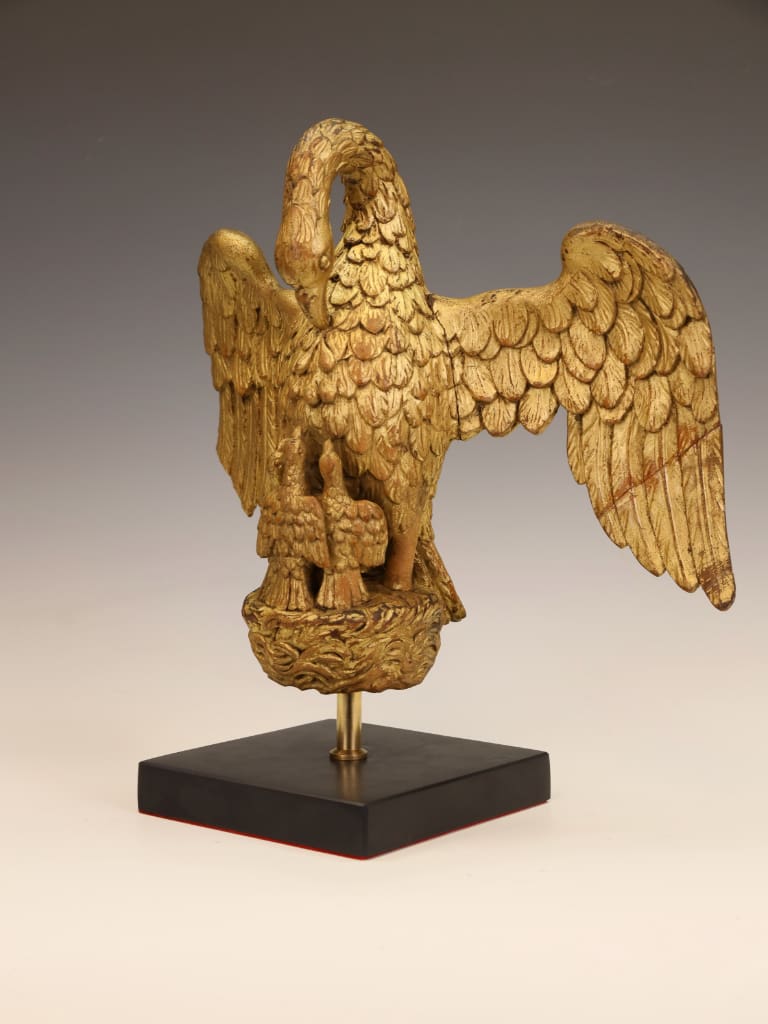
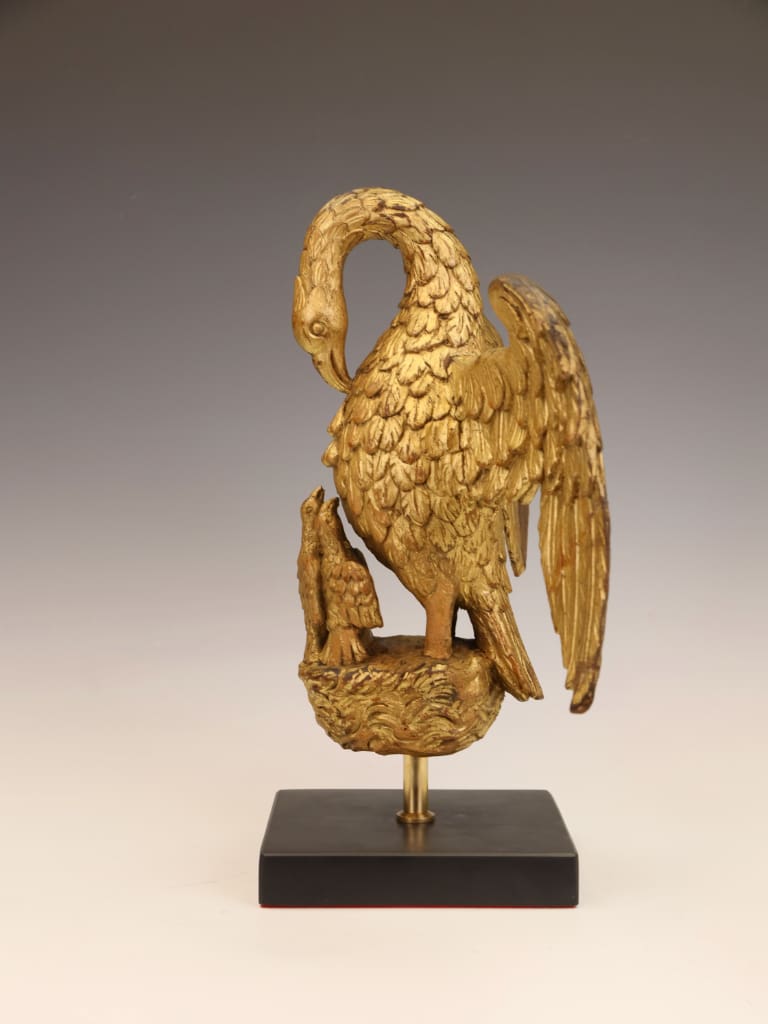
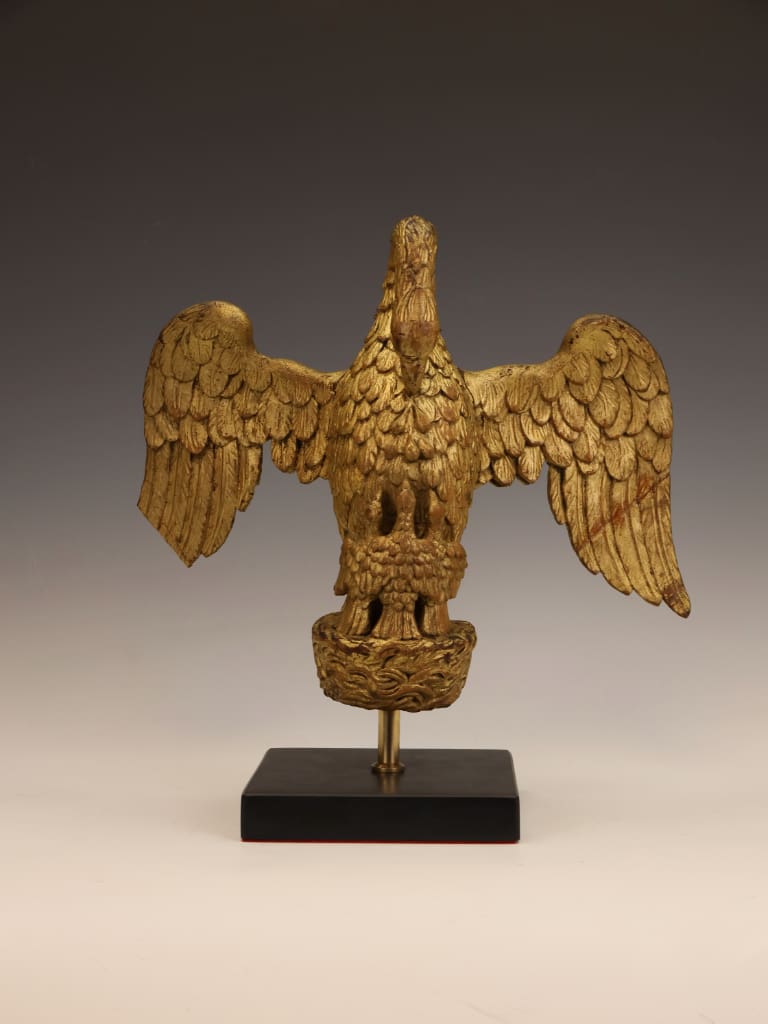
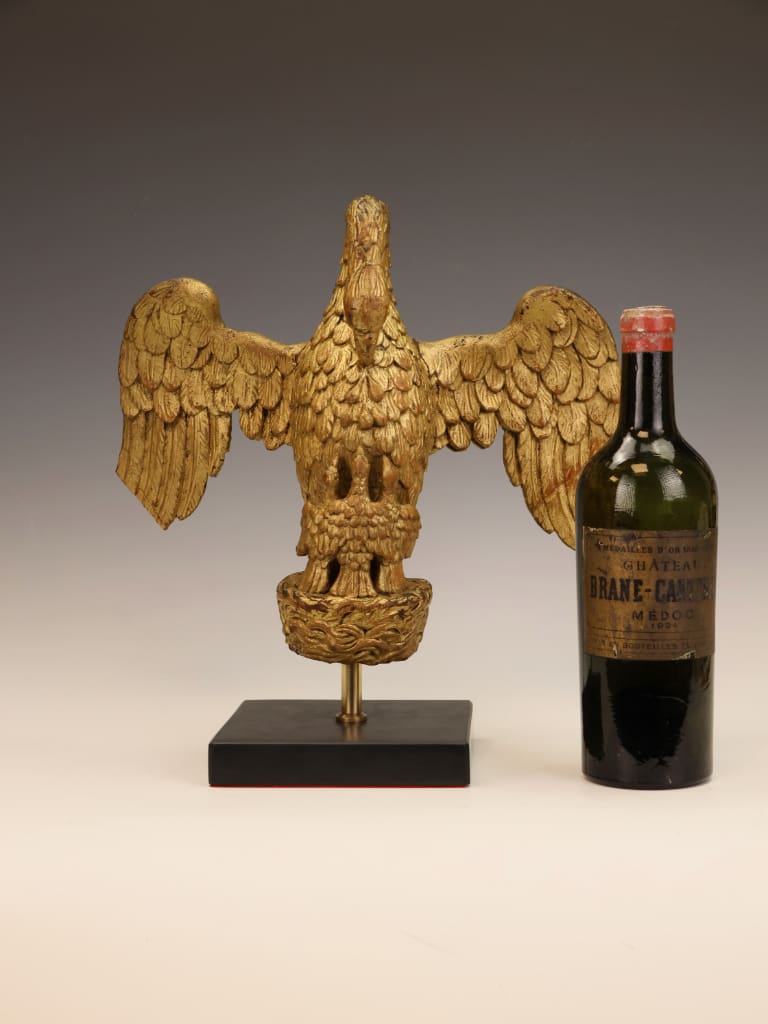
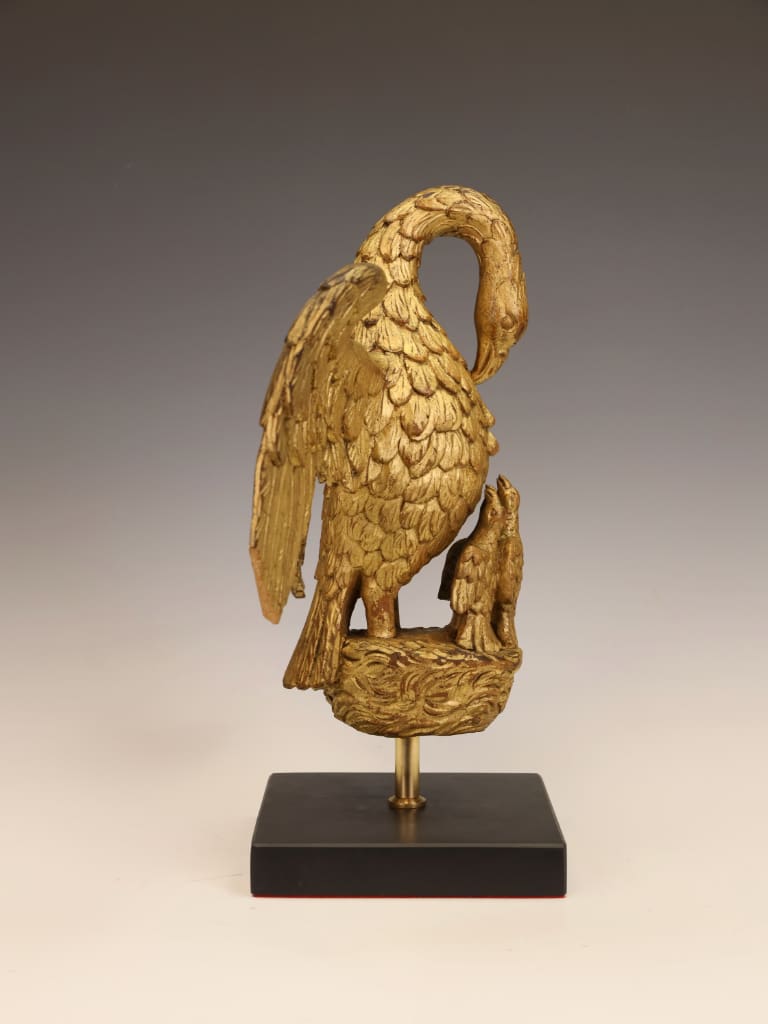
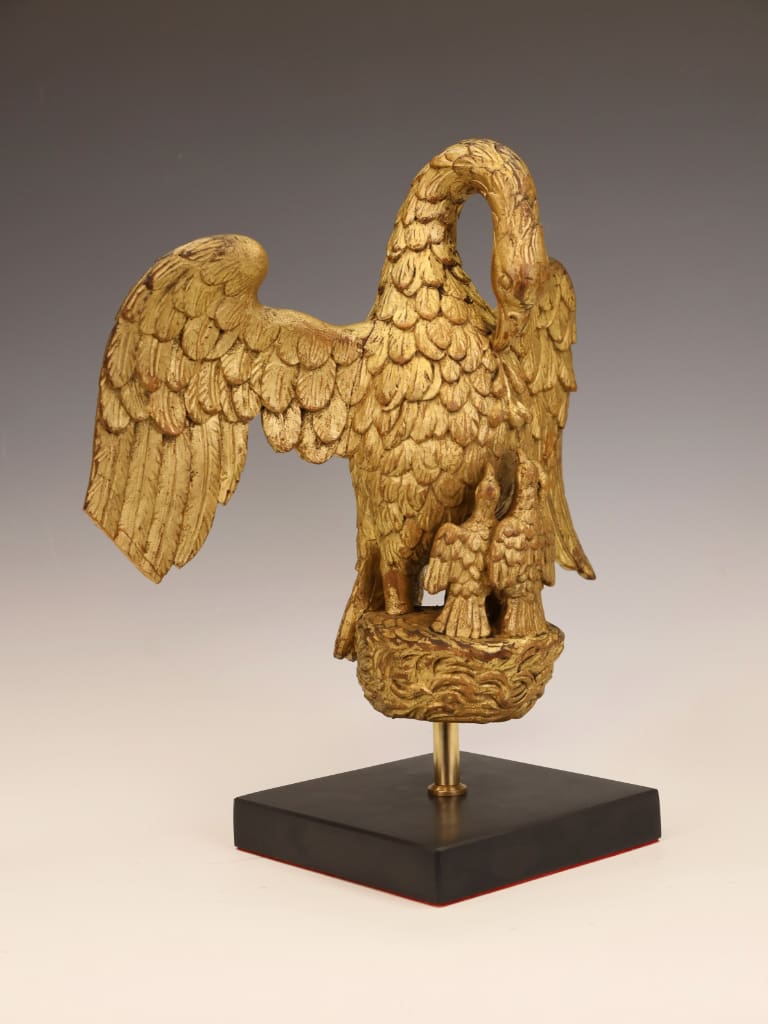
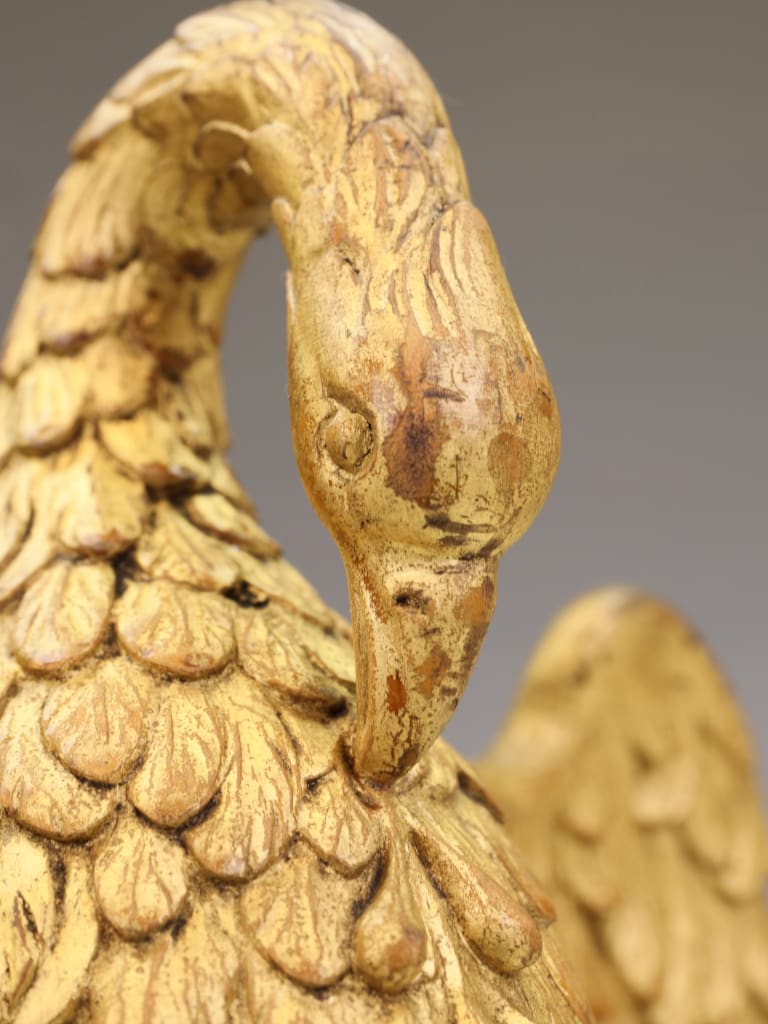
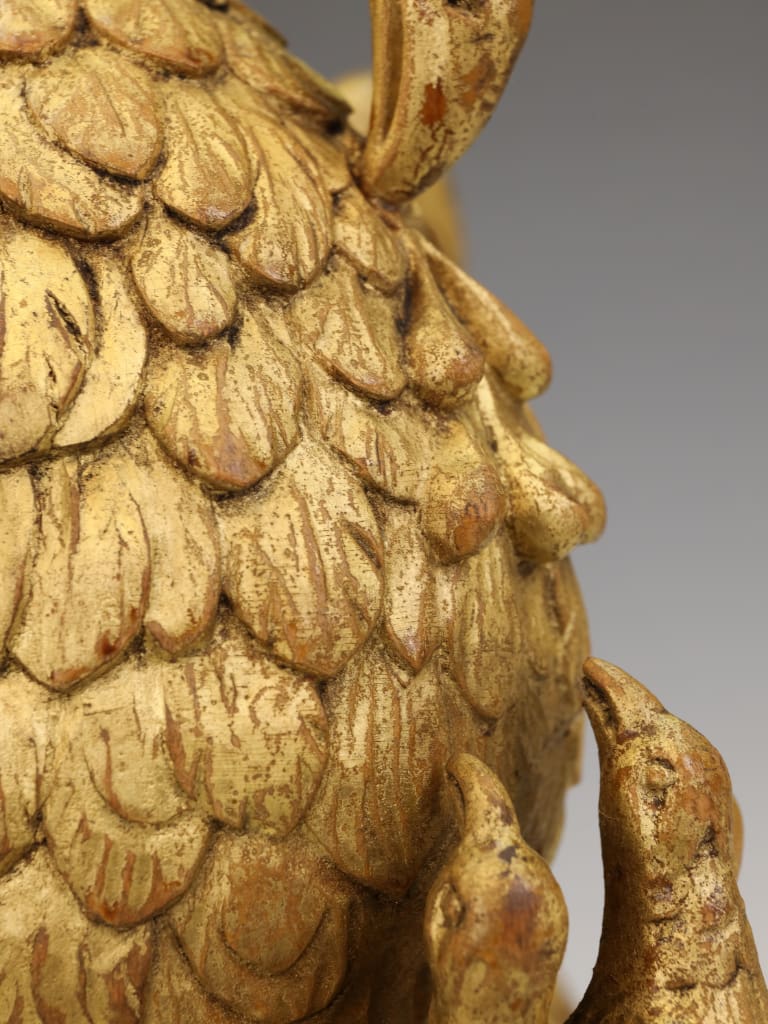
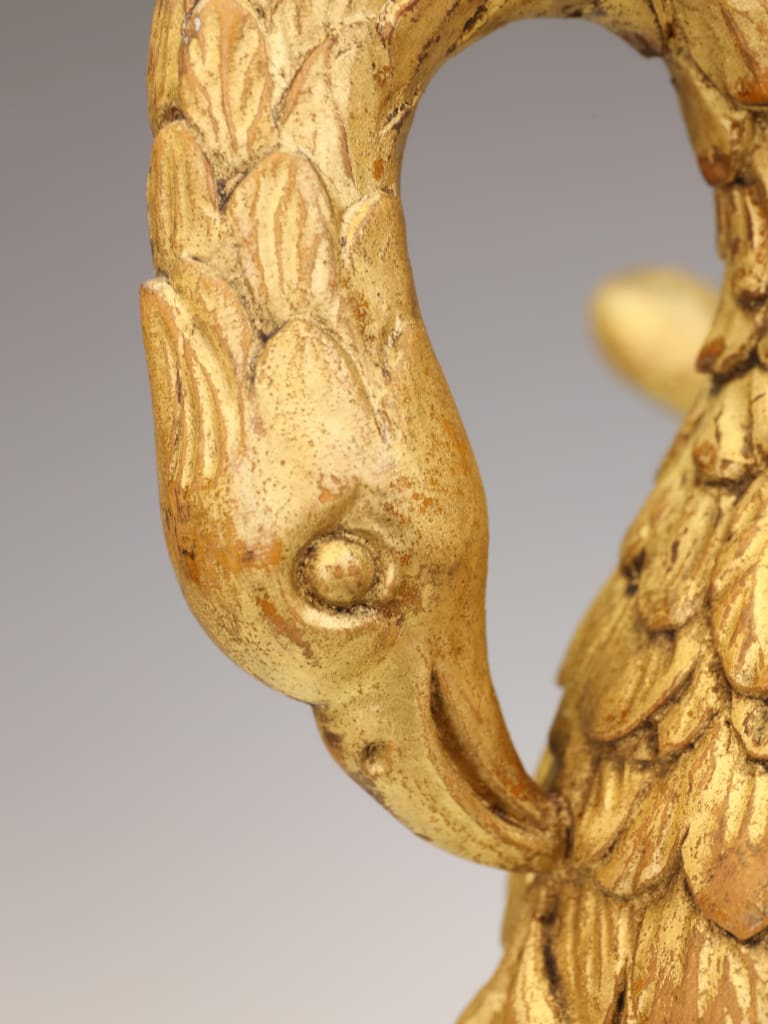
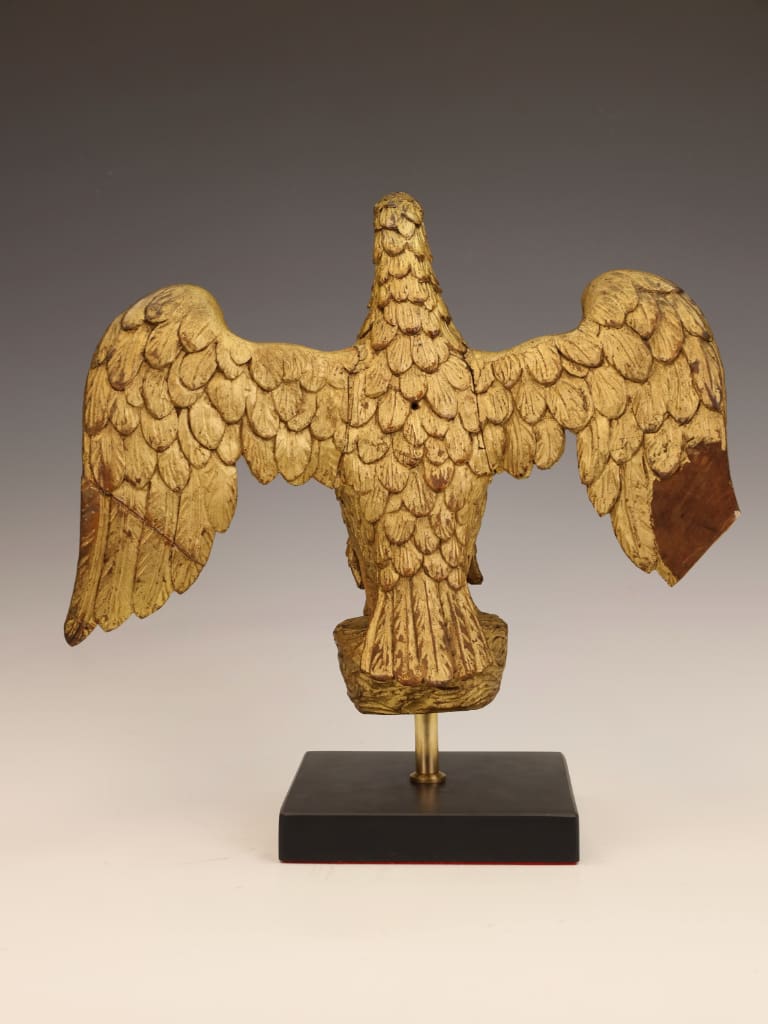
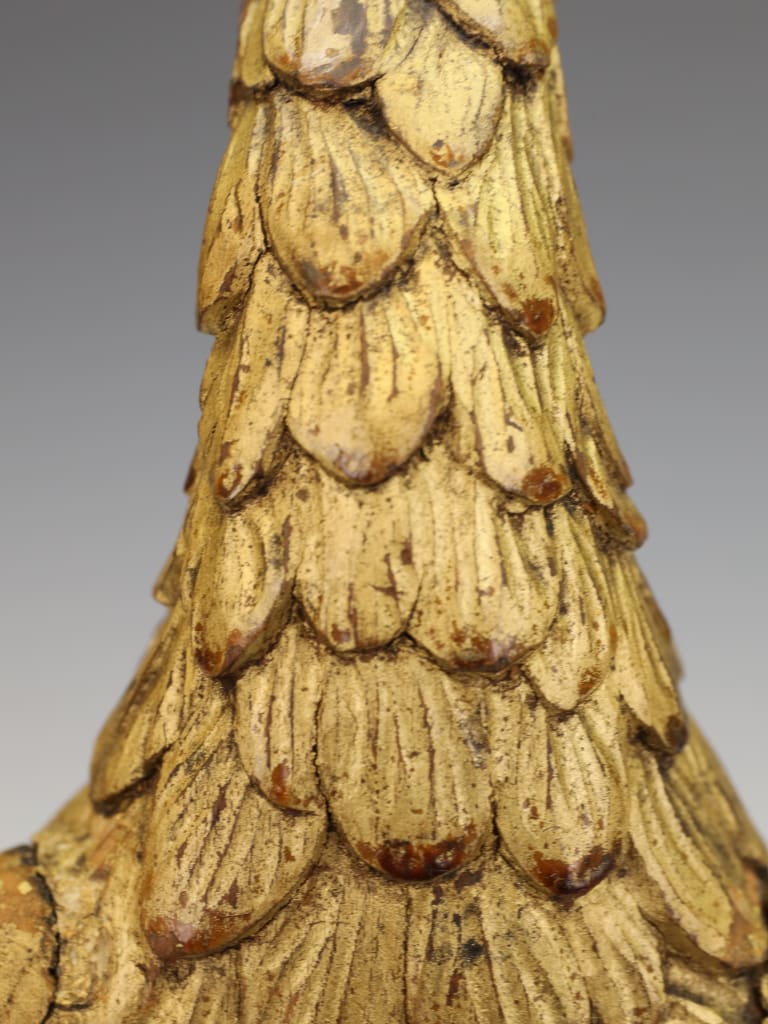
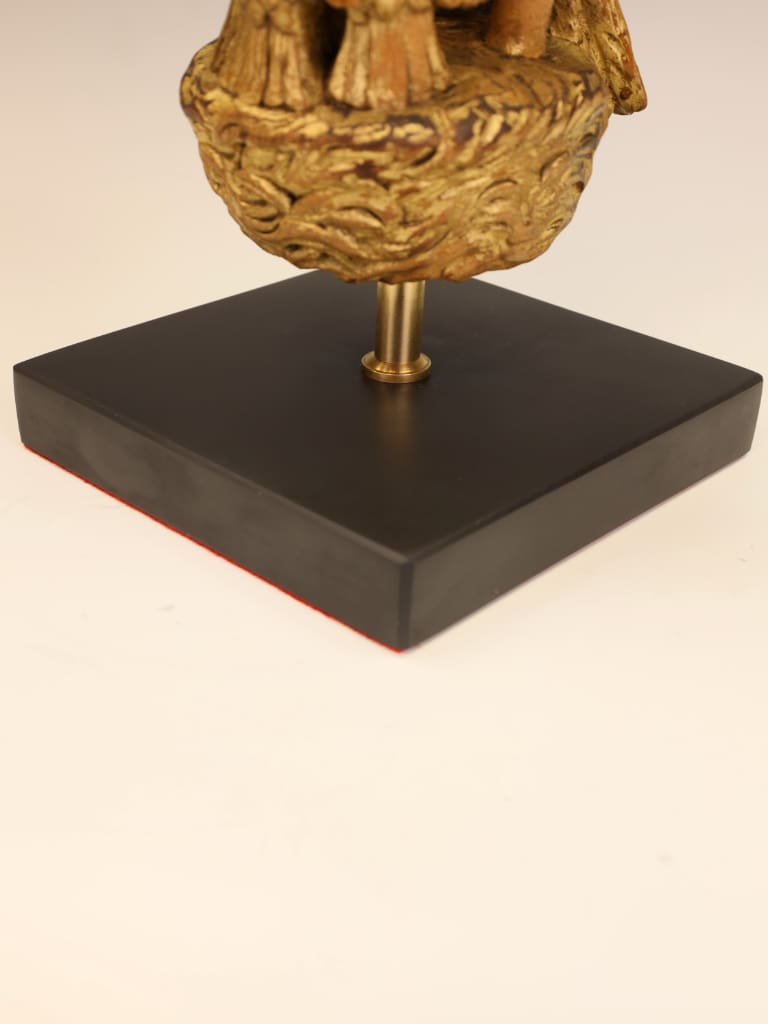




A beautifully carved and richly gilt wooden figure depicting the venerable motif of the Pelican in Her Piety, mounted on a later museum-style stand. This exceptional piece, most likely late 18th to early 19th century, exemplifies the highly symbolic devotional carvings once found in ecclesiastical interiors across Britain and Continental Europe.
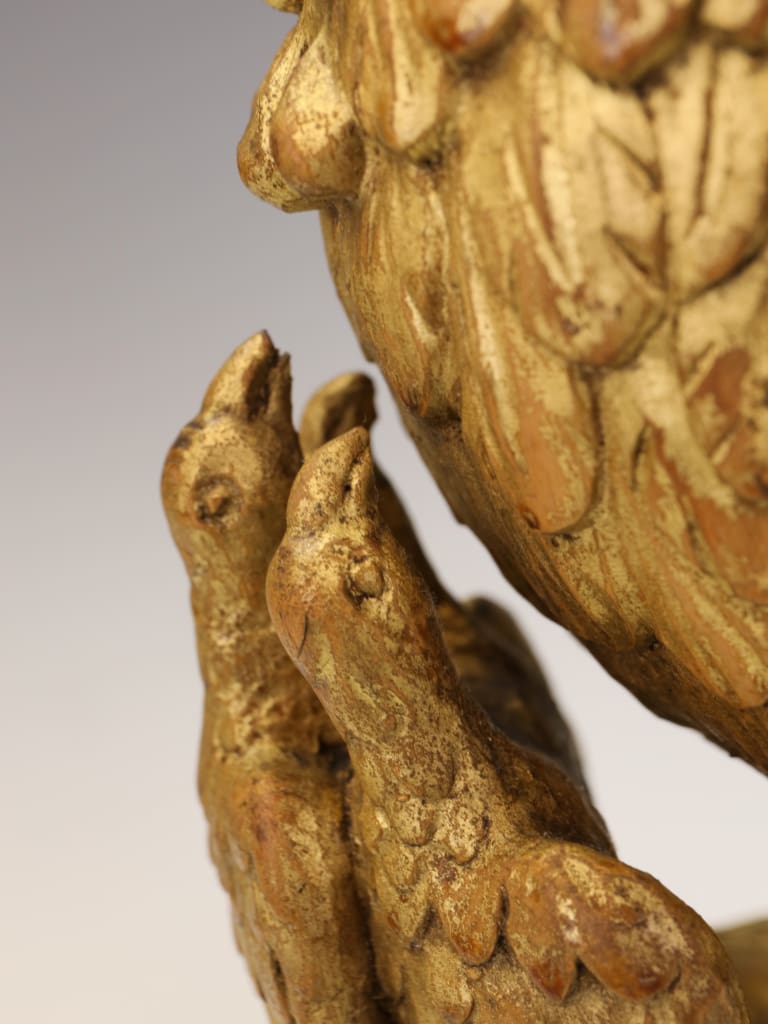
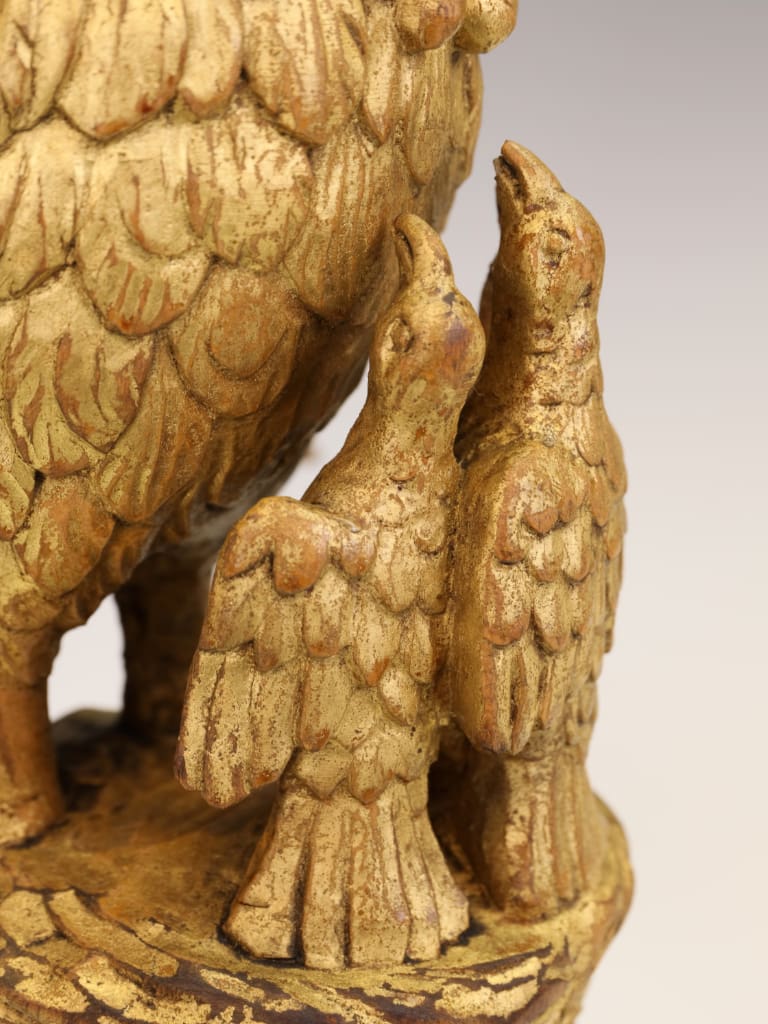
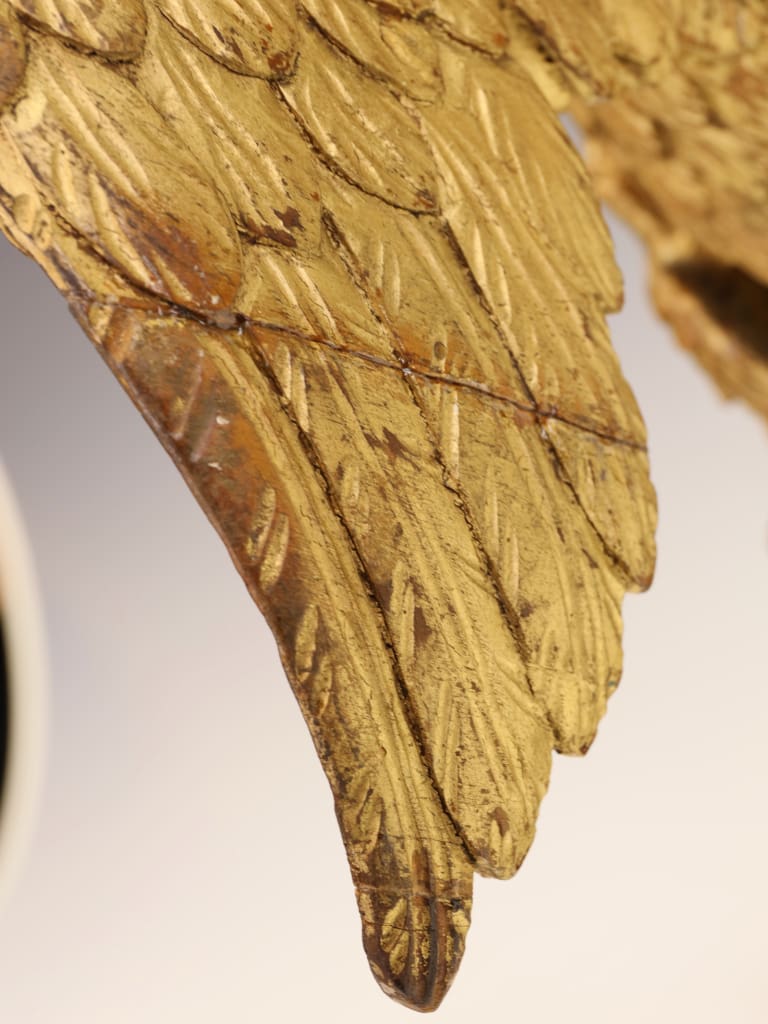
The pelican, rendered with great sensitivity and sculptural depth, is shown with her wings outstretched in a protective arc, bending gracefully toward her young. At her feet, two finely modelled chicks look upward, their forms crisply detailed with individually worked feathers, demonstrating the artisan’s command of both anatomical understanding and religious iconography.
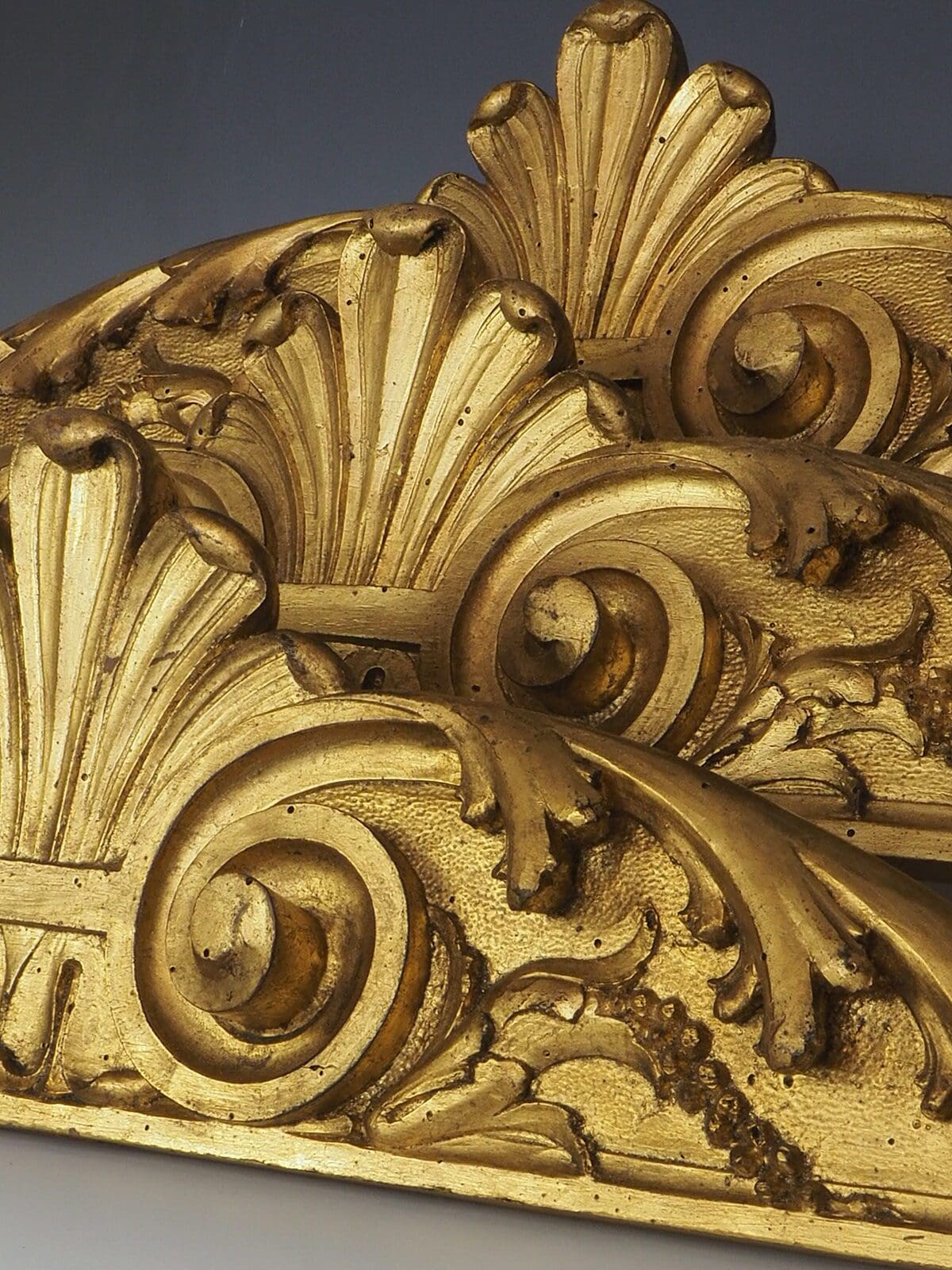
The surface retains its original gilding, now beautifully mellowed with age into a warm, softly burnished patina. Subtle traces of red bole beneath the gilding are visible in places, a hallmark of traditional 18th-century gilding practice. The carving exhibits a confident hand, particularly evident in the layered plumage, which creates a rhythmic, almost architectural pattern across the wings and body.
The subject of the Pelican in Her Piety has been associated with Christian symbolism since medieval times, representing self-sacrifice, divine love, and resurrection. According to medieval bestiaries, the pelican was believed to pierce her own breast to nourish her young with her blood—an allegory for Christ’s sacrifice. Carvings of this type were often placed on church lecterns, altarpieces, or within clerical furnishings to underscore themes of devotion and spiritual renewal.
This example stands out for its rare completeness, exceptional surface, and sculptural vitality. The later stand, made to museum standards, allows the piece to be presented as an object of art in its own right, suitable for both traditional and contemporary interiors.
A fine and evocative devotional carving of excellent presence and historical resonance.
The carving remains structurally sound and retains its original gilded surface with an attractive aged patina. Both wings, however, show historical damage: one wingtip is lacking, and the opposing wing has an old break which has been rejoined. The repair is visible, though stable. Minor rubbing and age-related wear to the gilding throughout, consistent with its period and use. No evidence of modern overpainting. The piece is well-presented on its later stand and remains an impressive and well-preserved example despite the noted losses.
Height: 39 cm / 15.4 inches
Width: 34 cm / 13.4 inches
Depth: 15 cm / 5.9 inches
Weight: 3.3 k.g / 7.3 lbs
All our collections have been through our workshop and where possible, we always try to maintain the original finish preserving the patina and colour, some items are sympathetically restored and this is done by our own skilled craftsmen using only traditional methods
We complete a full assessment, re-wire and PAT inspection on all lighting. The full assessment can include general upkeep and updating – Fitting new lamp holders, deep cleaning, minor repairs and replacement of fragile metal pins are all part of our service. Rewiring includes a standard rewire to conform with UK electrical regulations to an adaptation or conversion