





£195.00



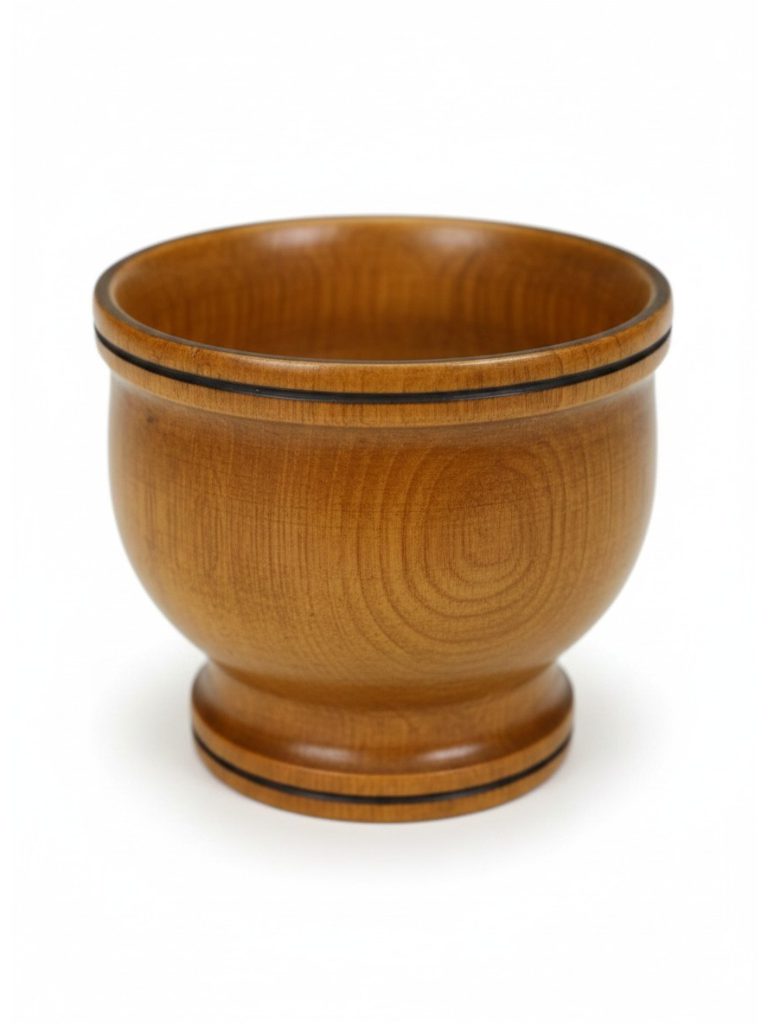
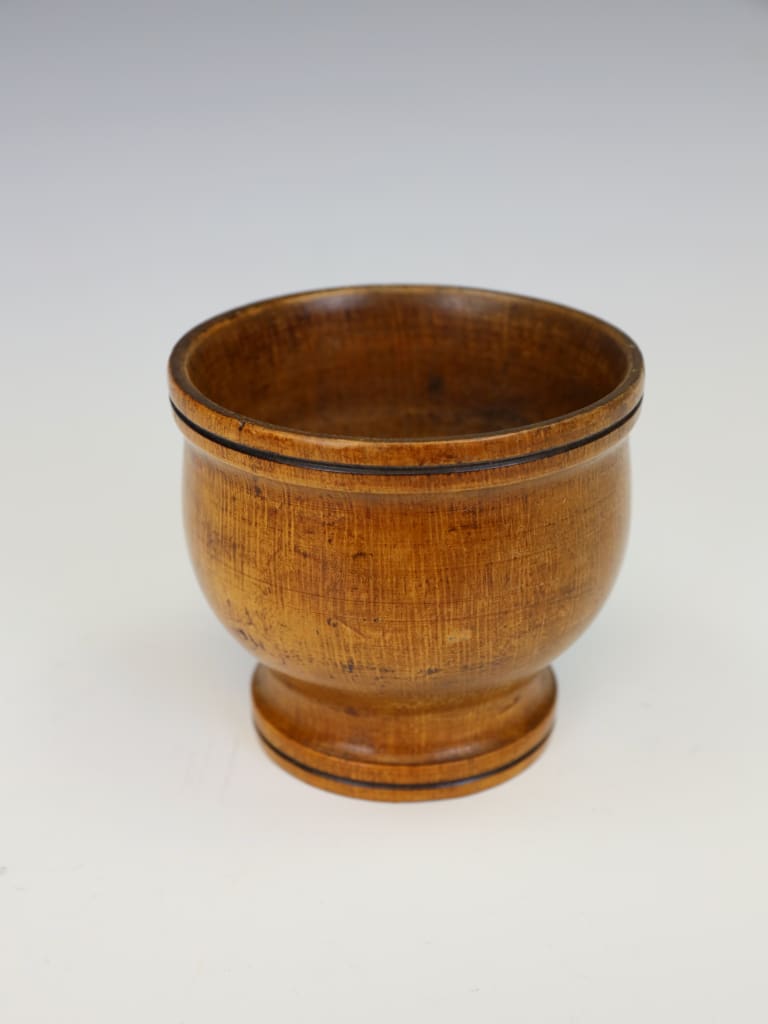
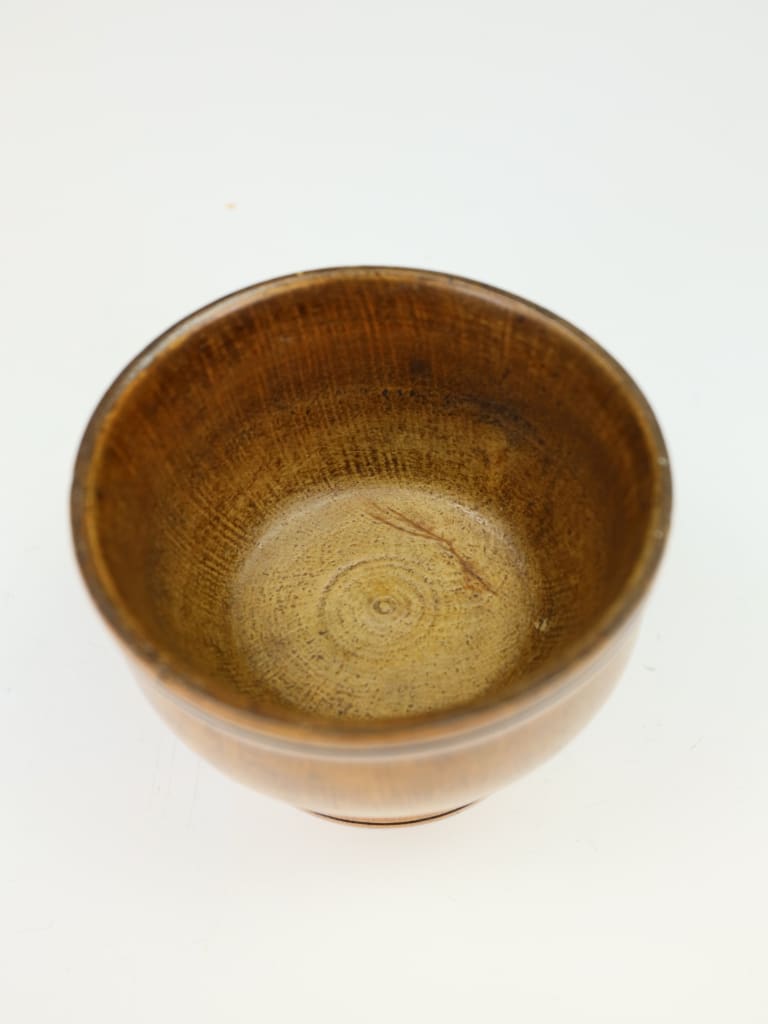
This fine example of Regency-period treen is a testament to the skill of the 19th-century turner. Carved from a single block of dense, slow-grown European Boxwood, the vessel exhibits the tight grain and buttery, honey-toned patina that only two centuries of handling and oxidation can bestow.
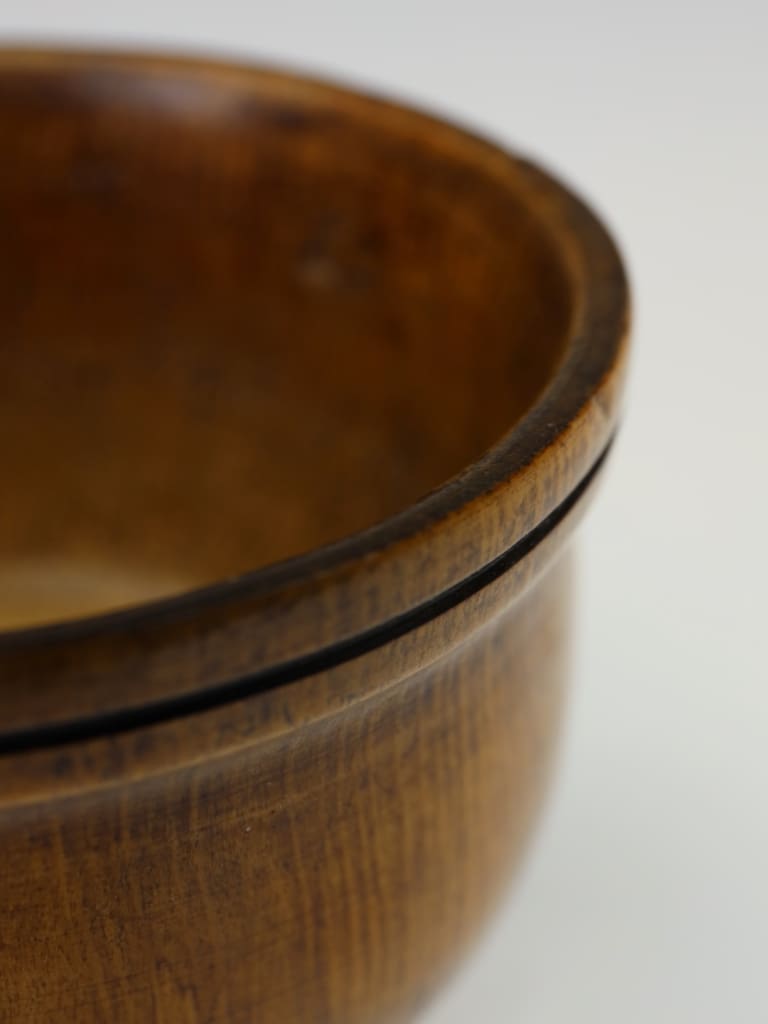
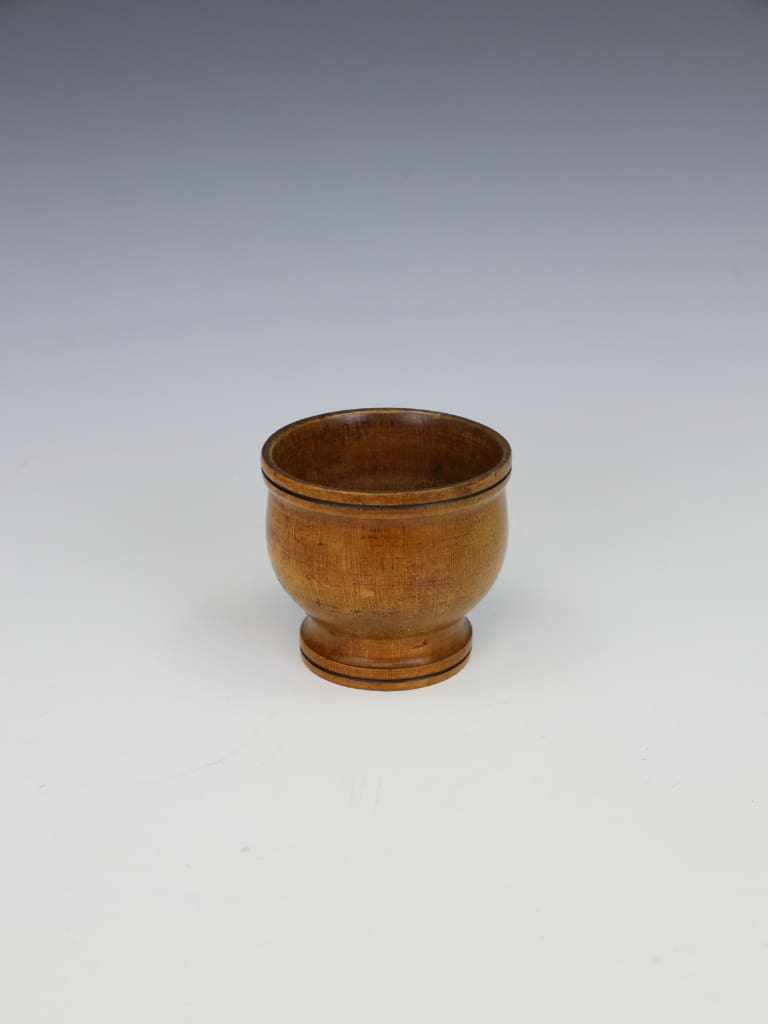
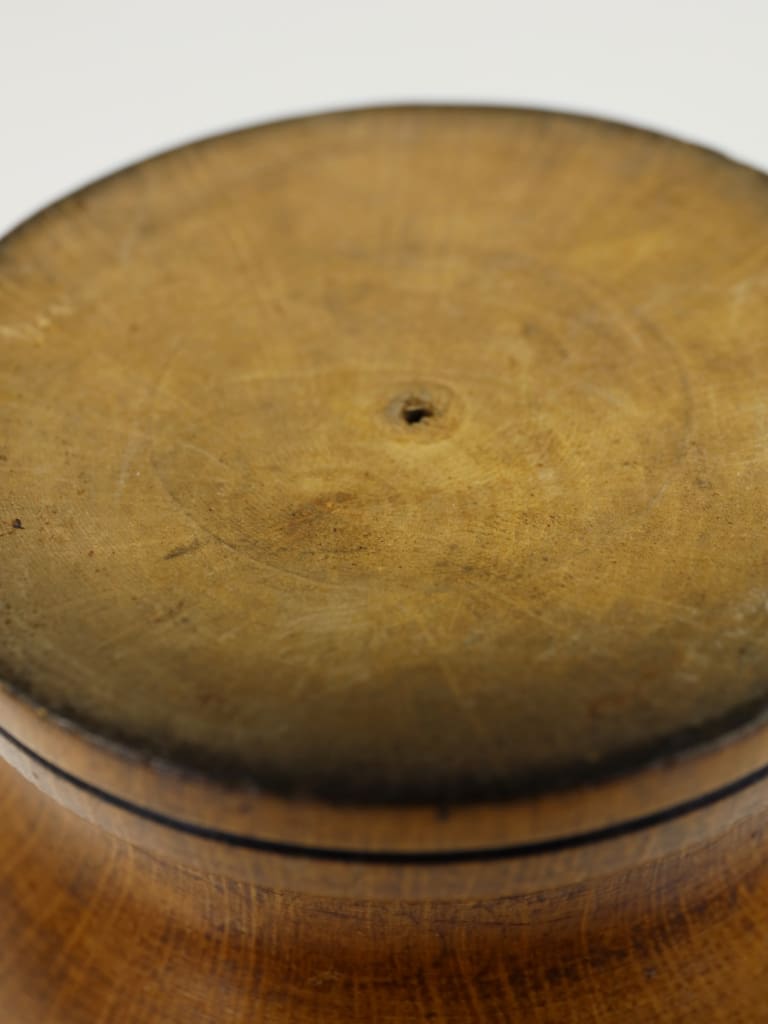
The vessel features a classic flared rim, a gently bulbous body, and a well-defined waisted foot. The aesthetic appeal is elevated by two ebonised incised rings, one encircling the upper rim and another at the base of the foot. These ebonised details were a hallmark of the Regency era (c. 1810–1830), often intended to mimic the expensive ebony stringing found on high-end Sheraton or Hope-style furniture.
While treen of this nature is rarely signed, pieces of this caliber were typically produced by specialised master turners in major English urban centers like London or Birmingham. In the early 19th century, boxwood was the material of choice for "clean" medicinal use because of its incredible density and lack of resinous odor, which prevented cross-contamination between different medicinal compounds or spices.
Acquired from a private collection of English Treen in the Cotswolds. The piece exhibits a "lived-in" quality that suggests it was a staple of a well-to-do domestic kitchen or a provincial apothecary’s counter for generations.
This Regency period boxwood mortar is in excellent antique condition, especially considering the volatile nature of the timber. It presents with an honest, un-faked surface and remains structurally robust for display or light collection use.
Height: 10 cm / 3.8 inch
Width: 9 cm / 3.5 inch
Depth: 9 cm / 3.5 inch
Weight: 0.2 k.g. / 0.3 lbs
All our collections have been through our workshop and where possible, we always try to maintain the original finish preserving the patina and colour, some items are sympathetically restored and this is done by our own skilled craftsmen using only traditional methods