
£1,450.00



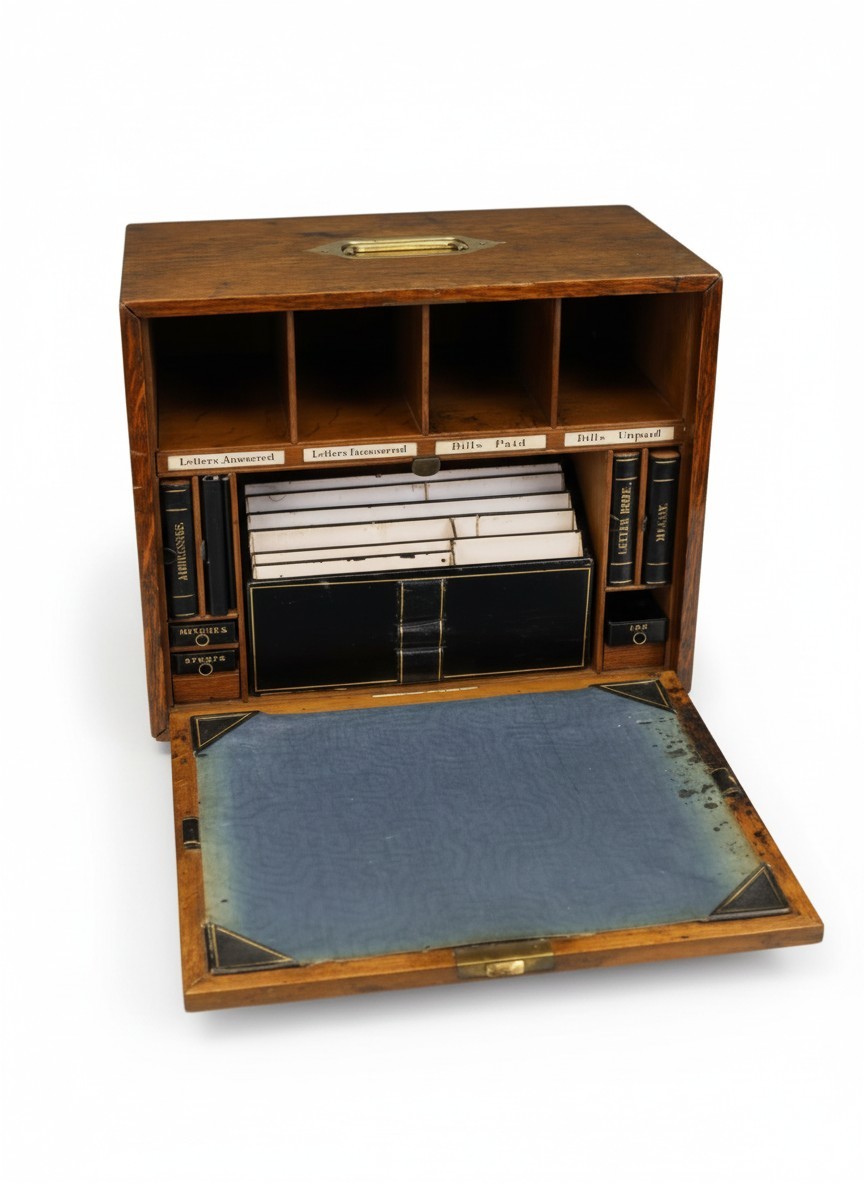
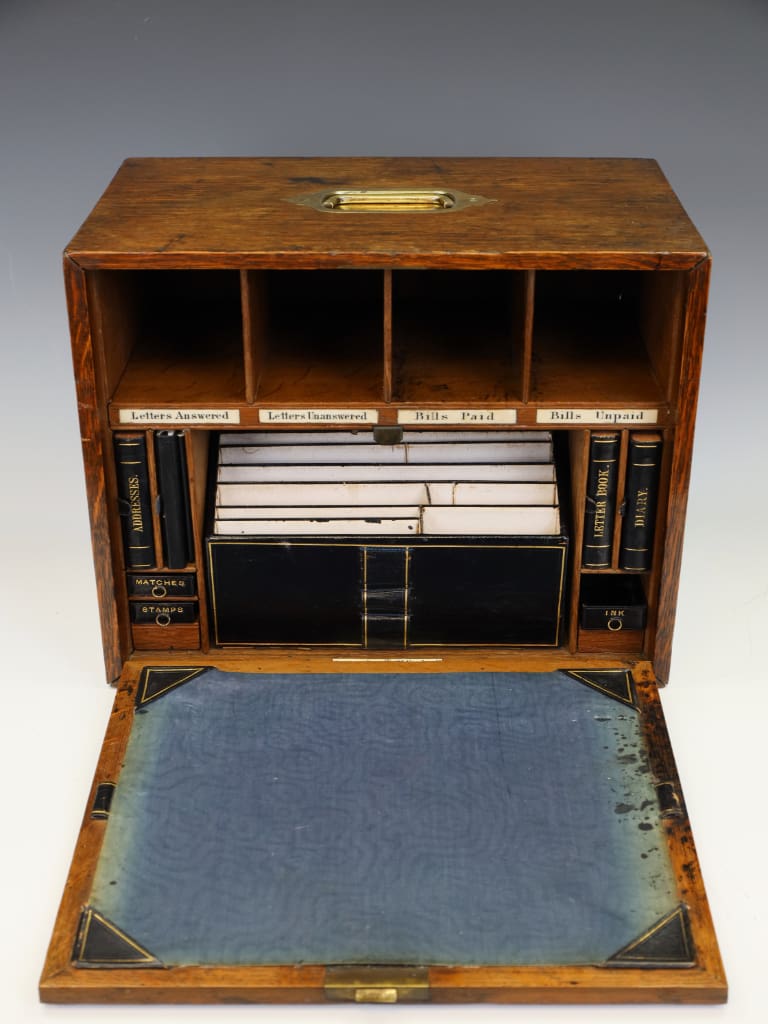
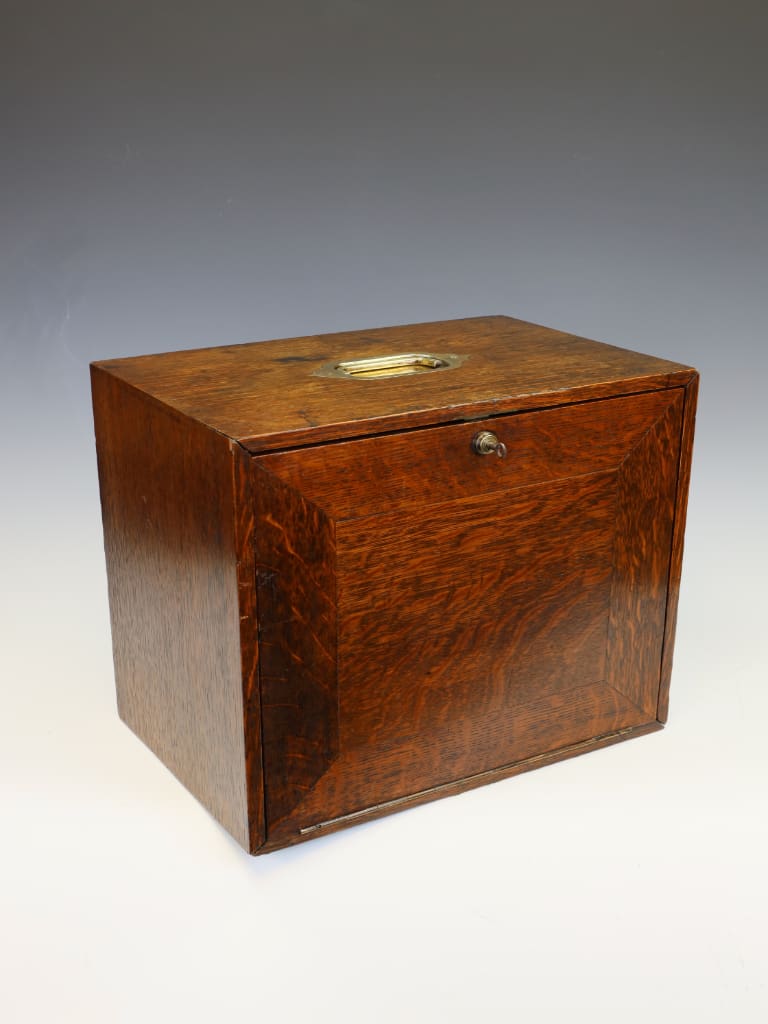
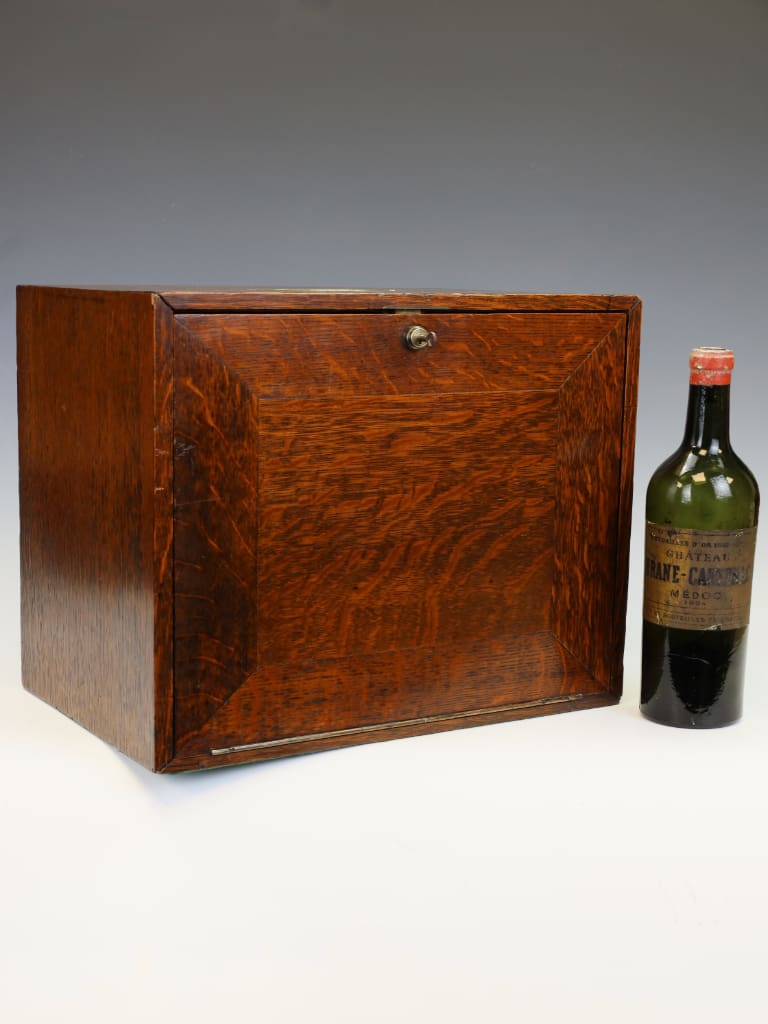
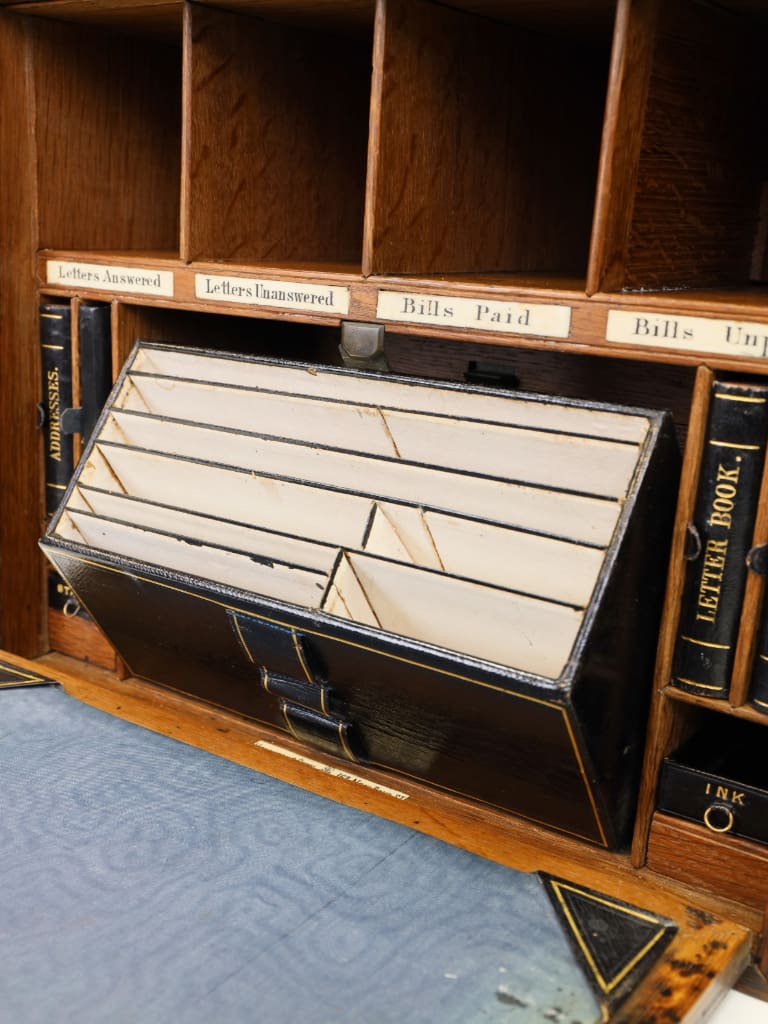
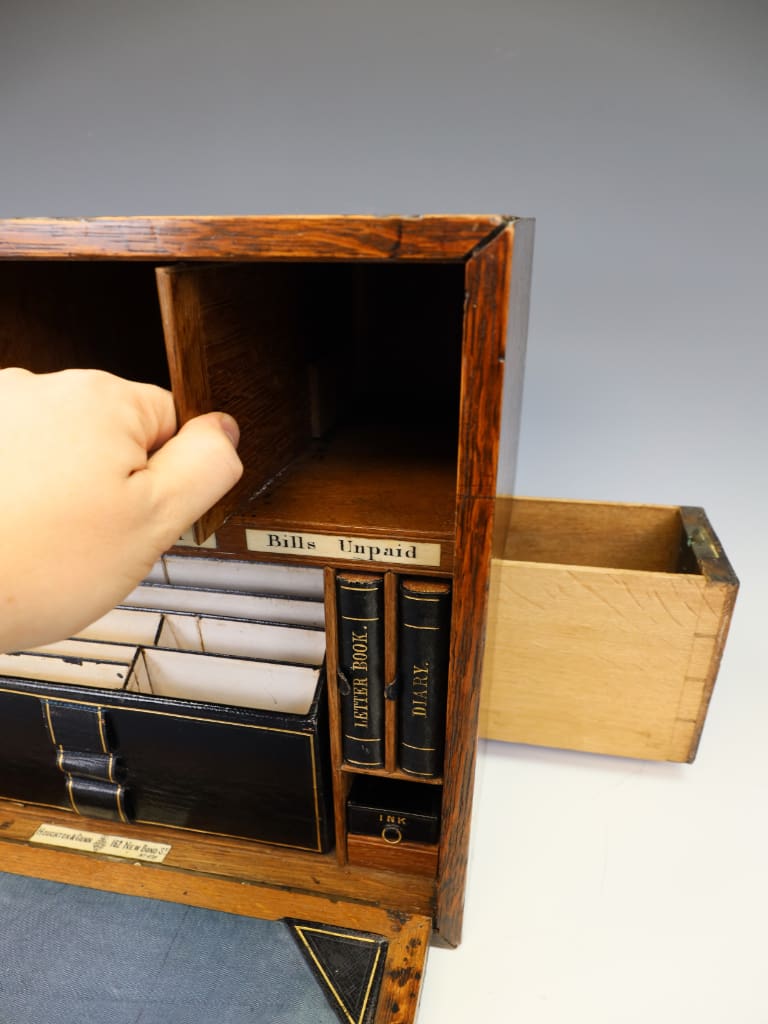
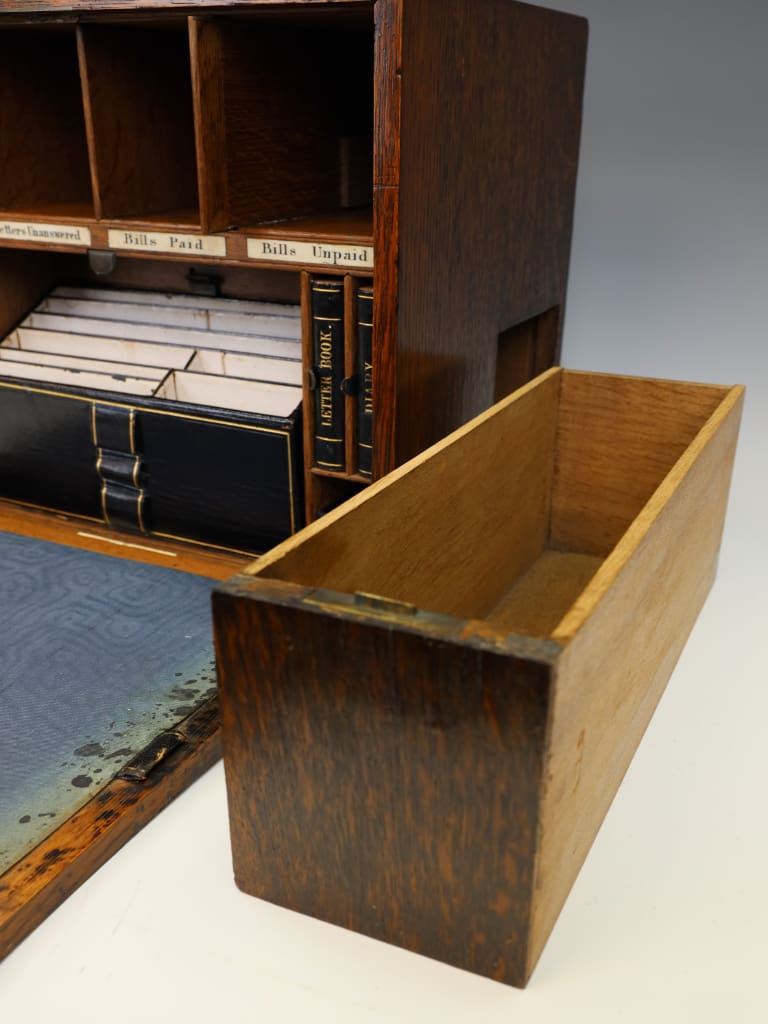
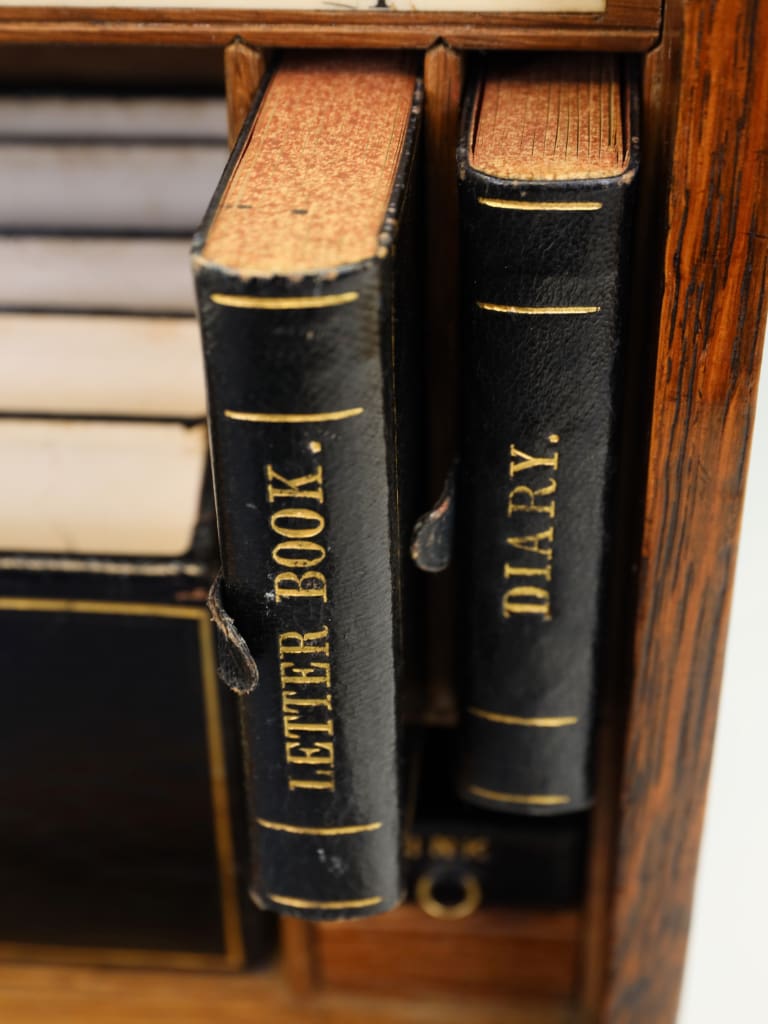
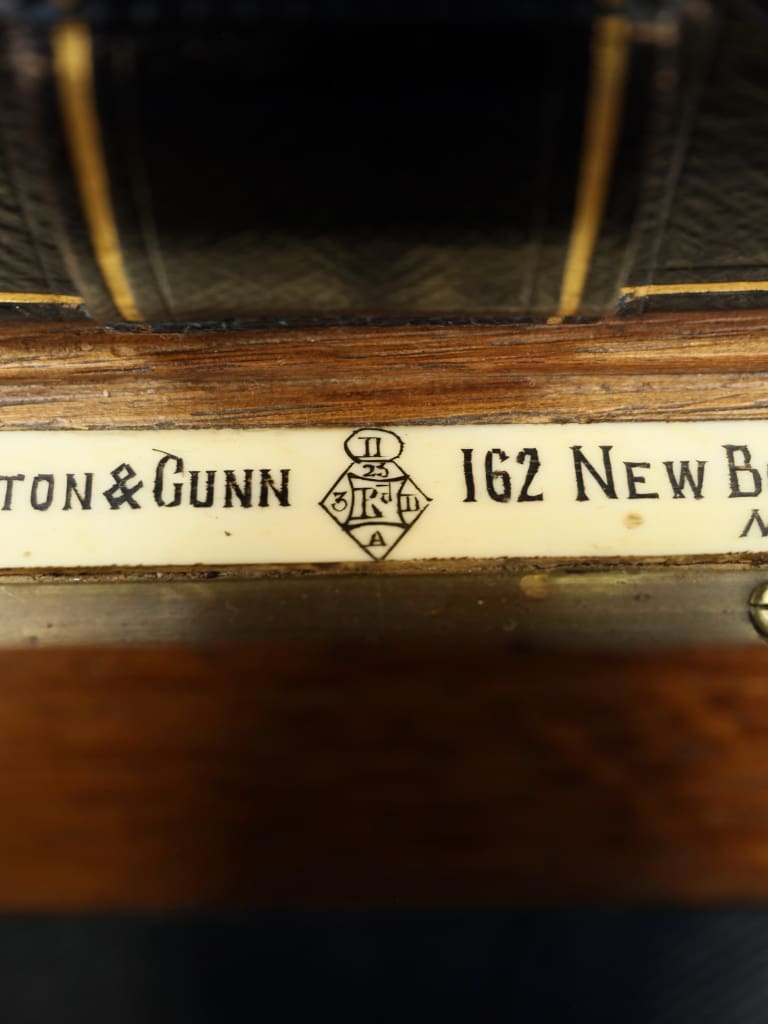
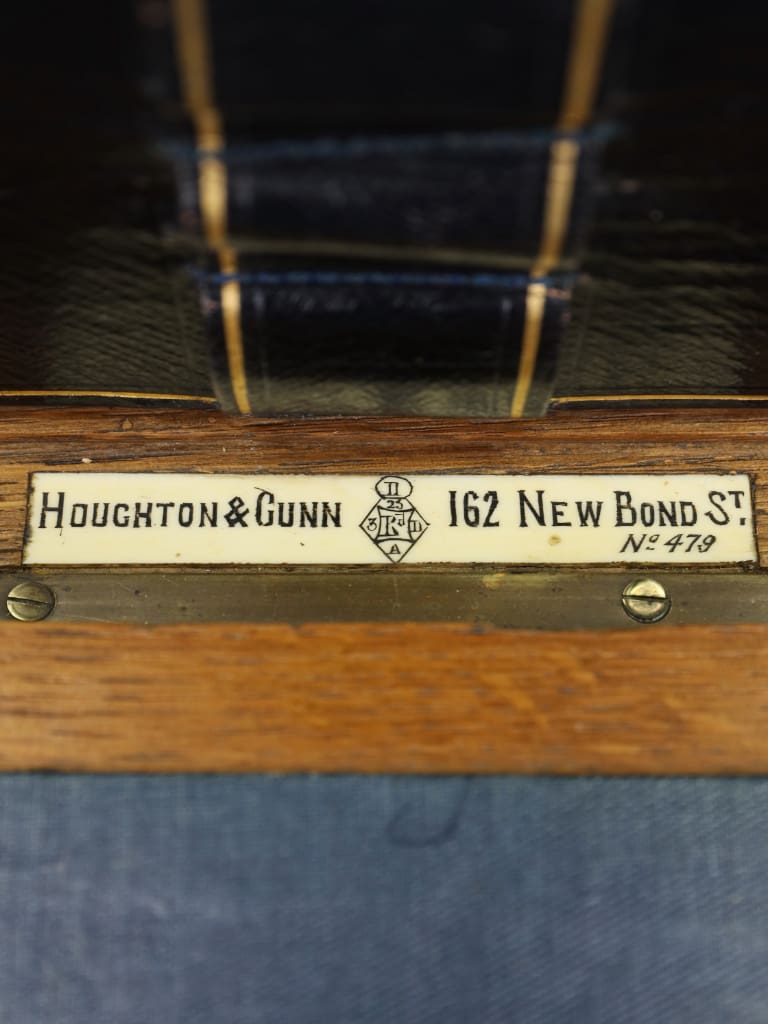
This oak campaign stationery and dispatch chest, by Houghton & Sons, belonged to Maunsell Mark Prendergast, a career officer who served for 32 years in the Indian Army, rising to the honorary rank of Major-General upon retirement. The chest is accompanied by a personal diary whose contents allow the object to be firmly linked to Prendergast and place it within both his military and domestic life.
Born 13 December 1836 in Madras, India, Prendergast was the son of Guy Lushington Prendergast of the Madras Civil Service and Catherine Jane Annesley. He came from a prominent Anglo-Indian family with deep ties to colonial administration and military service. His brothers included Colonel Reynolds Stephen James Prendergast, commanding the 2nd Madras Light Cavalry, and Major-General Guy Annesley Prendergast, both of whom also served with distinction.
On 4 April 1861, Prendergast married Eliza Ann Aubert in Benares, daughter of the late Colonel Jeremiah Aubert. They had three children, two of whom survived to adulthood. His daughter Catherine May (“Maysie”) later married Charles Prideaux Triscott, an officer of the Royal Artillery who served in the Anglo-Afghan War—a figure referred to affectionately as “Charlie” in the diary preserved within the chest.
Prendergast died on 25 April 1907 at his home, “Avington,” London Road, Guildford, Surrey, and was buried alongside his wife, who had been interred less than a month earlier.
Prendergast joined the 4th Bengal Cavalry as a Cornet in January 1854, embarking on a career that would see him involved in some of the most significant military campaigns of British India.
He served extensively during the Indian Mutiny (1857–1858), including:
Operations against tribes in the Googaira District (Punjab)
Service under Sir James Outram at Alum Bagh during the Siege and Capture of Lucknow
Subsequent operations throughout Oude (Oudh)
Engagements at Bunnee (where he was slightly wounded), Simree, and Nawabgunge
Being twice mentioned in despatches by Sir Hope Grant
He later commanded a squadron of the Multan Cavalry, acted as an Orderly Officer in Oude, and took part in the attack and capture of Fort Mittowlie.
Promotions followed steadily:
Lieutenant – November 1856
Captain – July 1860
Major, Bengal Staff Corps – 4 January 1874
Lieutenant-Colonel – 4 January 1880
Colonel – October 1881
Between 1878 and 1880, Prendergast commanded the 4th Bengal Cavalry during the Second Anglo-Afghan War. On retirement, he was granted the honorary rank of Major-General on 31 December 1887.
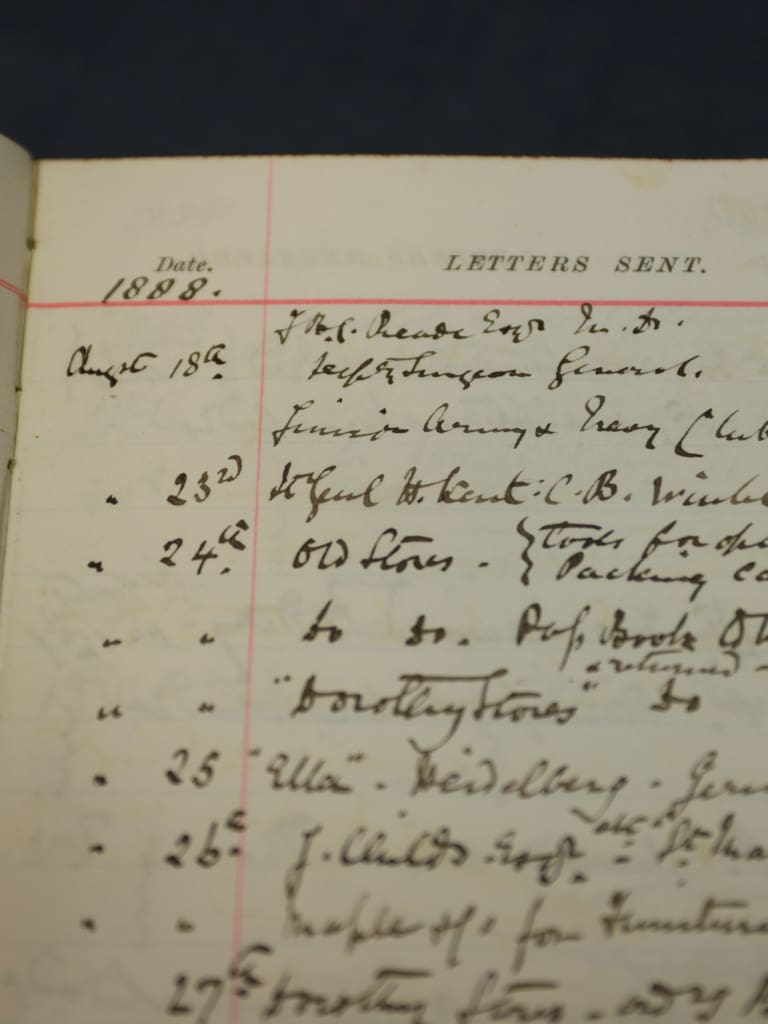
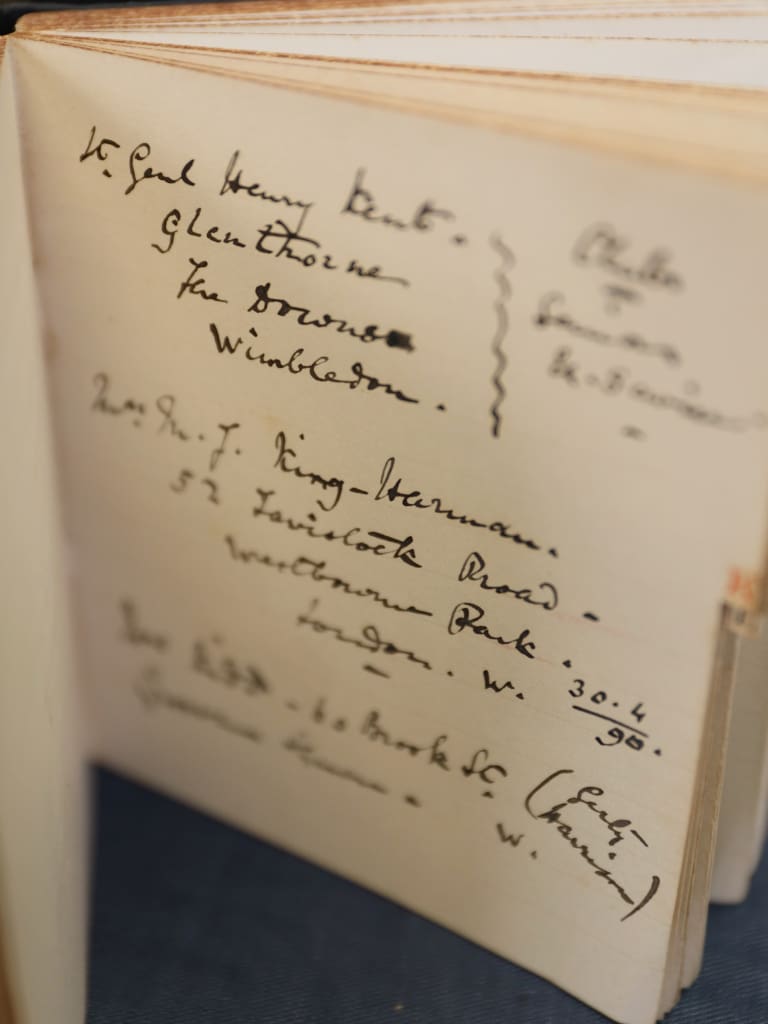
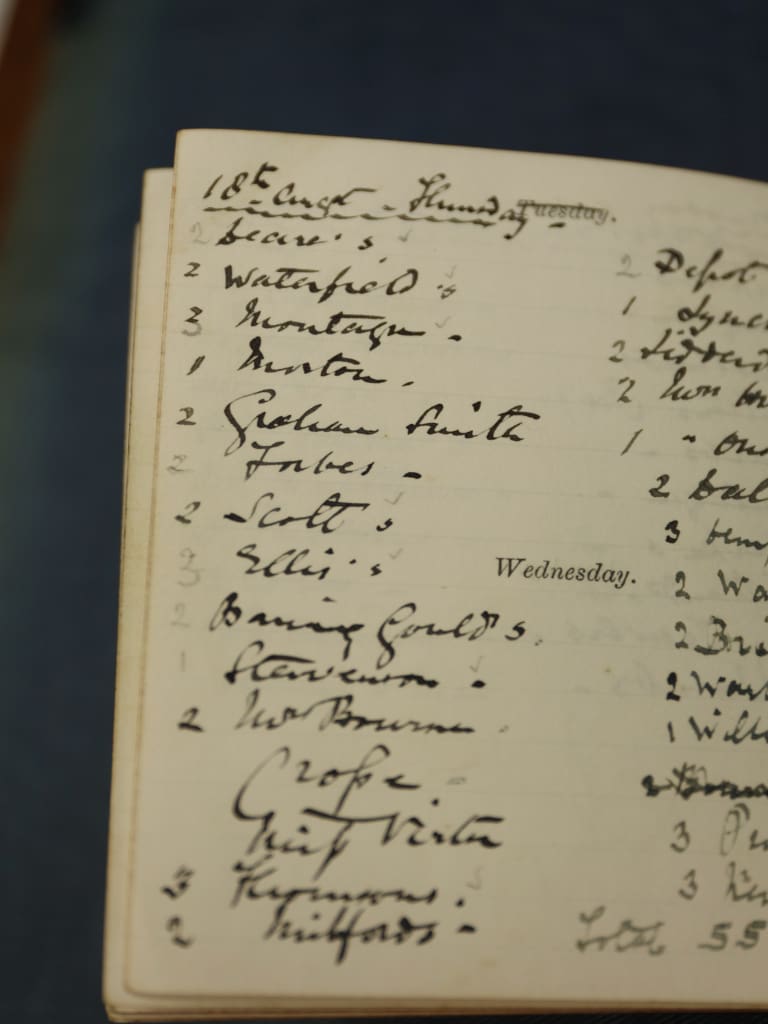
The chest contains a diary beginning shortly after Prendergast’s retirement, offering rare insight into the private life of a senior colonial officer returned to England.
Key entries include:
13 September 1888 – First diary entry, newly retired and back in the UK
31 October 1888 – Move to “St. Margaret’s,” Guildford, Surrey (later confirmed via the 1891 Census)
December 1888–1889 – Detailed notes on household staff, visitors, and family life
Multiple garden parties, including one in July 1890 with 148 guests invited and 82 attending
Frequent mentions of his daughter Maysie, granddaughter Dorothy, and son-in-law “Charlie”
17 January 1904 – Final diary entry, written in pencil, three years before his death
These entries firmly anchor the chest not only to Prendergast’s military career but also to his later life as a retired officer of means and social standing in Surrey.
This campaign chest is a rare, well-documented survival directly associated with a named officer whose career spanned the Indian Mutiny and the Anglo-Afghan War. The presence of the diary transforms the chest from a utilitarian object into a deeply personal artefact, bridging the worlds of imperial warfare and Victorian domestic life. Together, they offer a tangible connection to the lived experience of a senior British officer in both India and late-19th-century England.
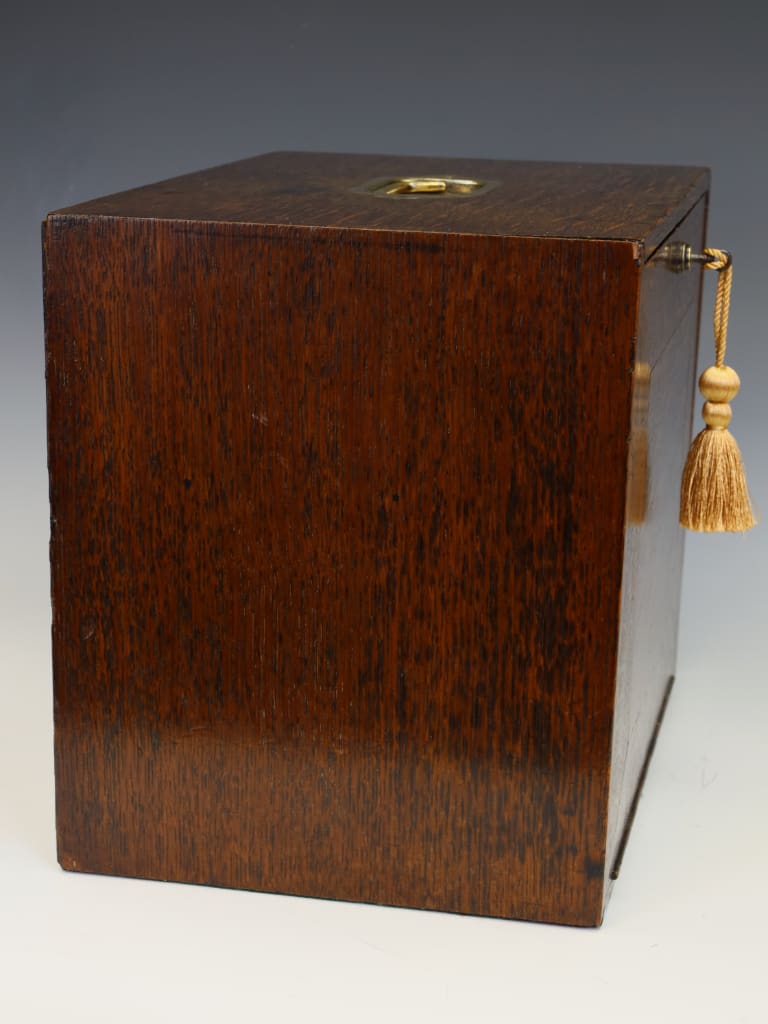
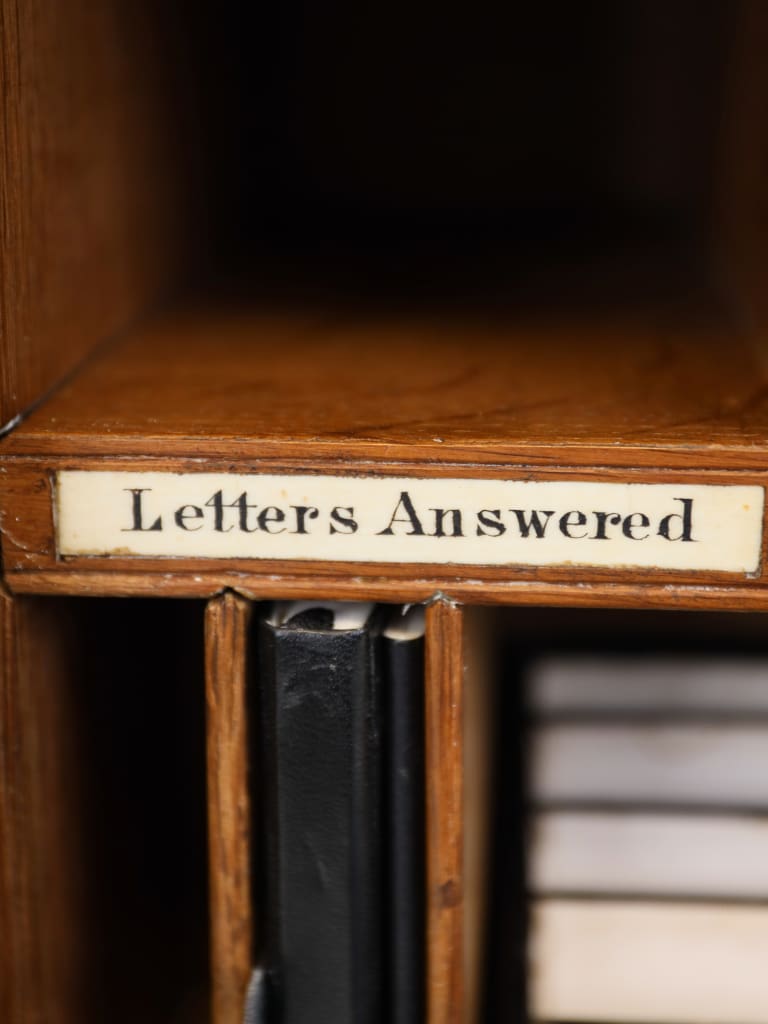
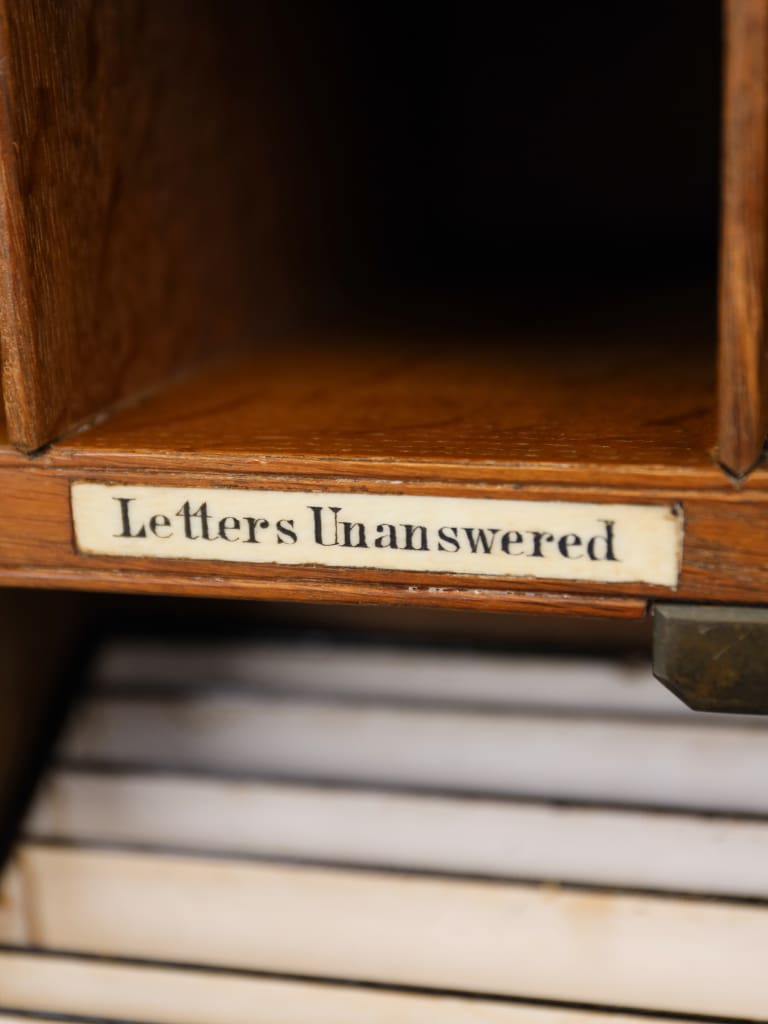
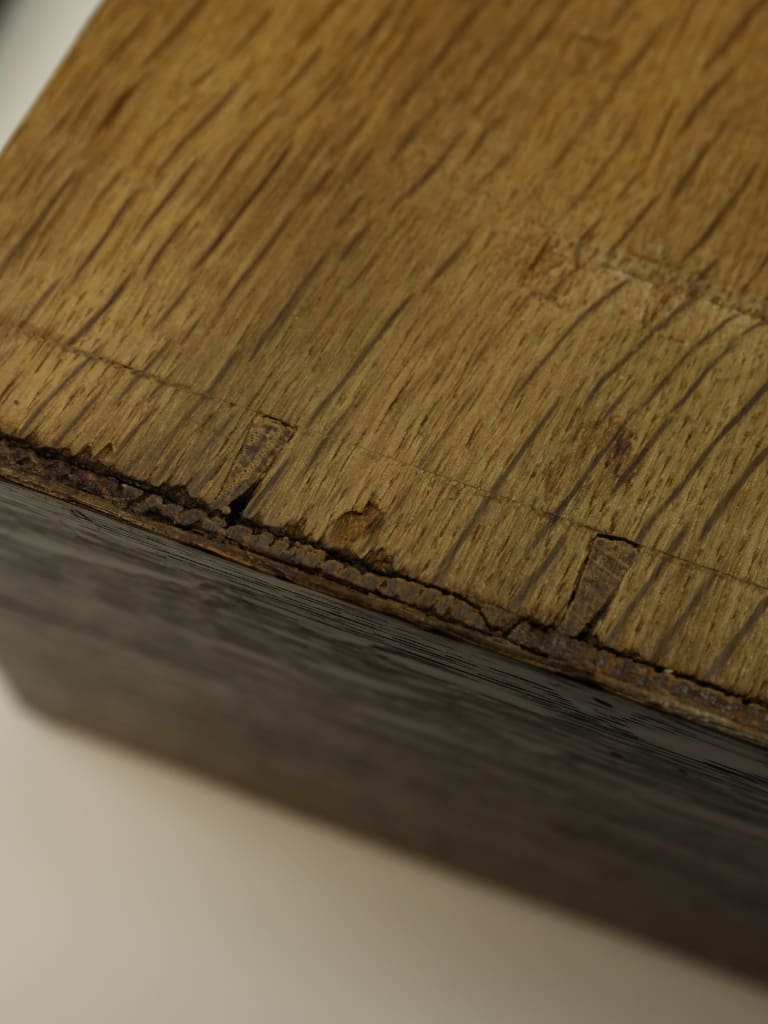
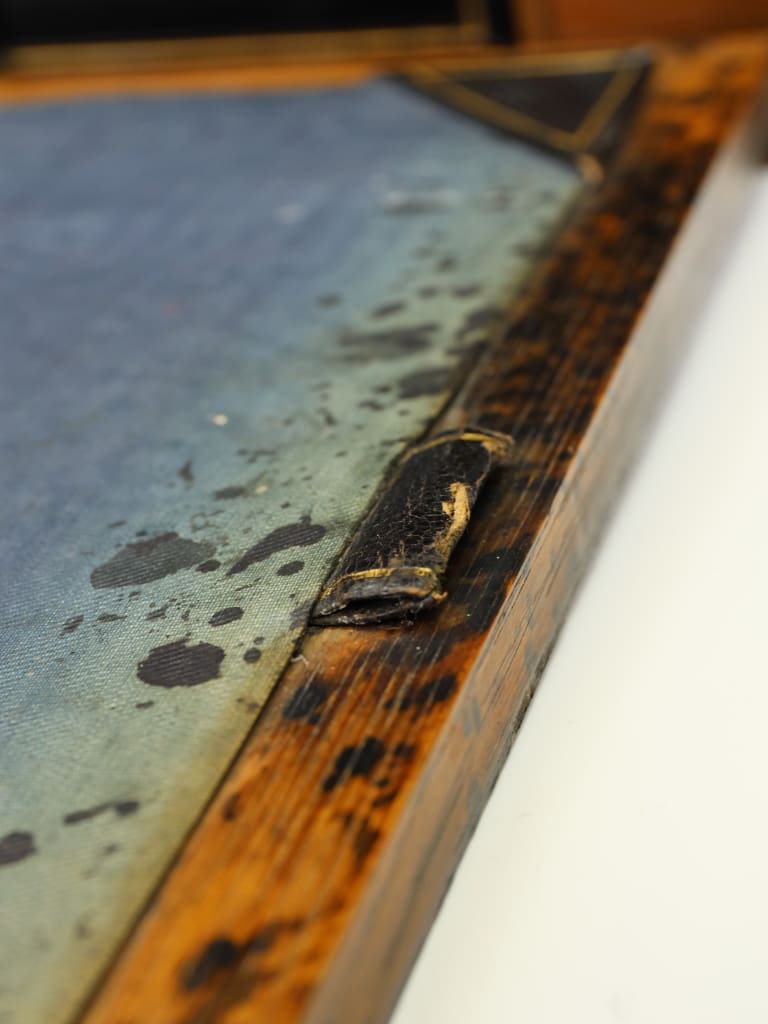
The oak box is in very good condition with a rich, deep honey-toned patina. No significant splits or warping.
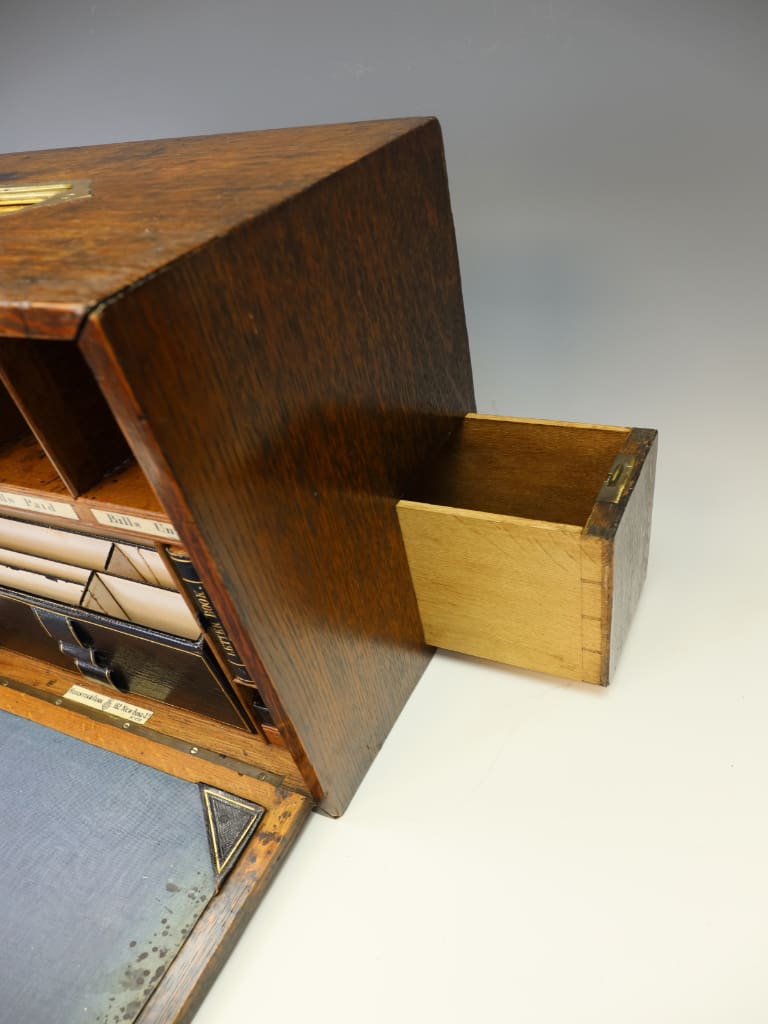
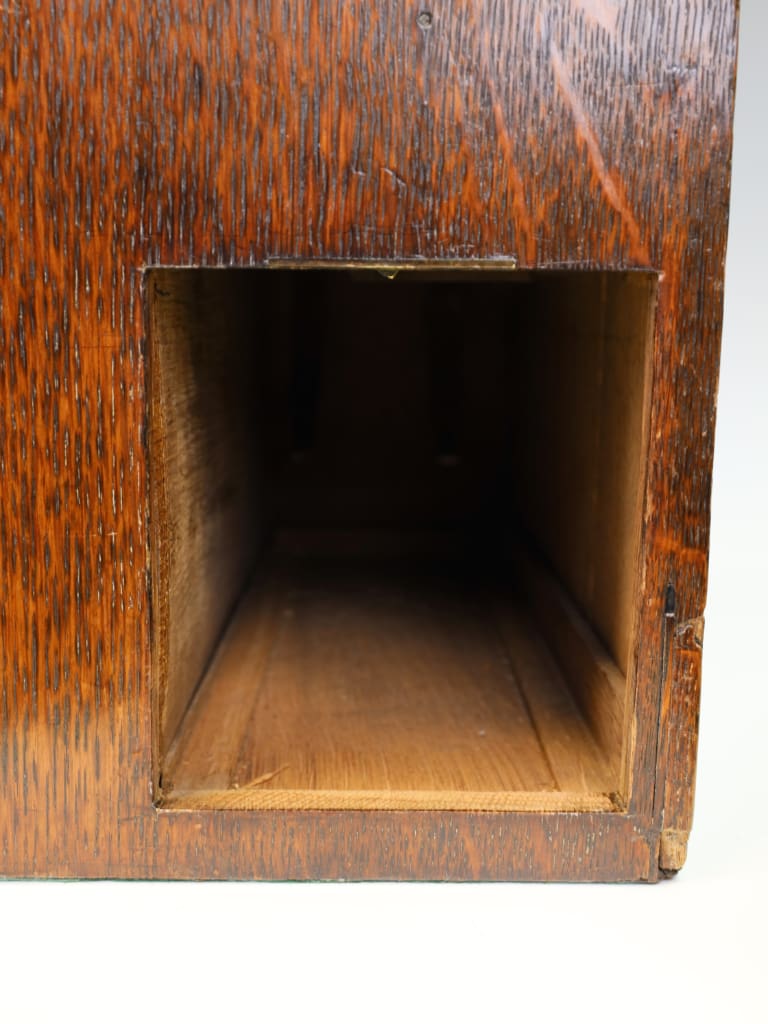
The secret drawer trigger is fully operational and remarkably smooth.
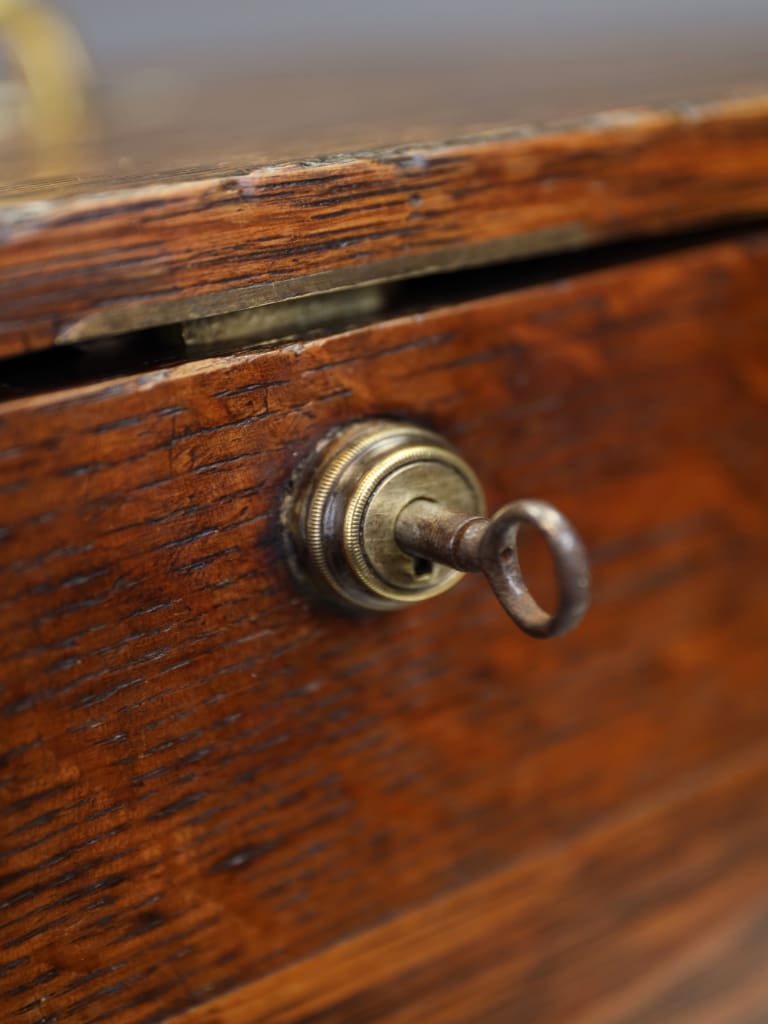
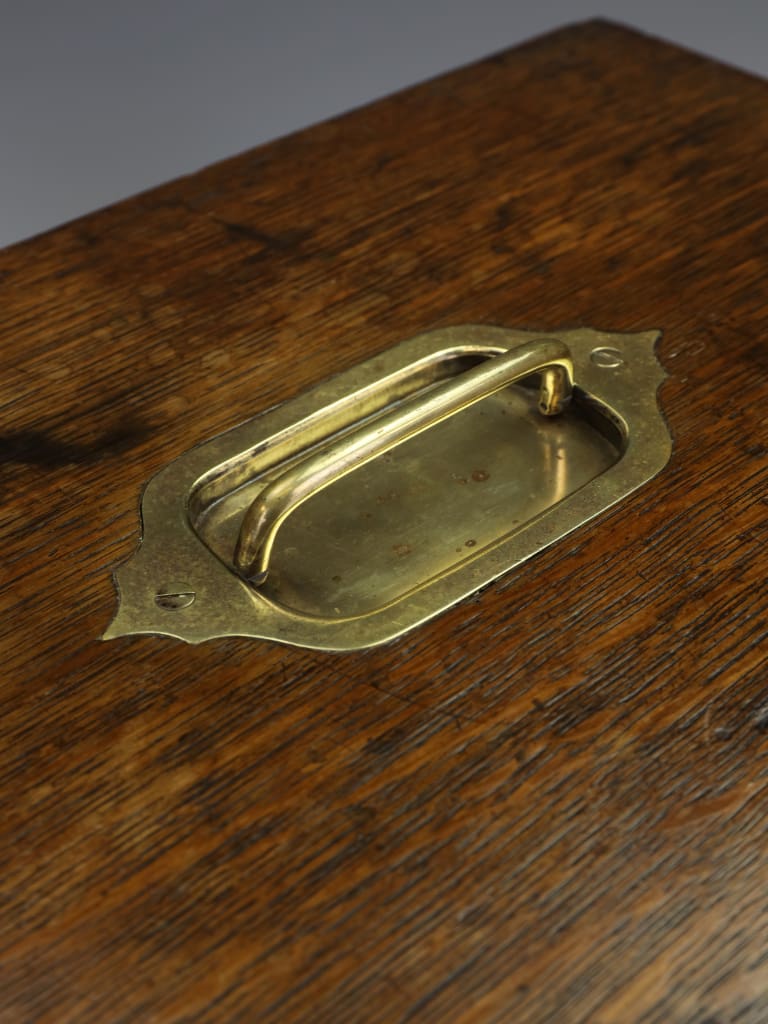
Original brass campaign handle and hinges are securely seated. Original key is present and operates the lock perfectly.
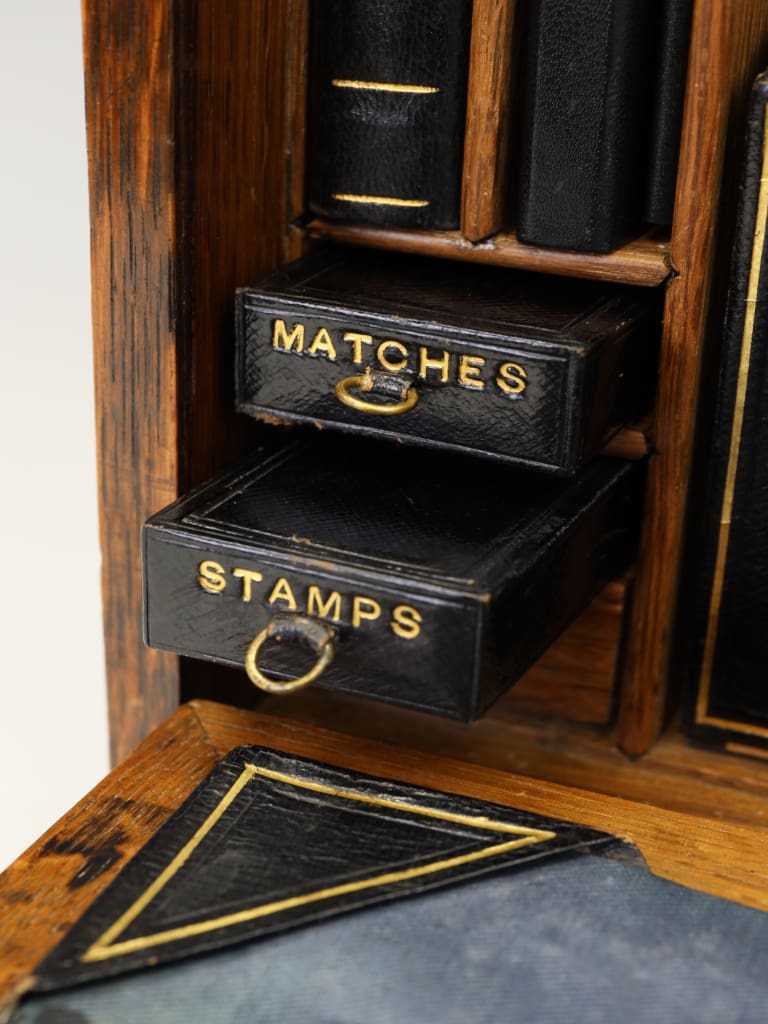
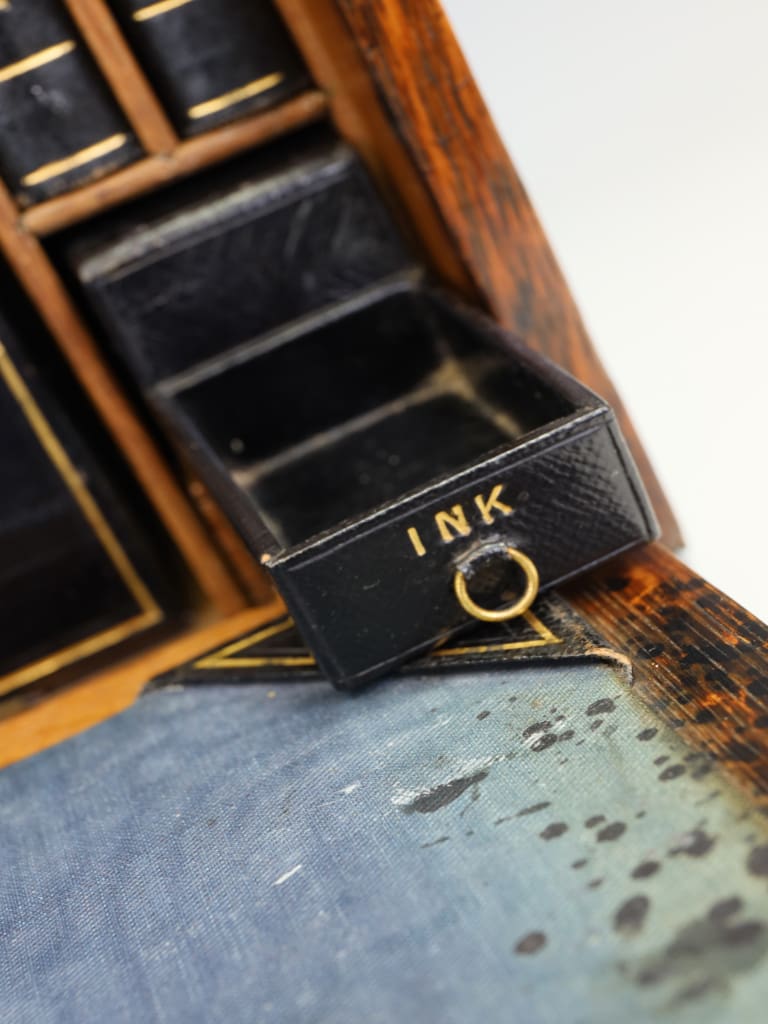
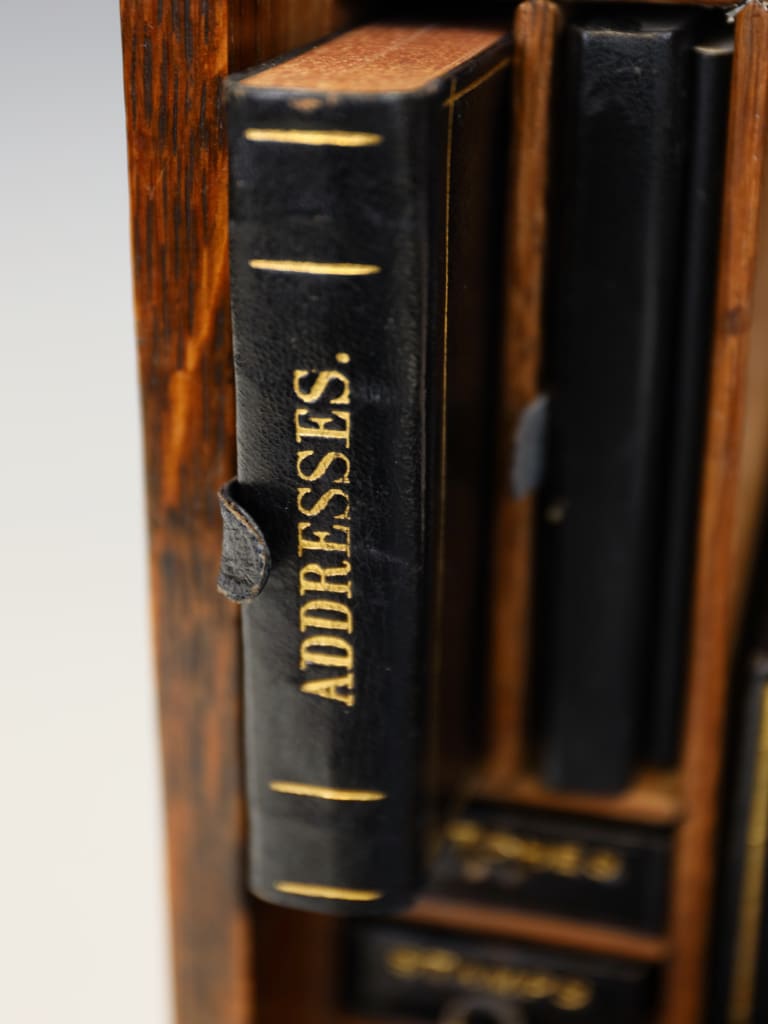
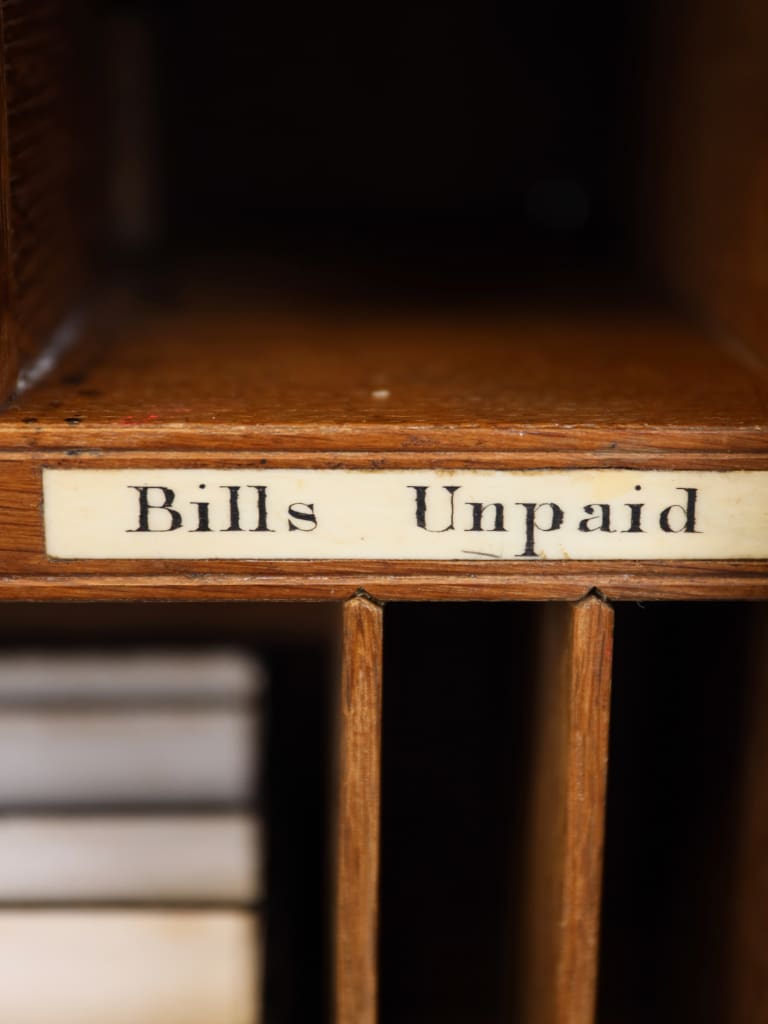
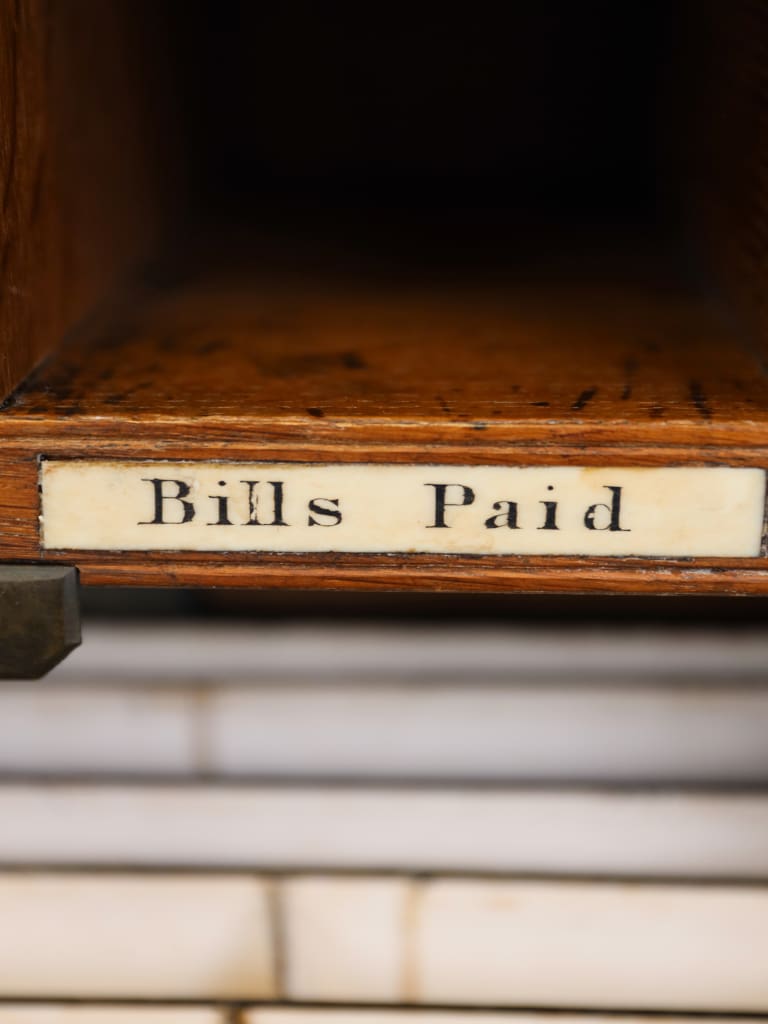
The paper ephemera shows expected age-toning. The bindings of the books show minor historical wear but remain structurally sound and entirely legible. One original book has been replaced with a blank.
Height: 34 cm / 13.5 inch
Width: 38 cm / 15 inch
Depth: 26 cm / 10 inch
Weight: 8.9 k.g. / 19.6 lbs
All our collections have been through our workshop and where possible, we always try to maintain the original finish preserving the patina and colour, some items are sympathetically restored and this is done by our own skilled craftsmen using only traditional methods