
£600.00



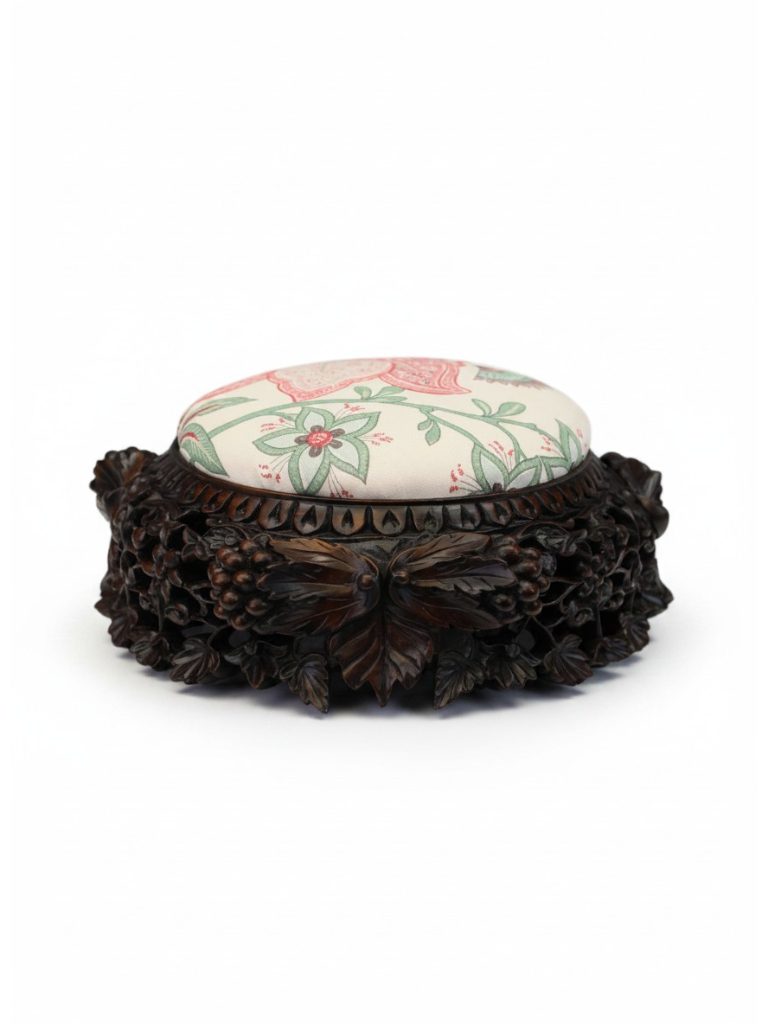
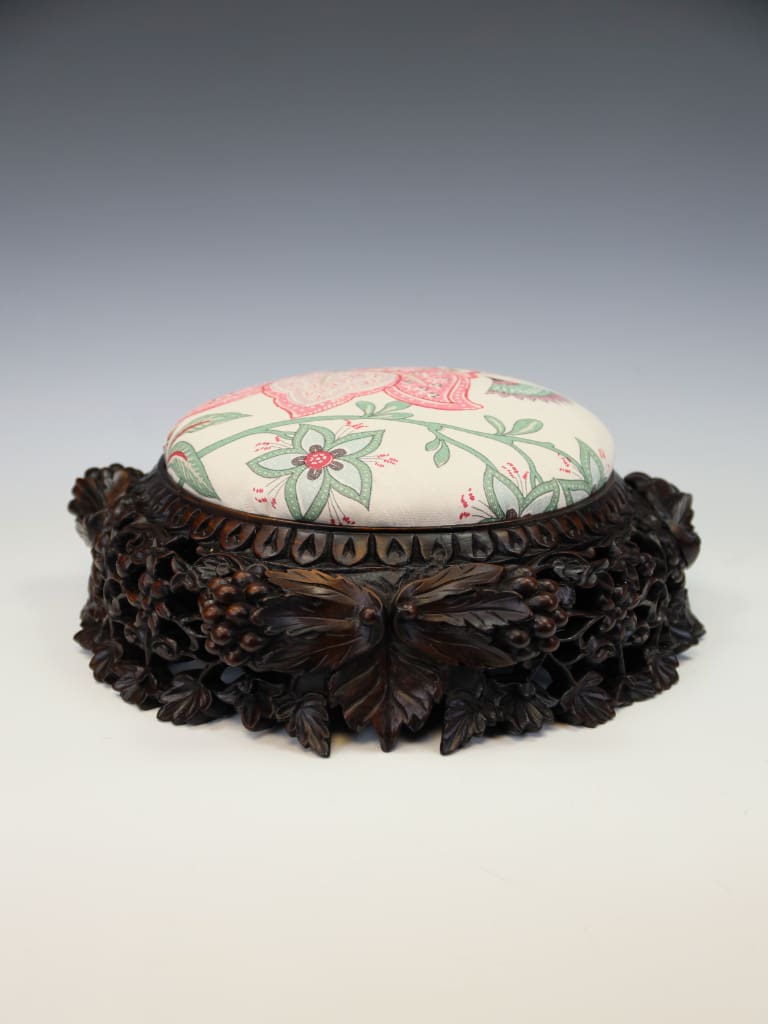
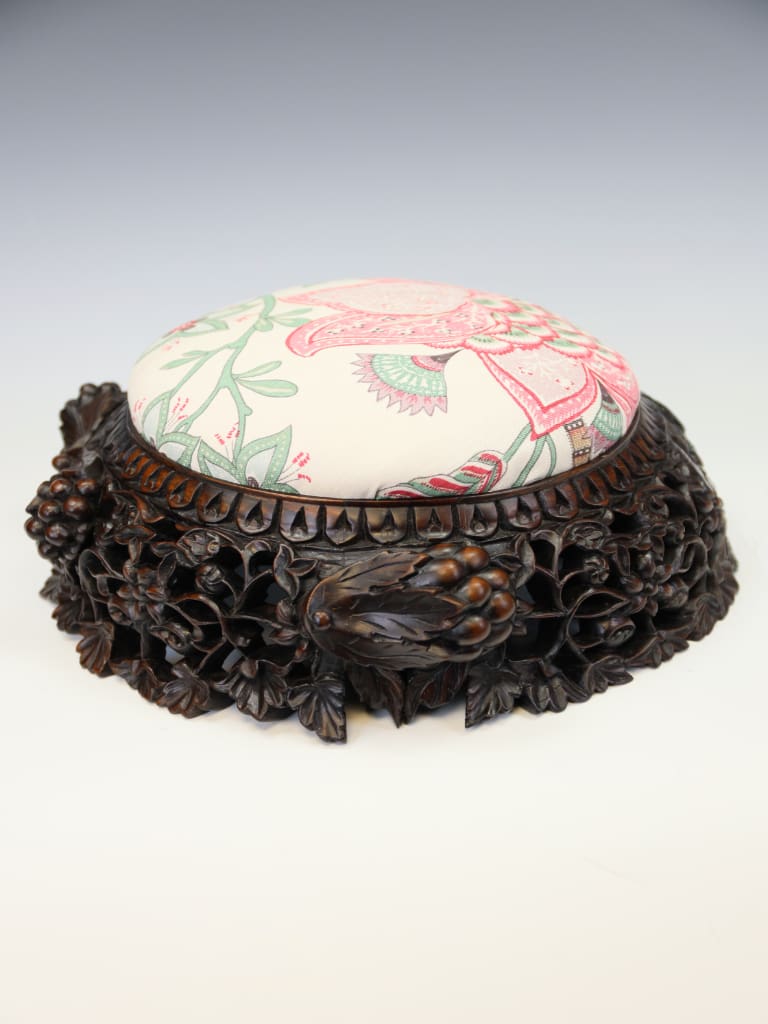
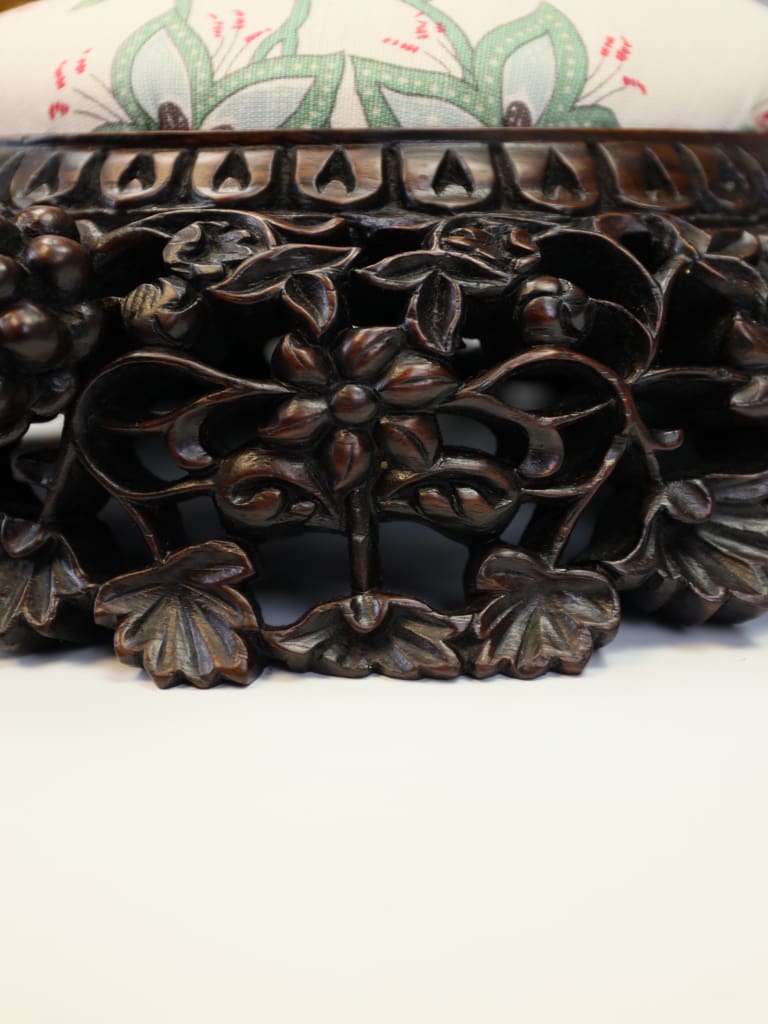
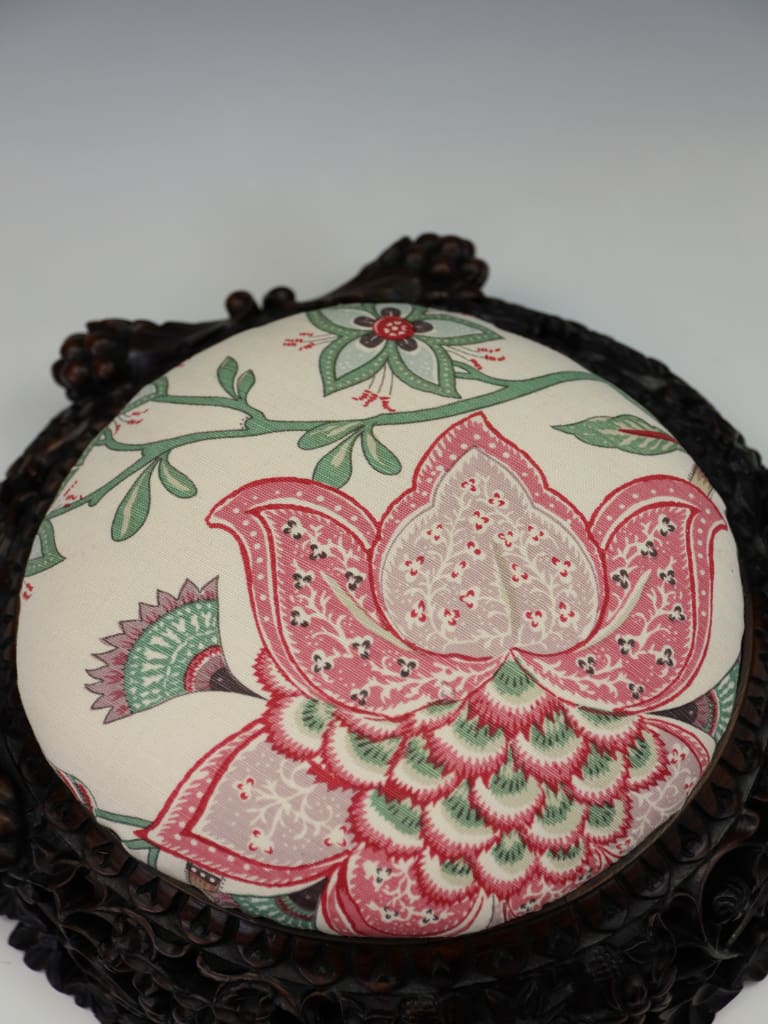
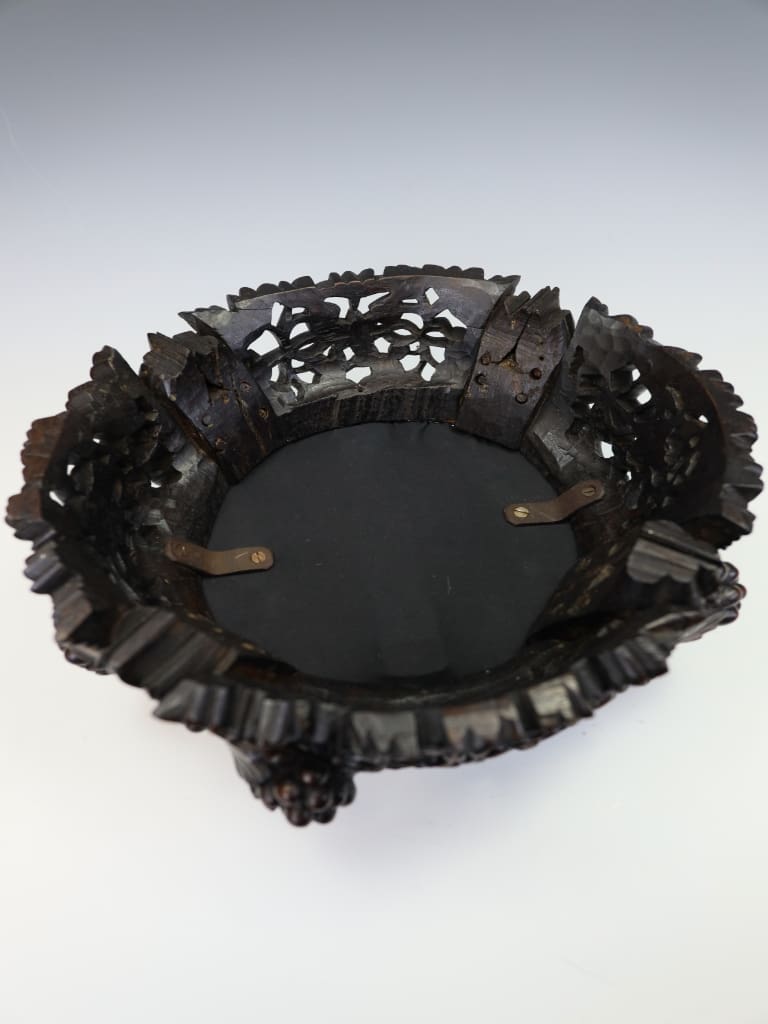
This is an extraordinary example of High Victorian Naturalism, a period where the boundaries between furniture and sculpture became beautifully blurred. Unlike standard stools of the era that rely on turned legs for support, this piece features a continuous, architectural apron that serves as a 360-degree canvas for a master woodcarver.
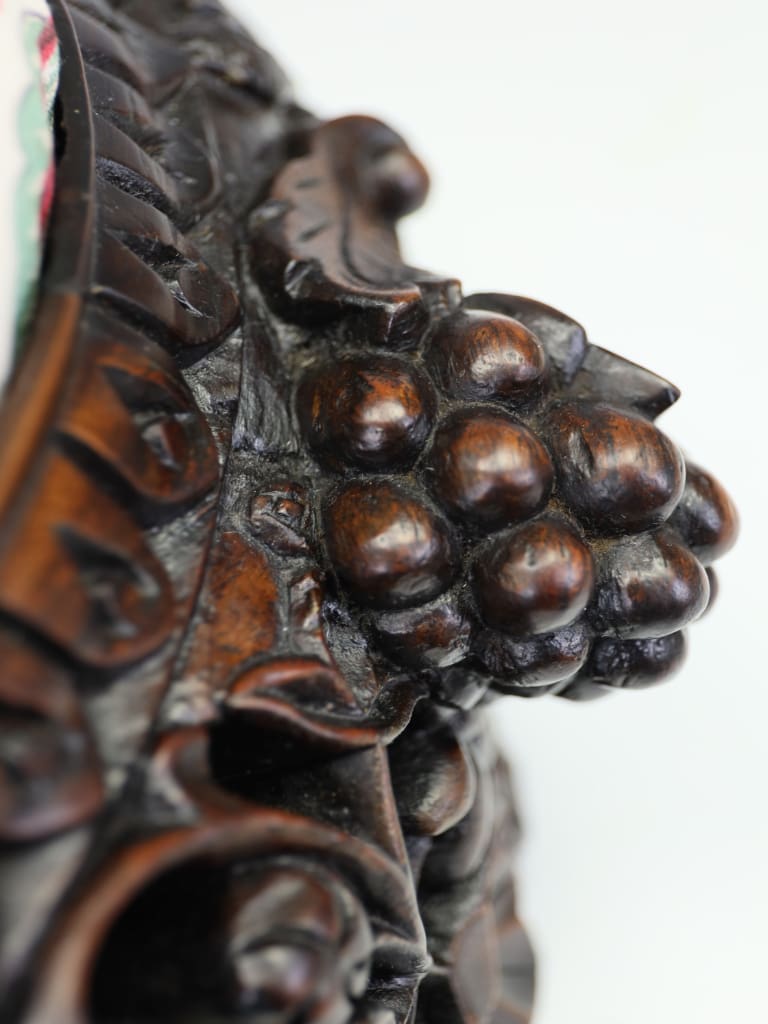
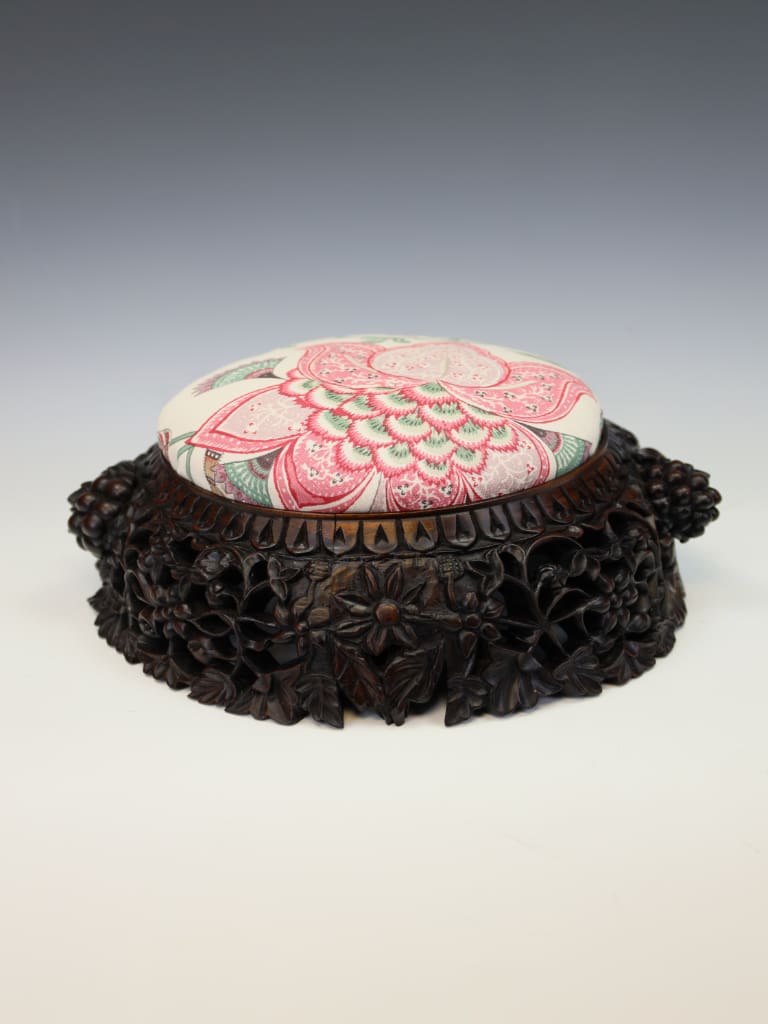
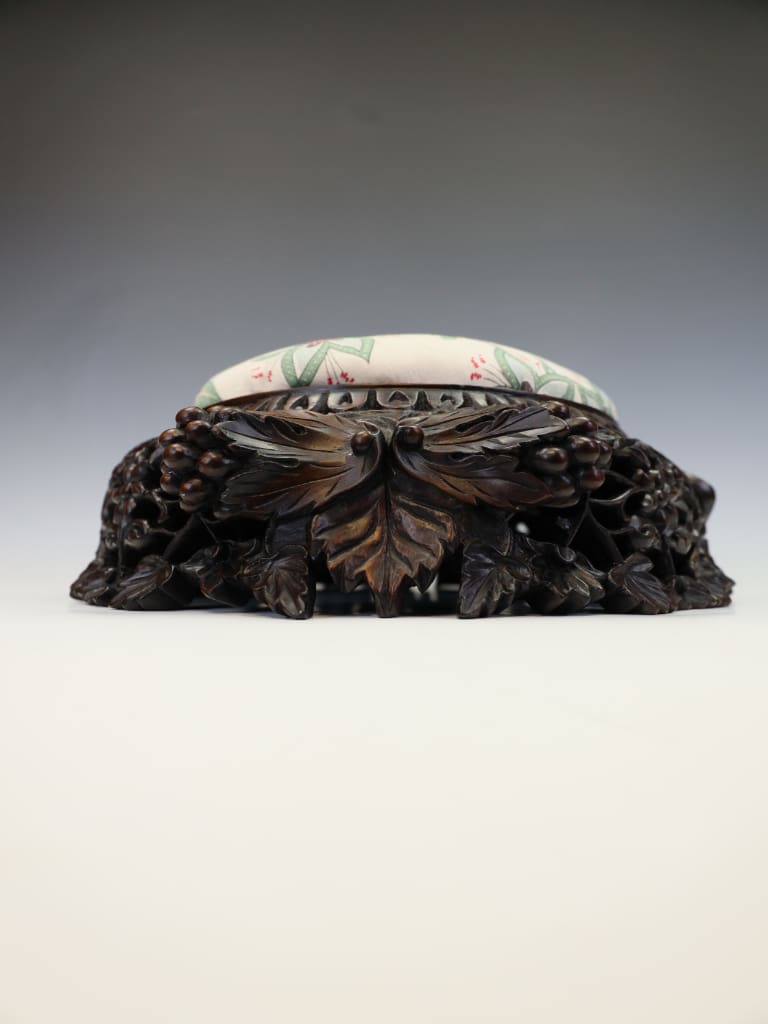
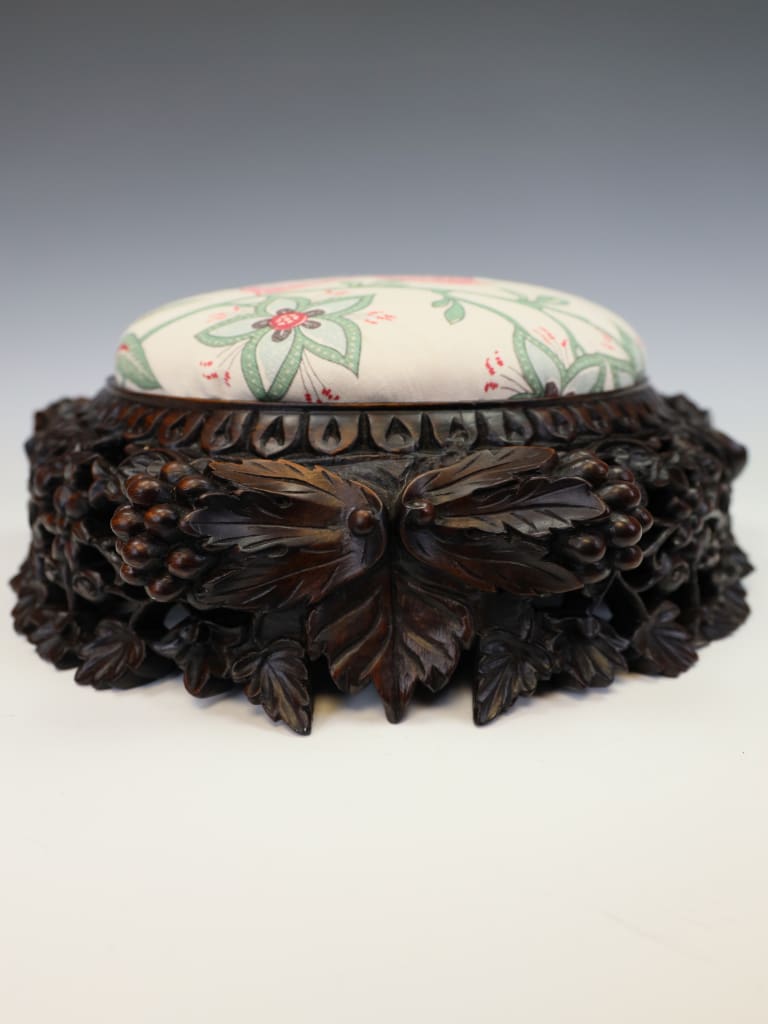
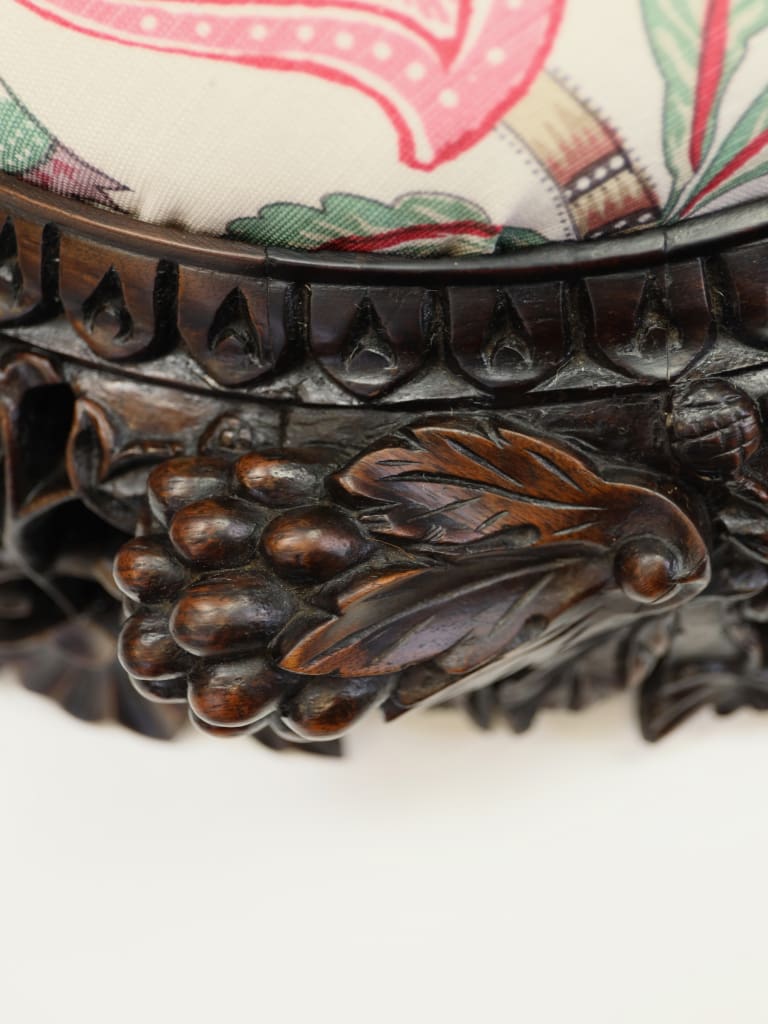
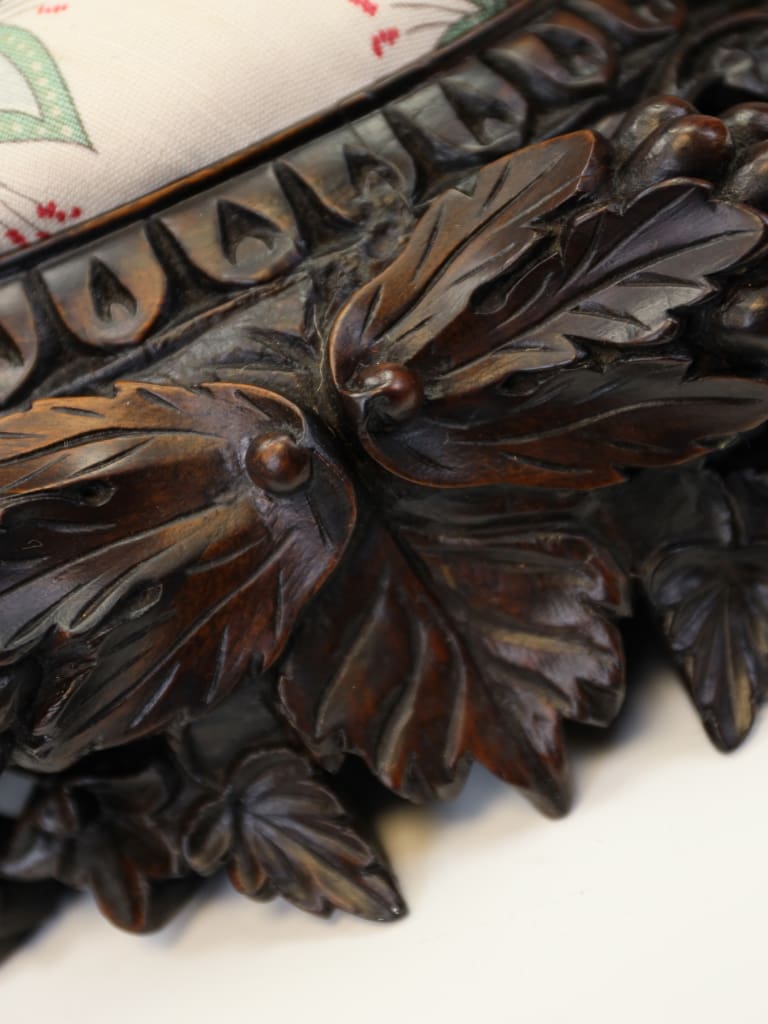
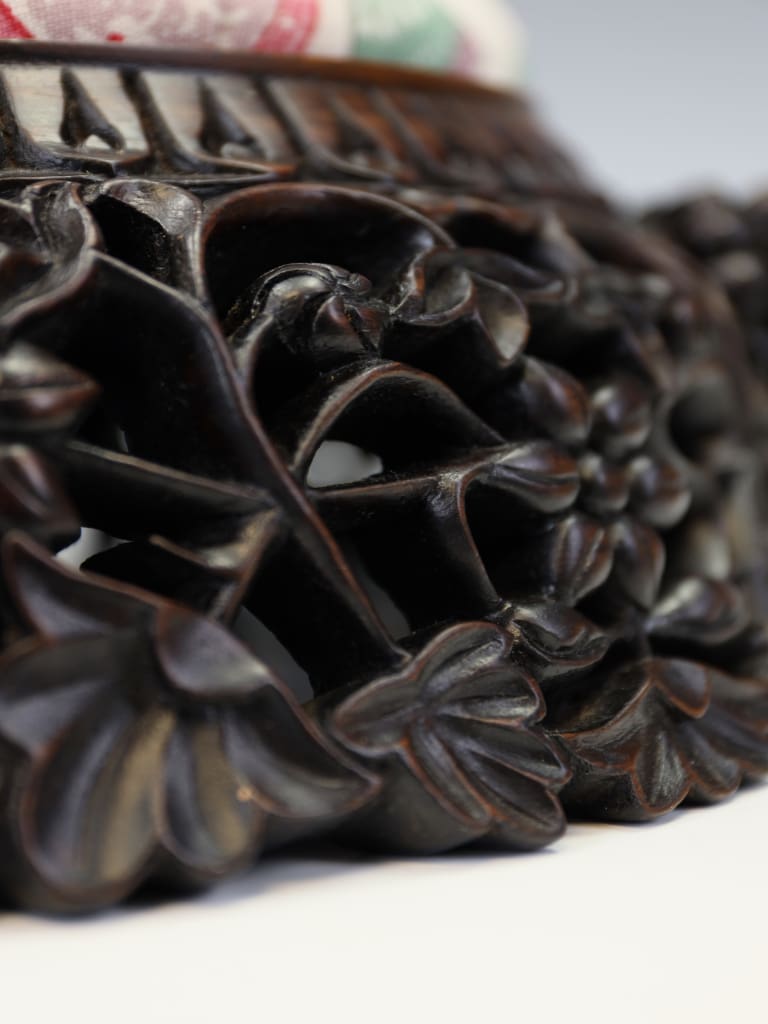
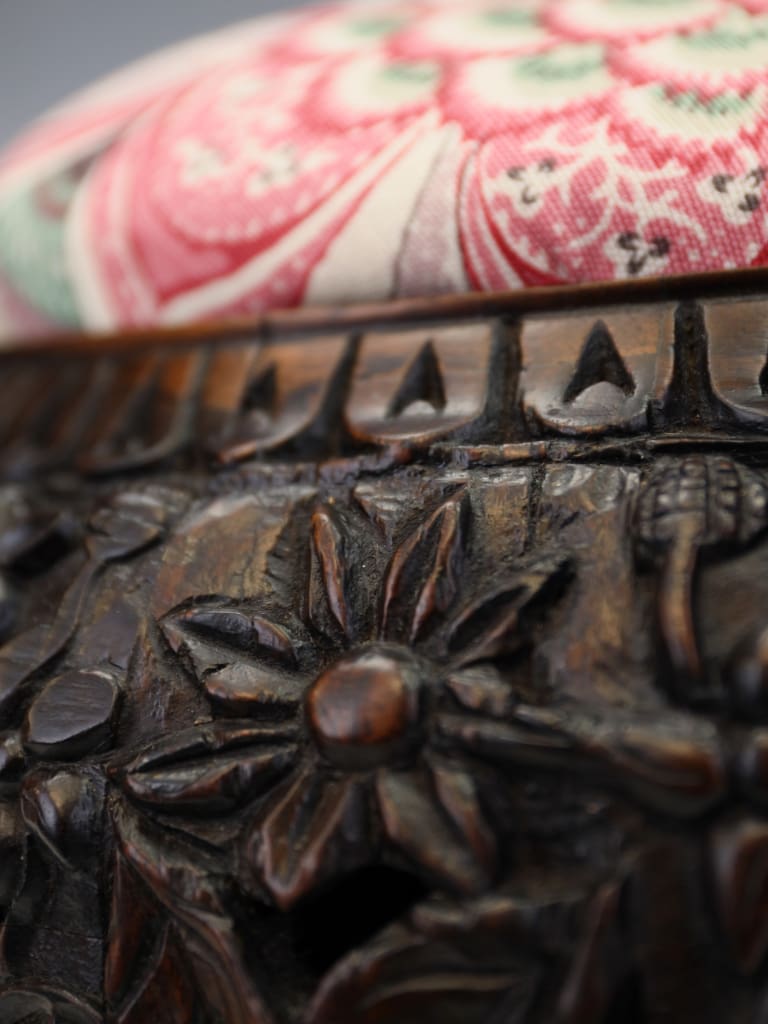
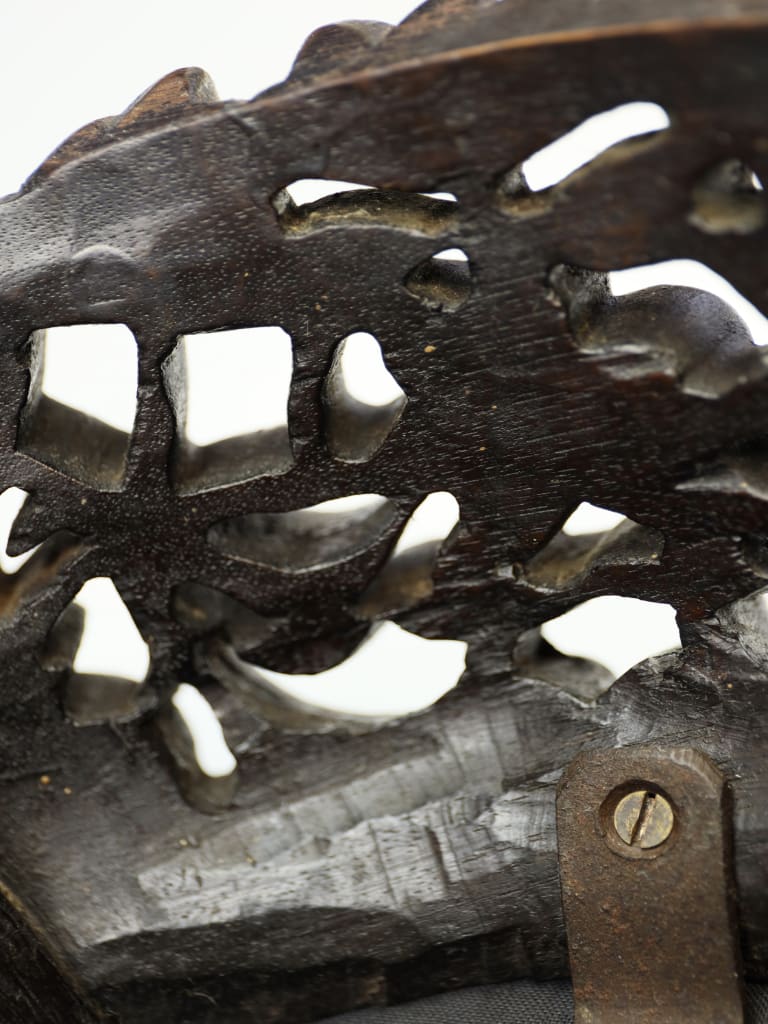
The carving is executed in high relief, featuring a succulent "Harvest of the Empire" motif. One can trace the organic path of winding grapevines, heavy clusters of fruit, and delicate serrated leaves that appear to grow directly out of the timber. The "undercutting"—the technical term for carving behind the motif to create a free-floating effect, is of a quality typically reserved for exhibition pieces shown at the Crystal Palace.
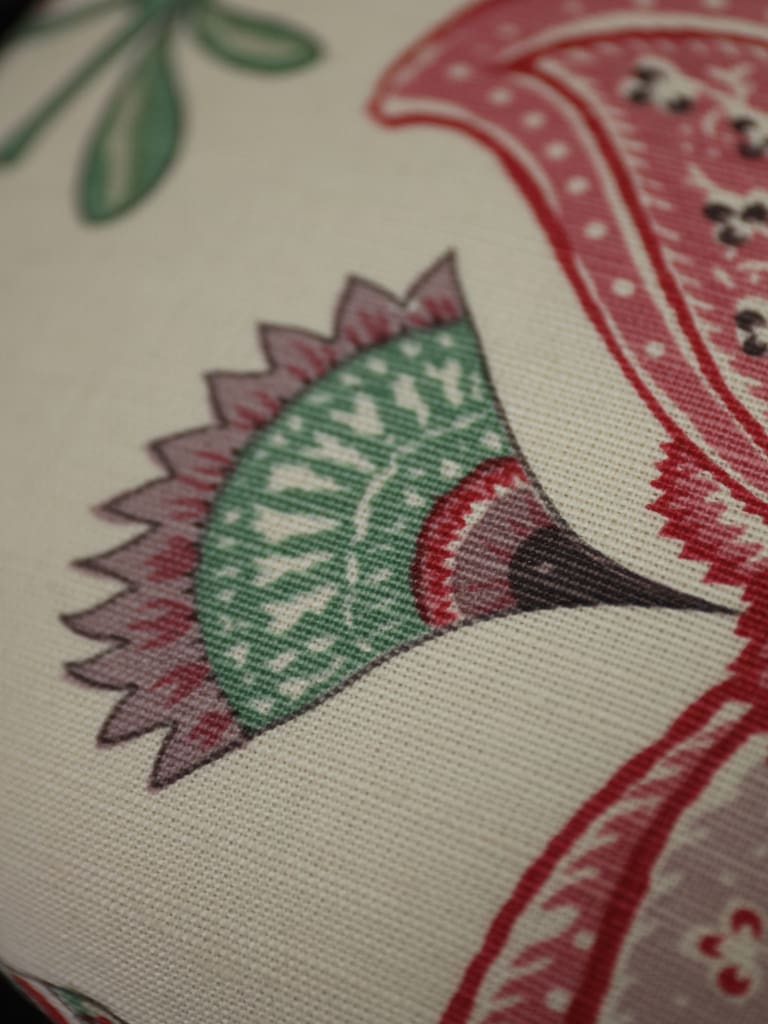
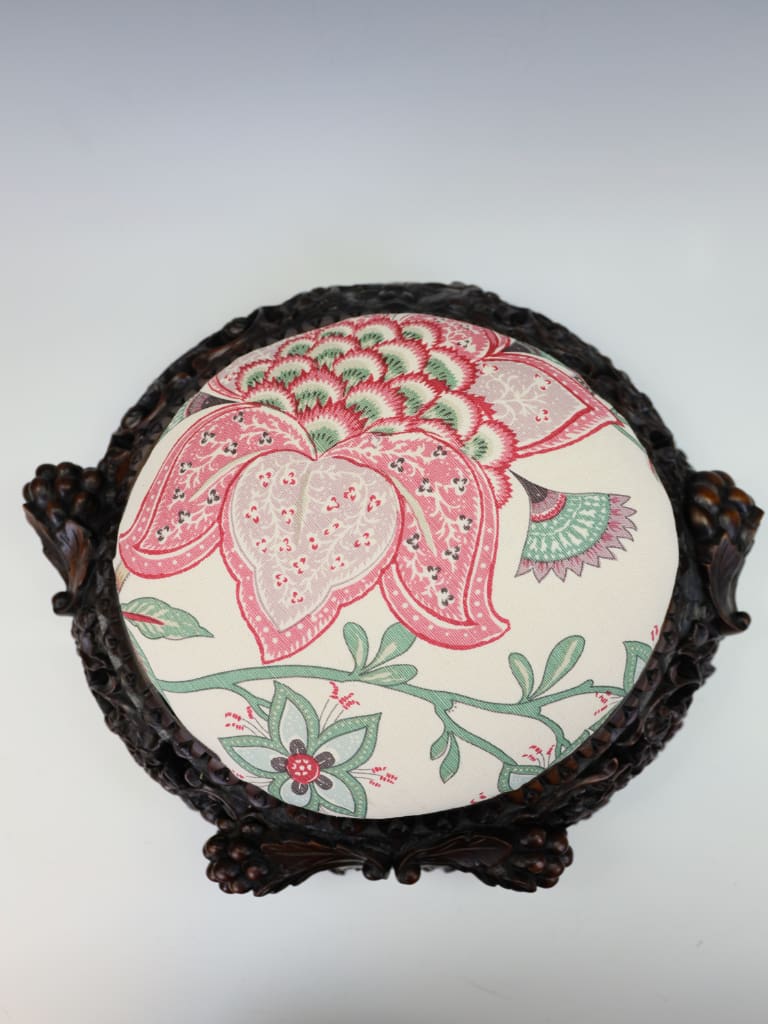
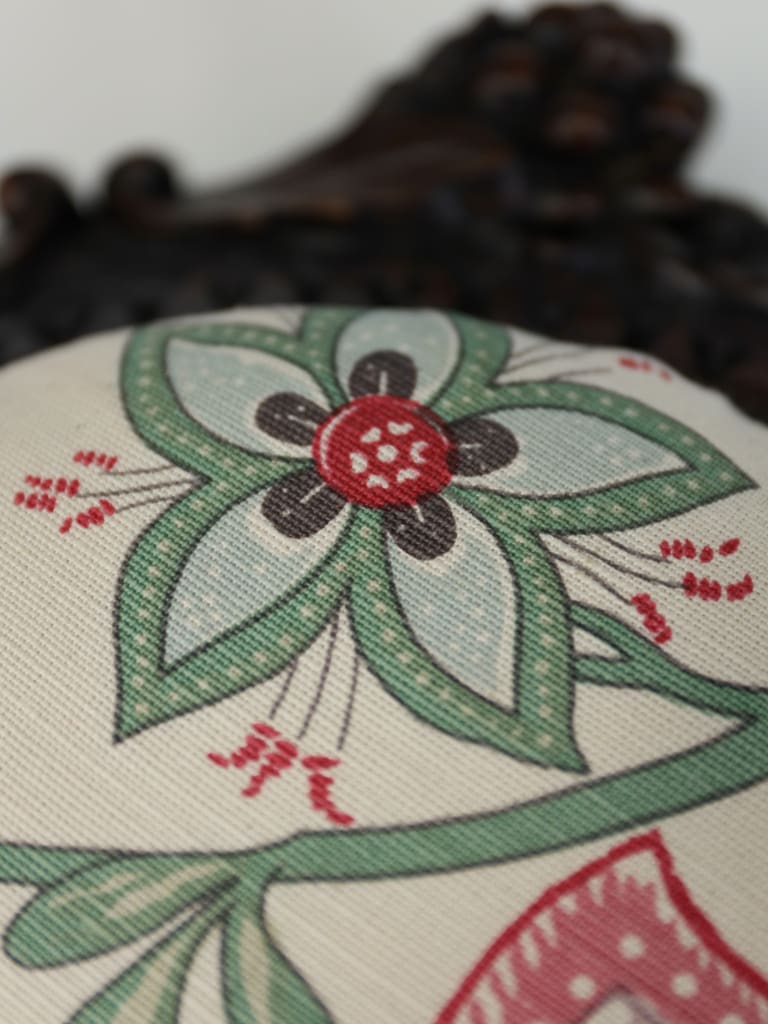
To honour the botanical theme of the frame, the stool has been newly upholstered in Bennison’s ‘Banyan’ linen.
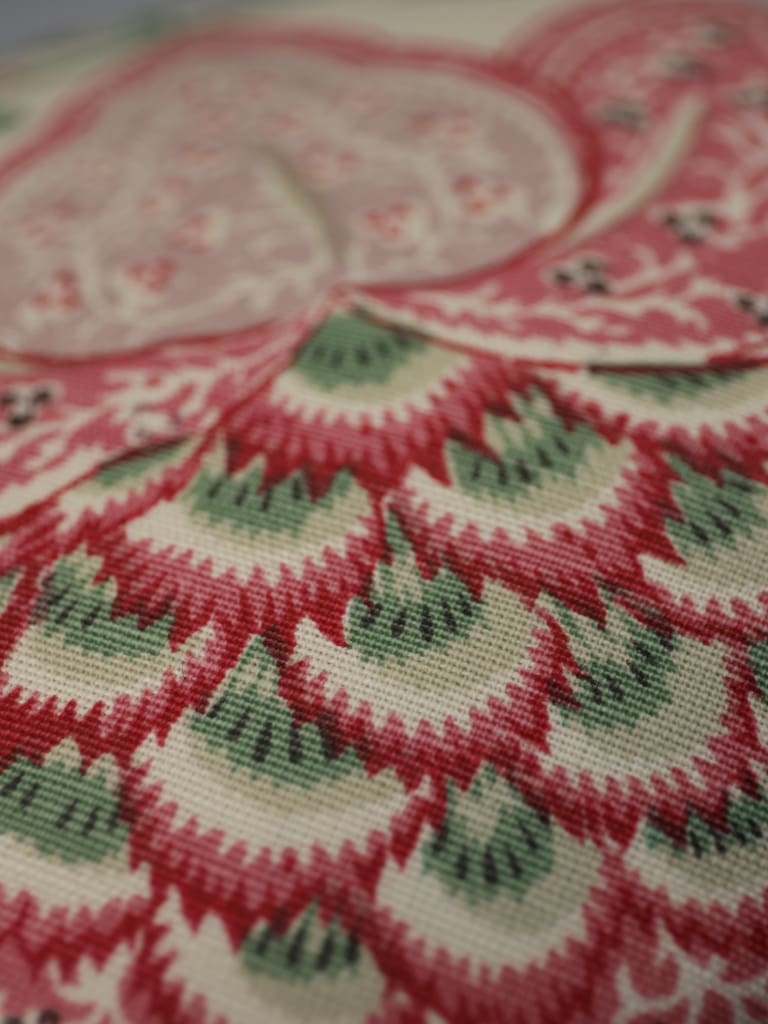
Inspired by 18th-century Indienne textiles, Banyan is hand-printed in England using traditional screens. Its "Tree of Life" pattern features flowing floral trails that create a visual dialogue with the carved vines below.
The fabric has been meticulously "centre-matched" so that the most beautiful floral elements of the print are perfectly poised atop the stool, ensuring the piece looks magnificent from every angle.
In the grand Victorian interior, such a stool was a "mobile luxury." Its heavy, legless apron construction suggests it was designed to be a "jewel" in a formal drawing room or a lady’s boudoir.
In the 1860s, grapes and vines were symbols of Dionysian hospitality and domestic abundance. To own such a piece was a subtle "status symbol" indicating a well-appointed house and a sophisticated palate.
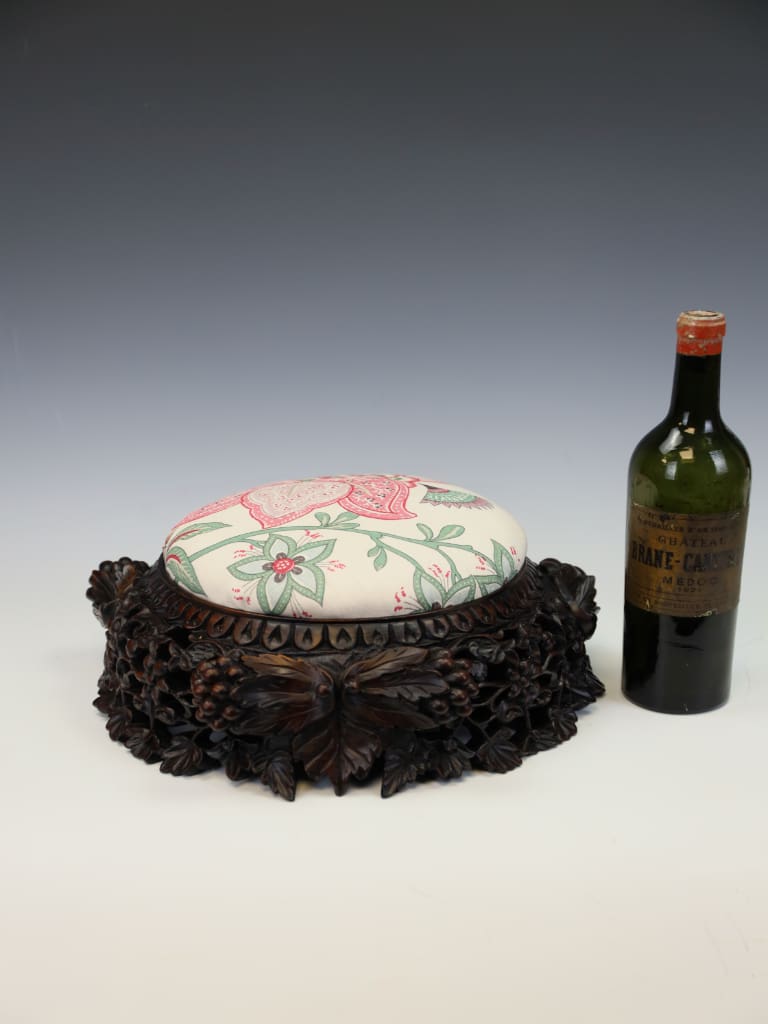
Its compact scale is its greatest strength. It is designed to be tucked under a console table or used as a "fireside perch," offering a punch of high-relief texture without overwhelming the room’s layout.
"In the current market, we see many 'revival' pieces, but rarely do we encounter this level of authentic, hand-chiselled virtuosity. If you look closely at the grapes, you can see the individual marks of the gouge—this is the 'fingerprint' of a 19th-century master who likely spent weeks on this single apron.
What makes this stool a 'top-tier' investment is its versatility. It possesses the 'English Country House' DNA, that specific blend of high-art carving and soft, lived-in linen, that is currently the most sought-after look in international interior design. It is a small piece that carries the weight of a gallery-quality sculpture."
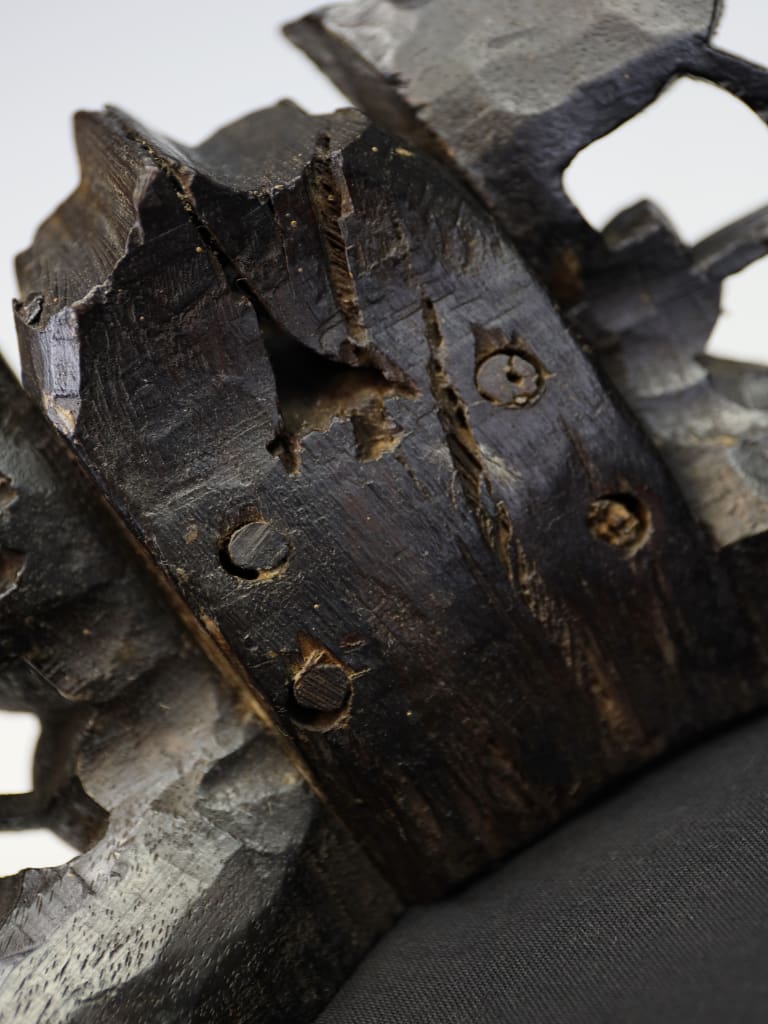
The elaborately carved apron is in excellent, gallery-ready condition. The carving remains remarkably crisp, with the high-relief fruit and vine motifs retaining their original depth and detail. There are no significant losses to the decorative frieze. The timber has been traditionally wax-polished to a deep, lustrous patina, with only the "honest wear" and minor surface indentations one expects of an authentic mid-19th-century piece.
The stool is structurally sound and stable, sitting perfectly level on its carved base. It has been professionally tightened in our workshop to ensure it is fit for daily use. There is no evidence of active woodworm or structural fatigue.
The piece has been completely reupholstered from the frame up using traditional methods. The seat is firm and well-profiled, covered in pristine Bennison ‘Banyan’ linen. The fabric is new, expertly pattern-matched, and free from any marks, pulls, or fading.
Height: 16 cm / 6.3 inch
Width: 35 cm / 13.8 inch
Depth: 35 cm / 13.8 inch
Weight: 2.6 k.g. / 5.7 lbs
All our collections have been through our workshop and where possible, we always try to maintain the original finish preserving the patina and colour, some items are sympathetically restored and this is done by our own skilled craftsmen using only traditional methods