£1,450.00
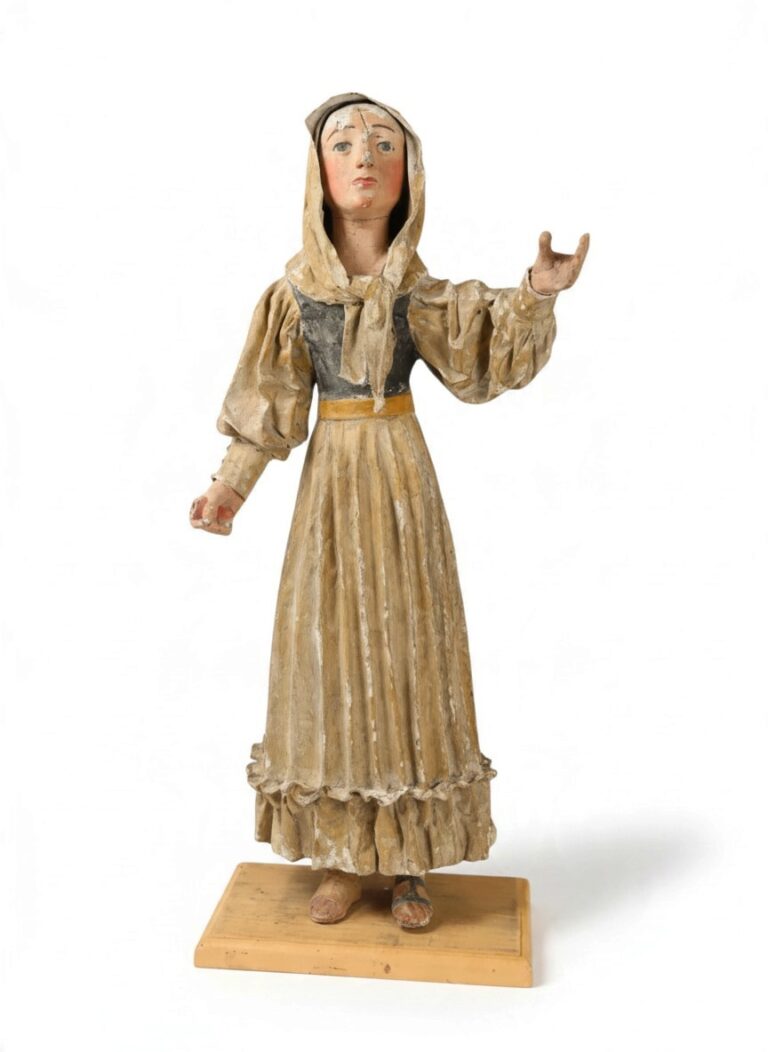
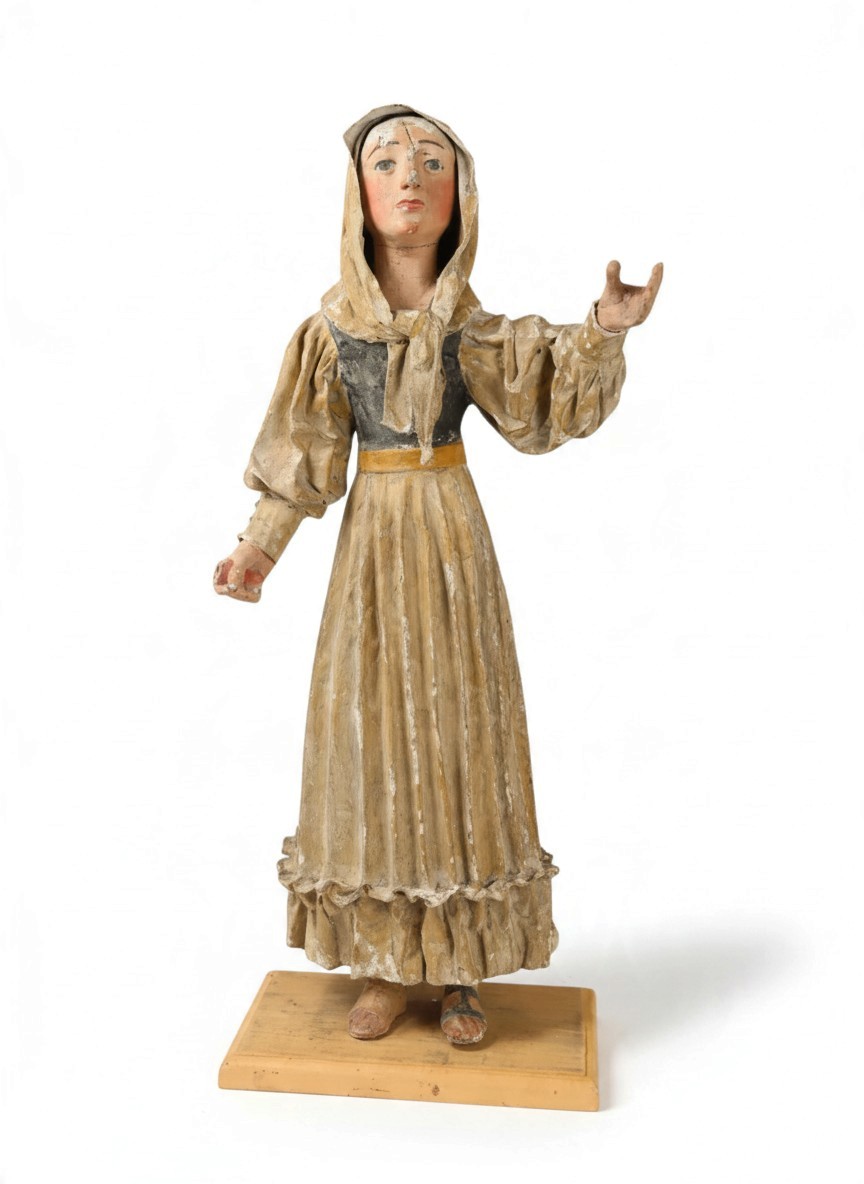
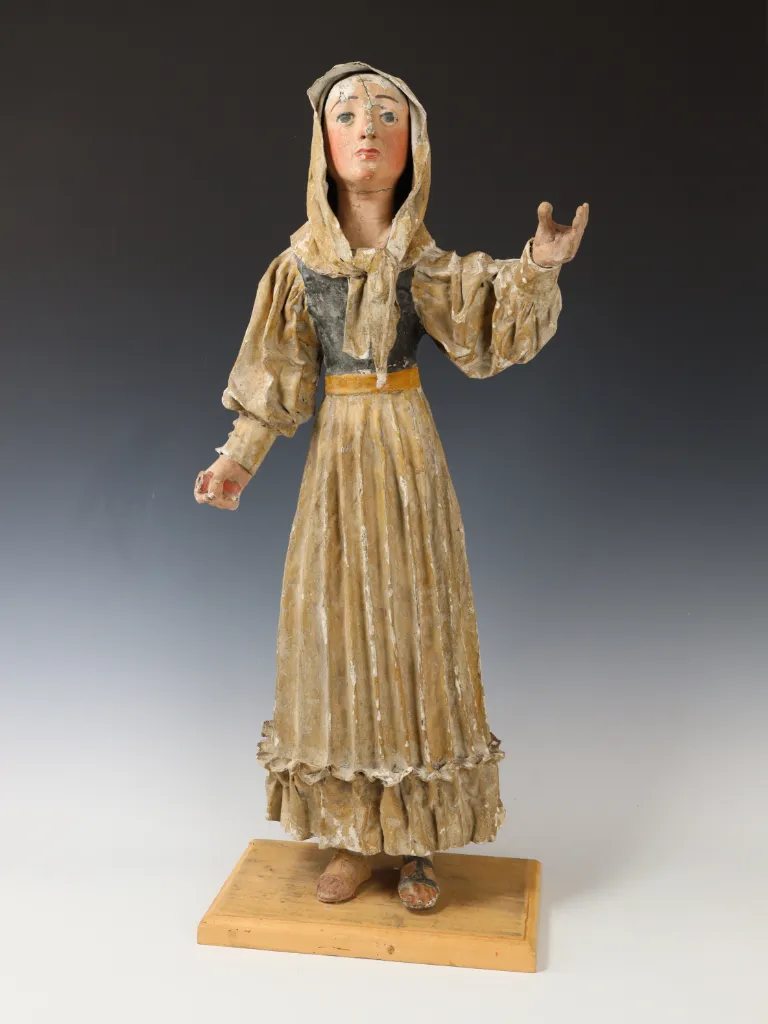
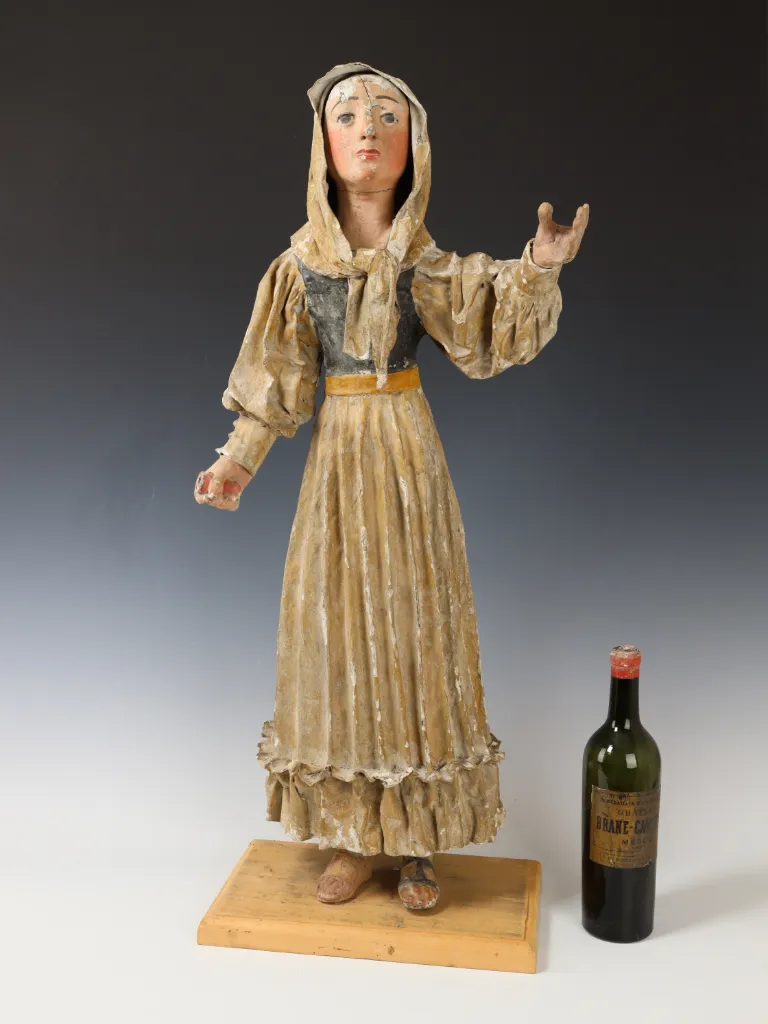
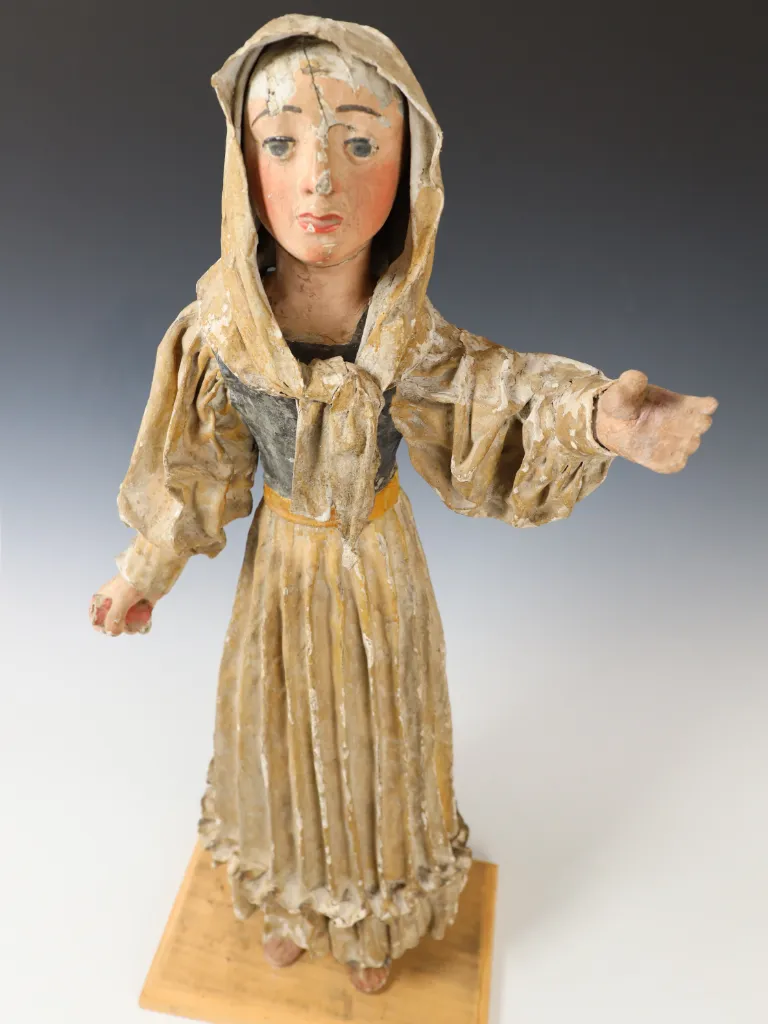
An exceptionally rare and highly decorative early European folk art figure depicting a shepherdess or village woman, standing an impressive 88 cm tall and combining carved wood, gesso, original-style polychrome decoration and a remarkable sculptural costume formed from papier-mâché.



An exceptionally rare and highly decorative early European folk art figure depicting a shepherdess or village woman, standing an impressive 88 cm tall and combining carved wood, gesso, original-style polychrome decoration and a remarkable sculptural costume formed from papier-mâché.
Believed to originate from France or the Southern Netherlands, present-day Belgium, the figure is an extraordinary survivor of the European vernacular sculptural tradition. The underlying wooden elements are believed to be of considerable age, possibly dating to the 18th century, while the elaborate costume may represent a subsequent historic adaptation.
What makes this figure particularly special is the remarkable combination of materials, expressive craftsmanship and the exceptional movement achieved in the modelling of her dress.
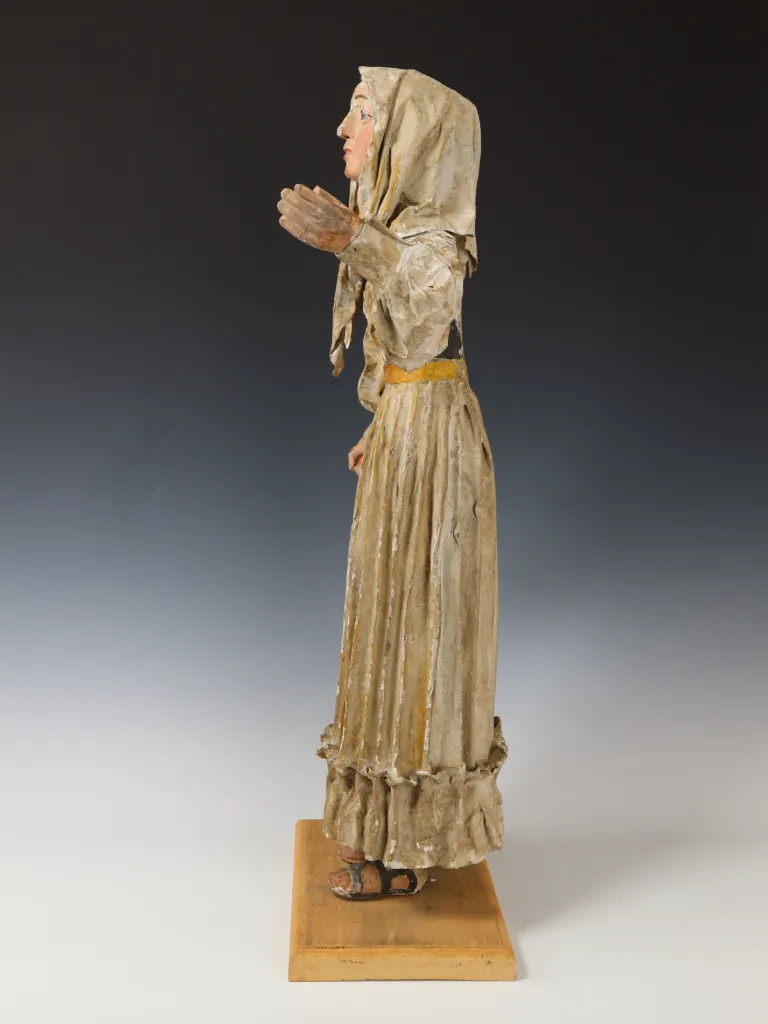
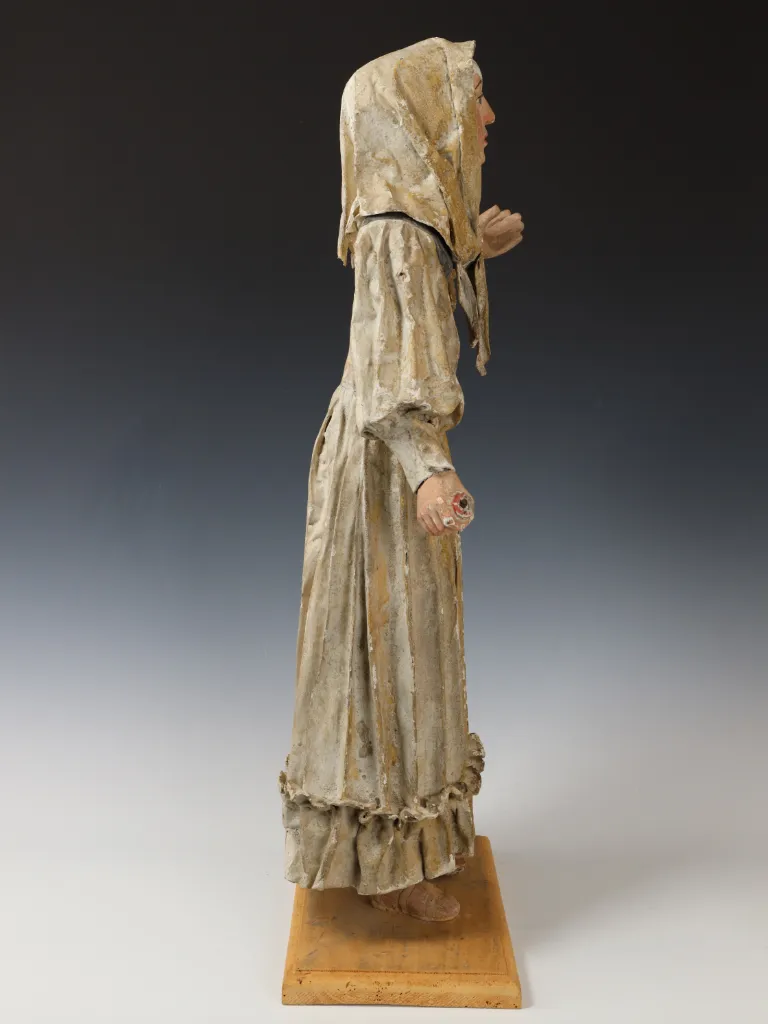
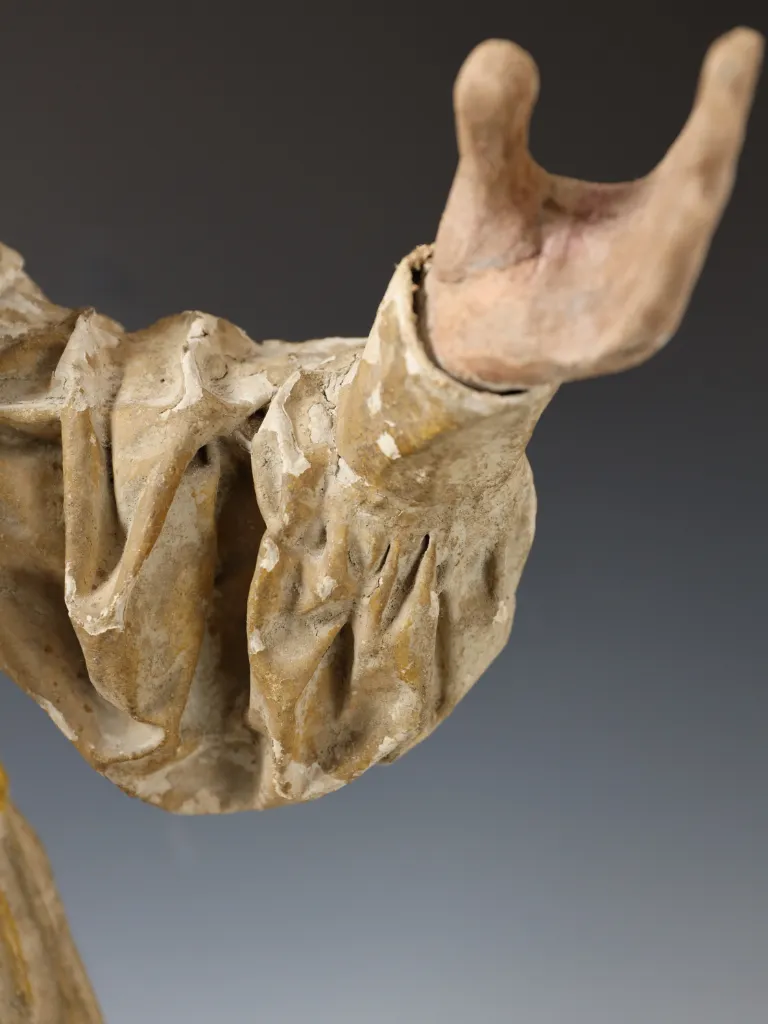
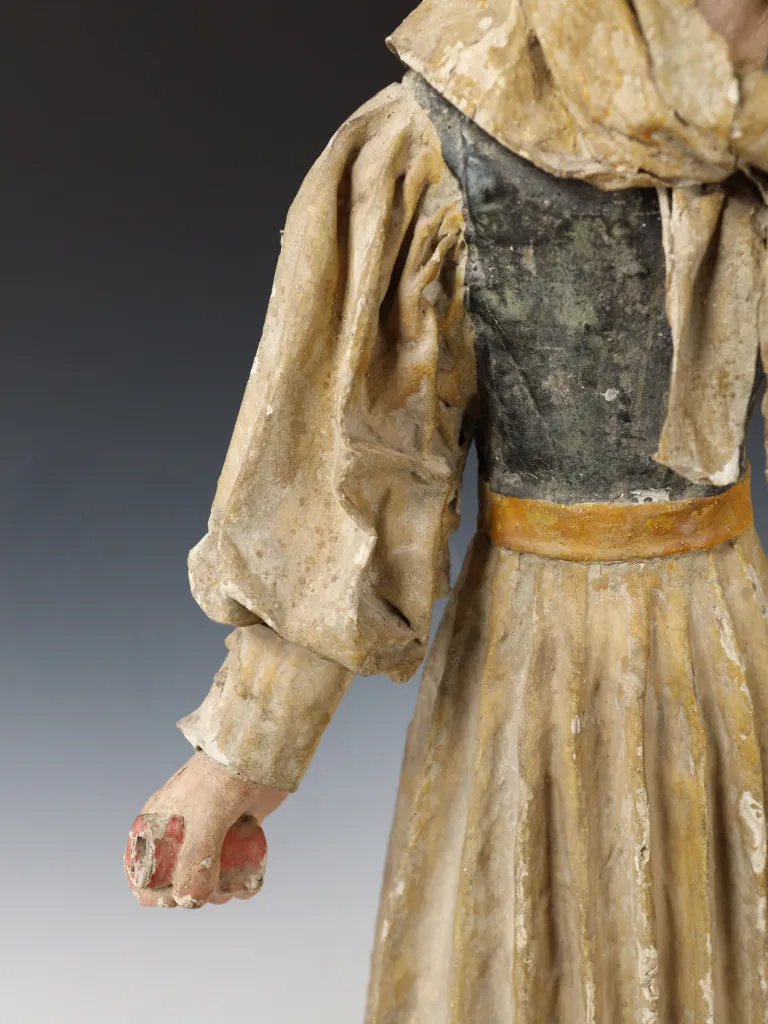
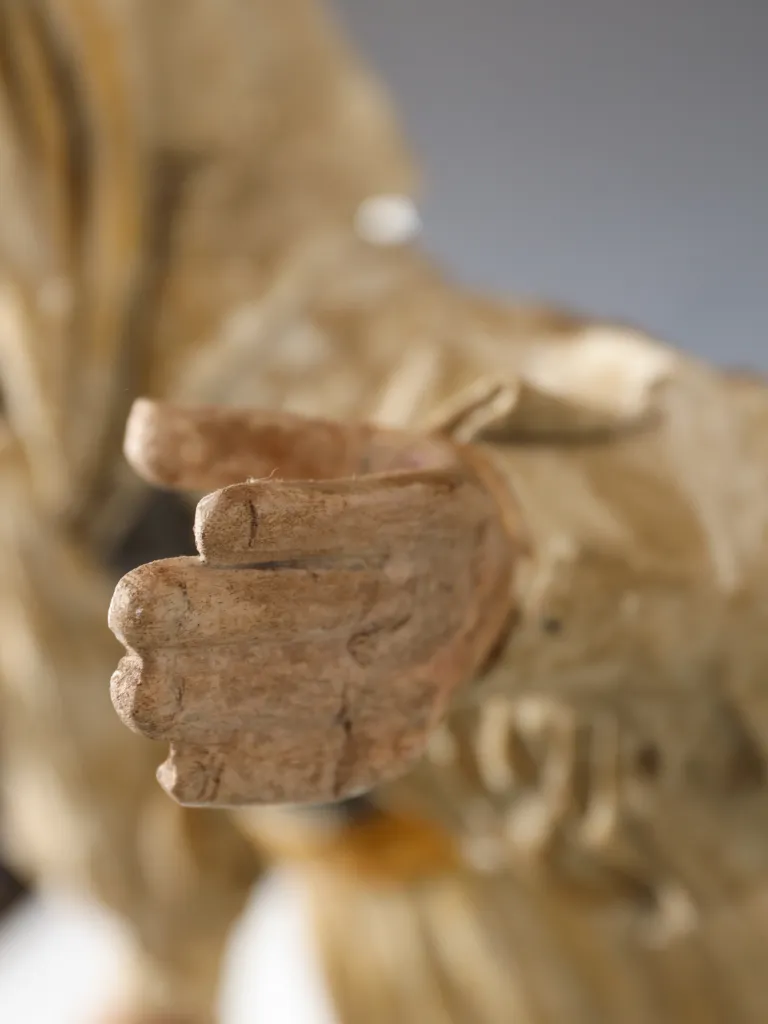
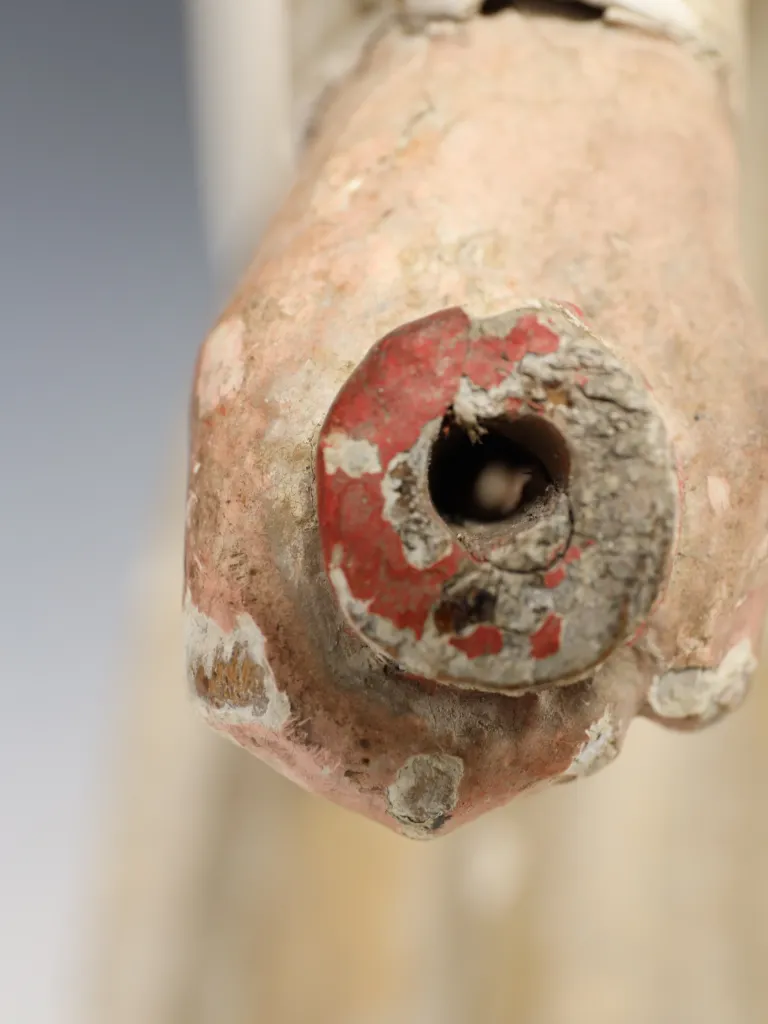
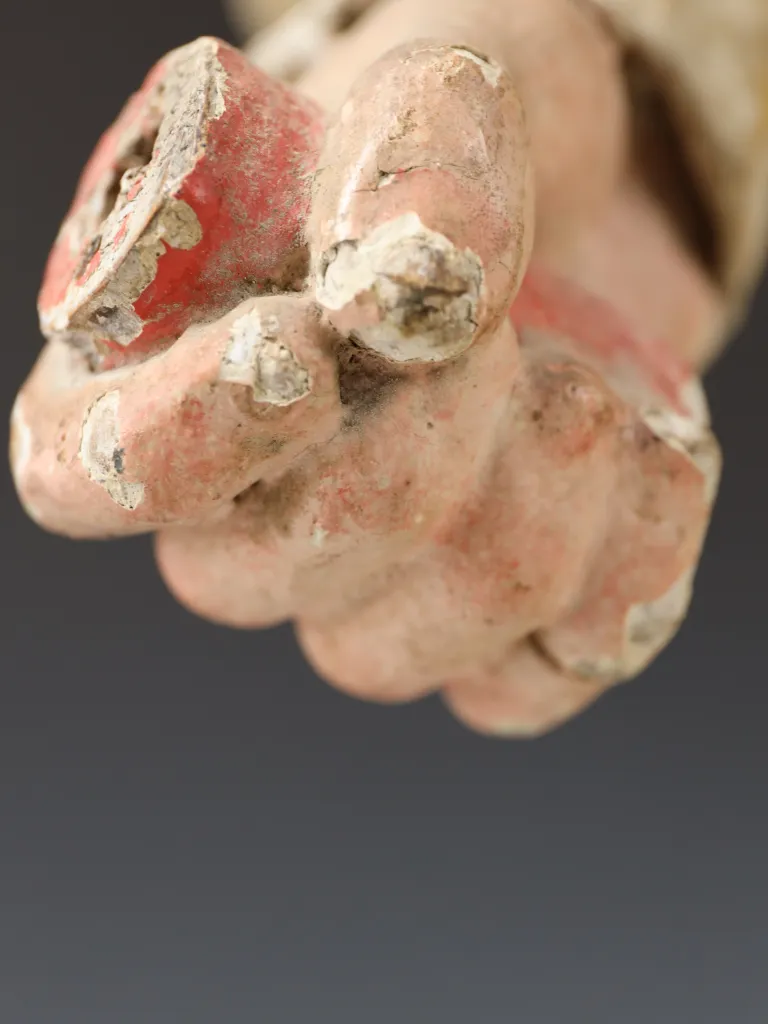
The young woman stands with one arm raised, her hand elegantly outstretched, while the opposite arm rests lower against her side. The latter hand retains a fragment of a red-painted object, possibly the remains of an original accessory (bucket). The raised hand appears positioned to have once supported a staff or shepherd's crook, suggesting that the figure may originally have represented a shepherdess or rural village woman.
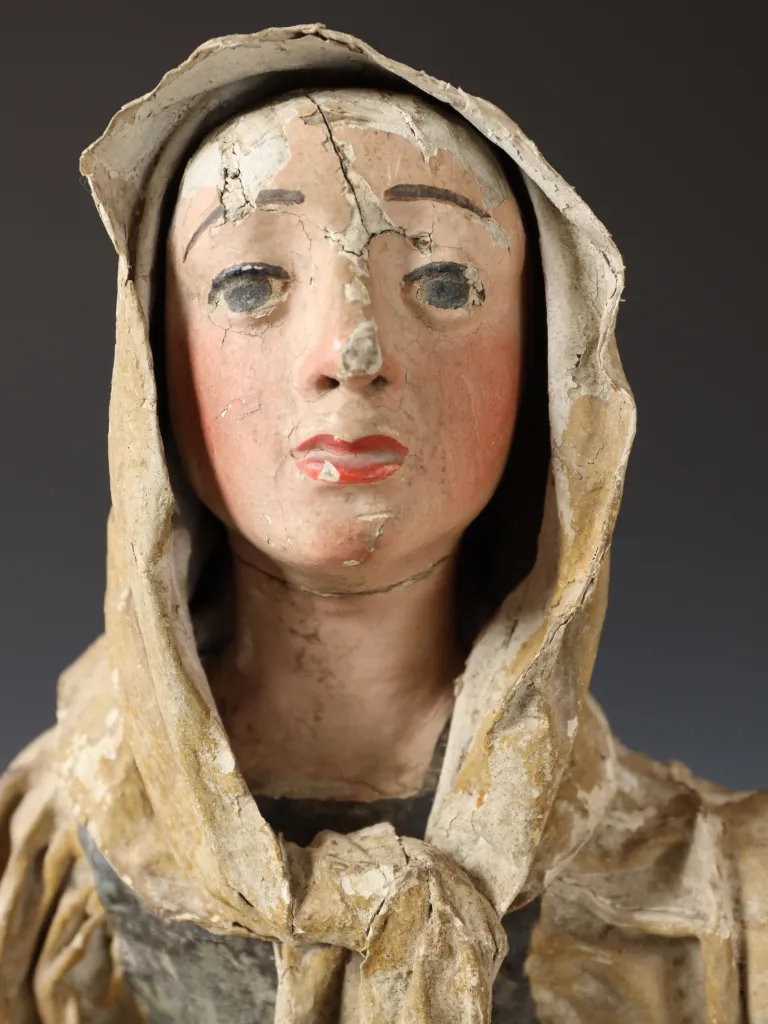
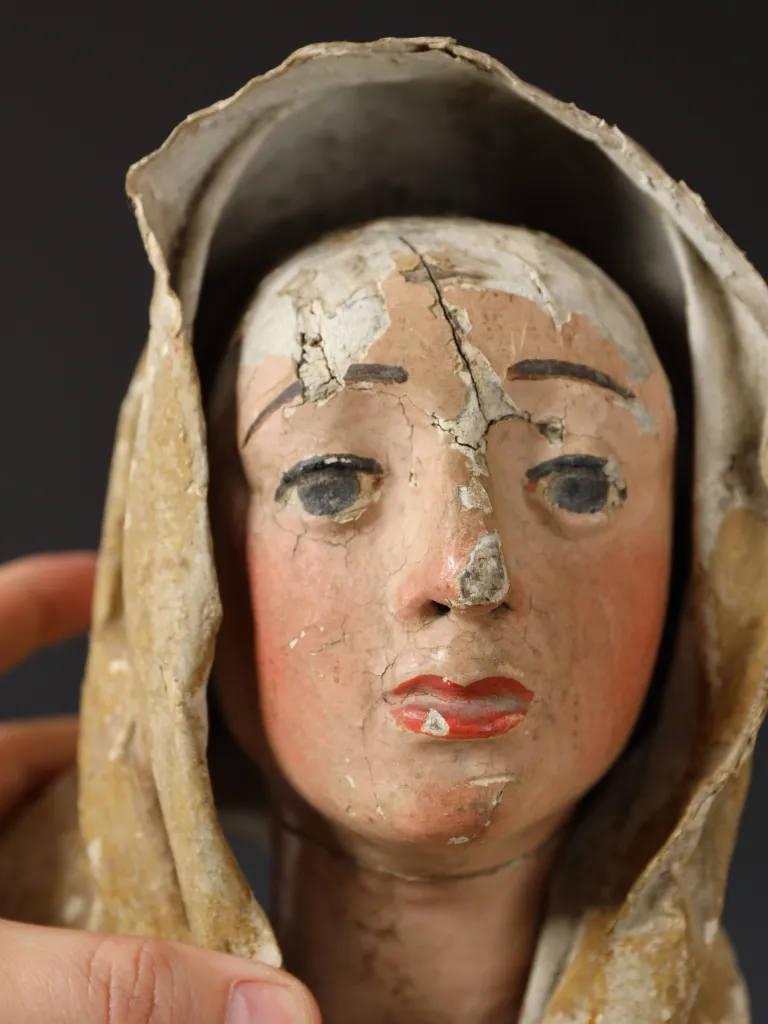
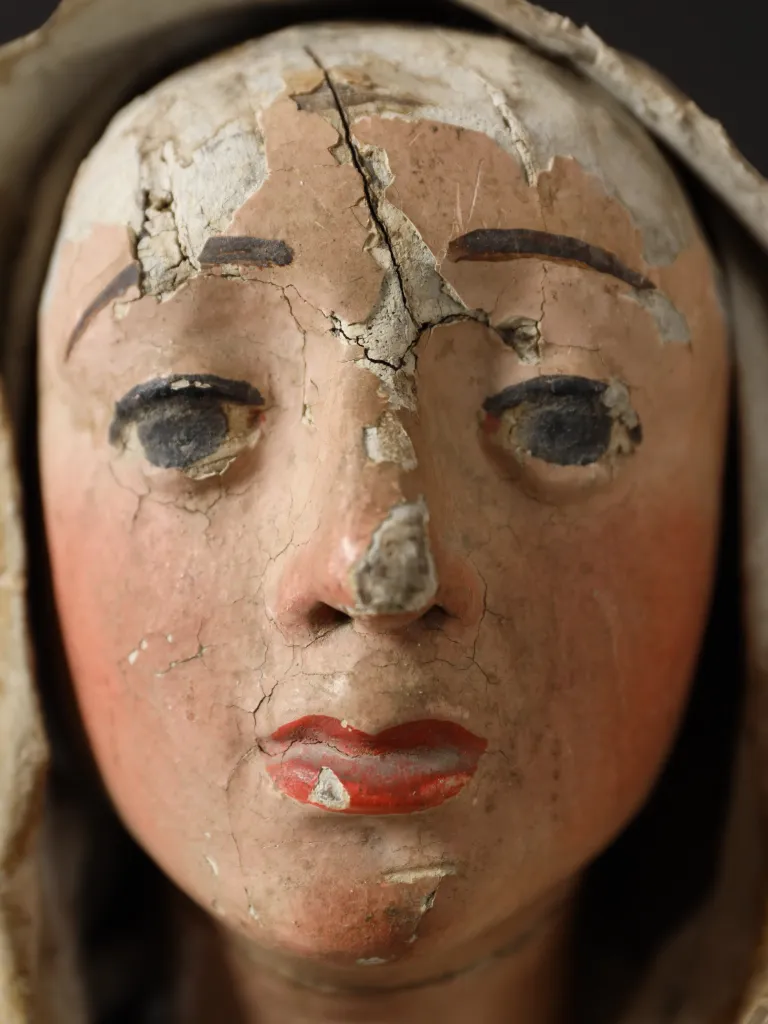
Her face is particularly captivating, with large painted eyes, finely arched eyebrows, delicately flushed cheeks and red lips. The expression is unmistakably naïve yet wonderfully engaging, displaying the individuality and character so highly appreciated in early European folk art.
The painted surface has developed a beautiful historic patina, with areas of wear and exposed gesso lending depth and authenticity to the figure.
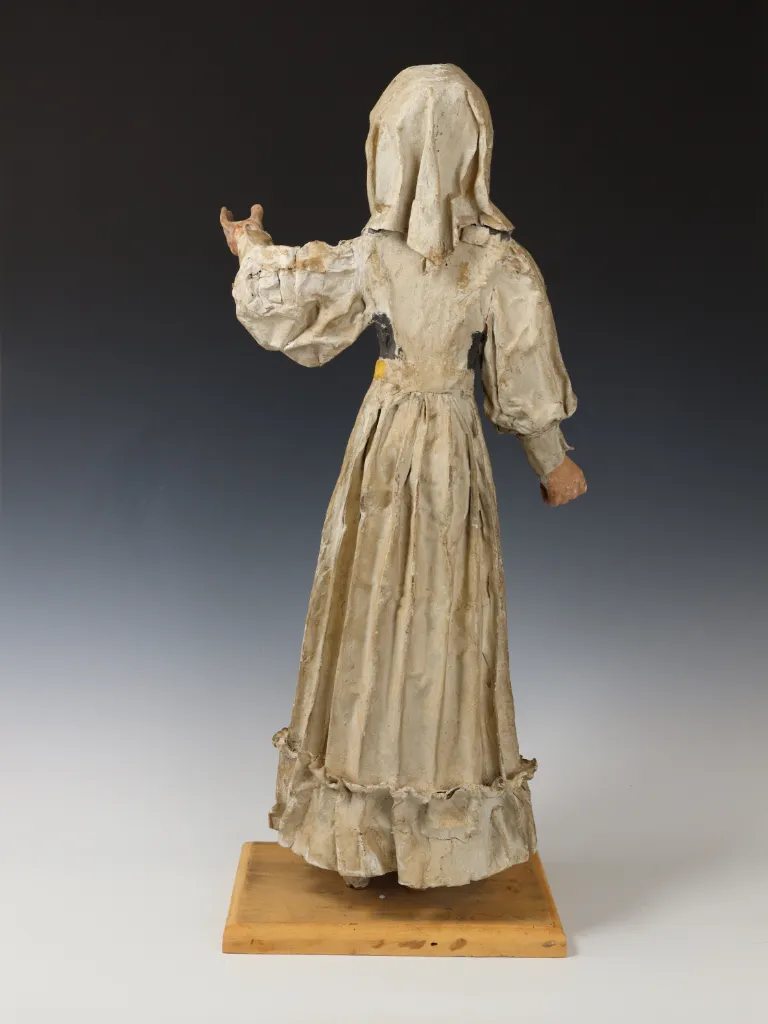
Undoubtedly the most remarkable feature is the beautifully modelled papier-mâché dress.
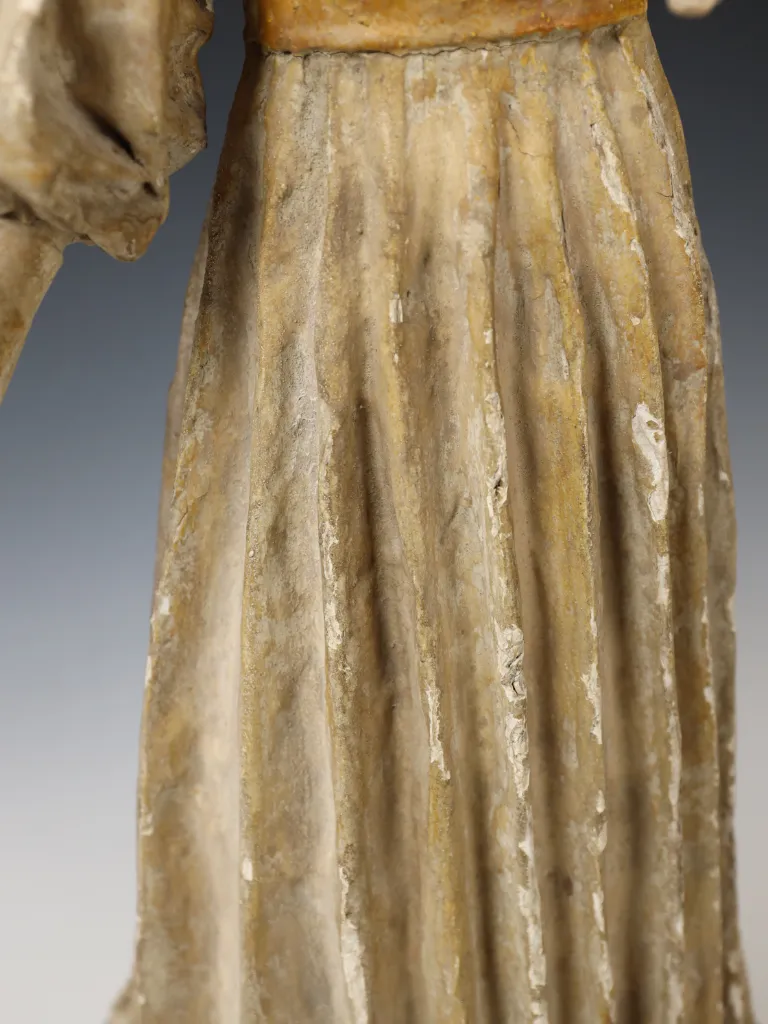
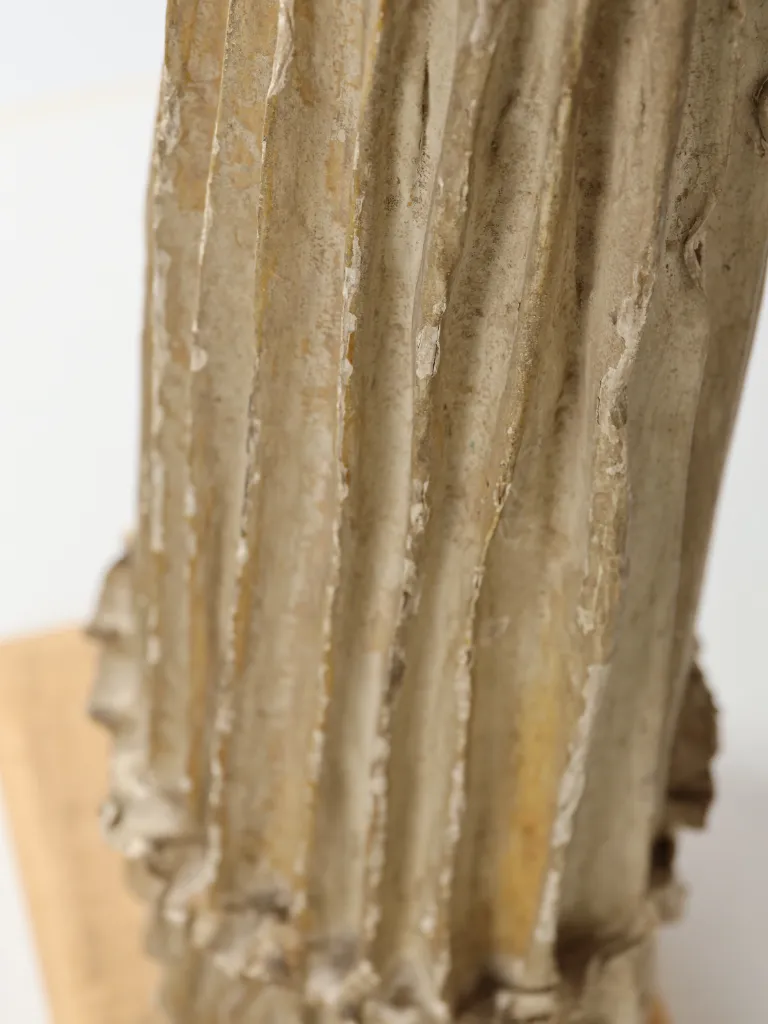
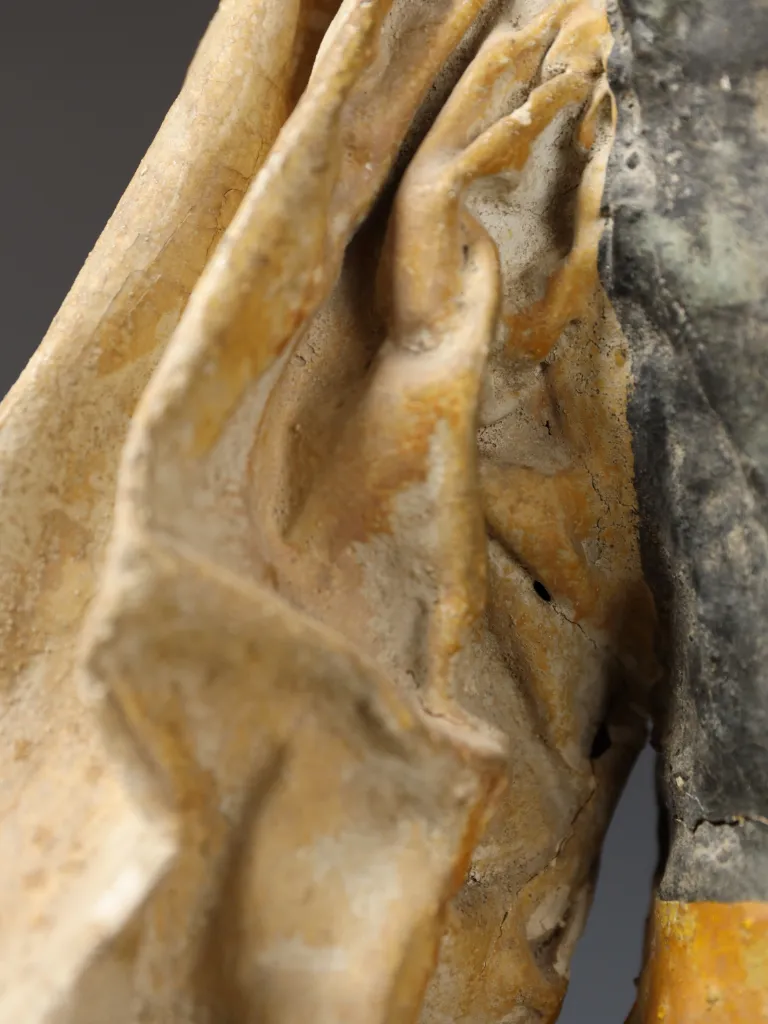
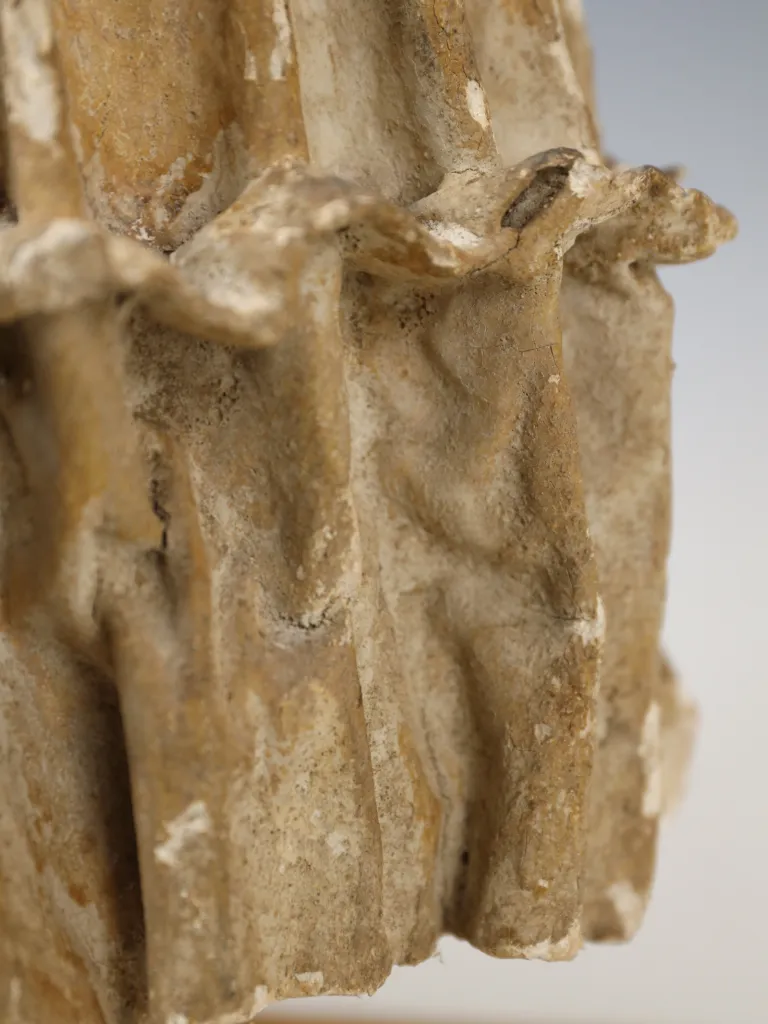
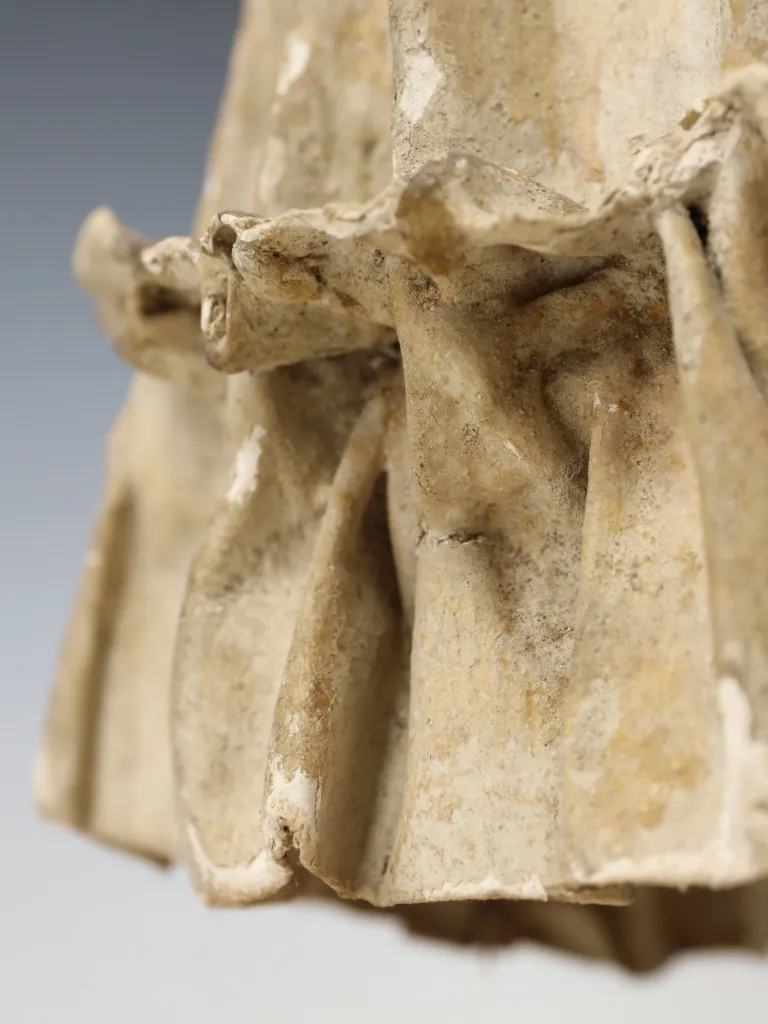
The costume displays an exceptional understanding of the movement and weight of fabric, with deeply formed vertical folds flowing naturally from the waist towards the ground. These irregular pleats create a wonderful sense of movement, almost as though the figure has been captured in the act of walking or gesturing.
The full, gathered sleeves are particularly expressive, with exaggerated folds at the shoulders and elbows before narrowing into fitted cuffs. The long skirt falls in generous folds before terminating in a wonderfully irregular, layered and ruffled hem.
The sculptural quality of the dress is quite extraordinary, particularly considering the fragility of the material and the considerable age of the figure.
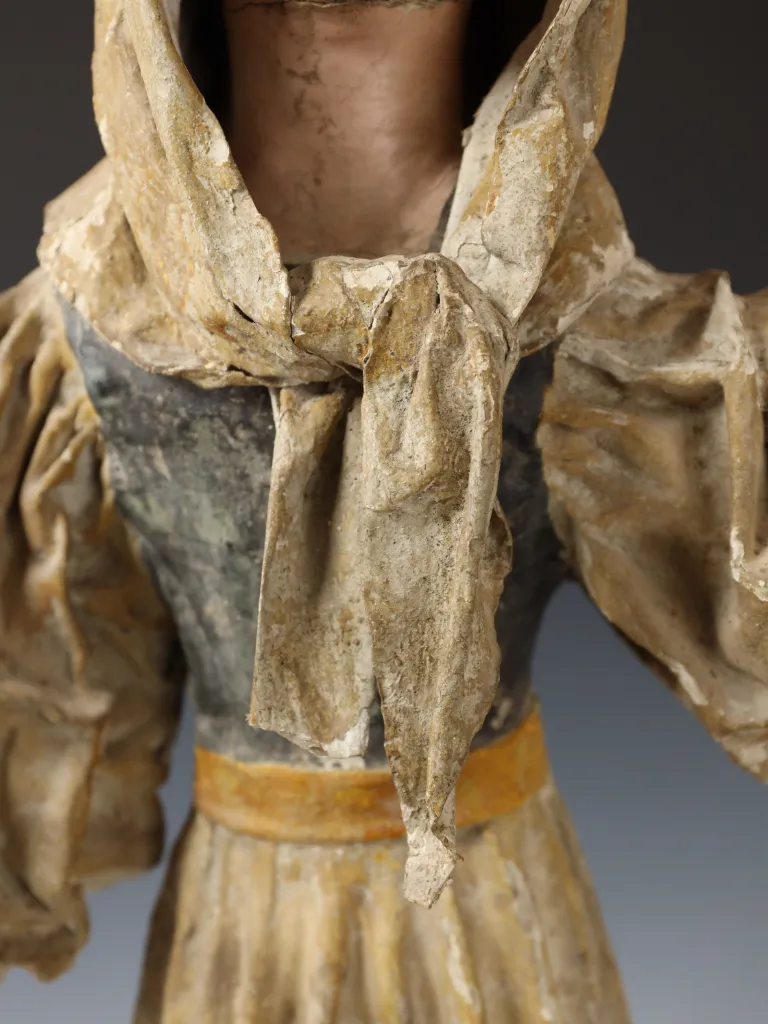
A dark, close-fitting bodice provides a striking contrast to the softly coloured skirt, while a warm ochre waistband defines the figure's silhouette.
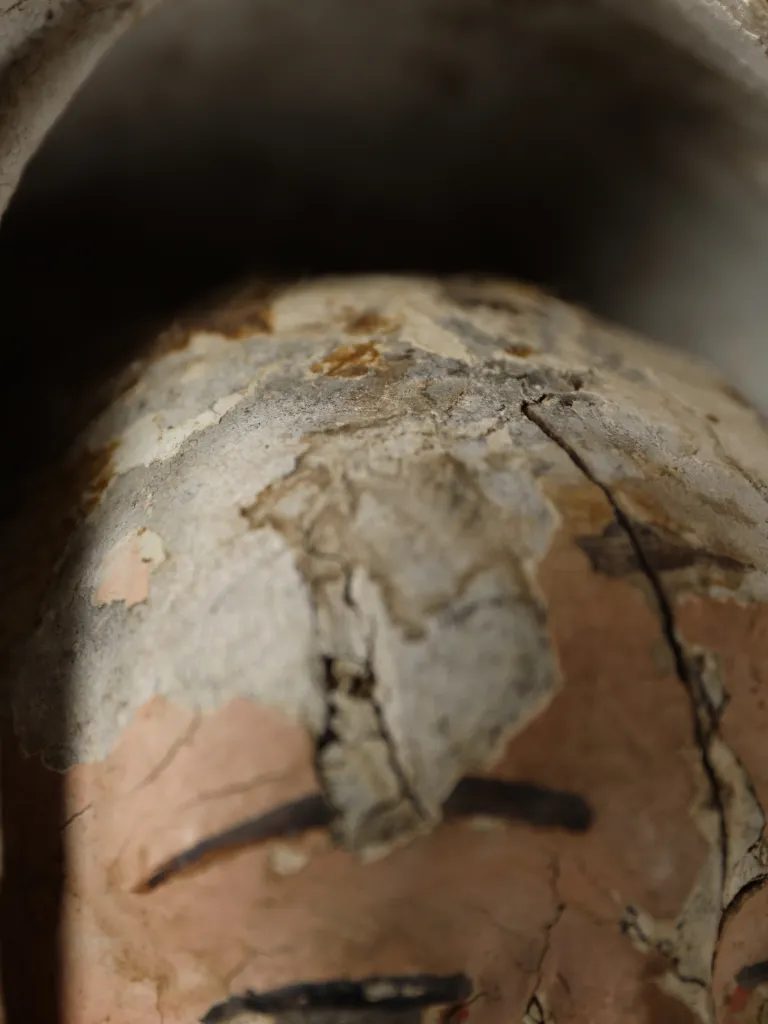
The head is framed by a generously modelled hood or headscarf, gathered and tied beneath the chin. Particularly interesting is that the hood remains movable around the carved wooden head, rather than being rigidly attached, although it is not removable.
The surviving decoration is beautifully subdued, with soft cream, warm stone, ochre, charcoal and faded rose tones combining to create a particularly attractive historic surface.
The figure's unusual construction suggests a fascinating history of craftsmanship, adaptation and preservation.
The combination of carved wooden elements, gesso, polychrome decoration and papier-mâché bears similarities to European devotional and processional sculpture, including the tradition of dressed Santos and religious figures.
It is possible that the wooden figure originally served a devotional or ceremonial purpose before being adapted into its present representation of a rural woman. Equally, it may have been conceived as a pastoral or village character within a larger decorative or theatrical arrangement.
Its original purpose remains uncertain, adding to the intrigue of this unusual object.
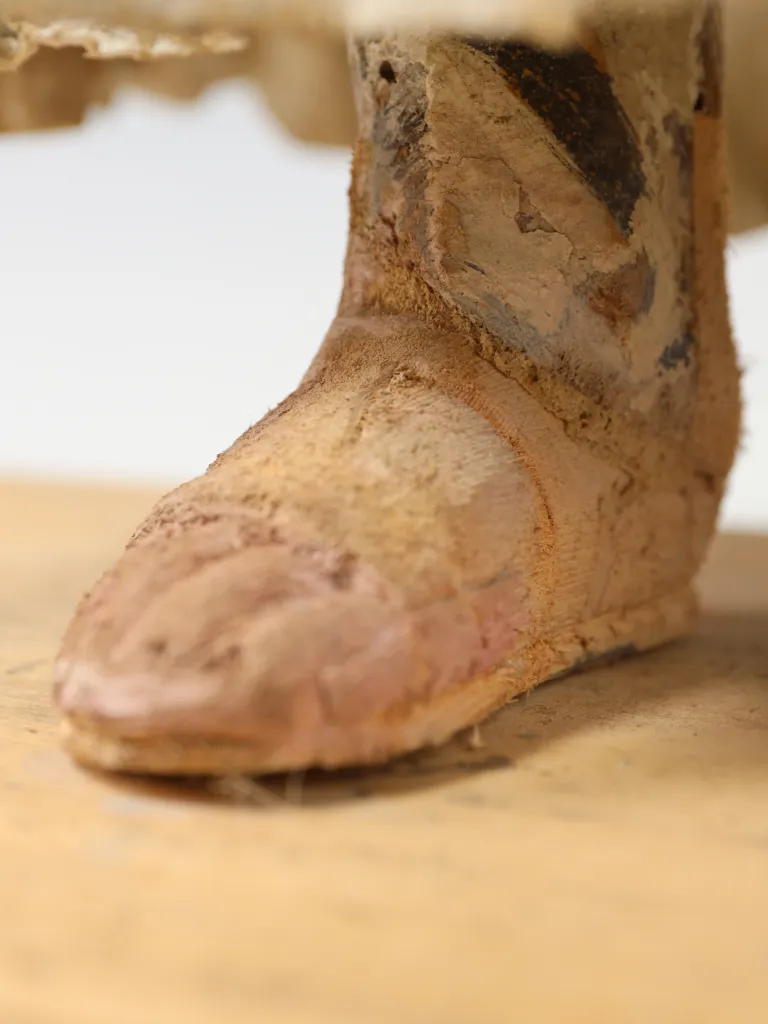
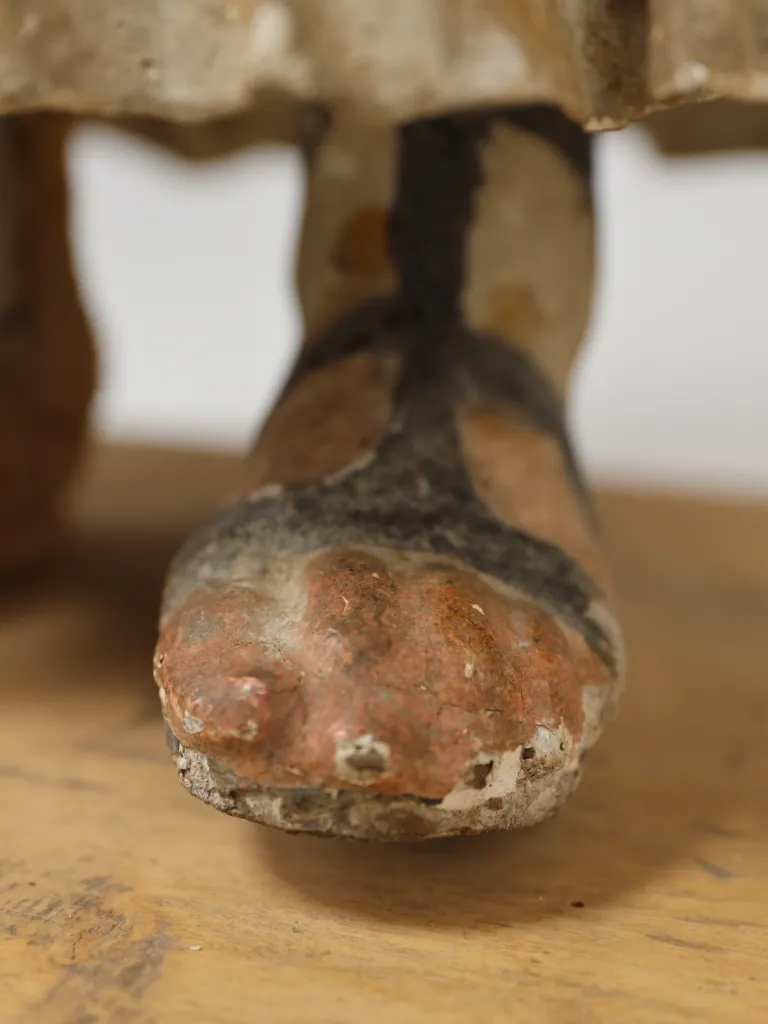
The apparent historic alteration to one foot, possibly undertaken around the same period as the application of the papier-mâché costume, further suggests that the figure has undergone changes during its long history.
The rectangular wooden display base is a later addition, providing a practical means of displaying the sculpture.
Figures of this scale and unusual mixed-material construction are not commonly encountered, particularly with such extensive survival of the modelled costume and painted decoration.
At almost three feet tall, this is a substantial sculptural object with remarkable decorative presence.
The combination of naïve expression, historic patination, theatrical movement and unusual construction makes it especially appealing to collectors of early folk art, European vernacular sculpture and decorative antiques.
A wonderfully atmospheric and individual piece, equally at home within a country house interior, a collection of historic sculpture or a thoughtfully curated contemporary setting.
Date: 18th century wooden elements, with later historic costume alterations. Exact dating remains unconfirmed.
Origin: Continental Europe, possibly France or the Southern Netherlands (present-day Belgium).
Subject: Shepherdess or village woman.
Materials: Carved wood, papier-mâché, gesso and polychrome decoration.
Maker: Unknown.
Style: European folk art, vernacular sculpture, with possible devotional influences.
The figure survives in evocative historic condition, displaying extensive age-related wear and patination consistent with its apparent considerable age and mixed-material construction.
There are areas of cracking, flaking and losses to the gesso and painted surfaces, particularly across the face, hands and folds of the costume.
The face retains its original-looking painted character, although losses are evident around the forehead, nose and other exposed areas.
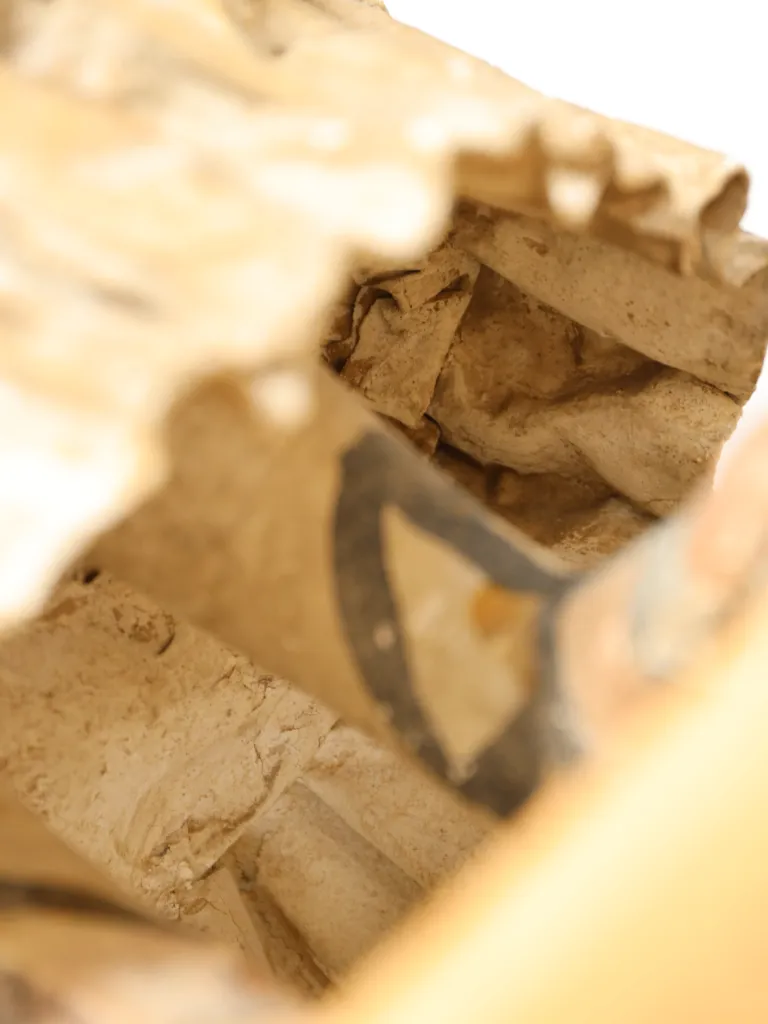
The papier-mâché dress displays historic wear, small losses, surface irregularities and areas of exposed underlying material. These have been retained rather than disguised, preserving the character of the sculpture.
The hood remains movable but cannot be removed from the head.
One foot appears to have undergone a historic alteration or replacement, possibly contemporary with the adaptation of the costume.
The wooden display base is a later addition.
Any original accessories are no longer complete, with a surviving red-painted fragment retained in one hand.
The figure is offered in its present historic condition, with the aged surfaces and evidence of earlier alterations forming an important part of its character.
Height: 88 cm / 34.65 inches
Width: 39 cm / 15.35 inches
Depth: 22 cm / 8.66 inches
Weight: 6.8 kg / 14.99 lbs
Every item offered by Shackleton Fox is carefully inspected, prepared, and where necessary conserved within our workshop prior to sale.
As heritage craftsmen and antique specialists, we believe in preserving the authenticity and integrity of each piece. Original finishes, patina, wear, and signs of age are retained wherever possible, as these elements contribute to both character and historical significance.
When restoration, rewiring, repairs, or conservation work is required, it is undertaken sympathetically using traditional techniques and materials appropriate to the period of the piece. Our philosophy is one of careful stewardship rather than unnecessary restoration, ensuring antiques remain both functional and historically respectful.
The result is a collection of pieces that have been thoughtfully prepared, allowing future owners to enjoy them with confidence while preserving their unique story and character.