Introduction: Buying Guide on Antique Table Lamps
Throughout the history of lighting, preferences in style continually evolved with progressionin technology and design. From what was once a necessity, craftsmen have displayed their artistic ambition to develop the most exuberant of lighting fixtures to suit grand homes.
Moving toward the end of the 18 th century, design movements became further established.
Following the Industrial Revolution there was a social shift in want for possessions, and a growth in wealth that enabled a wider society to access manufactured goods. Upper and middle-class Victorian society responded with an particular focus on intricate designs, the contrary of standardised design at the time, which was simplified for machine production.
Across Europe this design period, named ‘Historicism’, exhibit influences of Renaissance and Classical design, reflected in the Baroque style and Gothic detailing on the antiques. As scientists developed the incandescent light bulb, the opportunity for artisans to design candelabras and chandeliers progressed to table lamps.
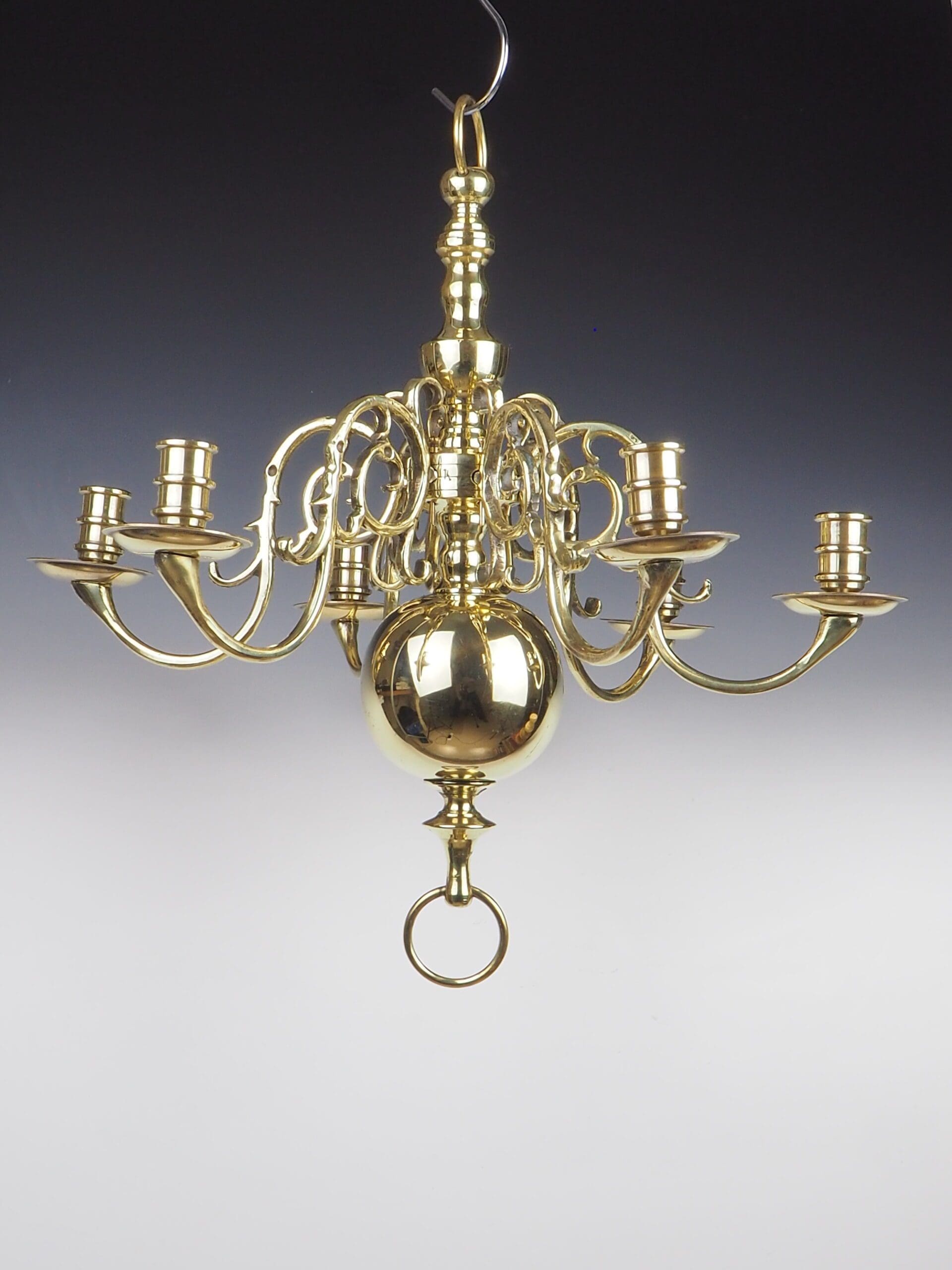
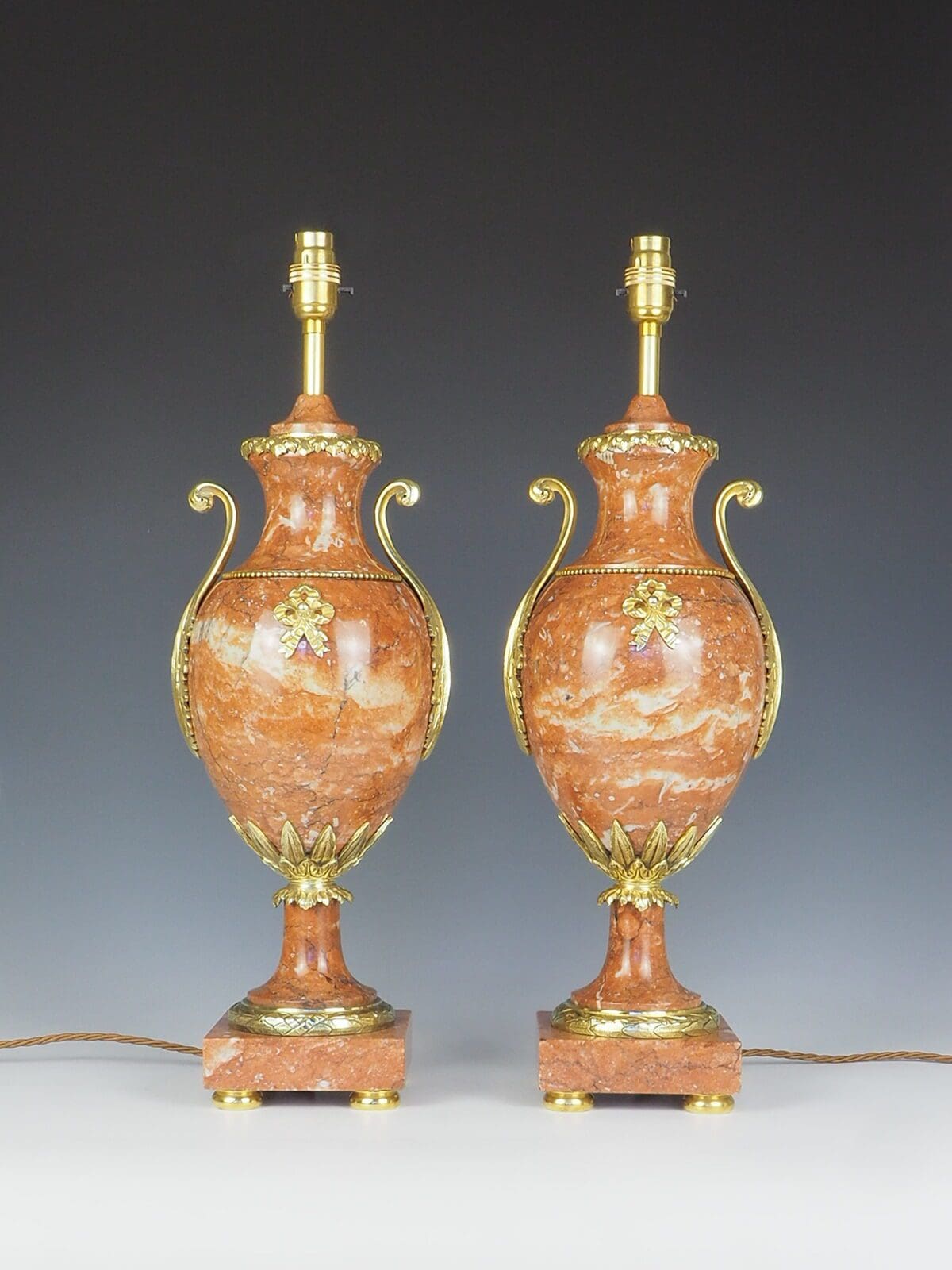
Shackleton Fox lamps date between the 16th and 19th centuries, constructed with a variety of materials from giltwood and a combination of marble and brass providing royal elegance and style.
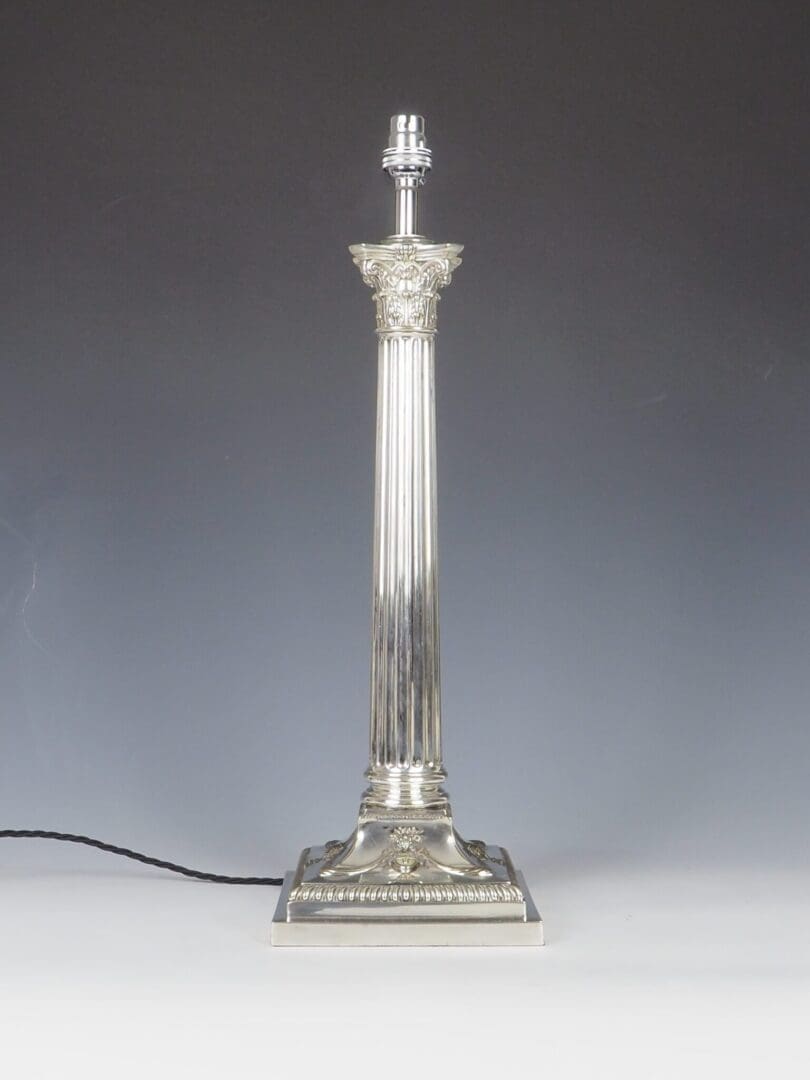
The Victorian Silver-Plated Corinthian Table Lamp, accessorised with garlands and laurel and structured with a tall flute, accentuates the Baroque taste for Victorian interior and carries its character into the setting of a modern home with an electrical light fixture.
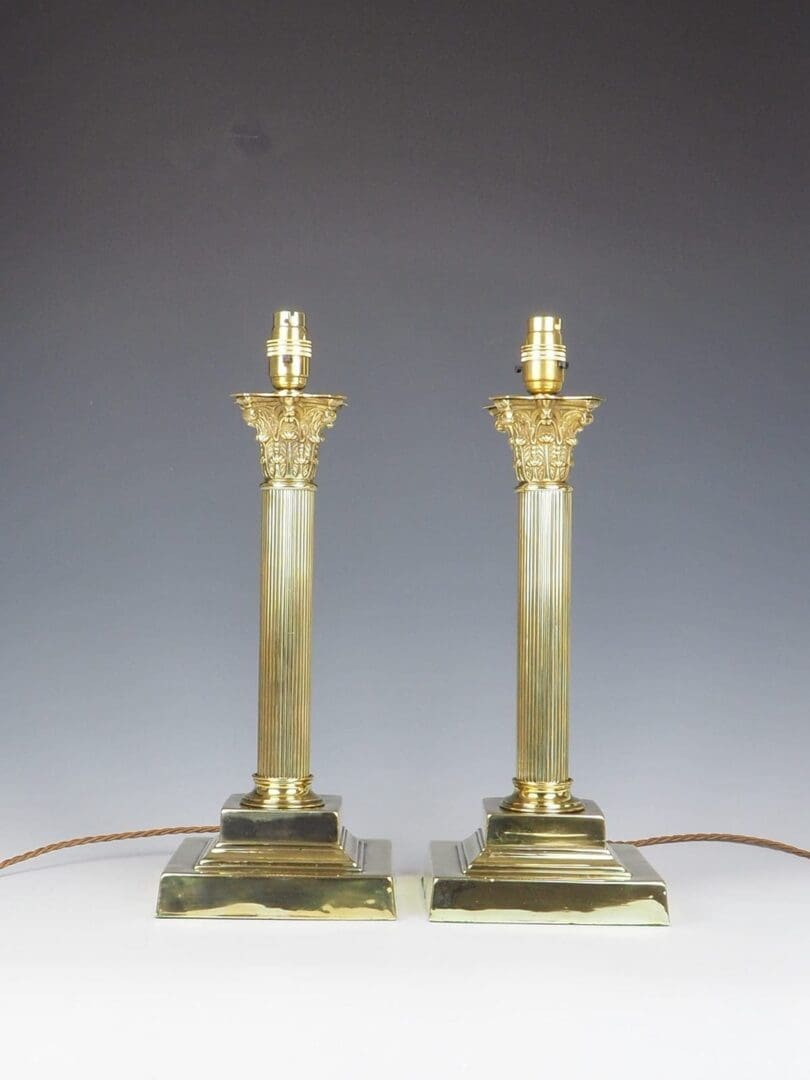
You may recognise our 19th Century Corinthian Column Table Lamps similar to those viewed in the Netflix sensation, The Crown. Here a classical pair behold a Kingly Corinthian Capital, these meticulous minutiae, represent an unfathomable attention to detail, and labour devoted to the initial crafting. Originally intended as oil lamps, Shackleton Fox tactfully installed electrics extending its noble history to fit into a contemporary home.
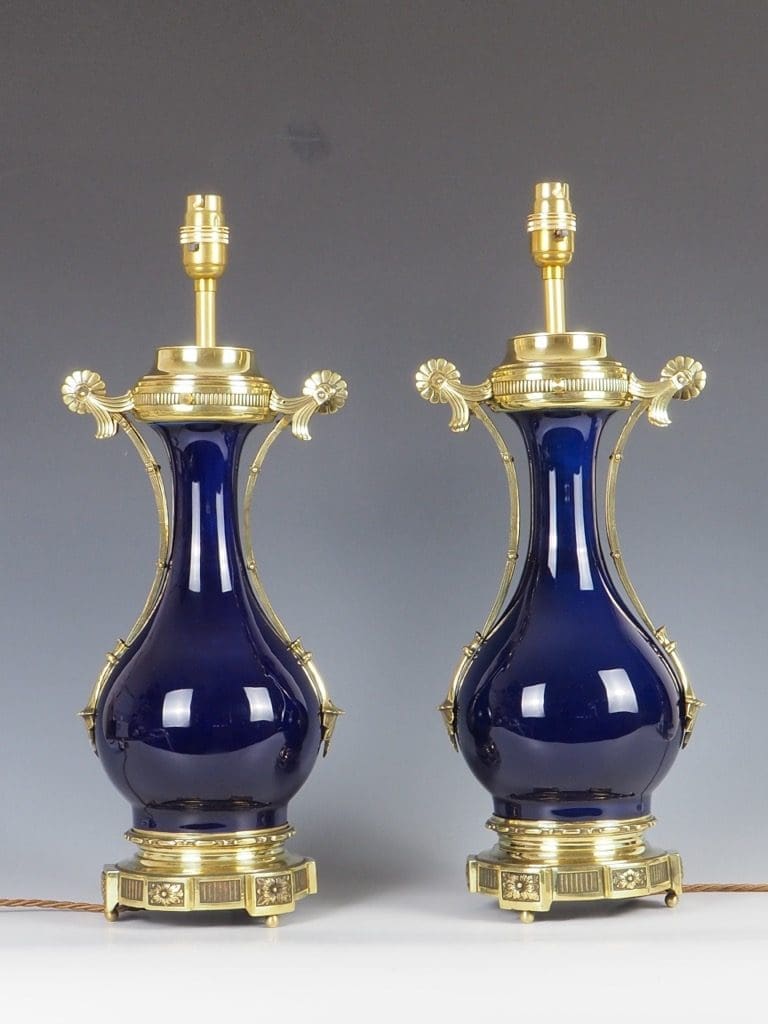
Antique Pair of Royal Blue French Napoleon III Porcelain Table Lamps , composed with porcelain and brass detailing, these lamps exuberate Louis XIV style and French lustre.
Morrison introduced to England the Arts and Crafts movement that rejected the over-consumption and mass production of the period of Historicism. Here designers navigated their skills to replicate the natural environment, with neutral colours, asymmetrical lines, and adopting a minimalist focus.
Design possibilities extended with the introduction of glassware. For instance, this table lamp by Louis Majorelle and Daum sold at Sotheby’s, was one of the younger designs embracing an Art Nouveau semblance, circa 1900.
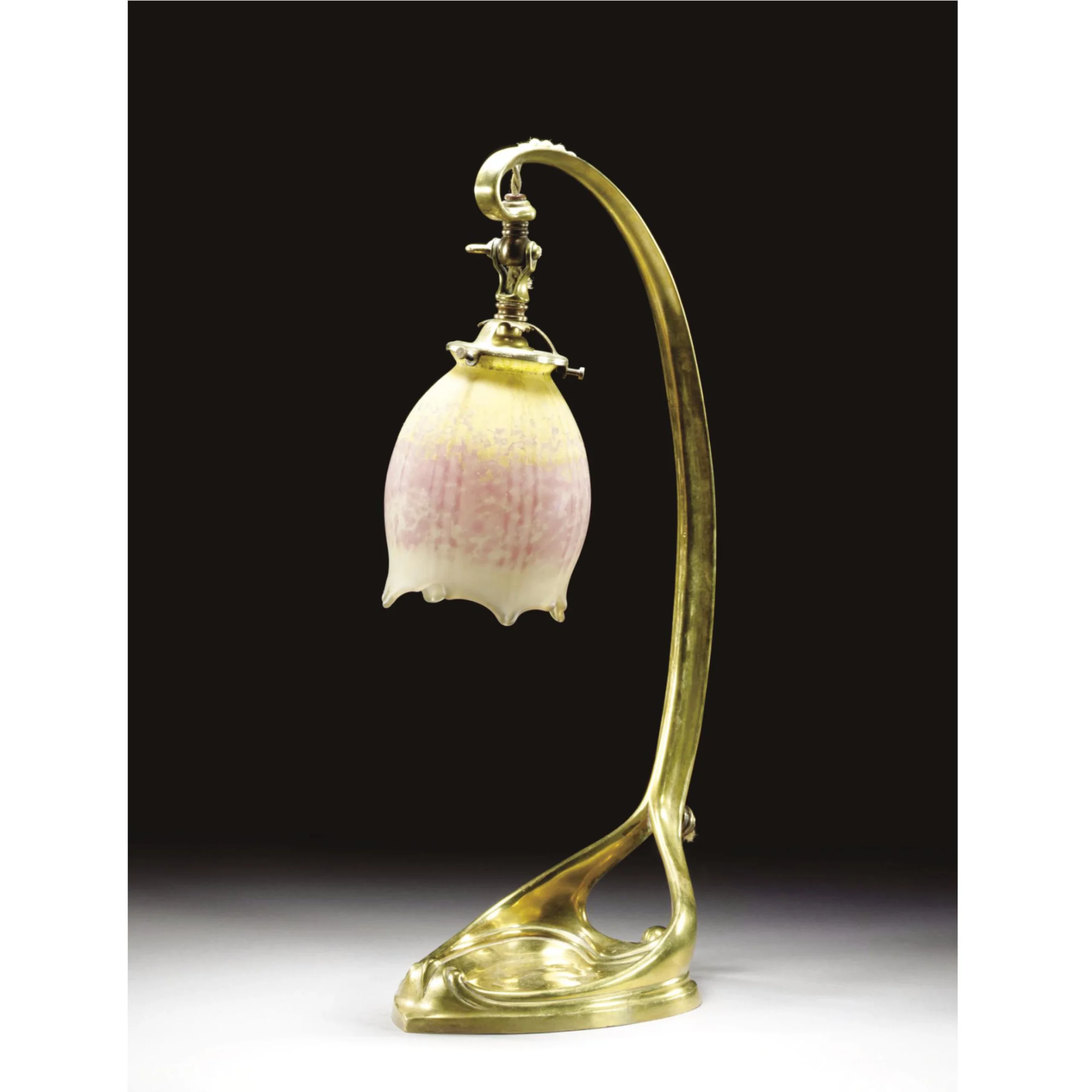
Several skilled artists contributed to the Art Nouveau movement, although predominantly influenced by French and Belgium craftsmen, the movement was transformed by New York designer Louis Comfort Tiffany. Tiffany lamps expressed the form of the previous Arts and Crafts movement; Morrisons influence visible in the 1903 ‘Pond Lily’ leaf design at the base of the lamp. The French Art Nouveau style is defined in Tiffany’s design, sustaining a classical aesthetic using bronze metals as the base, and by providing a modern touch with geometric shapes and stained glassware.
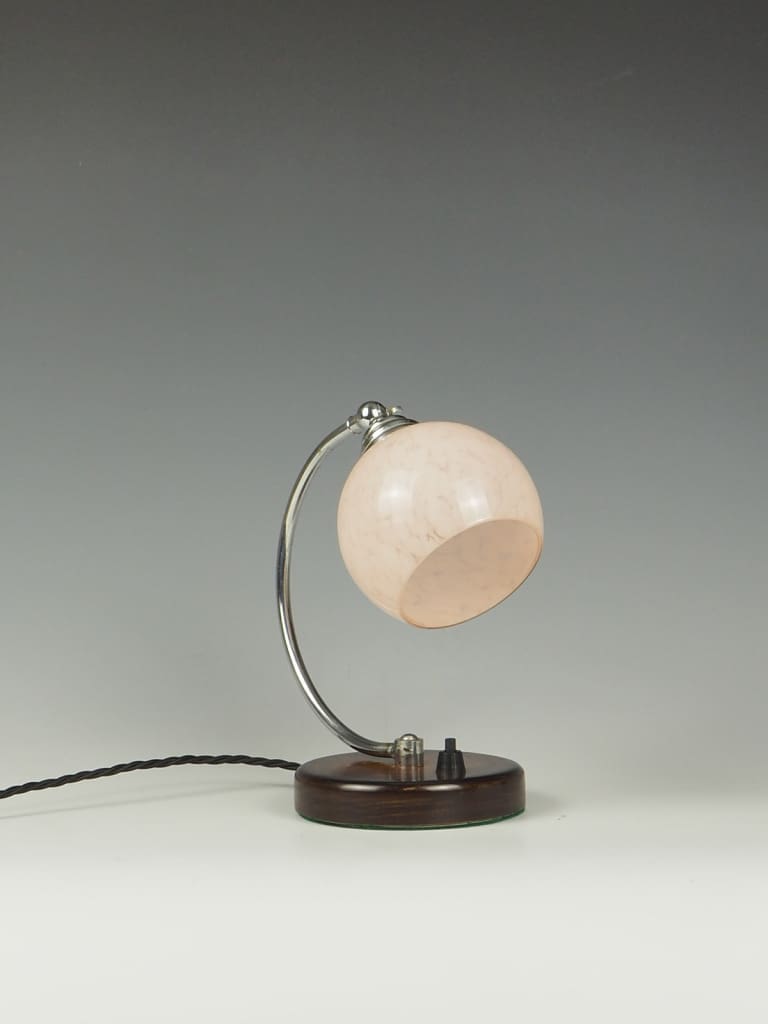
Forward to the 1920s, post WW1 Art Nouveau was replaced in favour of Art Deco. As lighting became widely available Art Deco lighting excelled in business. A fashion of defined and sleek furnishings reduced the number of ornamented lighting fixtures in preference of streamlined shapes. Arched arms on lamps and globe sculpted glass embody the visual smoothness of Art Deco design. Lighting engineers were able to fix electrical wall lights, this changed the way lighting could be designed for display in homes. Today, Art deco lighting is often used to decorate hotels with its traditional colour and vintage effect; neat and bold it complements neutral colour schemes. Throughout the 20’s and 30’s Tiffany lighting continued to be extremely popular and staple to the Art deco era.
An original French Art Deco Desk Table Lamp Pink Globe dating to the 1930s complemented with a chrome finish, portraits the true quality of Art Deco design. This lamp is restored, fully functional, and makes a stunning addition to a stylish office desk.
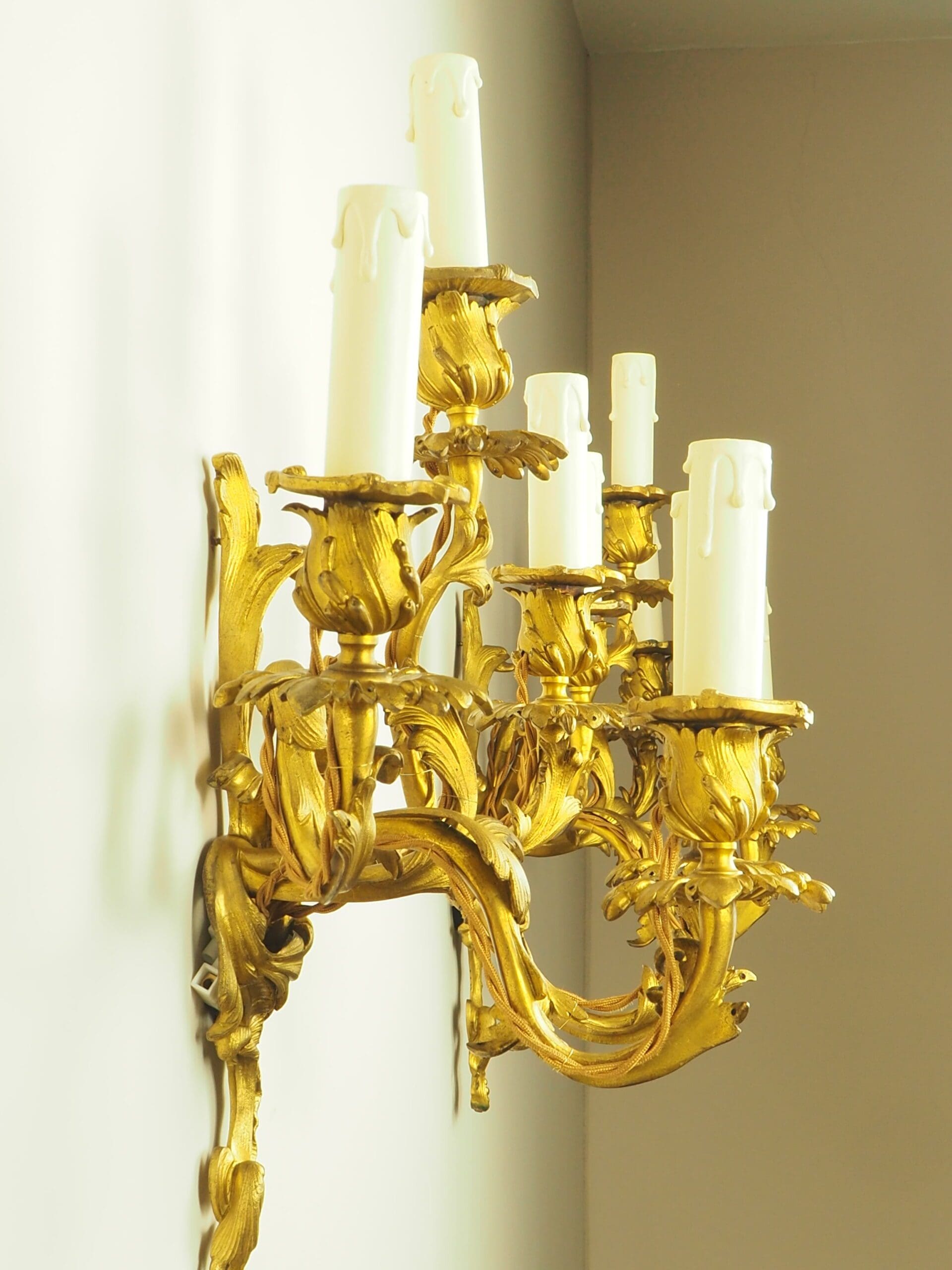
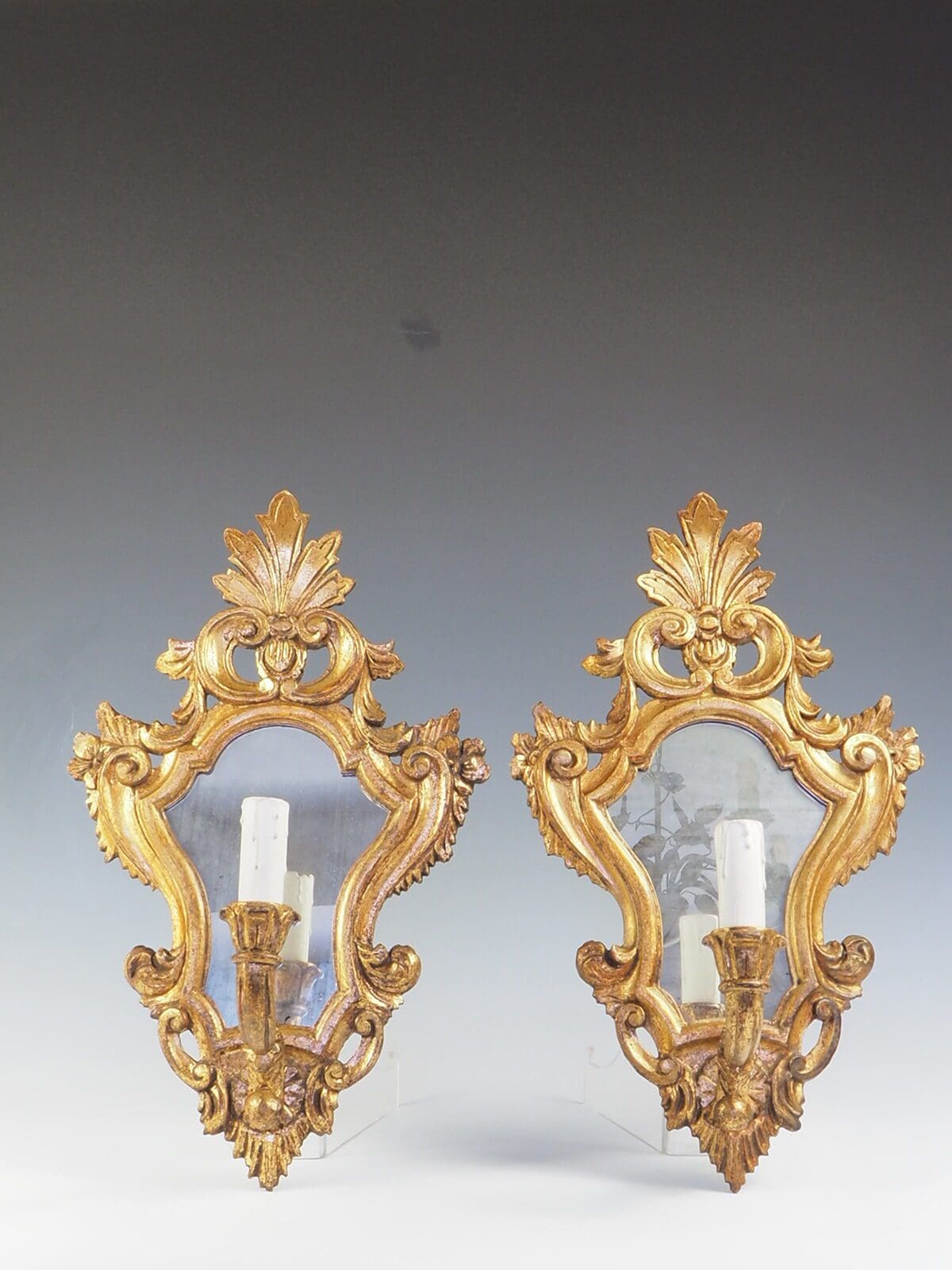
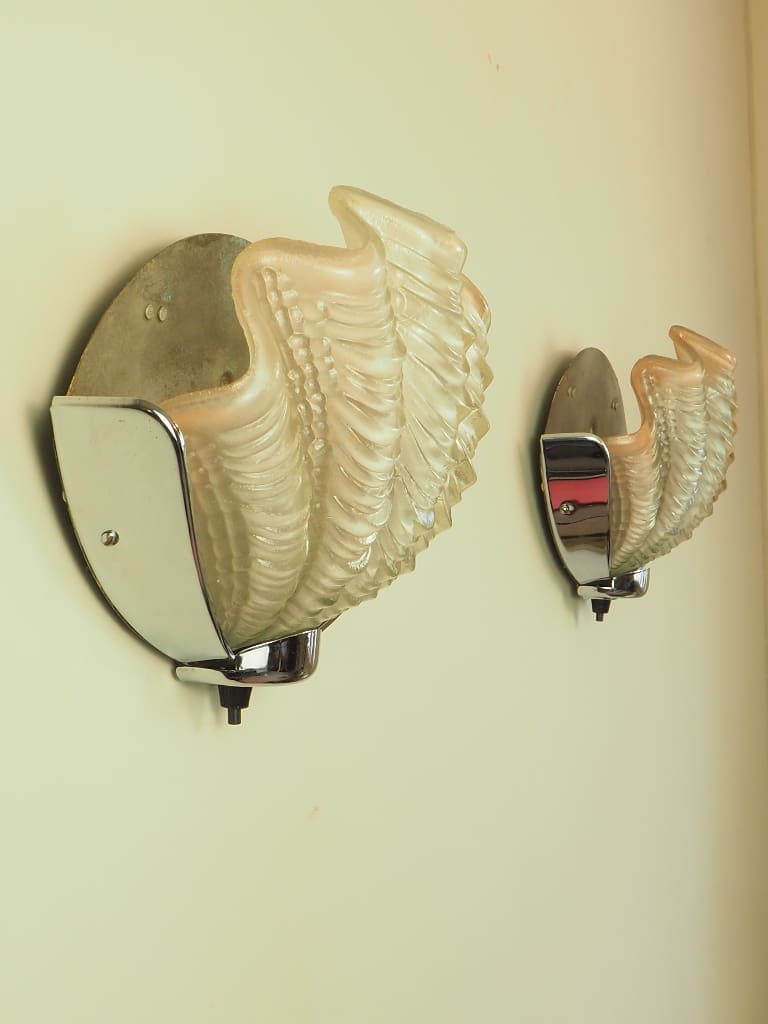
This 1930s Pair of Art Deco Clamshell Wall Lights are exemplary of the new stylisation available from a progression in electrical lighting during the Art Deco movement. Wall sconces became ever more fashionable and practical for homes, hotels, and business worldwide.
A History of Lighting
Artificial sources of light are one of the oldest inventions of humanity. The creation of the
candlestick and the oil lamp – the initial contrivances of lighting – enabled a way of living beyond the circadian pattern of daylight hours. The craft of the candle and oil lamp displays art at its highest function; a portable light, which illuminates the hidden, and granted civilisation nocturnality. The Romans and Ancient Greeks gathered at dusk hours for theatre, games and chariot racing, which were common forms of amusement in the darkening evening. Stadiums and stages were a new space to navigate creativity, emotion, and
connection, lit by candlelight; light sources capture a particular atmosphere containing a cultural past. The burning flame of a candle upholds the symbolic value – denoted by the Romans - who inspired by the wonderous light practised religious rituals and made offerings to the Gods, and for entering the Underworld.
Amongst today’s antiques there exists histories of an indefinite user object relationship, the candle and oil lamp – on which humanity depended - and a direct connection with the epitome of human creation for survival. The development of arts and technology in subsequent centuries sprung a fountain of artists and inventors eager to embellish the most essential and practical of objects, the table lamp.
Evolution of the Candle
First evolving from the Egyptians, candlesticks were brought to England by the Romans. Moulded from wax and tallow (animal fat from sheep or cows), the Romans used rope papyrus to dip into tallow and then hang it to solidify, before rolling it out into a cylindrical
shape. Other civilisations, during the Qing Dynasty of Ancient China, used whale fat also known as spermaceti as candle wax; in Ancient India wax came from yak butter and cinnamon boiled together, unintentionally producing the first scented candle. Europe in the
Middle Ages introduced beeswax for an alternative to tallow, it was preferable amongst the higher class, a practical consideration as tallow burned much faster and dispelled black smoke with a pungent aroma. Fortunately for the wealthy, beeswax was accessible, whereas much of the working-class population continued to use tallow. In England candles were taxed; however, beeswax was eight times the tax of tallow, further propending its exclusivity. Candlestick making fuelled the economy, and throughout the 19 th century the developments of the candle, braiding the wick over twisting, and the use of stearic acid mixed with paraffin, made for longer lasting candles that required less maintenance. Up until the introduction of the light bulb, candles were central in every home.
After a minimal decline in profit and production in the candle industry, the 1980s marketed scented candles, which surged in popularity. Forward looking to the 21 st century candles are widely available anywhere, including environmentally and ethically sourced wax such a soy.
The intention for candle production has shifted from dependency to commodity, yet the golden glow upholds a timeless charm and artists continue to etch and design for a decorative purpose. Still the candlelight evokes a particular emotion and retains a higher purpose for religious and spiritual practices, the light a symbol of hope, God, or spirit.
Oil Lamps
Oil Lamps were originally developed by the Egyptians, as well as being used by Ancient Greeks and by the Romans who introduced the invention to England. Constructed glass, stone, metal and more commonly clay, the cultural legacy of the oil lamp is pivotal to
human progression. Often the Greeks and Romans would carve onto the lamps mythological scenes or classical art depictures. Archaeologists in recent centuries have identified the makers mark inscribed on remains of oil lamps giving an indication of the workshop it was made in. At this time, Americans found resources available to them to make lamps, often using shells, and burning animal fats or camphine made from turpentine, whereas in India, they burnt ghee, mustard or coconut oil in lamps crafted from brass. Oil lamps were both
necessary and quintessential up to the 18 th century. The basic oil lamp was a metal tray with a spout edge for a thick wick to be inserted and set alight. Many designers made adaptions to increase the functionality of the oil lamp, including the invention of several spouts to
maximise the amount of light emitted from one lamp.
Changes to Gas Lighting
In 1807 - after Benjamin Franklin’s revolutionary lantern design in the 1750s that minimised the smoking of glass globes - gas lighting was introduced to London’s streets. William Murdoch oversaw the installation of thirteen gas lamps along Pall Mall, a street in the
centre of London. In succession to this, 1820’s London had installed 40,000 Victorian style gas lamps around the city. The labour-intensive process of producing and maintaining lighting employed several workers from: Blacksmiths, Coppersmiths, Potters, and Tinsmiths.
A Lamp lighter, using a pole with a wick, was responsible for lighting the candles every evening, and return at sunrise to extinguish each light. Lamp Lighters were responsible for trimming the wick, cleaning the glass globes, and keeping up maintenance of the streetlamps. In 1930 the clockwork controller was installed which worked on an automated system to produce light, relieving the Lamp Lighter of their duty. By 1950 almost all gas lights were replaced by electric lighting, providing brighter streets for a busier, more populous city.
How did the Light Bulb evolve lighting?
After decades of experimentation, the commercial light bulb was driven into Britain’s public market in 1883. Several individuals worked towards the production of the light bulb, De Moleyn and Joseph Swan hypothesised and tested alternative filament for efficient light production. However, not until Thomas Edison manufactured a carbon filament curated from carbonised bamboo, did the bulb become a commercial success and available for open trade. Edison produced a bulb that lasted 600 hours and was suitable to sell, providing a
revolutionary alternative of lighting for upper-class members of society and businesses.
Lighting Services at Shackleton Fox
At Shackleton Fox all lamps undergo a PAT inspection and full rewiring to meet UK standards, included within the price of the item. As part of the restoration process, we examine the surface, research, and identify the condition of the item to ensure safe handling of the
antiques, making repairs, and providing a thorough cleaning. Often table lamps made of brass have a natural patina, a desirable element which enhances value, and which we preserve, for our desire is to maintain the items originality. Assessment ensures we accordingly alter the cleaning and restoration of the antique depending on the condition. If however, a piece is selected to ornament a house with grandeur architecture and interior design, and a certain aesthetic is desired, the brass is given a full polish.
For over 5 years we have hand selected more than 300 lamps back into commission and take pride in our renovations; in which we renovate beautiful antiques into lamps to suit for a sophisticated modern home. Explore the bespoke range of Antique lighting at Shackleton Fox.
Written by Guest Blogger: Anya Tindale