
Rare Matching Pair of Japanese Meiji Period ‘Hakone’ Marquetry Kodansu
£1,600.00
Description
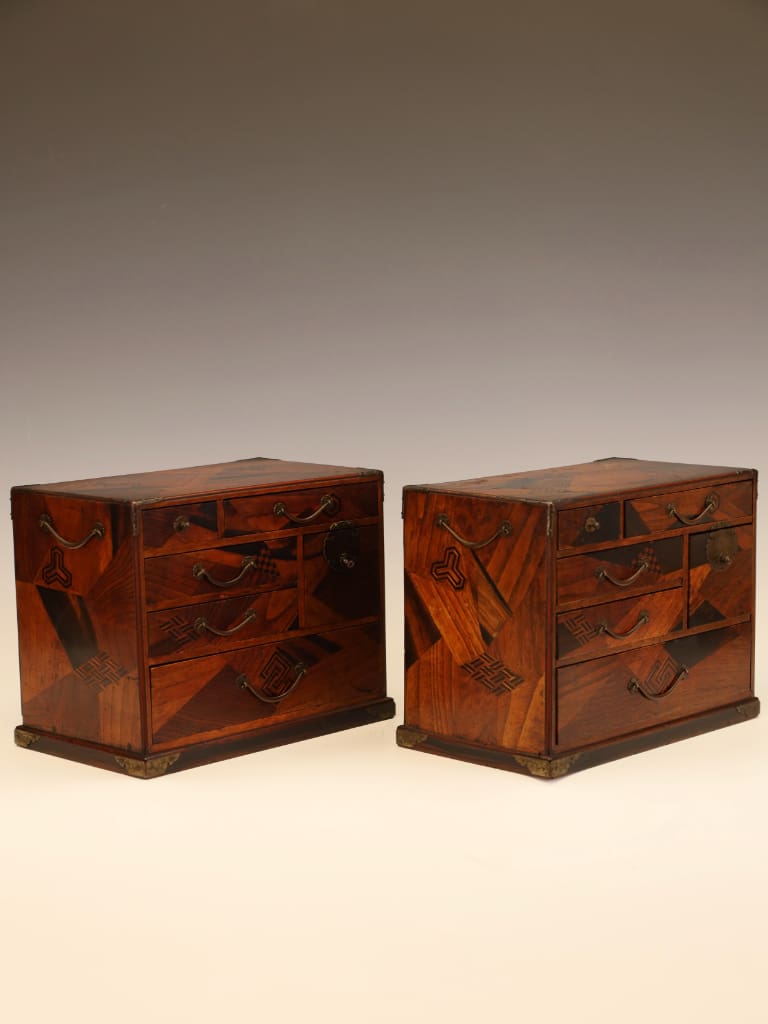
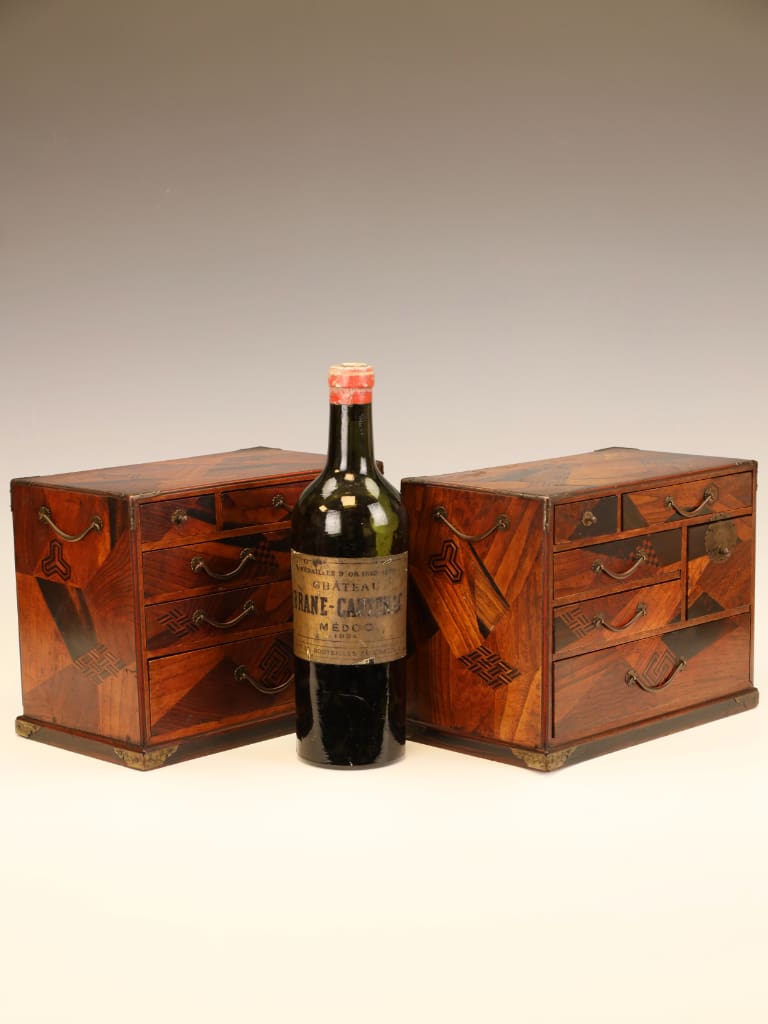
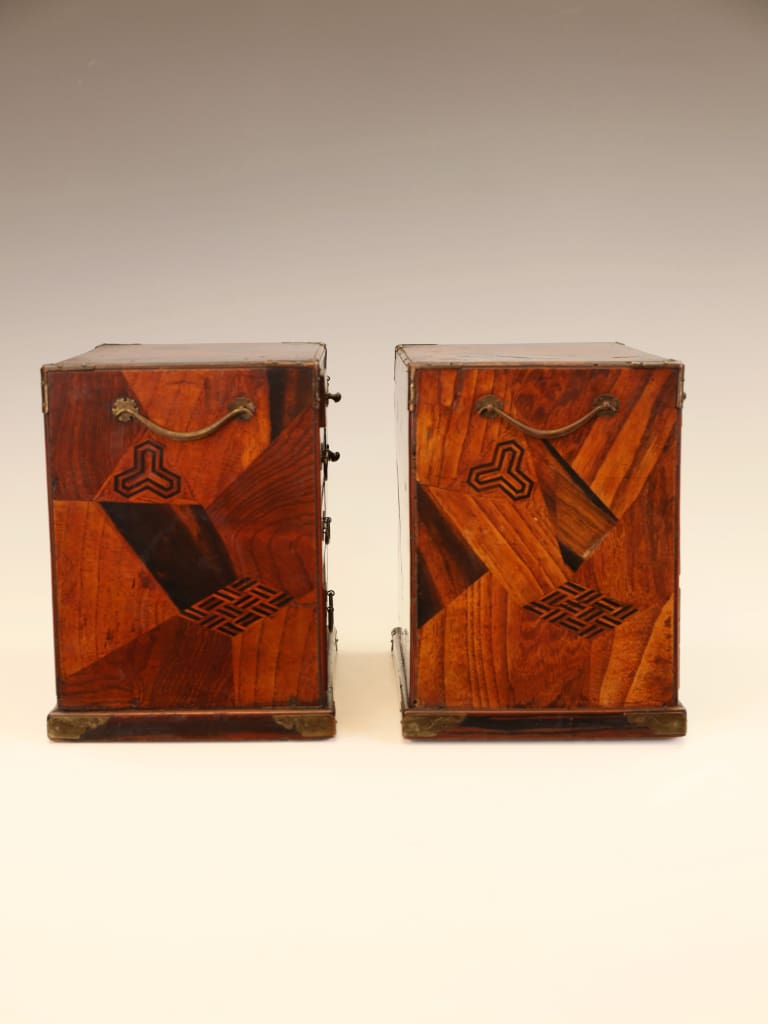
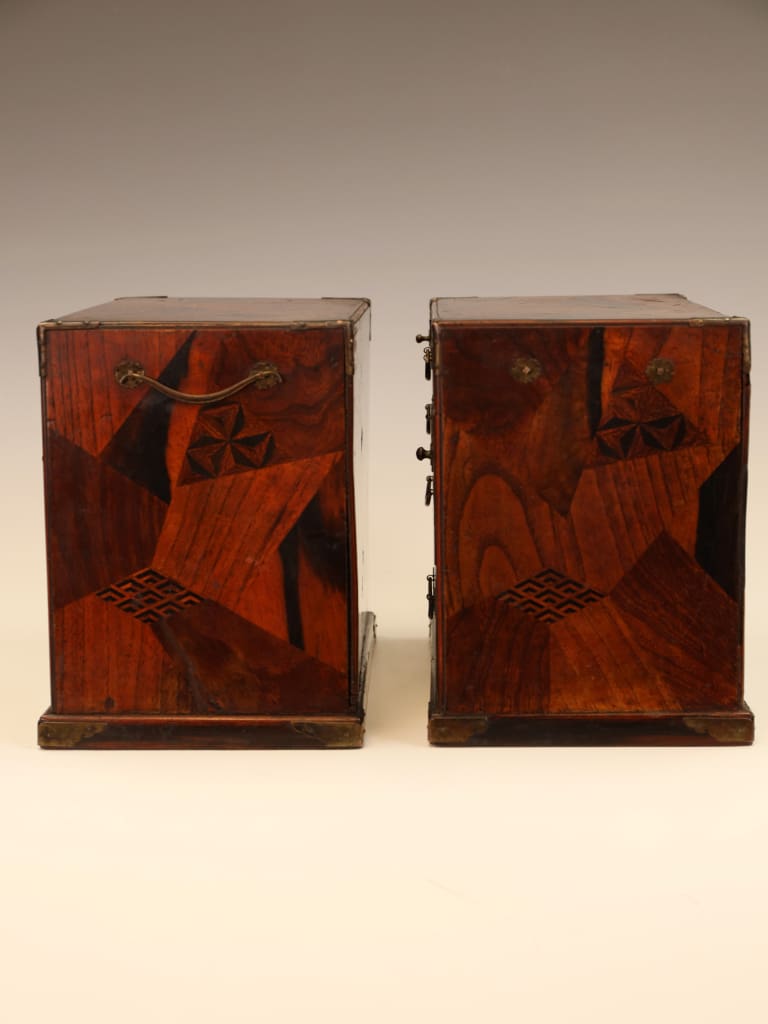
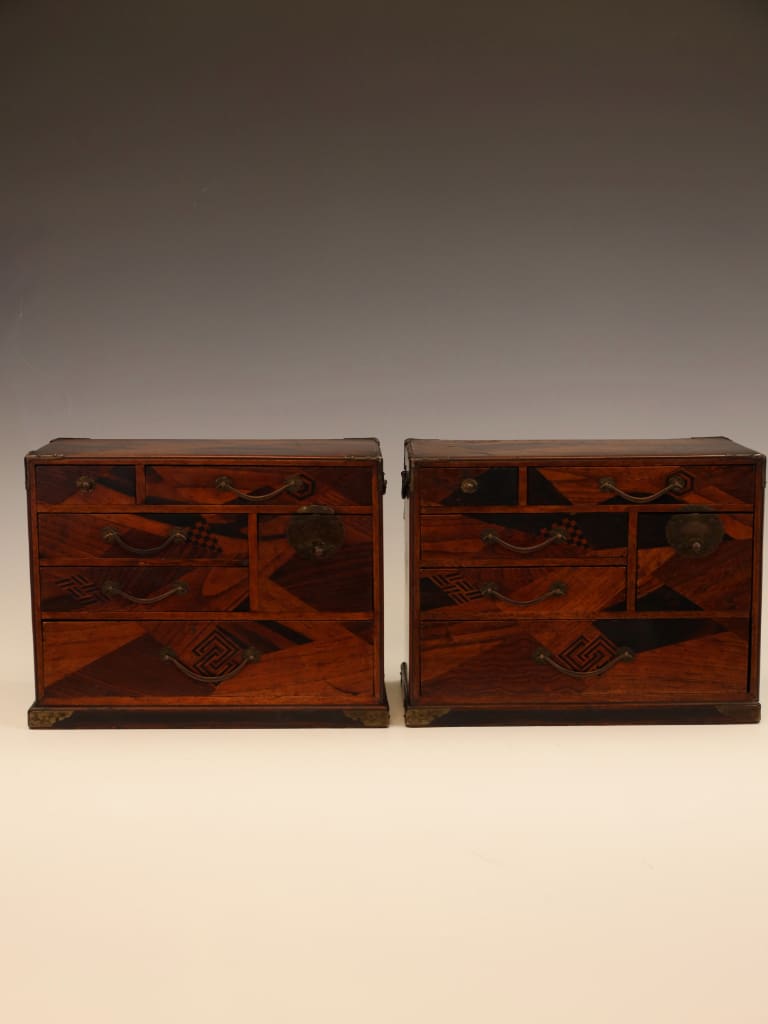
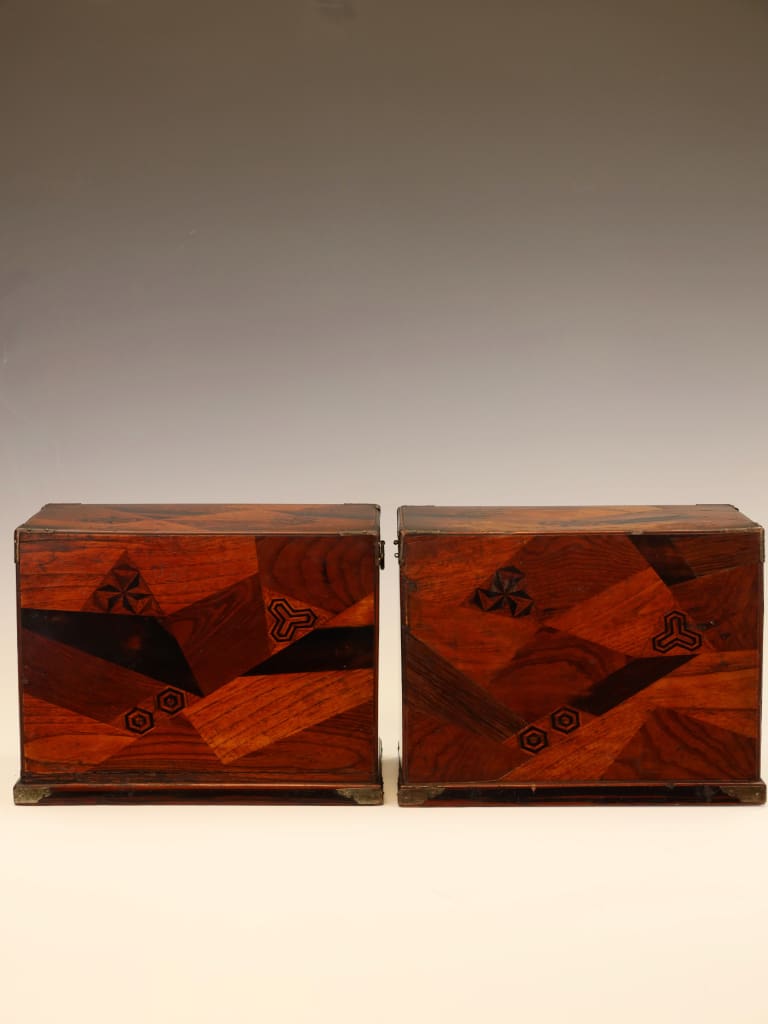
A truly remarkable and rare matching pair of late 19th-century Japanese Kodansu (table chests), masterfully decorated in the renowned Yosegi-zaiku marquetry of the Hakone region. Finding an identical pair of these cabinets in such cohesive condition is a significant discovery for the collector of Meiji-era decorative arts.
Mainland UK Delivery Included

International Shipping
Delivery Leadtime
International delivery is estimated at 5-7 working days.
Full details will be confirmed during the ordering process.

Rare Matching Pair of Japanese Meiji Period ‘Hakone’ Marquetry Kodansu
A truly remarkable and rare matching pair of late 19th-century Japanese Kodansu (table chests), masterfully decorated in the renowned Yosegi-zaiku marquetry of the Hakone region. Finding an identical pair of these cabinets in such cohesive condition is a significant discovery for the collector of Meiji-era decorative arts.
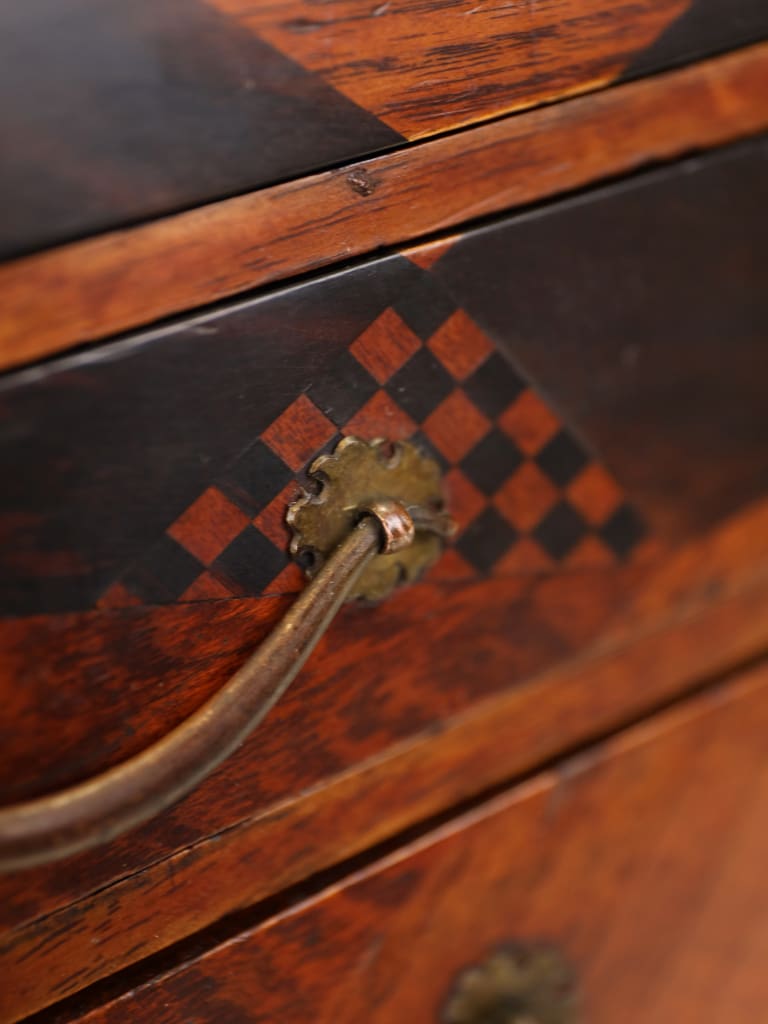
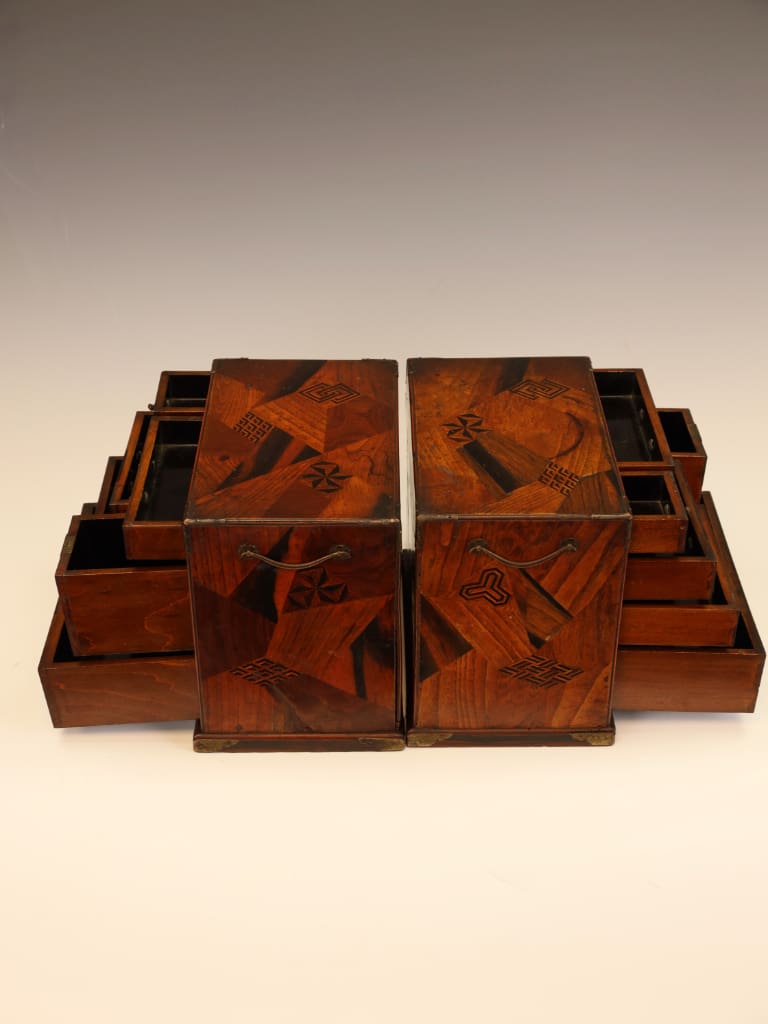
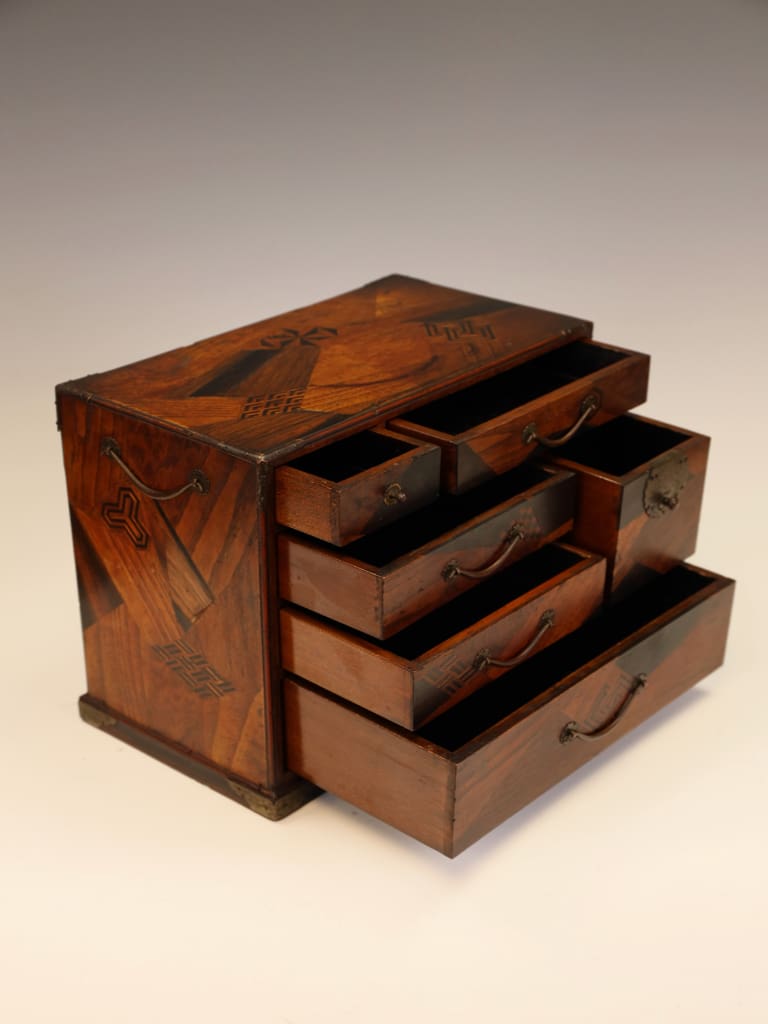
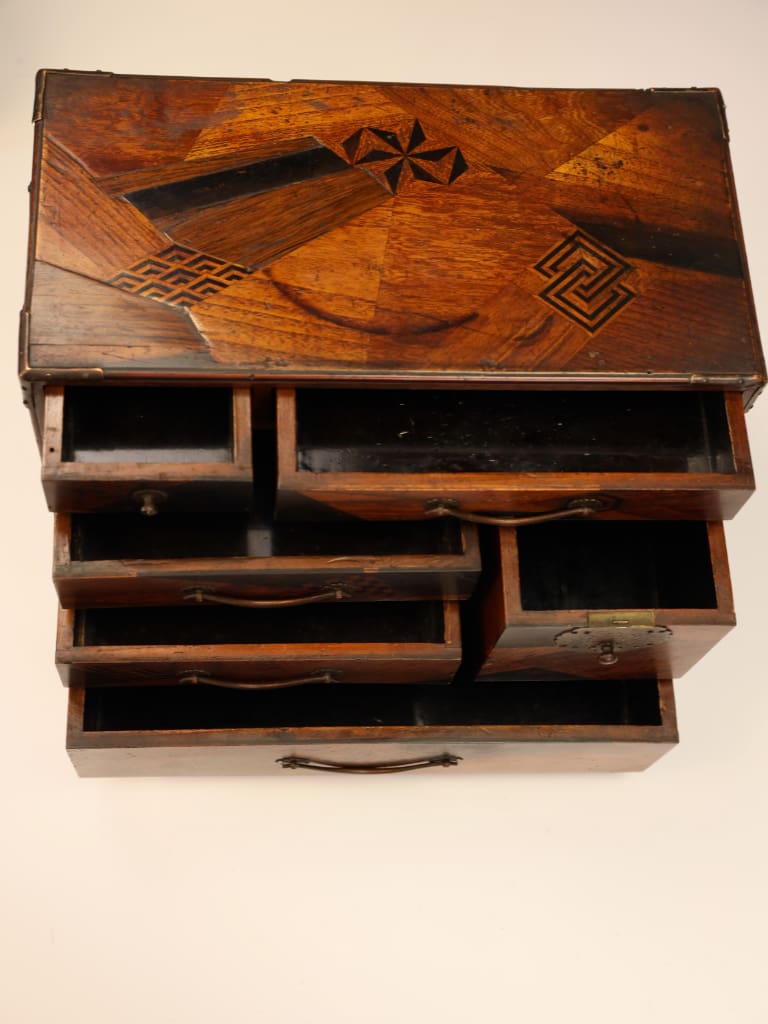
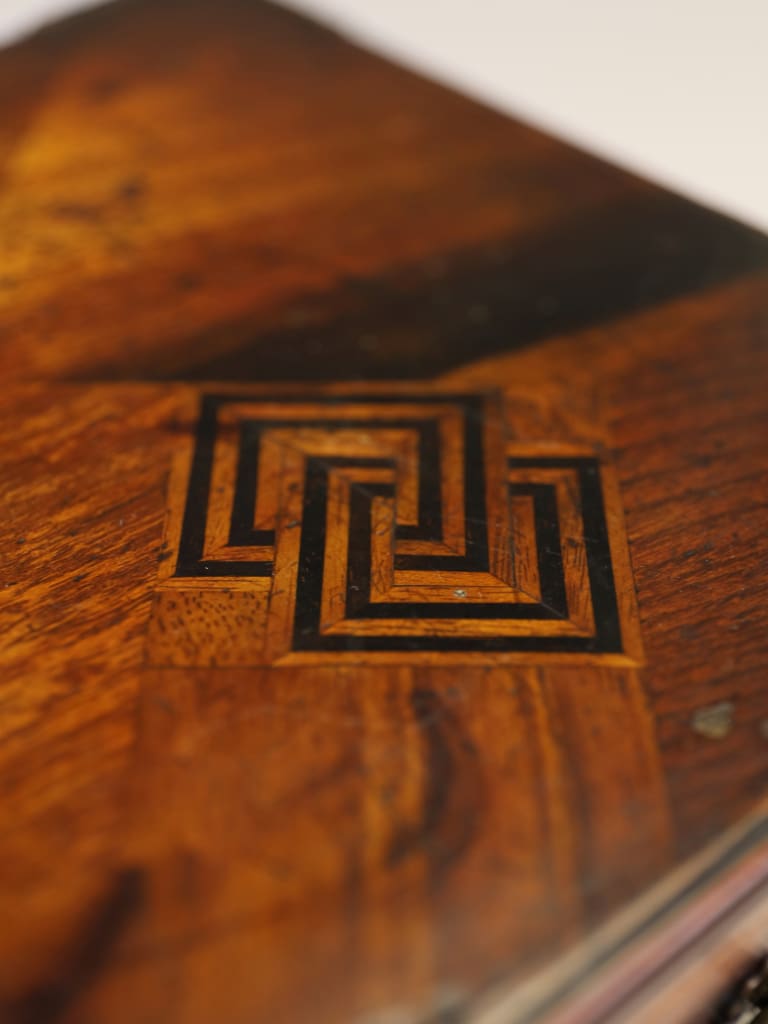
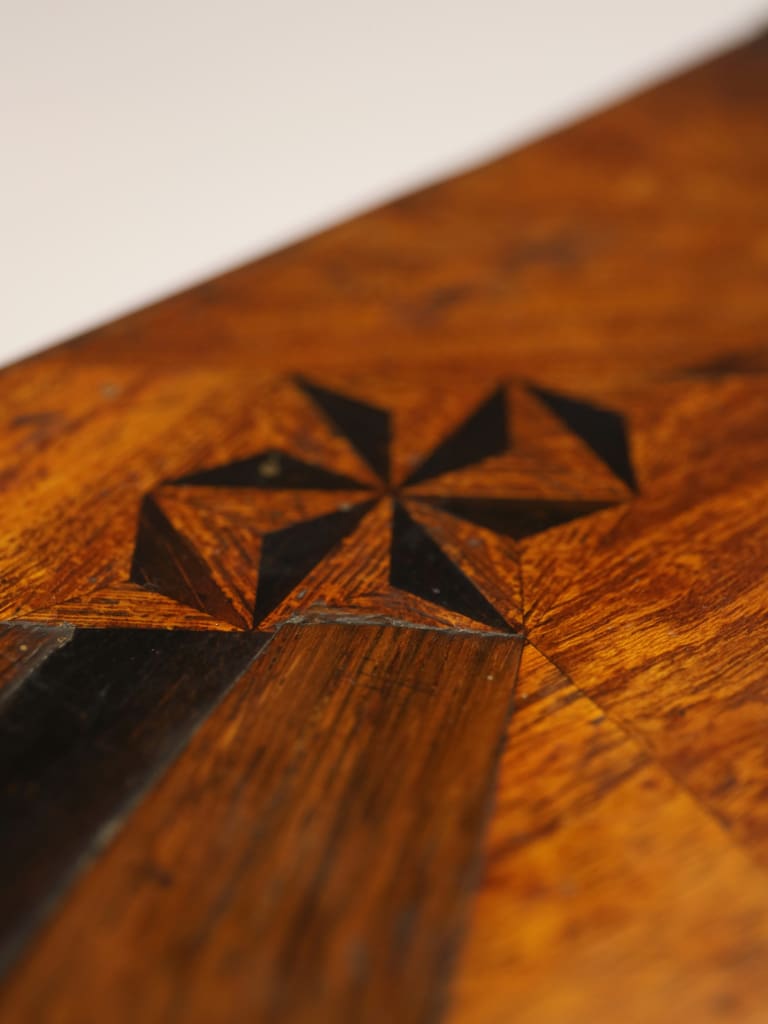
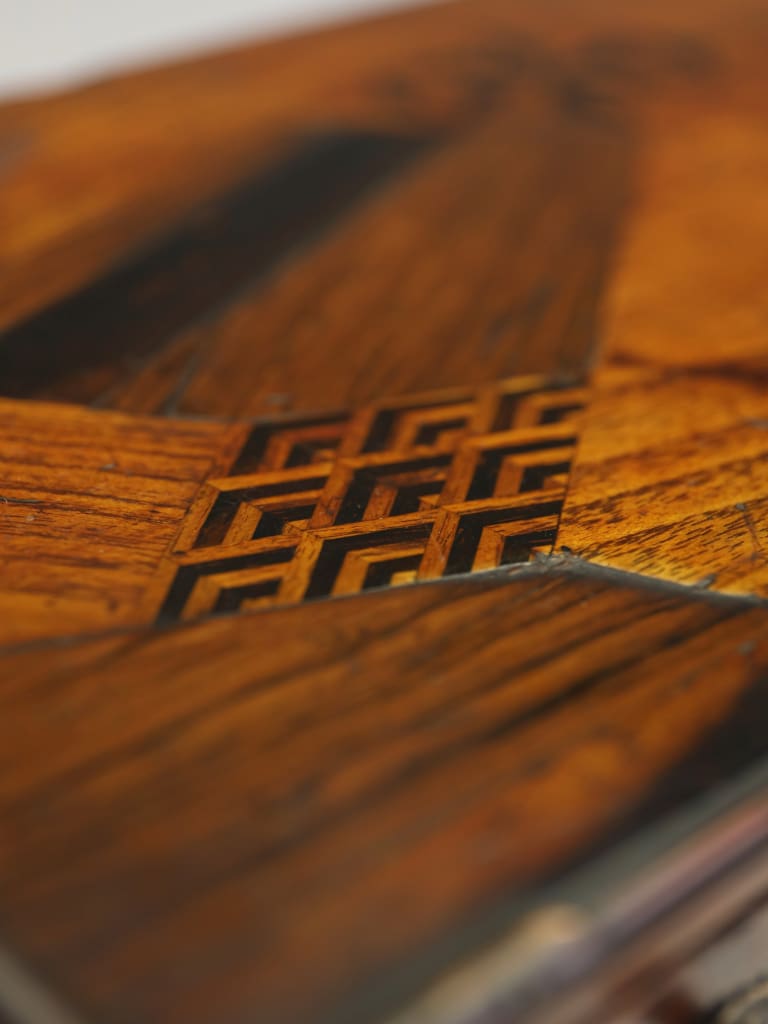
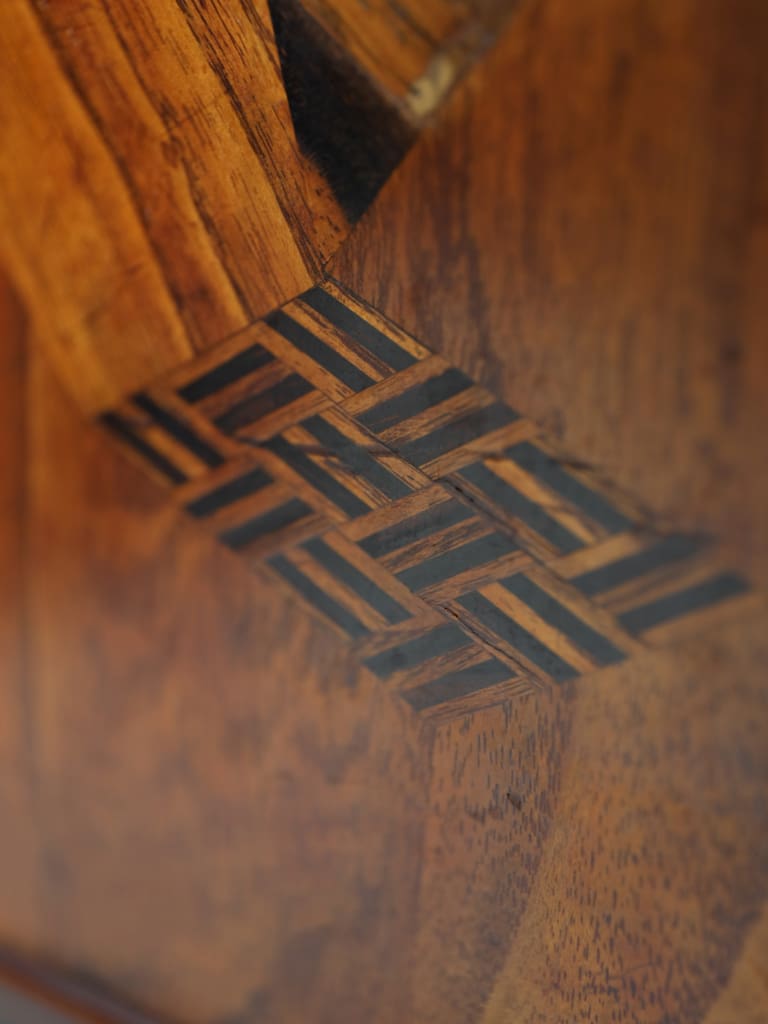
Each chest is a technical marvel of geometric parquetry, featuring an intricate "mosaic" of naturally coloured woods including spindle tree (white), mulberry (yellow), and katsura (black). The surfaces are adorned with traditional patterns, most notably the Asanoha (hemp leaf) motif, which symbolises vitality and growth.
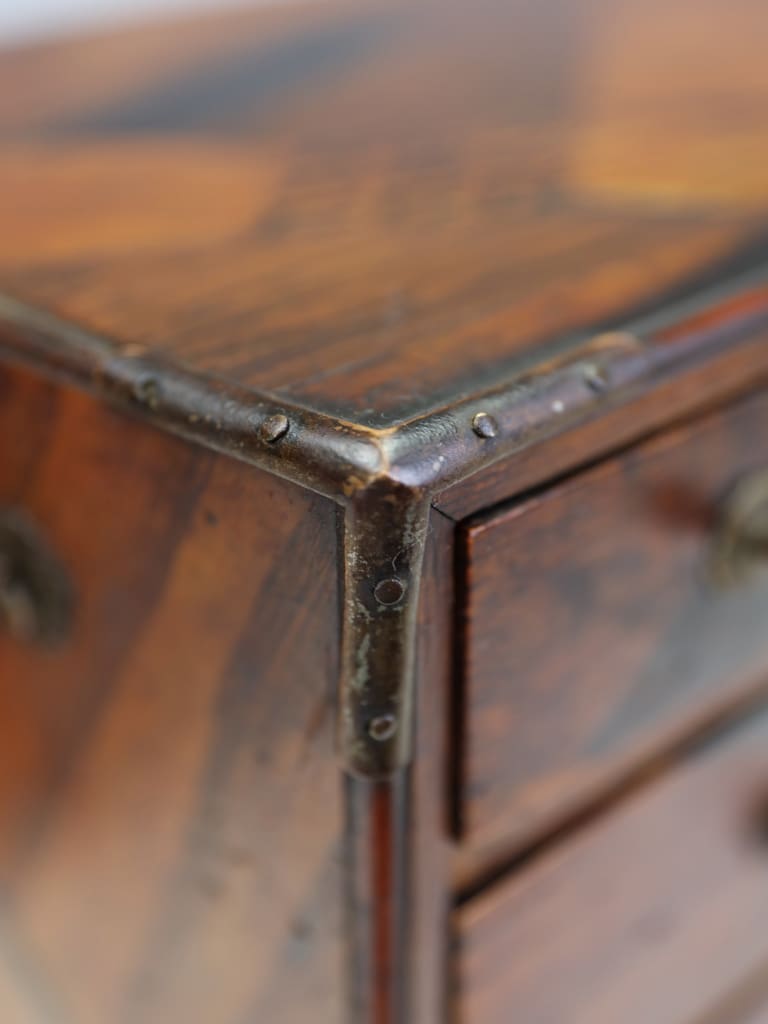
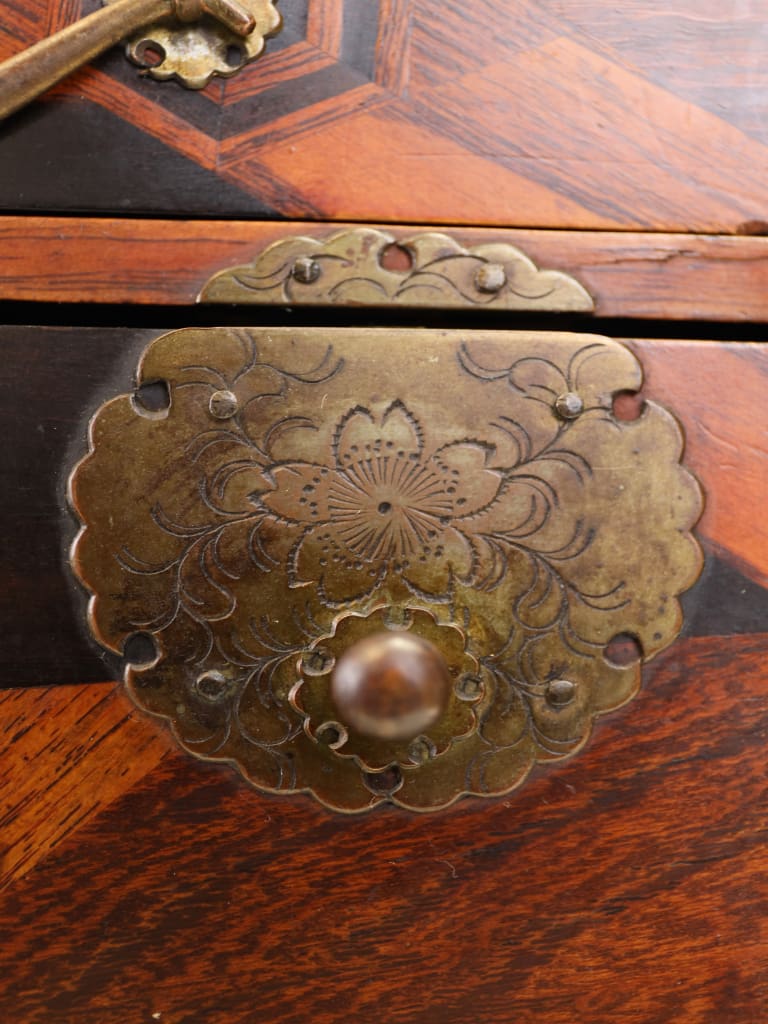
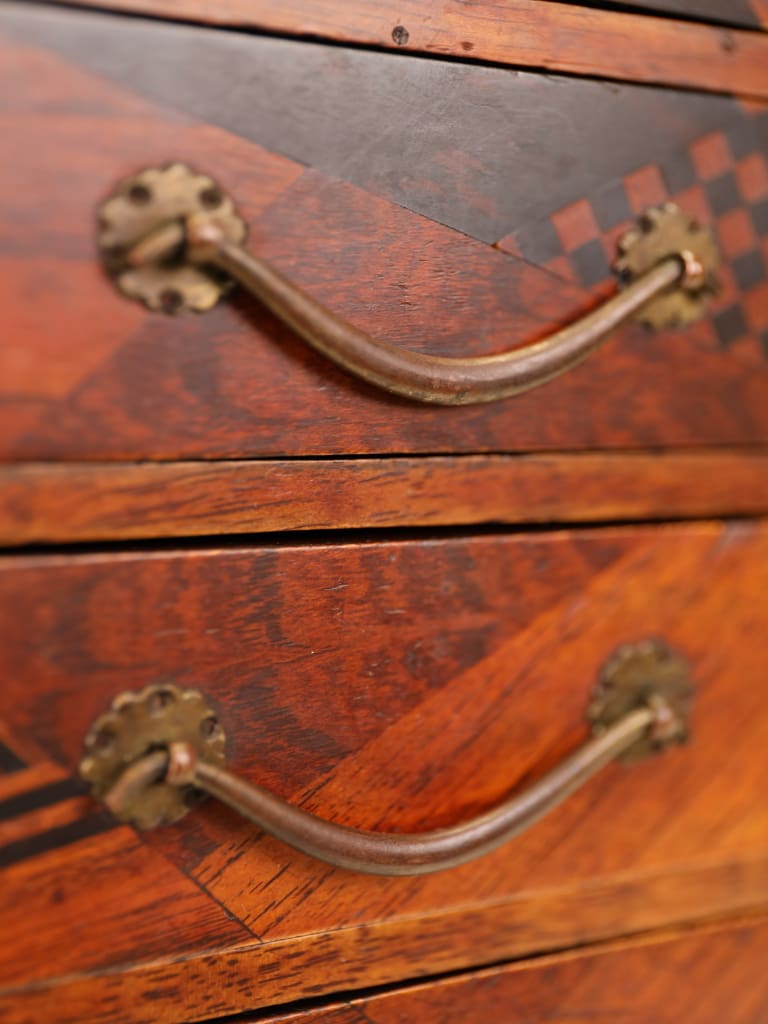
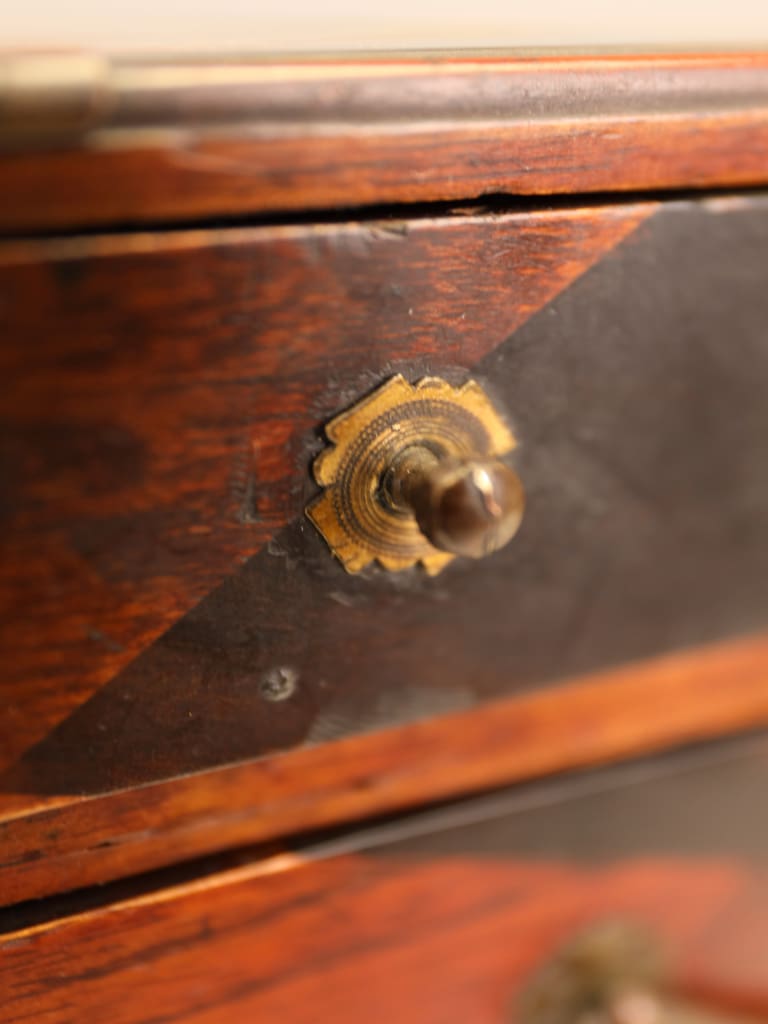
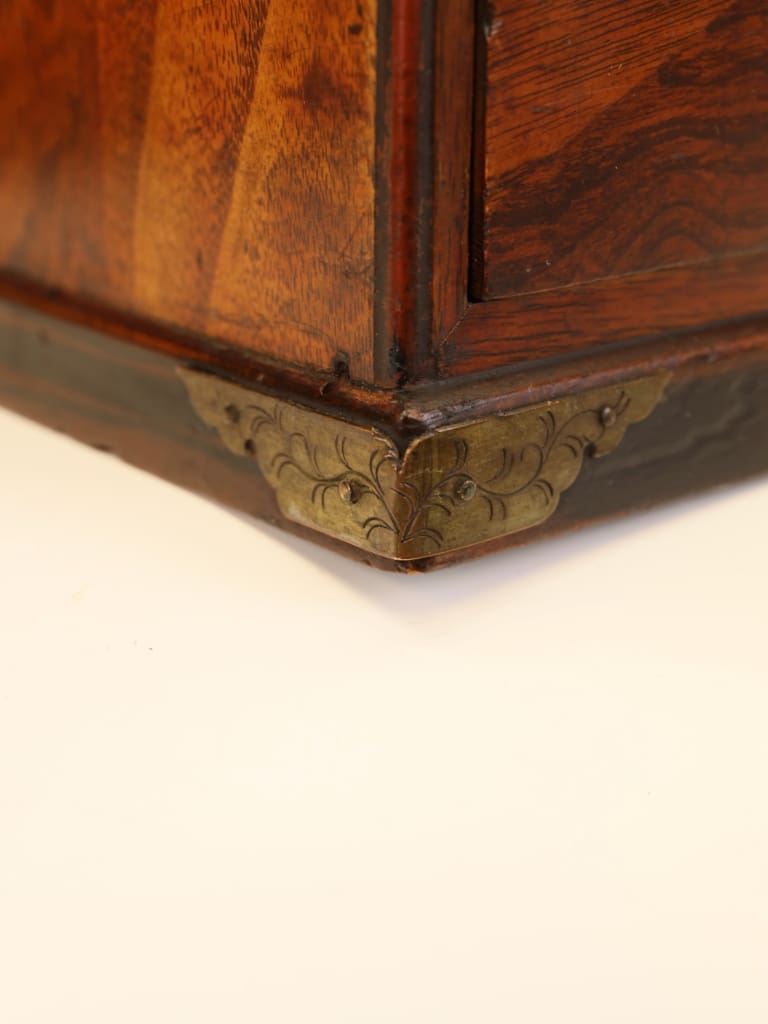
The ingenious configuration includes multiple small drawers and a central hinged door—likely concealing further secret compartments—secured with original bronze and brass fittings. These "miniature museums" of woodcraft were highly prized during the Meiji period as luxurious export items, captivating Western collectors at the great International Exhibitions with their precision and exotic aesthetic.
Hakone, Kanagawa Prefecture, Japan. Specifically attributed to the village of Hatajuku, the historic centre of Yosegi-zaiku craftsmanship.
Meiji Period (1868–1912). This era saw the transition of Yosegi-zaiku from local souvenir-ware into high-art export pieces intended for the European and American markets.
Unlike Western marquetry, which uses dyed woods, these patterns are created solely from the natural variations of native Japanese timber. Blocks of different woods are glued together to form a "seed plate" (tanegi), which is then shaved into paper-thin veneers (zuku) and applied to the cabinet’s frame. This pair likely dates to circa 1890, a time when the technical complexity of these patterns reached its zenith.
Condition Report
The veneers are in good stable condition across both chests. There is no significant lifting or "bubbling" of the wood, which is often seen in pieces exposed to central heating. The natural colours remain crisp and well-defined. Both cabinets are structurally sound. The drawers pull smoothly, and the internal hinges of the central doors are firm and original.The original metalwork (handles and corner protectors) remains present and correct, displaying a fine, dark, aged patina that has not been over-polished. One handle is missing from the side of one chest, and another appears to be a later replacement. Each cabinet has one locking drawer, though the locks can be temperamental Finished with a light, traditional clear lacquer that protects the wood while allowing the grain to breathe.
Measurement
Height: 22 cm / 8.5 inches
Width: 44 cm / 9.4 inches
Depth: 14 cm / 5.3 inches
Weight: 1.5 k.g. / 3.3 lbs