
£1,250.00



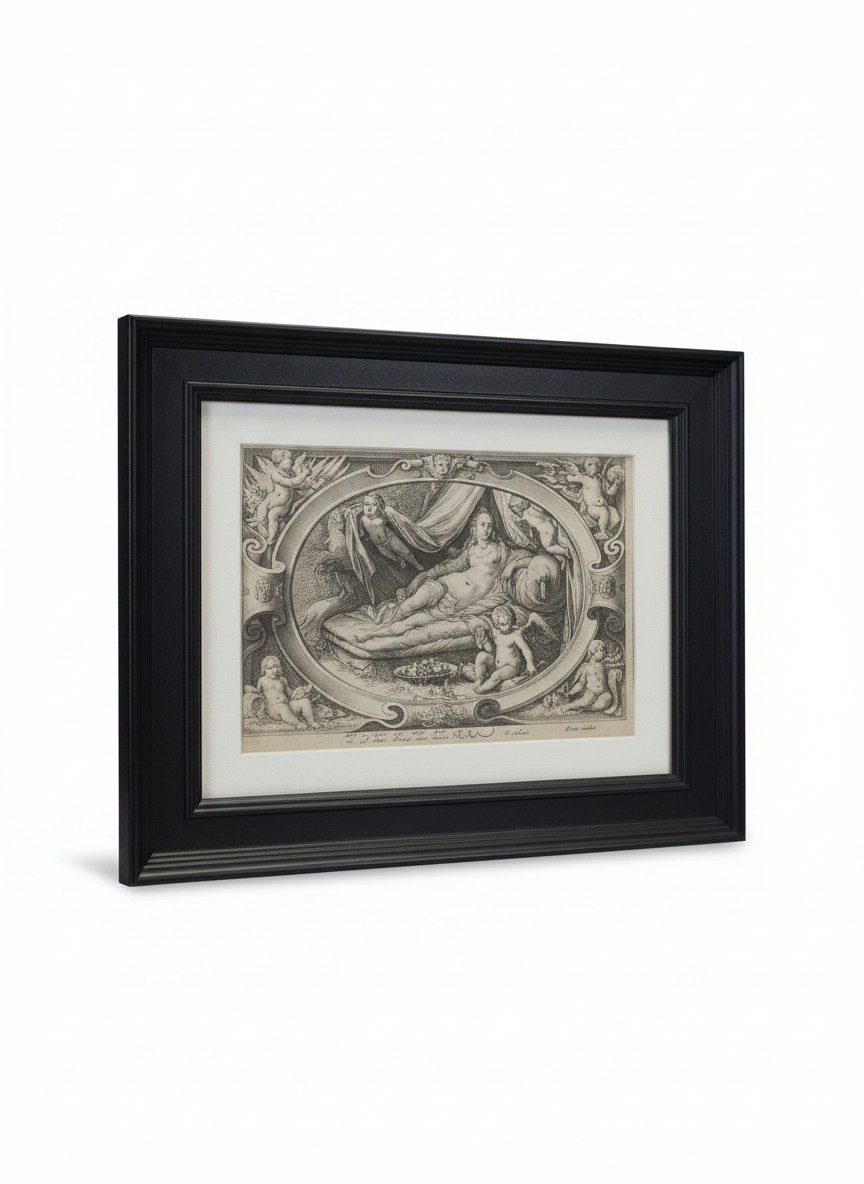
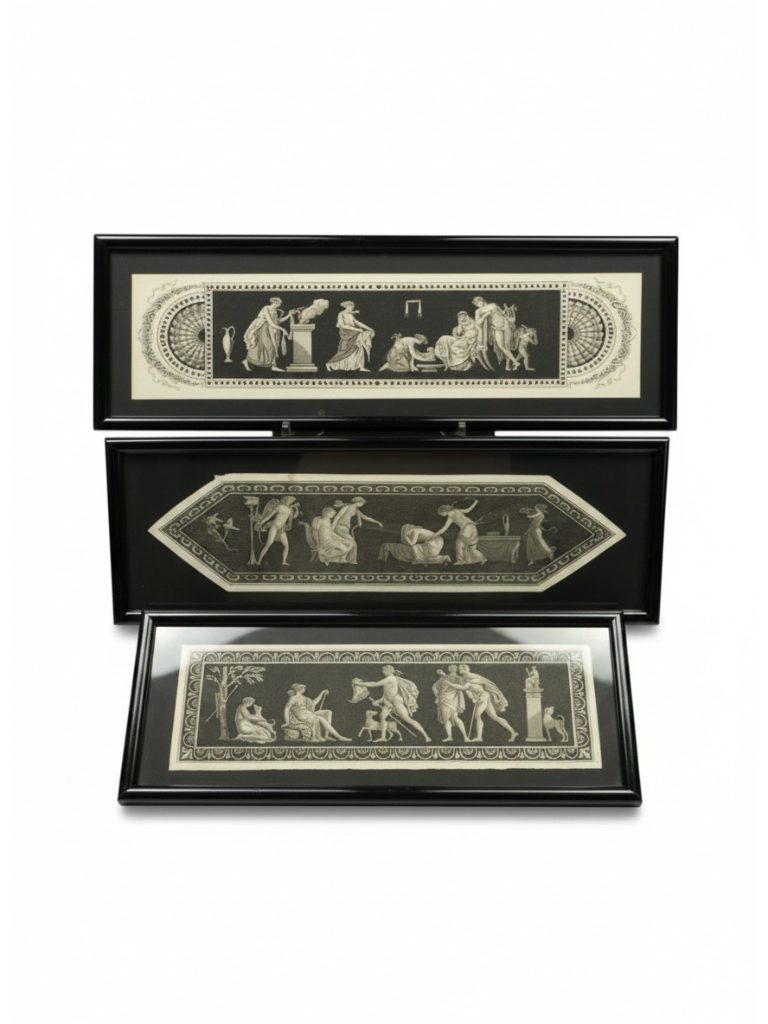
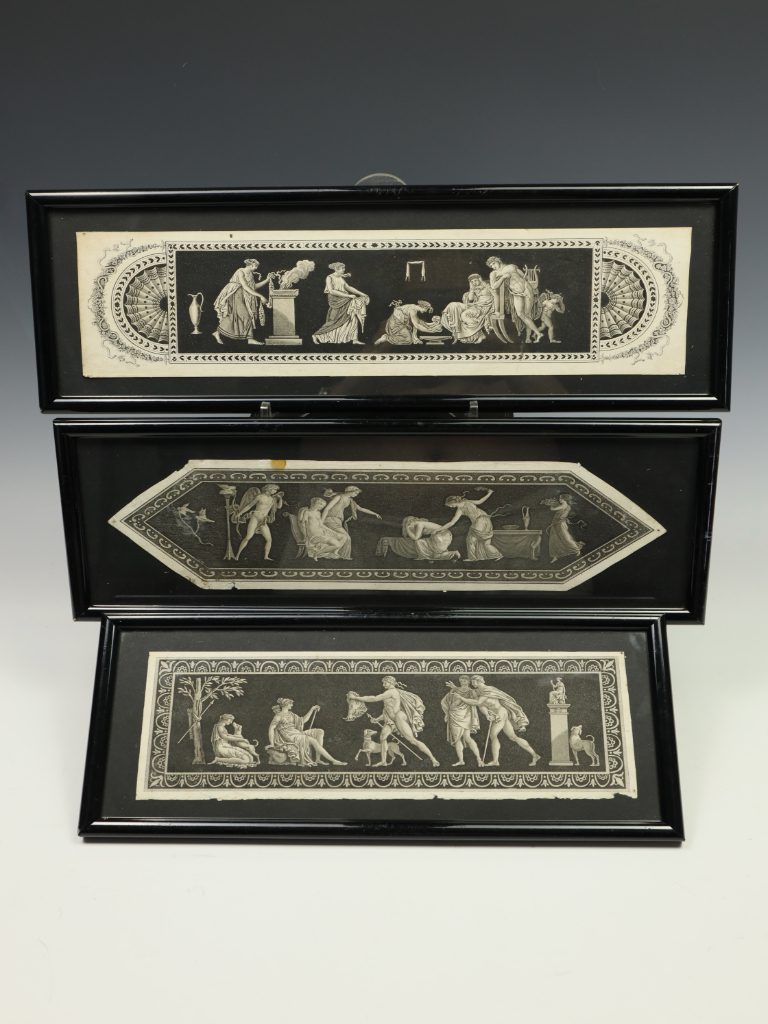
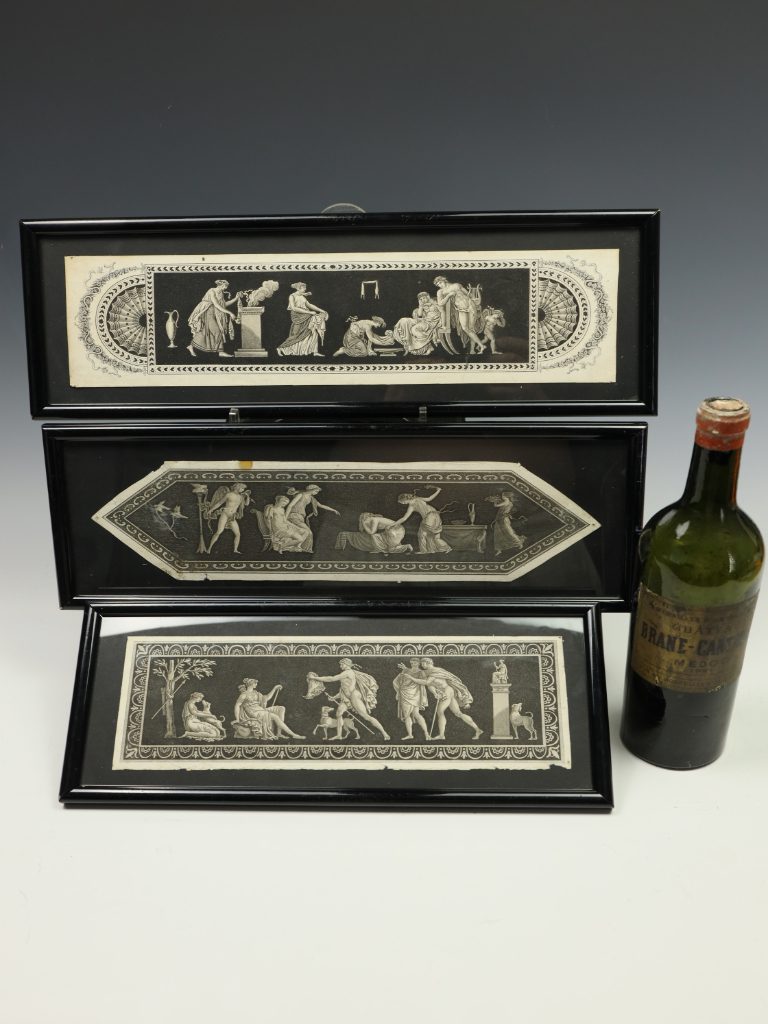
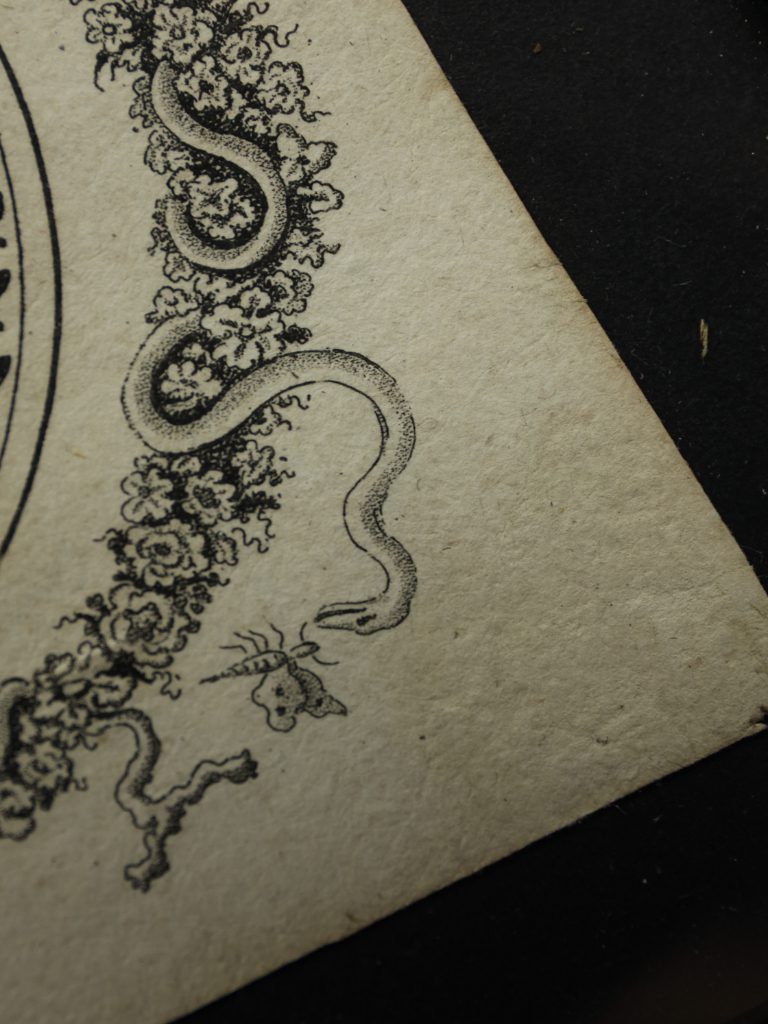
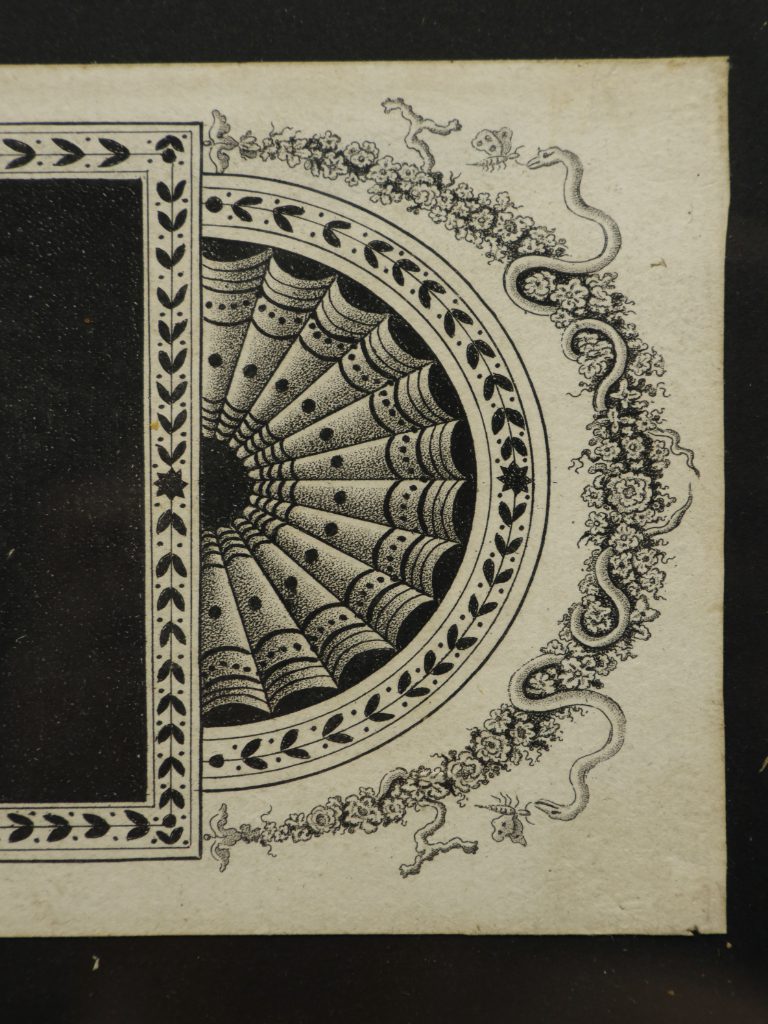
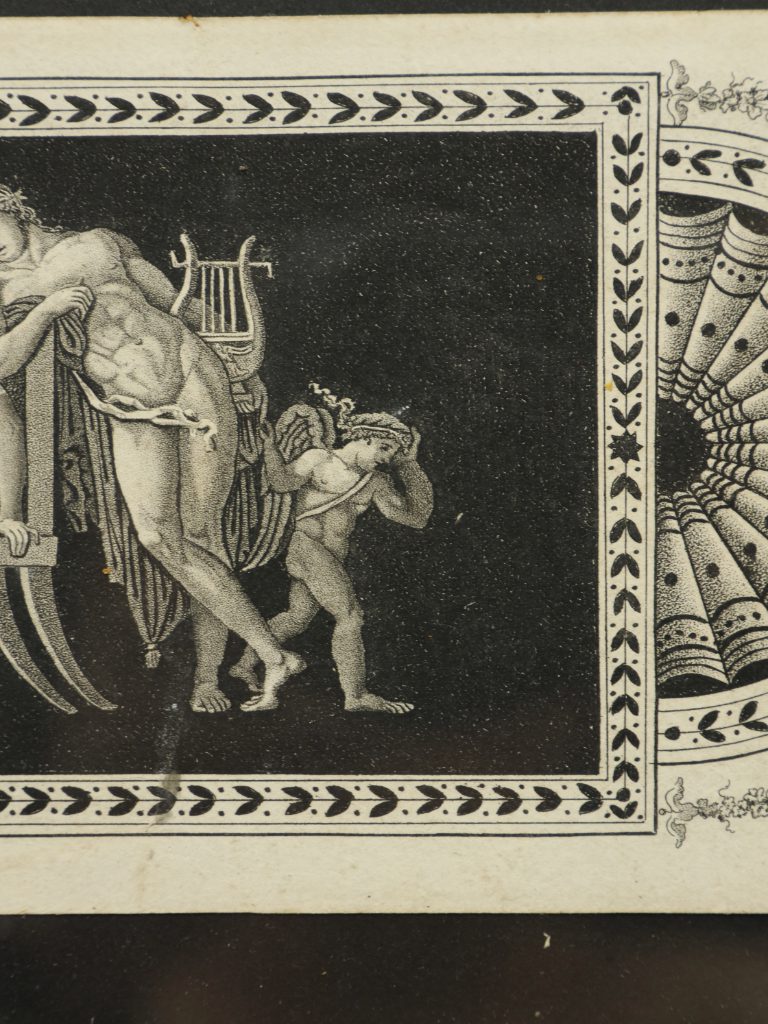
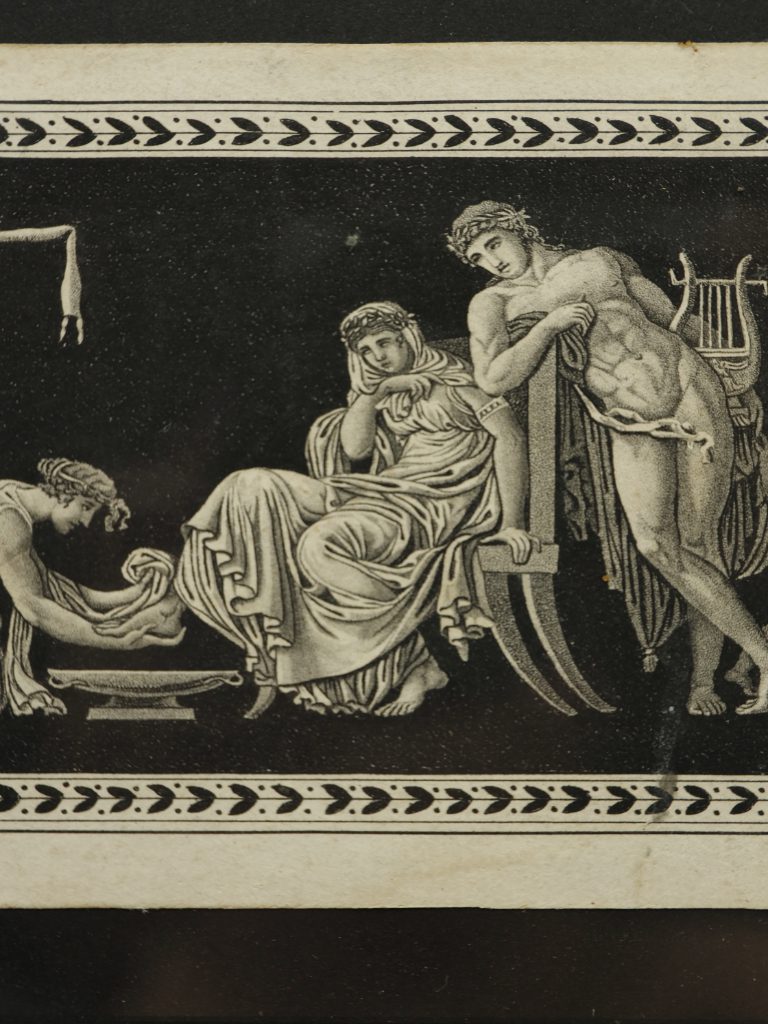
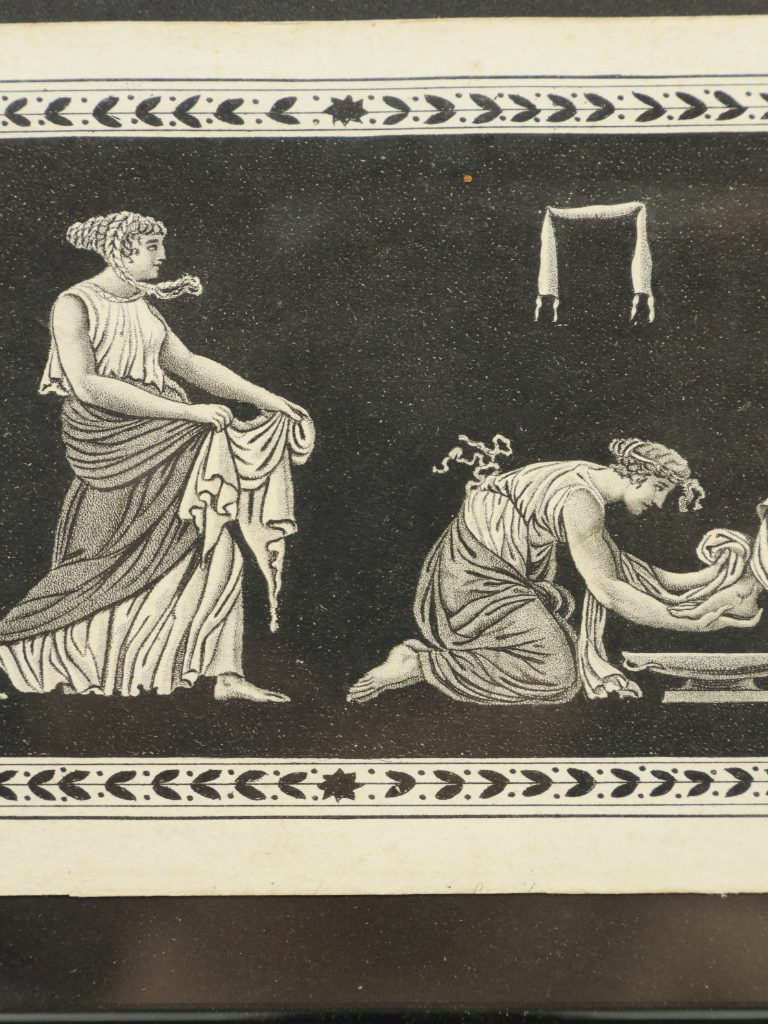
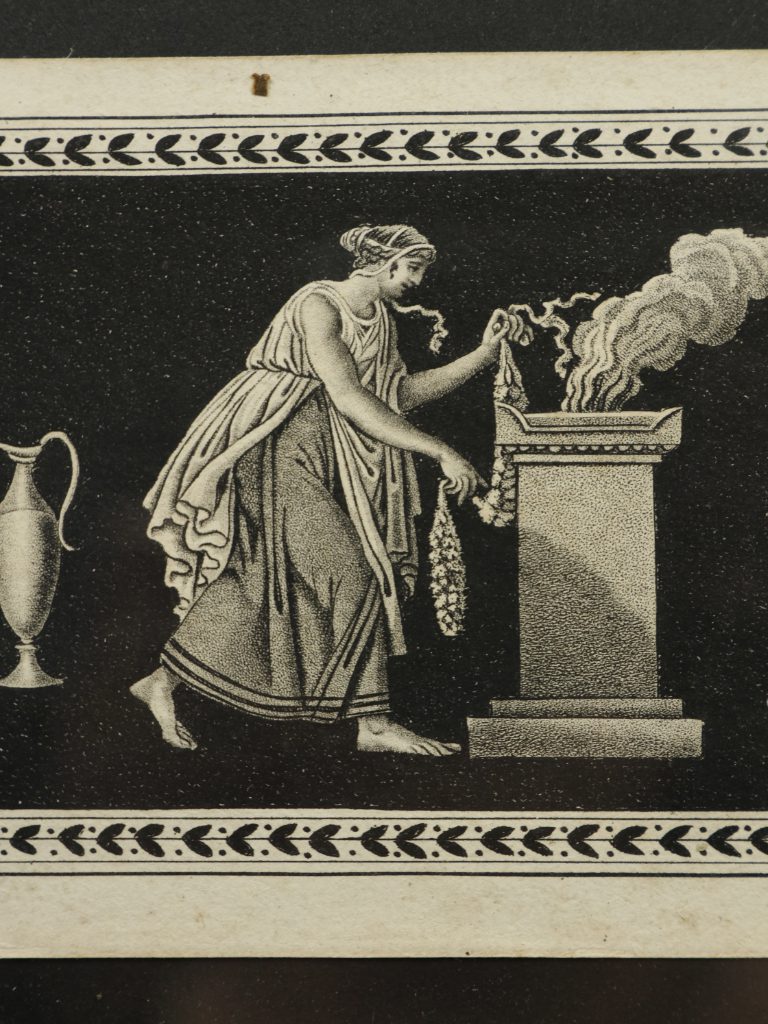
A striking set of three late 18th-century Neoclassical stipple engravings, designed in the classical “Etruscan” style associated with Sir William Hamilton’s influential antiquarian collections. These highly decorative frieze compositions combine refined linear engraving with rich stippled tonal grounds to create a sophisticated, architectural visual rhythm.
Executed in monochrome to emulate ancient Greek vase painting and Roman relief sculpture, each panel presents a distinct narrative drawn from classical mythology and antiquity. Together, they form a cohesive decorative suite with strong horizontal balance and sculptural presence.
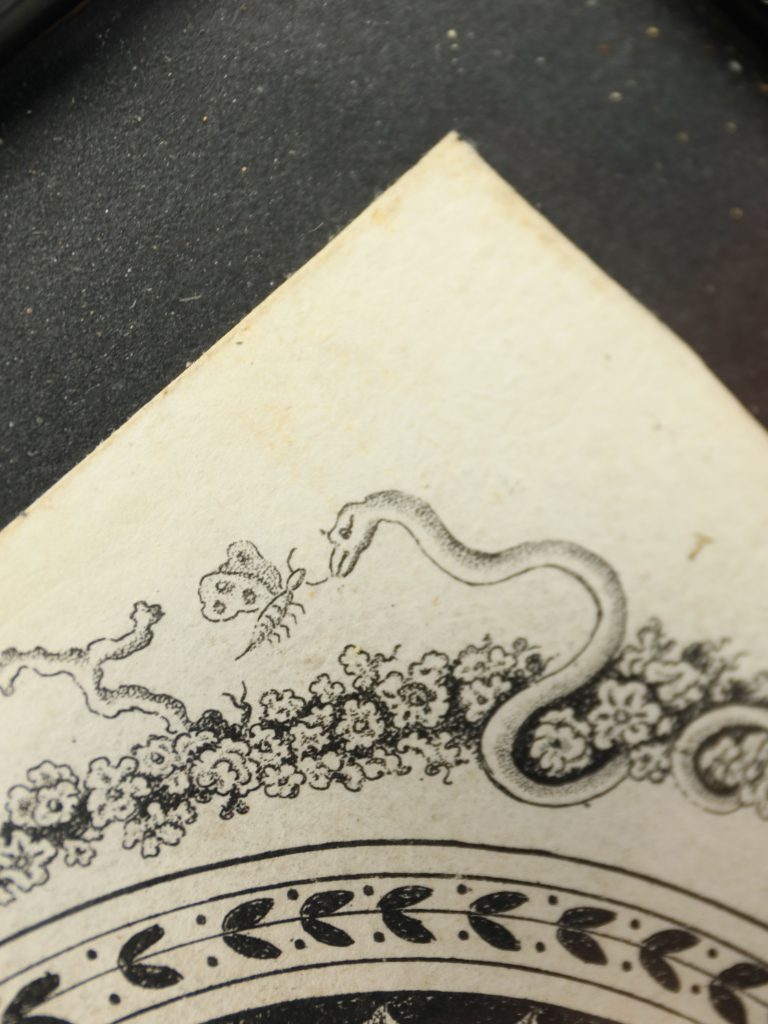
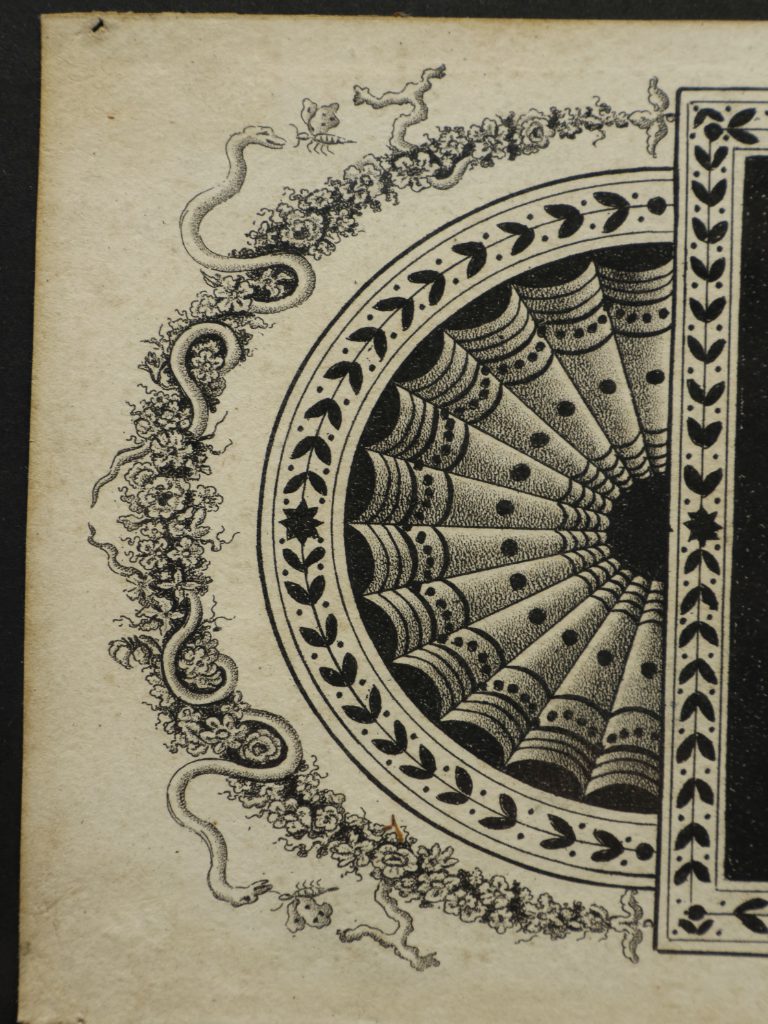
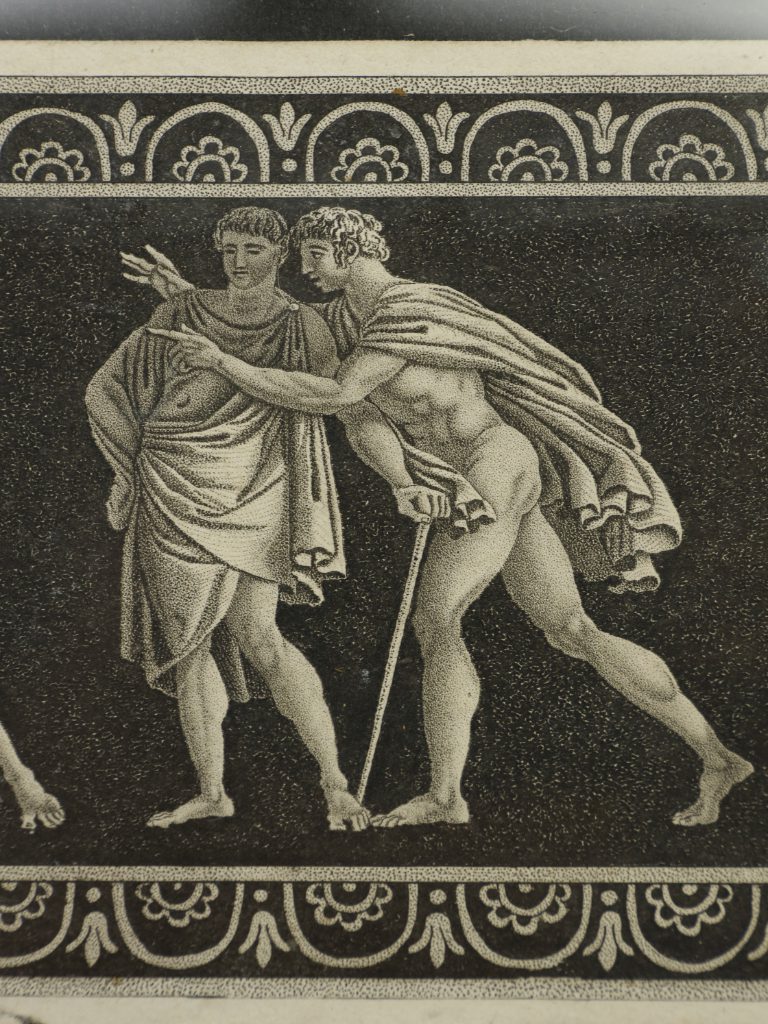
A formal classical scene depicting a ritual offering at an altar. Draped female figures, a seated noble, and attendants are arranged within a carefully structured composition, flanked by decorative fan-shaped neoclassical motifs. The scene reflects ceremonial themes associated with ancient civic and religious life.
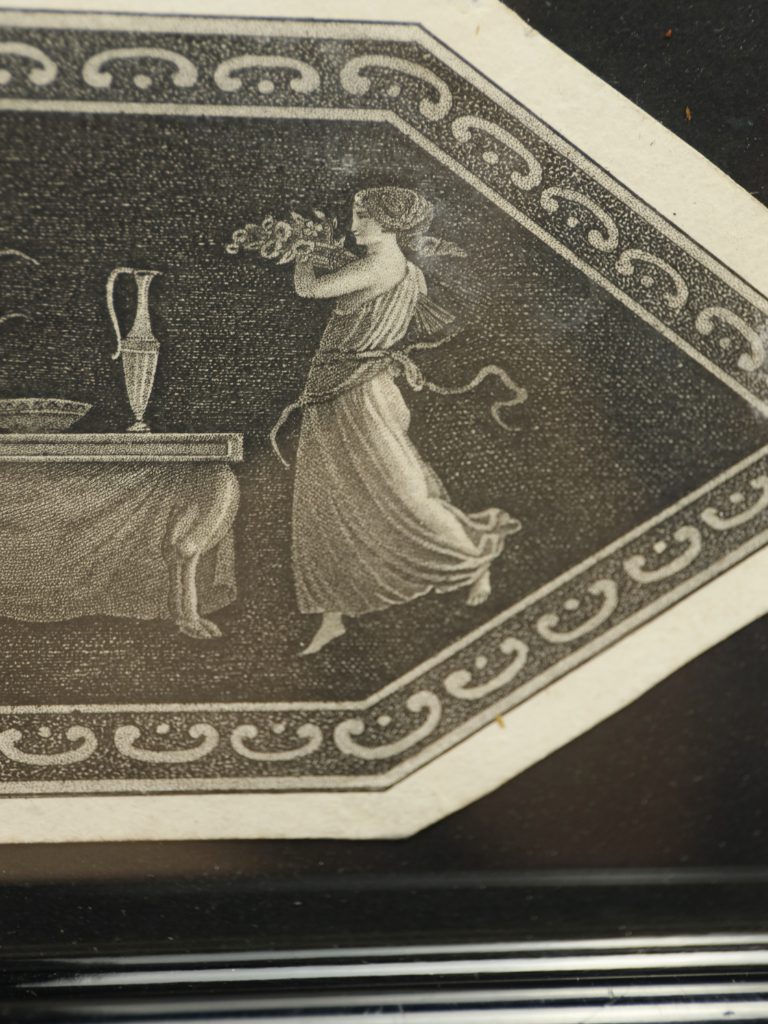
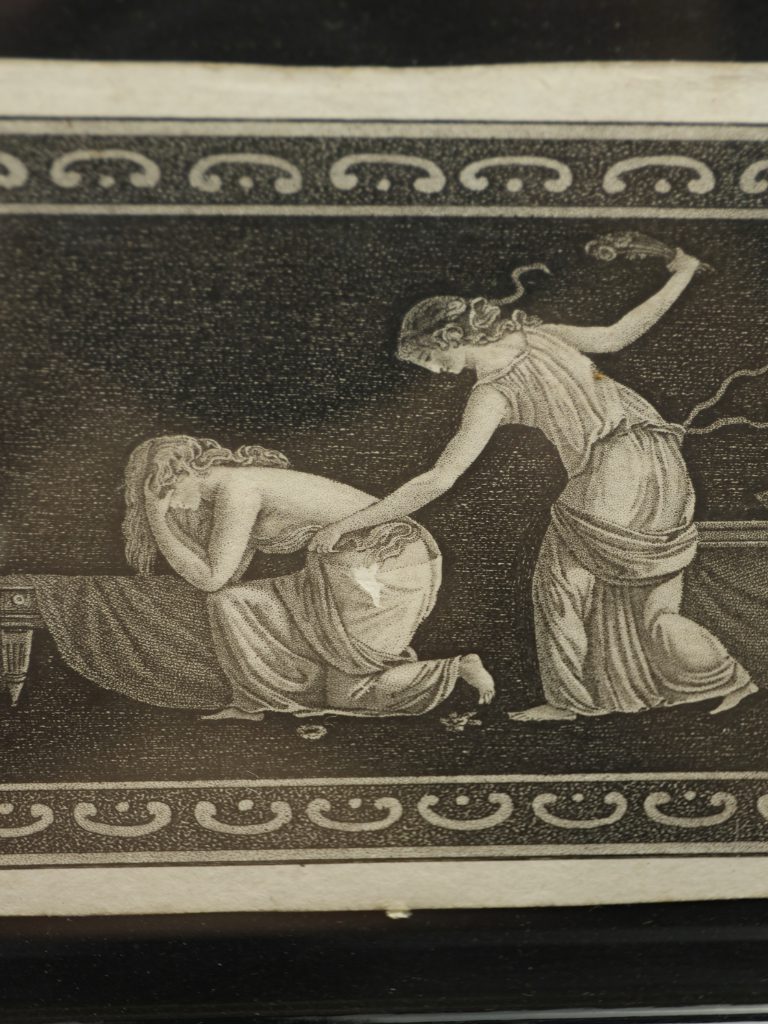
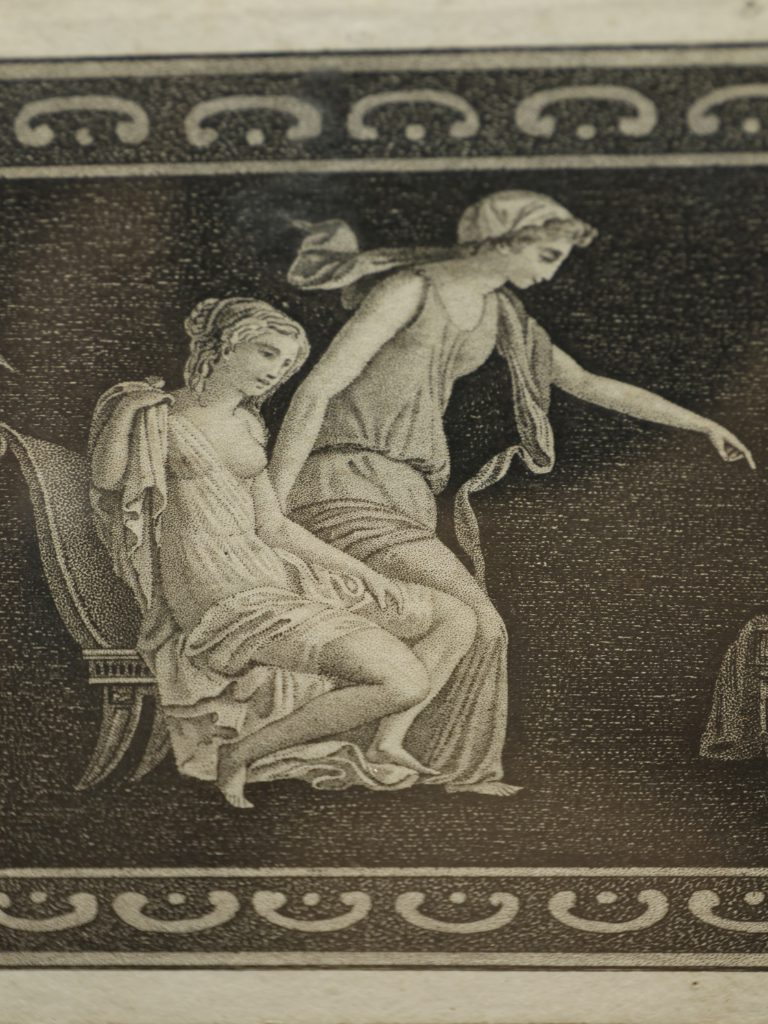
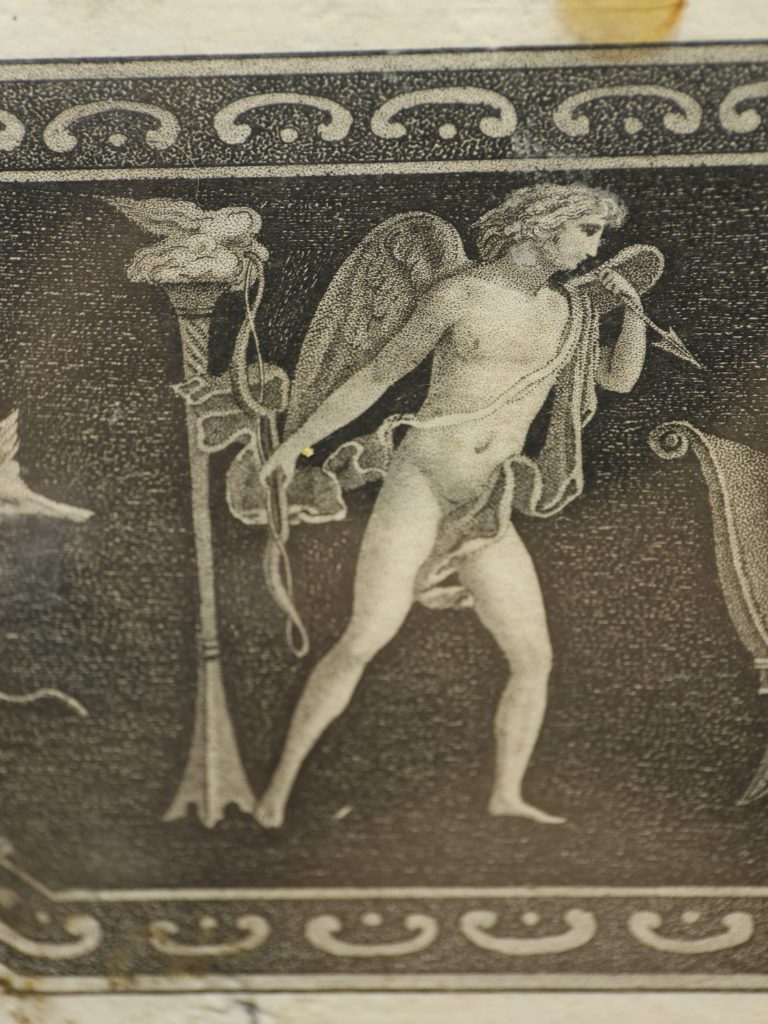
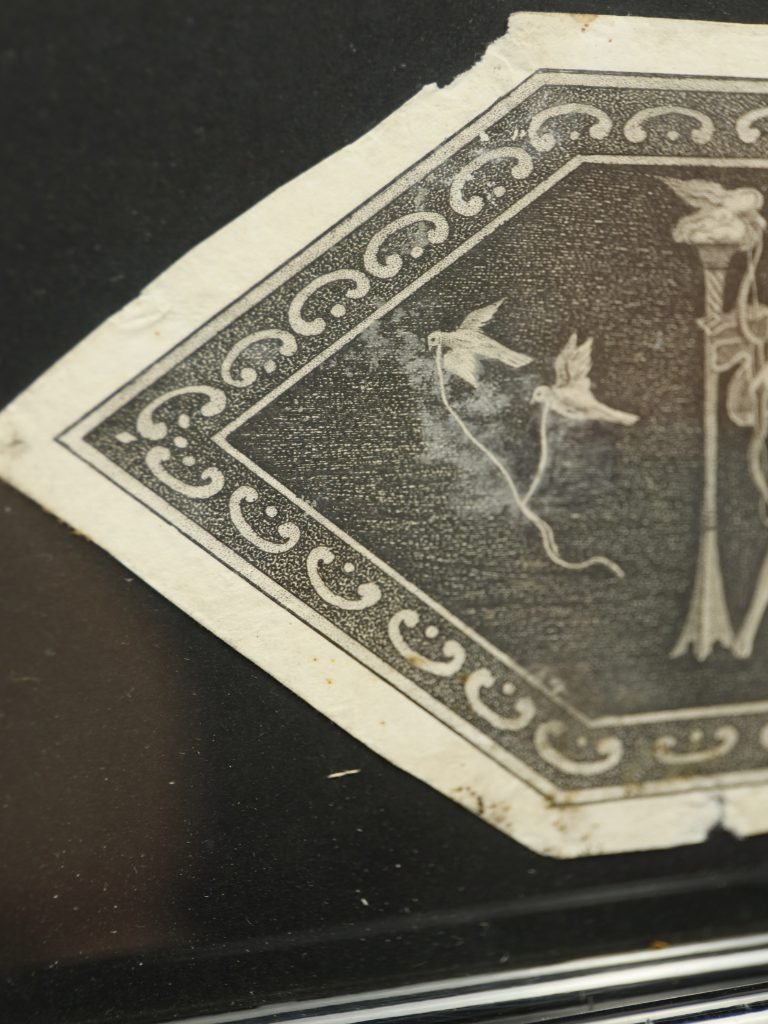
A dynamic, more expressive mythological vignette presented within an unusual lozenge-shaped cartouche. The composition features a winged Eros holding a bow near a flaming torch, accompanied by doves carrying a ribbon in flight. Surrounding figures in classical drapery express contrasting states of emotion, centred around a reclining form, creating a sense of narrative tension and allegory.
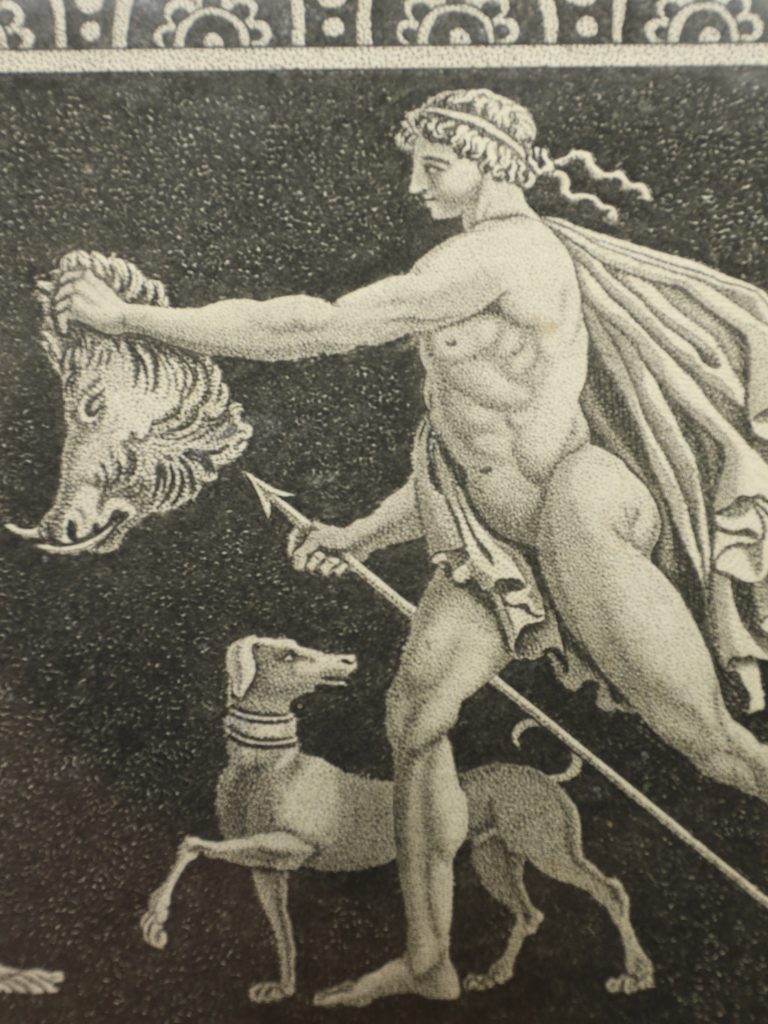
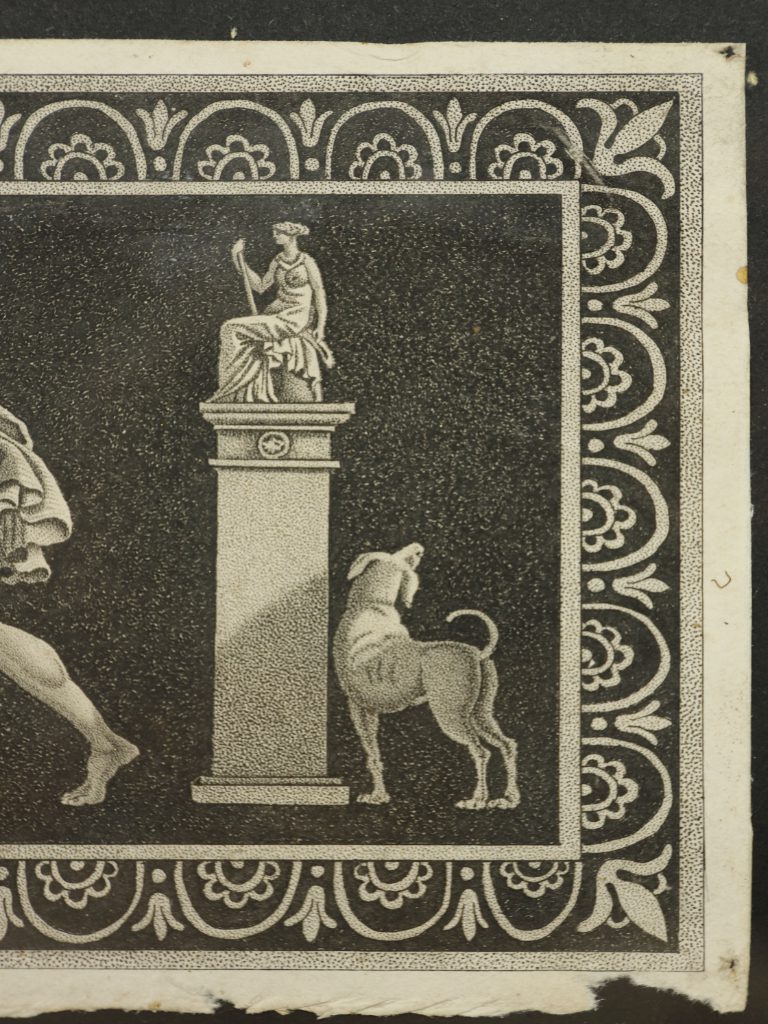
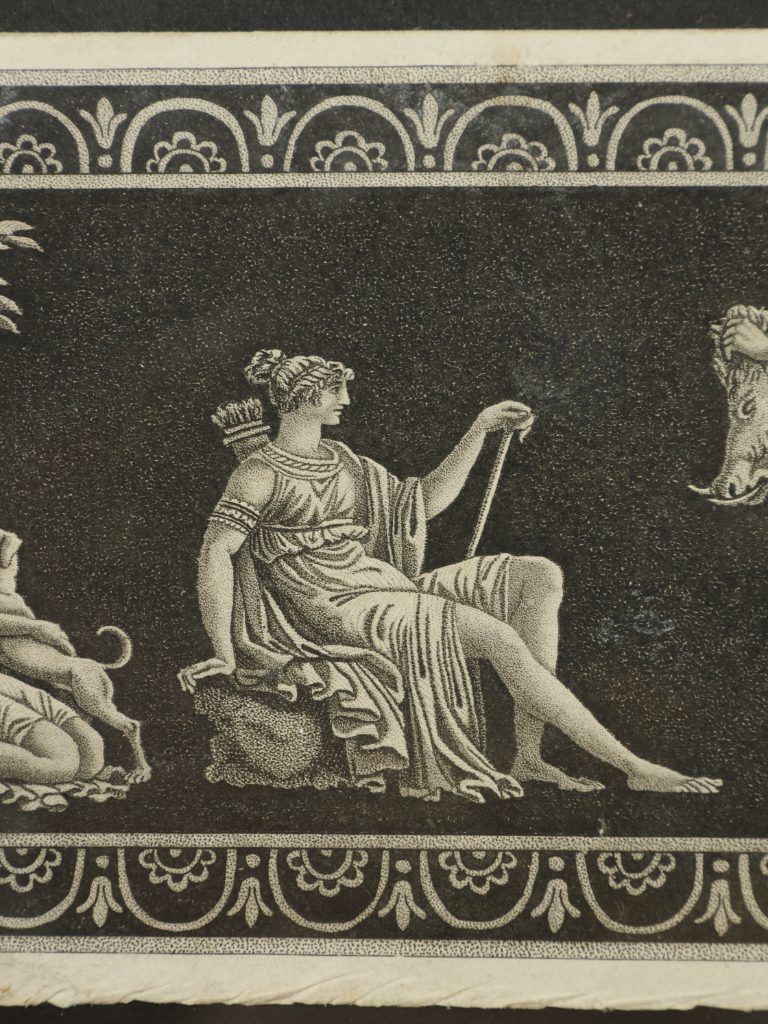
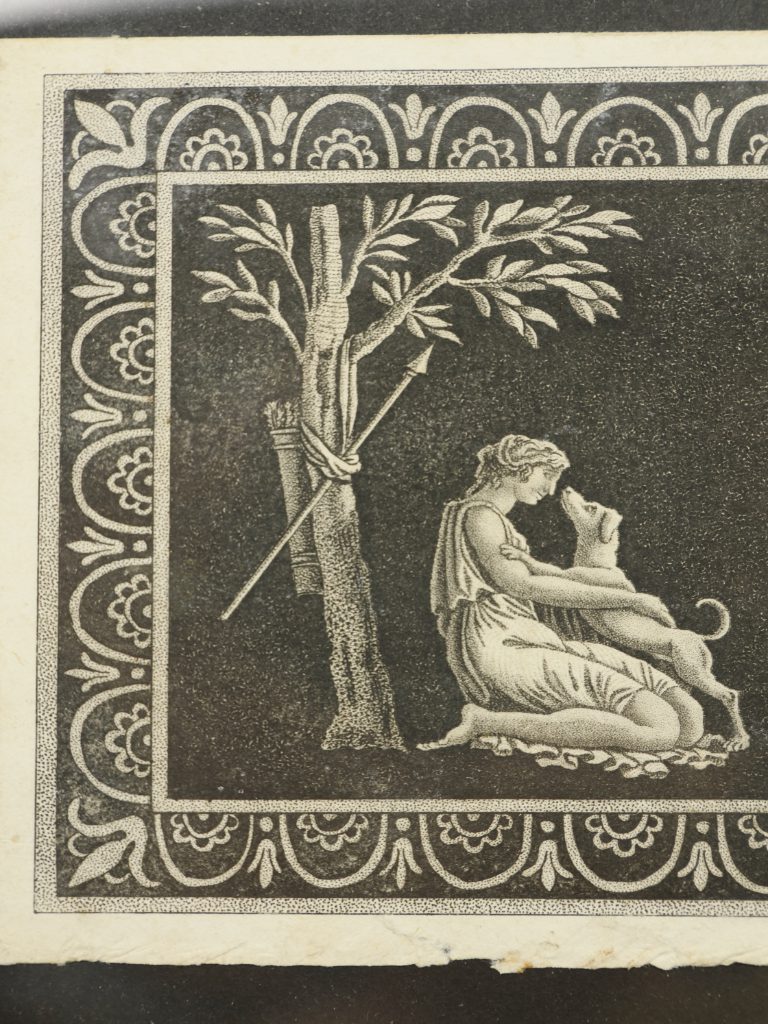
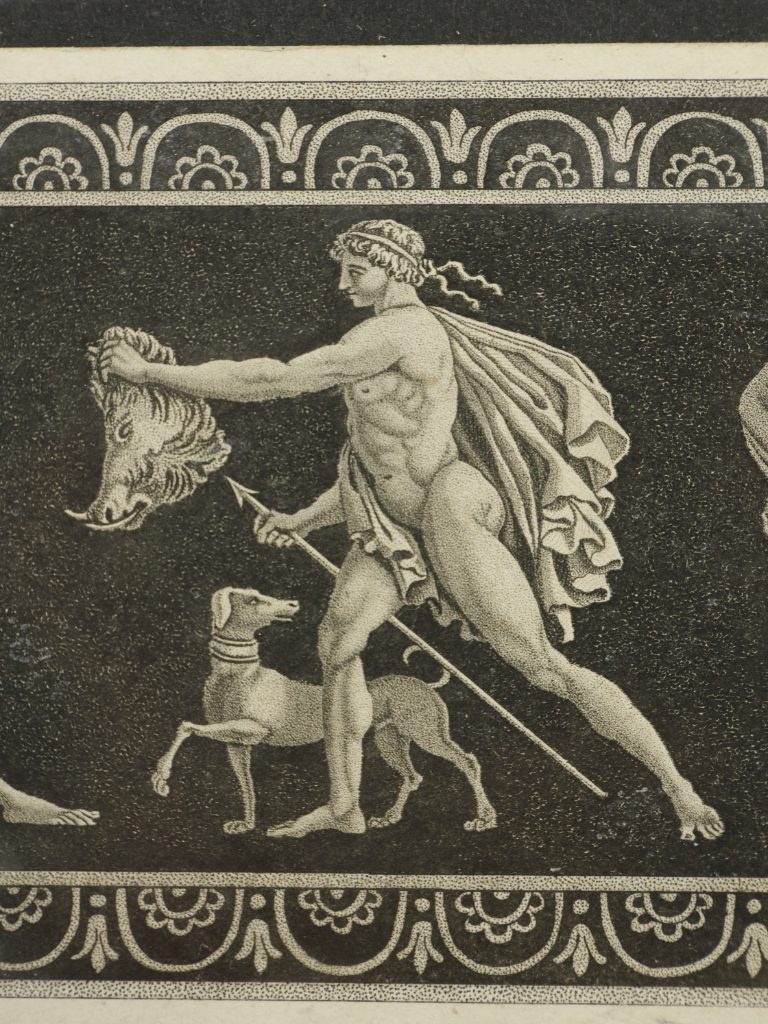
A balanced pastoral and heroic composition. To the left, a figure rests beneath an olive tree alongside a quiver, spear and hunting hound. The narrative shifts to a central figure presenting the head of the Calydonian Boar, while to the right a loyal hound gazes toward a raised classical figure positioned on a pedestal, completing the mythological sequence.
Produced in England or Continental Europe circa 1790, these engravings reflect the peak of Grand Tour collecting culture.
The rediscovery of Pompeii and Herculaneum in the 18th century, along with Sir William Hamilton’s publication of ancient vase collections, sparked a widespread European fascination with classical antiquity. Wealthy travellers on the Grand Tour acquired finely printed works such as these to decorate libraries, salons and country estates, reflecting cultural knowledge and refined taste.
Stipple engraving on laid paper.
Stipple engraving was an exceptionally skilled printmaking technique in which thousands of fine dots were engraved into a copper plate, allowing for subtle tonal transitions and soft modelling of form. This method was particularly suited to reproducing classical sculpture and painted vases, creating a painterly effect rarely achieved in traditional line engraving.
The strength of this set lies in the contrast between its structured neoclassical borders and the softer tonal modelling of the figures. The combination of strict architectural framing with fluid narrative scenes gives the works both decorative order and visual depth.
Their monochrome palette and graphic clarity allow them to sit comfortably in both traditional and contemporary interiors, where they function as strong architectural wall elements.
Very good antique condition considering age.
The paper retains strong structural integrity with light, even age toning. Minor scattered foxing is present, consistent with over 200 years of natural ageing.
The central print shows a faint, stable water mark along the upper margin which does not affect the main image. The impressions remain crisp, clear and well-defined throughout all three engravings.
Height: 47 cm / 18.5 in
Width: 17 cm / 6.7 in
Weight: 0.5 kg / 1 lb
All our collections have been through our workshop and where possible, we always try to maintain the original finish preserving the patina and colour, some items are sympathetically restored and this is done by our own skilled craftsmen using only traditional methods