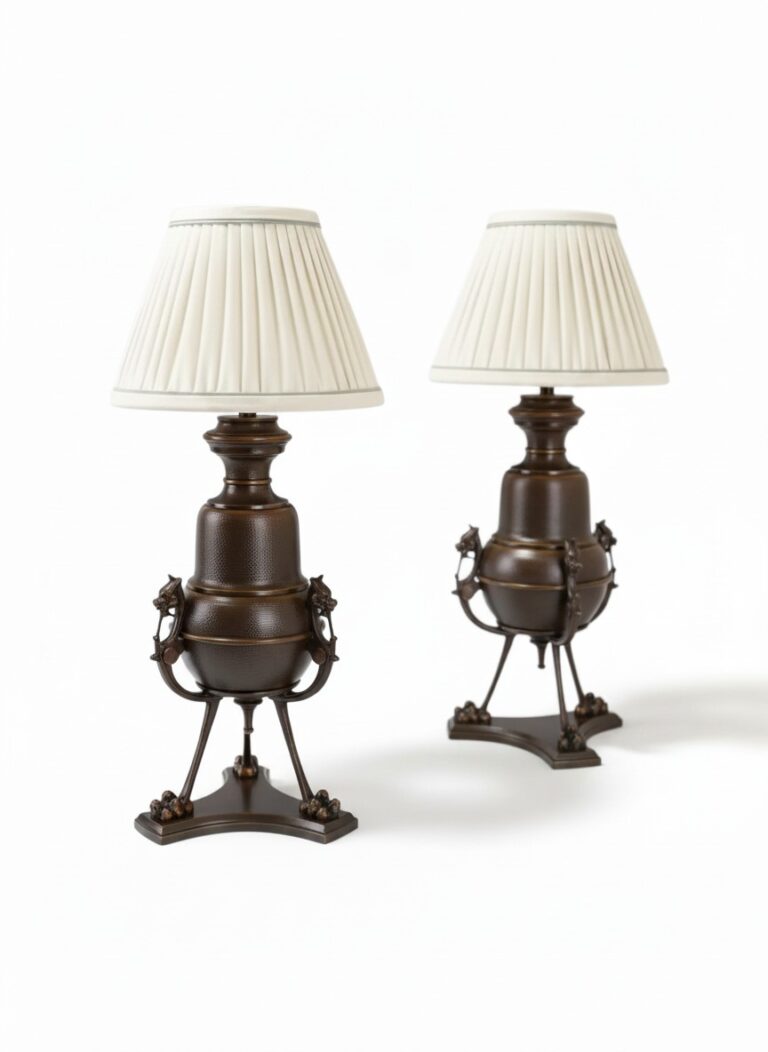
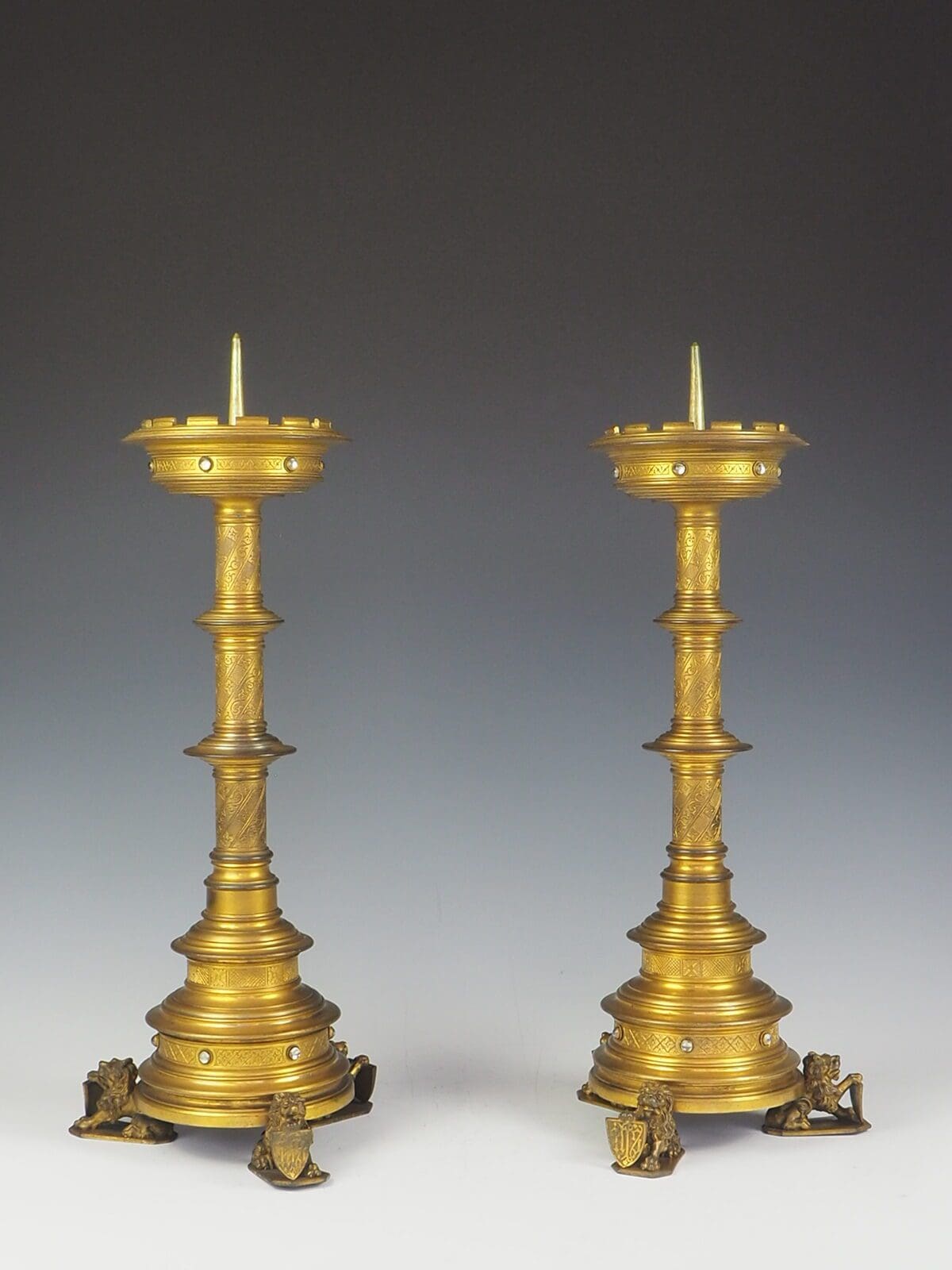
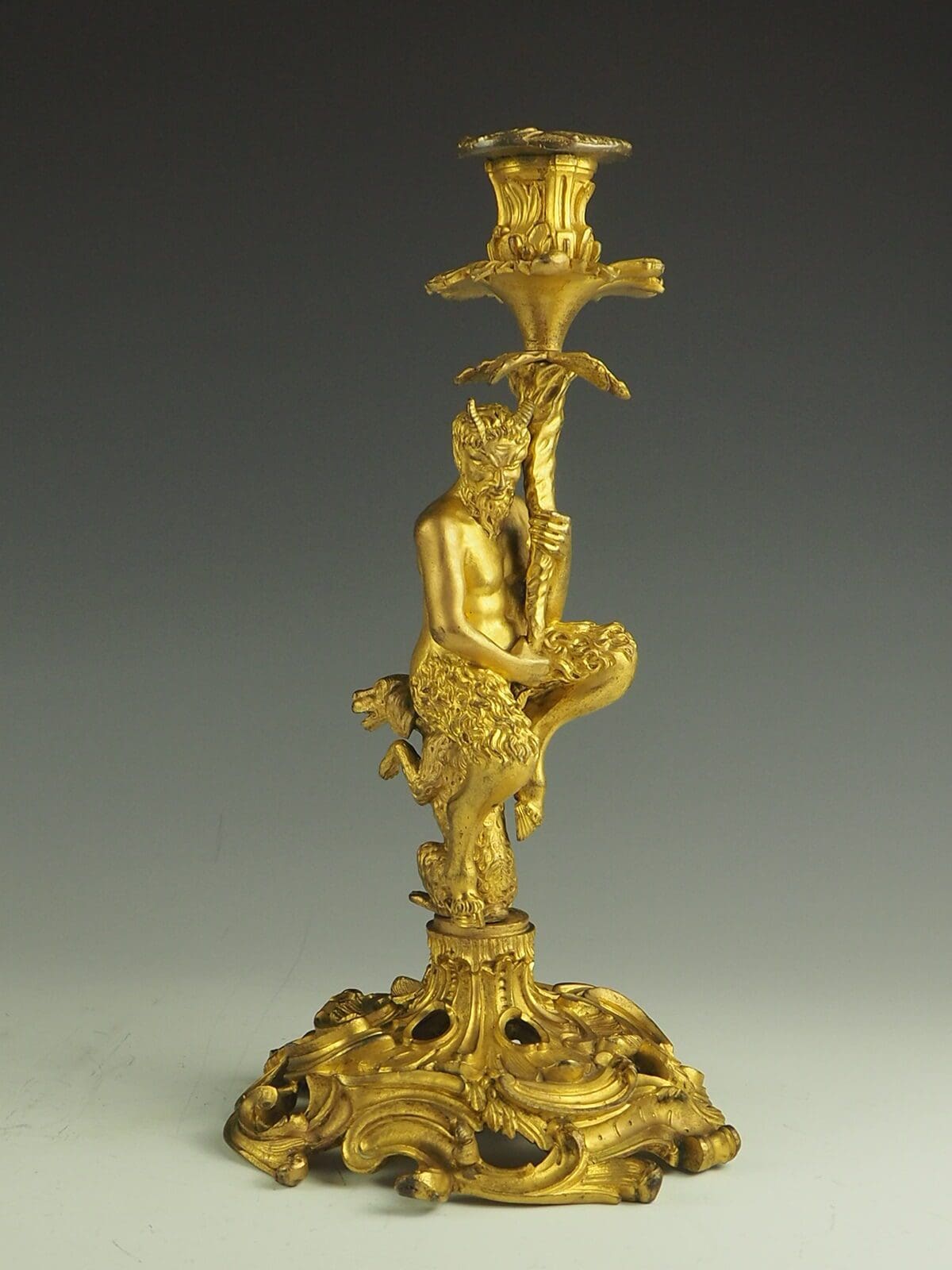



A beautifully crafted late eighteenth-century brass ecclesiastical pricket candlestick, distinguished by its elegant architectural form and exceptional tripod base raised upon finely cast zoomorphic feet.



A beautifully crafted late eighteenth-century brass ecclesiastical pricket candlestick, distinguished by its elegant architectural form and exceptional tripod base raised upon finely cast zoomorphic feet.
Originally made for use within a church or chapel, this impressive candlestick was designed to support a substantial beeswax altar candle upon its original brass pricket. The generous circular drip pan, positioned beneath the candle spike, was intended to collect molten wax during religious services, while the solid brass construction ensured both durability and stability for continual liturgical use.
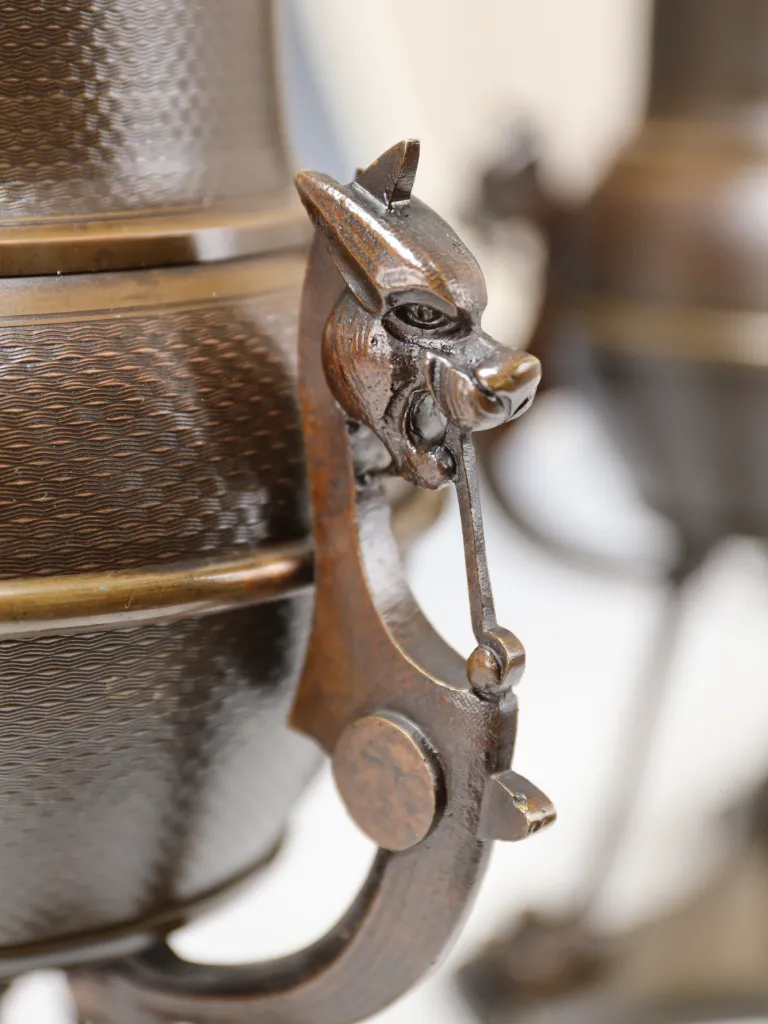
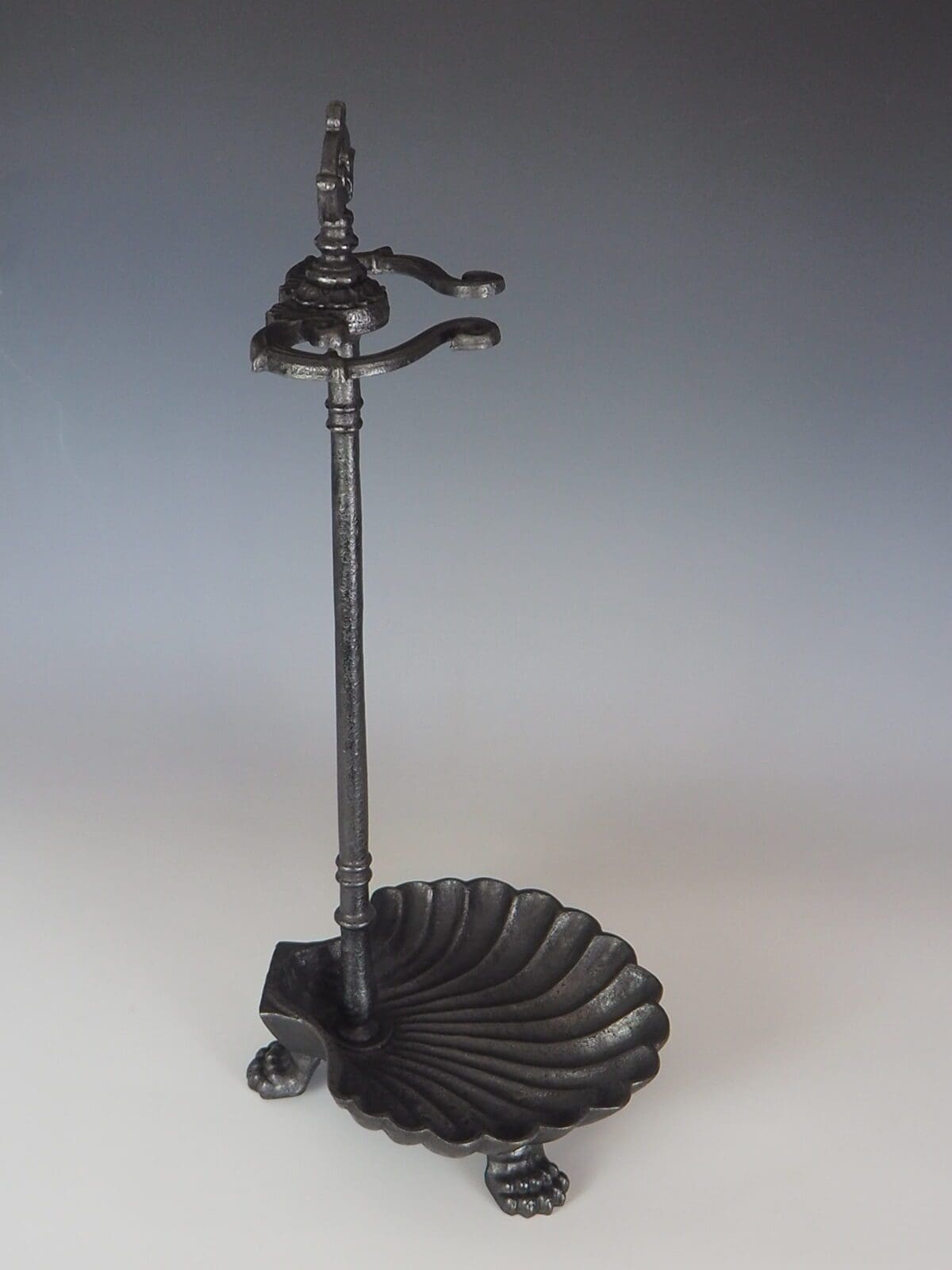
The elegant baluster stem is finely turned with a series of restrained mouldings that reflect the refined proportions associated with late eighteenth-century ecclesiastical metalwork. The broad circular base is supported by three beautifully cast zoomorphic feet, each individually modelled with remarkable character and detail. These sculptural supports not only provide strength but also introduce a distinctive decorative element rarely encountered on surviving examples.
Beautifully balanced in both proportion and design, the warm golden tones of the polished brass contrast elegantly with the architectural simplicity of the column, creating a timeless piece that is equally suited to collectors of ecclesiastical antiques and sophisticated interior settings.
Whether displayed individually, as part of a pair, or incorporated into a collection of early church furnishings, this remarkable candlestick remains a striking example of eighteenth-century Belgian brasswork.
Belgium has a distinguished history of producing exceptional ecclesiastical metalwork, with skilled brass founders supplying churches, monasteries and cathedrals throughout Europe for centuries. During the eighteenth century, brass altar furnishings were carefully crafted to combine practical function with enduring beauty, reflecting both the religious importance of their purpose and the expertise of the craftsmen who produced them.
Unlike domestic candlesticks, ecclesiastical pricket candlesticks were specifically designed to hold large beeswax candles. Rather than using a socket, a sharpened central spike secured the candle firmly in place, allowing it to burn safely throughout lengthy religious ceremonies.
Many examples incorporated decorative animal supports inspired by medieval traditions. These zoomorphic feet served both structural and decorative purposes, adding visual interest while reflecting the symbolic language often found within ecclesiastical art and architecture.
Today, surviving eighteenth-century Belgian church brass is increasingly sought after by collectors, museums and interior designers for its quality of craftsmanship, historical significance and timeless decorative appeal.
Expertly cast and turned in solid brass, this candlestick demonstrates the high standard of workmanship associated with eighteenth-century Belgian ecclesiastical metalwork.
The finely proportioned column has been carefully turned with balanced mouldings that create an elegant architectural silhouette, whilst the broad wax pan and original pricket retain their functional design.
Particularly noteworthy are the three finely cast zoomorphic feet. Their expressive modelling, flowing forms and crisp detailing elevate the piece beyond a simple liturgical furnishing, showcasing the skill and artistry of the original brass founder.
The substantial weight and quality of casting further reflect the durability expected of furnishings intended for continual use within places of worship.
Originally produced in Belgium during the late eighteenth century for ecclesiastical use, this impressive pricket candlestick has survived remarkably well and has been carefully selected for its quality, rarity and exceptional decorative appeal.
We are continually searching for ecclesiastical antiques that combine historical significance with outstanding craftsmanship, and this beautiful Belgian pricket candlestick immediately stood out. The elegant architectural proportions, exceptional quality of the brass casting and wonderfully expressive zoomorphic feet create a piece that possesses genuine presence without excessive ornamentation.
Its simplicity allows the craftsmanship to speak for itself, making it equally appealing to collectors of early church furnishings and those seeking an authentic decorative object with centuries of history.
Presented in very good antique condition, commensurate with age and over two centuries of careful use.
The solid brass retains a beautiful rich colour and natural patina with light surface wear, minor scratches and small marks consistent with age and historic use. The turned column remains straight, whilst the original pricket, wax pan and circular base are all in excellent structural order.
The three cast zoomorphic feet remain crisp and well defined with no evidence of structural damage, repairs or restoration visible. The candlestick stands firmly and displays exceptionally well.
Overall, this is a beautifully preserved example of eighteenth-century Belgian ecclesiastical brasswork with excellent colour, honest wear and remarkable decorative character.
Height: 36 cm / 14.2 inches
Width: 16 cm / 6.3 inches
Depth: 16 cm / 6.3 inches
Weight: 2.2 kg / 4.9 lbs
Every item offered by Shackleton Fox is carefully inspected, prepared, and where necessary conserved within our workshop prior to sale.
As heritage craftsmen and antique specialists, we believe in preserving the authenticity and integrity of each piece. Original finishes, patina, wear, and signs of age are retained wherever possible, as these elements contribute to both character and historical significance.
When restoration, rewiring, repairs, or conservation work is required, it is undertaken sympathetically using traditional techniques and materials appropriate to the period of the piece. Our philosophy is one of careful stewardship rather than unnecessary restoration, ensuring antiques remain both functional and historically respectful.
The result is a collection of pieces that have been thoughtfully prepared, allowing future owners to enjoy them with confidence while preserving their unique story and character.