











£1,250.00
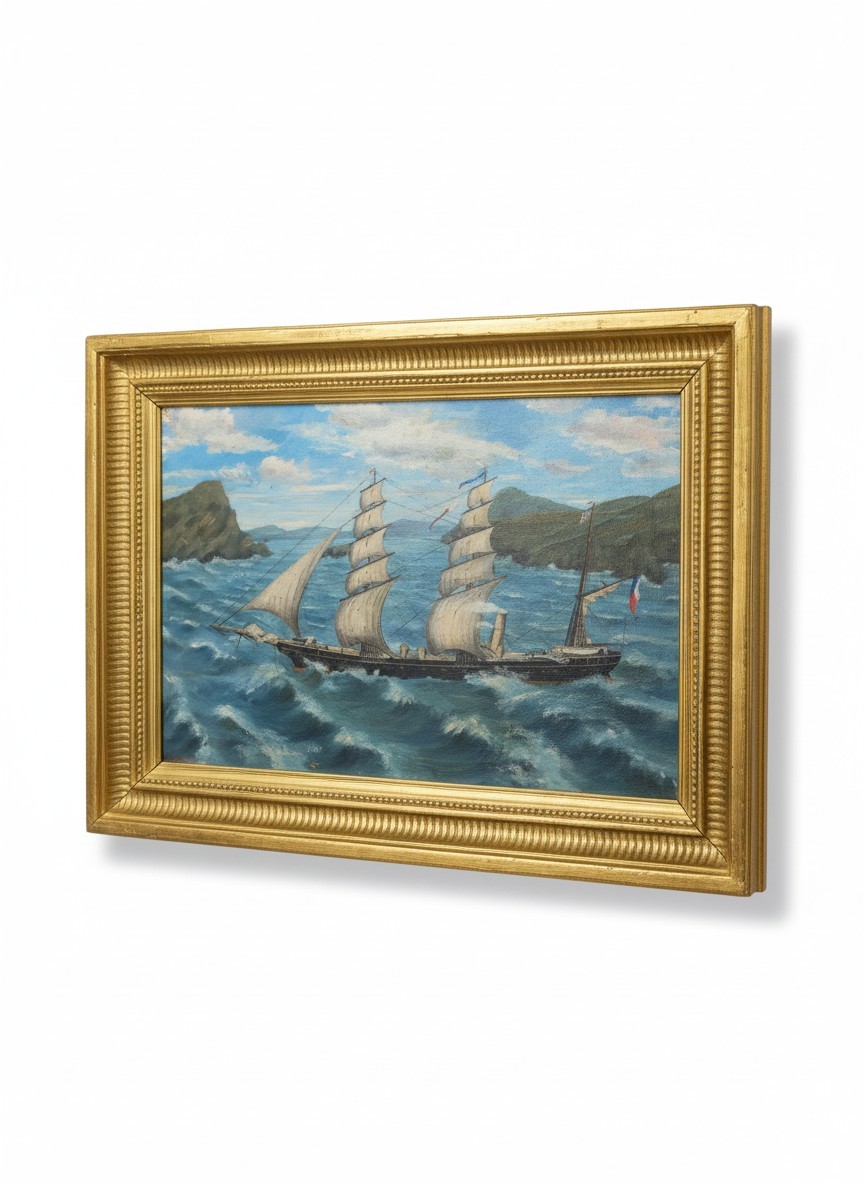
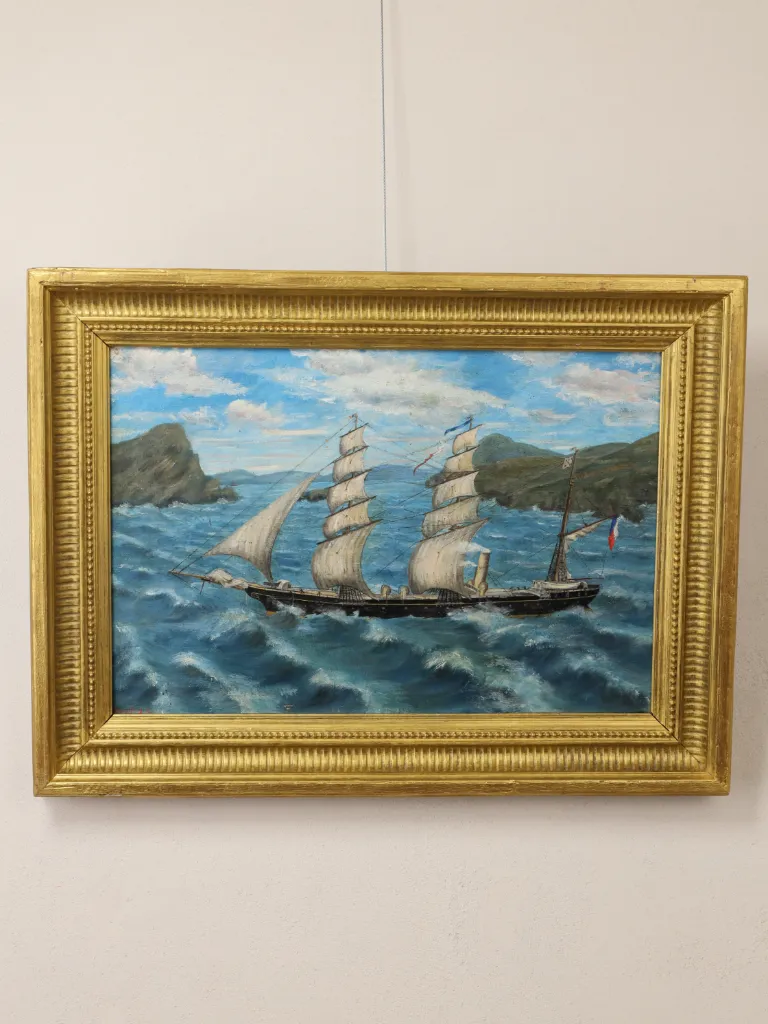
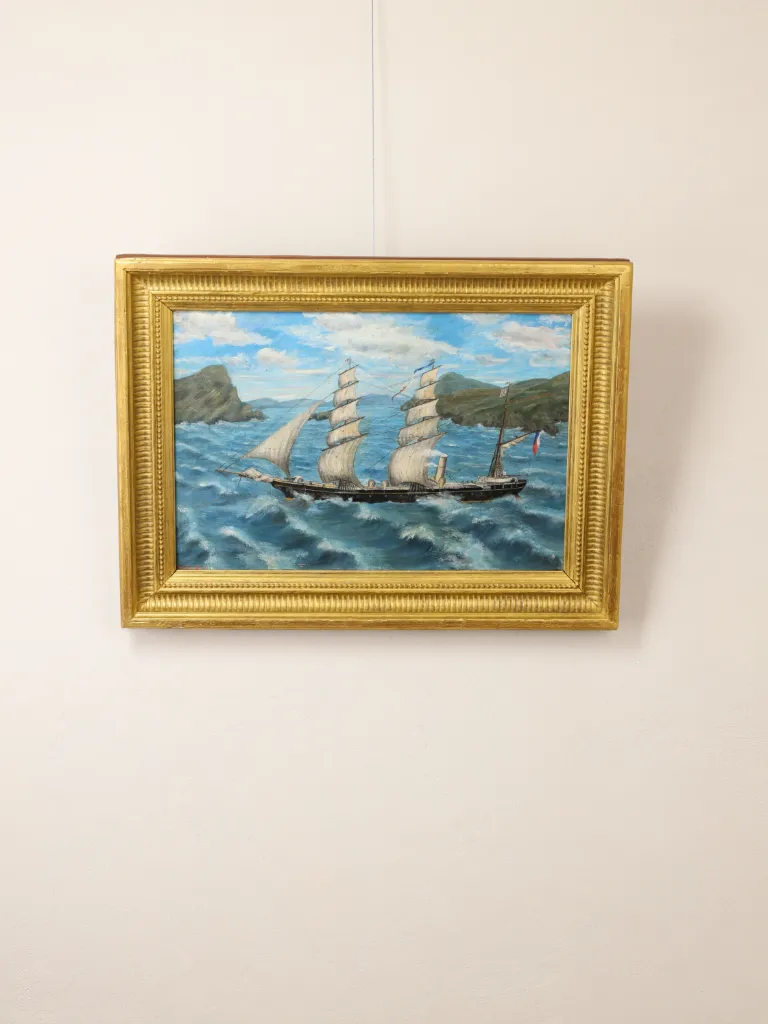
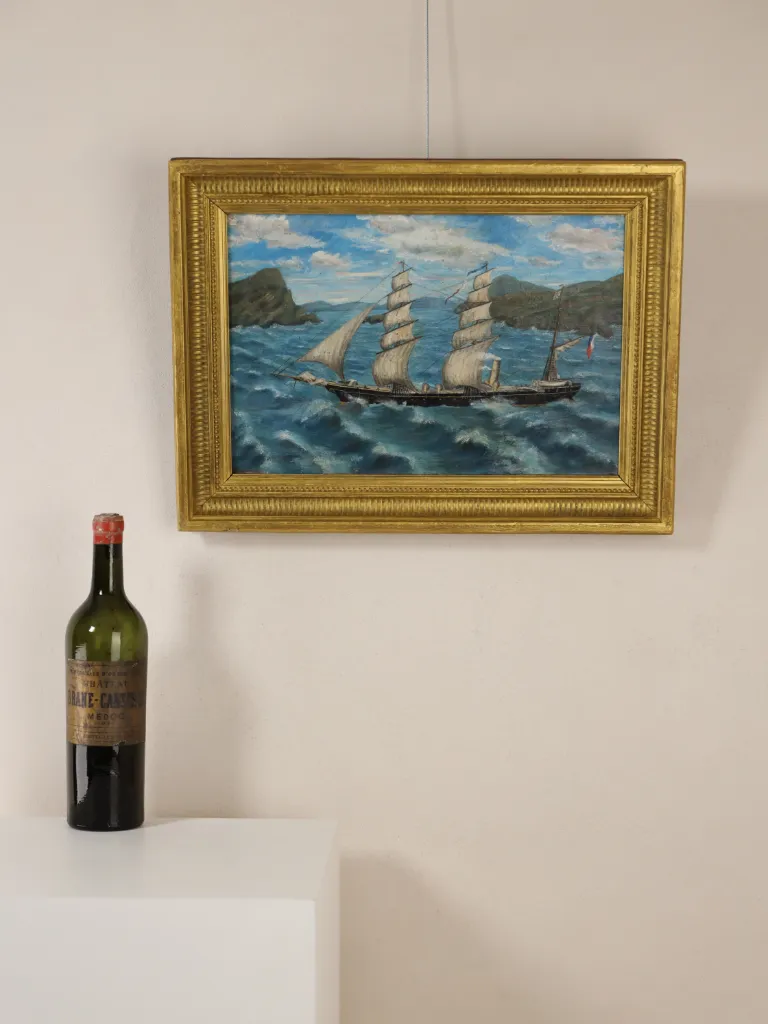
A wonderfully evocative 19th-century French maritime oil painting, depicting a large three-masted steam-assisted sailing vessel making its way through a turbulent coastal sea.
Signed “Monscavoir” in red to the lower left and apparently dated, although the final numerals are indistinct, the painting belongs to the fascinating tradition of naïve and folk maritime portraiture produced during the great age of commercial sail and the transition from sail to steam.



A wonderfully evocative 19th-century French maritime oil painting, depicting a large three-masted steam-assisted sailing vessel making its way through a turbulent coastal sea.
Signed “Monscavoir” in red to the lower left and apparently dated, although the final numerals are indistinct, the painting belongs to the fascinating tradition of naïve and folk maritime portraiture produced during the great age of commercial sail and the transition from sail to steam.
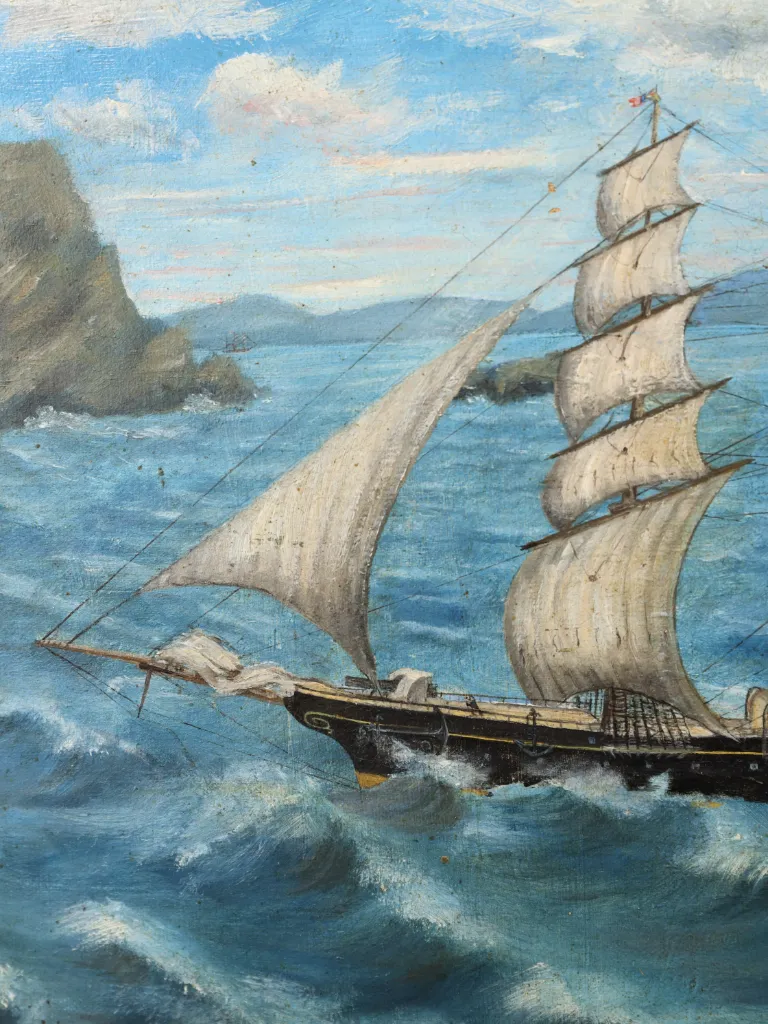
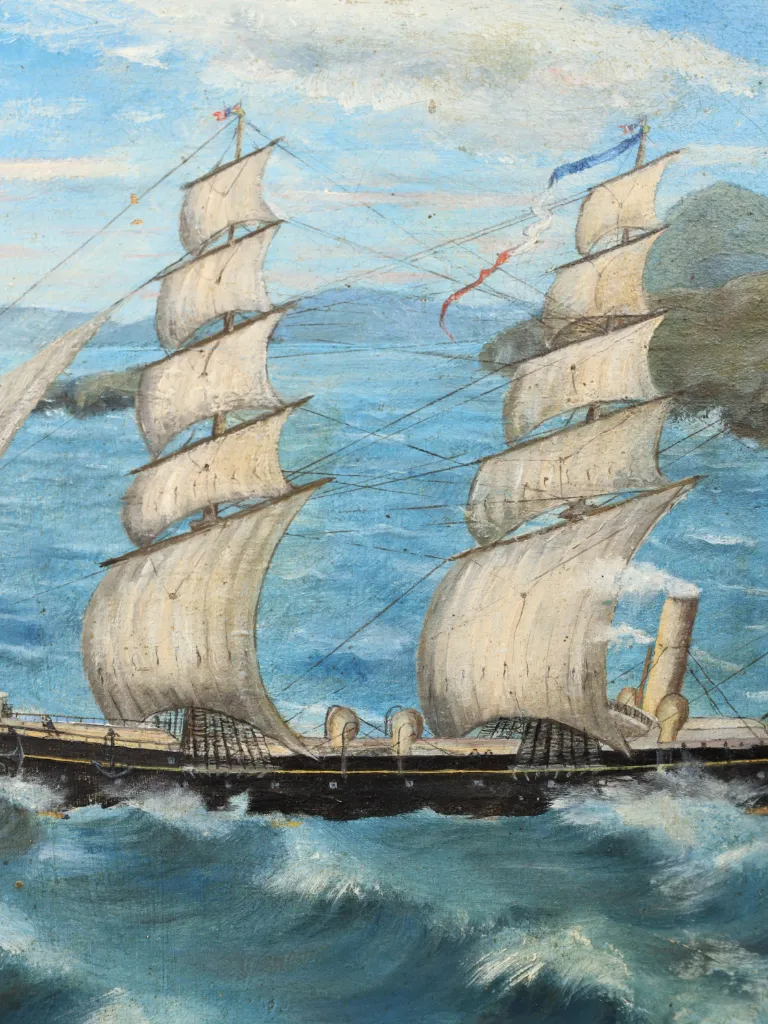
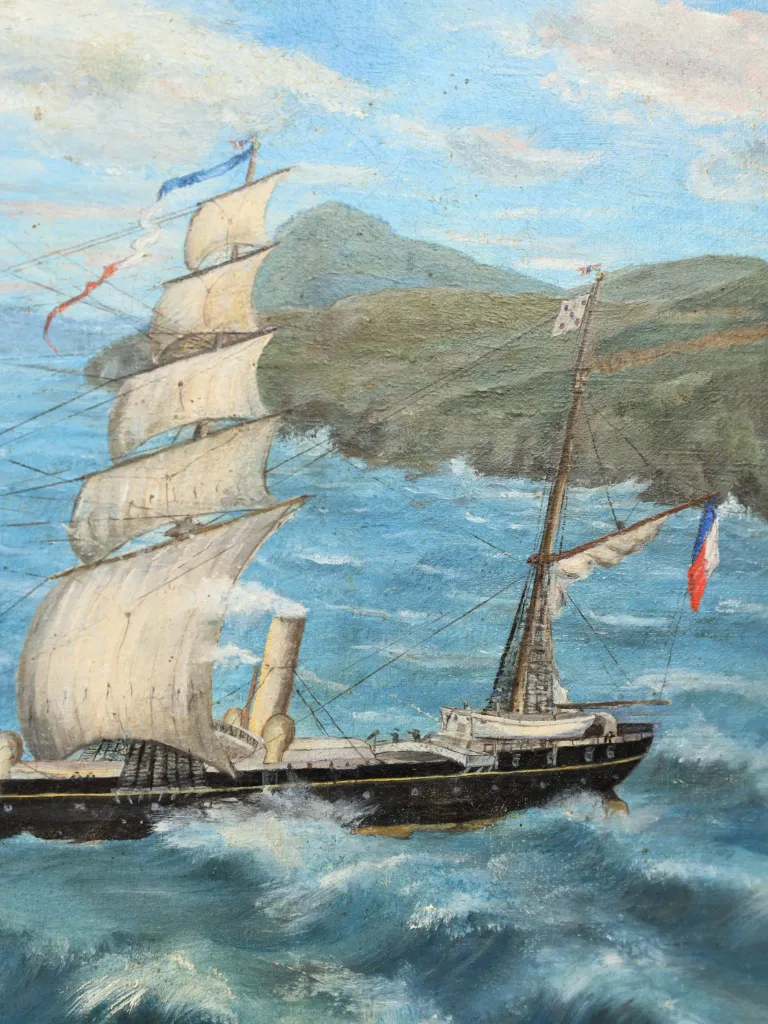
The vessel dominates the composition, shown broadside beneath a dramatic expanse of canvas. Its tall masts carry multiple square sails alongside a large forward sail, while a prominent funnel amidships emits a plume of white smoke — an important detail identifying the ship as a steam-assisted sailing vessel, representative of the transitional period when auxiliary steam power was increasingly combined with traditional sailing rigs.
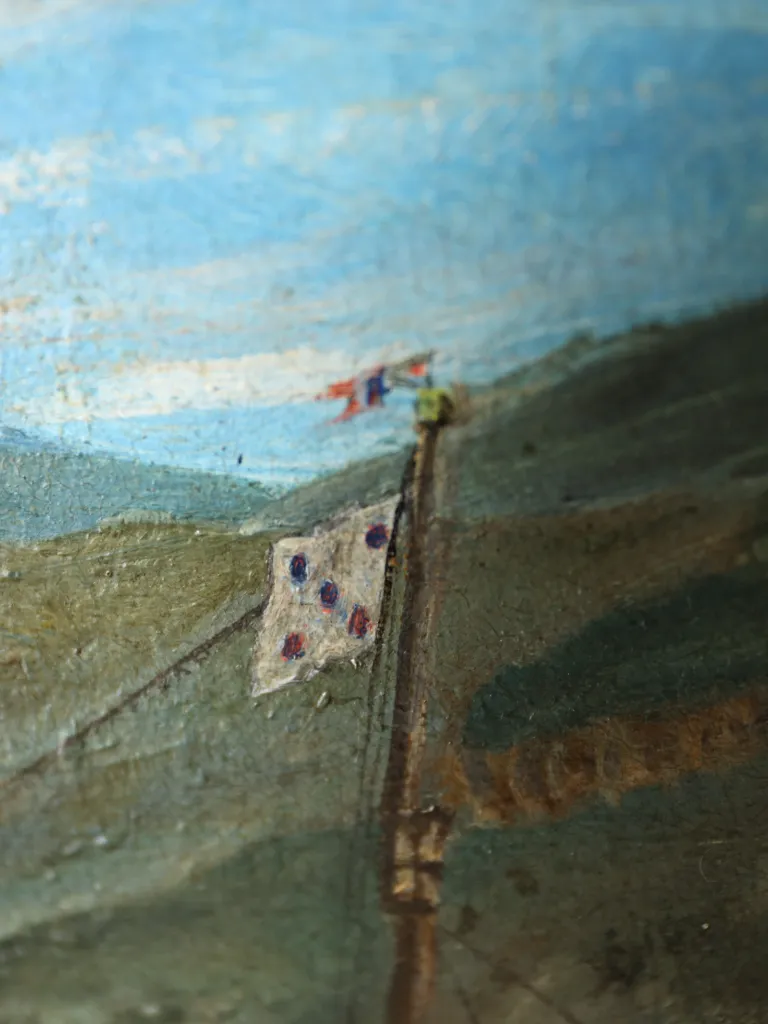
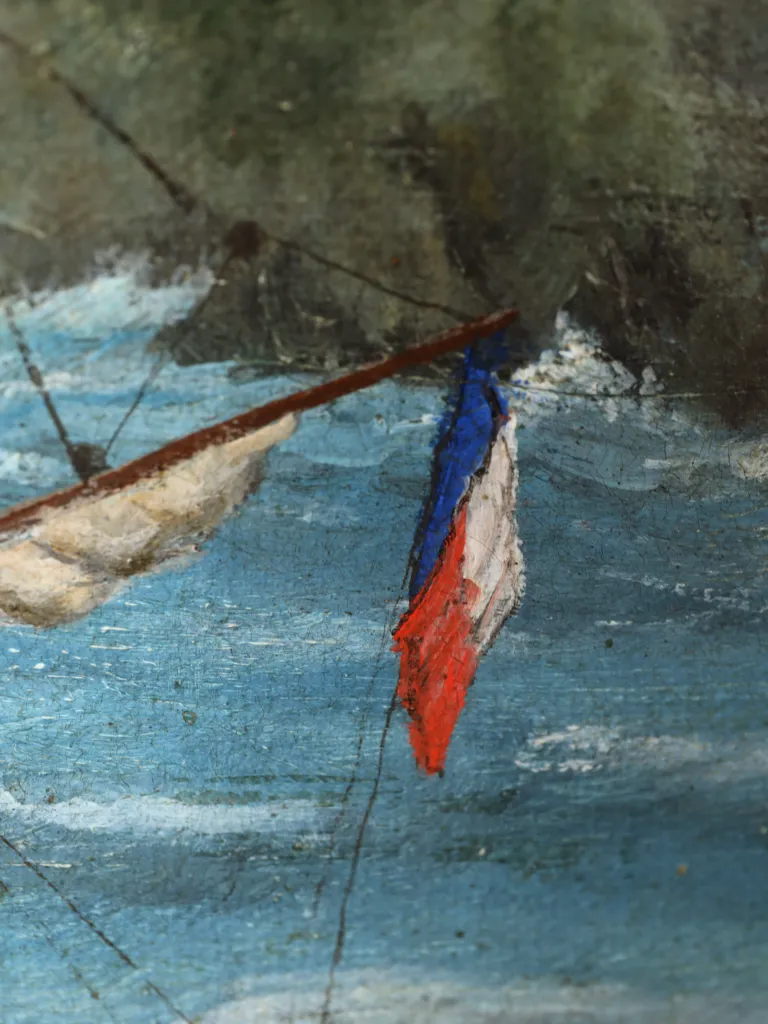
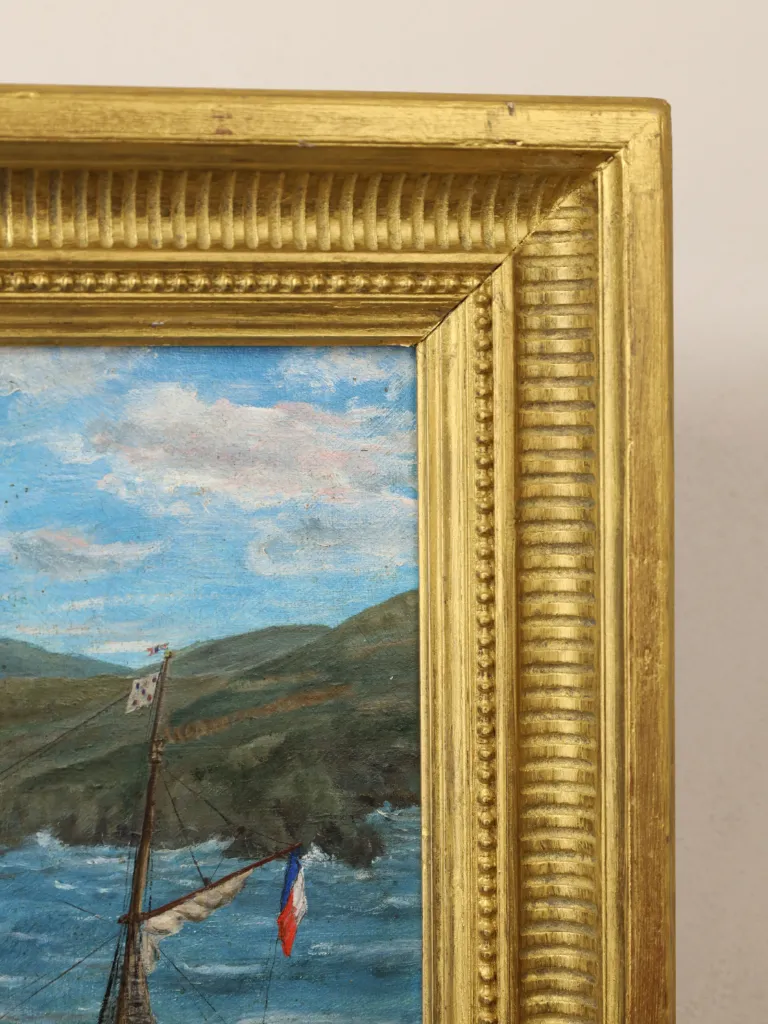
At the stern flies the unmistakable French tricolour, strongly indicating a French vessel. Additional pennants and flags fly from the rigging and mastheads, adding colour and animation to the composition.
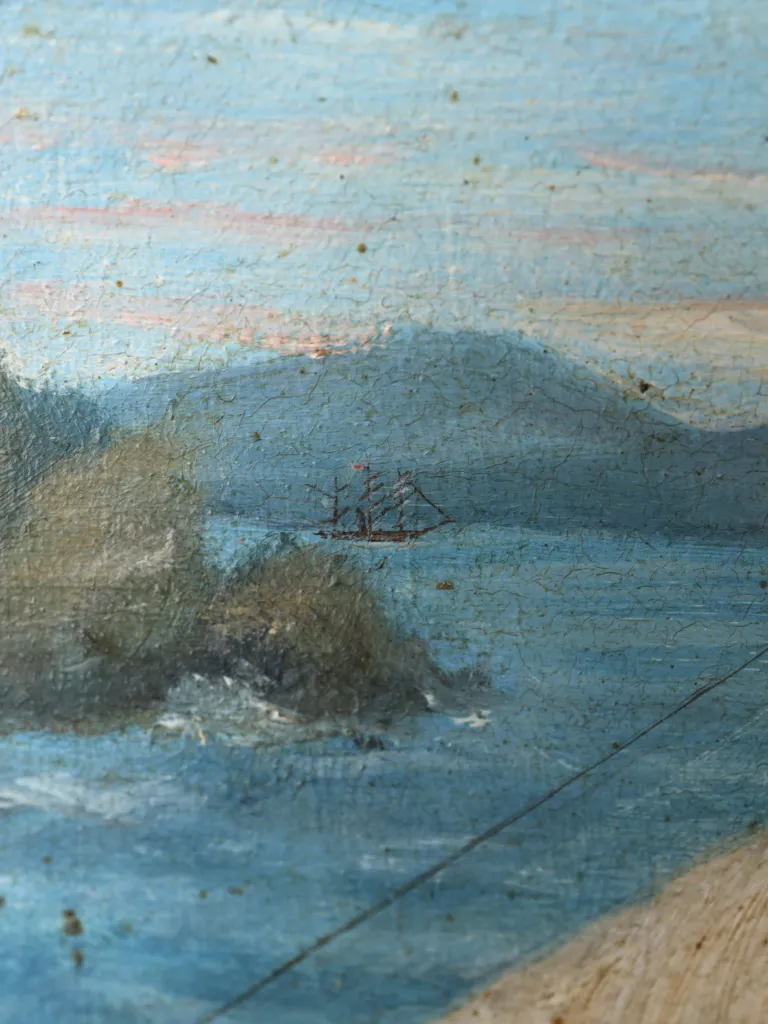
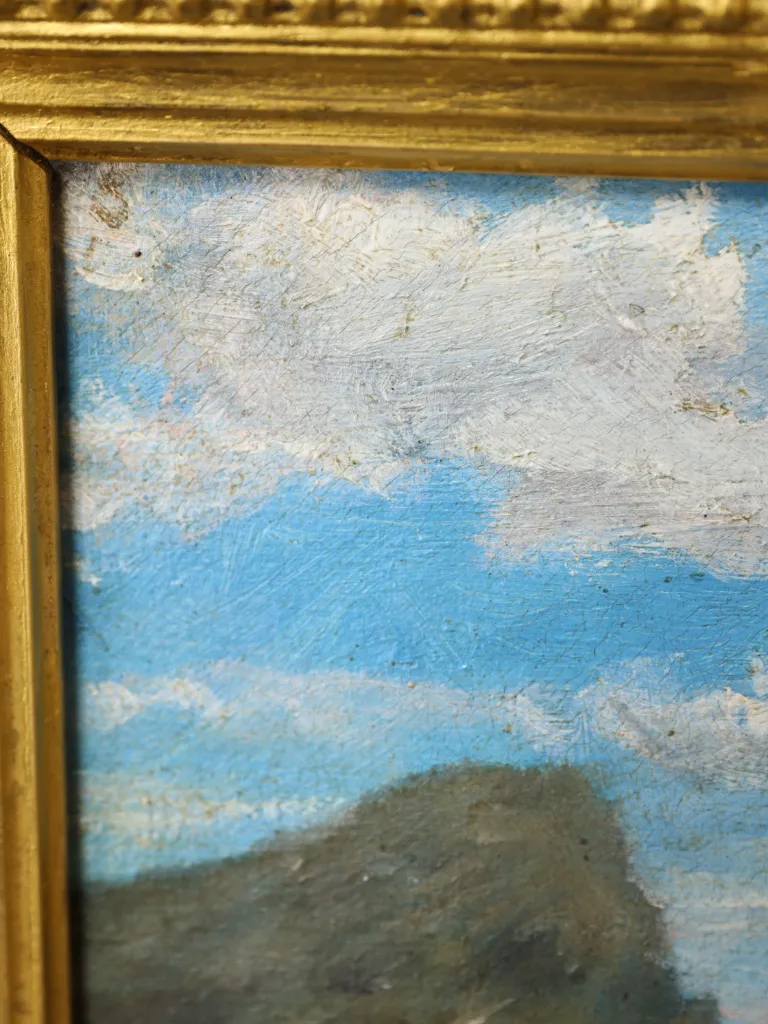
The ship is depicted navigating between steep rocky headlands, the artist filling the foreground with energetic blue-green waves broken by white crests. Beyond, the coastline recedes into softer blue and green tones beneath a bright sky scattered with clouds.
There is a particularly appealing contrast between the artist's careful attention to the vessel — its rigging, sails, deck structures, funnel and flags — and the more freely handled sea and landscape.
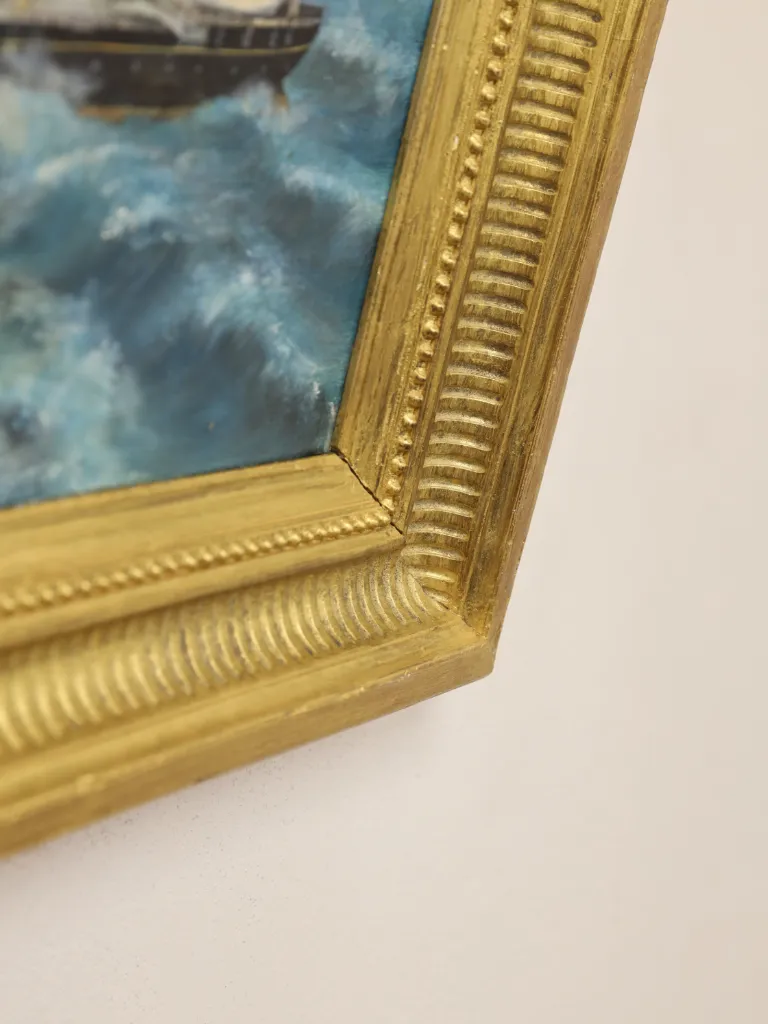
Presented within a substantial gilt frame with classical moulded and beaded decoration, the painting has considerable decorative presence while retaining the charming individuality associated with 19th-century maritime folk art.
The painting is clearly signed in red at the lower left:
“Monscavoir”
A date appears to follow the signature, although from the surviving inscription I would not presently claim an exact year.
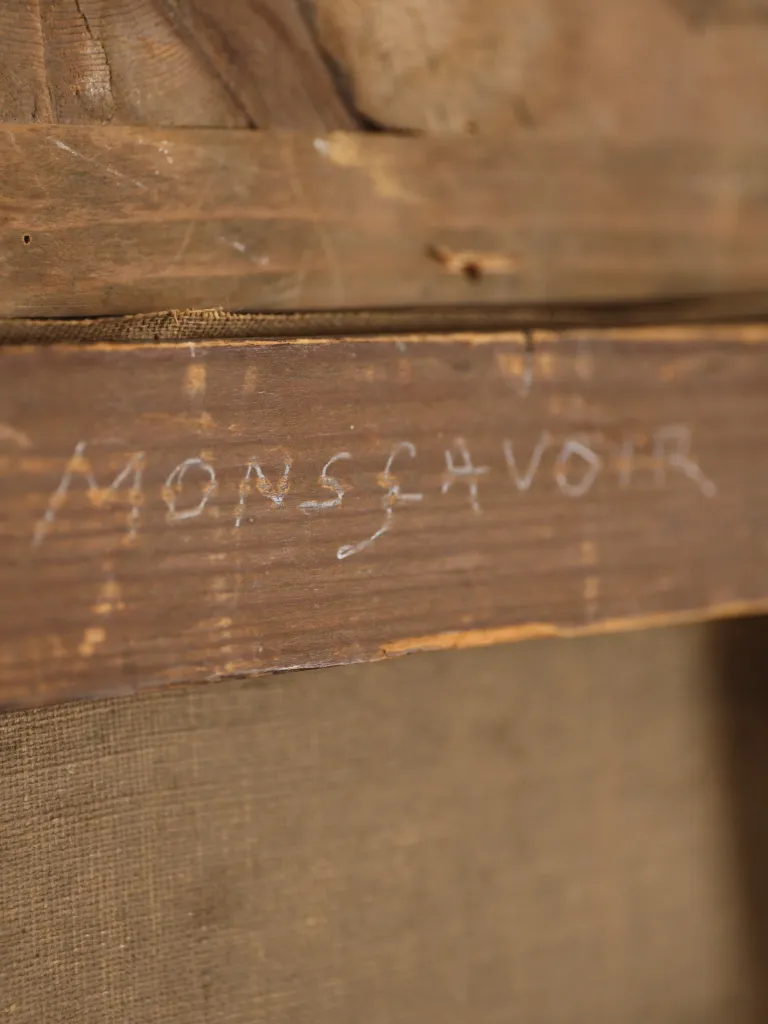
Monscavoir/Monsçavoir is also a genuine, though uncommon, French surname.
French three-masted steam-assisted sailing vessel in coastal waters
The French tricolour indicates French nationality, but merchant vessels also flew the national ensign. The black hull, extensive cargo-vessel-style rig, auxiliary steam funnel and overall configuration are entirely consistent with a 19th-century merchant vessel.
The painting captures a fascinating moment in maritime history when sail and steam existed side by side.
During the 19th century, steam propulsion increasingly transformed international shipping, but sail did not disappear overnight. Vessels were constructed and adapted to combine traditional sailing rigs with auxiliary steam engines, allowing them to retain the economy and range of sail while gaining the advantages of mechanical propulsion when conditions demanded it.
The artist has made this dual identity particularly clear: the ship remains dominated visually by its enormous spread of canvas, while the smoking funnel amidships reveals the presence of steam power.
Maritime portraits such as this were often commissioned by shipowners, captains or crew and valued as records of particular vessels. Naïve examples are especially appealing because they frequently devote extraordinary attention to the ship itself while treating perspective, sea and landscape with considerably greater artistic freedom.
France
19th Century
c.1860–1890
Monscavoir
Signed lower left.
Naïve / Folk Maritime Art
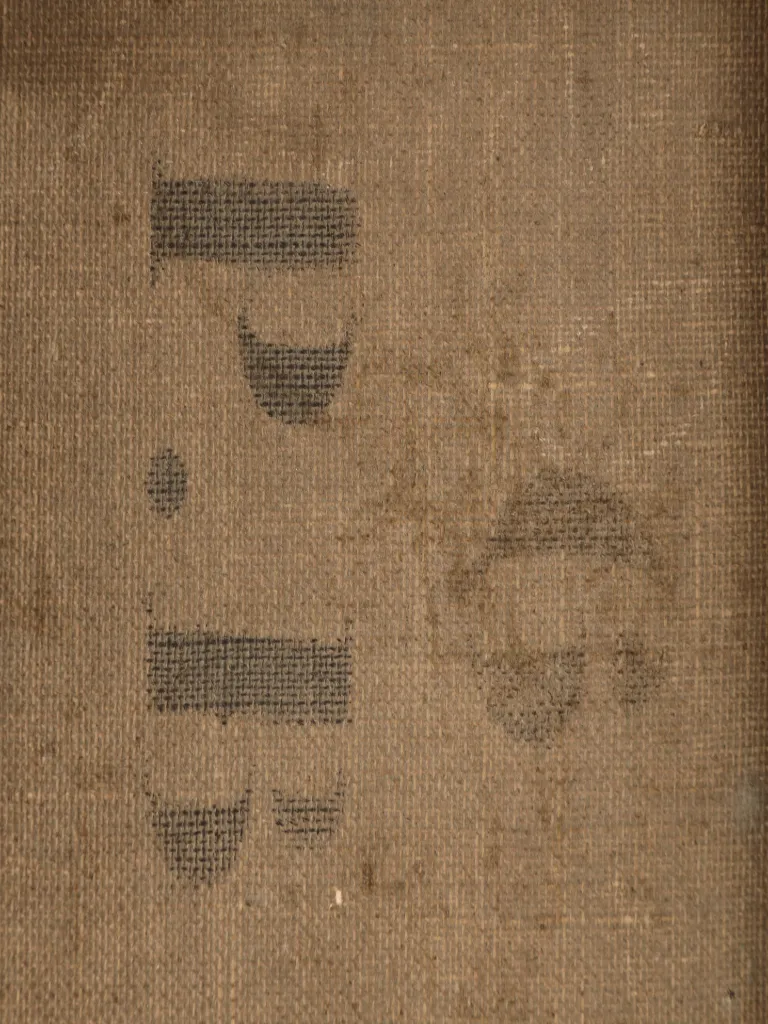
From the photographs this appears to be oil on canvas.
Oil on canvas
Gilt frame
Acquired in UK from a European Art Dealer
This is exactly the type of maritime painting we are particularly drawn to.
There is an immediacy and honesty to the artist's depiction of the ship that is difficult to achieve through more academically painted marine works. The vessel has clearly been the focus of the artist's attention, with its rigging, individual sails, deck structures, funnel and flags all carefully recorded.
The sea, meanwhile, is wonderfully energetic. Broad passages of blue, turquoise and white give the impression of a vessel pushing through heavy coastal waters, while the surrounding rocky landscape creates an almost theatrical setting.
We particularly like the inclusion of the steam funnel amongst the traditional sailing rig. It immediately places the vessel within one of the most interesting periods of 19th-century maritime history, the transition between the age of sail and steam.
The painting is in good antique condition, retaining considerable character and surface appropriate to its age.
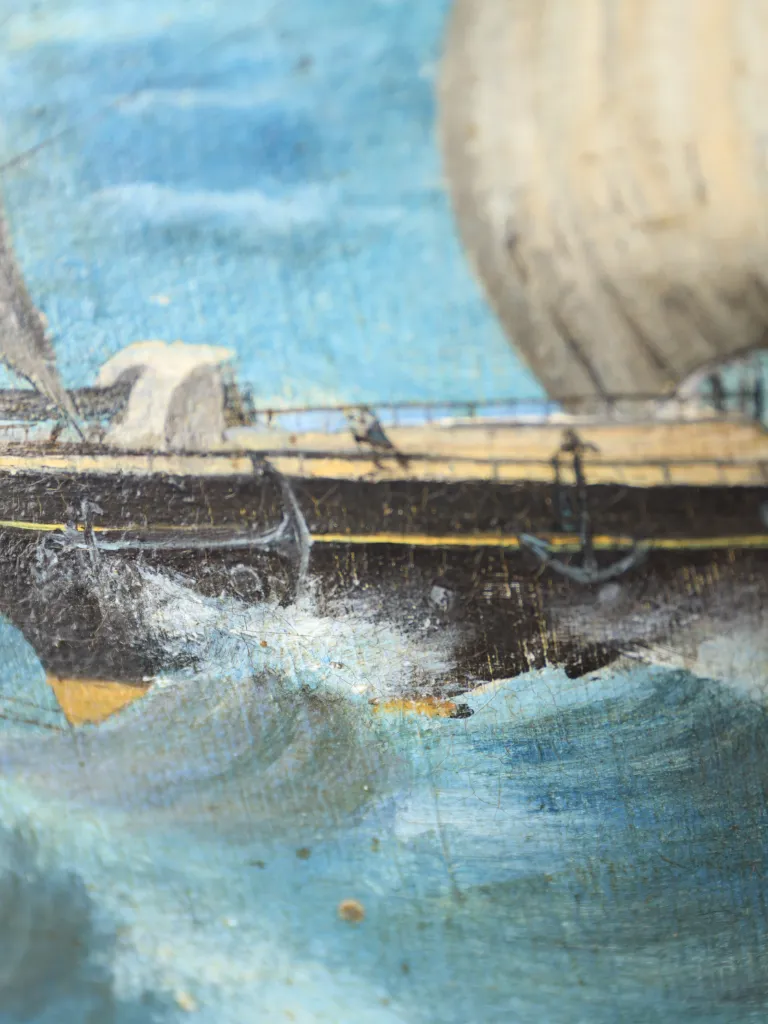
There is visible age-related craquelure, surface marking and areas of wear consistent with a 19th-century oil painting. The surface retains an attractive aged appearance.
The gilt frame displays expected age-related wear, rubbing and minor losses to the gilded finish.
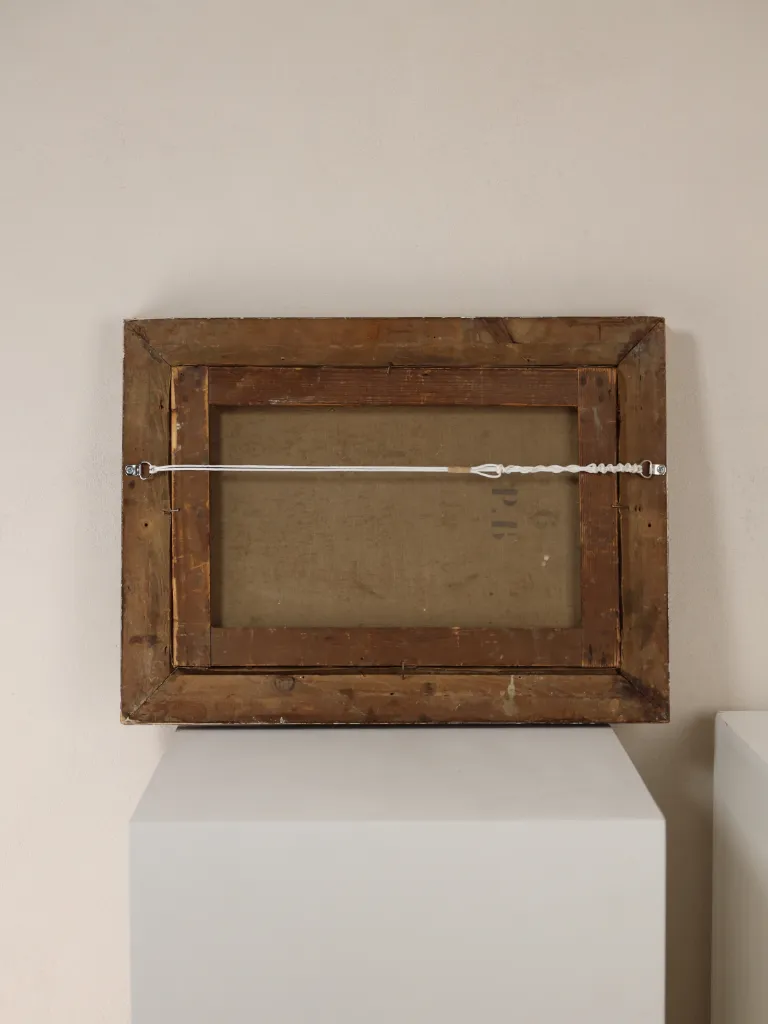
Please refer closely to the photographs, which form an important part of the condition report.
Height: — 37 cm / — 14.6 inches
Width: — 50 cm / — 19.7 inches
Depth: — 5 cm / — 2 inches
Weight: — 1.5 kg / — 3.3 lbs
Every item offered by Shackleton Fox is carefully inspected, prepared, and where necessary conserved within our workshop prior to sale.
As heritage craftsmen and antique specialists, we believe in preserving the authenticity and integrity of each piece. Original finishes, patina, wear, and signs of age are retained wherever possible, as these elements contribute to both character and historical significance.
When restoration, rewiring, repairs, or conservation work is required, it is undertaken sympathetically using traditional techniques and materials appropriate to the period of the piece. Our philosophy is one of careful stewardship rather than unnecessary restoration, ensuring antiques remain both functional and historically respectful.
The result is a collection of pieces that have been thoughtfully prepared, allowing future owners to enjoy them with confidence while preserving their unique story and character.