

£1,850.00
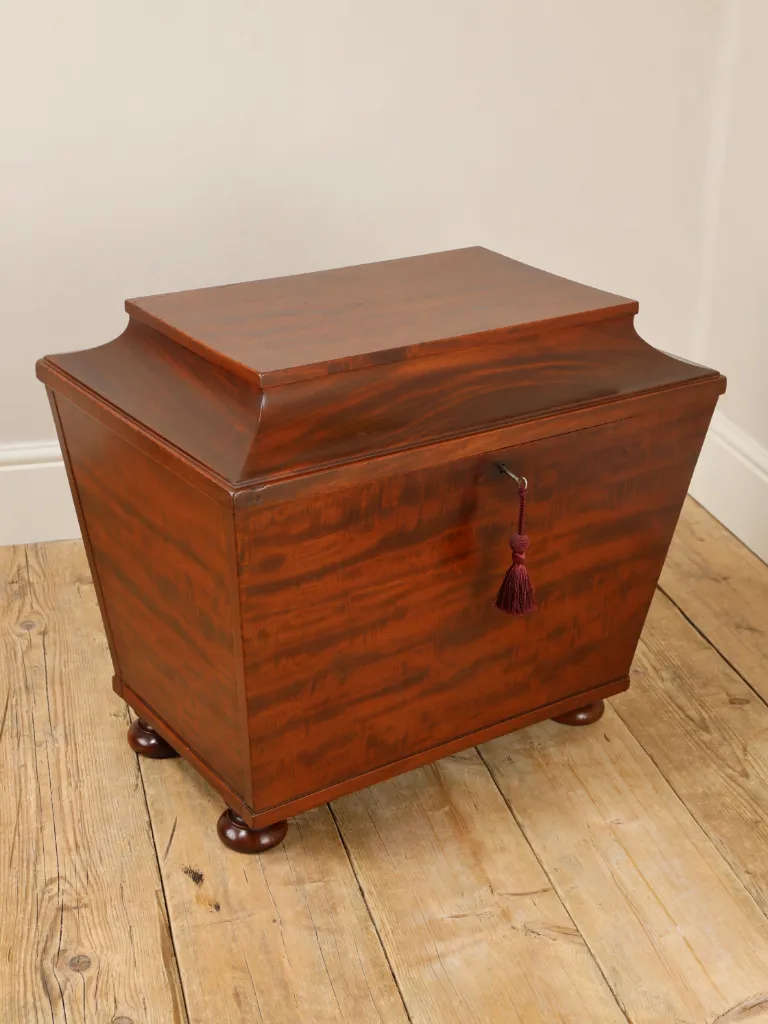
A handsome and unusually well-appointed 19th-century mahogany cellarette and wine cabinet, designed specifically for the storage and serving of wine and spirits.



A handsome and unusually well-appointed 19th-century mahogany cellarette and wine cabinet, designed specifically for the storage and serving of wine and spirits.
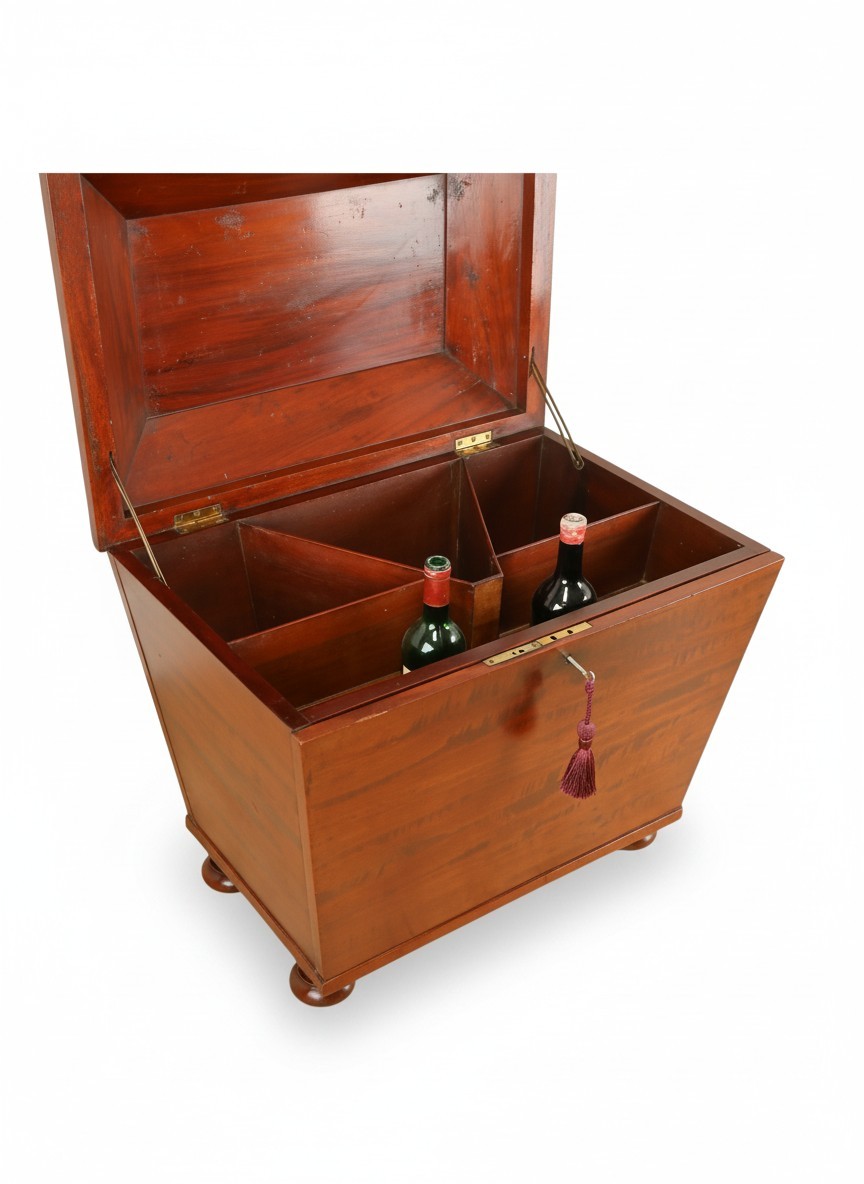
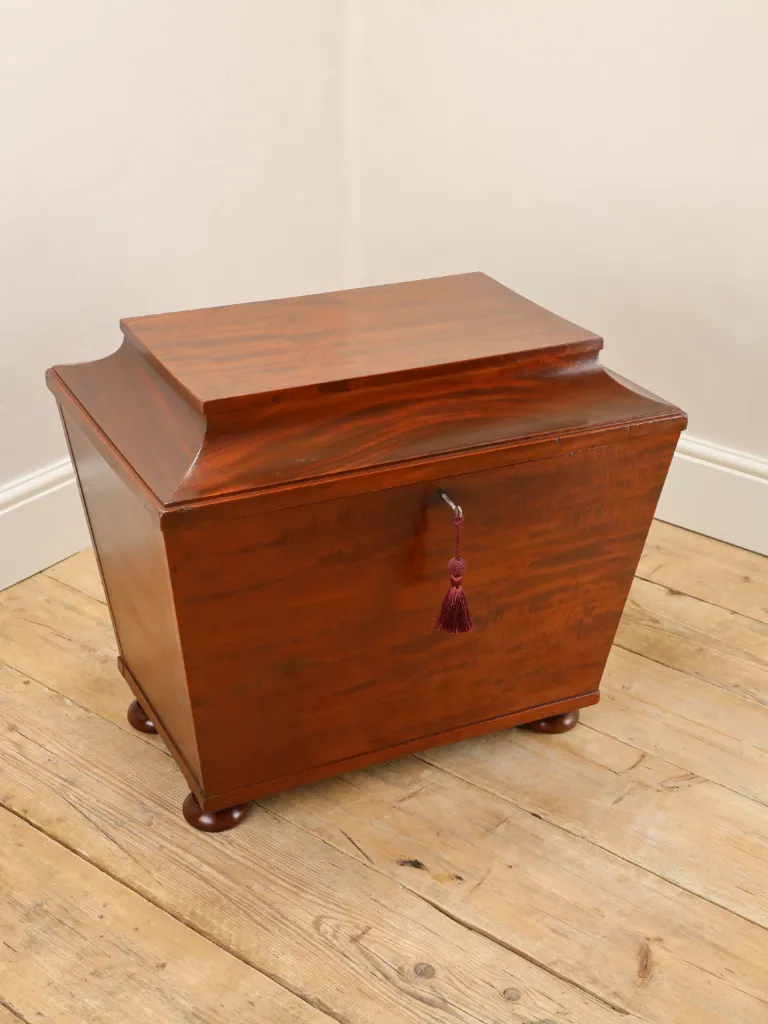
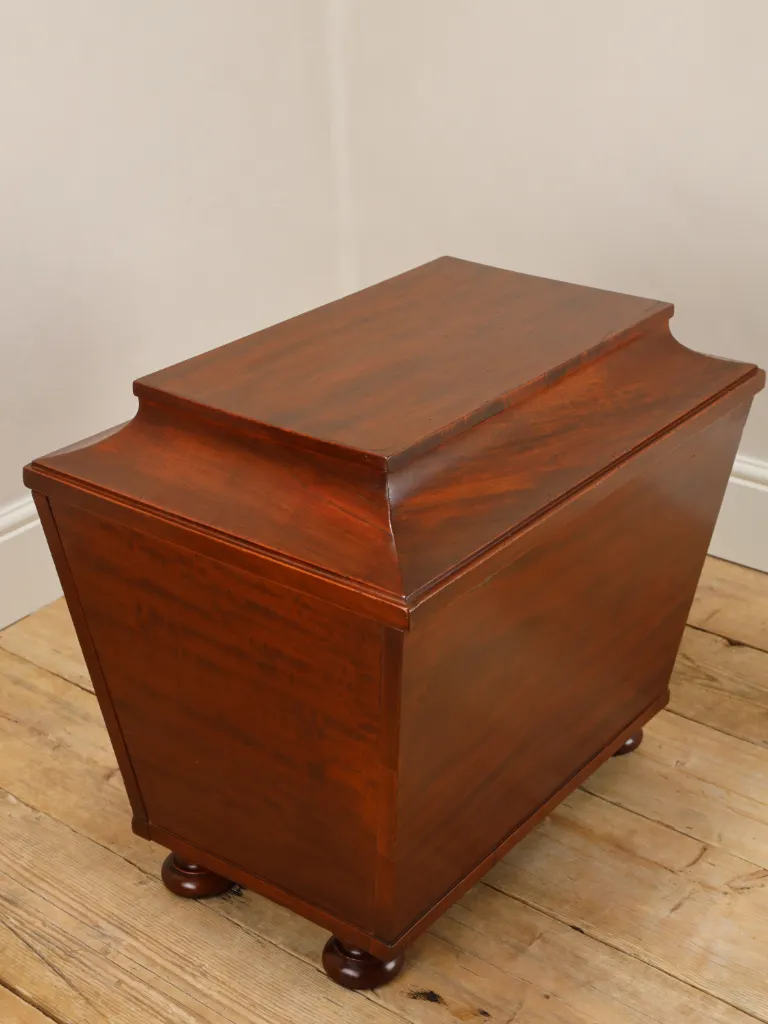
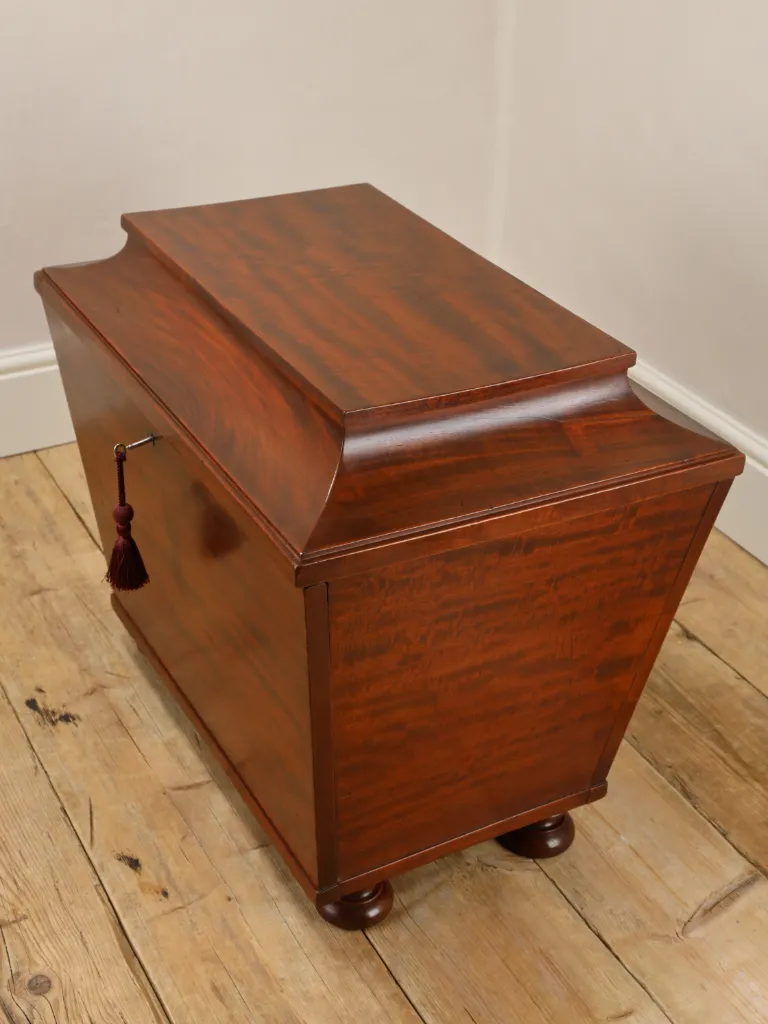
Of substantial cabinet form, the cellarette is constructed in richly figured mahogany with a warm reddish-brown colour and beautifully polished surface. The restrained exterior conceals a particularly clever three-part fitted interior, providing separate storage for bottles, decanters and the smaller accessories associated with serving wine.
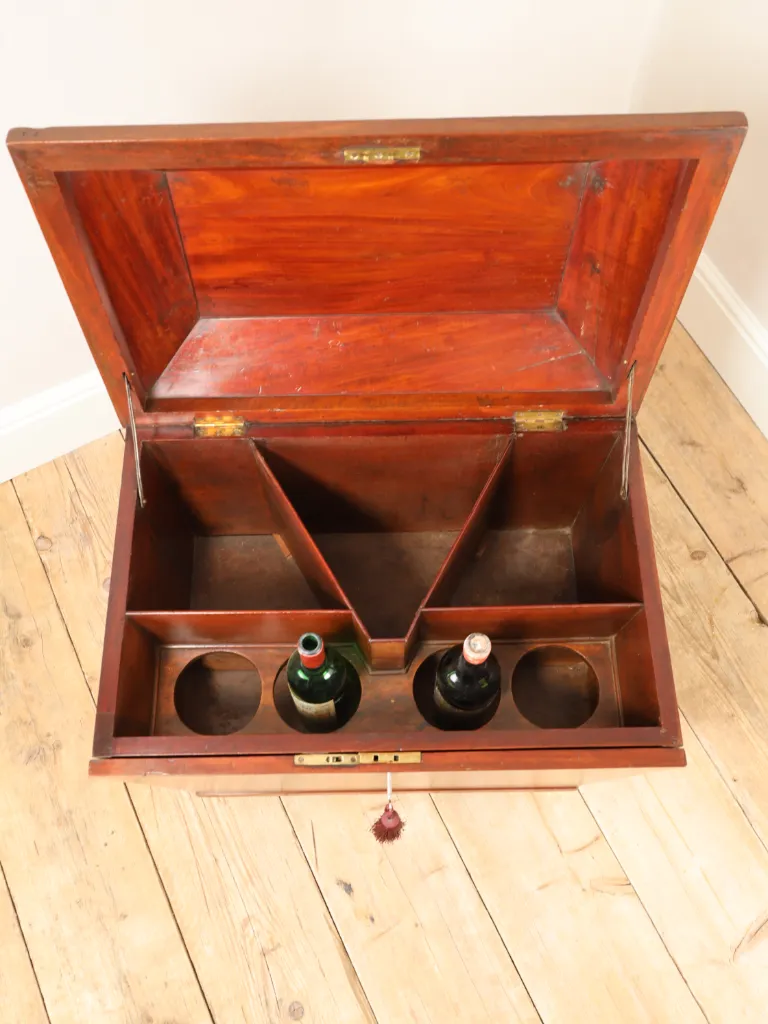
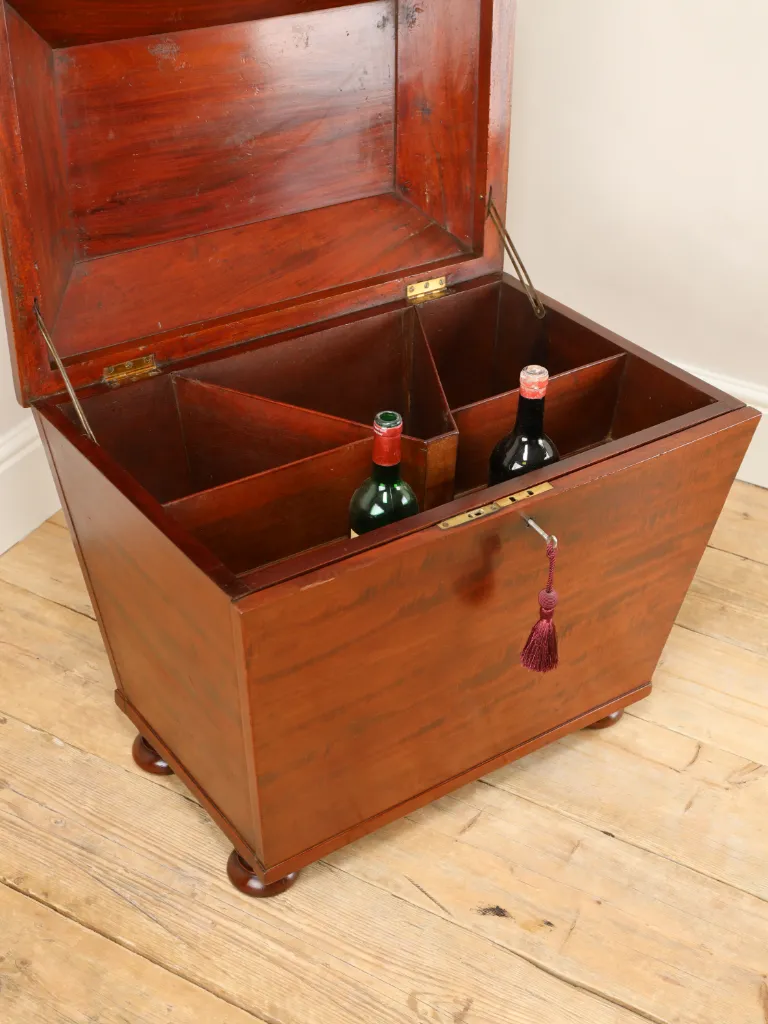
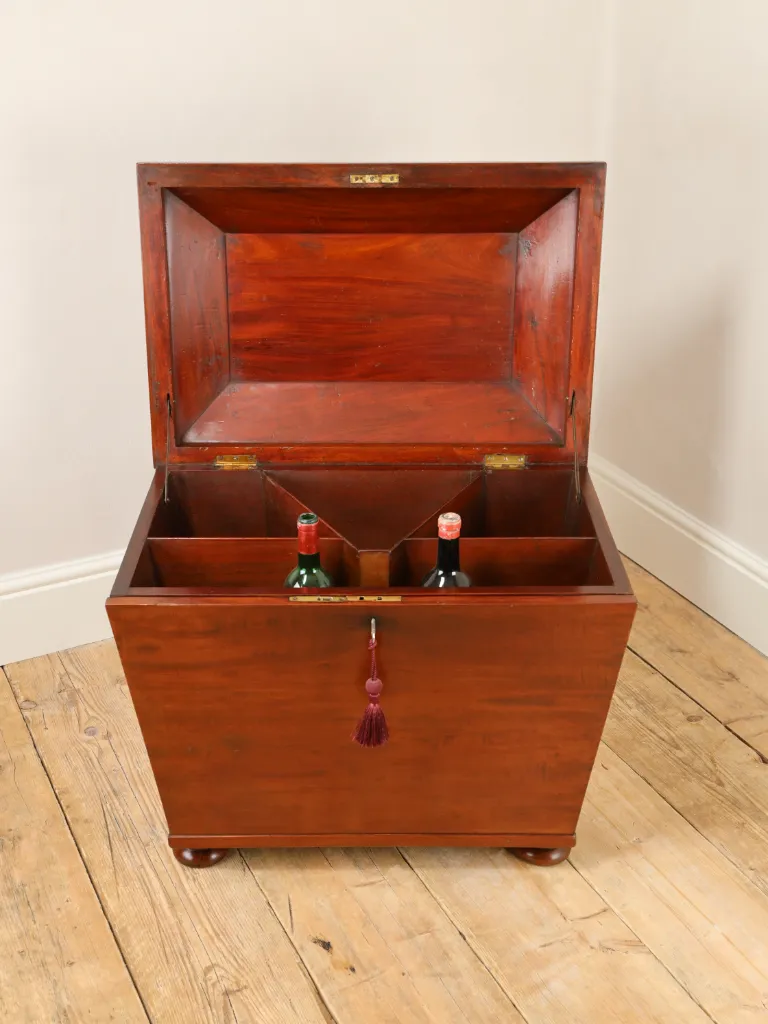
The hinged upper lid opens to reveal the principal storage compartment, divided into sections suitable for standing bottles and decanters. The internal divisions keep individual vessels separated while allowing different bottle shapes and serving pieces to be accommodated.
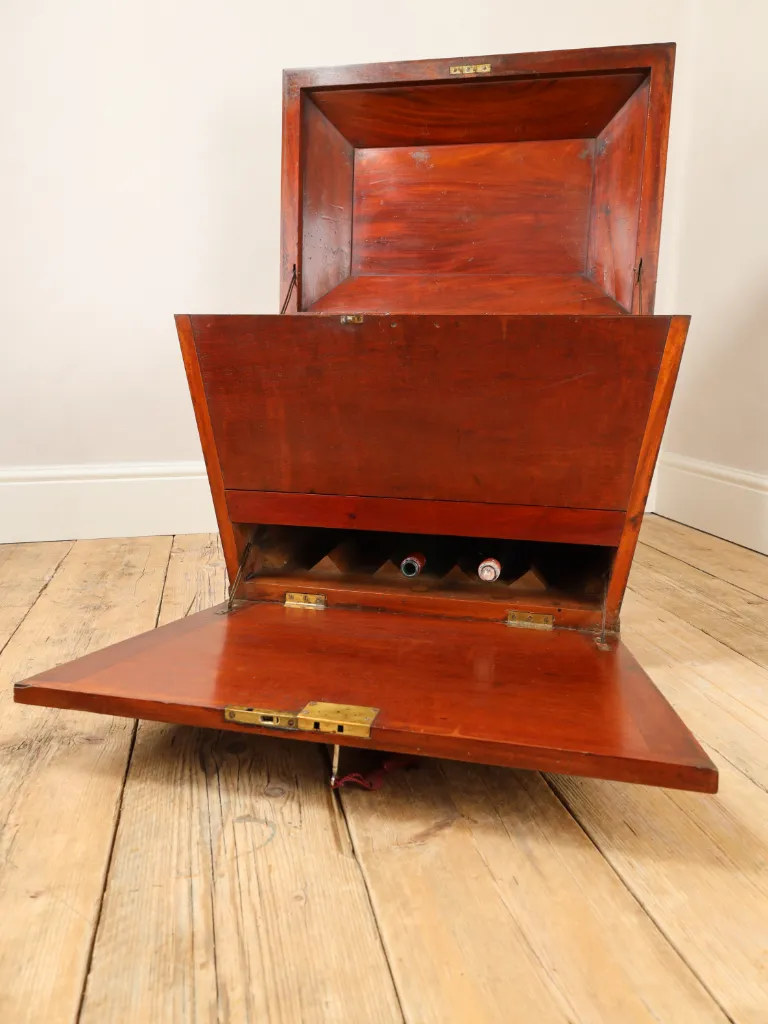
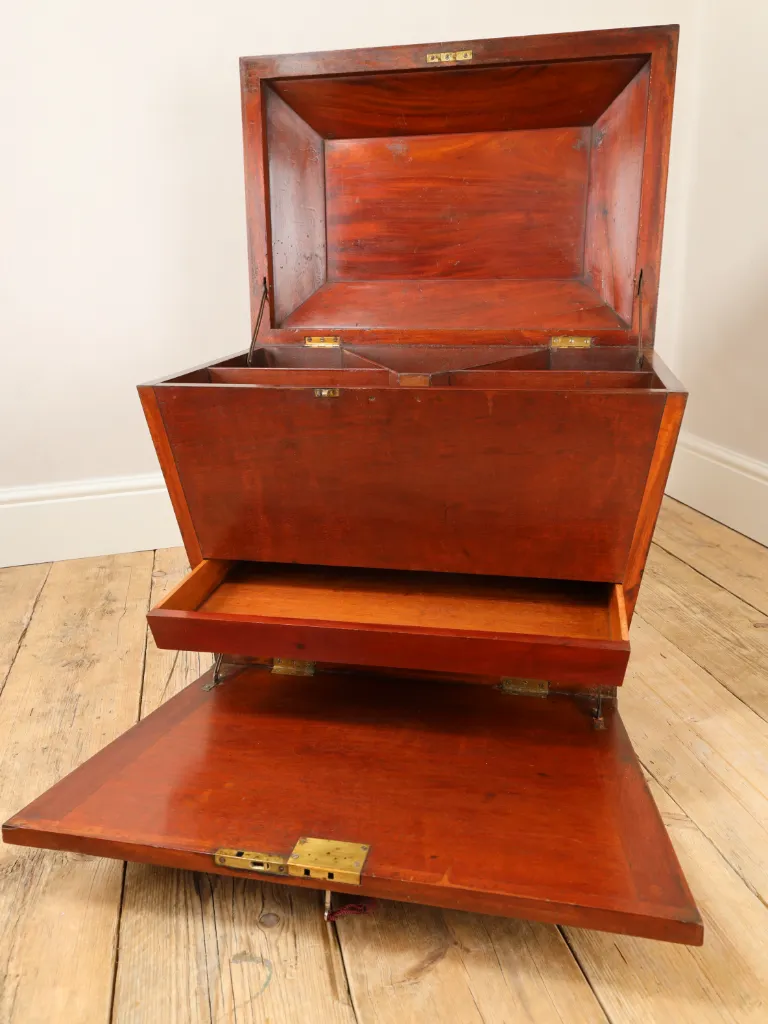
More unusually, the front of the cabinet opens to reveal a second level. A shallow internal drawer provides dedicated storage for corkscrews, bottle stoppers, stirrers and other wine or bar accessories, keeping the smaller implements neatly separated from the bottles themselves.
Below this, a further compartment contains a fitted bottle rack designed to accommodate five bottles of wine horizontally. The circular apertures hold the bottles individually and make particularly good use of the depth of the cabinet.
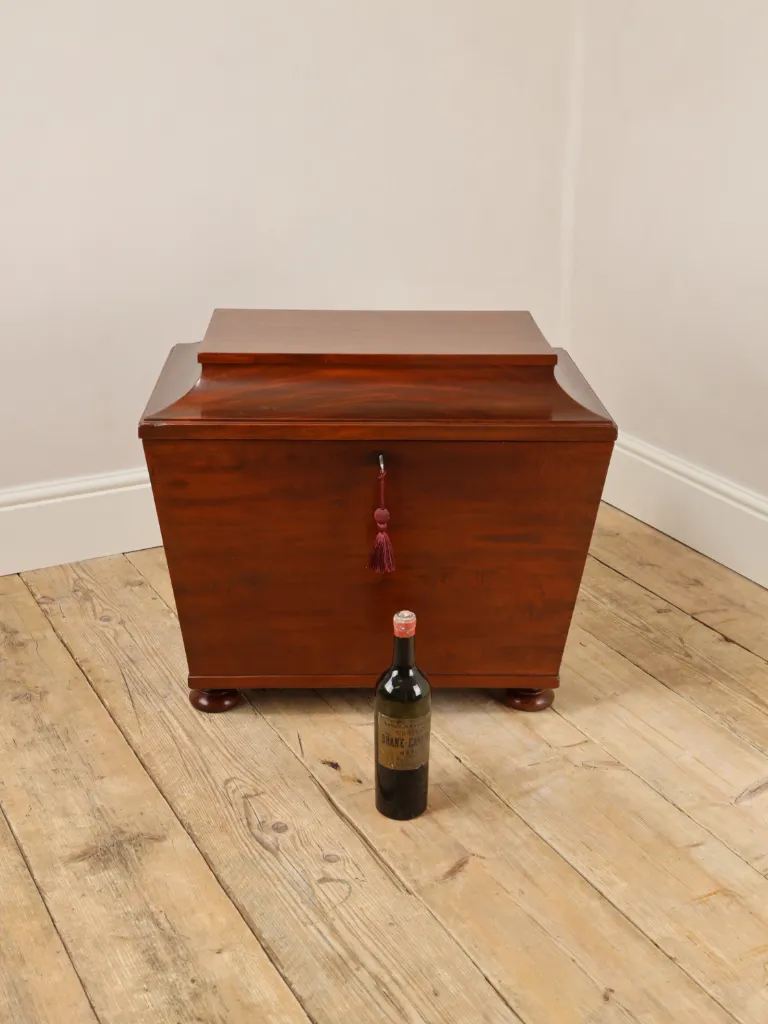
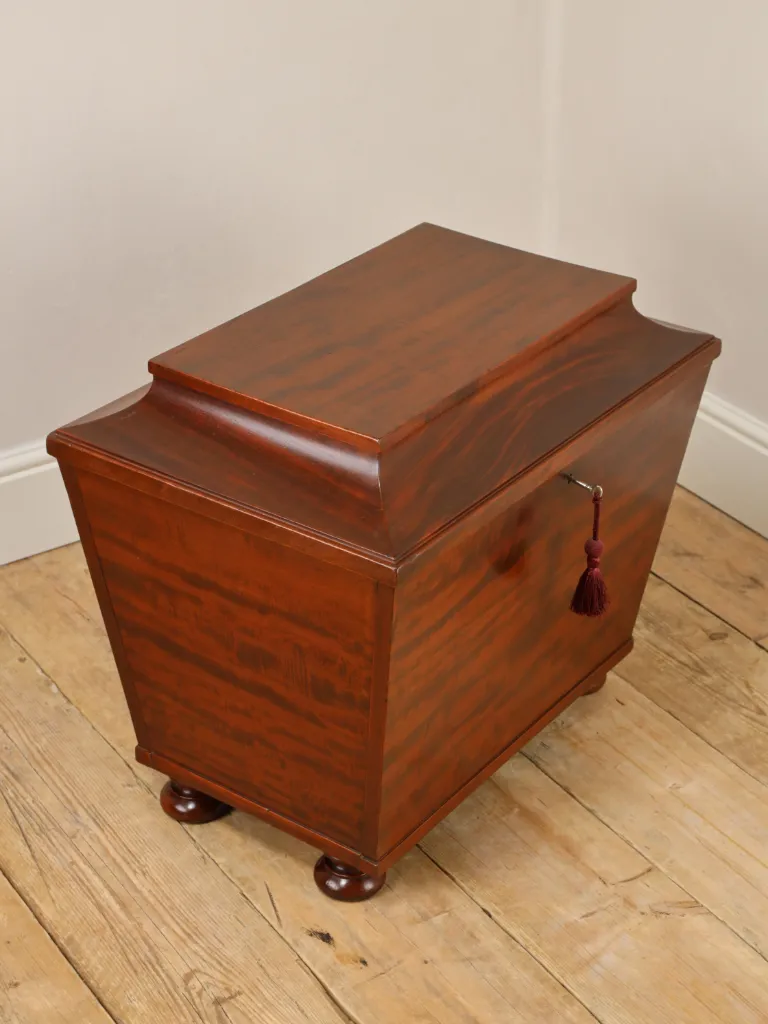
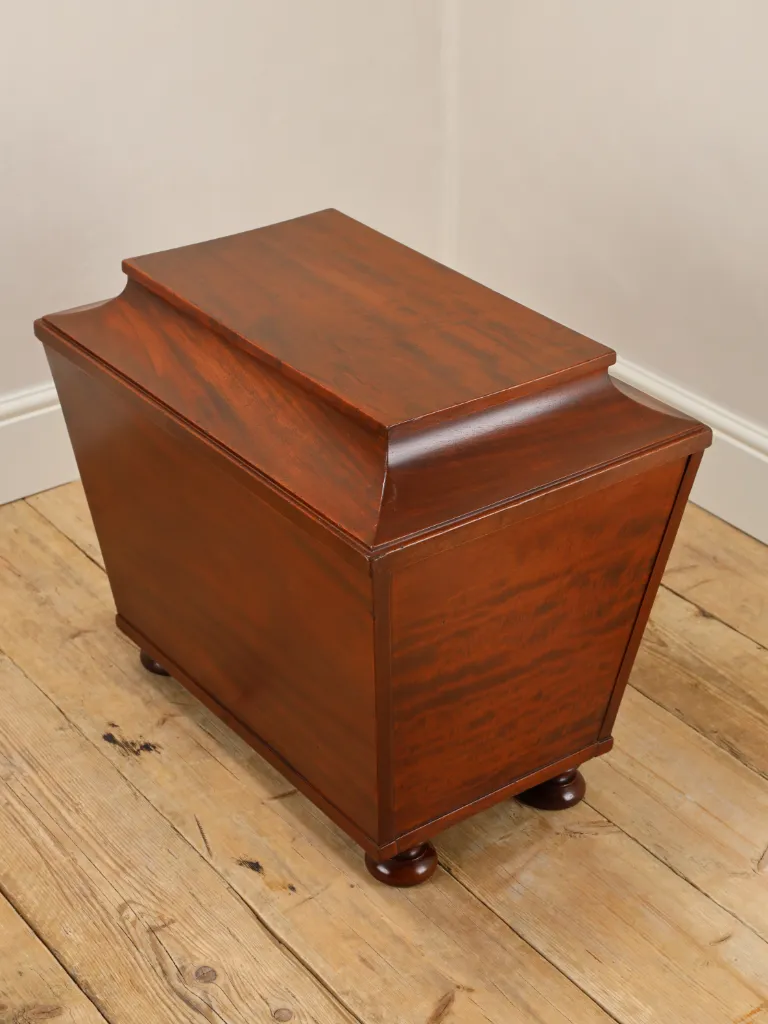
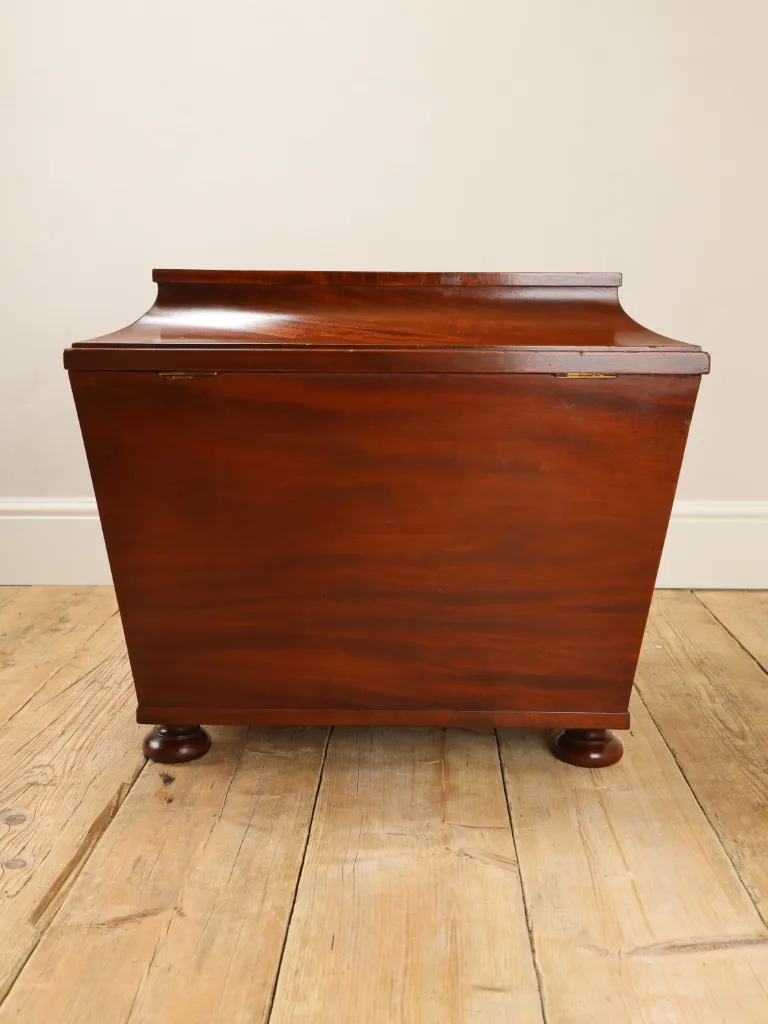
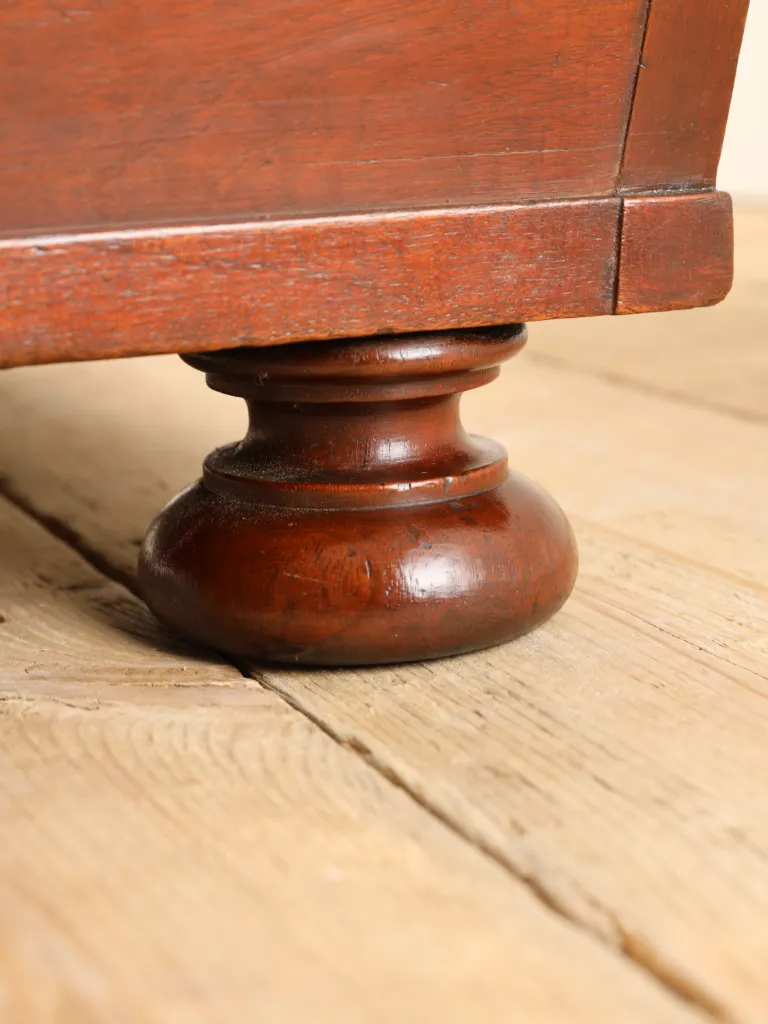
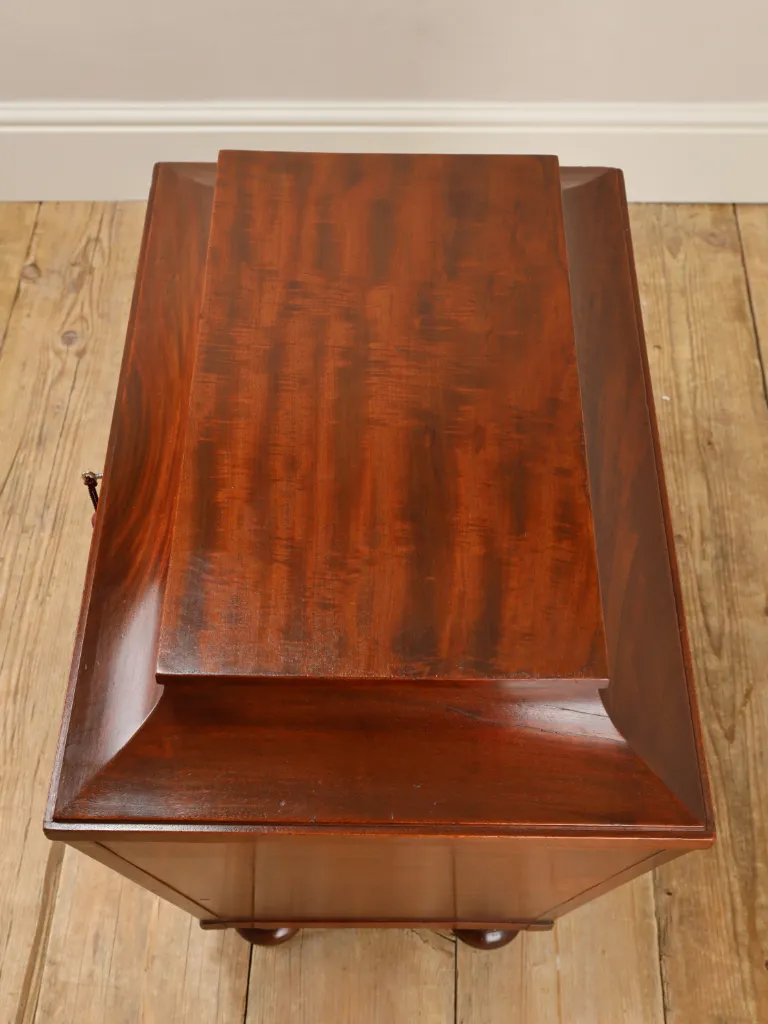
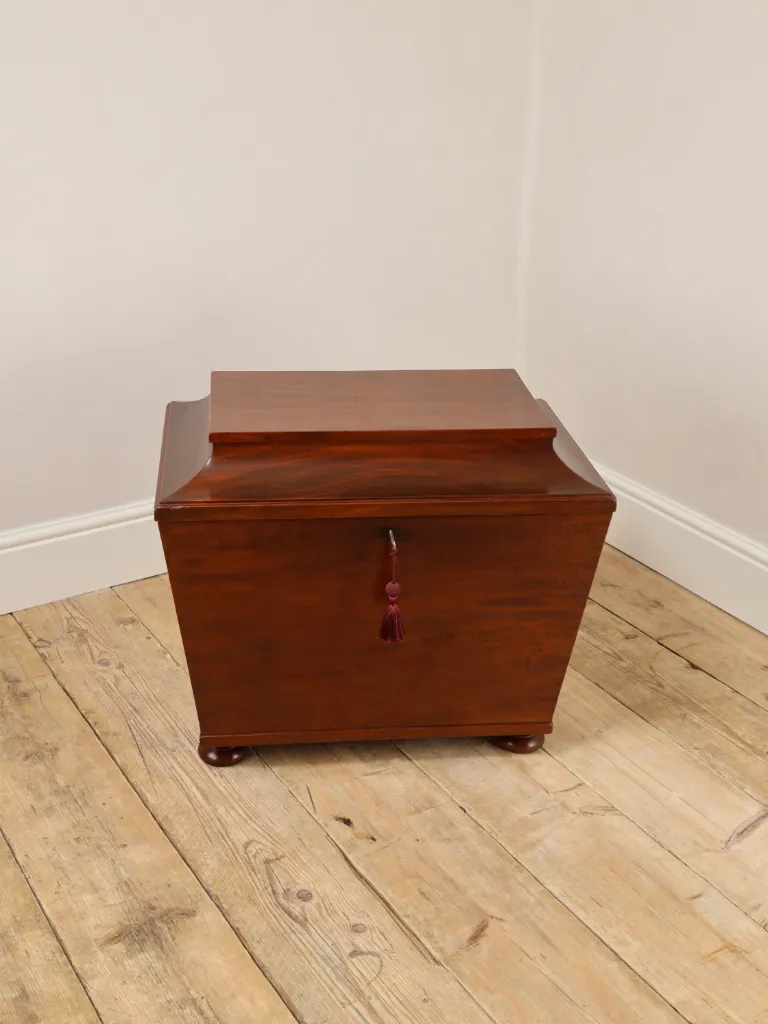
The exterior is deliberately restrained, allowing the quality and figuring of the mahogany to take prominence. A stepped architectural lid with gently concave moulded sides gives the piece a strong profile, while the substantial rectangular body is raised on four beautifully turned bun feet.
The front retains its lock and is finished with a traditional tasselled key.
Recently renovated and French polished for Shackleton Fox by furniture restorer Alex Webster of Colwyn Bay, North Wales, the cabinet presents beautifully while retaining the character expected of a piece approaching two centuries old.
It is both an attractive piece of period furniture and an exceptionally usable object for the contemporary home.
Cellarettes developed as specialist pieces of furniture for storing wine and spirits, particularly in affluent British households during the Georgian and early Victorian periods.
Before the modern drinks cabinet became commonplace, wine might be stored in a cellar but a smaller selection would be brought into the dining or drawing room for service. Purpose-built cellarettes allowed bottles and decanters to be kept securely and conveniently close to the dining table.
Many Georgian examples were essentially lined or divided boxes, sometimes raised on legs or fitted beneath sideboards. During the first half of the 19th century, more elaborate cabinet forms appeared, incorporating bottle divisions, drawers and concealed storage.
This example is particularly appealing because the maker has incorporated three distinct storage functions into one compact cabinet:
It is this internal organisation that makes the piece much more interesting than a conventional antique bottle box or simple cellarette.
I would currently date this piece to approximately c.1830–1850, placing it around the transition between the William IV and early Victorian periods.
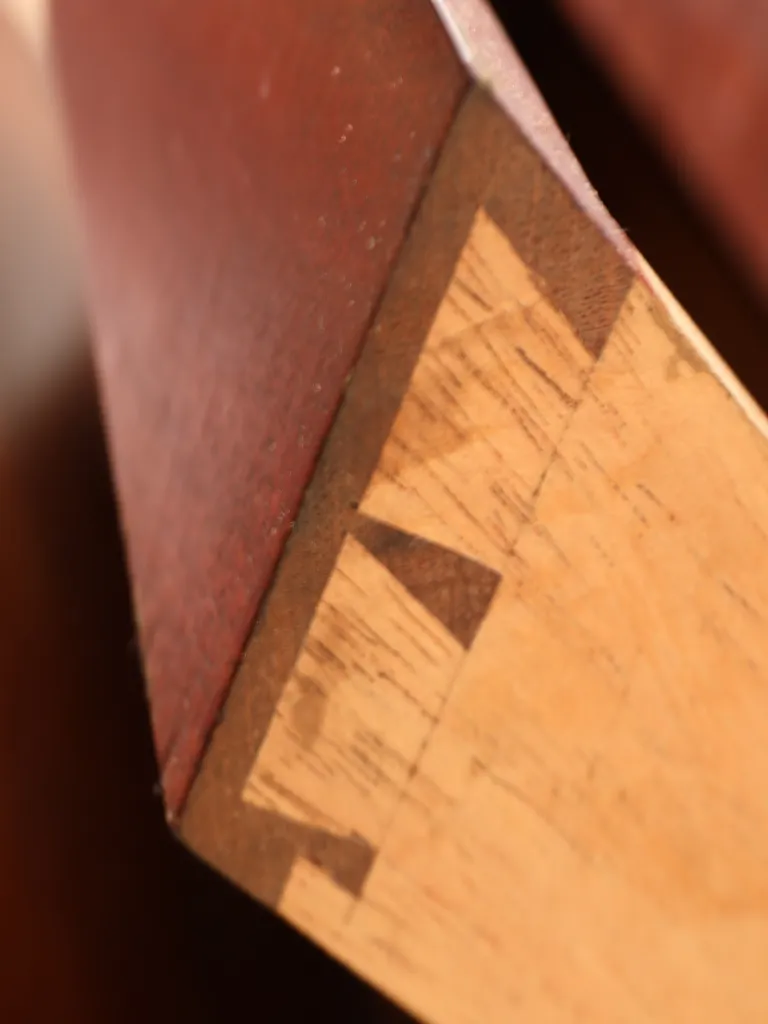
The use of richly figured mahogany, relatively restrained cabinet work, substantial architectural top and low turned bun feet are all consistent with British furniture of the first half of the 19th century.
The hinged top opens to reveal a substantial fitted compartment divided for the storage of bottles and decanters.
The depth allows taller bottles to stand securely within the cabinet, while the individual divisions prevent them from moving freely against one another.
Opening the lower front reveals a shallow internal drawer, providing a particularly useful space for wine and drinks accessories.
It would originally have allowed the owner to keep the various implements required for serving wine close at hand and today is ideal for corkscrews, bottle openers, stoppers, pourers and stirrers.
Below the drawer is a further concealed fitted compartment incorporating five circular bottle positions.
This allows five wine bottles to be stored horizontally and securely within the lower section of the cabinet.
Together, the three levels make this a remarkably practical piece of early 19th-century drinks furniture.
The cellarette has been sympathetically renovated and French polished for Shackleton Fox by Alex Webster of Colwyn Bay, North Wales, with whom we work on larger pieces of period furniture requiring specialist attention.
The work has been undertaken to improve the presentation and usability of the cabinet while respecting the original construction, surface and character of the mahogany.
The French polishing has brought considerable depth back to the timber, particularly highlighting the wonderful figuring across the broad front and architectural lid.
Importantly, the intention has not been to make the piece appear new. Age-related variation, marks and evidence of historic use remain visible and form part of its character.
This is one of those pieces of antique furniture that becomes considerably more interesting once it is opened.
From the outside it is an elegant and relatively restrained mahogany cabinet, but the interior reveals just how carefully it was designed around the ritual of storing and serving wine.
We particularly like the three separate levels. Having space for standing bottles and decanters at the top, a dedicated accessory drawer and then five further bottles stored horizontally below makes it considerably more sophisticated than the more commonly encountered single-compartment cellarette.
The proportions are also excellent. It has enough presence to work as a piece of furniture in its own right without being excessively large.
Today we could see it working beautifully beside a dining table, in a library or drawing room, or as a highly individual antique home bar or drinks cabinet.
The freshly French-polished mahogany is particularly attractive, bringing out the movement and figuring of the timber while retaining the maturity expected from a genuine 19th-century piece.
Presented in very good antique condition following sympathetic renovation and French polishing.
The mahogany displays expected age-related marks, surface variation, minor knocks and historic wear consistent with a functional piece of 19th-century furniture.
The interior retains further evidence of use associated with the historic storage of bottles and drinks accessories.
The cabinet retains its fitted internal divisions, accessory drawer, lower five-bottle rack, brass hinges and supporting stays.
The four turned bun feet are present and provide a particularly attractive finish to the cabinet.
The piece has deliberately not been over-restored; historic marks and variations have been retained where appropriate as part of its age and character.
Acquired in the United Kingdom
England
William IV / Early Victorian, c.1830–1850
Height: 60 cm / 23.6 inches
Width: 70 cm / 27.6 inches
Depth: 48 cm / 18.9 inches
Weight: 23 kg / 50.7 lbs
Every item offered by Shackleton Fox is carefully inspected, prepared, and where necessary conserved within our workshop prior to sale.
As heritage craftsmen and antique specialists, we believe in preserving the authenticity and integrity of each piece. Original finishes, patina, wear, and signs of age are retained wherever possible, as these elements contribute to both character and historical significance.
When restoration, rewiring, repairs, or conservation work is required, it is undertaken sympathetically using traditional techniques and materials appropriate to the period of the piece. Our philosophy is one of careful stewardship rather than unnecessary restoration, ensuring antiques remain both functional and historically respectful.
The result is a collection of pieces that have been thoughtfully prepared, allowing future owners to enjoy them with confidence while preserving their unique story and character.