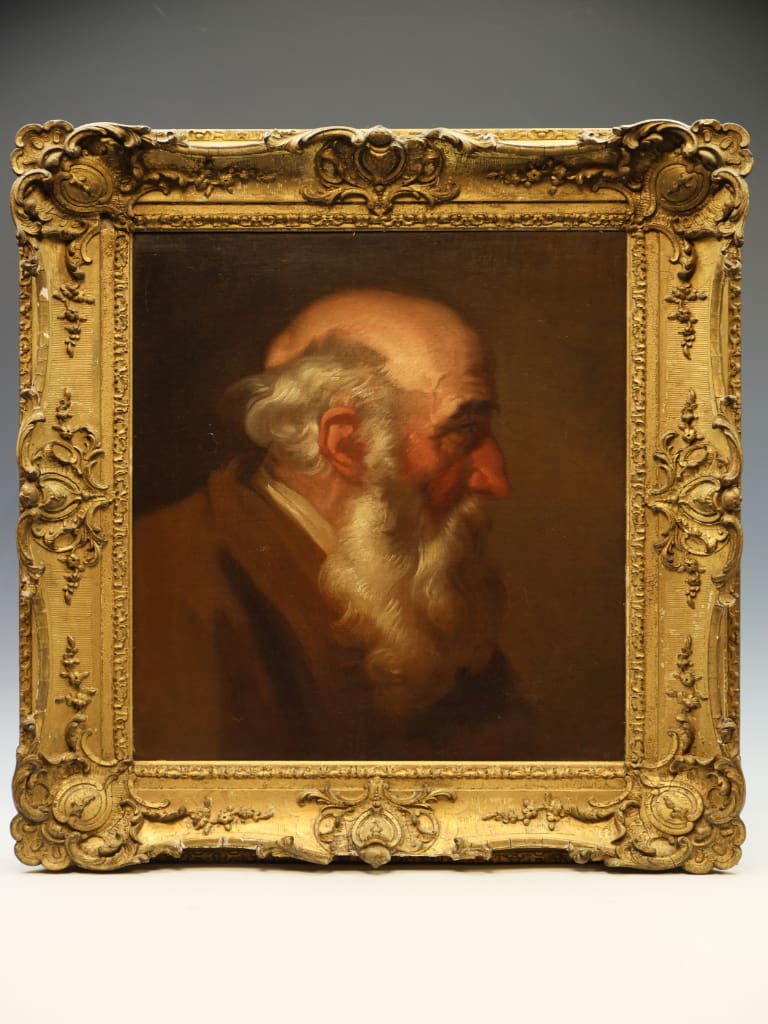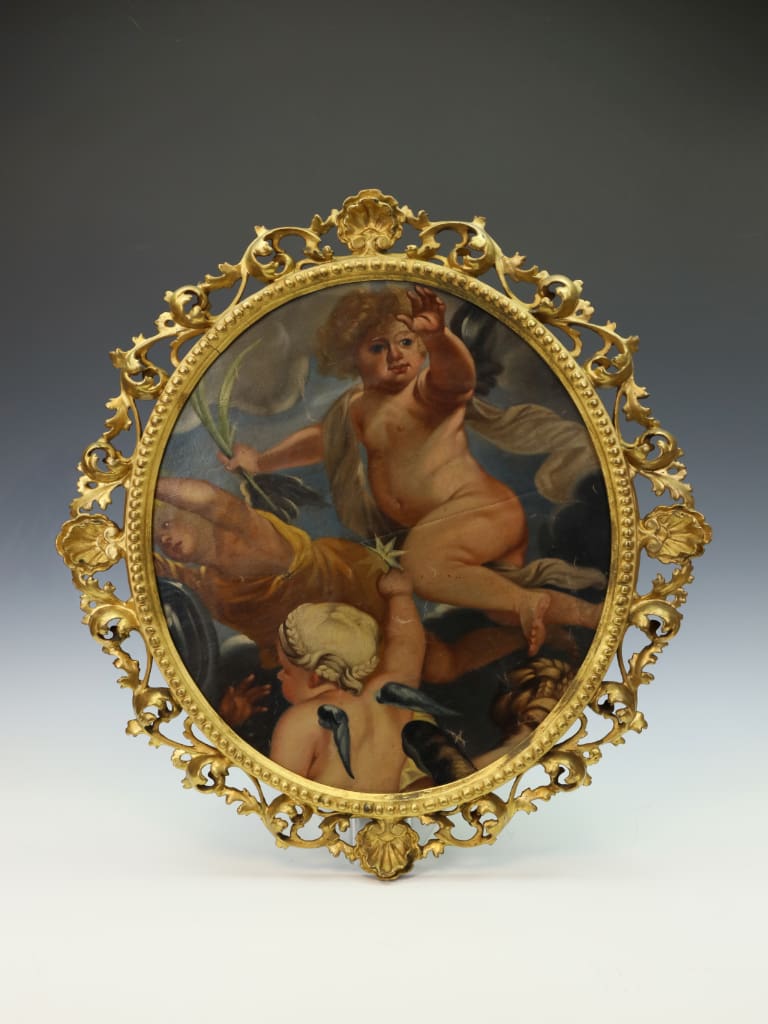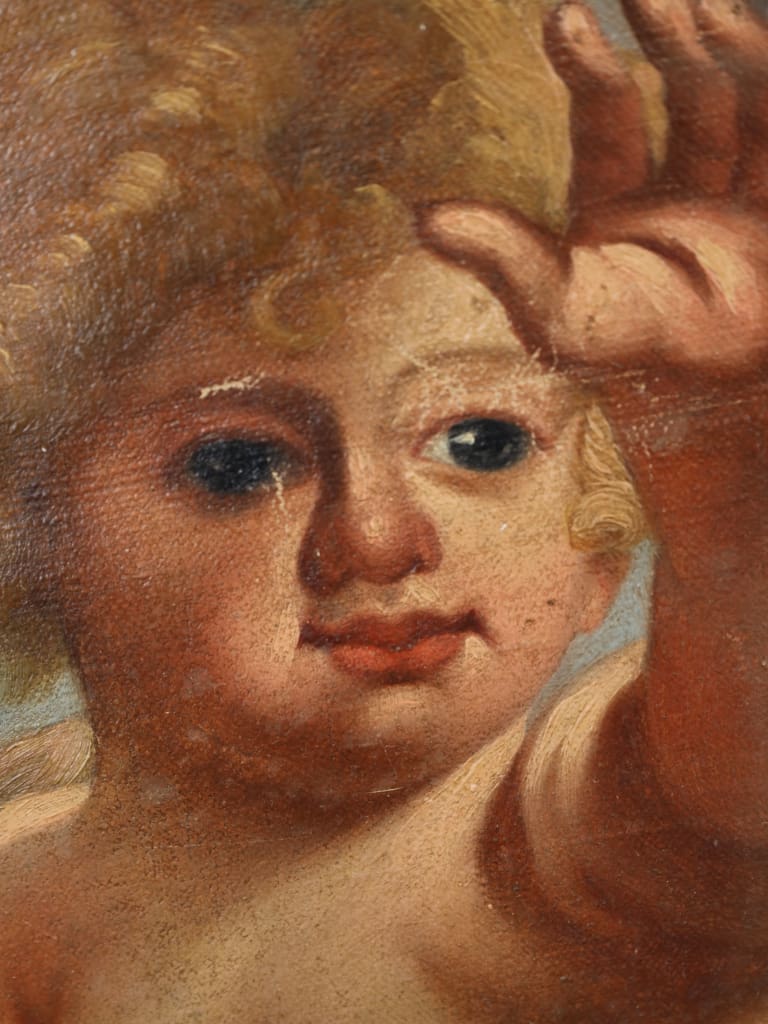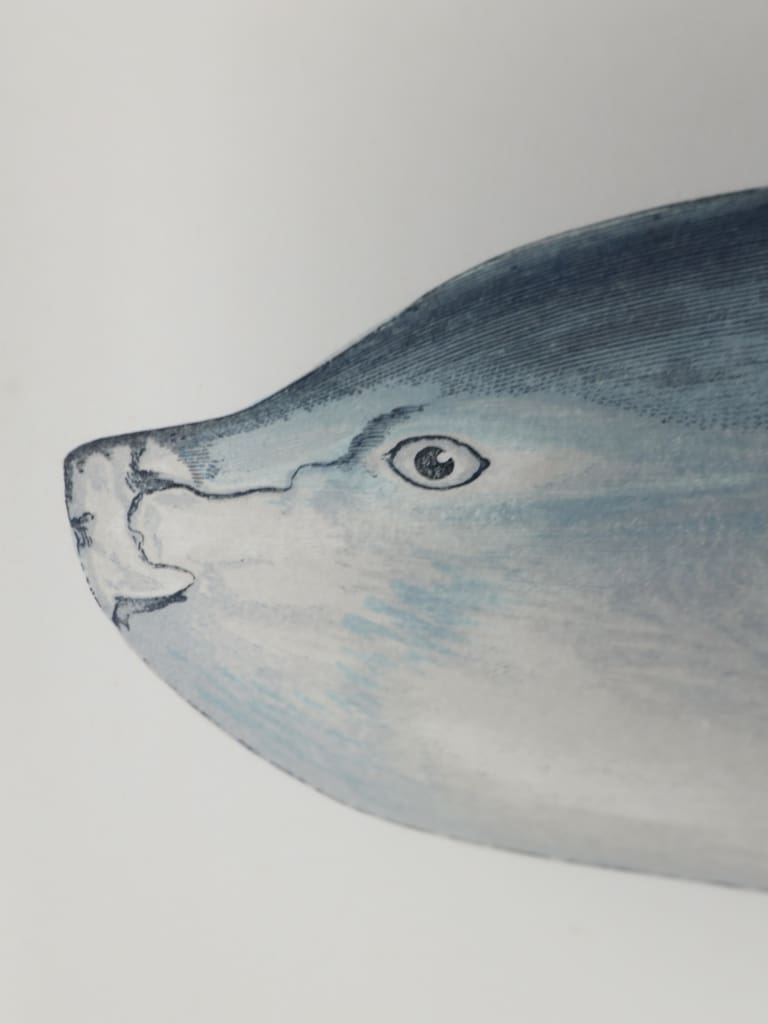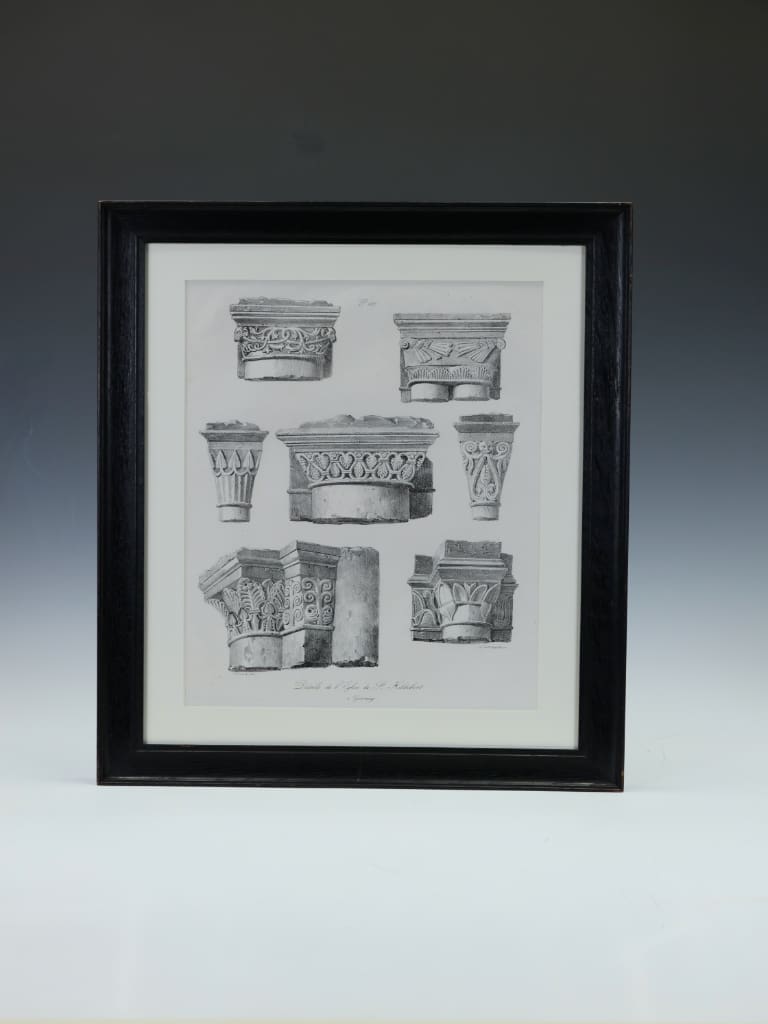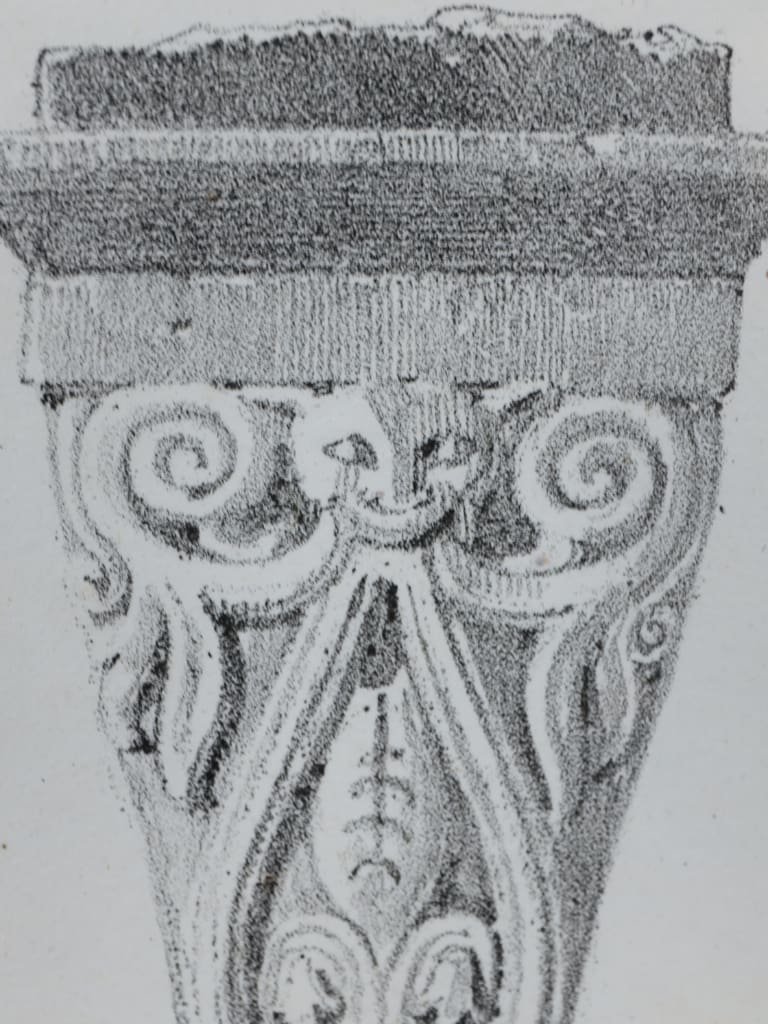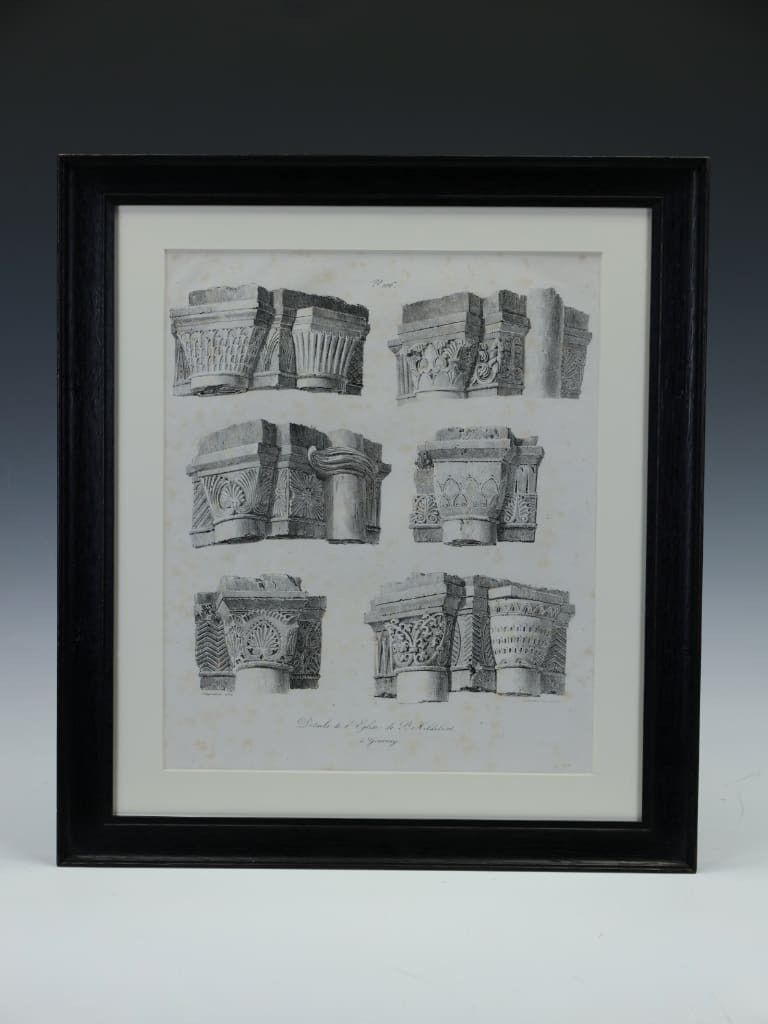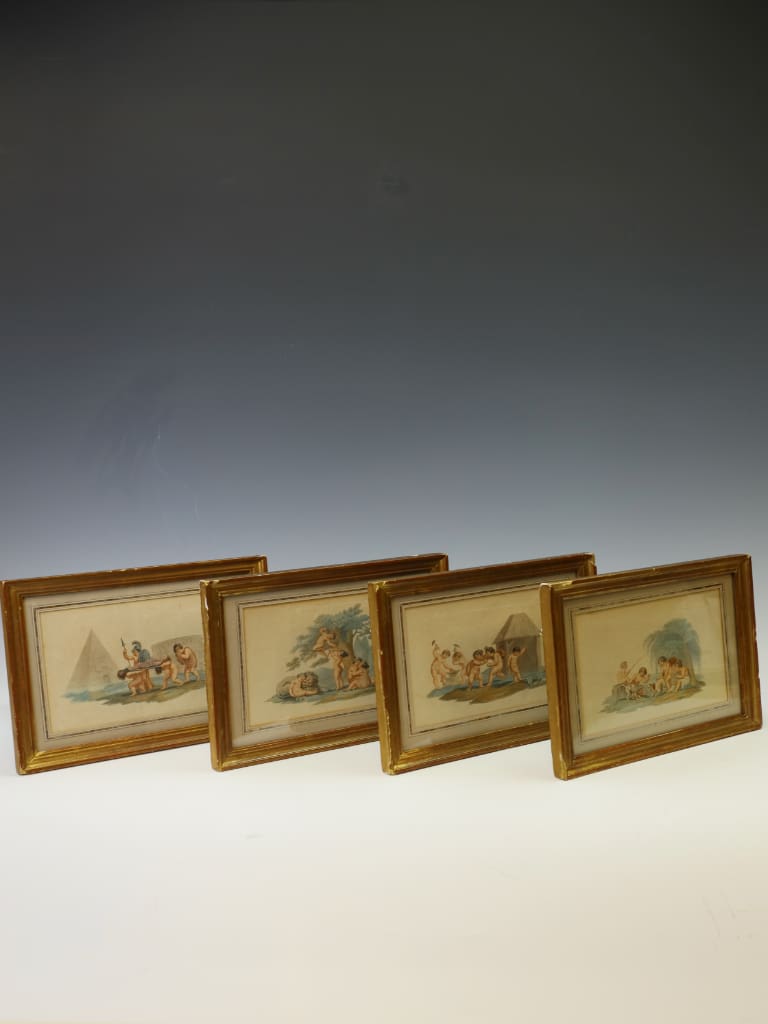
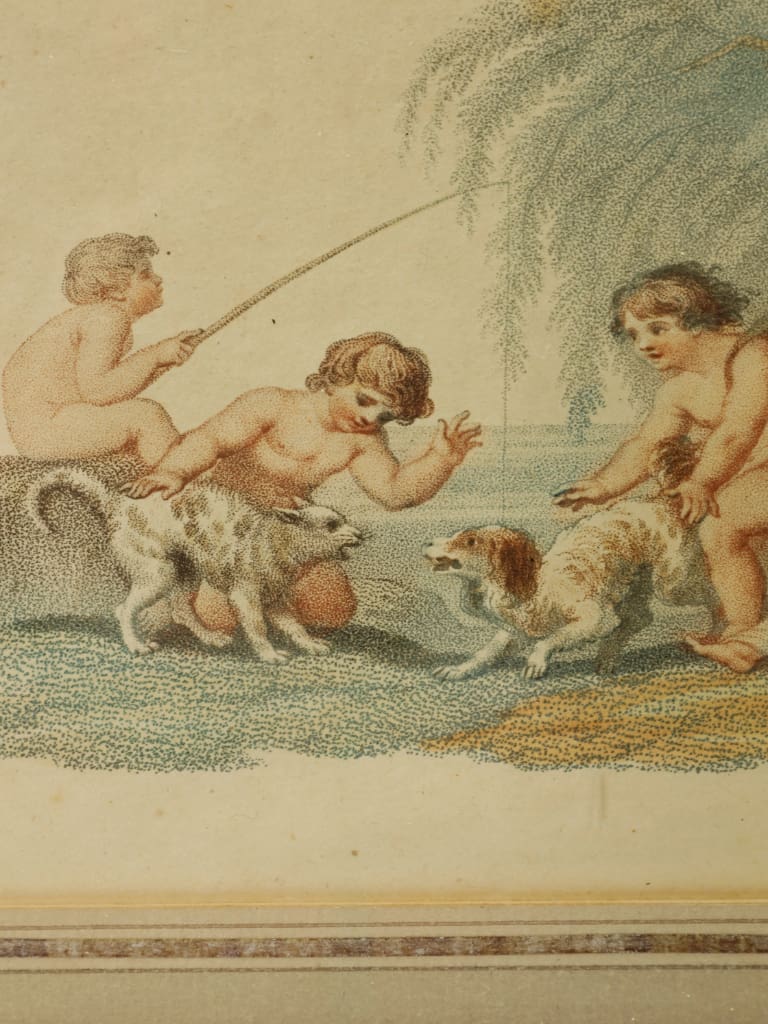
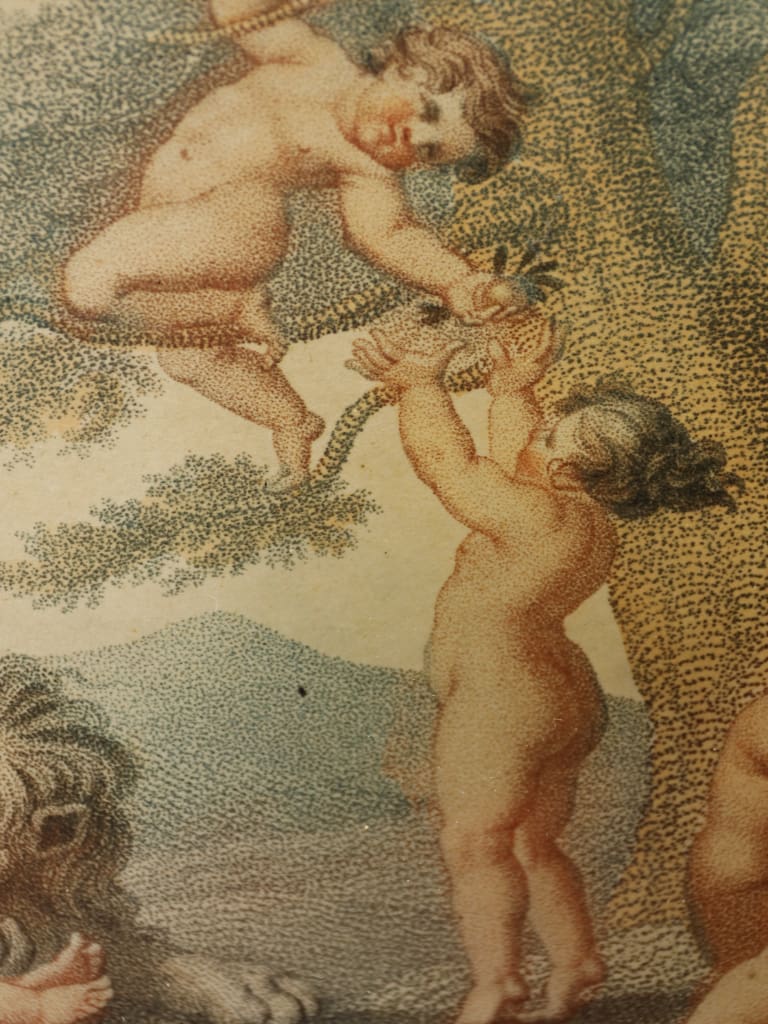
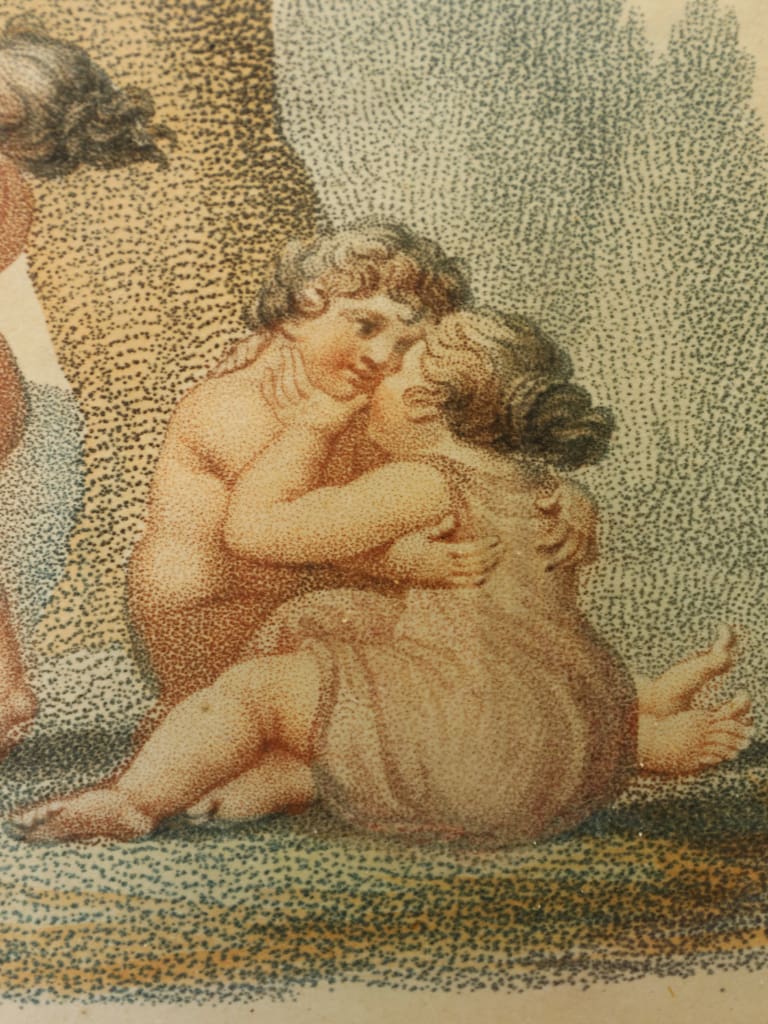
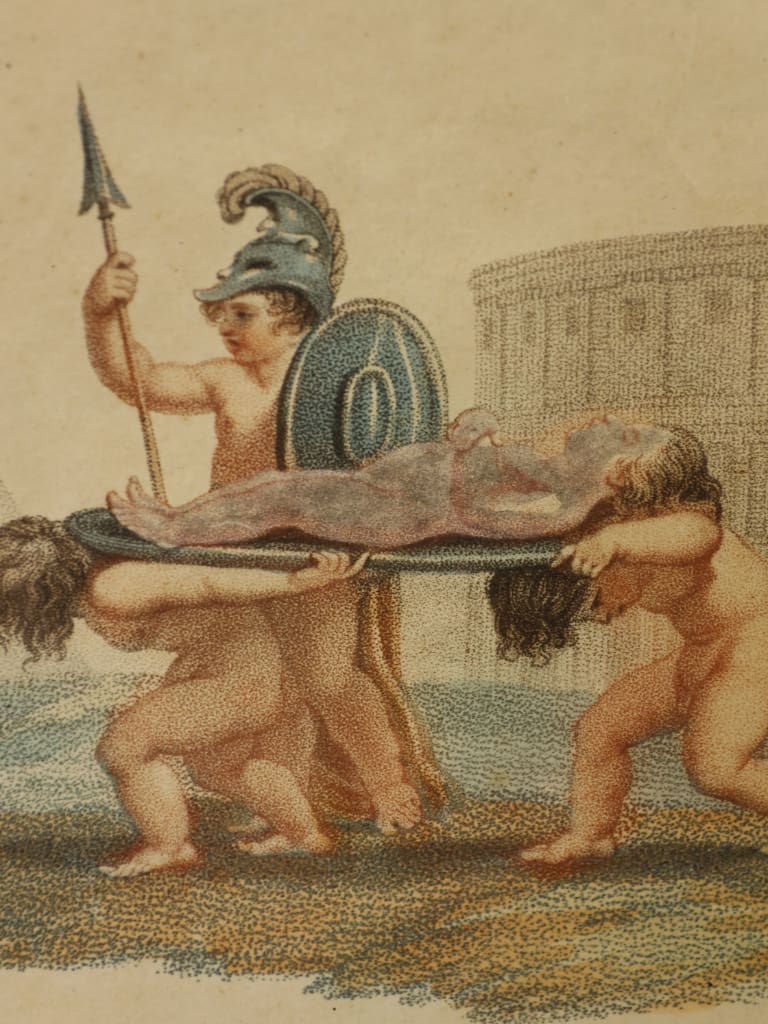
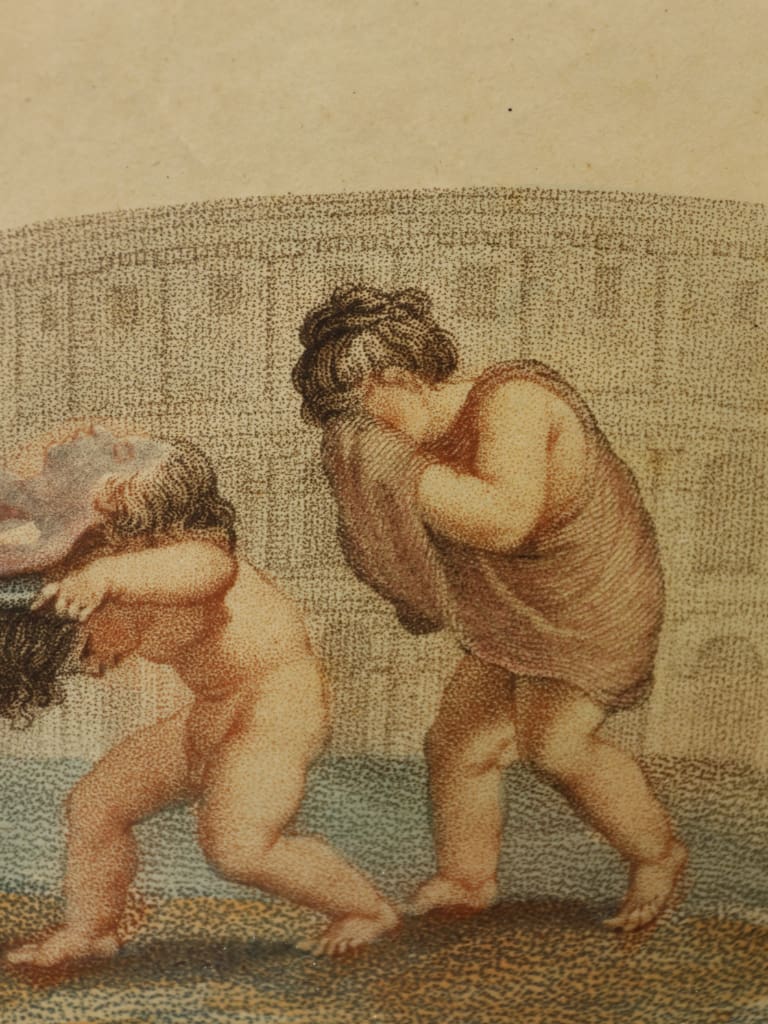
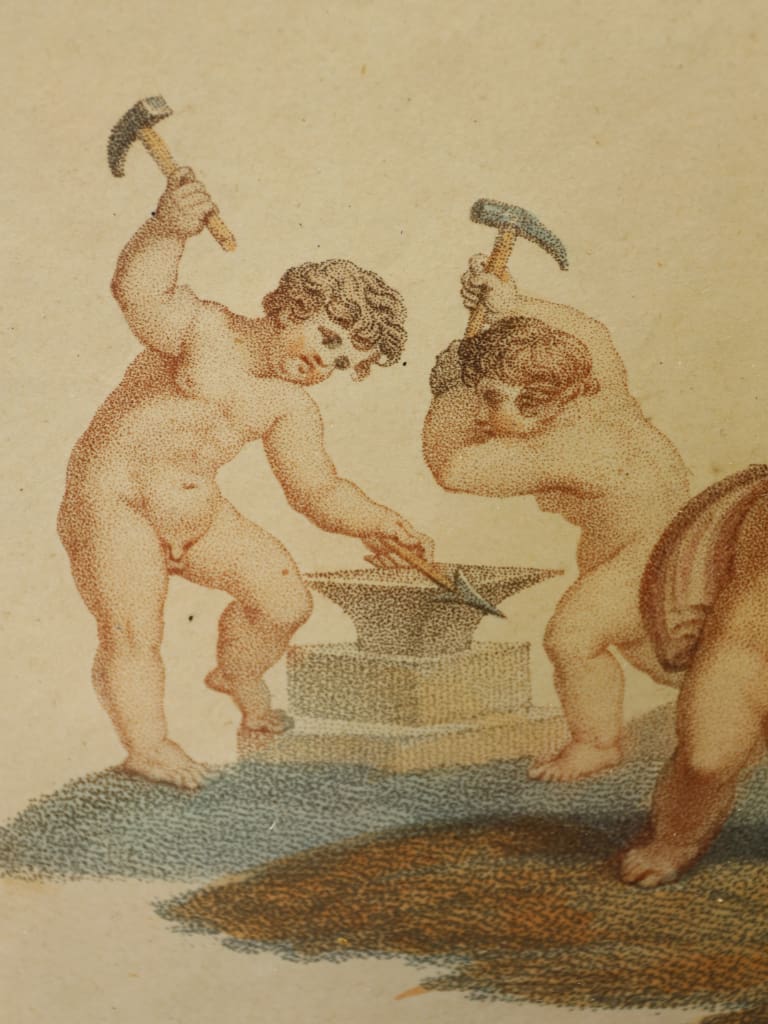
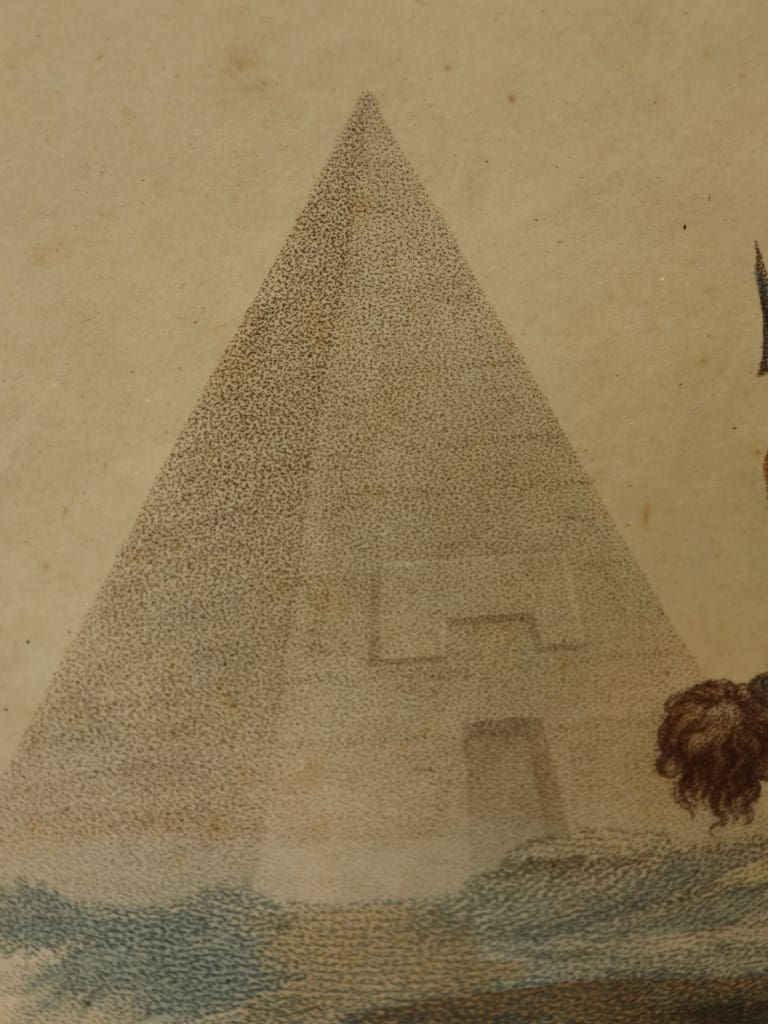
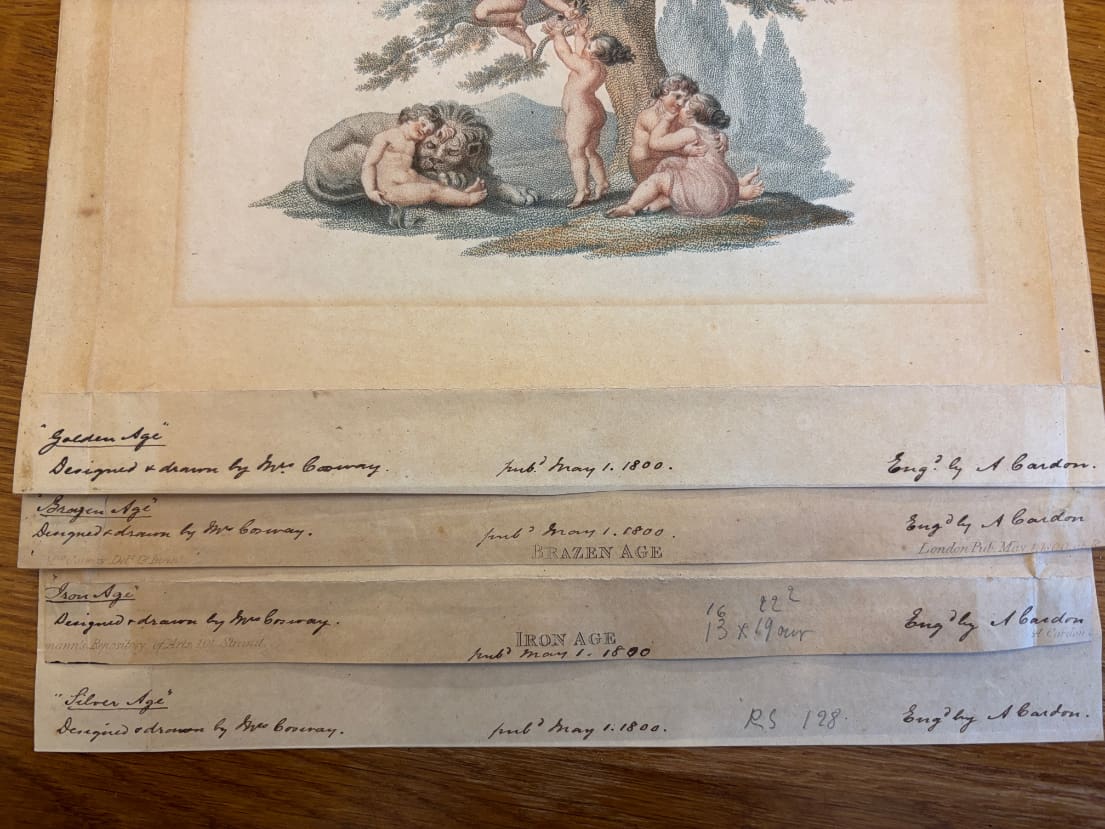

A Rare Set of Four Regency Putti Stipple Engravings
£1,200.00
Description
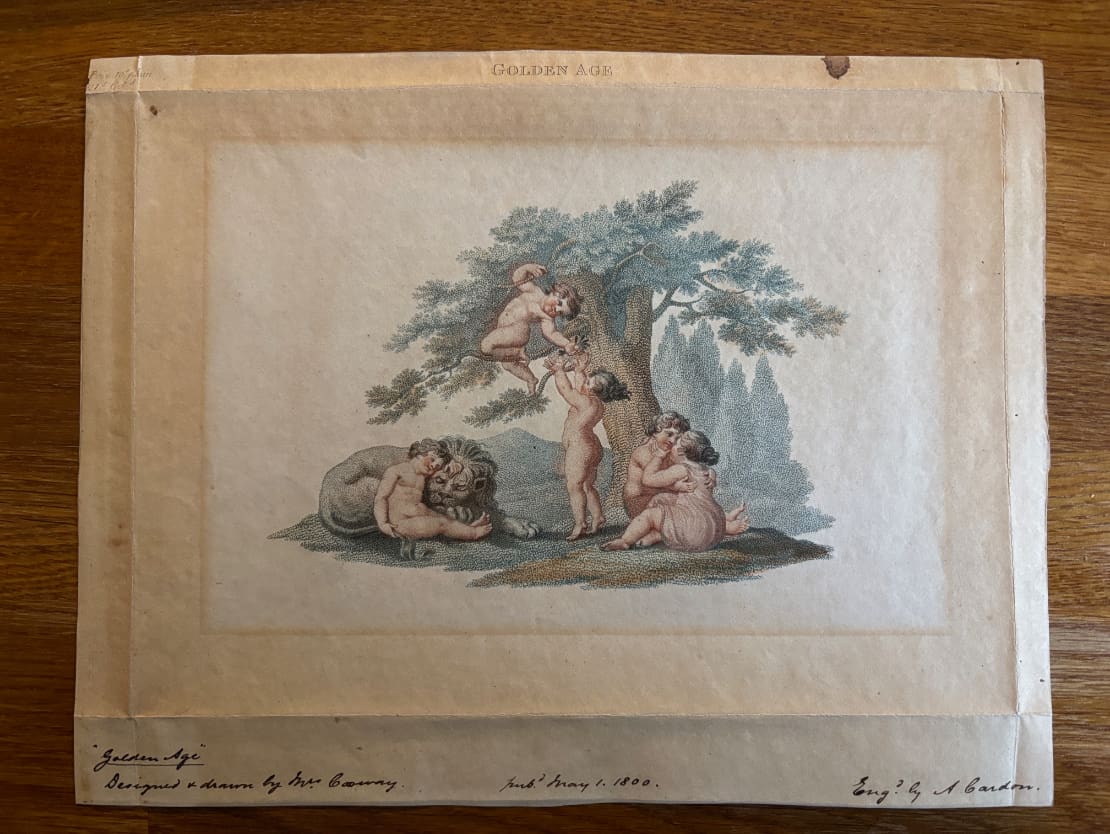
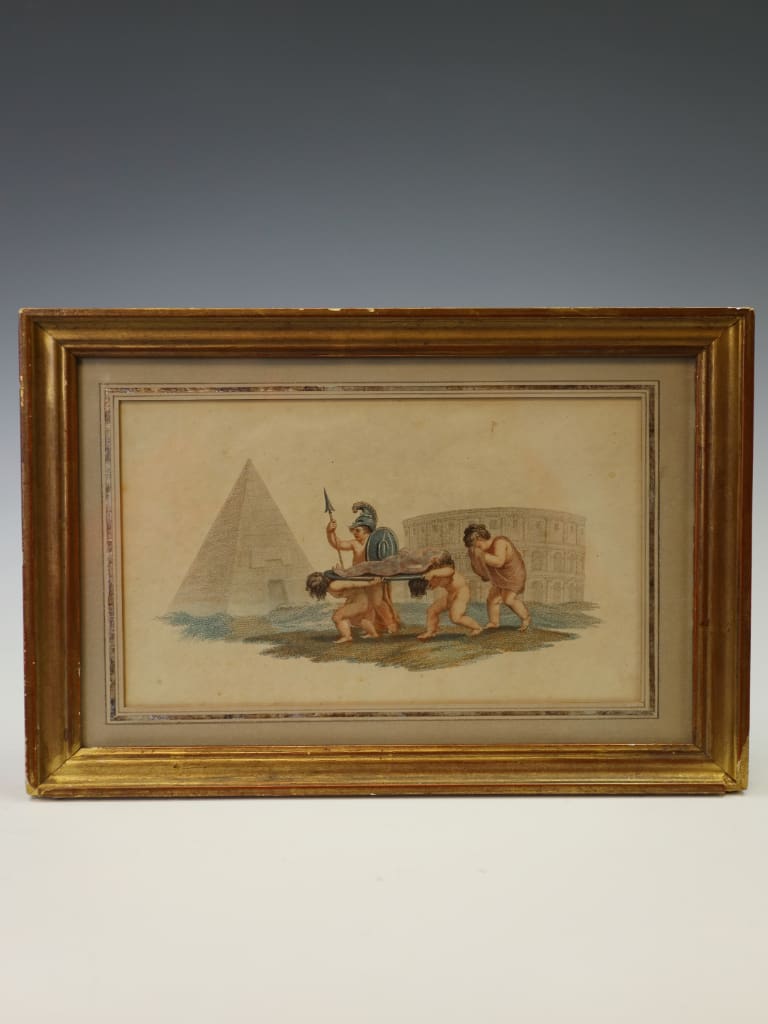
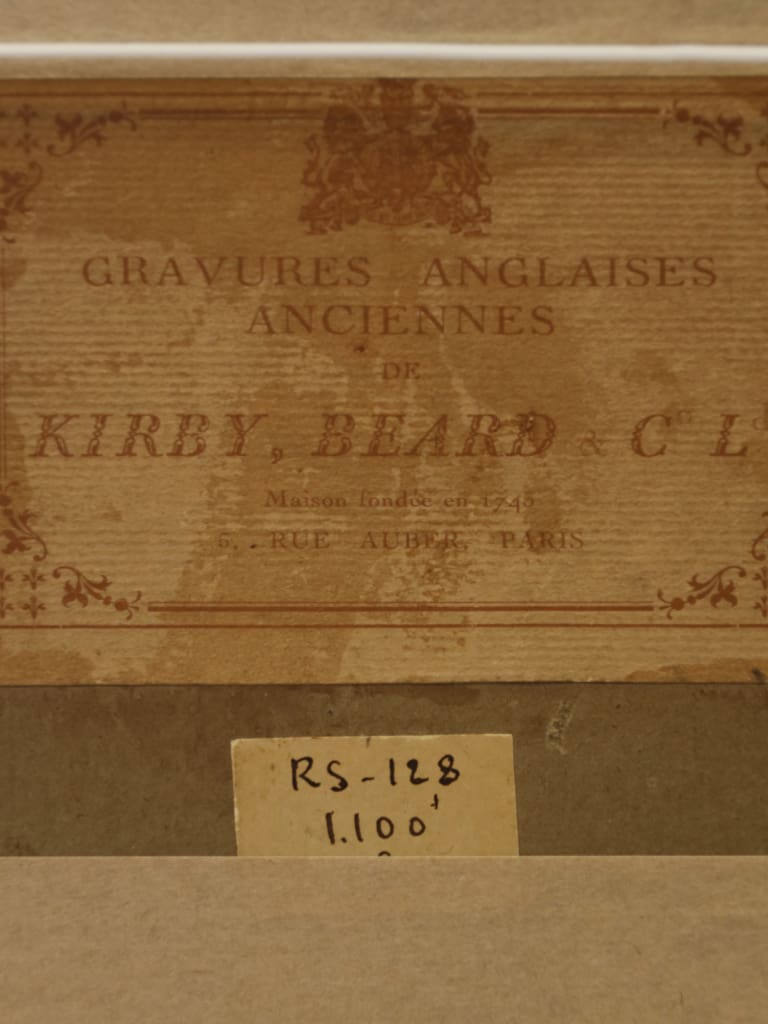
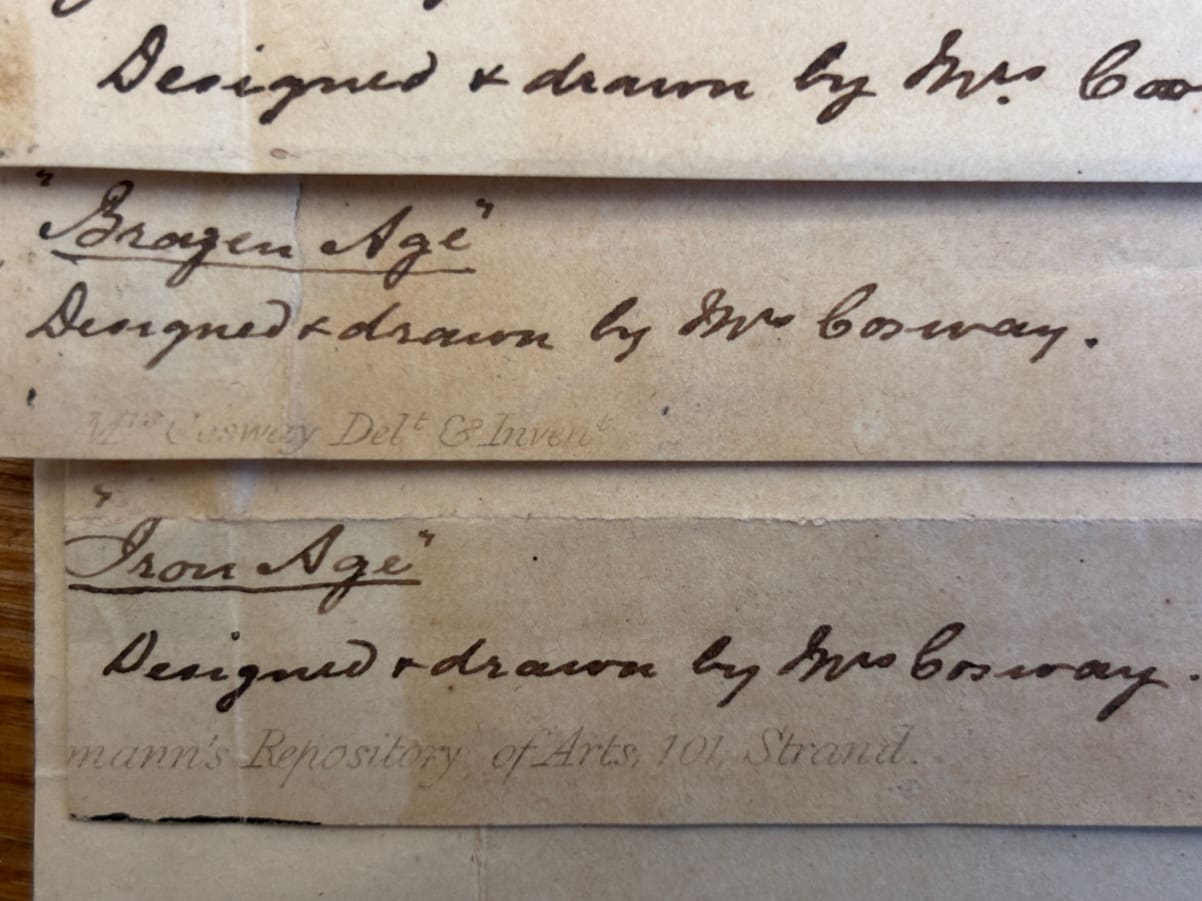
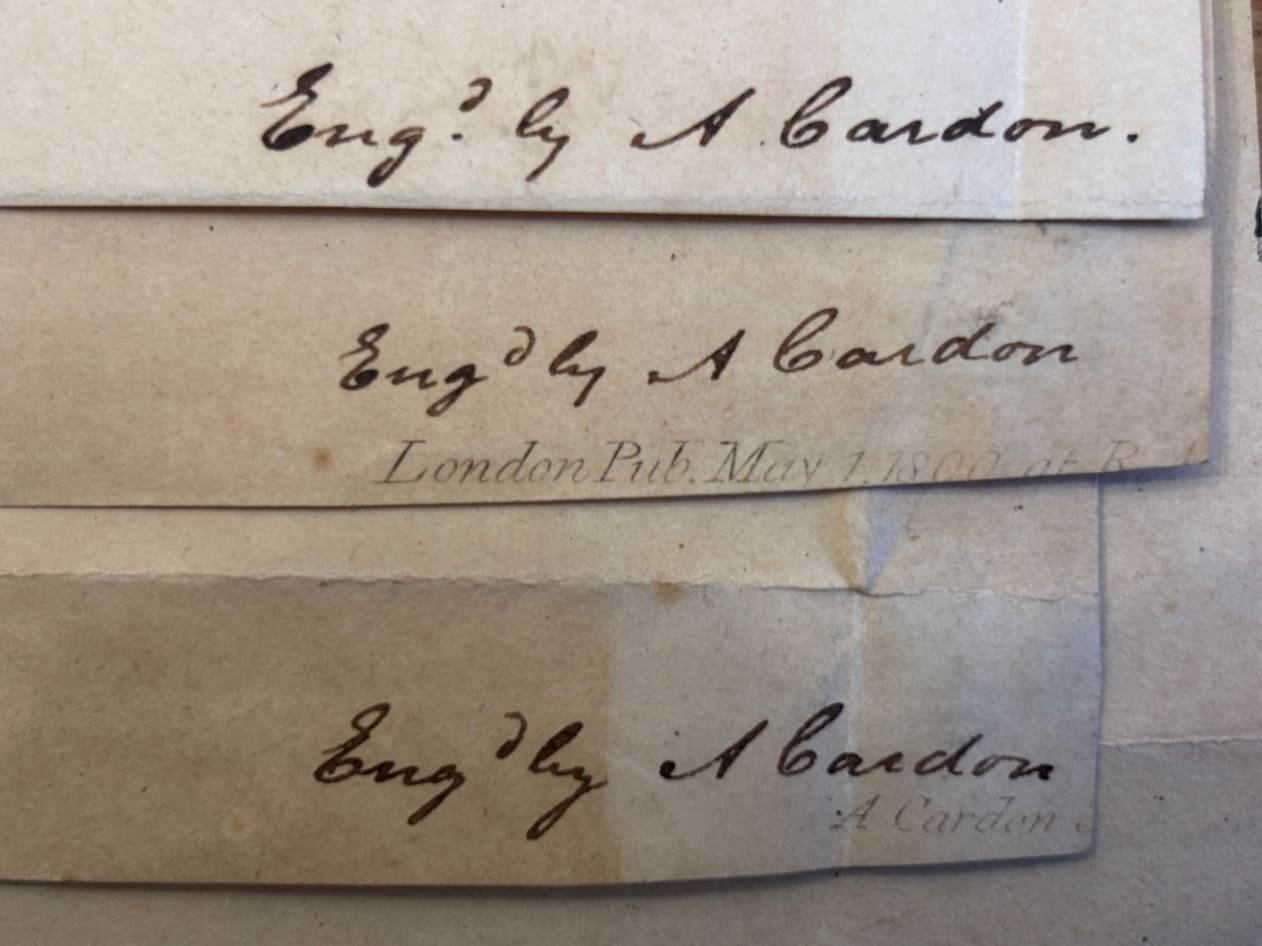
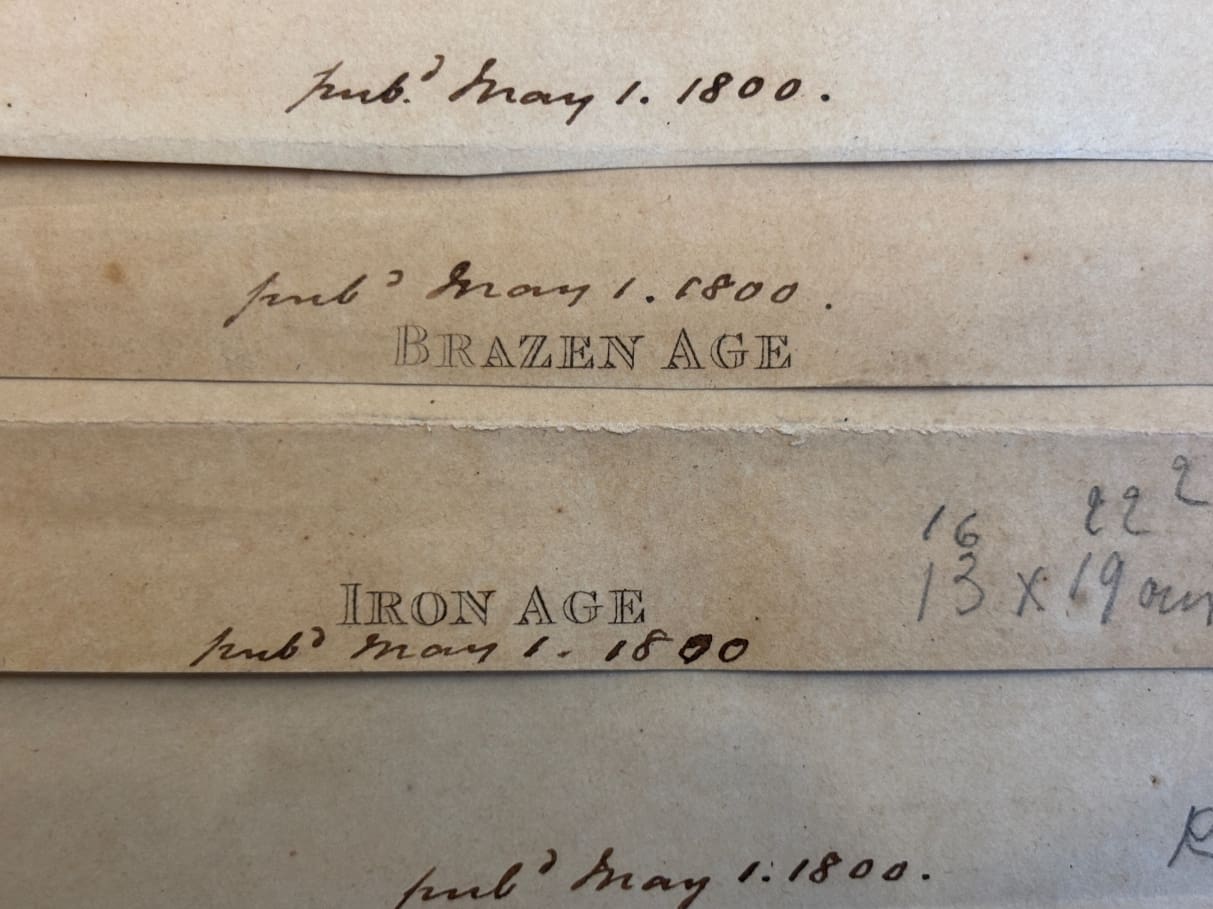
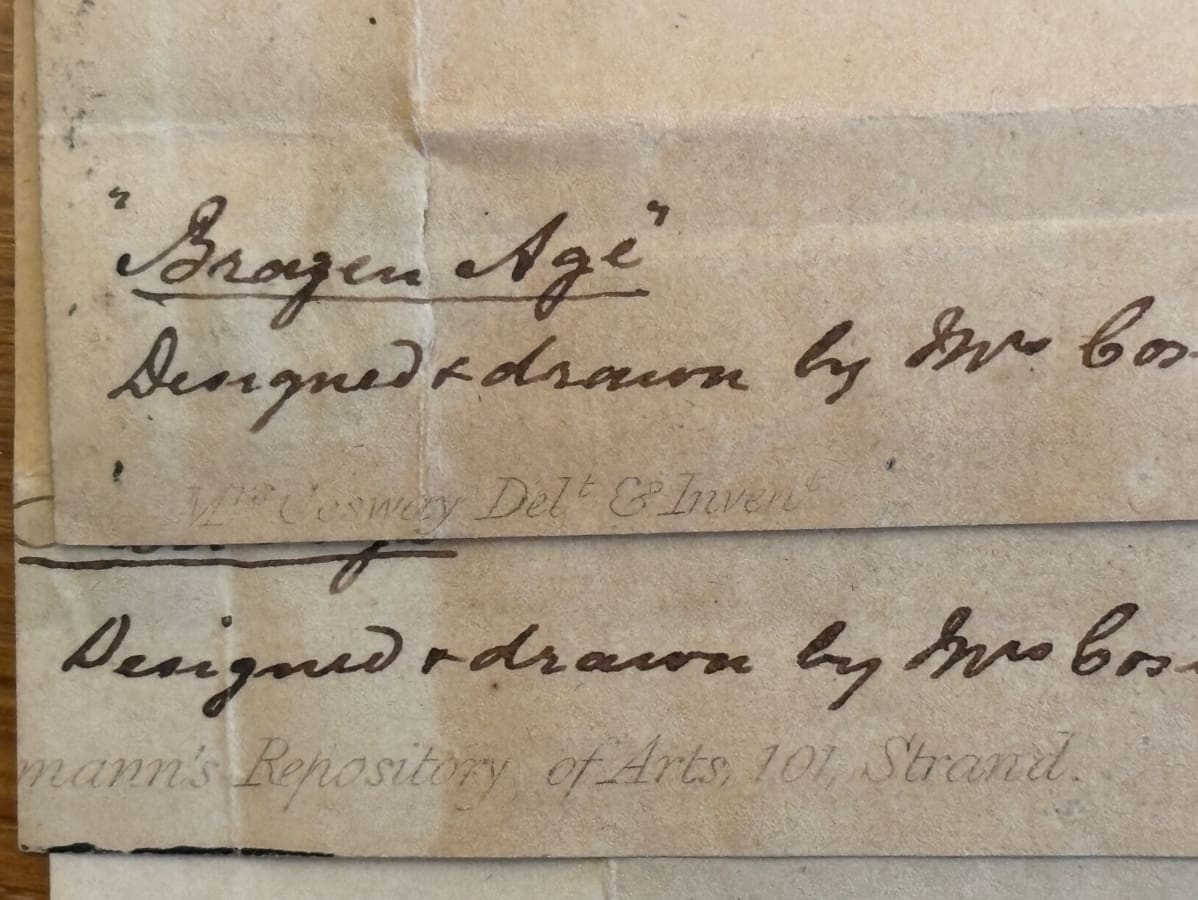
A charming and refined set of four early nineteenth-century hand-coloured stipple engravings depicting playful putti in pastoral and allegorical scenes, engraved by the celebrated stipple master Anthony Cardon after designs by the eminent miniaturist and Royal Academician Richard Cosway. The prints were issued on 1 May 1800 by the renowned London publisher Rudolph Ackermann from his fashionable establishment, the Ackermann's Repository of Arts at 101 Strand.
Mainland UK Delivery Included

International Shipping
Delivery Leadtime
International delivery is estimated at 5-7 working days.
Full details will be confirmed during the ordering process.

A Rare Set of Four Regency Putti Stipple Engravings
Published by Rudolph Ackermann, Repository of Arts, 101 Strand, London
Engraved by Anthony Cardon after designs by Richard Cosway
Published 1 May 1800
A charming and refined set of four early nineteenth-century hand-coloured stipple engravings depicting playful putti in pastoral and allegorical scenes, engraved by the celebrated stipple master Anthony Cardon after designs by the eminent miniaturist and Royal Academician Richard Cosway. The prints were issued on 1 May 1800 by the renowned London publisher Rudolph Ackermann from his fashionable establishment, the Ackermann's Repository of Arts at 101 Strand.
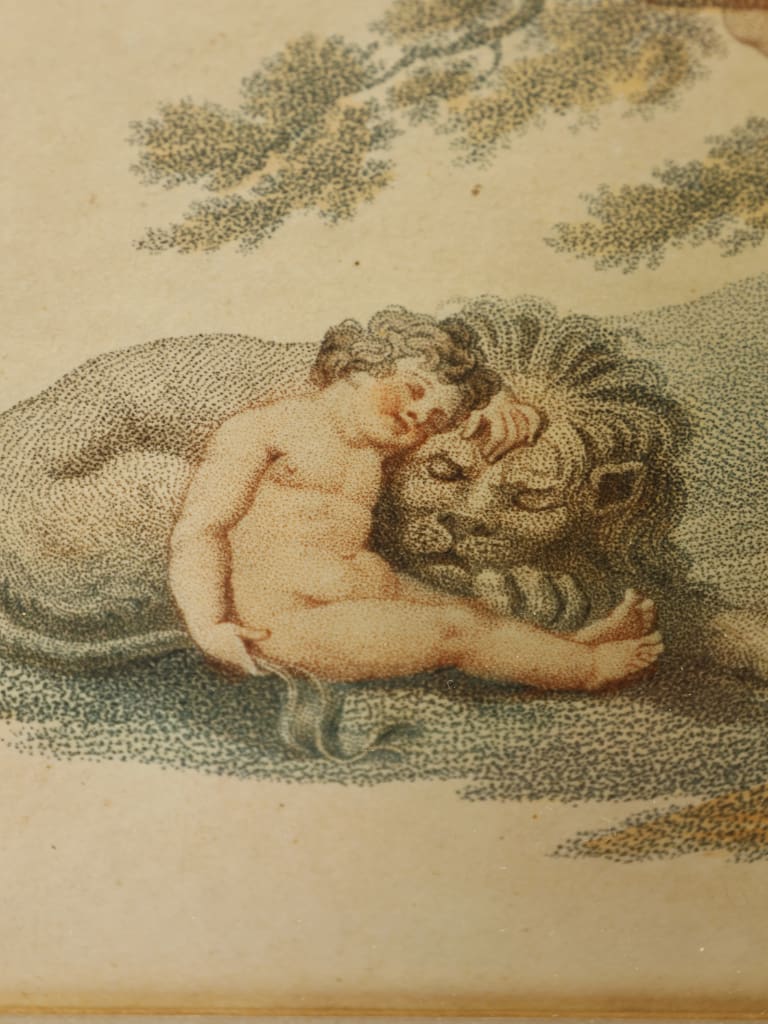
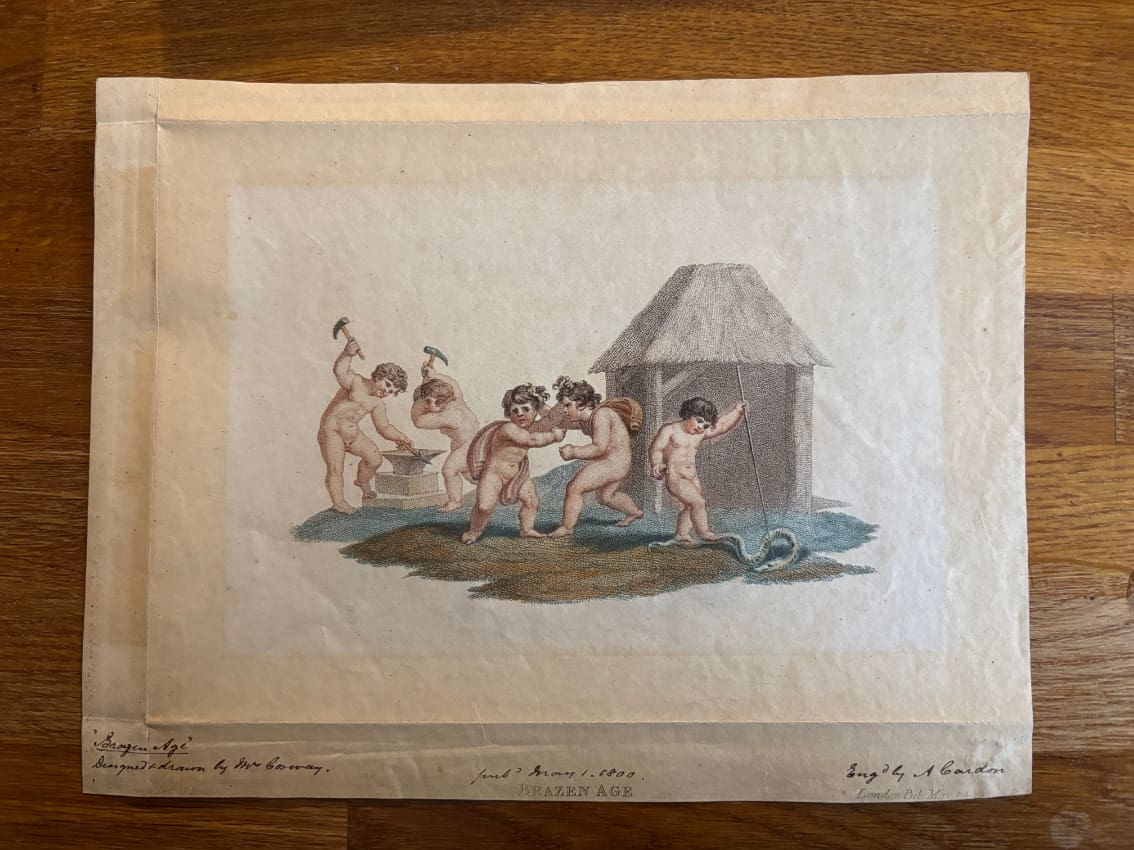
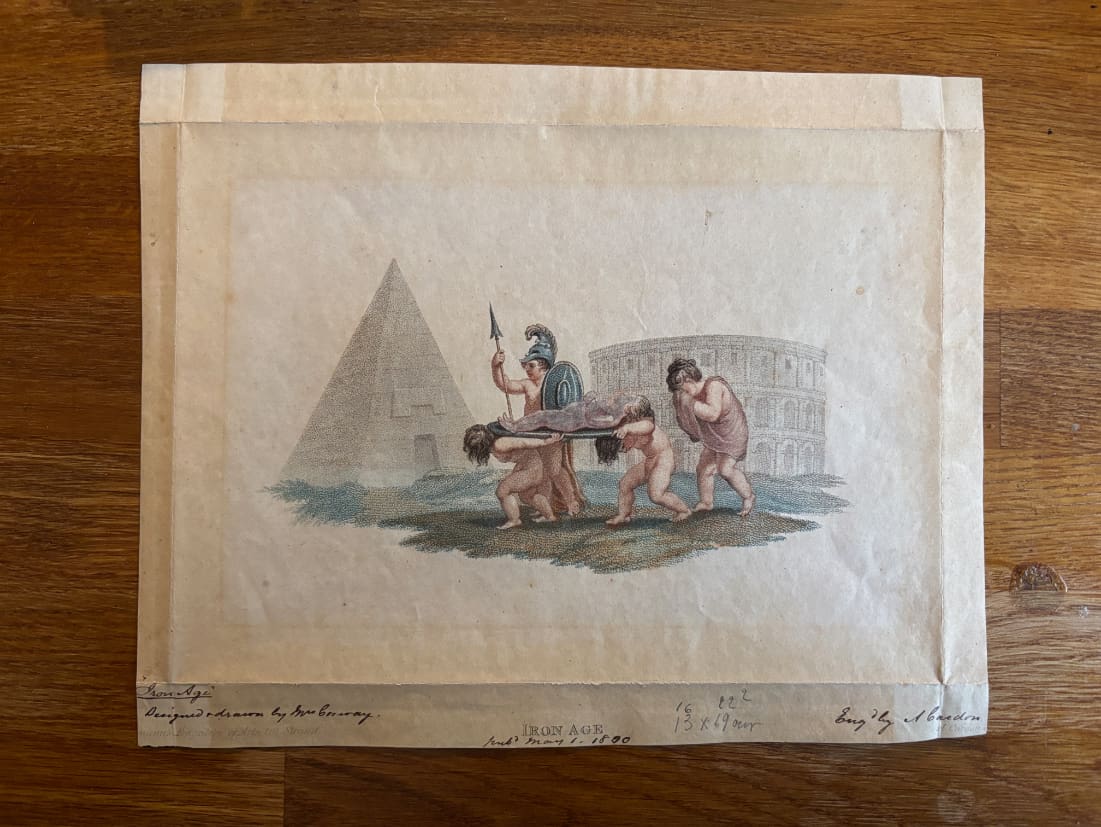
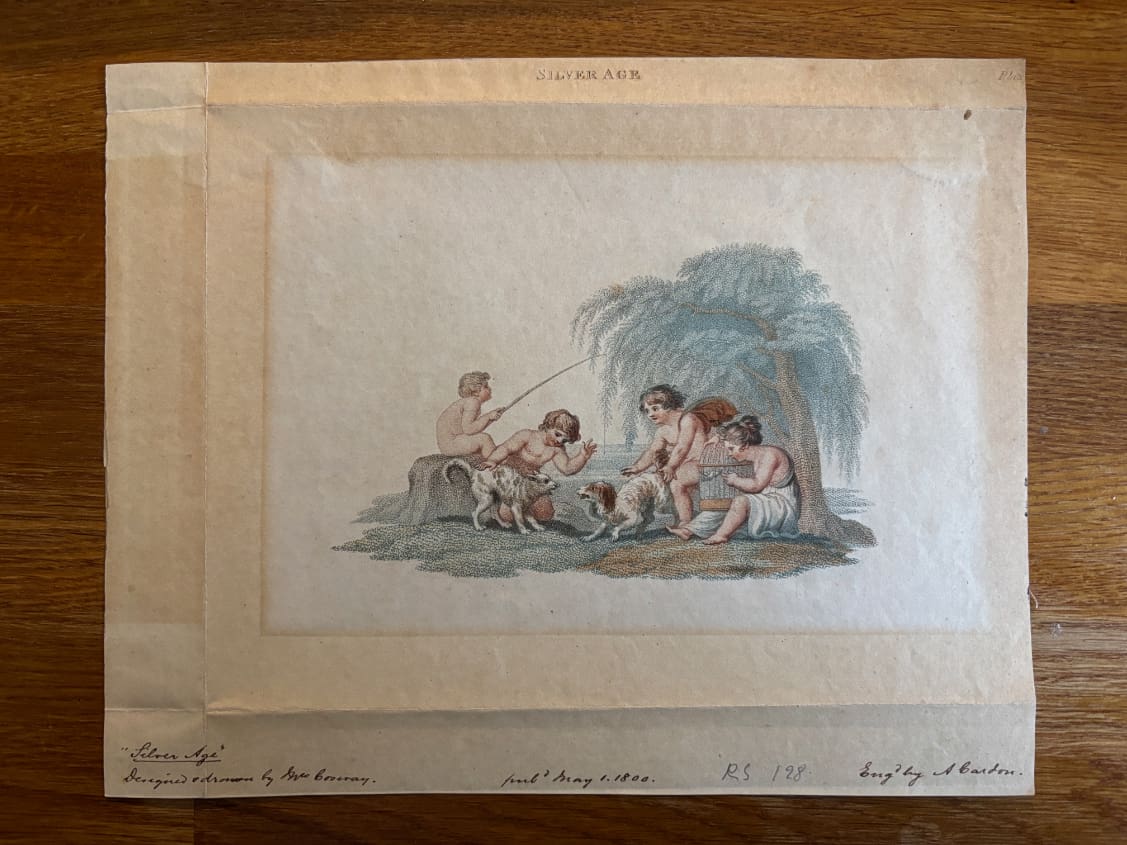
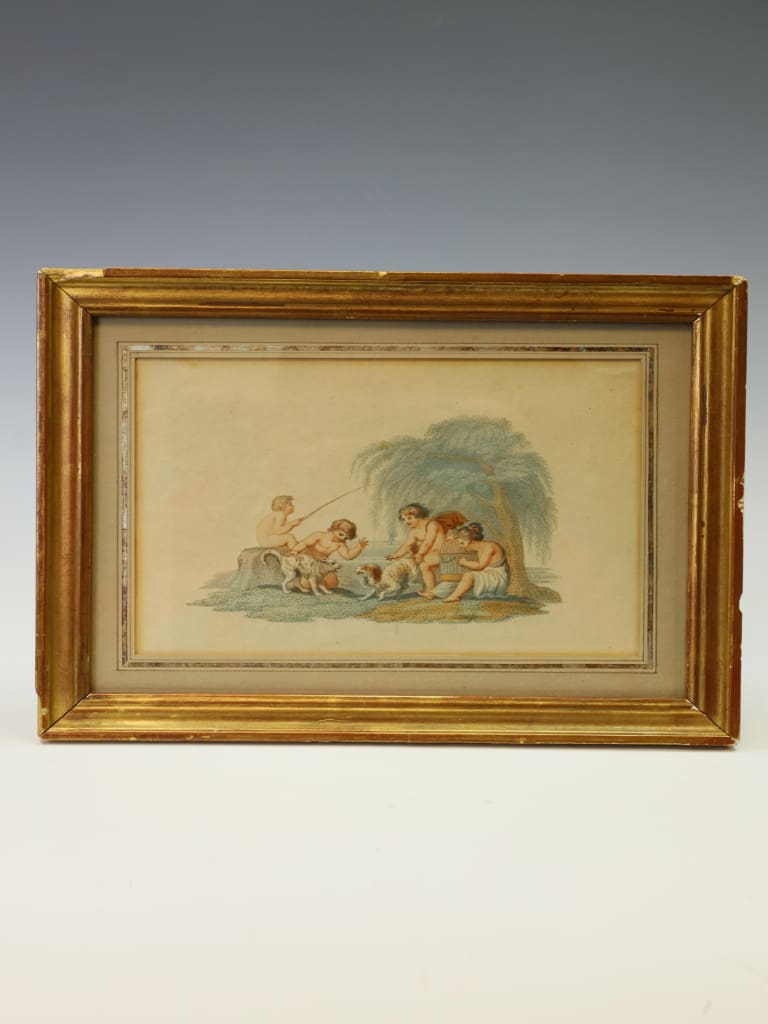
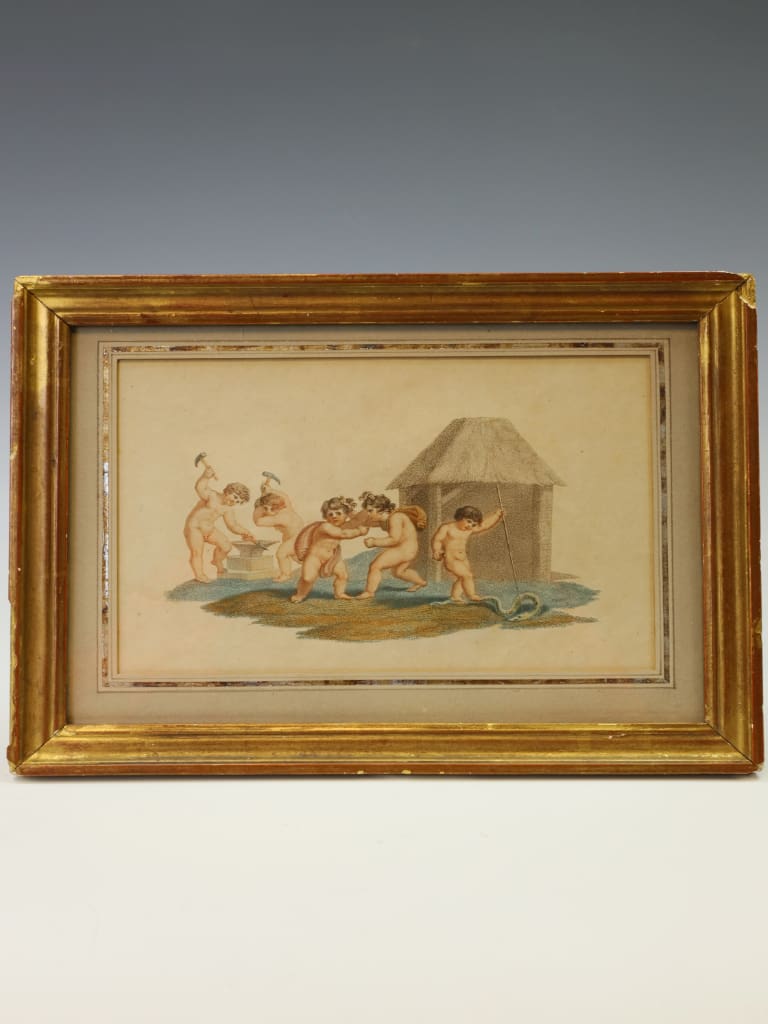
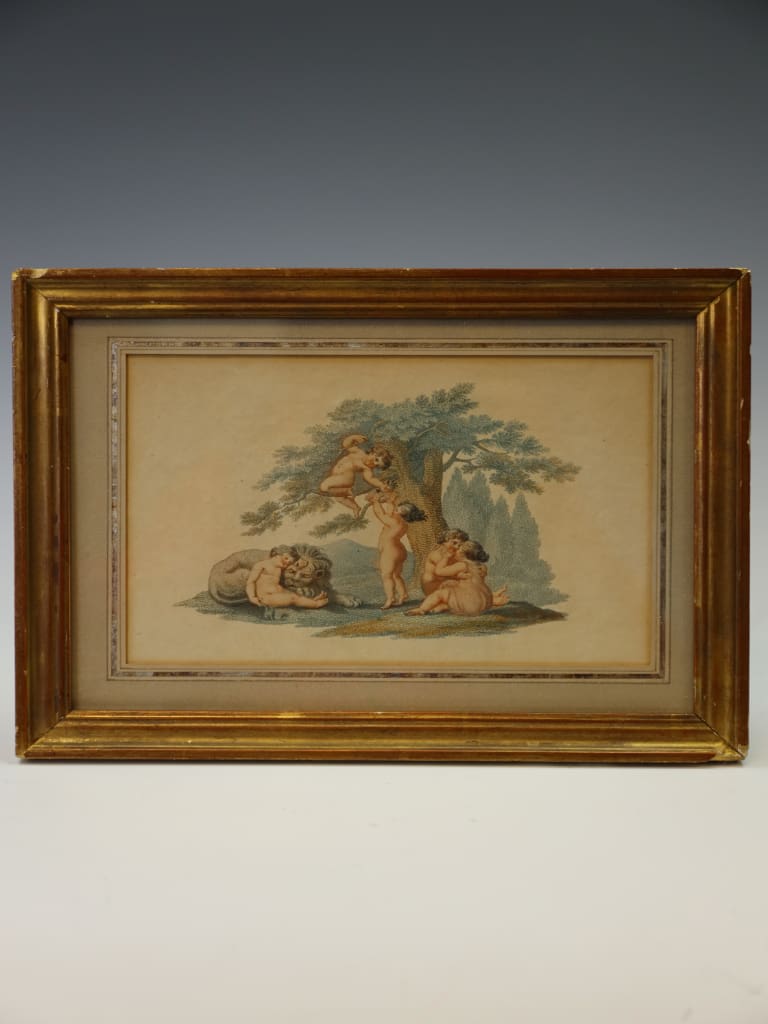
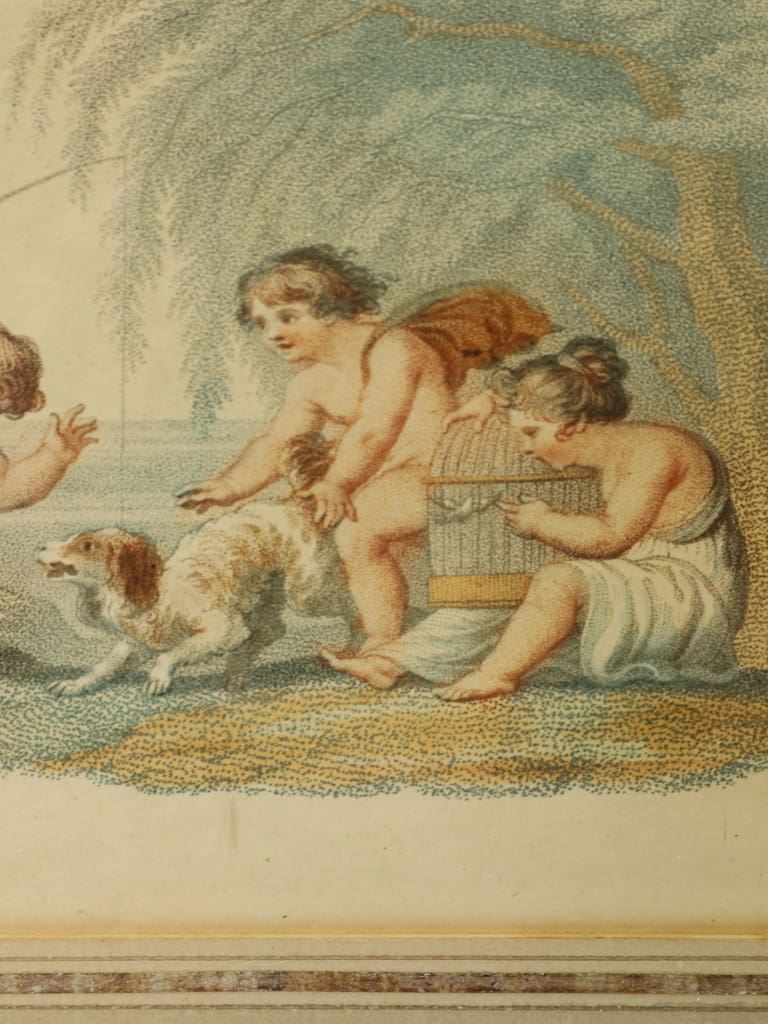
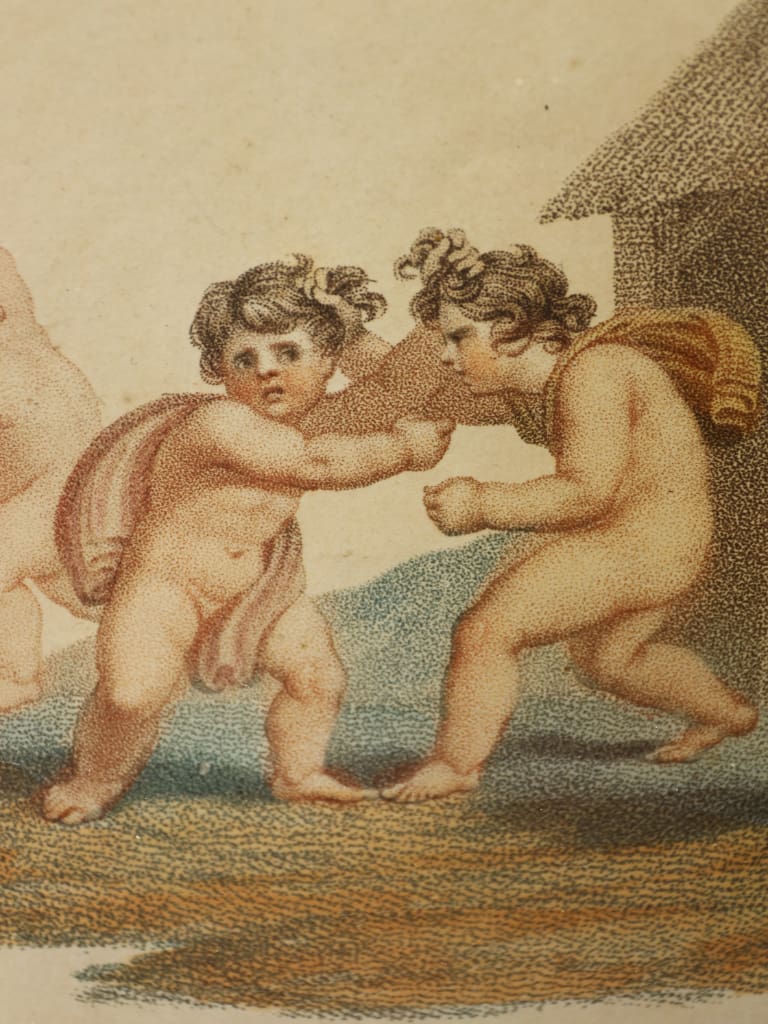
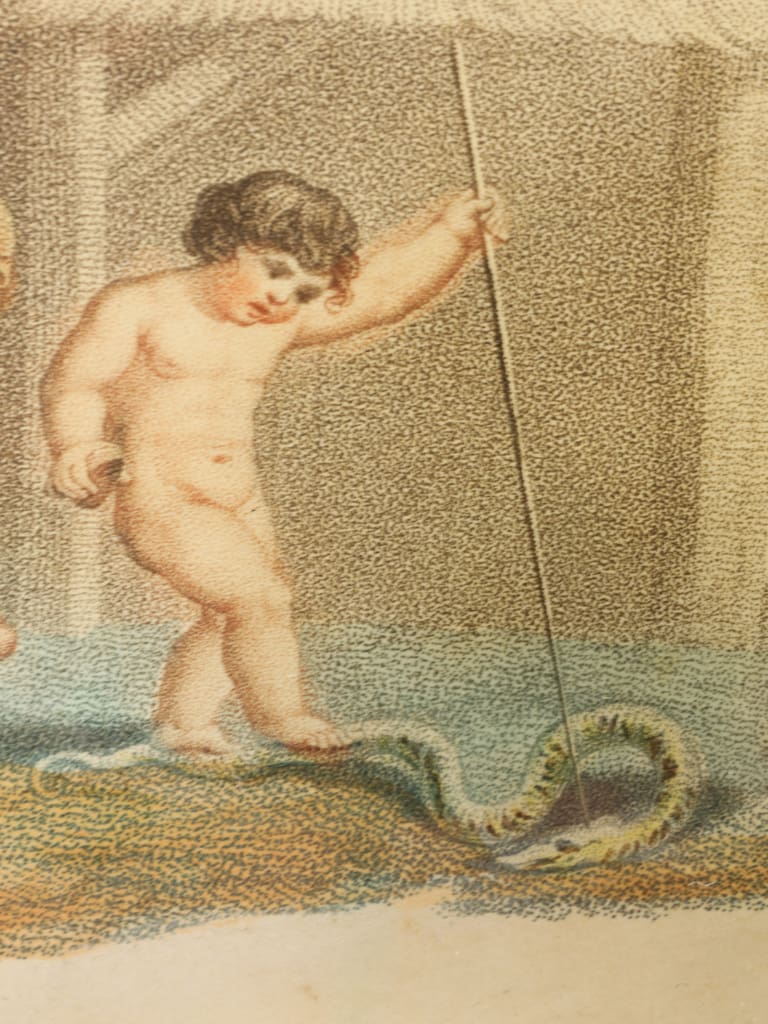
Executed in the delicate stipple engraving technique for which Cardon was particularly admired, the compositions capture the lightness and elegance characteristic of Cosway’s artistic vision. Each scene presents groups of putti engaged in playful or pastoral pursuits—figures rendered with subtle tonal gradations created through finely worked dots rather than engraved lines. This method allowed engravers to translate the soft modelling and painterly quality of Cosway’s designs into print with remarkable sensitivity.
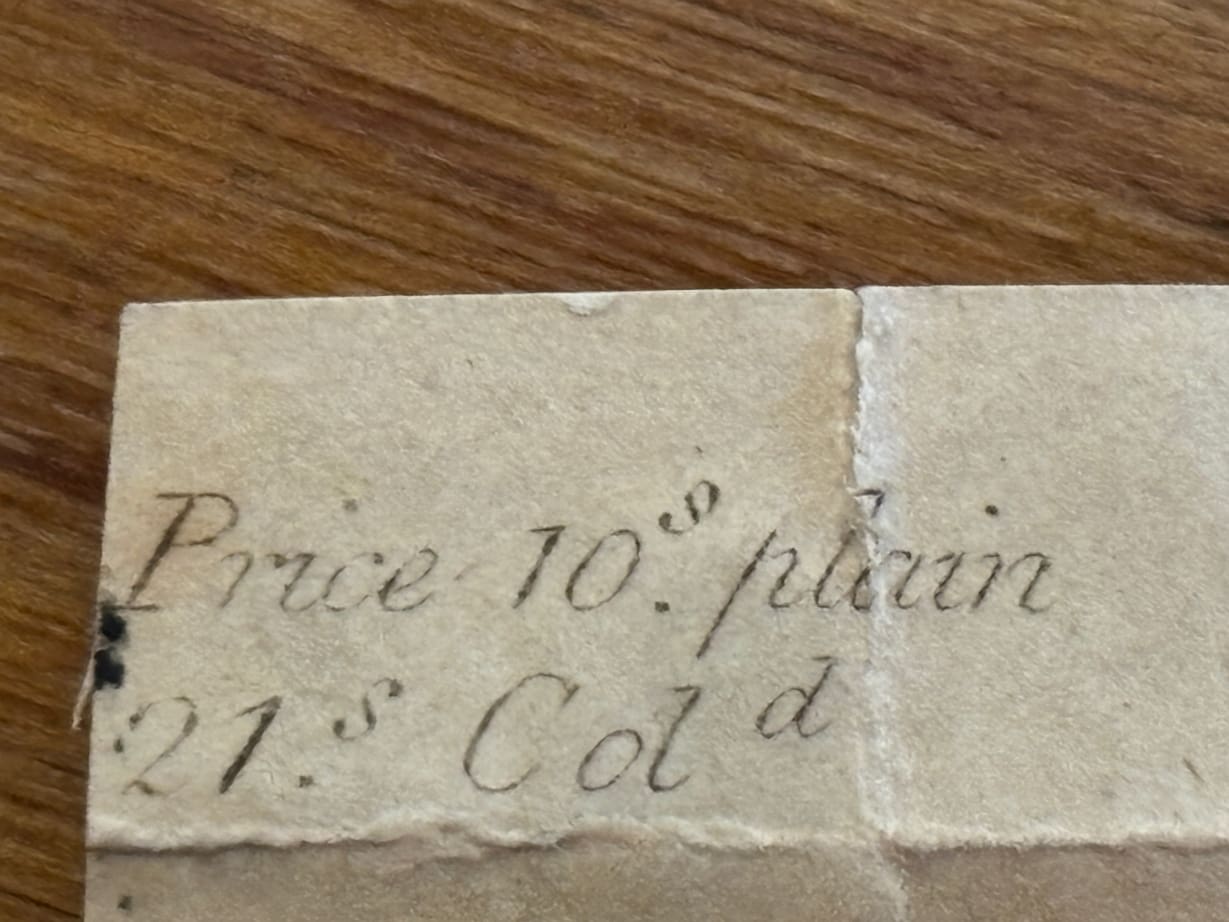
The prints were originally offered at a price of 21 shillings, equivalent to approximately one week’s wages for a skilled worker at the time, reflecting both their quality and the fashionable market for finely engraved decorative prints during the Regency period.
The publication of these engravings forms part of the remarkable output of Rudolph Ackermann, whose Repository of Arts became one of the most influential cultural and artistic venues in London at the turn of the nineteenth century. Founded in 1796, Ackermann’s establishment was far more than a print shop; it was an elegant emporium where members of fashionable society could browse illustrated books, purchase prints, discover the latest interior and fashion designs, and attend lectures and social gatherings. The shop was celebrated for its innovation and refinement—indeed, it was among the first commercial premises in Britain to be illuminated by gaslight.
Ackermann quickly became one of the most significant publishers of illustrated works of the period. His publications, including the celebrated Microcosm of London (1808–1810), set new standards for the quality of illustrated books and prints. His monthly periodical, The Repository of Arts, Literature, Commerce, Manufactures, Fashion and Politics, launched in 1809, profoundly influenced Regency taste and fashion and featured nearly fifteen hundred hand-coloured plates during its run.
Richard Cosway (1742–1821) was one of the most distinguished artists of Georgian England. Renowned primarily for his exquisite miniature portraits, he also produced imaginative allegorical and mythological compositions populated by classical figures and cherubs. His work was prized for its grace, delicacy, and refined elegance, making his designs particularly well suited to the stipple engraving technique.
Anthony Cardon (1772–1813), born in Brussels and later active in London, was among the finest stipple engravers of his generation. His mastery of the technique allowed him to reproduce the tonal softness of drawings and miniature paintings with remarkable fidelity. Cardon engraved numerous works after Cosway and other leading artists of the period, producing prints that were both technically accomplished and visually enchanting.
The four engravings depict putti—cherubic figures derived from classical mythology and Renaissance decorative traditions—engaged in scenes of leisure and playful interaction within gentle pastoral landscapes. Such imagery was highly fashionable in the late eighteenth and early nineteenth centuries, appealing to Regency tastes for classical refinement and decorative charm.
Cosway’s designs translate the grace of classical allegory into intimate and whimsical scenes, while Cardon’s stipple technique renders the figures with softness and subtle shading. The hand colouring further enhances the delicacy of the compositions, lending them a warm and decorative quality.
Examples of works by Cosway and Cardon are held in major institutional collections, including the British Museum and the Yale Center for British Art, illustrating the enduring importance of their collaborative engravings within the history of British printmaking.
London, England
Published 1 May 1800
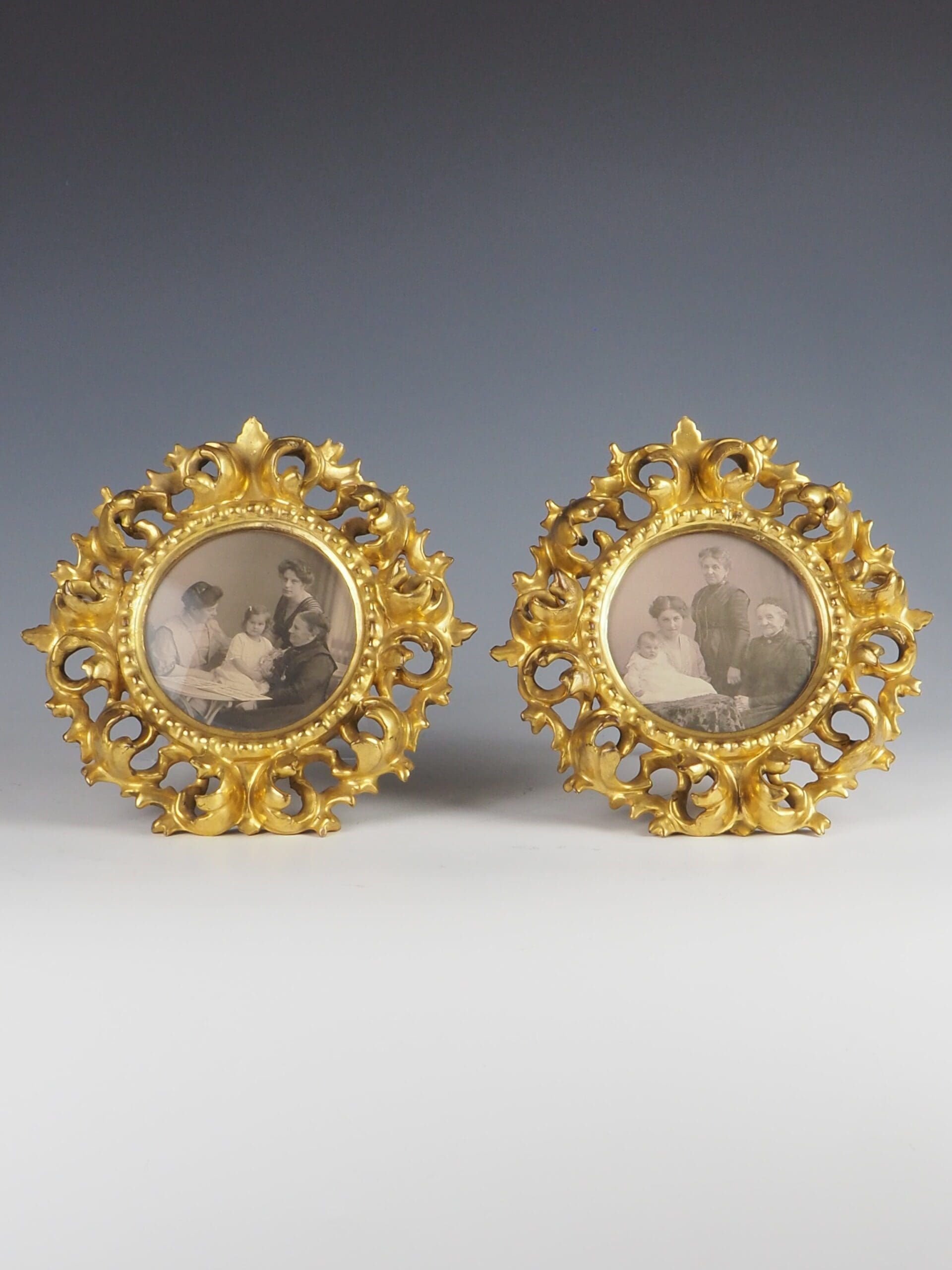
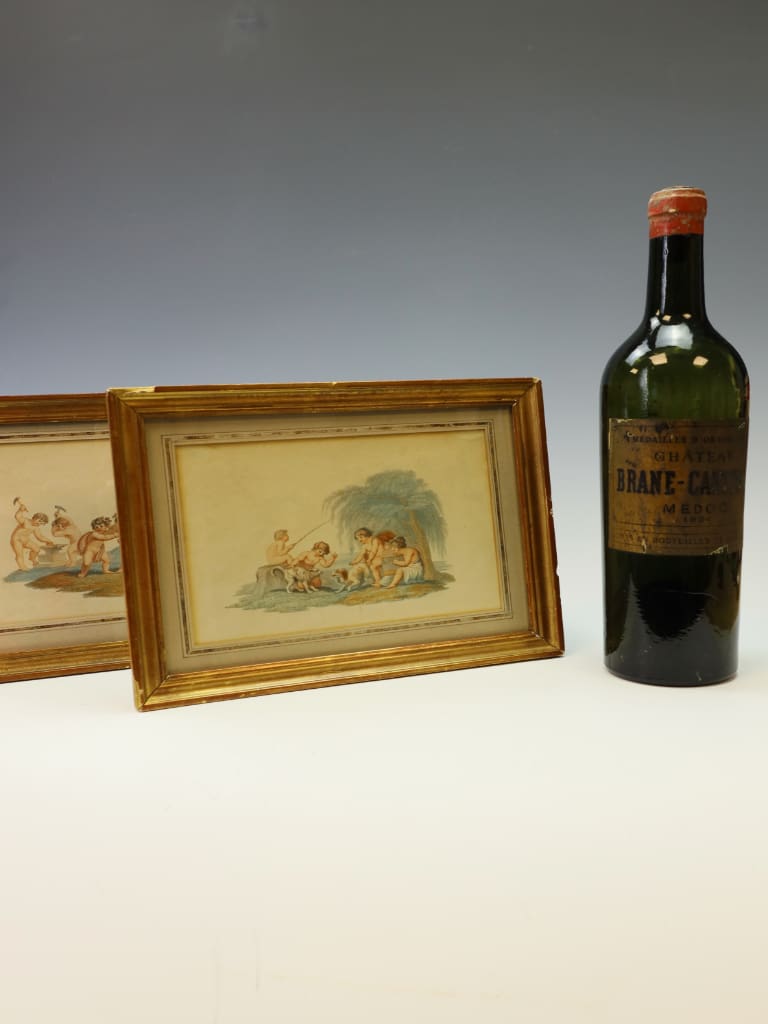
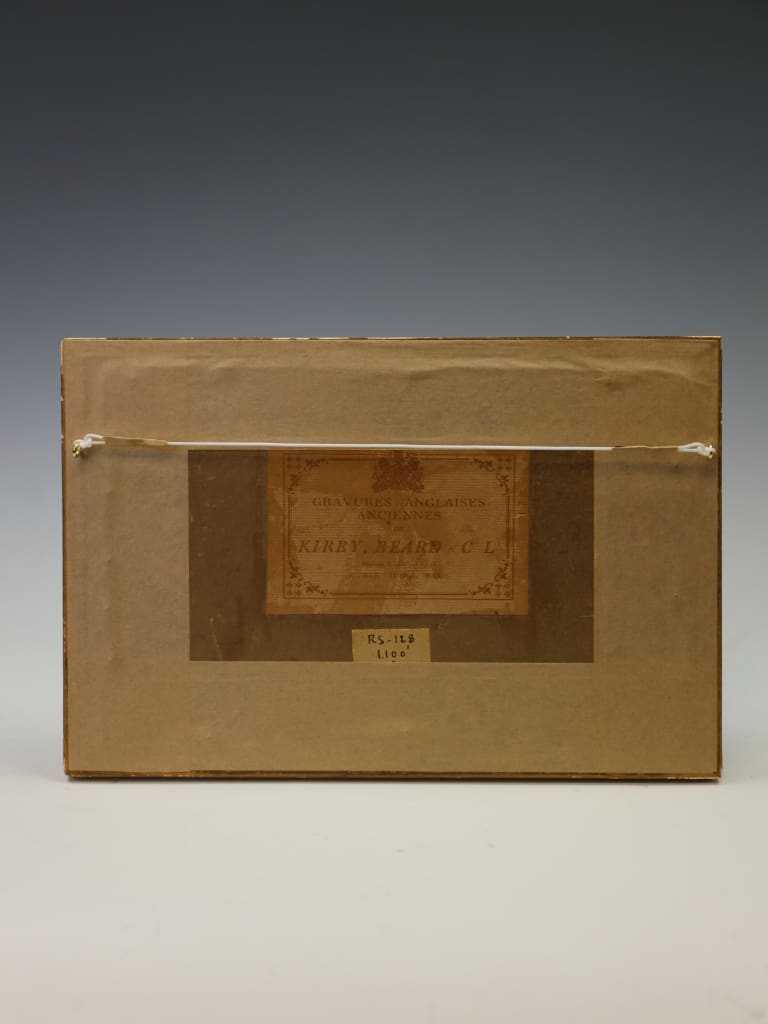
The engravings are presented as a set of four and are housed in elegant gilt frames which complement the refined character of the prints and allow them to be displayed as a cohesive decorative group.
Condition Report
The set of four hand-coloured stipple engravings remains in very good condition consistent with age and early nineteenth-century works on paper (circa 1800).
The prints display pleasing colour and clear impressions, with the delicate stipple engraving by Anthony Cardon after the designs of Richard Cosway remaining crisp and well defined.
The paper shows light, even toning commensurate with age, which is typical for prints of this period and contributes to their authentic antique character. Minor age-related spotting and very light foxing may be present in places, though this is unobtrusive and does not detract from the overall presentation of the images.
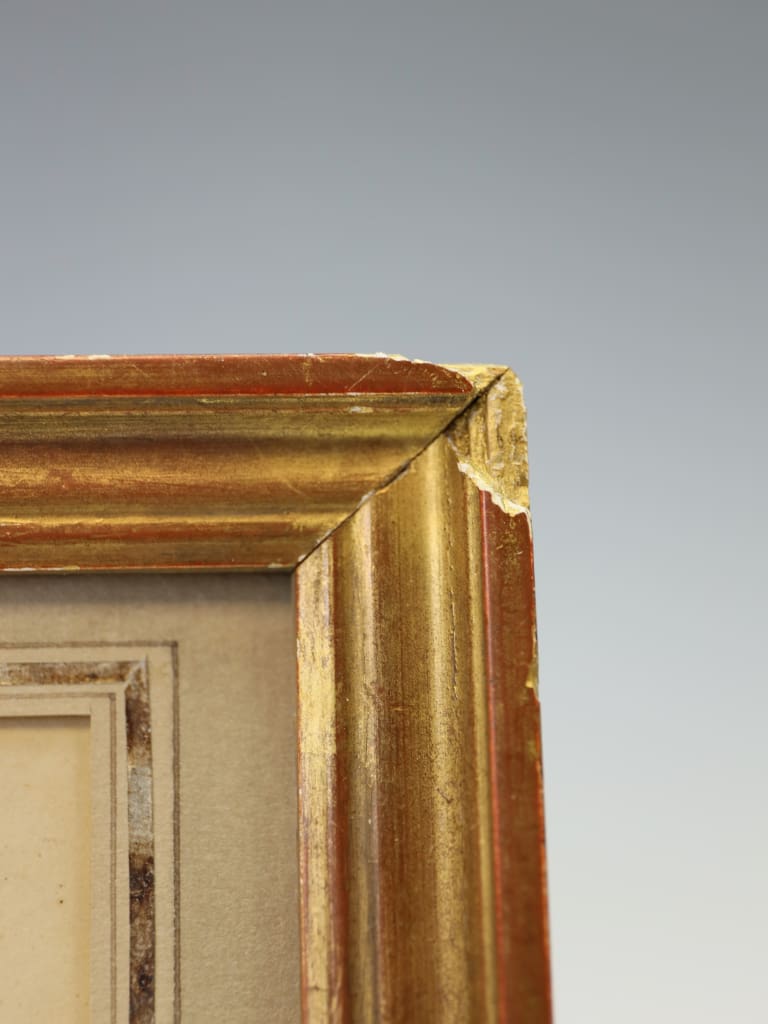
The engravings are presented in later gilt frames, which show minor surface wear and small marks consistent with handling and age, but remain structurally sound and suitable for display. The frames complement the prints well and provide an attractive Regency-style presentation.
Overall, the works present exceptionally well as a decorative group, with no significant damage noted and with the imagery remaining strong and highly attractive.
Condition consistent with age and use.
Measurement
Height: 20 cm / 7.9 inch
Width: 26 cm / 10.2 inch
Depth: 1 cm / 0.4 inch
Weight: 0.4 k.g. / 0.9 lbs
Cleaning, Polishing & Restoration
All our collections have been through our workshop and where possible, we always try to maintain the original finish preserving the patina and colour, some items are sympathetically restored and this is done by our own skilled craftsmen using only traditional methods