

£1,750.00
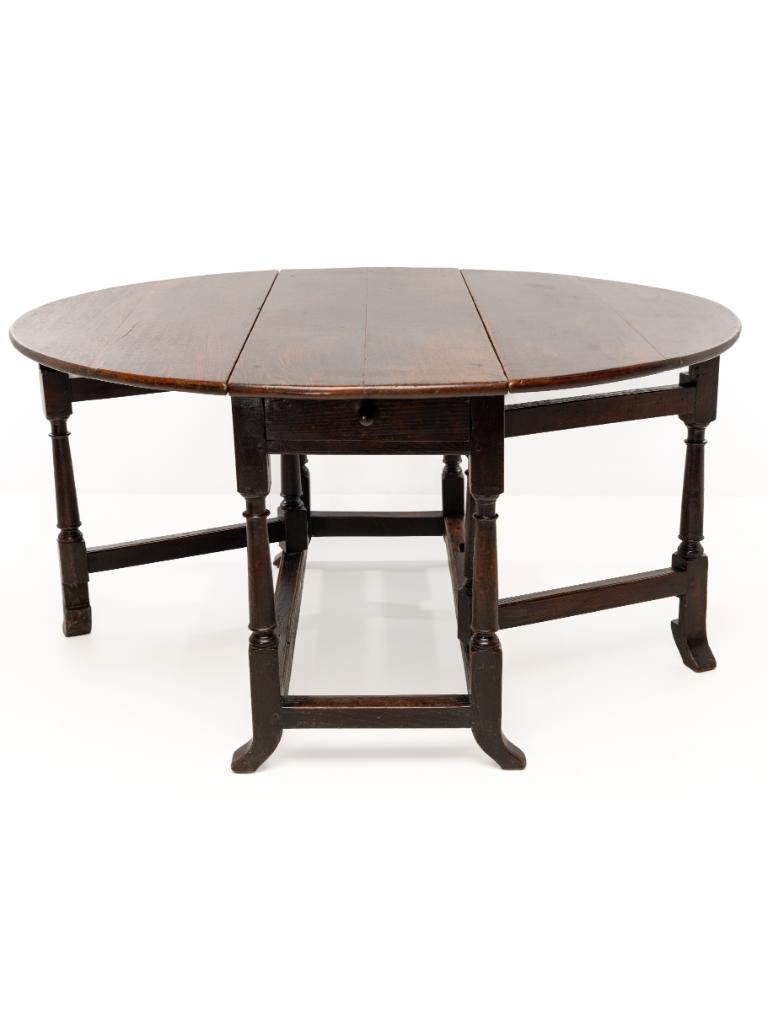
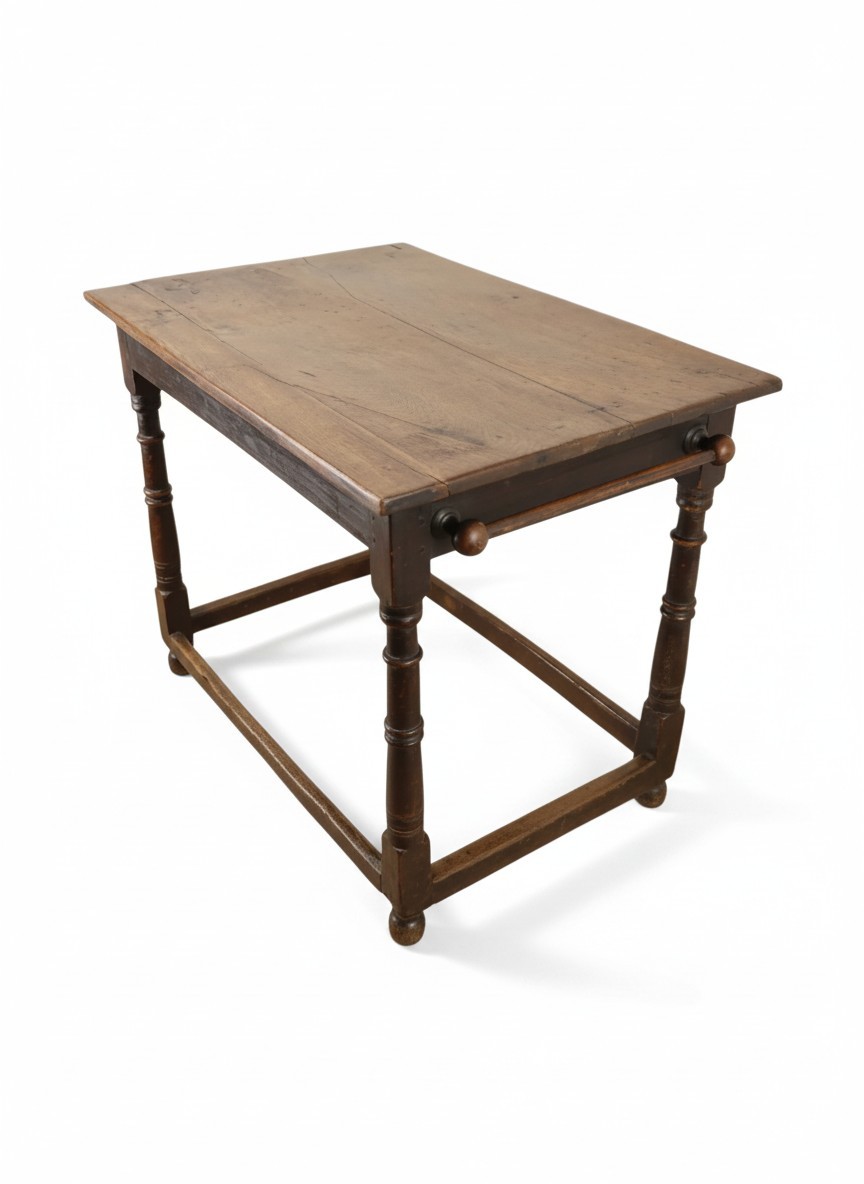
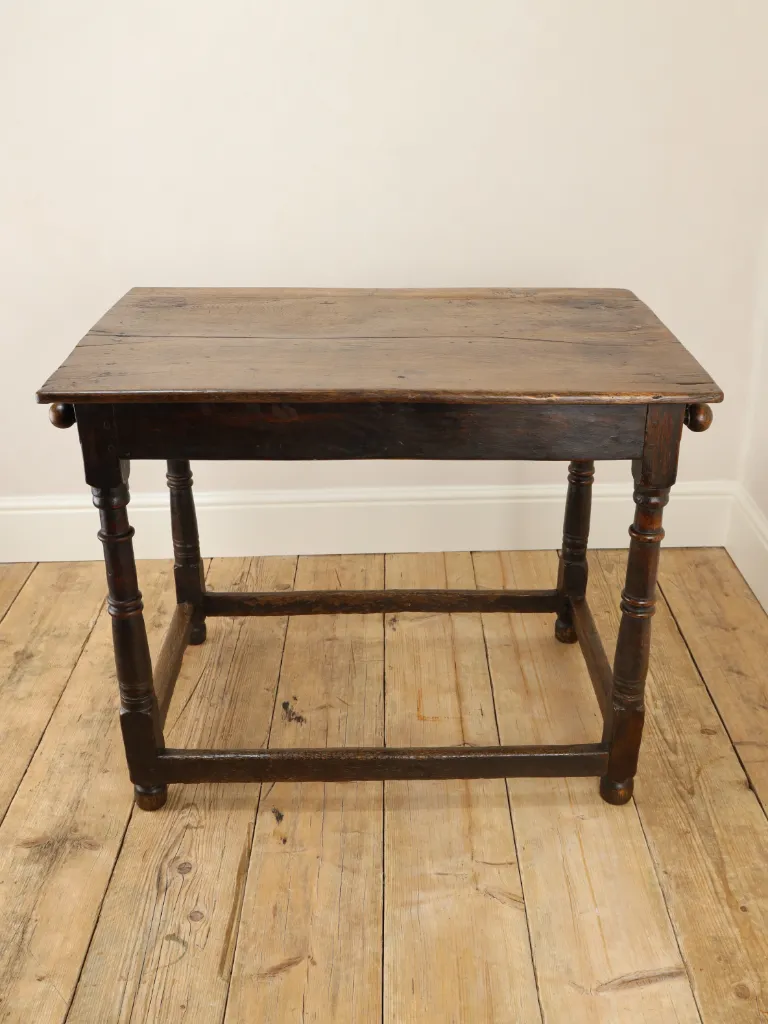
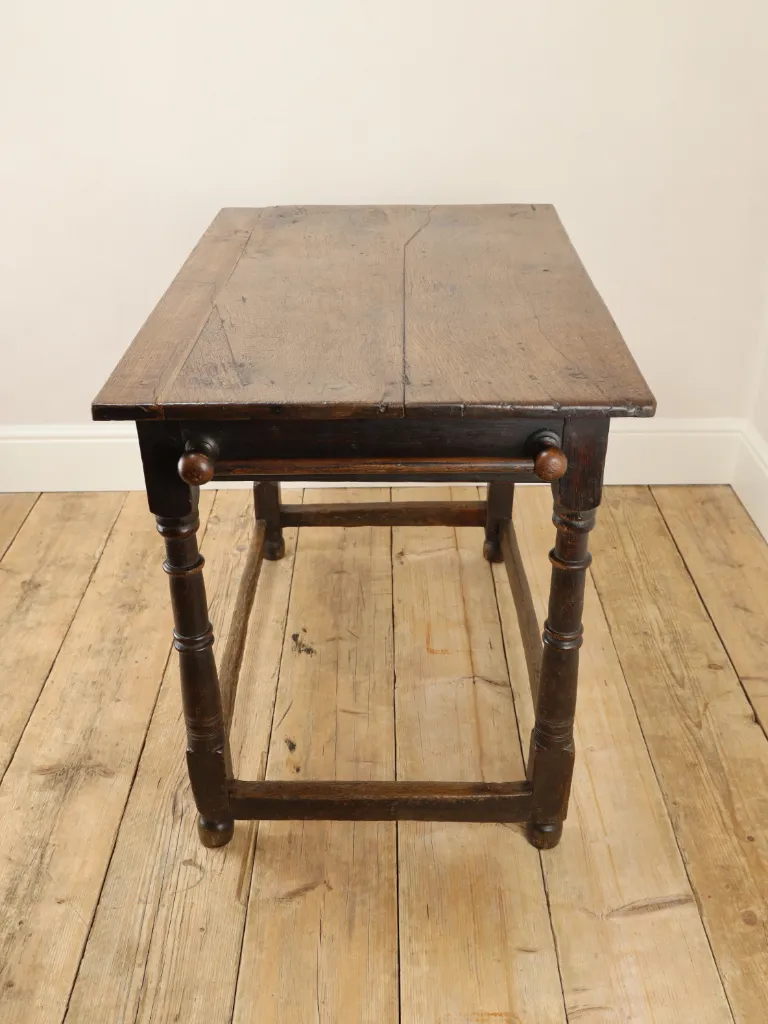
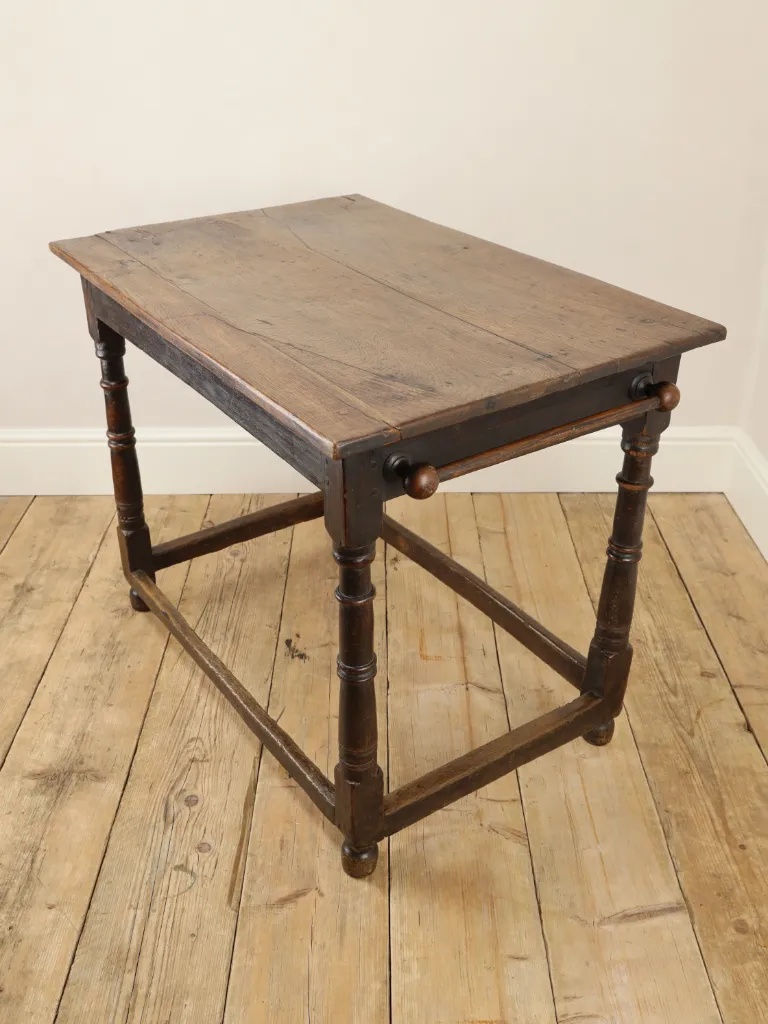
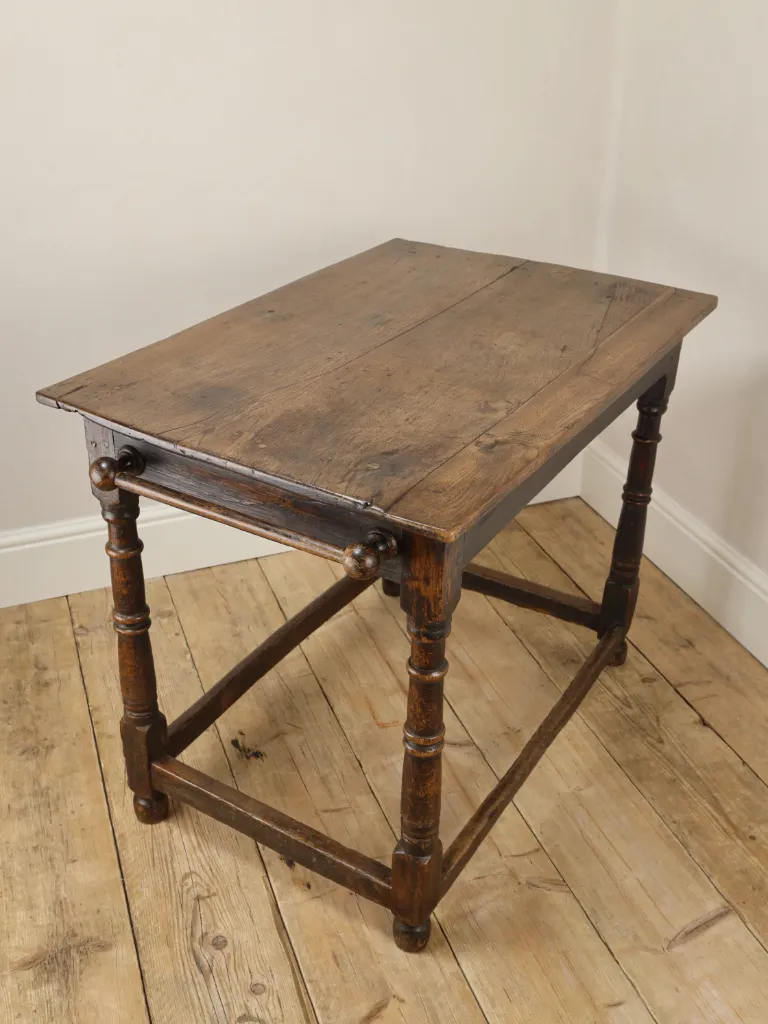
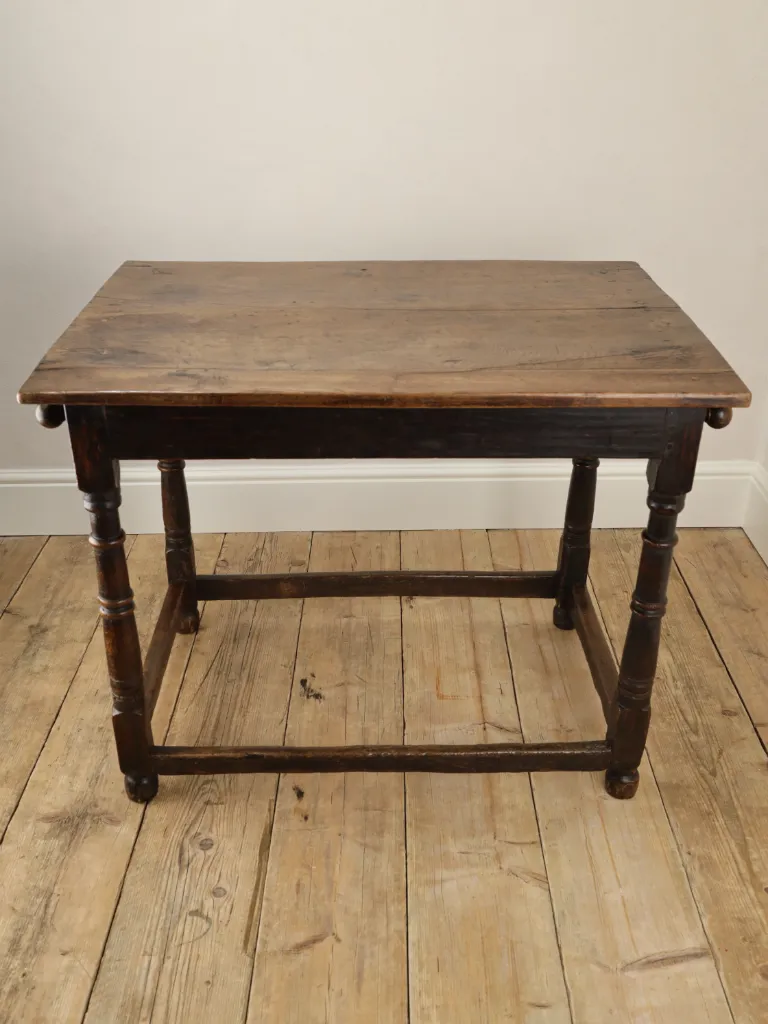
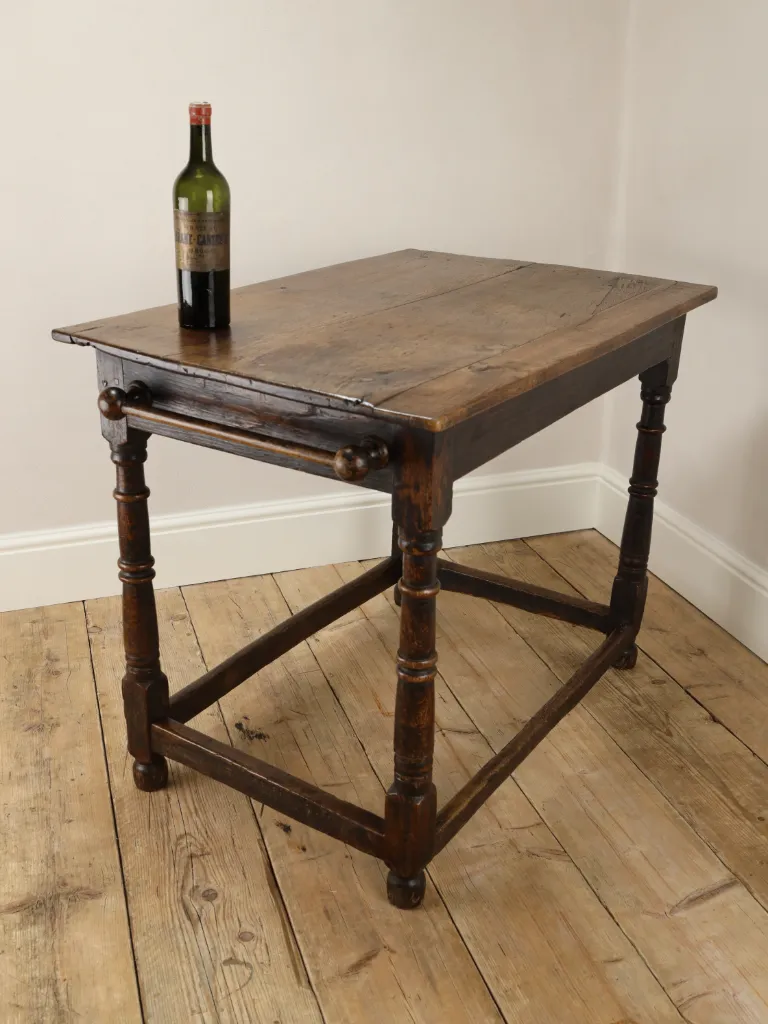
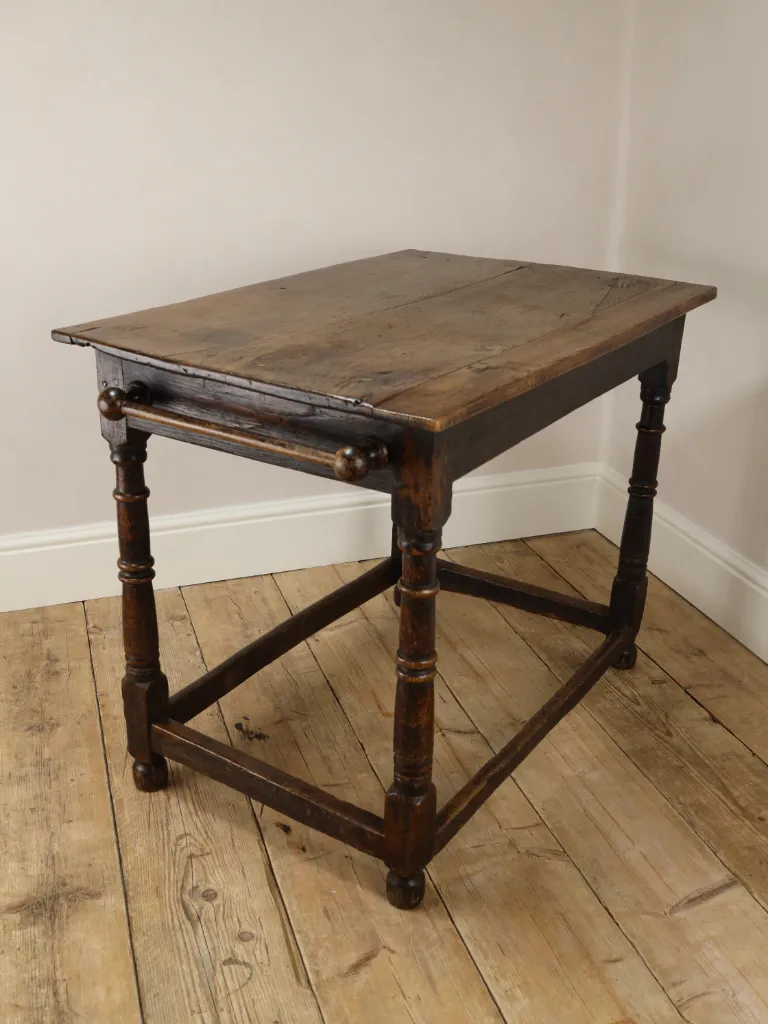
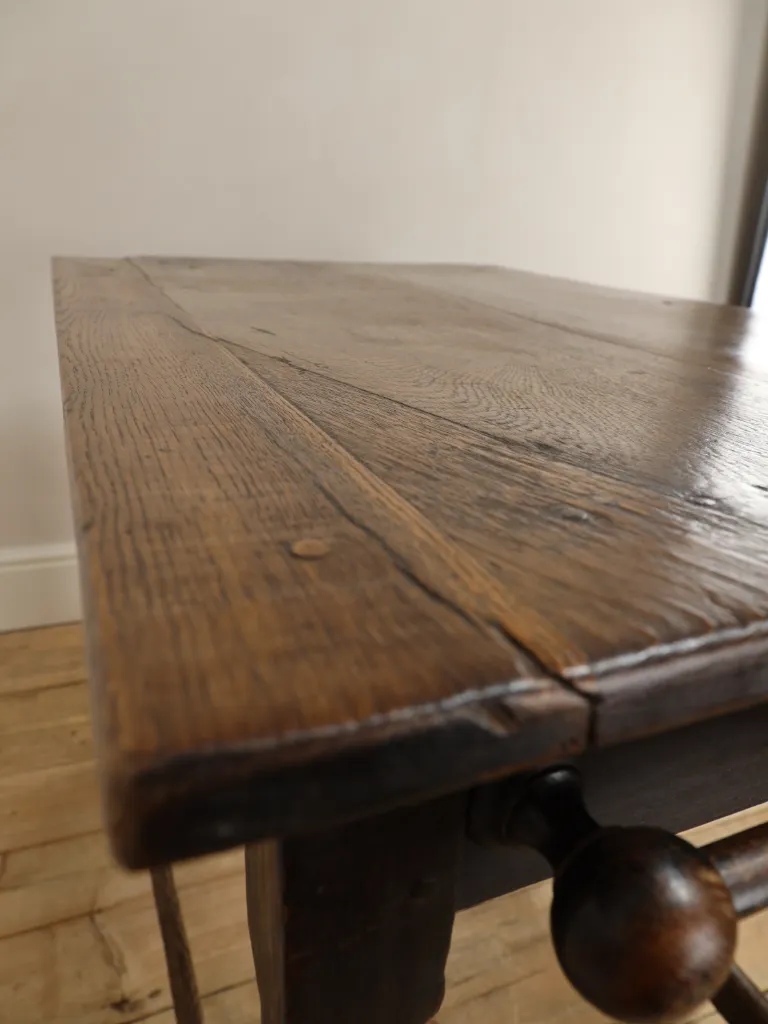
A wonderfully characterful late 17th to early 18th-century English oak table, traditionally constructed entirely with pegged joints and retaining a beautifully worn two-plank oak top, turned legs and unusual original wooden rails to either end.



A wonderfully characterful late 17th to early 18th-century English oak table, traditionally constructed entirely with pegged joints and retaining a beautifully worn two-plank oak top, turned legs and unusual original wooden rails to either end.
Dating to approximately 1680–1720, the table is a particularly appealing example of early English vernacular furniture: functional in its original purpose, robustly constructed and now possessing the depth of surface and patination that can only develop through several centuries of use.
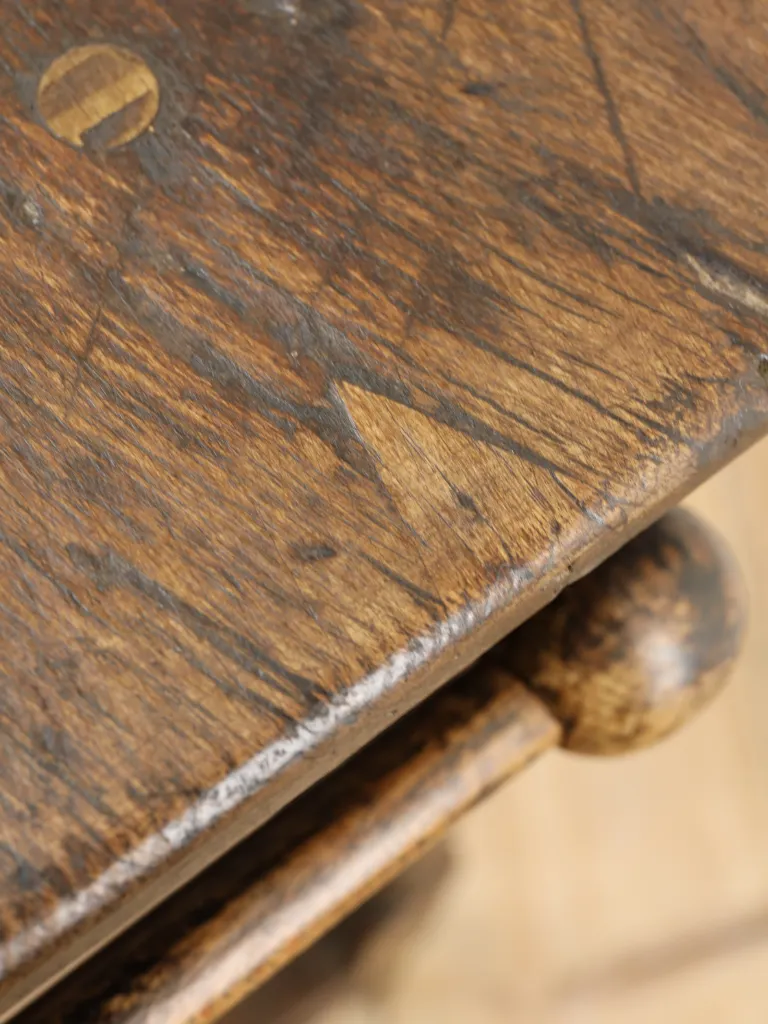
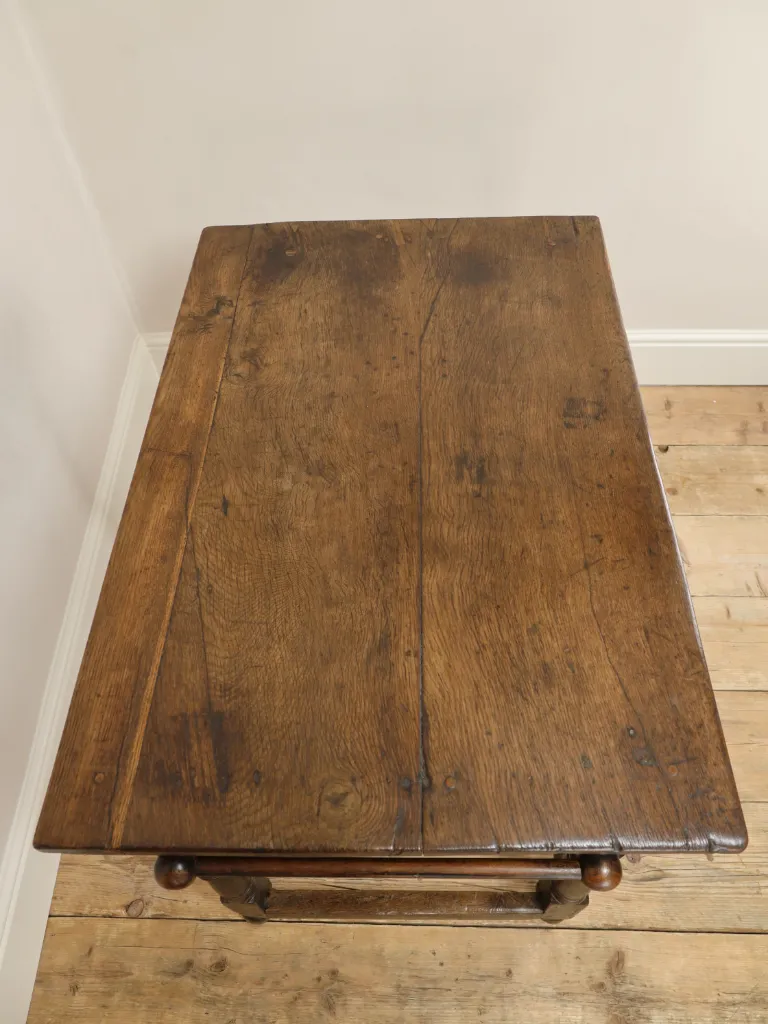
The substantial rectangular top is formed from just two remarkably broad oak planks. Their irregular grain, old shrinkage, historic marks, small repairs and gently worn edges create an exceptionally attractive surface.
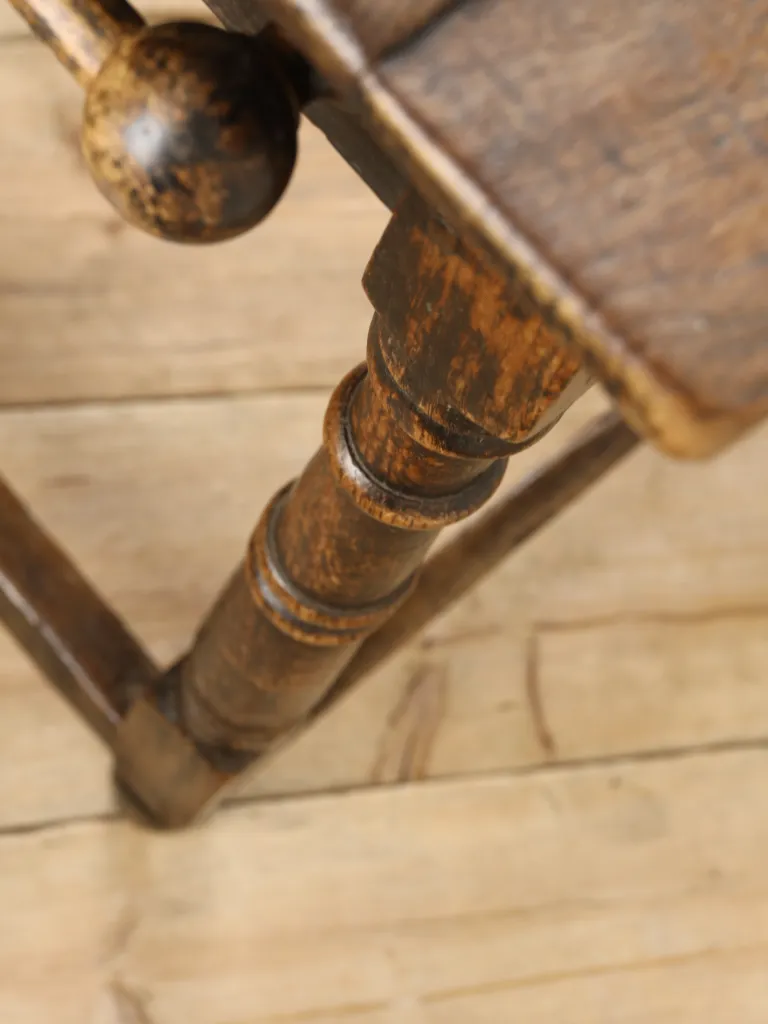
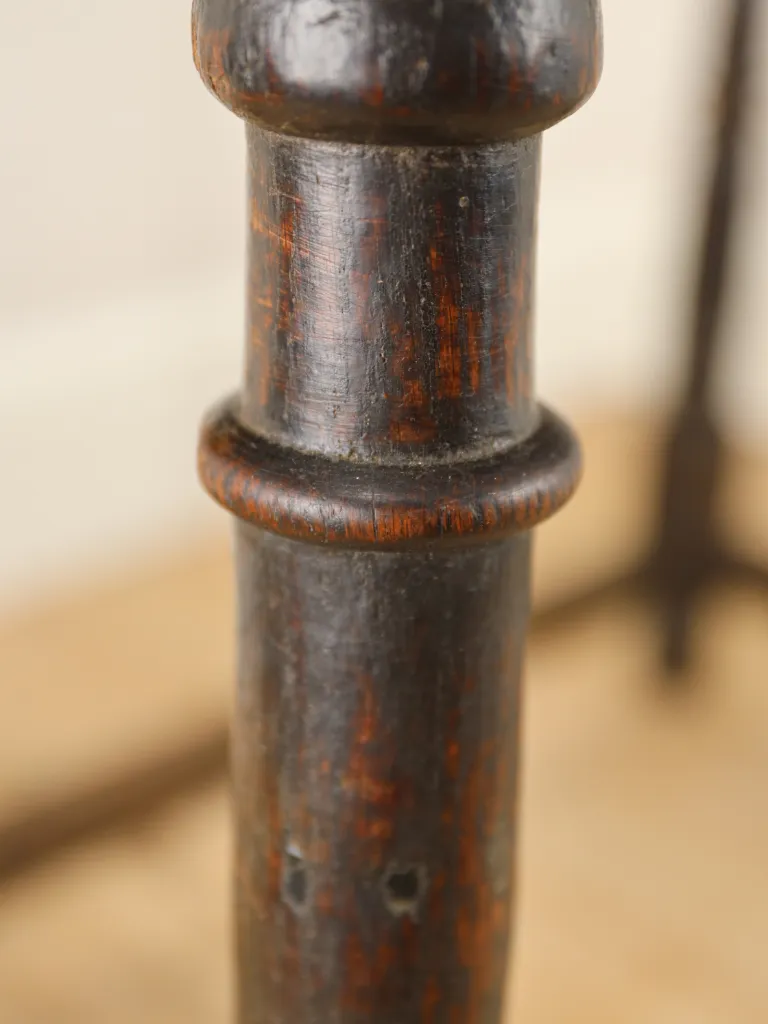
Beneath, the table is supported on four turned oak legs, each with a sequence of simple ring turnings characteristic of provincial furniture of the period. The legs terminate in small rounded feet and are joined by a complete arrangement of low stretchers, giving the table both strength and a pleasing architectural balance.
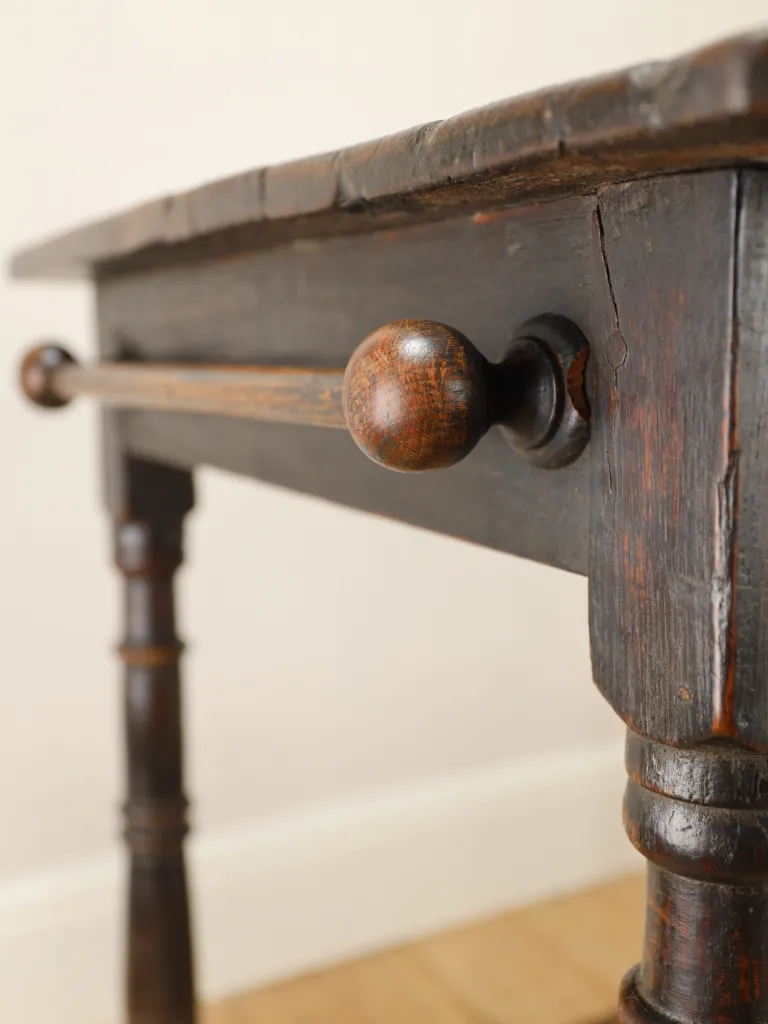
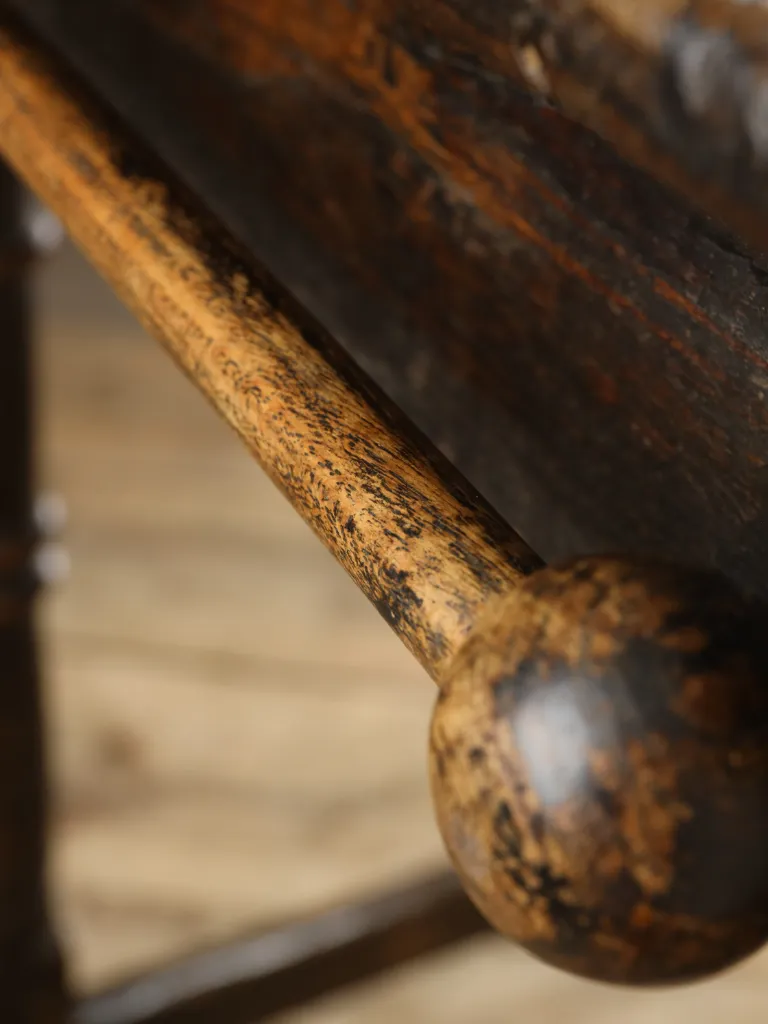
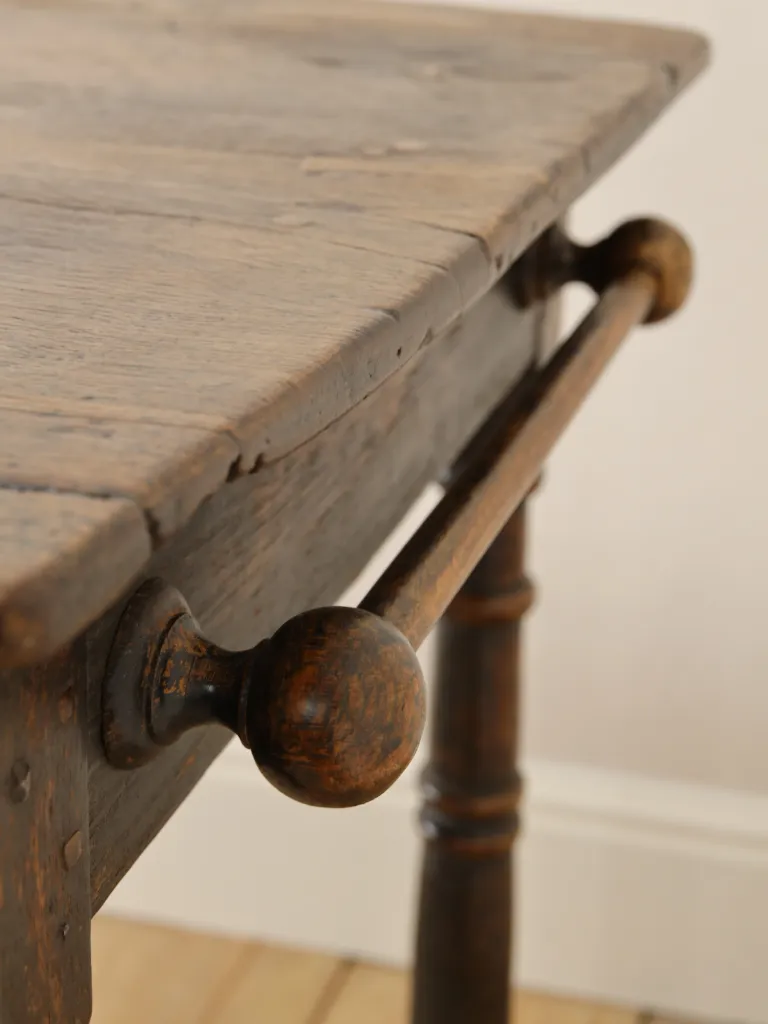
Perhaps its most distinctive feature is the pair of wooden rails positioned across either end of the table. Each consists of a long turned rail terminating in large spherical knobs and mounted directly into the table's end frame. These appear to be original to the construction rather than later additions.
They may originally have served as hanging rails for cloths, towels or other domestic textiles, reinforcing the table's likely association with a working household interior.
One of the most compelling aspects of this table is its construction.
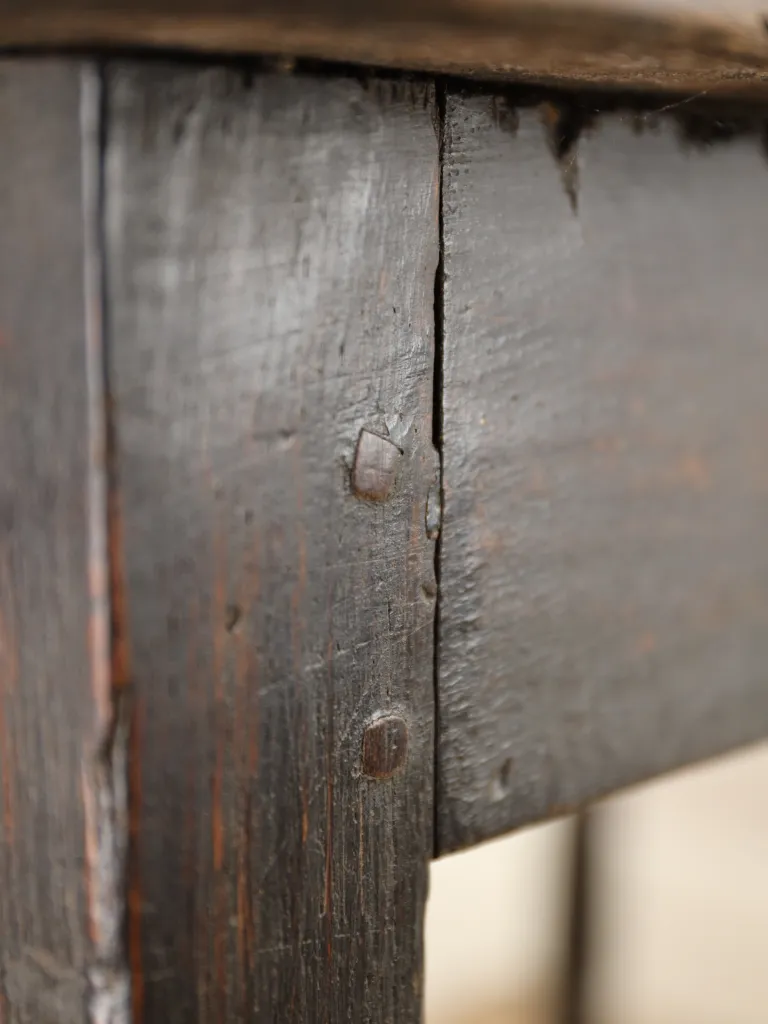
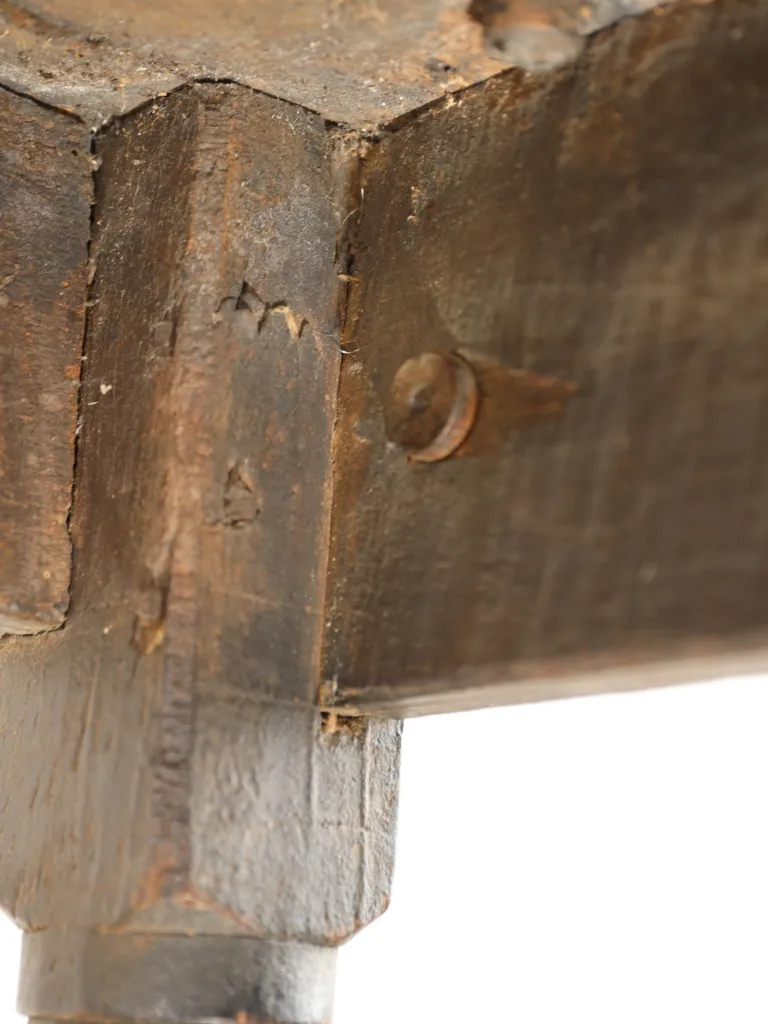
The frame has been assembled using traditional mortise-and-tenon joints secured with hand-cut wooden pegs, rather than modern screws.
Numerous original pegs remain clearly visible within the legs and frame. The underside also reveals the wonderfully honest hand-built nature of the table, with irregularities in the timber, old tool marks and traditional joinery remaining visible.
This method of construction is entirely consistent with the table's proposed late 17th/early 18th-century date and is an important part of its authenticity and appeal.
The tabletop is particularly good.
Rather than being assembled from numerous narrow boards, it has been made using two very broad oak planks, indicative of the substantial timber available to the original maker.
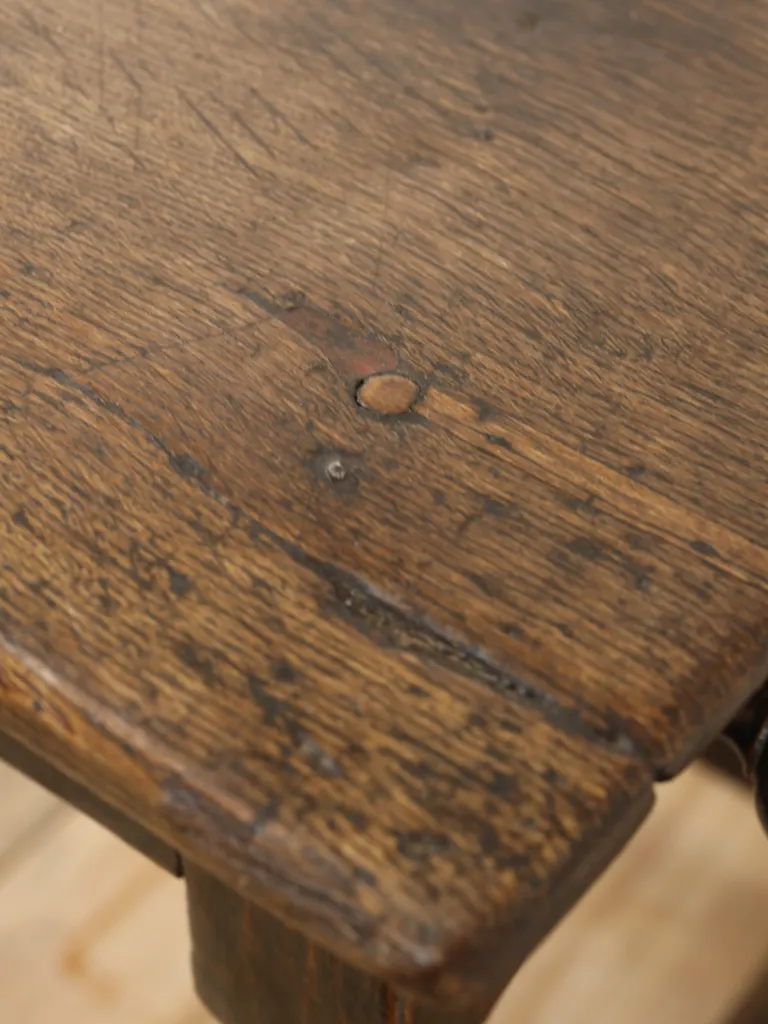
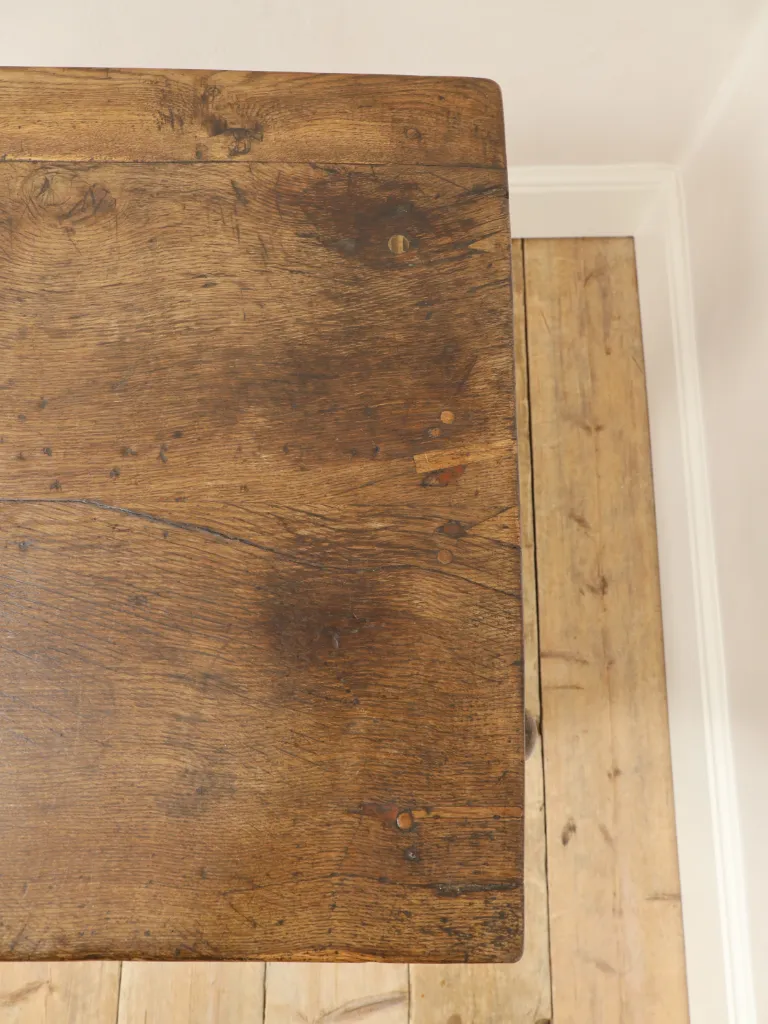
Over approximately three centuries, the oak has acquired a beautifully mellow surface with variations in colour, open grain, historic scratches, old marks, shrinkage and subtle movement between the boards.
Several small historic timber repairs and plugs are visible. These have become part of the surface rather than being disguised and contribute enormously to the table's character.
The top has deliberately not been excessively refinished or sanded back during conservation, allowing the centuries-old surface to remain evident.
Tables of this type formed part of the practical furniture of English homes during the late 17th and early 18th centuries.
They were made by regional craftsmen using locally available oak and traditional joinery rather than according to fashionable metropolitan cabinetmaking conventions. Their simplicity was intentional: they were robust pieces designed for everyday use and often remained within households for generations.
The end rails on this example are an especially appealing survival and suggest a practical domestic function. They could have accommodated towels, cloths or other textiles while the table itself provided a working surface.
Its relatively compact proportions make it remarkably relevant to modern interiors.
Today it would make an excellent small kitchen or preparation table, but we particularly like the idea of using it in a bathroom as a freestanding washstand or linen table, where the original end rails could once again be used for towels.
It would work equally well in a boot room, utility room, hallway or country-house bedroom.
Origin: England
Period: Late 17th / Early 18th Century
Date: Circa 1680–1720
Material: English oak
Construction: Traditional mortise-and-tenon construction with wooden pegs
Top: Two broad oak planks
The table has been carefully and sympathetically conserved and polished by Alex Webster, with particular attention paid to retaining the age, surface and character of the original oak.
The intention has not been to make a centuries-old table appear new.
Instead, the work has stabilised and enhanced the piece while retaining the historic wear, old repairs, marks and variations that document its long life.
The oak now has a rich, naturally aged colour and soft lustre while remaining unmistakably antique.
Presented in good antique condition for a table approximately 300 years old.
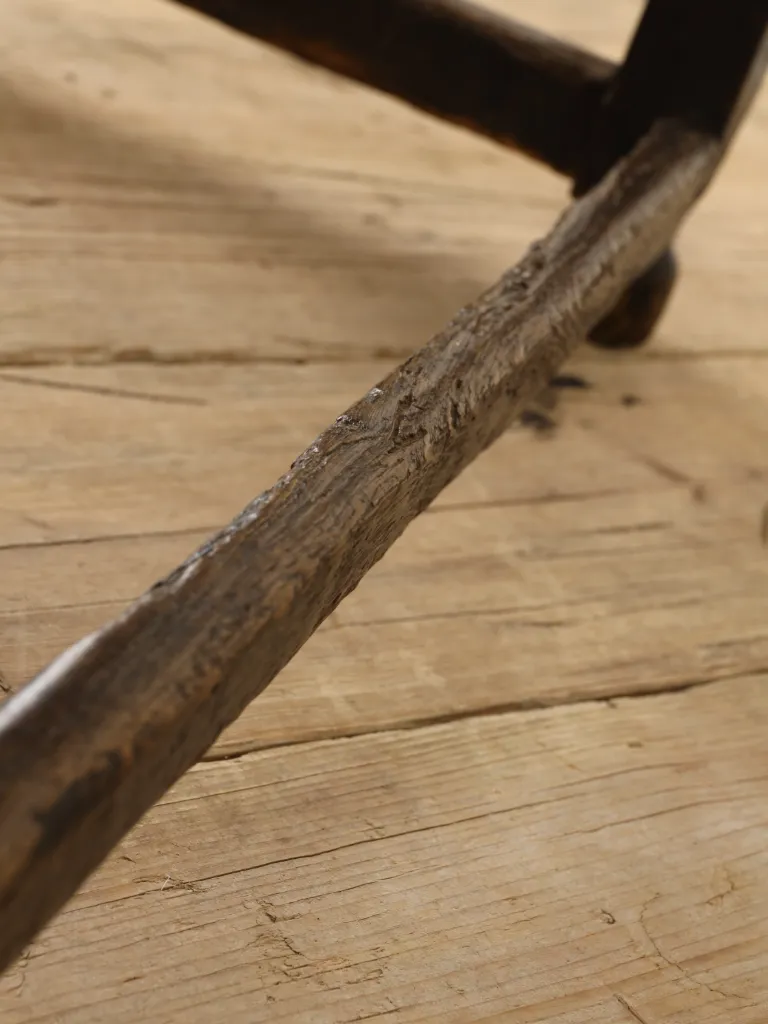
There is extensive historic wear commensurate with age and use, including surface marks, scratches, old knocks, shrinkage, small splits, historic repairs, timber plugs, areas of rubbing and natural variation throughout the oak.
There is historic movement and separation between areas of the broad-plank top, as should be expected from oak of this age.
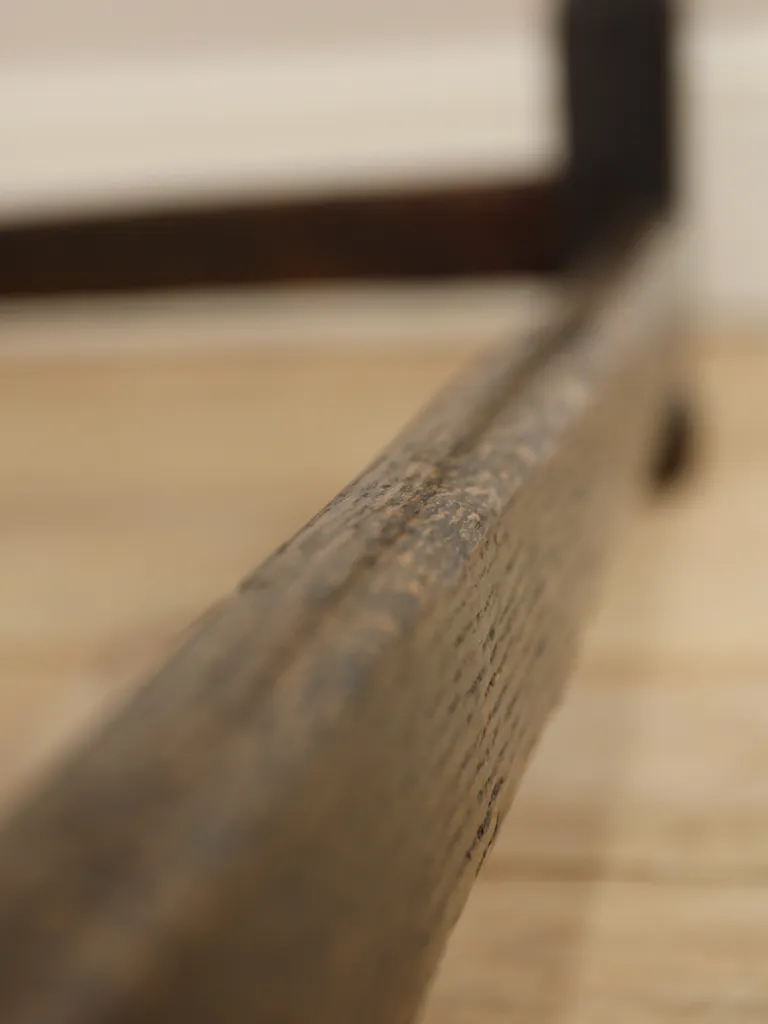
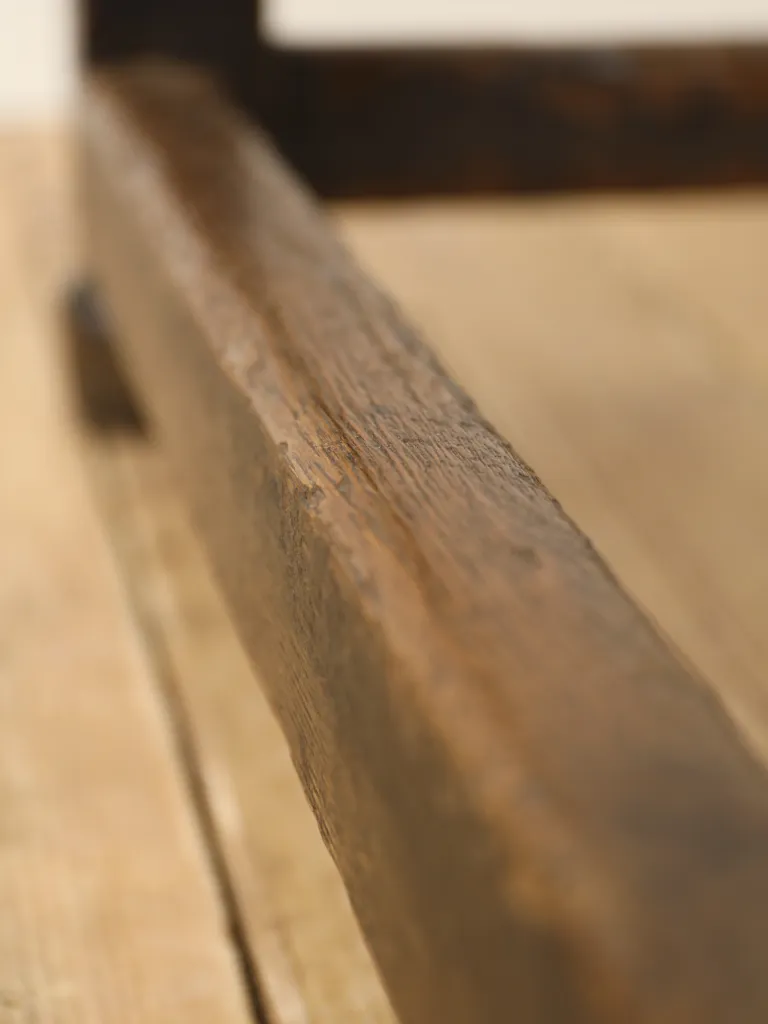
The stretchers display particularly attractive wear from generations of use.
The table has undergone sympathetic conservation and polishing and is structurally suitable for continued use.
We regard the historic wear and irregularities as integral to the table's character rather than defects. Please study the detailed photographs, which form an important part of the condition report.
What makes it special is the accumulation of small details: the enormous width of the two boards forming the top, the visible wooden pegs, worn stretchers, simple turned legs and the unusual rails running across both ends.
There is nothing manufactured or overly perfect about it. The slight irregularities and centuries of wear are exactly what give early English vernacular furniture its appeal.
Despite its age, it also feels surprisingly contemporary. Against stone, lime plaster, marble or handmade tiles, we think it would look exceptional.
The original rails make it particularly interesting as a bathroom table or washstand, where they could hold hand towels, while its original purpose and proportions make it equally convincing returned to a country kitchen.
It is a genuinely useful piece of early English furniture rather than something that needs to be treated purely as an historical object.
Height: 77 cm / 30.3 inches
Width: 97 cm / 38.2 inches
Depth: 65 cm / 25.6 inches
Weight: 20 kg / 44.1 lbs
Every item offered by Shackleton Fox is carefully inspected, prepared, and where necessary conserved within our workshop prior to sale.
As heritage craftsmen and antique specialists, we believe in preserving the authenticity and integrity of each piece. Original finishes, patina, wear, and signs of age are retained wherever possible, as these elements contribute to both character and historical significance.
When restoration, rewiring, repairs, or conservation work is required, it is undertaken sympathetically using traditional techniques and materials appropriate to the period of the piece. Our philosophy is one of careful stewardship rather than unnecessary restoration, ensuring antiques remain both functional and historically respectful.
The result is a collection of pieces that have been thoughtfully prepared, allowing future owners to enjoy them with confidence while preserving their unique story and character.