
£1,250.00
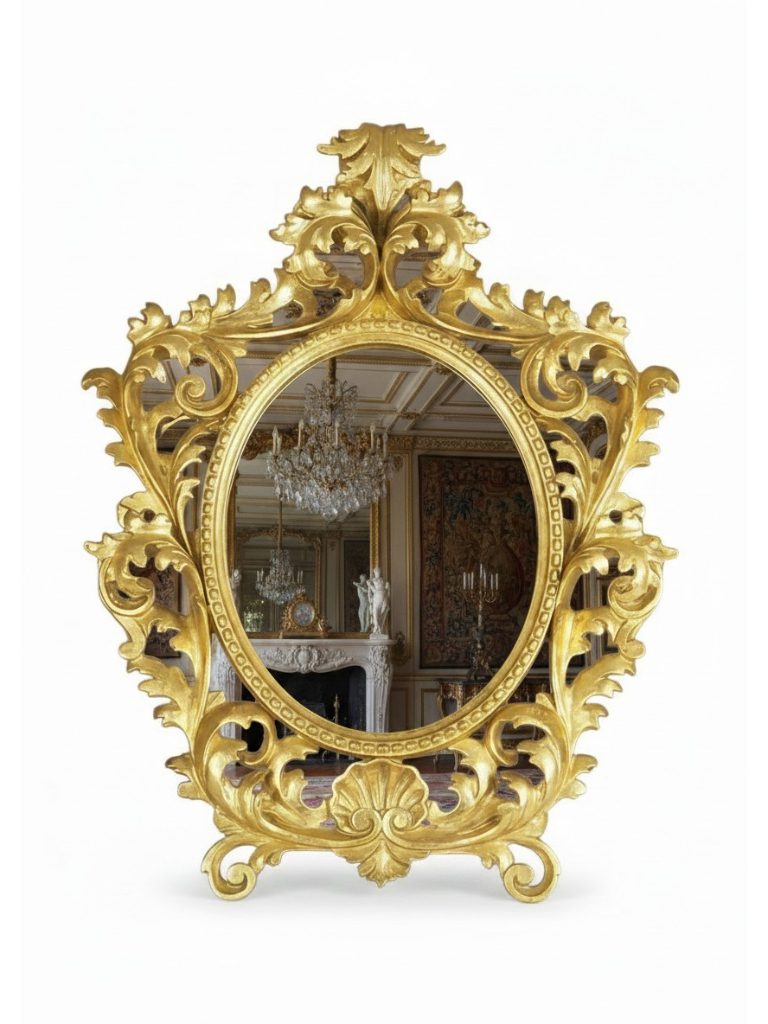
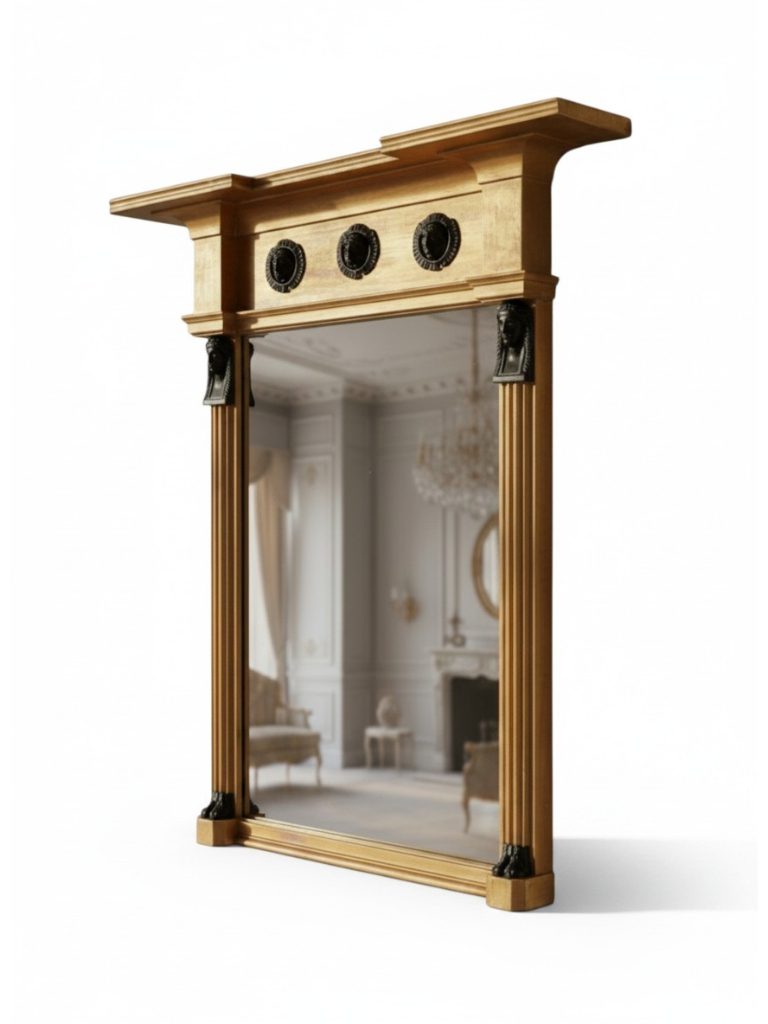
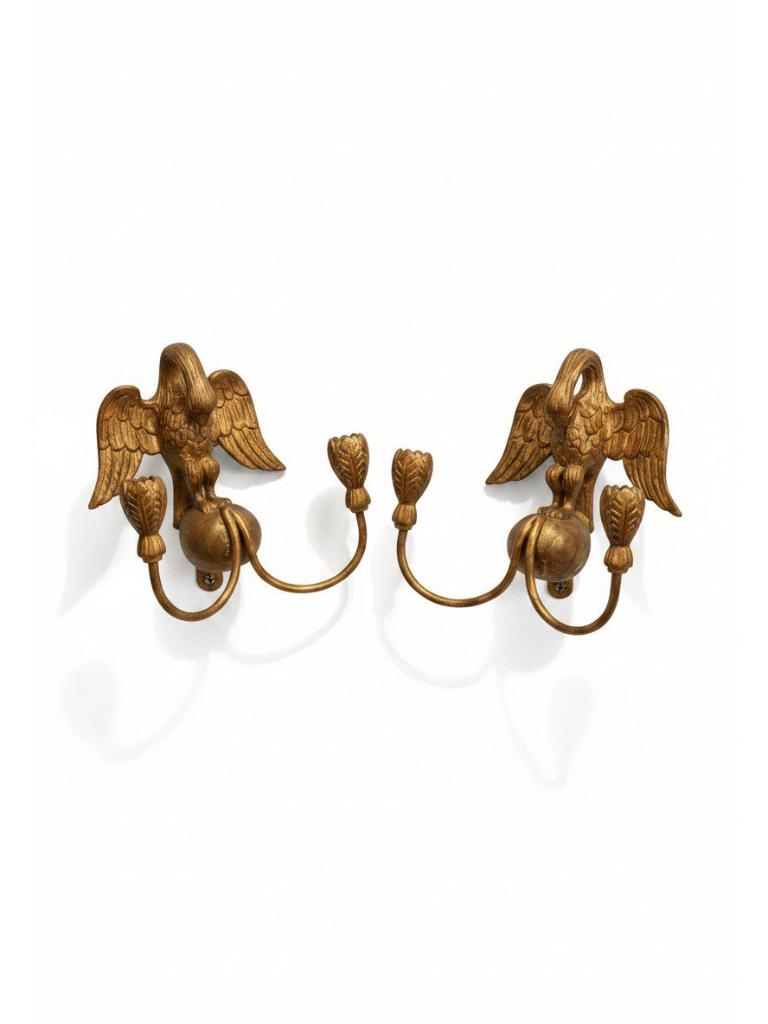
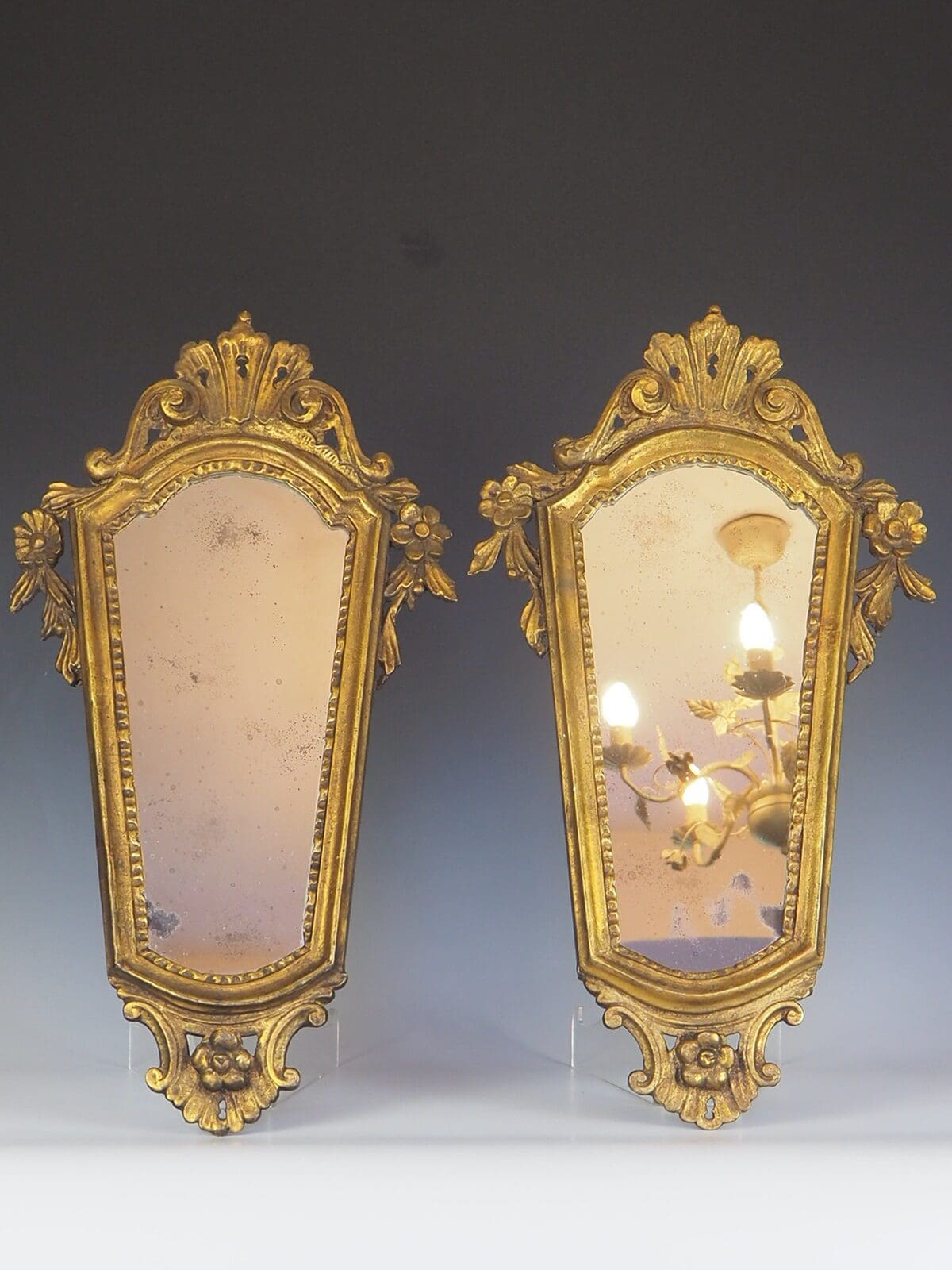
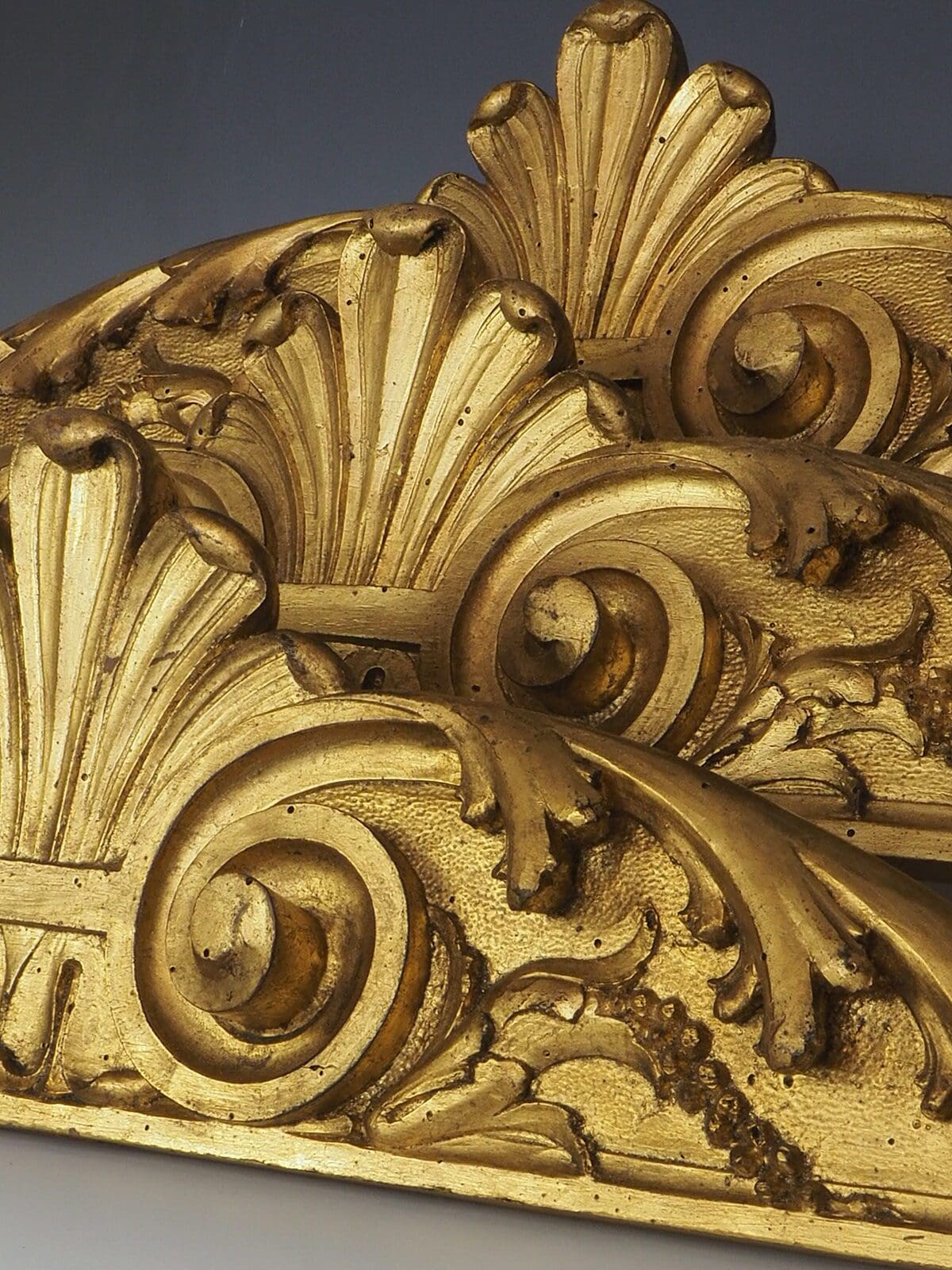
An exceptional and highly decorative pair of Irish George III carved giltwood mirrors, dating from the second half of the 18th century and acquired from the sale of the contents of a large country house.



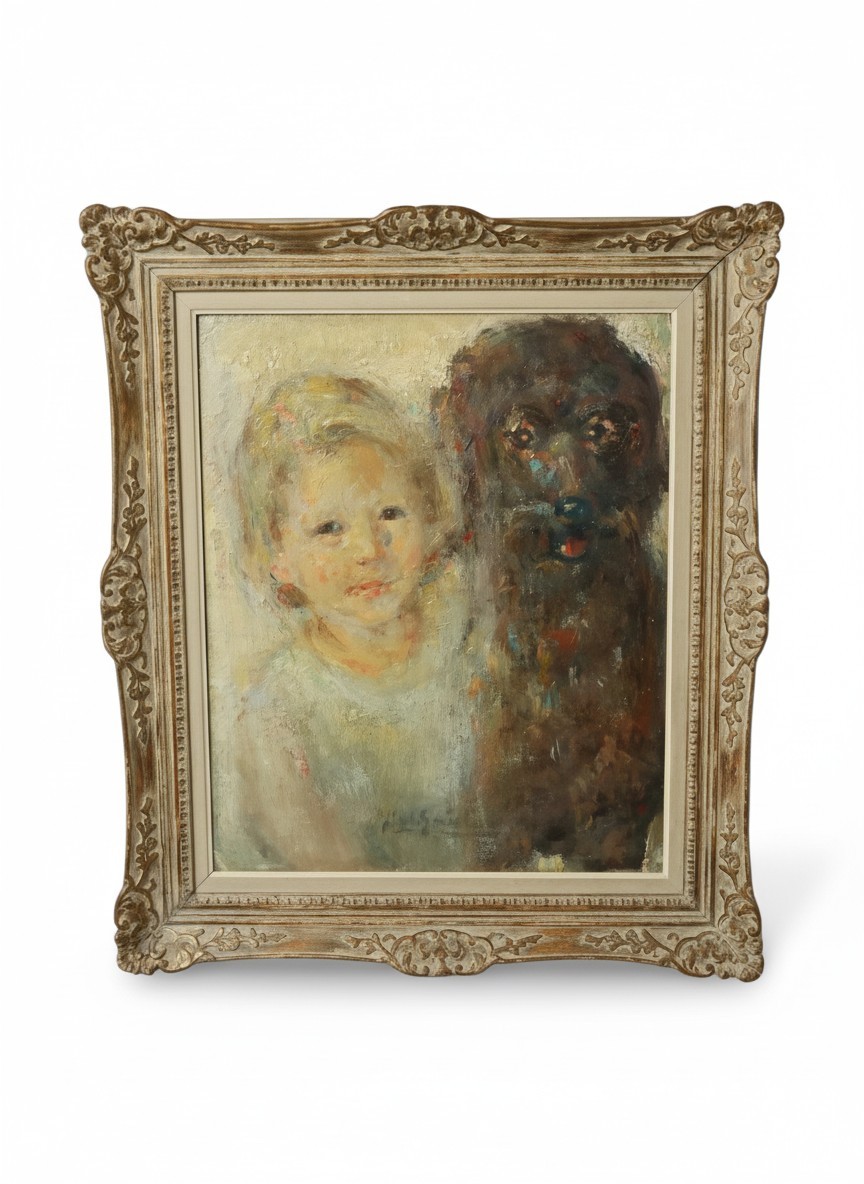
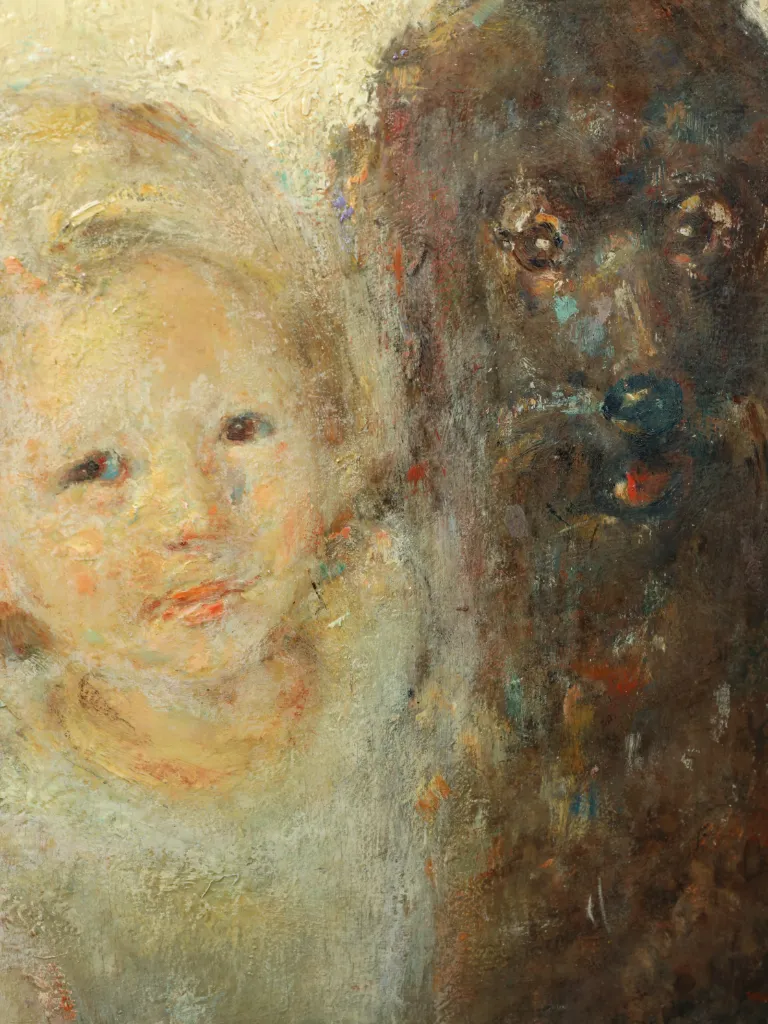
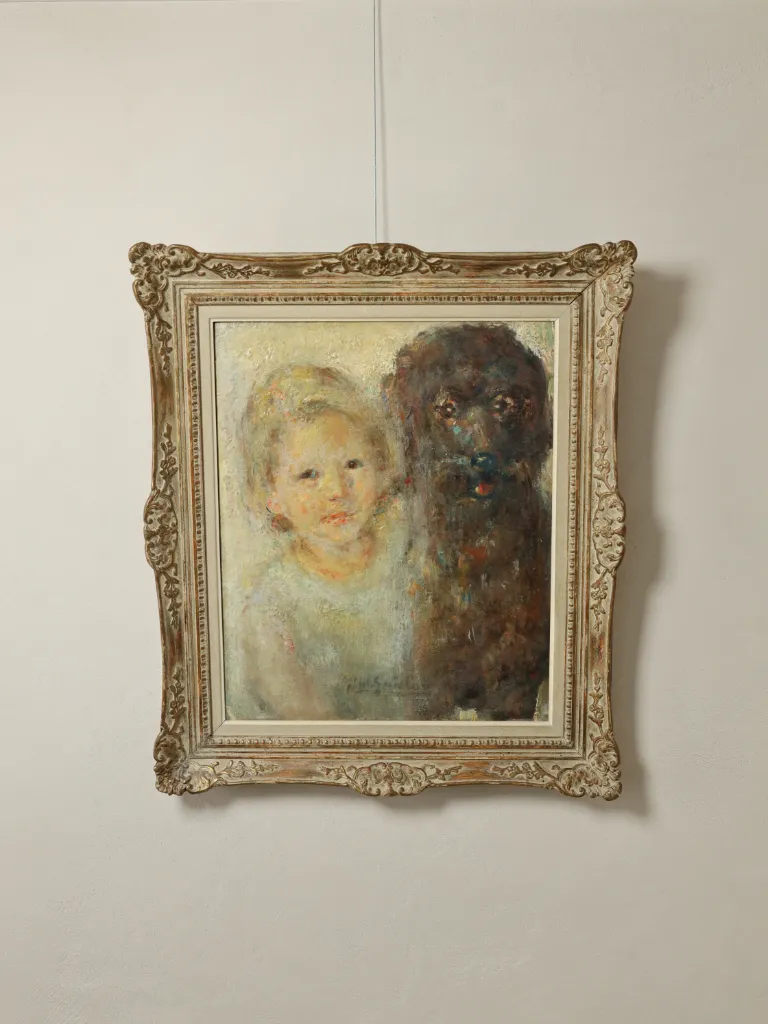
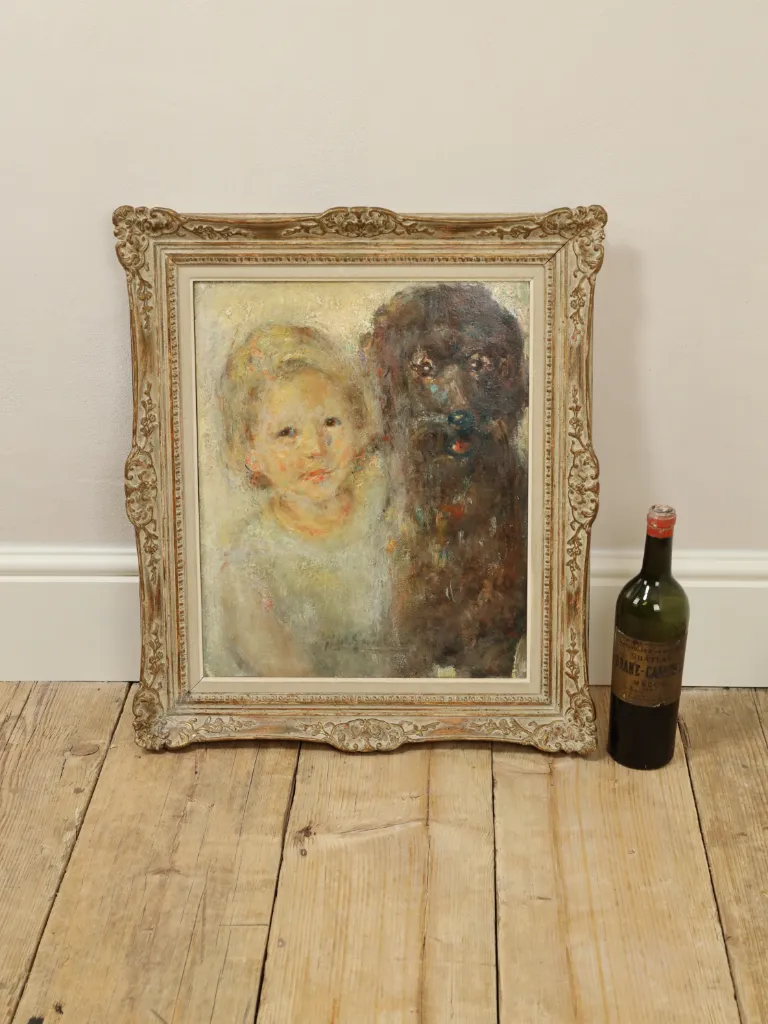
A wonderfully intimate and highly expressive portrait of a young girl and her dog by the Belgian-born painter and poet Jean-Marie Guislain (1882–1964), dating to around 1930.
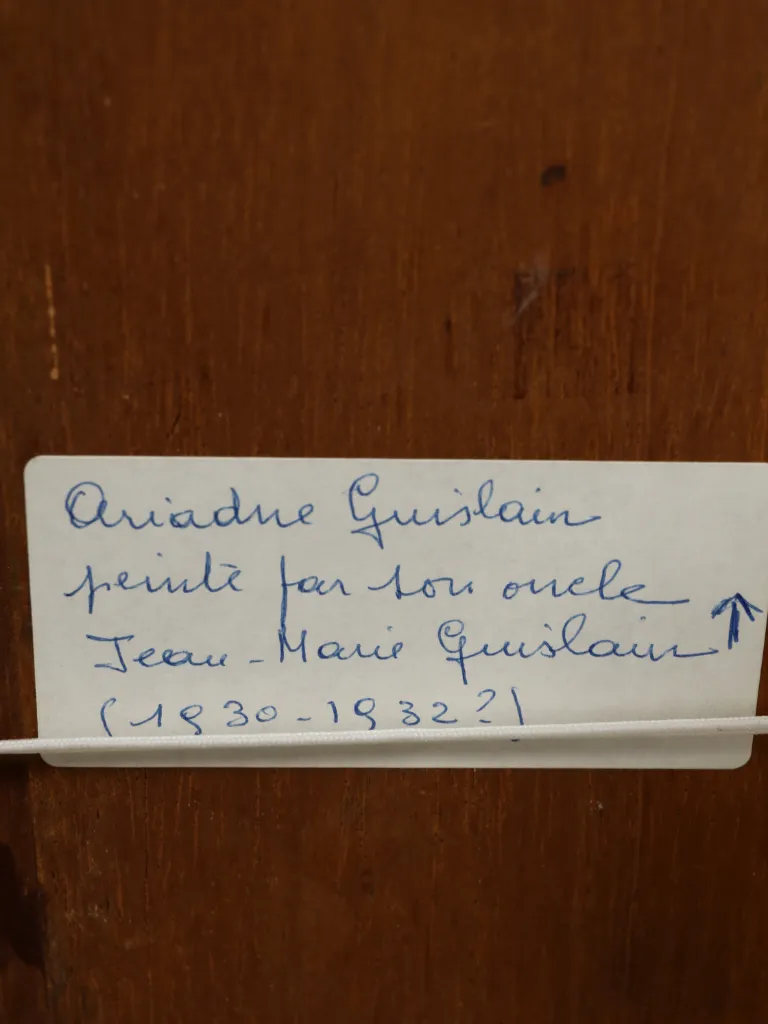
The painting is understood to depict Ariadne Guislain, identified by a handwritten family inscription retained on the reverse as the artist's niece.
It is an extraordinarily engaging composition.
Ariadne is positioned closely beside a large, dark-coated dog, the two figures filling almost the entirety of the picture plane. The considerable scale of the animal beside the small child gives the portrait an immediate visual presence, but there is also something wonderfully tender about their proximity.
Both look directly towards the viewer.
Guislain has deliberately avoided the precision and formality of conventional portraiture. Instead, child and dog emerge from a wonderfully atmospheric surface of loose, broken brushwork.
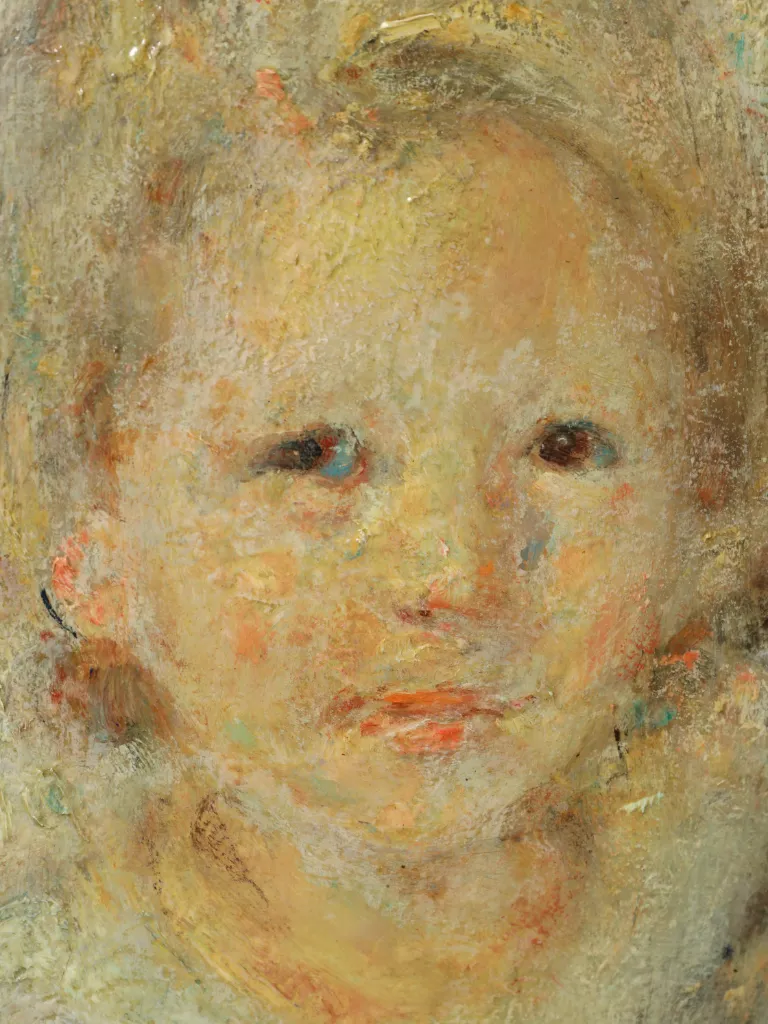
Ariadne's pale face is modelled in layers of cream, ochre, peach and soft grey, punctuated by unexpected touches of coral, turquoise and blue. Her blonde hair almost dissolves into the luminous background, while her pale clothing is suggested rather than precisely defined.
The dog provides a dramatic counterpoint.
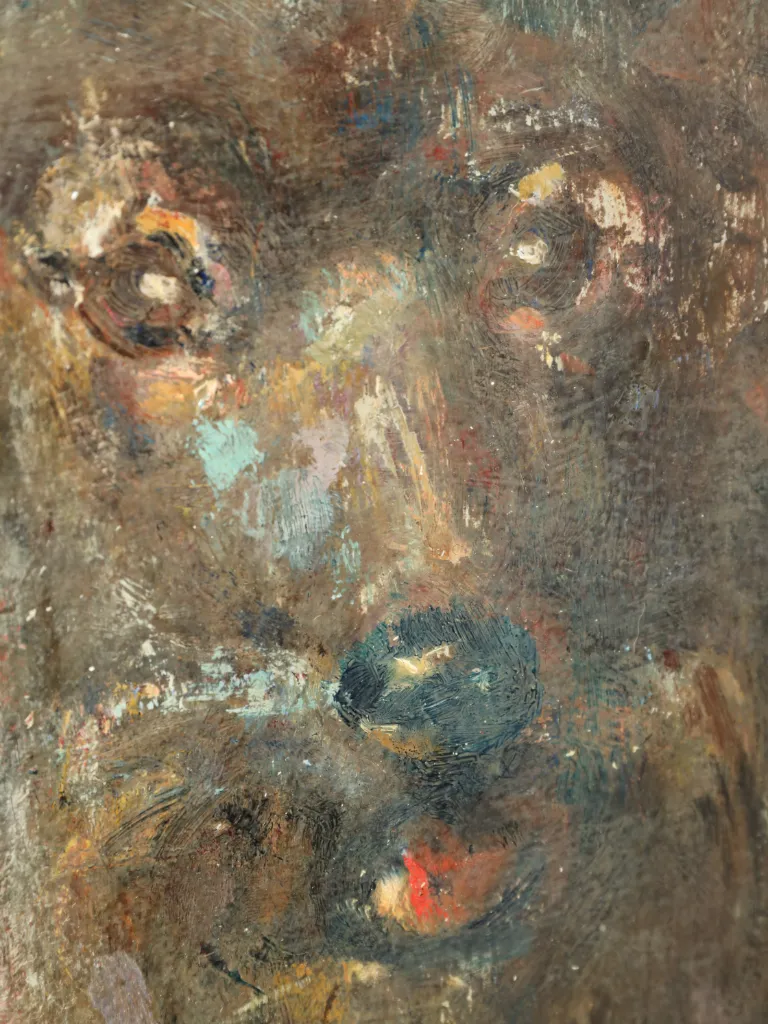
Its dark brown and black coat has been constructed from an extraordinary variety of colours. Close inspection reveals passages of blue, turquoise, ochre, orange, cream and red worked through the darker paint.
Particularly successful is the animal's face. A series of seemingly spontaneous marks resolve into bright, extraordinarily expressive eyes, a blue-black nose and a tiny flash of red at the mouth.
The closer one looks, the more painterly the work becomes.
Viewed from across a room the two sitters are immediately recognisable; viewed closely, their faces fragment into individual strokes and passages of colour.
It is this combination of observation and looseness that gives the painting so much character.
Rather than presenting Ariadne formally, Guislain appears to have captured a far more personal moment between a young girl and a familiar animal. Given the surviving family inscription identifying the sitter as his niece, there is an appealing intimacy to the work that distinguishes it from a commissioned society portrait.
Jean-Marie Guislain was born in Louvain, Belgium, in 1882. He subsequently worked internationally as both a painter and poet, spending periods in France and the United States.
Biographical research records that Guislain worked as a portrait painter and described himself as “a bit of an impressionist.” In 1913 he travelled through the United States as an itinerant portraitist, later exhibiting paintings and watercolours and becoming active within American artistic circles.
His work included portraiture, figure studies, landscapes, watercolours and still lifes.
A contemporary account of a 1921 exhibition in Omaha described one of his figure paintings, The Artilleryman, as among the exhibition's most impressive figure studies. Guislain was by then working in New York and exhibiting watercolours alongside his oils.
By 1940 his watercolours were being exhibited at Vassar College, including works depicting Paris and Marrakesh.
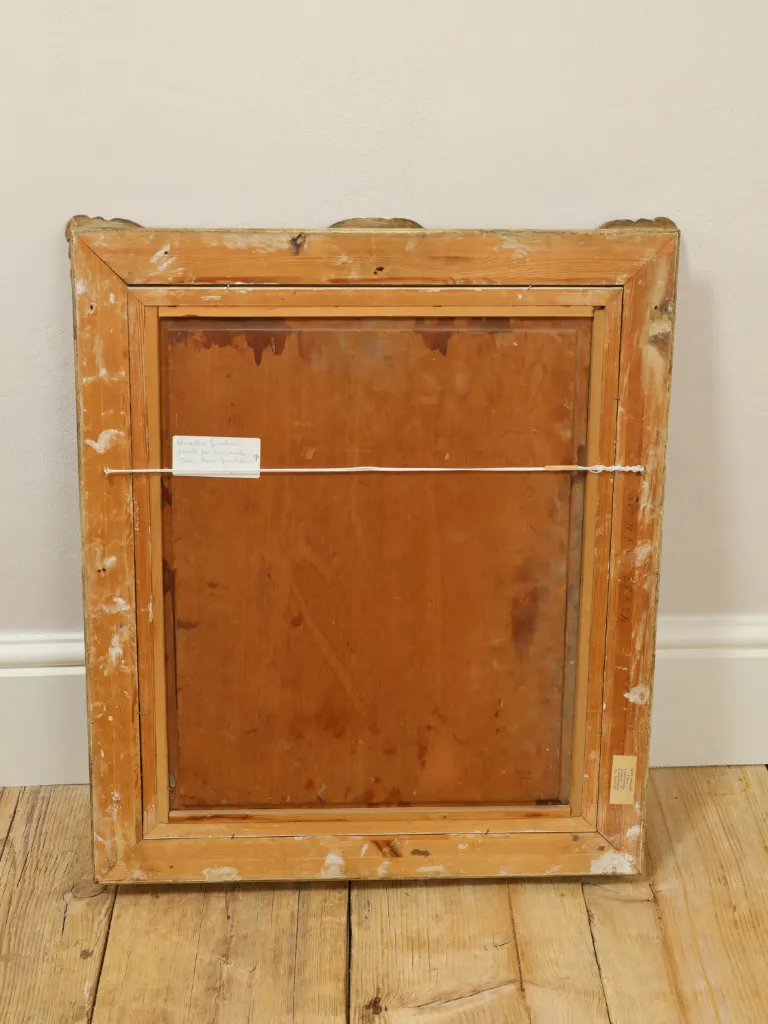
Particularly interesting is the handwritten family inscription retained on the reverse of the painting.
It reads:
“Ariadne Guislain
peinte par son oncle
Jean-Marie Guislain”
Translated:
“Ariadne Guislain, painted by her uncle Jean-Marie Guislain.”
A later date notation beneath the inscription appears inconsistent with the documented dates of the artist and has therefore not been relied upon in dating the painting.
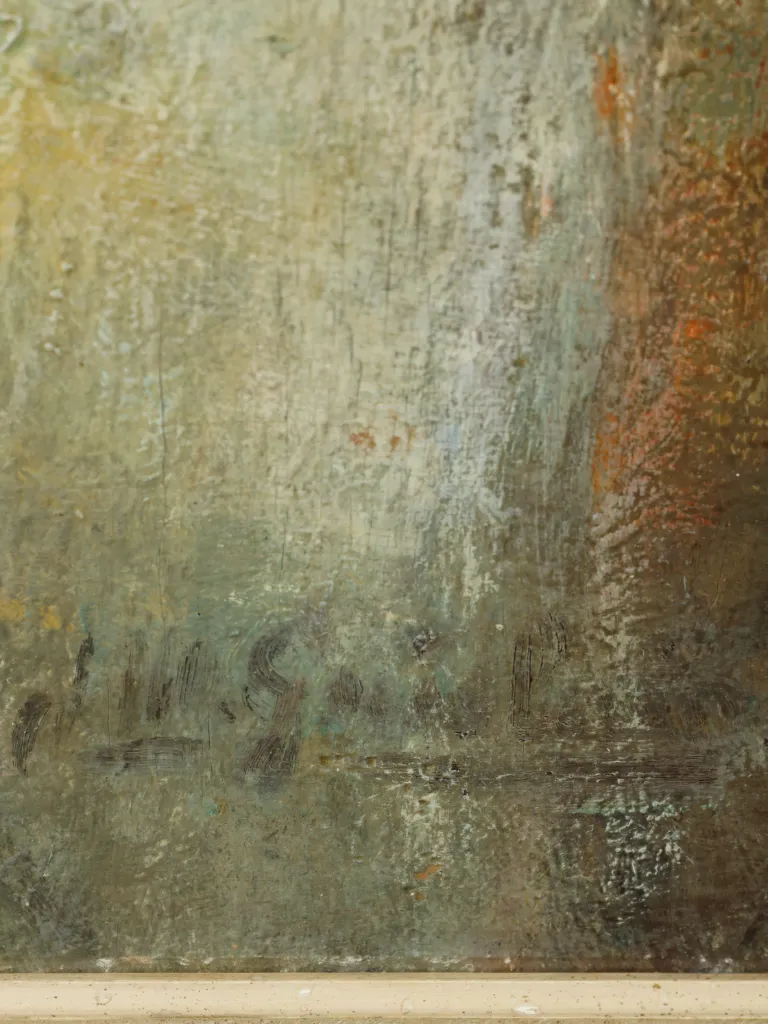
The painting itself is signed within the composition.
Taken together, the signature, family identification and known artistic career of Jean-Marie Guislain provide compelling evidence for the authorship of the work.
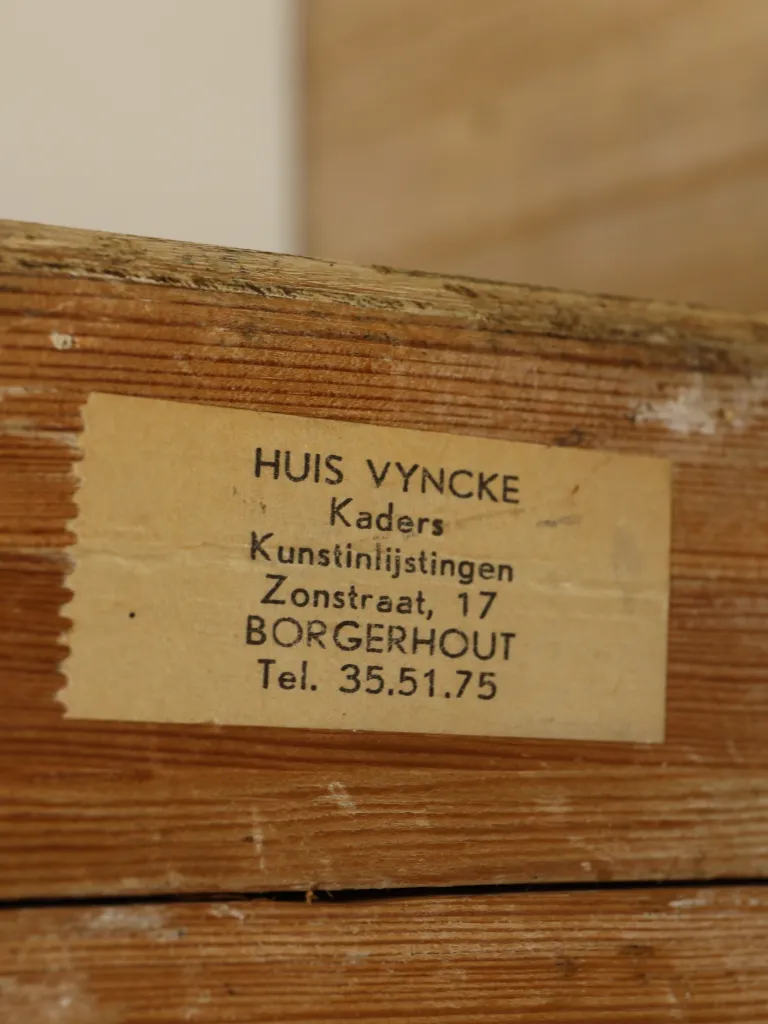
A second historic label survives on the reverse:
HUIS VYNCKE
Kaders
Kunstinlijstingen
Zonstraat, 17
Borgerhout
This identifies a framing business in Borgerhout, Antwerp, Belgium, providing an additional Belgian connection to the work.
The survival of both labels is particularly welcome. Rather than being an anonymous portrait whose sitters and history have disappeared, the painting retains a tangible link with the family of the artist and its Belgian history.
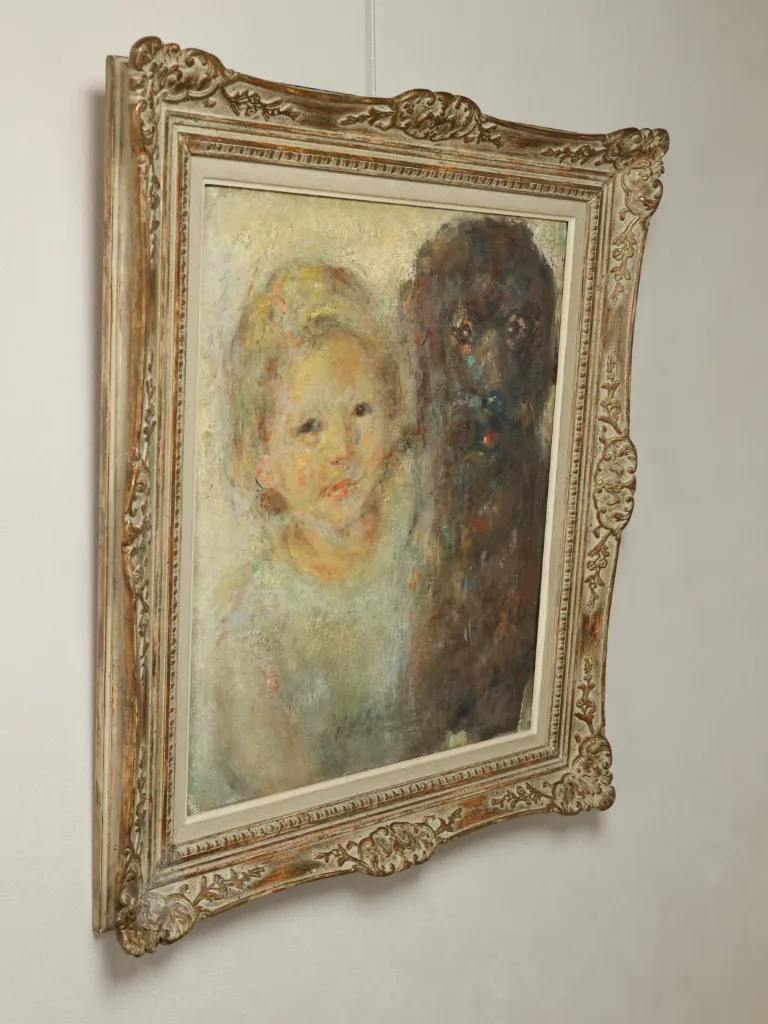
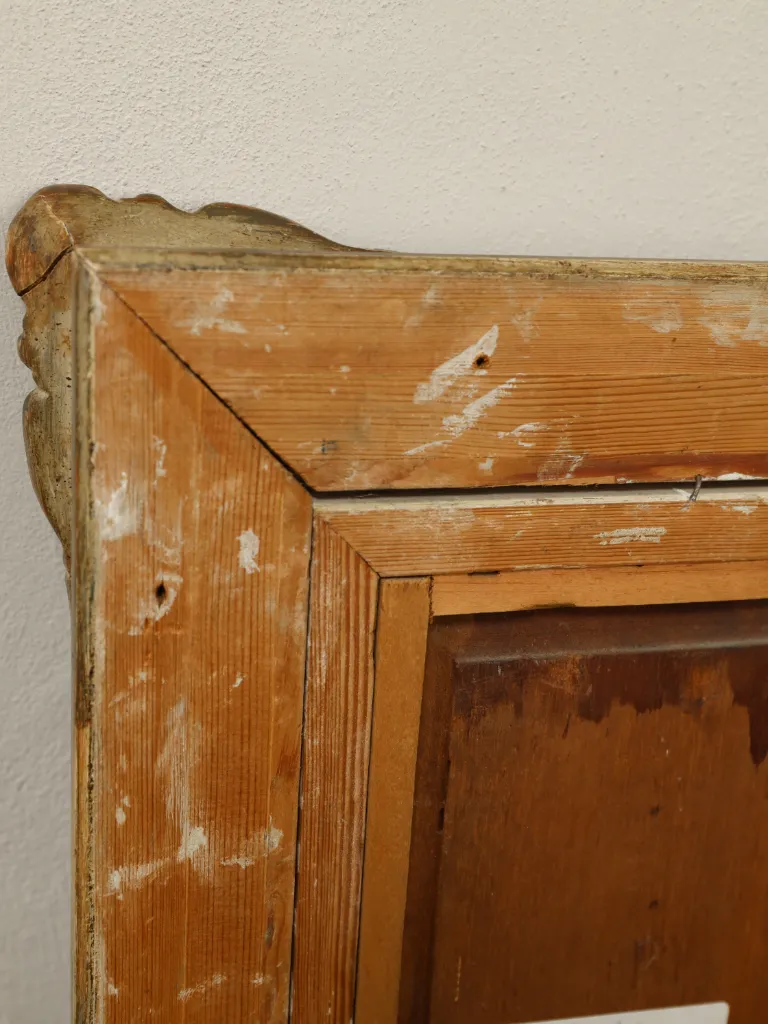
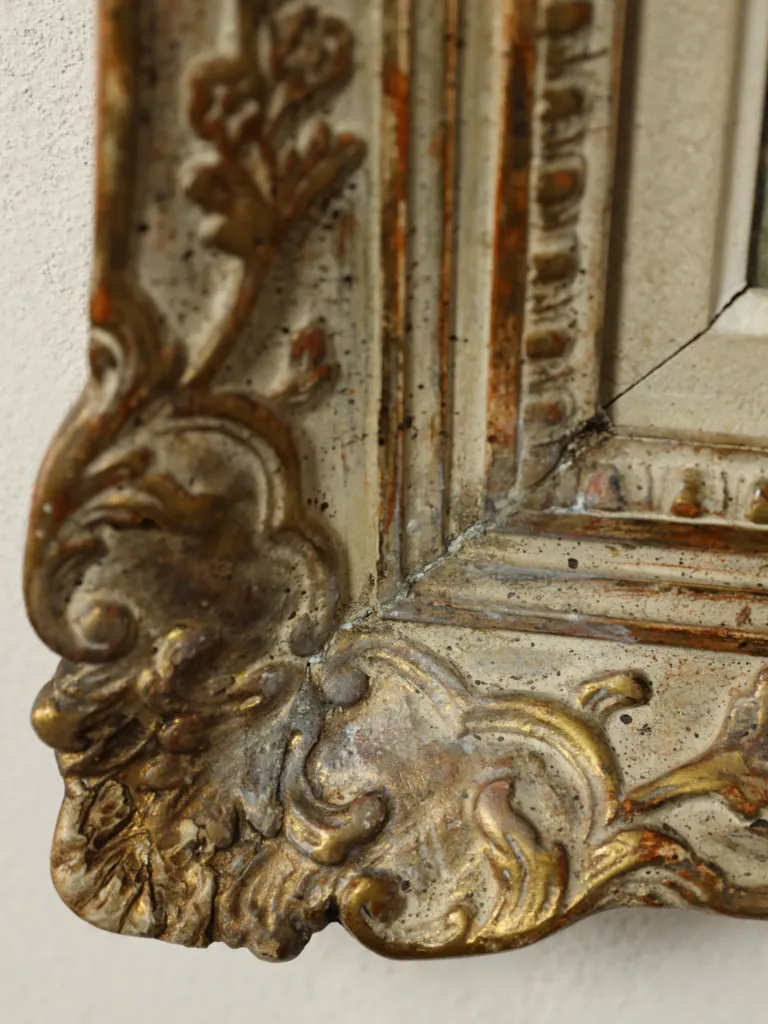
The painting is presented in an attractive period-style carved and moulded frame with a softly distressed cream and gilt finish.
Scrolled foliate ornament decorates the corners and centres of the frame, while a restrained inner moulding surrounds the painting.
The mellowed surface works particularly well with Guislain's palette, echoing the creams, ochres and muted tones running throughout the composition without competing with the painting itself.
Presented in good antique condition with the expected signs of age associated with an early 20th-century oil painting.
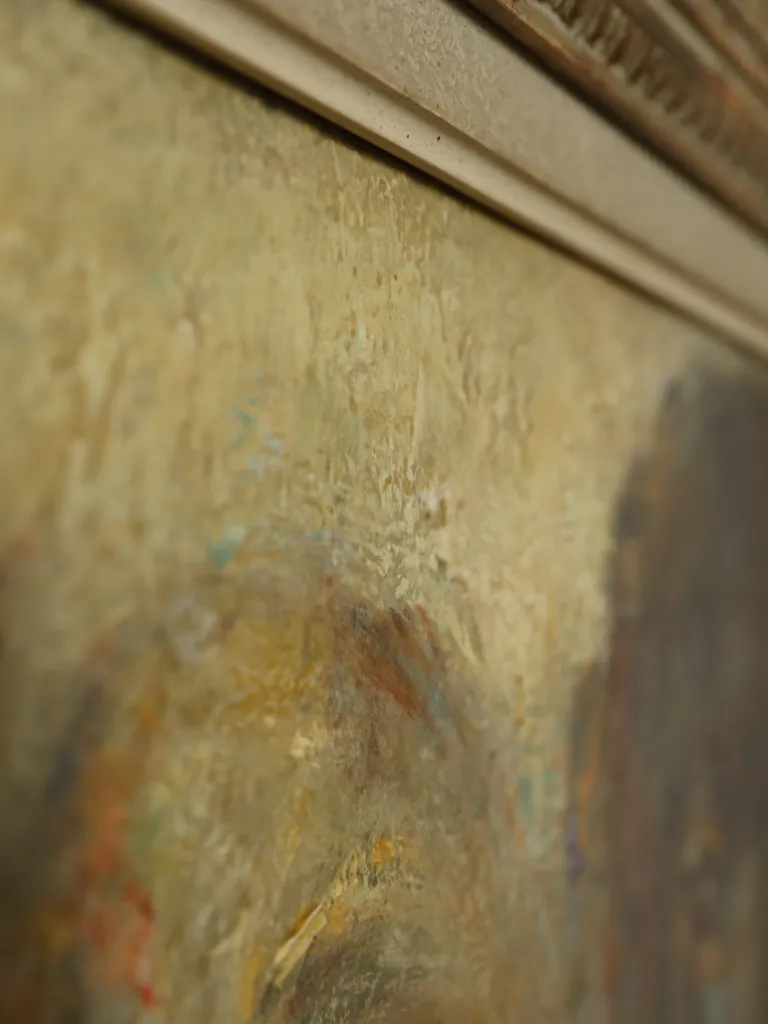
The painted surface retains Guislain's wonderfully loose and textural brushwork, with areas of impasto and visible individual brushstrokes throughout.
There are minor age-related surface marks and imperfections consistent with the age and nature of the work.
The decorative frame displays rubbing, marks and areas of wear and loss to the cream and gilt surface, commensurate with age. Minor repairs to the frame. These have been retained and contribute to the attractive time-worn appearance of the frame.
Importantly, the reverse retains both the handwritten family identification and historic Belgian framer's label.
Height: 62 cm / 24.4 inches
Width: 53 cm / 20.9 inches
Depth: 5 cm / 2 inches
Weight: 2.5 kg / 5.5 lbs
Every item offered by Shackleton Fox is carefully inspected, prepared, and where necessary conserved within our workshop prior to sale.
As heritage craftsmen and antique specialists, we believe in preserving the authenticity and integrity of each piece. Original finishes, patina, wear, and signs of age are retained wherever possible, as these elements contribute to both character and historical significance.
When restoration, rewiring, repairs, or conservation work is required, it is undertaken sympathetically using traditional techniques and materials appropriate to the period of the piece. Our philosophy is one of careful stewardship rather than unnecessary restoration, ensuring antiques remain both functional and historically respectful.
The result is a collection of pieces that have been thoughtfully prepared, allowing future owners to enjoy them with confidence while preserving their unique story and character.