
£1,250.00
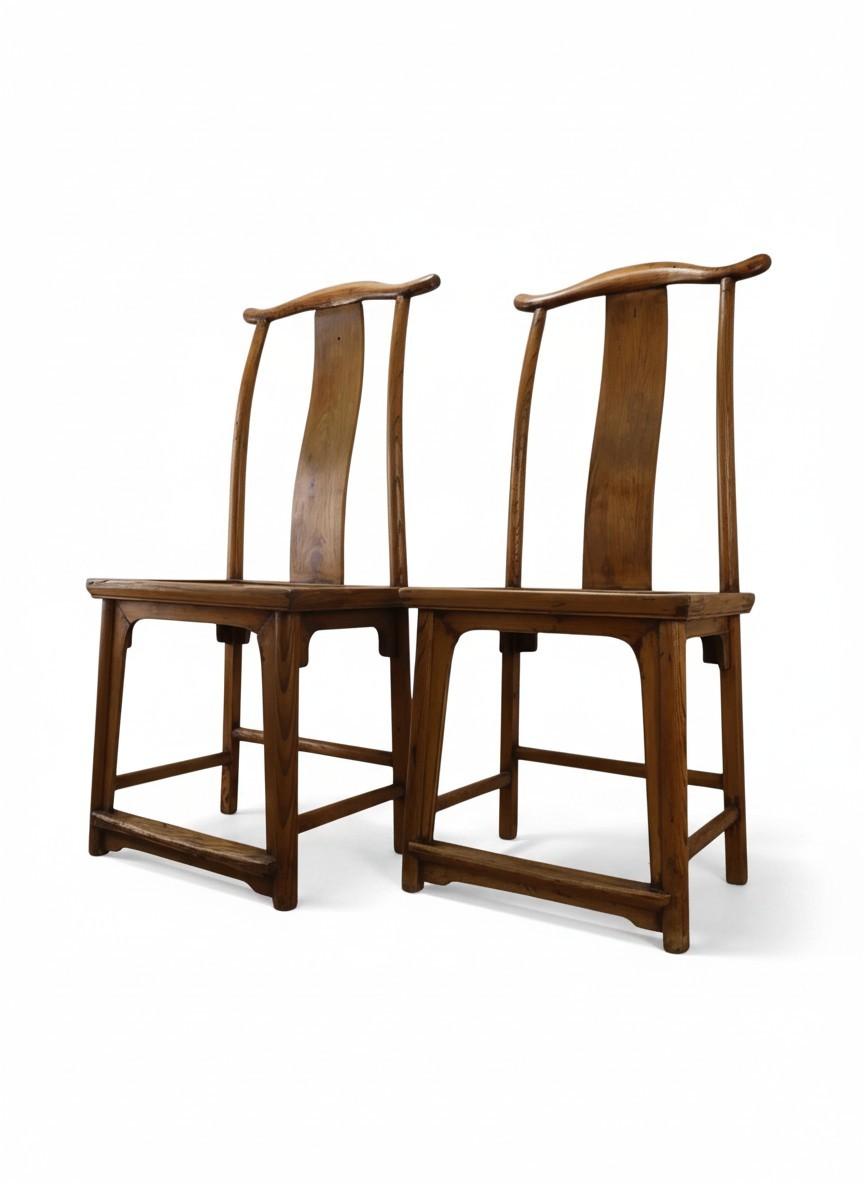
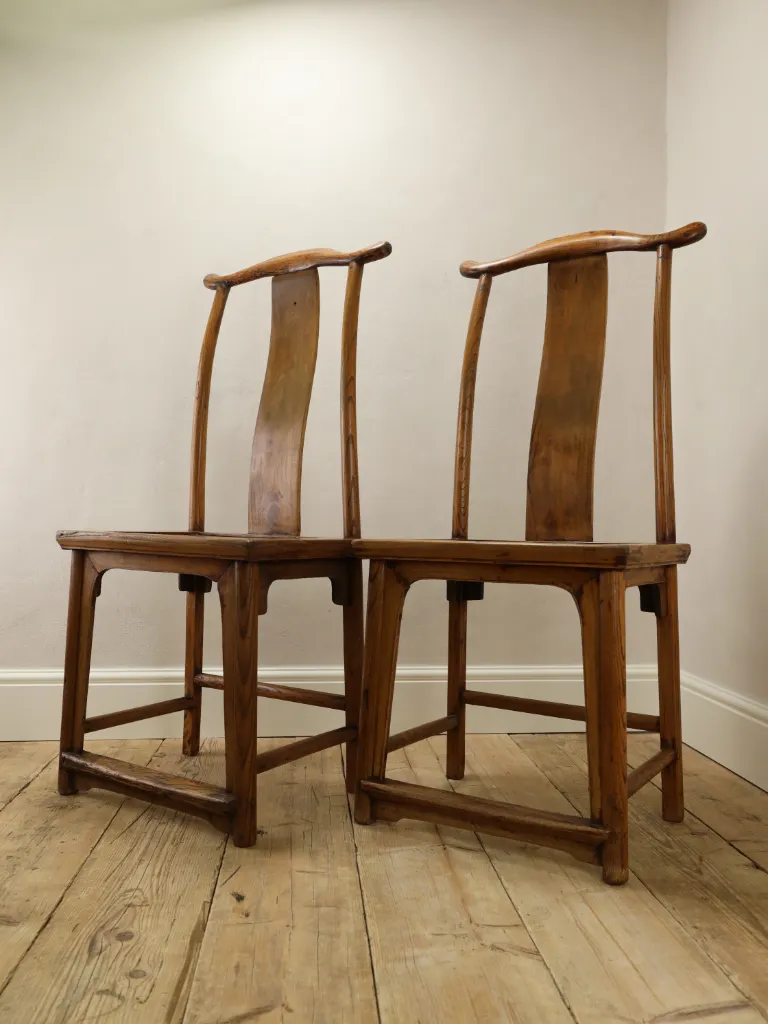
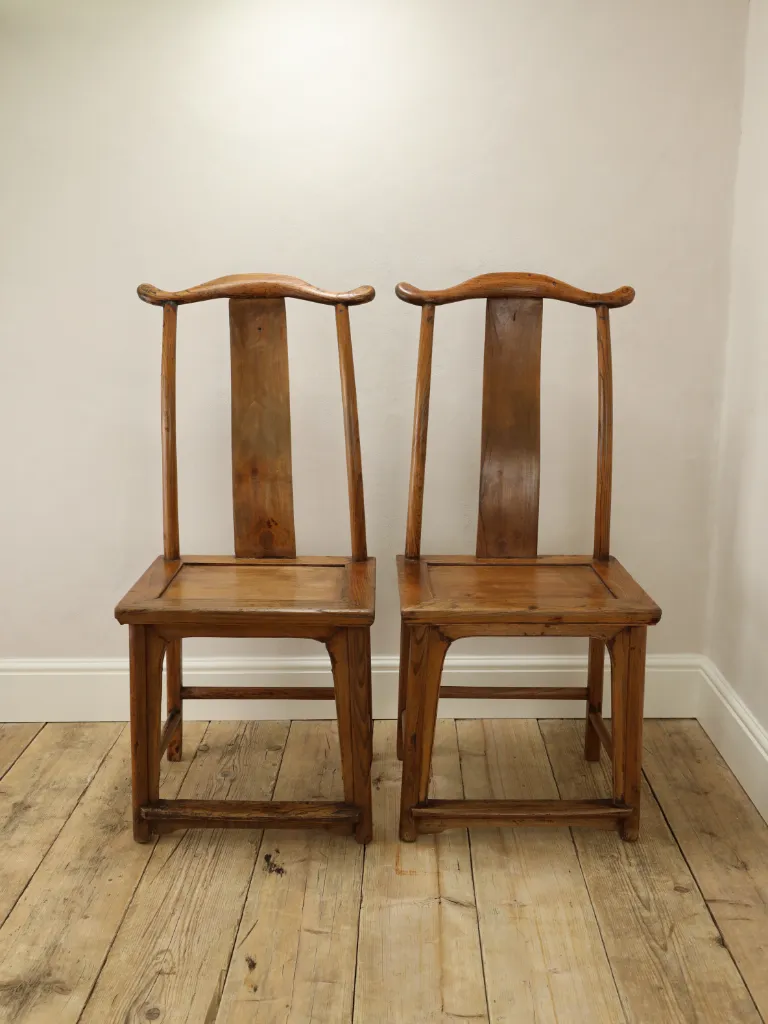
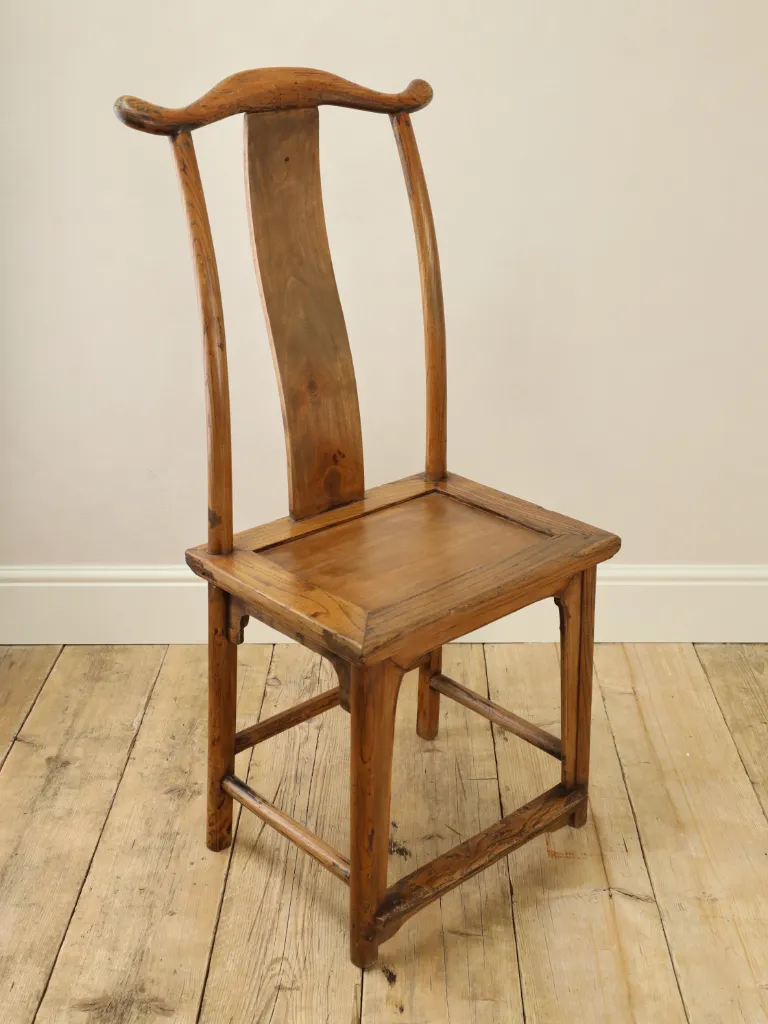
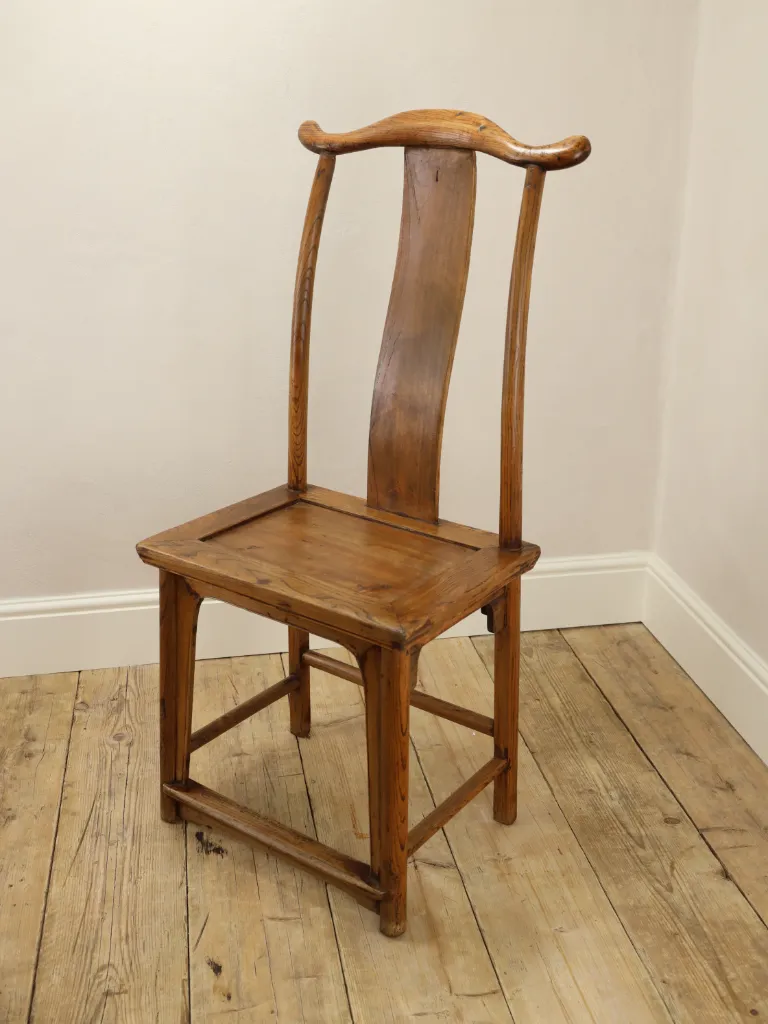
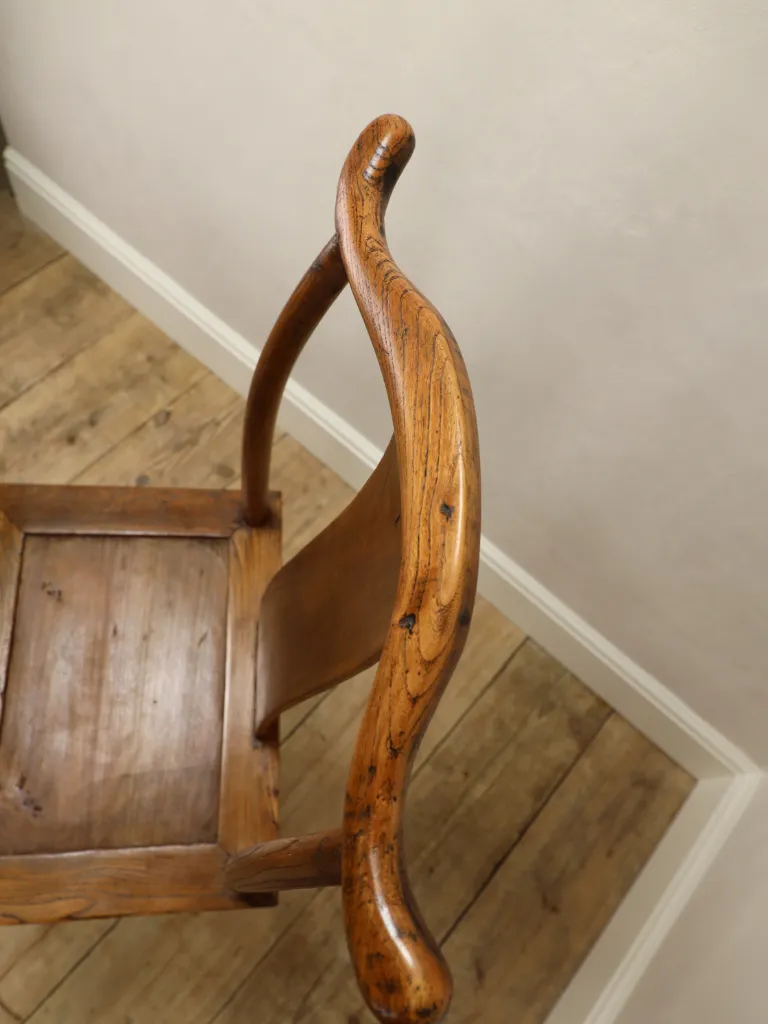
A wonderfully characterful pair of antique Chinese elm chairs, distinguished by their tall, elegant backs, beautifully shaped crest rails and warm, time-worn surfaces.
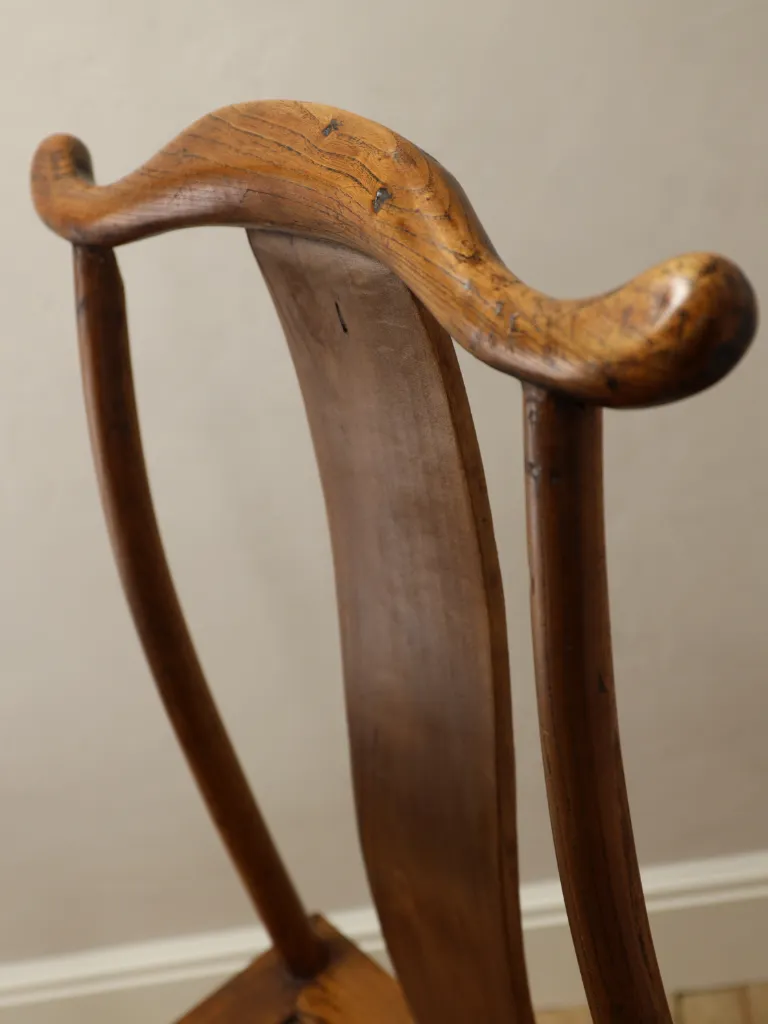
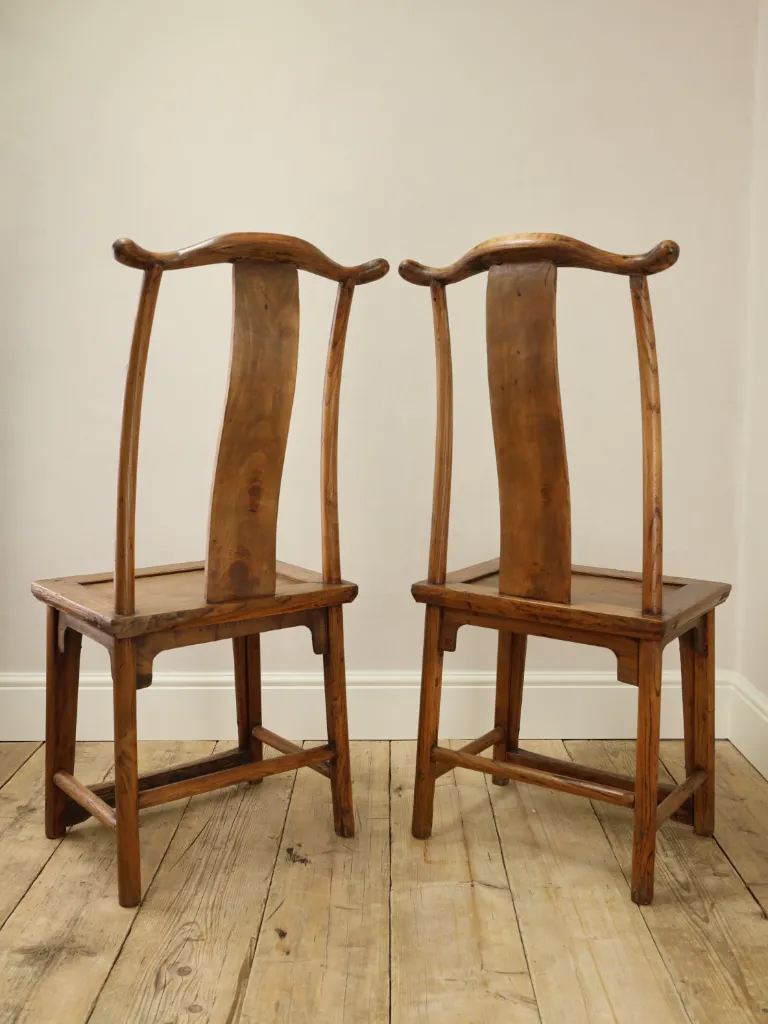
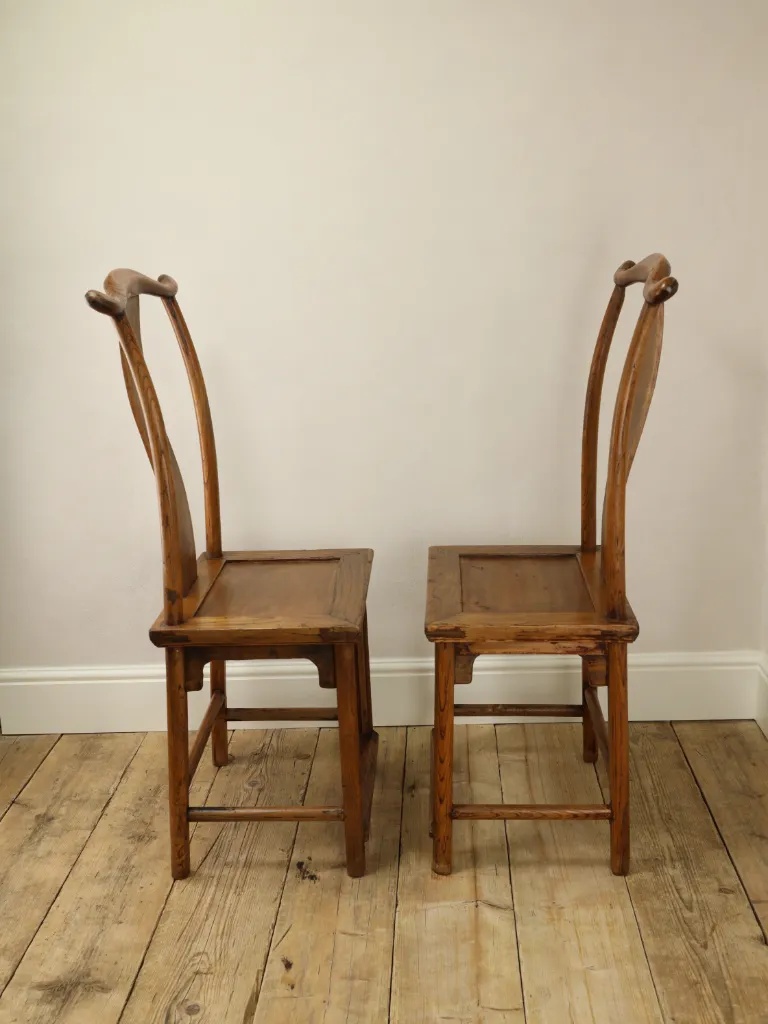
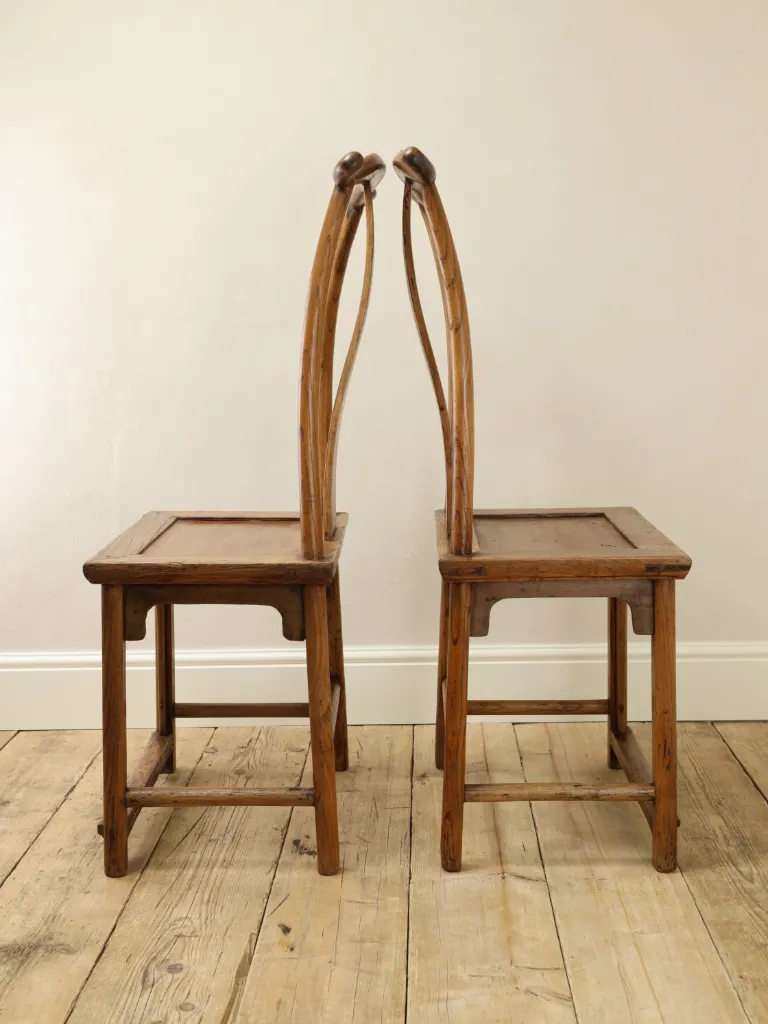
Each chair is constructed with a rectangular panelled seat above four gently splayed legs, united by traditional stretchers. The tall back is particularly attractive, formed with slender curved uprights supporting a broad central backsplat and an expressive shaped crest rail whose ends rise into subtle scrolling terminals.



A wonderfully characterful pair of antique Chinese elm chairs, distinguished by their tall, elegant backs, beautifully shaped crest rails and warm, time-worn surfaces.
Each chair is constructed with a rectangular panelled seat above four gently splayed legs, united by traditional stretchers. The tall back is particularly attractive, formed with slender curved uprights supporting a broad central backsplat and an expressive shaped crest rail whose ends rise into subtle scrolling terminals.
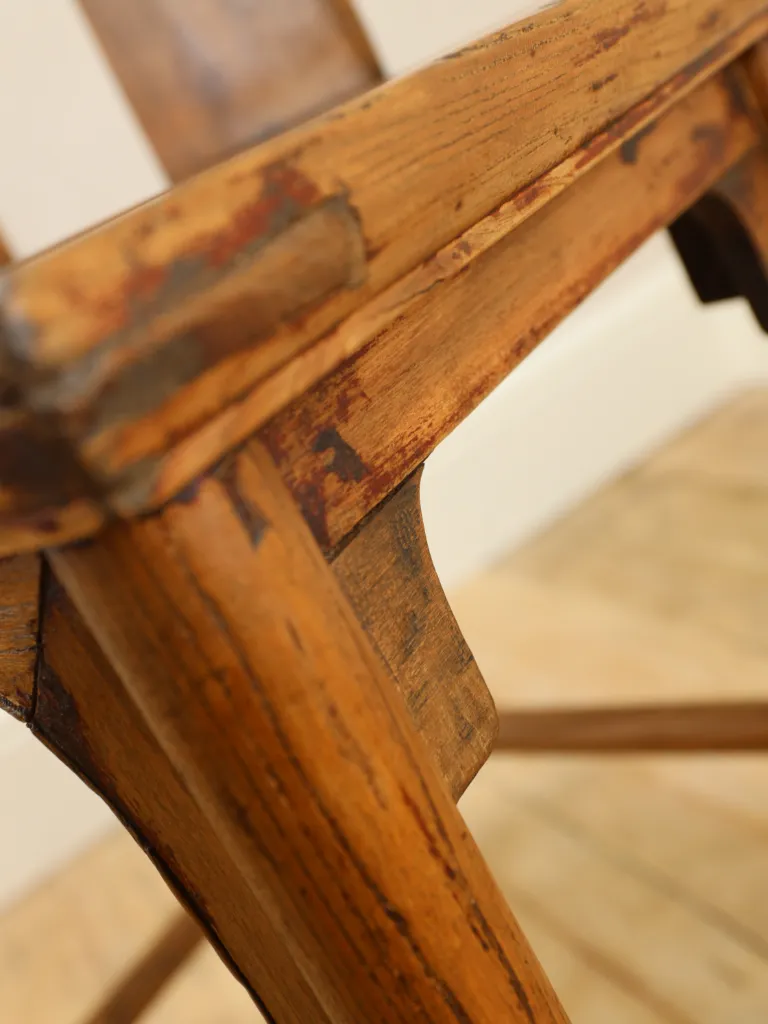
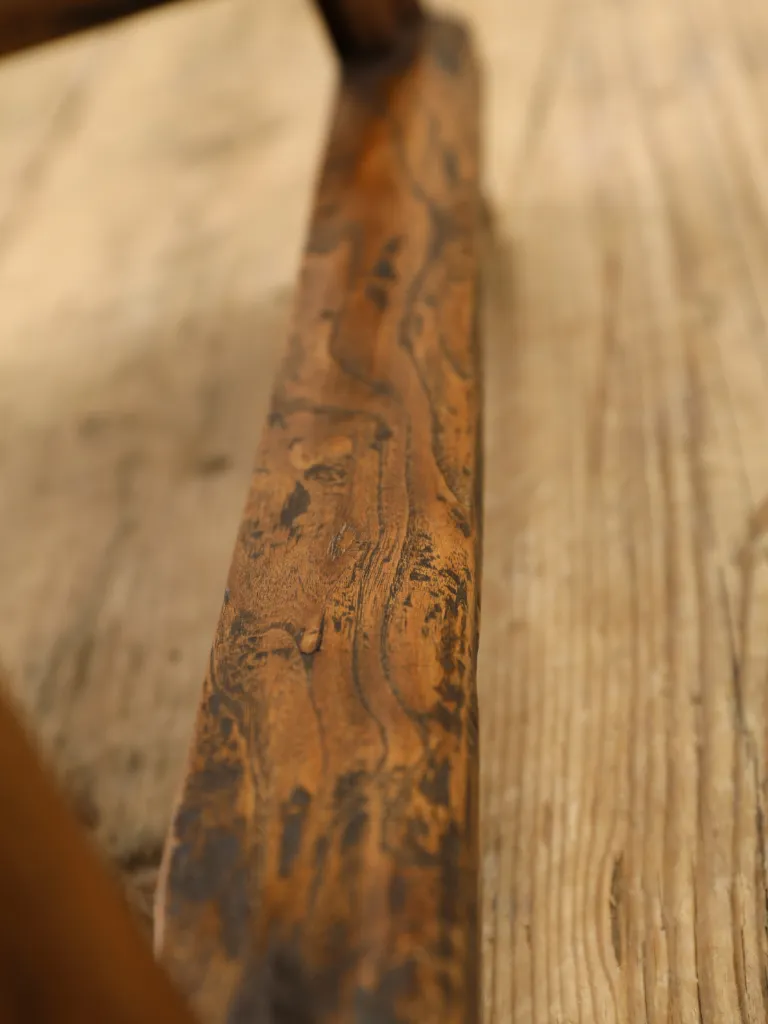
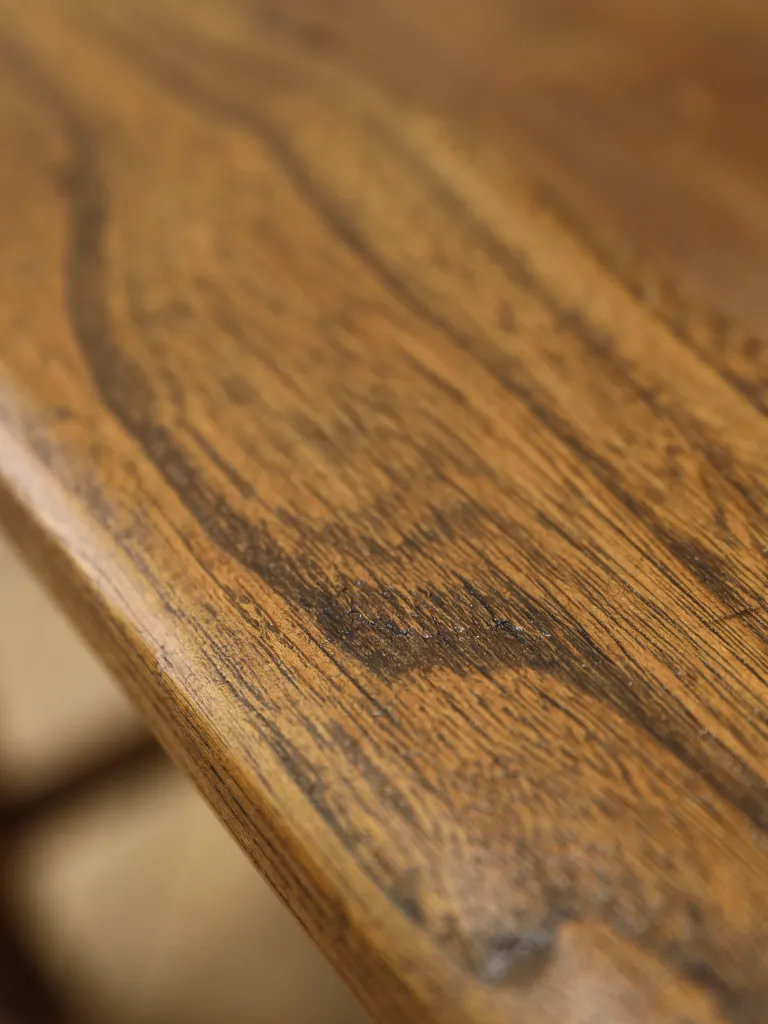
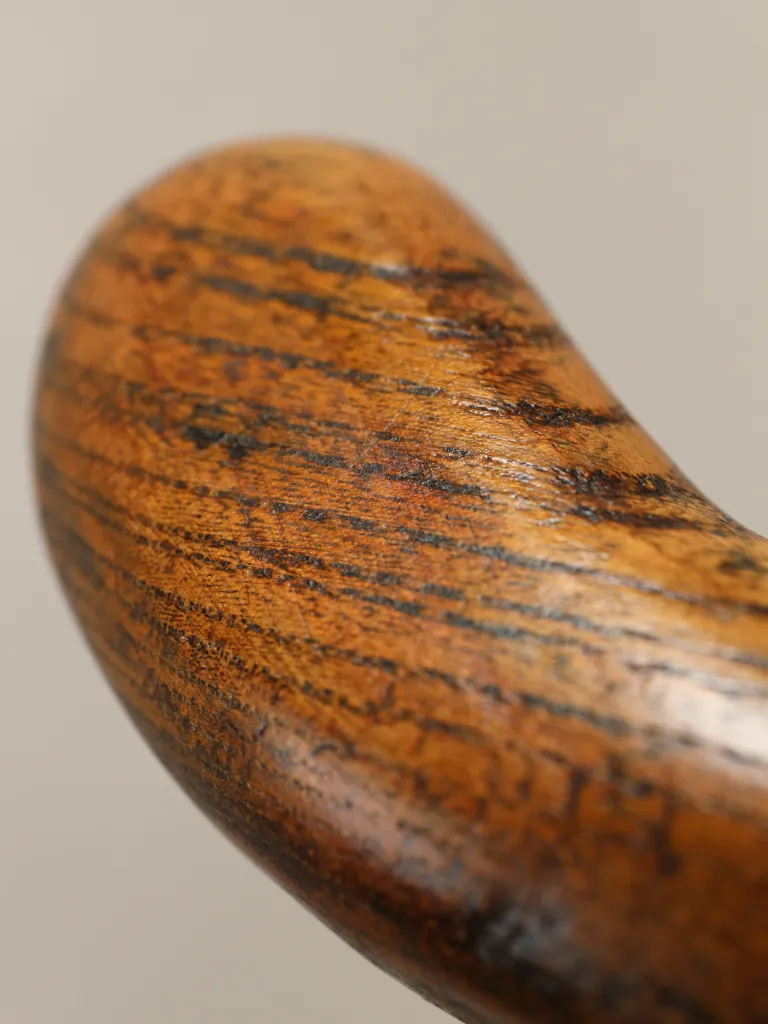
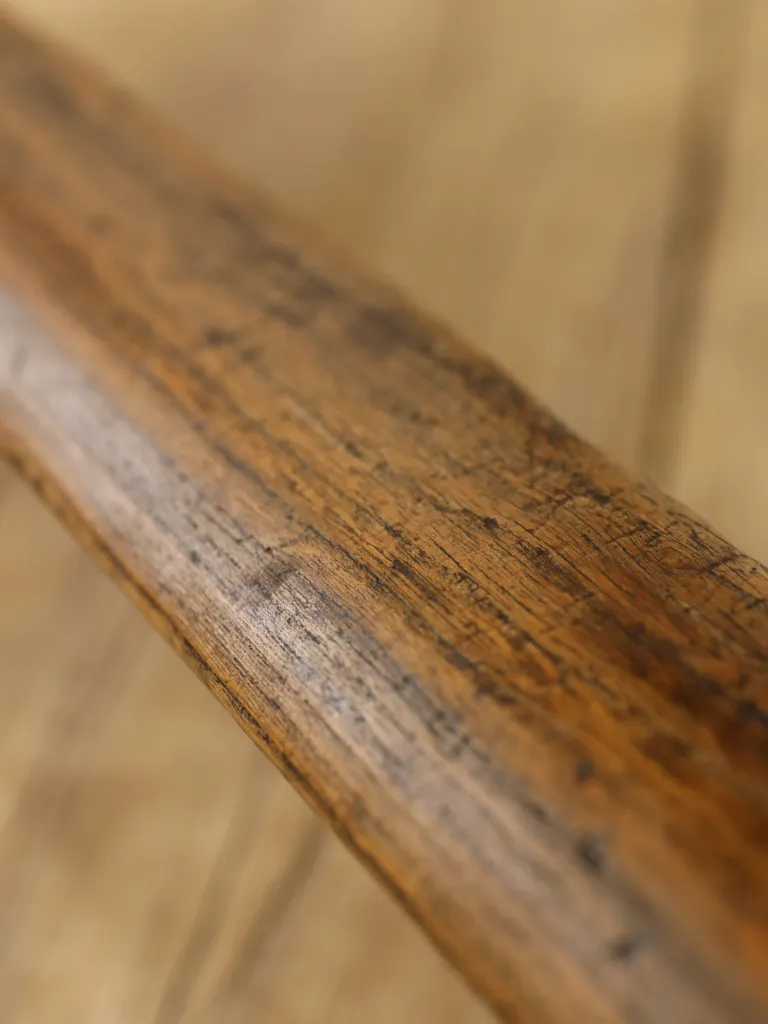
The restrained construction allows the natural character of the timber to become an important part of the design. Years of use have created a wonderfully varied surface, with areas of deeper colour, rubbing and old marks giving the elm a rich and authentic patina.
Viewed as a pair, the chairs have a strong architectural quality without appearing heavy. Their unusually tall backs create an elegant silhouette, while the relatively simple seats and legs retain the understated character associated with traditional Chinese vernacular furniture.
They would work particularly well positioned either side of a console table, within a hallway or entrance, at either end of a dining table, or simply as decorative occasional chairs within a country house or more contemporary interior.
The chairs have recently undergone sympathetic renovation and polishing, preserving the aged character and patina of the elm rather than attempting to make them appear newly restored.
Chinese furniture has a long tradition of achieving considerable elegance through relatively restrained construction, relying upon proportion, joinery and the natural beauty of timber rather than excessive ornament.
High-backed chairs of this general form developed from earlier Chinese chair-making traditions and remained in use into the late Qing dynasty and early 20th century. The shaped crest rail, central backsplat, slender uprights and stretchered lower frame seen here are all characteristic elements of traditional Chinese seating.
Elm was extensively used for domestic furniture in northern China. Its strength, attractive grain and ability to develop a particularly warm surface through generations of handling made it well suited to chairs, tables and cabinets intended for everyday use.
Today, antique Chinese vernacular furniture is particularly appealing in Western interiors because of its combination of sculptural form and restrained decoration. These chairs retain that quality particularly well, with their tall sweeping backs creating a strong silhouette while the aged elm provides warmth and texture.
These chairs have undergone sympathetic renovation and polishing to ensure they are structurally sound and ready for continued use while retaining the character acquired through age.
The work was undertaken with support from furniture restorer Alex Webster of Colwyn Bay, Wales, with whom Shackleton Fox works on larger furniture restoration projects requiring specialist attention.
The intention throughout has been conservation rather than over-restoration. Historic marks, colour variation, surface wear and the established patina have therefore been retained wherever possible.
What makes this pair particularly appealing is the combination of their height and simplicity.
The crest rails have an almost sculptural quality, with their sweeping profiles and gently upturned ends giving the chairs considerable presence when viewed from across a room. The long central backsplats exaggerate their vertical proportions beautifully.
We also particularly like the surface of the elm. Rather than being heavily refinished, the timber still displays the marks, variations in colour and areas of wear accumulated through years of use.
Although decorative enough to stand alone, they remain very usable pieces of furniture. We can see them working particularly well as a pair in a hallway or either side of a console, or used as characterful dining or occasional chairs within an otherwise understated interior.
In good antique condition, with wear and surface variation consistent with age, construction and previous use.
The chairs have undergone sympathetic renovation and polishing, including attention to their structural integrity, while deliberately retaining their historic character.
The elm displays numerous old marks, knocks, scratches, colour variation, areas of rubbing and surface wear. These are particularly evident around the crest rails, seats, legs and stretchers and form an important part of the chairs' established patina.
There are minor differences between the two chairs associated with handmade construction, age and historic use.
Please refer closely to the photographs, which form an important part of the condition report.
Acquired within the United Kingdom.
China
Late Qing Dynasty / Early 20th Century, circa 1890–1920
Elm
Chinese / Qing Dynasty / Vernacular
Height: 114 cm / 44.9 inches
Width: 53 cm / 20.9 inches
Depth: 39 cm / 15.4 inches
Seat Height: 51 cm / 20.1 inches
Weight: 7.7 kg / 17.0 lbs
Every item offered by Shackleton Fox is carefully inspected, prepared, and where necessary conserved within our workshop prior to sale.
As heritage craftsmen and antique specialists, we believe in preserving the authenticity and integrity of each piece. Original finishes, patina, wear, and signs of age are retained wherever possible, as these elements contribute to both character and historical significance.
When restoration, rewiring, repairs, or conservation work is required, it is undertaken sympathetically using traditional techniques and materials appropriate to the period of the piece. Our philosophy is one of careful stewardship rather than unnecessary restoration, ensuring antiques remain both functional and historically respectful.
The result is a collection of pieces that have been thoughtfully prepared, allowing future owners to enjoy them with confidence while preserving their unique story and character.