£3,250.00
A wonderfully characterful and historically fascinating pair of early 20th-century English racing pigeon portraits, painted in oil on board by C. H. Wadsworth and dated 1911.



A wonderfully characterful and historically fascinating pair of early 20th-century English racing pigeon portraits, painted in oil on board by C. H. Wadsworth and dated 1911.
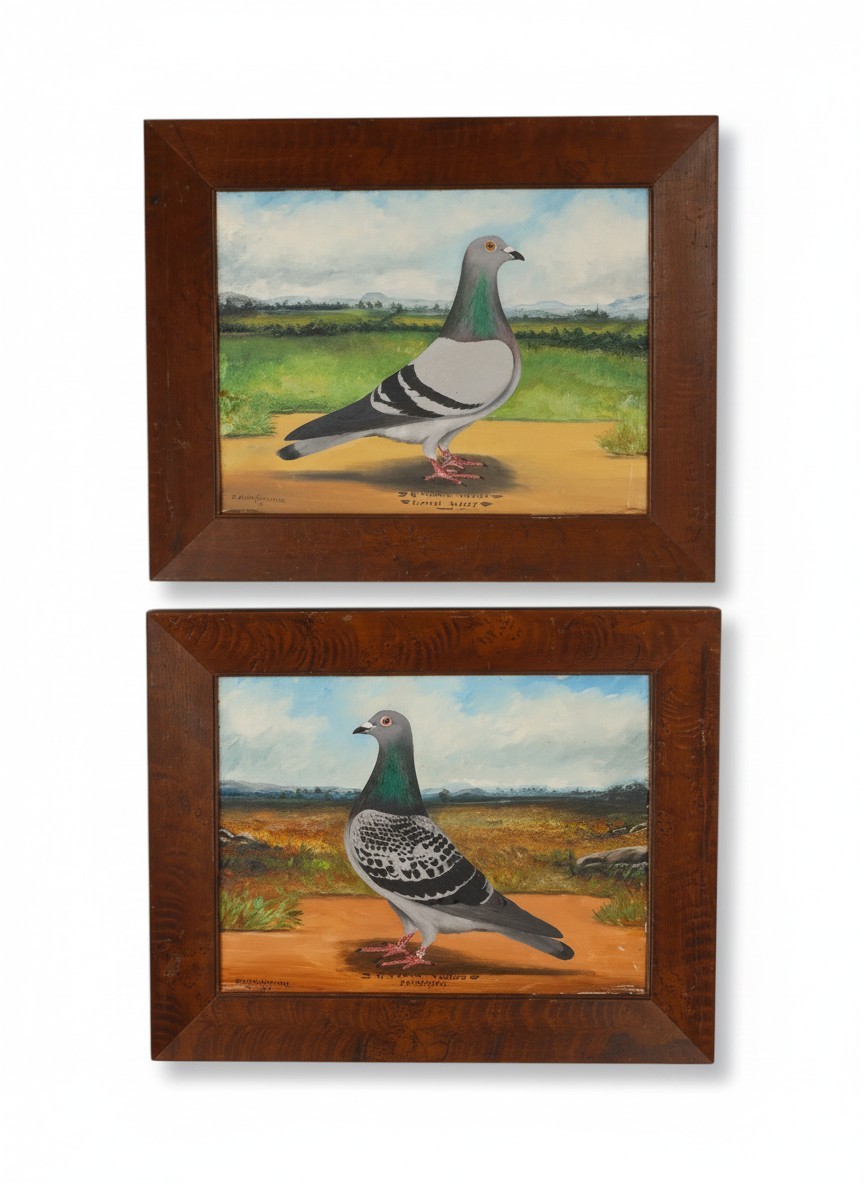
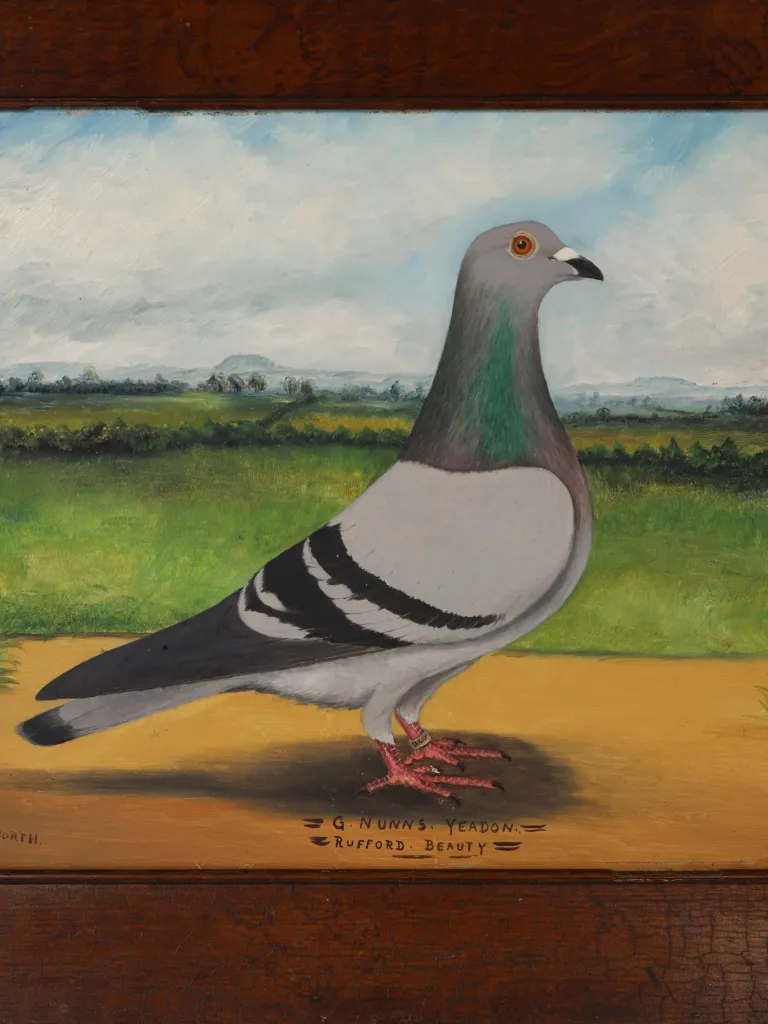
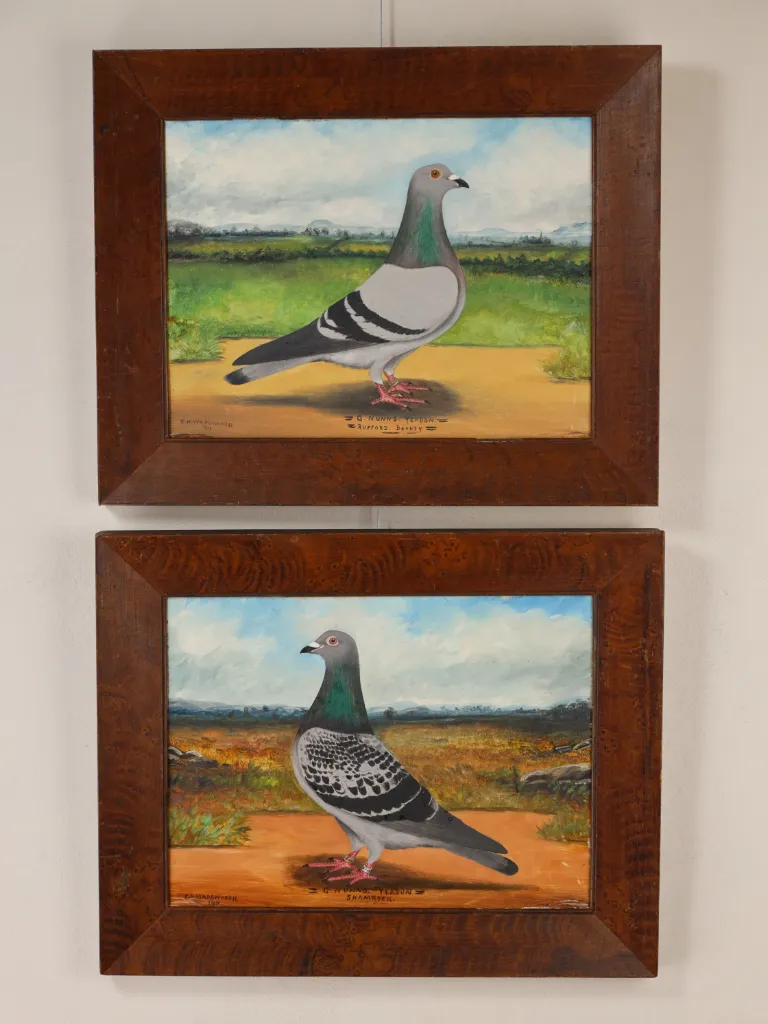
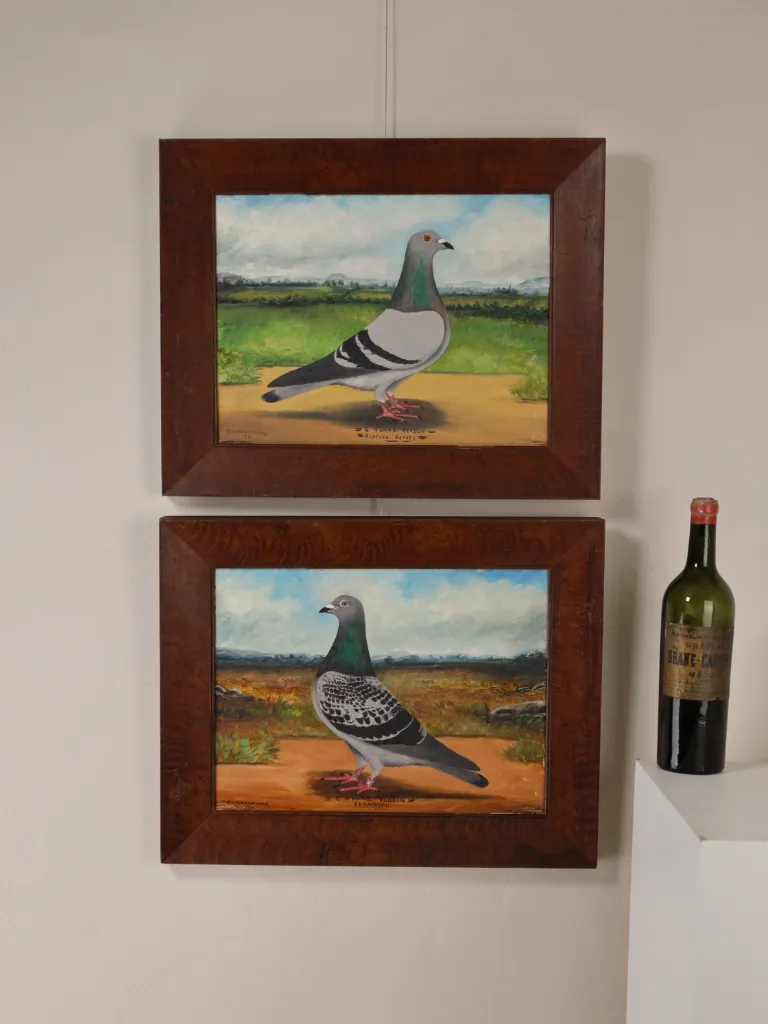
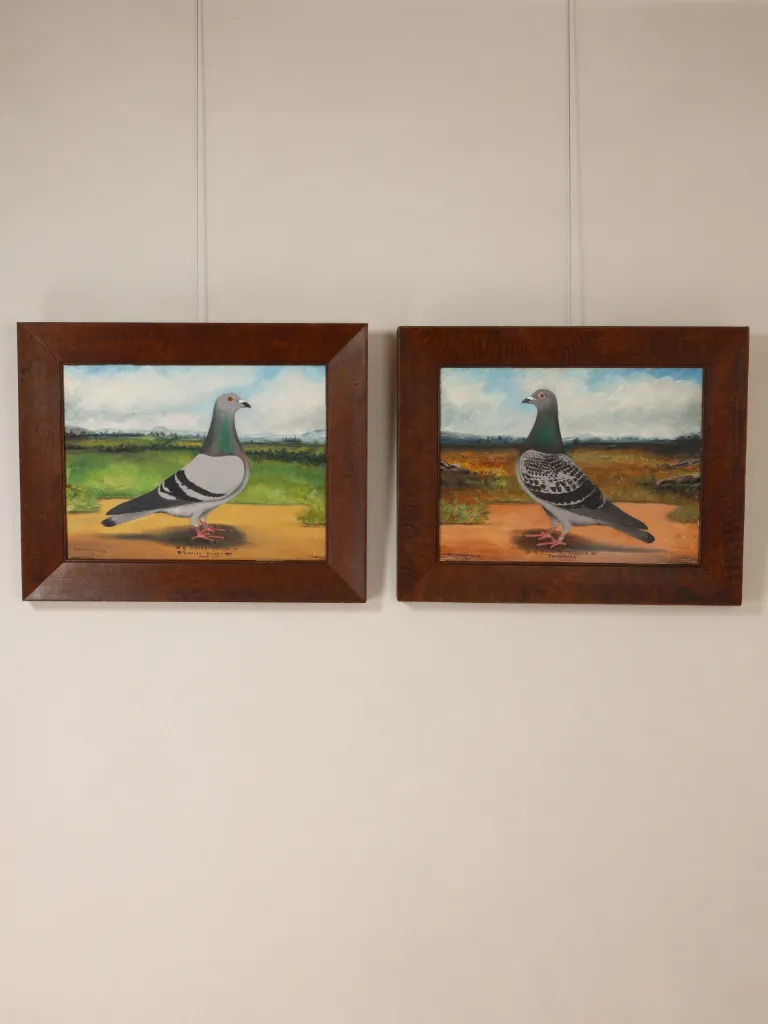
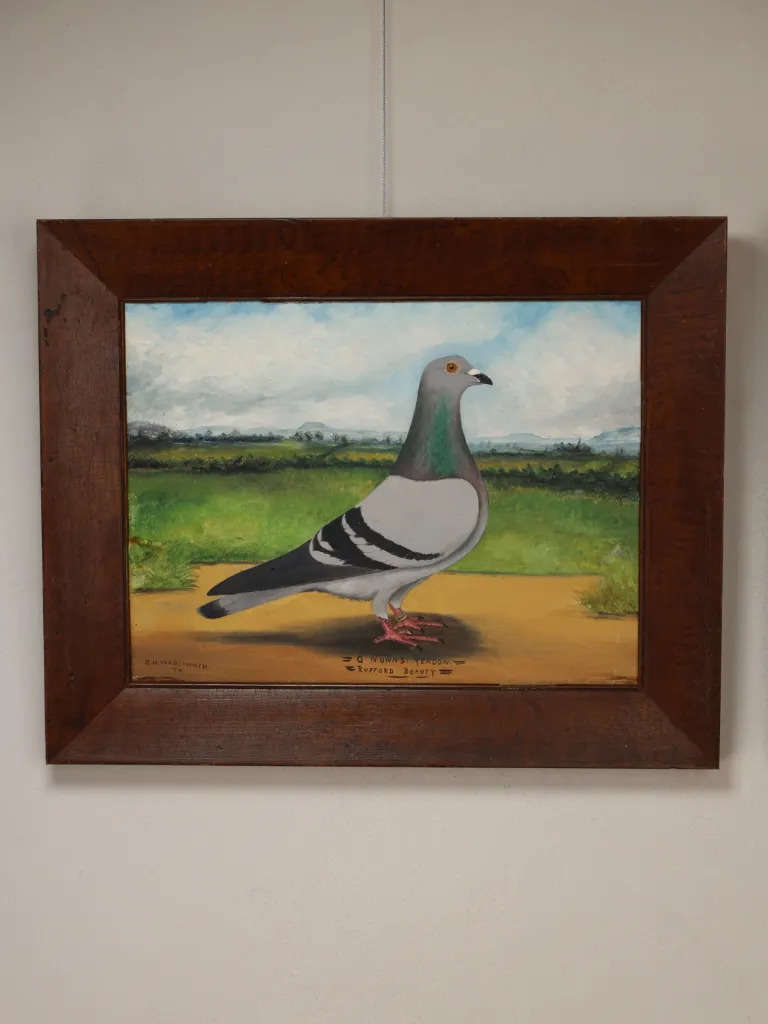
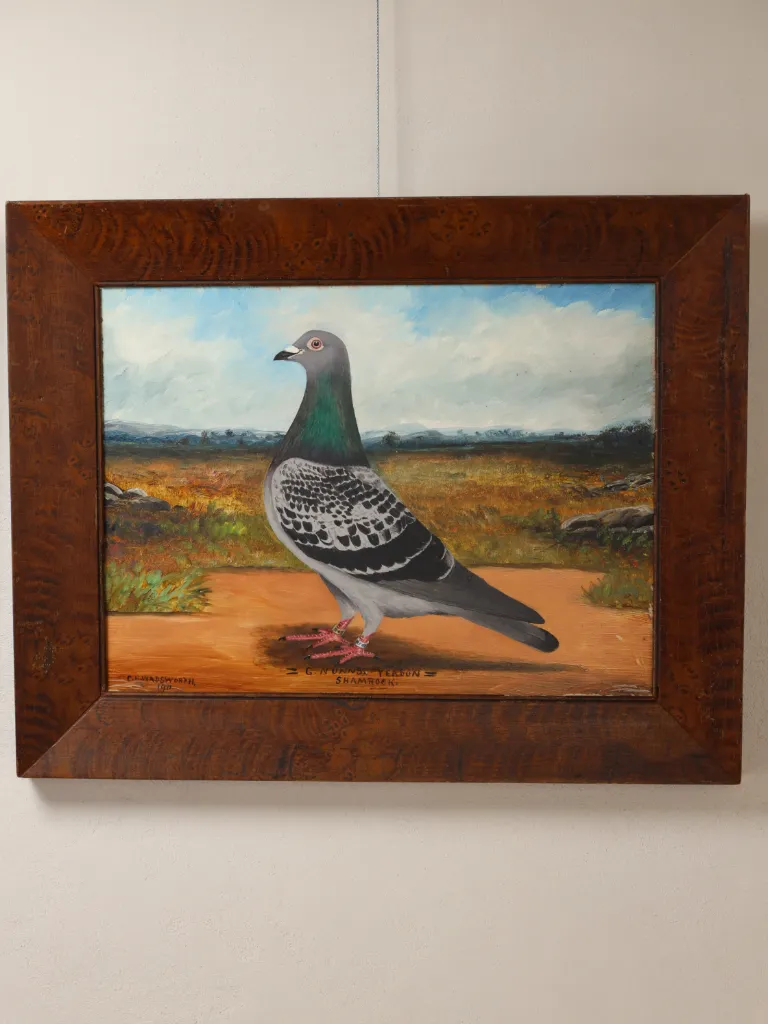
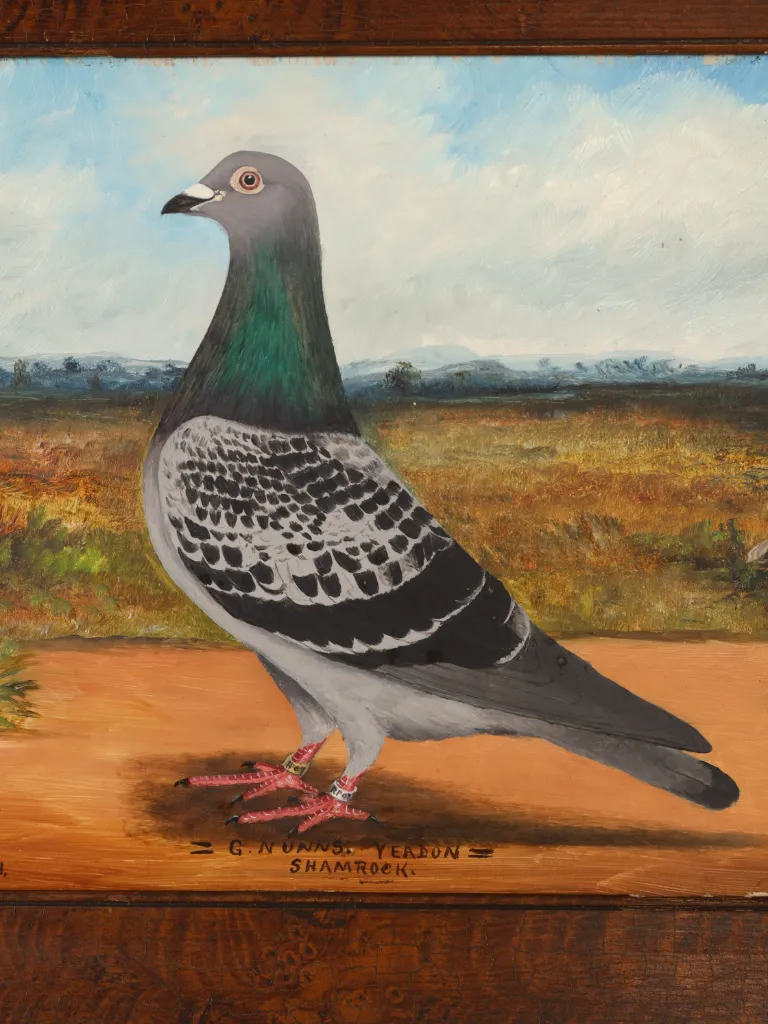
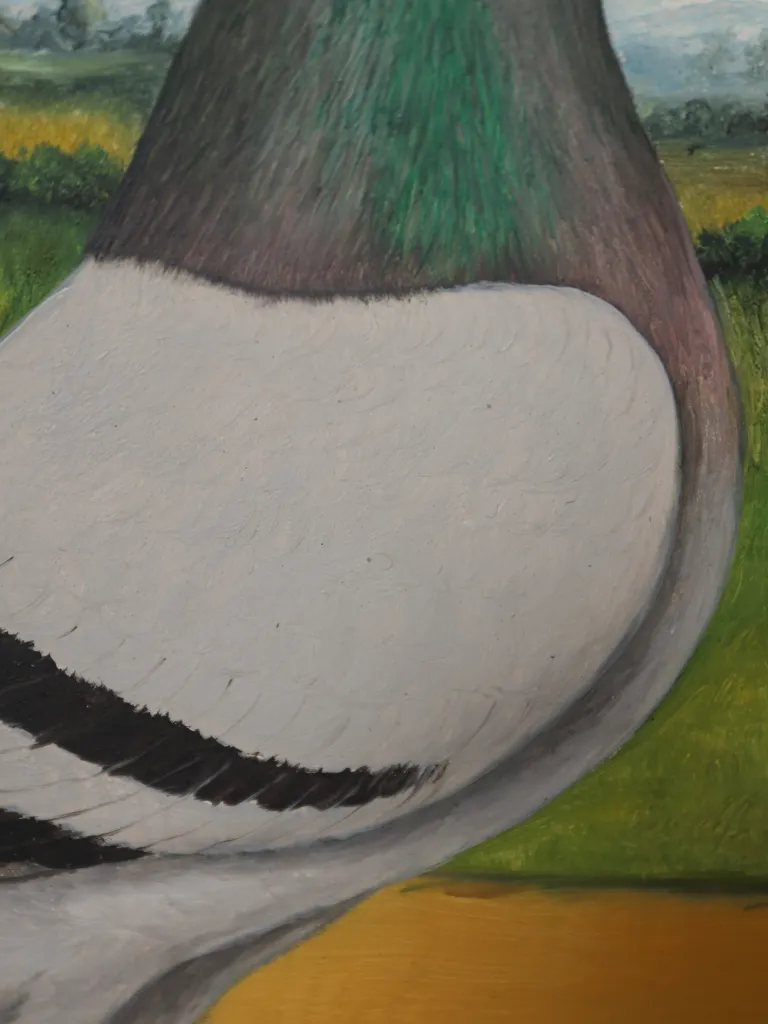
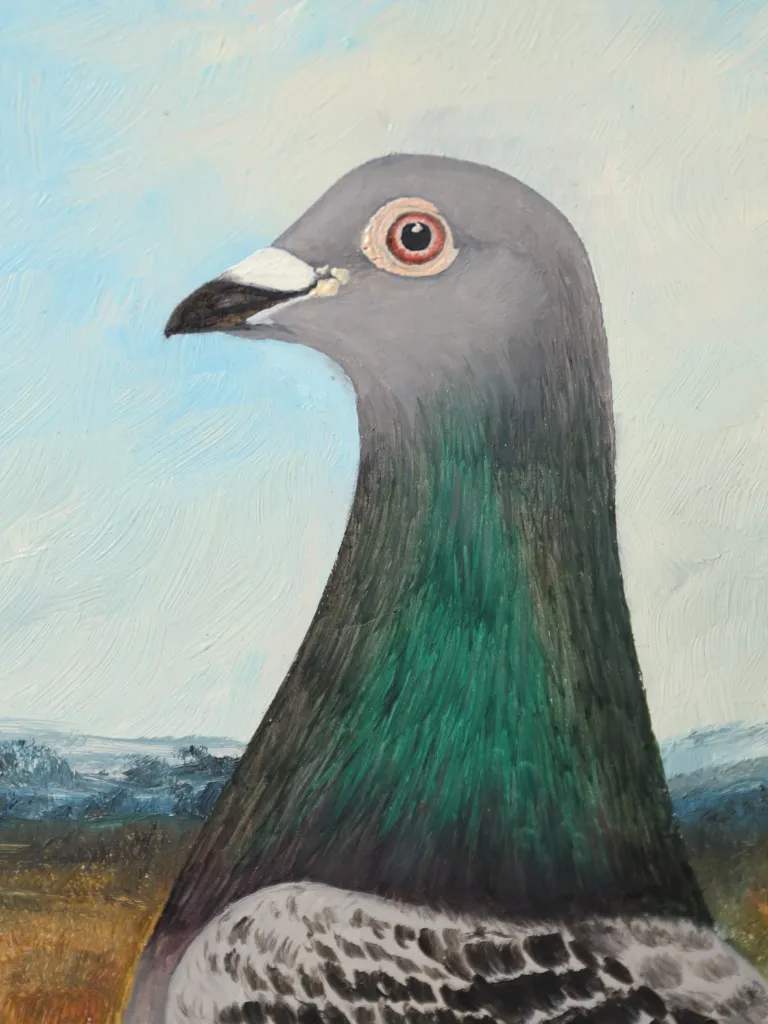
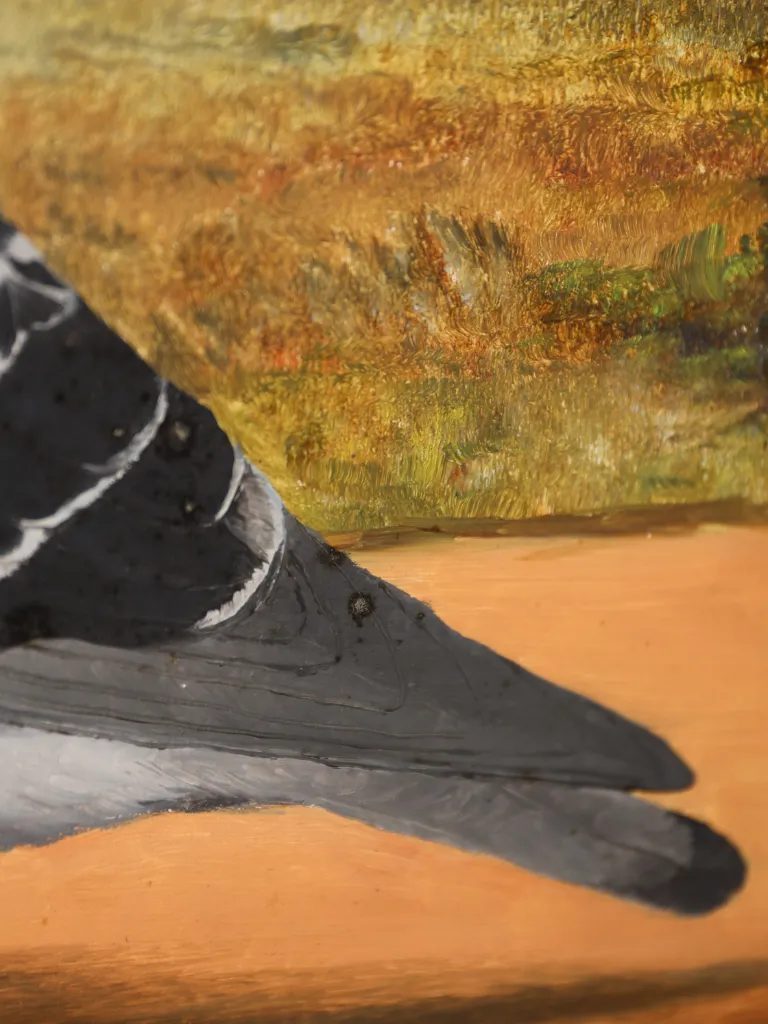
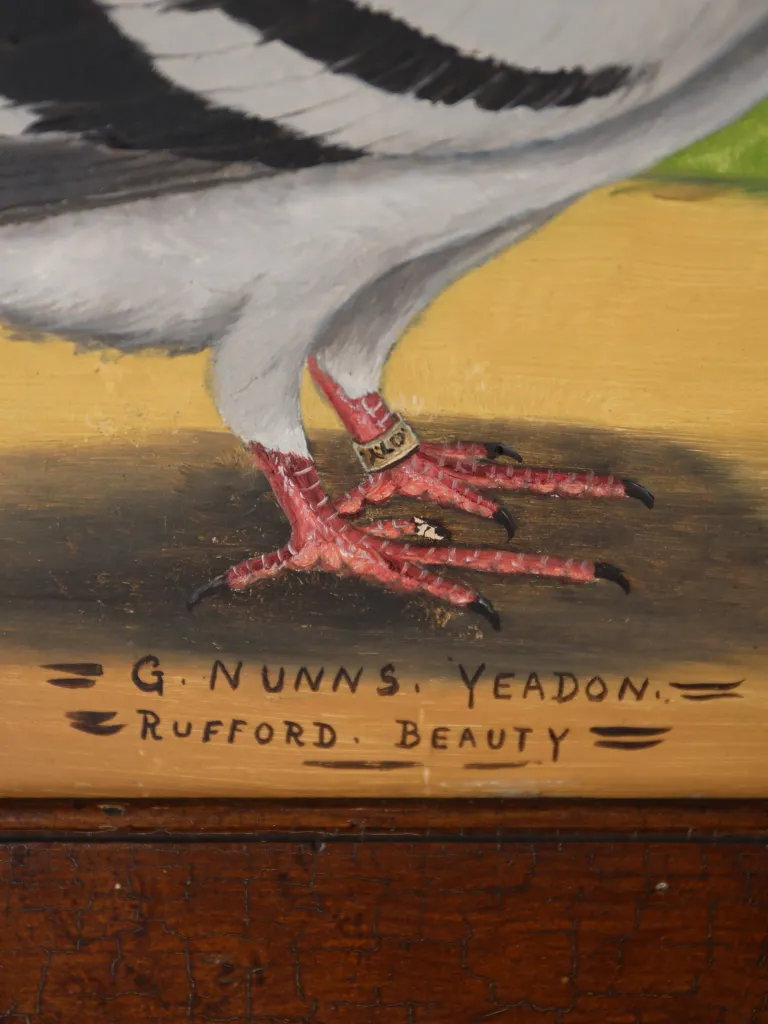
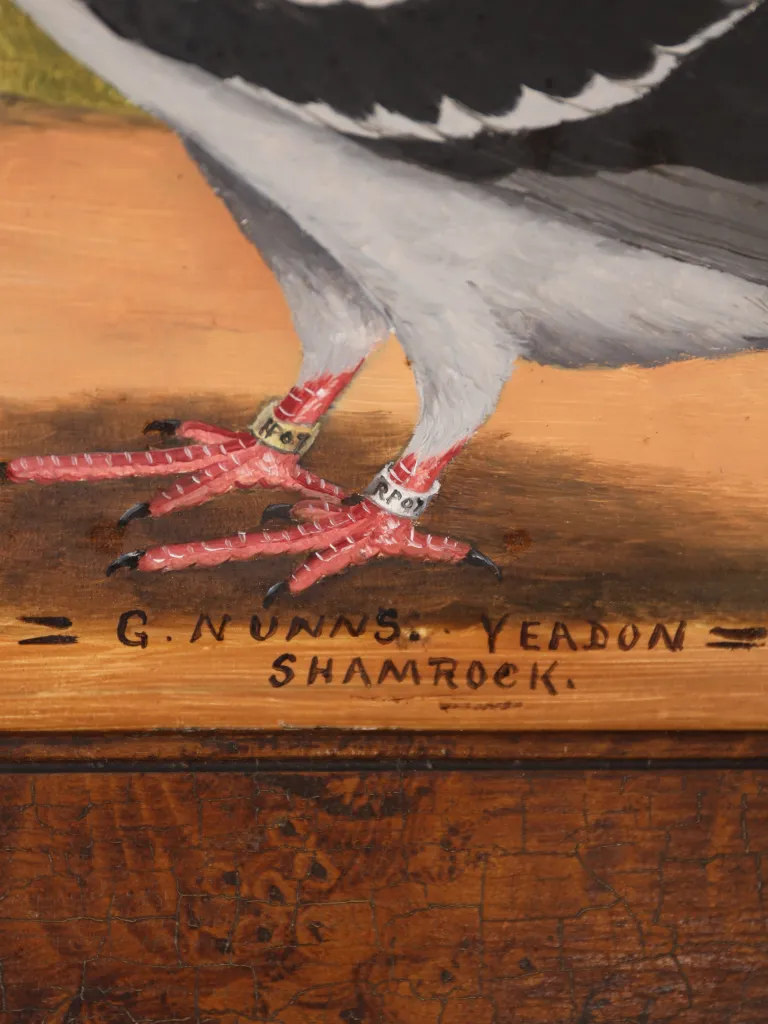
The companion paintings depict two individually named racing pigeons, ‘Shamrock’ and ‘Rufford Beauty’, each shown in profile against an expansive rural landscape. Rather than anonymous decorative bird studies, these are portraits of identifiable birds, their names and association with G. Nunns of Yeadon, Yorkshire carefully inscribed beneath them.
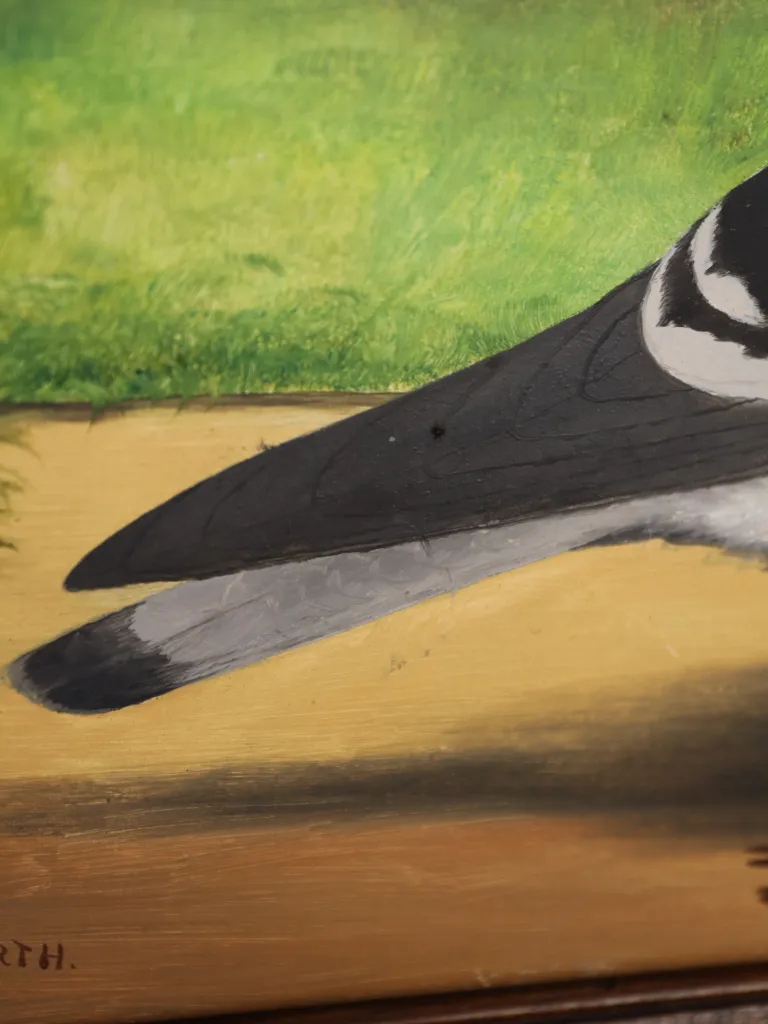
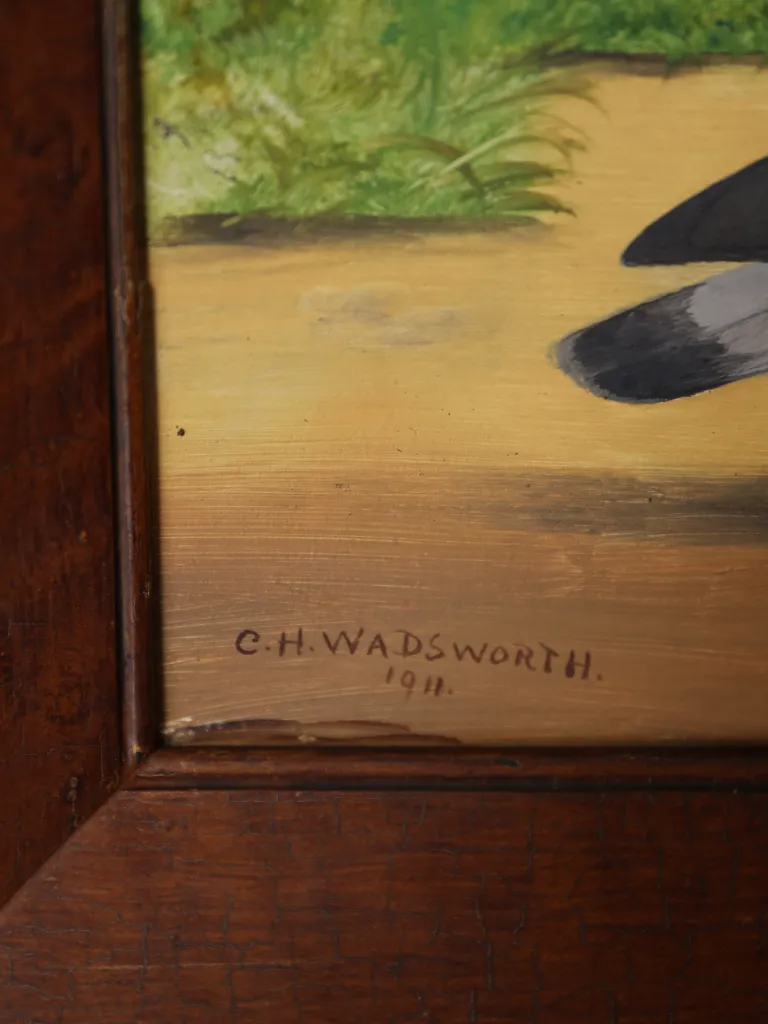
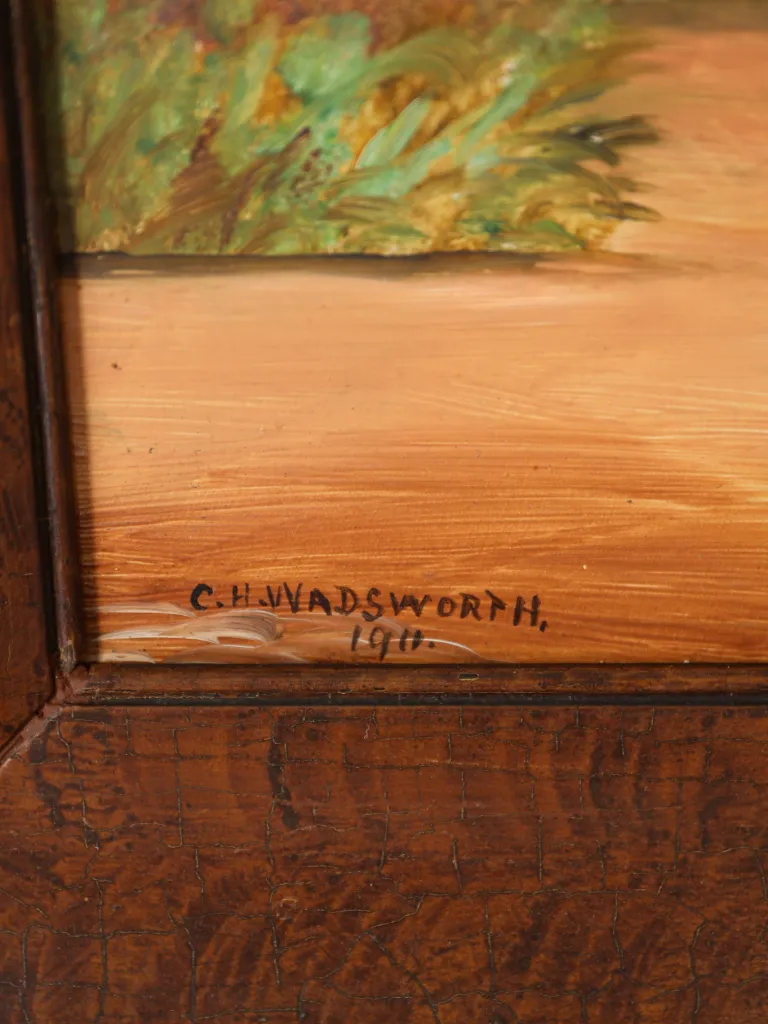
Both paintings are signed C. H. Wadsworth and dated 1911.
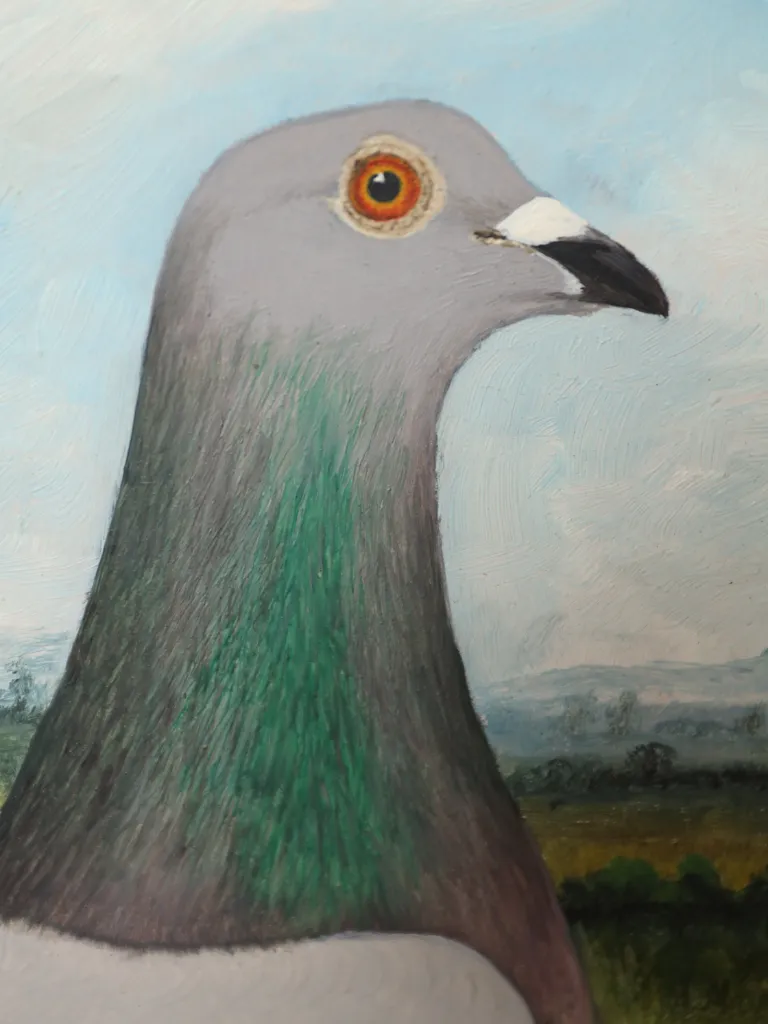
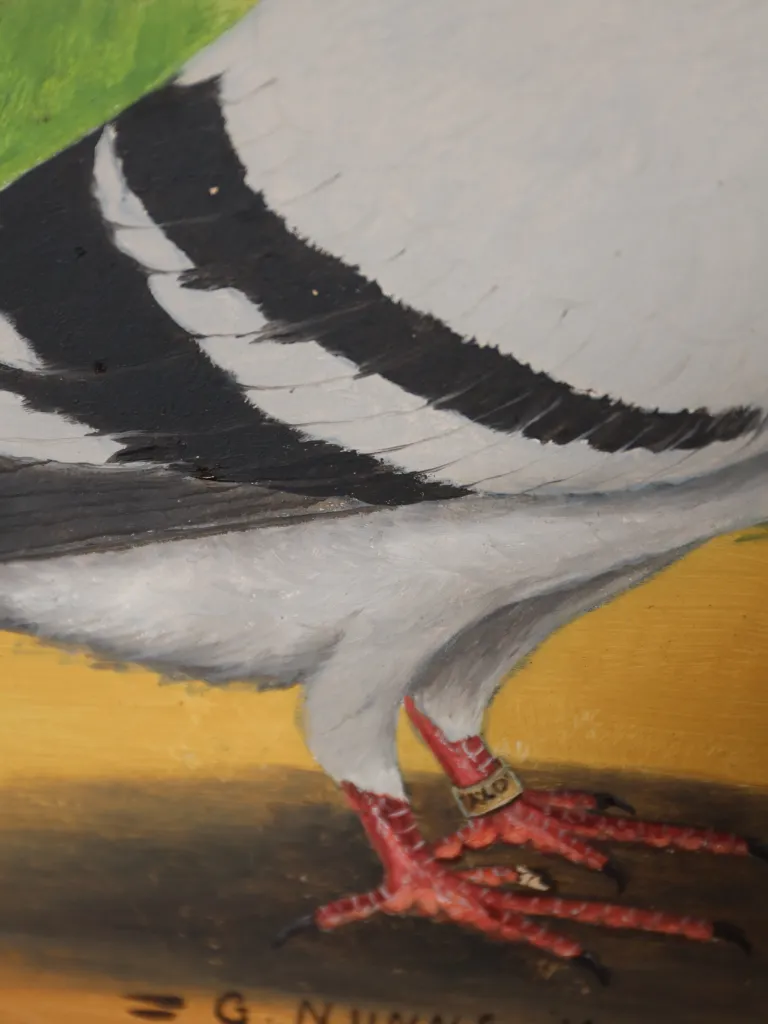
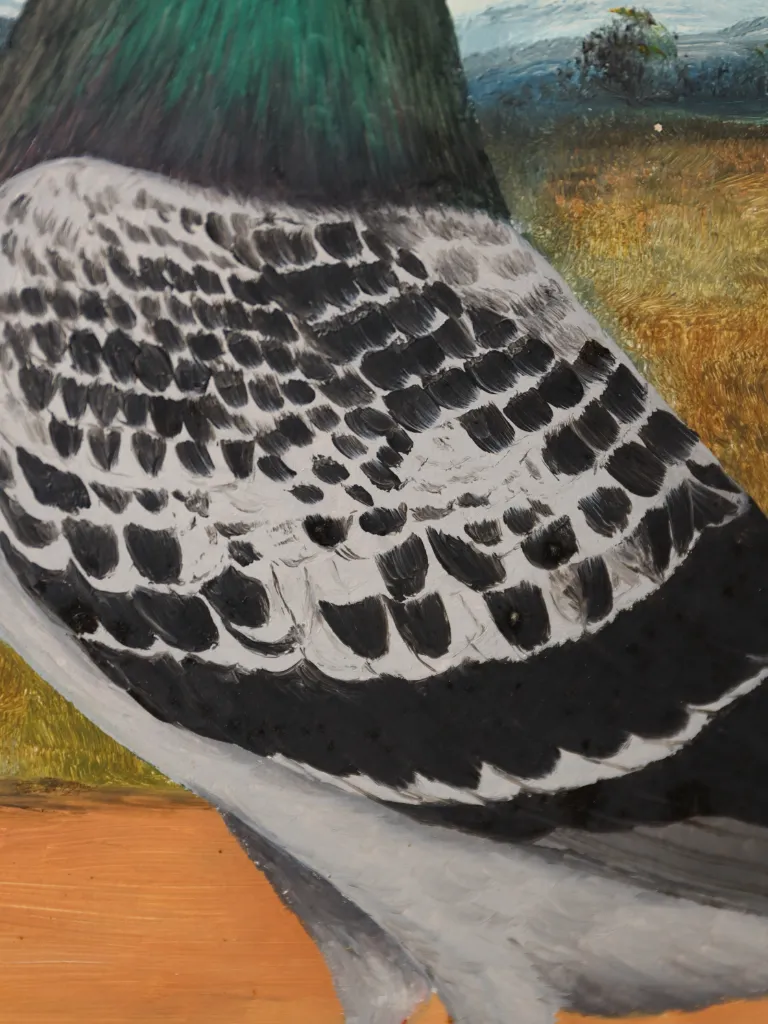
Particularly charming is the artist's attention to the individual characteristics of each pigeon. Shamrock is depicted with a cleaner pale-grey body and strongly defined black wing bars, while Rufford Beauty has considerably more intricate chequered plumage. Their iridescent green neck feathers, vivid red feet and alert eyes are carefully observed, while their racing identification rings are deliberately included on their legs.
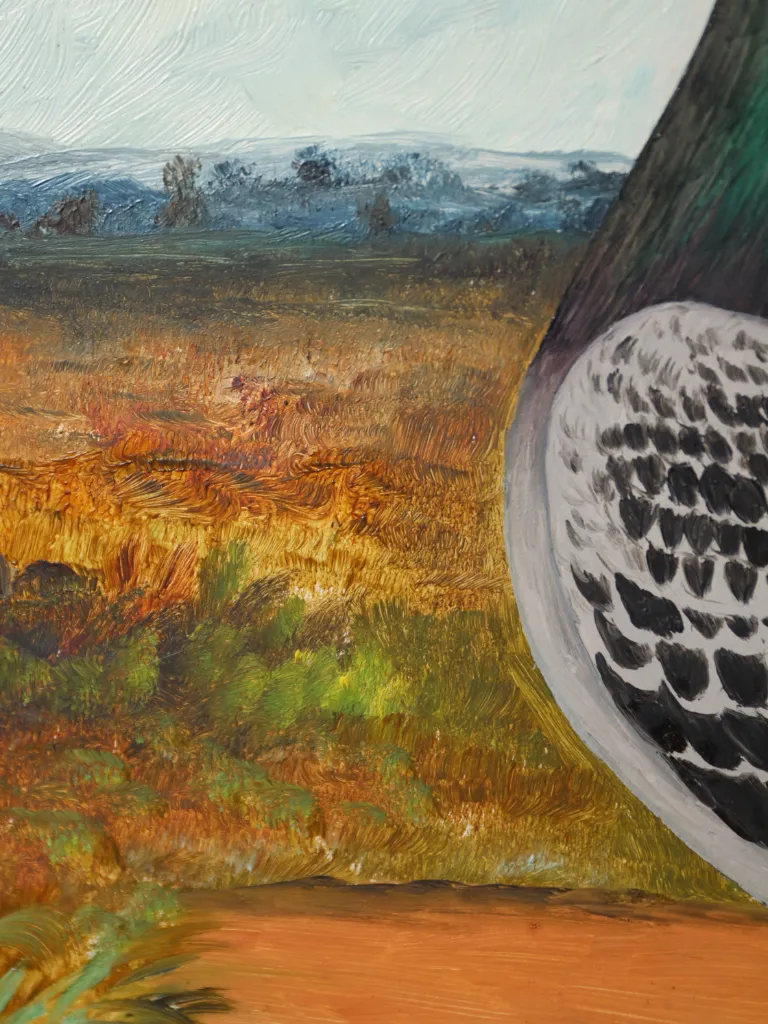
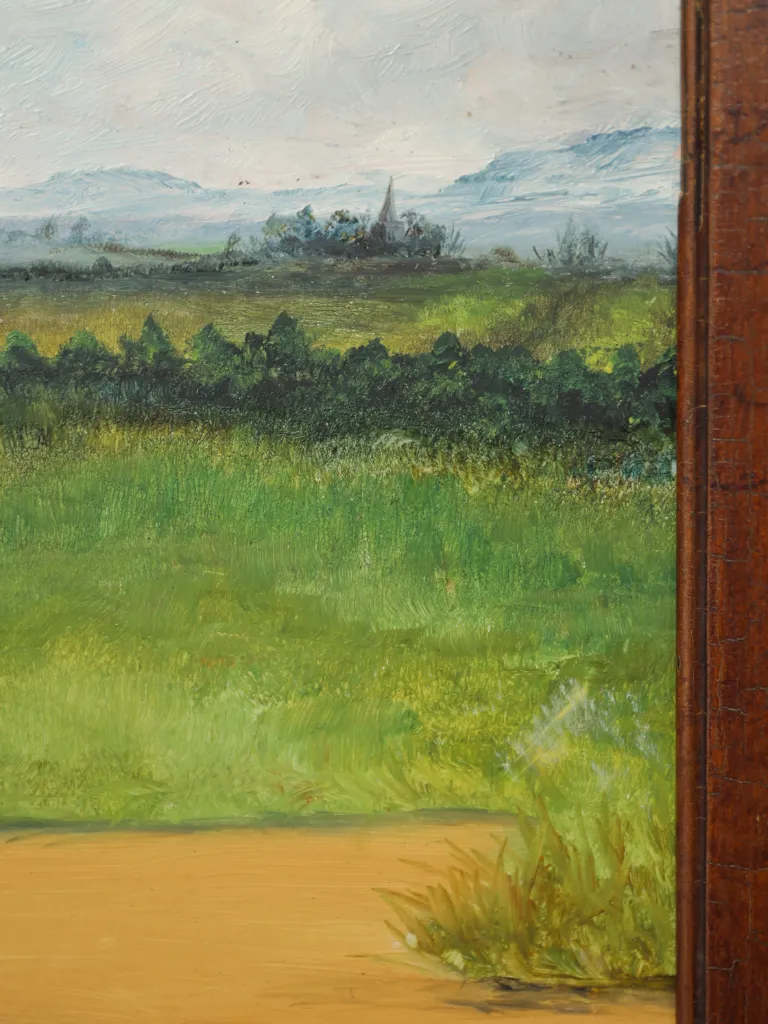
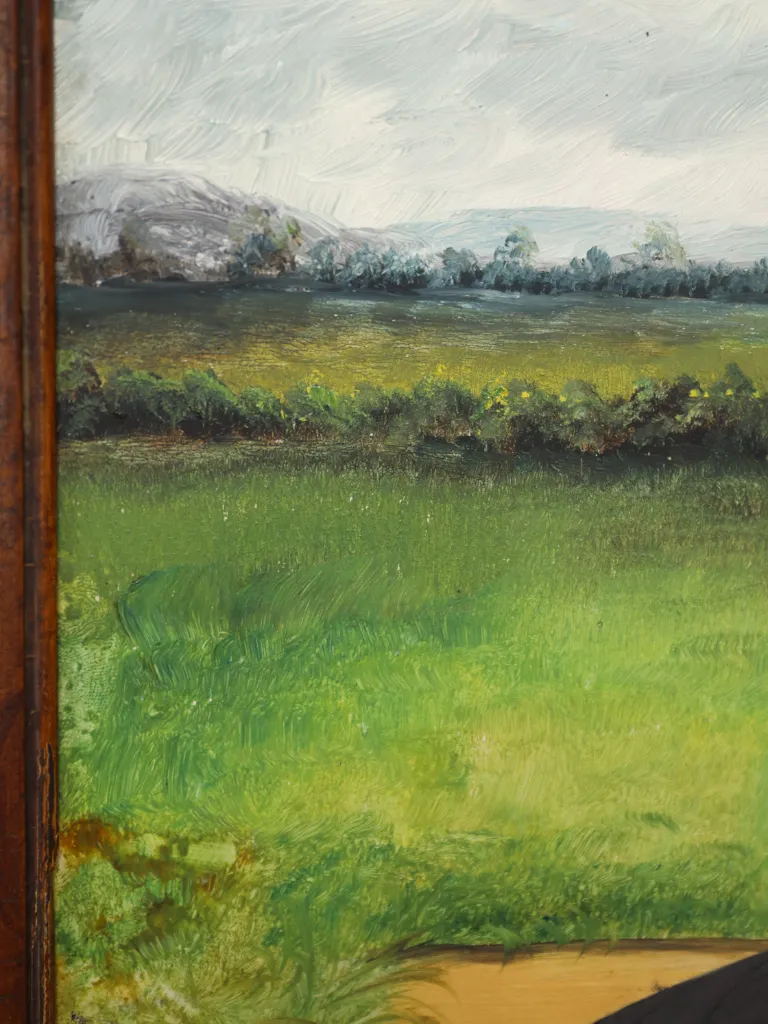
The birds stand against contrasting Yorkshire landscapes, giving the paintings considerably more presence than conventional pigeon portraits. Wadsworth has treated them with the formality normally associated with portraits of prized horses, cattle and sporting dogs, reflecting the considerable importance attached to competitive pigeon racing in industrial and working communities of northern England during this period.
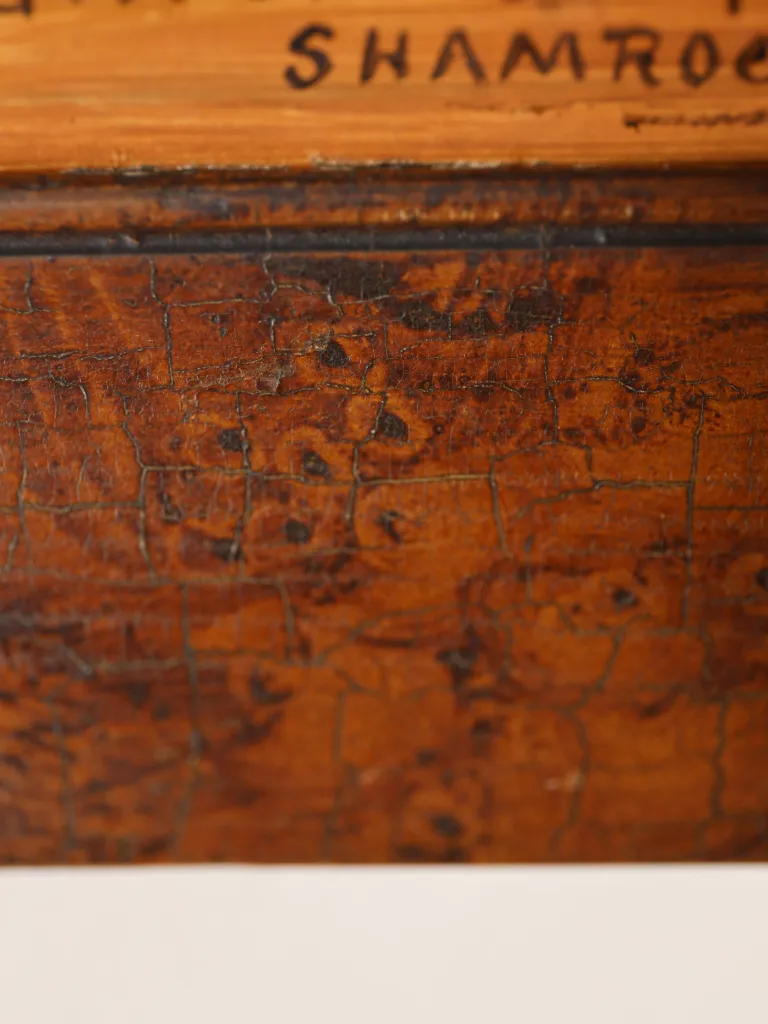
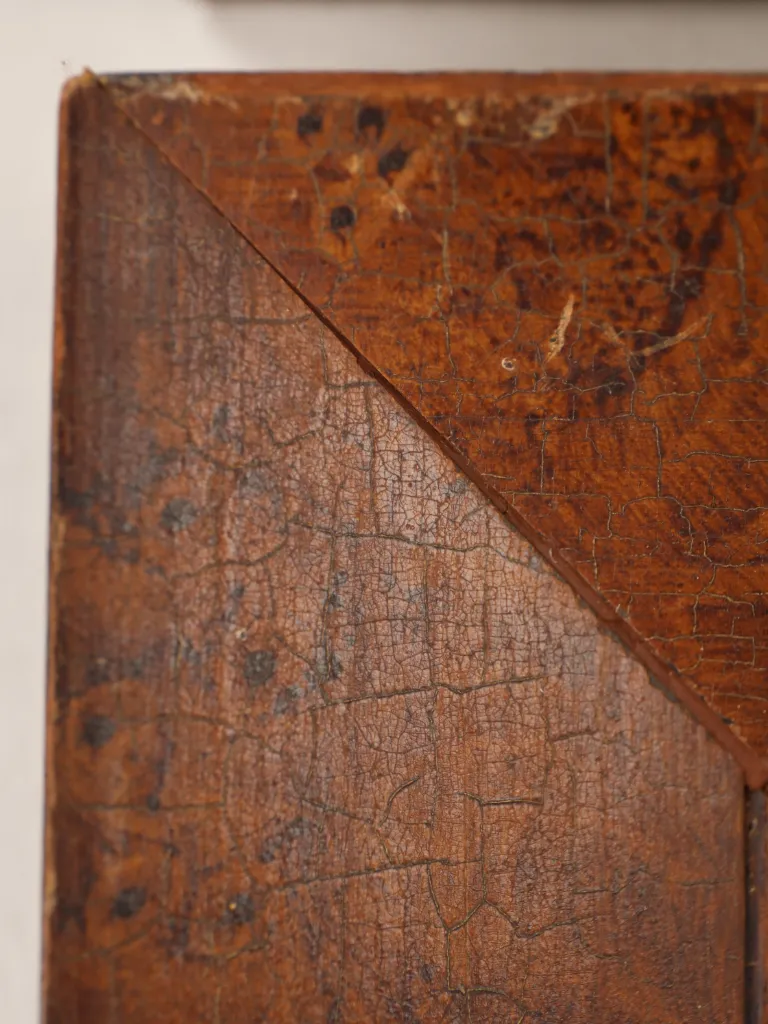
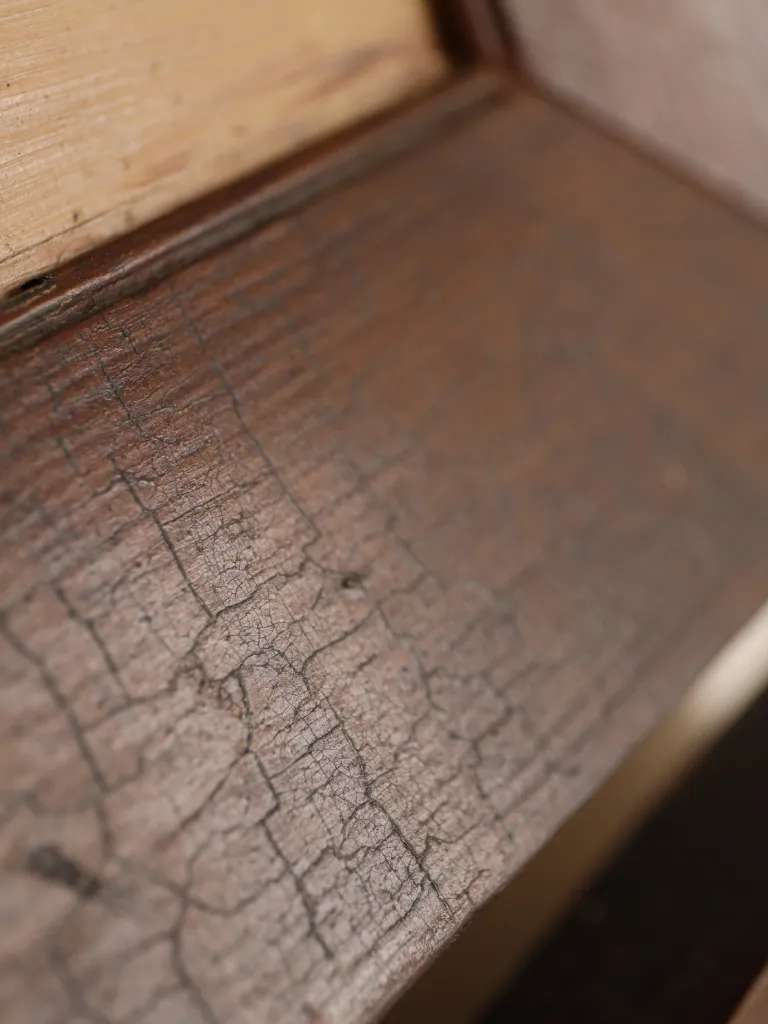
They remain together as a pair and are housed in substantial period wooden frames with a wonderfully warm, figured and aged surface.
The inscriptions ‘G. Nunns, Yeadon’ provide an important link between the paintings and Yorkshire's historic pigeon-racing community.
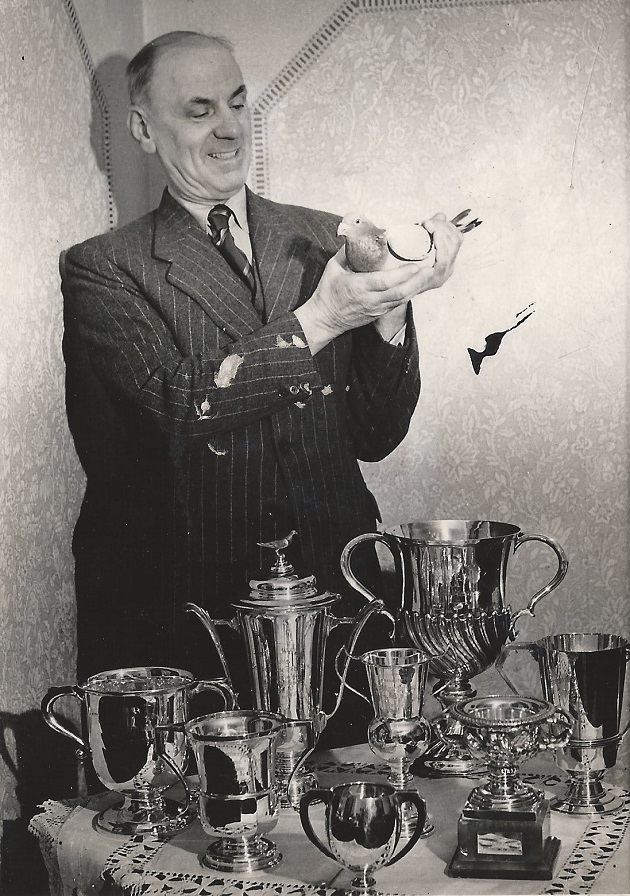
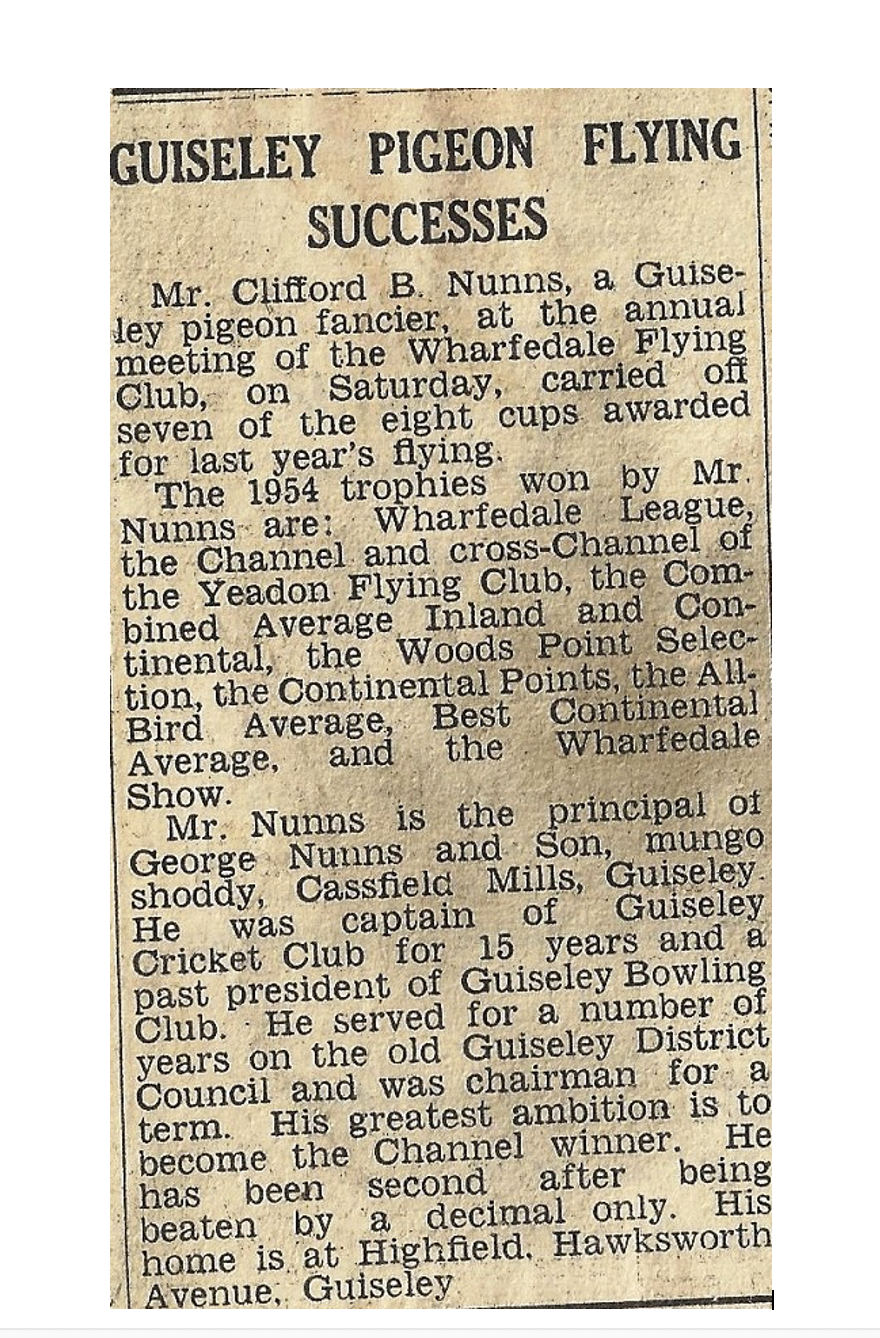
Accompanying the pair is an original period photograph showing a member of the Nunns family holding a pigeon behind an extraordinary display of silver racing trophies, together with a later newspaper cutting headed ‘Guiseley Pigeon Flying Successes’.
The newspaper records the achievements of Mr Clifford B. Nunns, described as a Guiseley pigeon fancier, who won seven of the eight cups awarded by the Wharfedale Flying Club for the preceding year's racing.
His 1954 successes included trophies associated with the Wharfedale League, Yeadon Flying Club, Combined Average Inland and Continental, Continental Points, All-Bird Average and Best Continental Average.
The article also records the family's connection with George Nunns and Son, mungo manufacturers of Cassfield Mills, Guiseley, and describes Clifford Nunns's wider involvement in the local community.
Although dating several decades after the paintings, this documentary material provides an evocative record of the Nunns family's continued association with competitive pigeon racing in the Yeadon and Guiseley area.
The photograph and newspaper cutting will accompany the paintings and form part of their provenance archive.
Both works are clearly signed C. H. Wadsworth and dated 1911.
Wadsworth appears to have worked within the specialist tradition of British animal and sporting portraiture, in which prized racing pigeons were painted as records of individual birds and their achievements or bloodlines.
I would not describe Wadsworth as a “renowned pigeon portrait artist” without stronger documentary evidence. The paintings themselves are sufficiently interesting that we don't need to inflate the attribution. Their strength lies in being a signed, dated and named pair with unusually good contextual provenance.
Pigeon racing became an enormously popular competitive pastime in Britain during the late 19th and early 20th centuries, with particularly strong traditions across Yorkshire and the industrial North.
Successful birds could represent years of selective breeding and training and were a considerable source of pride to their owners. Portraits such as these consequently occupy an interesting position between British sporting art, social history and vernacular or folk art.
Much like portraits commissioned of prize cattle, racehorses or champion dogs, they were intended to record an animal of particular importance to its owner.
The survival of both named companion paintings together, alongside associated Nunns-family photographic and documentary material, makes the group especially appealing.
Yorkshire, England.
Associated with G. Nunns of Yeadon, whose name is inscribed on both paintings beneath the respective birds.
Accompanied by:
An original historic photograph depicting a member of the Nunns family holding a pigeon alongside an extensive collection of silver trophies.
A period newspaper cutting, Guiseley Pigeon Flying Successes, documenting the later racing achievements of Clifford B. Nunns and the family's involvement with pigeon racing in the Yeadon and Guiseley area.
C. H. Wadsworth
Both signed lower left:
C. H. Wadsworth
1911
G. Nunns, Yeadon – ‘Shamrock’
and
G. Nunns, Yeadon – ‘Rufford Beauty’
Yorkshire, England
1911
Early 20th century / Edwardian period.
Oil on board.
Presented in their substantial period wooden frames, with a rich figured grain and aged surface.
They work exceptionally well with the paintings and contribute significantly to the early-20th-century vernacular character of the pair.
The paintings present very well for their age, retaining strong colour and considerable character.
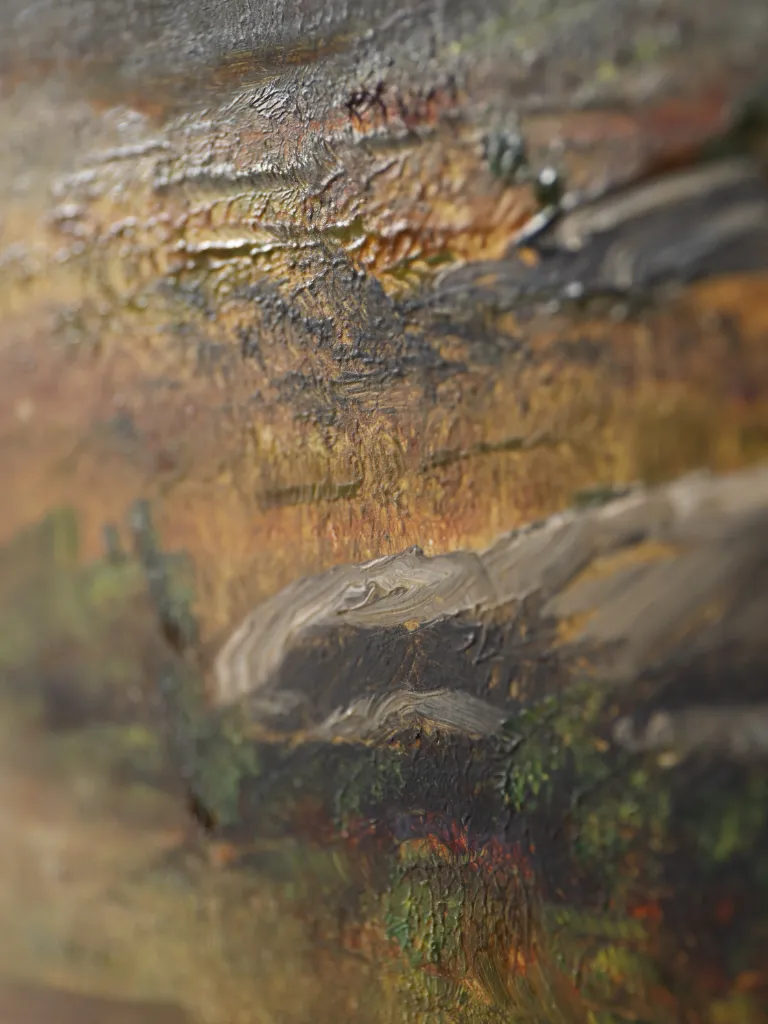
There are expected signs of age and use to the painted surfaces and frames, including minor surface marks, small losses, wear and imperfections consistent with works dating from 1911. These do not detract from the overall appearance and form part of their historic character.
Please refer to the detailed photographs for a full visual assessment of condition.
We particularly like these because they go well beyond decorative animal paintings. They are portraits of two named racing pigeons with a tangible connection to Yorkshire's pigeon-racing history.
The artist has captured the individual plumage and characteristics of each bird beautifully, right down to their identification rings, while the inscriptions provide a direct connection to G. Nunns of Yeadon.
Finding the two paintings still together is particularly pleasing, but it is the accompanying photograph and newspaper material that gives the group its real narrative quality.
They would work exceptionally well in a country house interior, study, boot room or kitchen, but equally have considerable appeal to collectors of British sporting art, social history and English folk and vernacular painting.
Height: 42 cm / 16.5 inches
Width: 52 cm / 20.5 inches
Depth: 3 cm / 1.2 inches
Weight: 1.5 kg / 3.3 lbs
Combined weight: approximately 3 kg / 6.6 lbs
Every item offered by Shackleton Fox is carefully inspected, prepared, and where necessary conserved within our workshop prior to sale.
As heritage craftsmen and antique specialists, we believe in preserving the authenticity and integrity of each piece. Original finishes, patina, wear, and signs of age are retained wherever possible, as these elements contribute to both character and historical significance.
When restoration, rewiring, repairs, or conservation work is required, it is undertaken sympathetically using traditional techniques and materials appropriate to the period of the piece. Our philosophy is one of careful stewardship rather than unnecessary restoration, ensuring antiques remain both functional and historically respectful.
The result is a collection of pieces that have been thoughtfully prepared, allowing future owners to enjoy them with confidence while preserving their unique story and character.