
£22,500.00
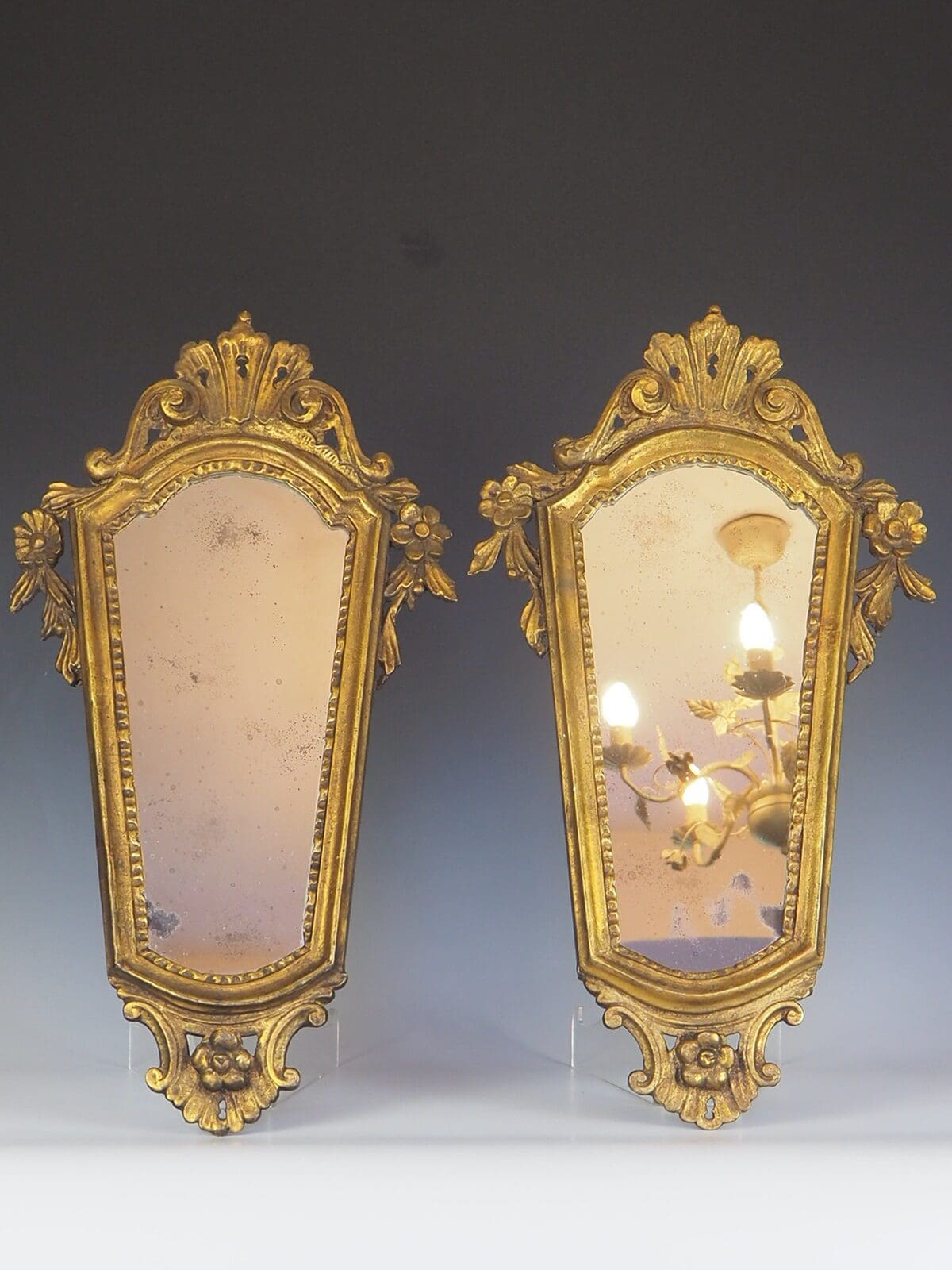
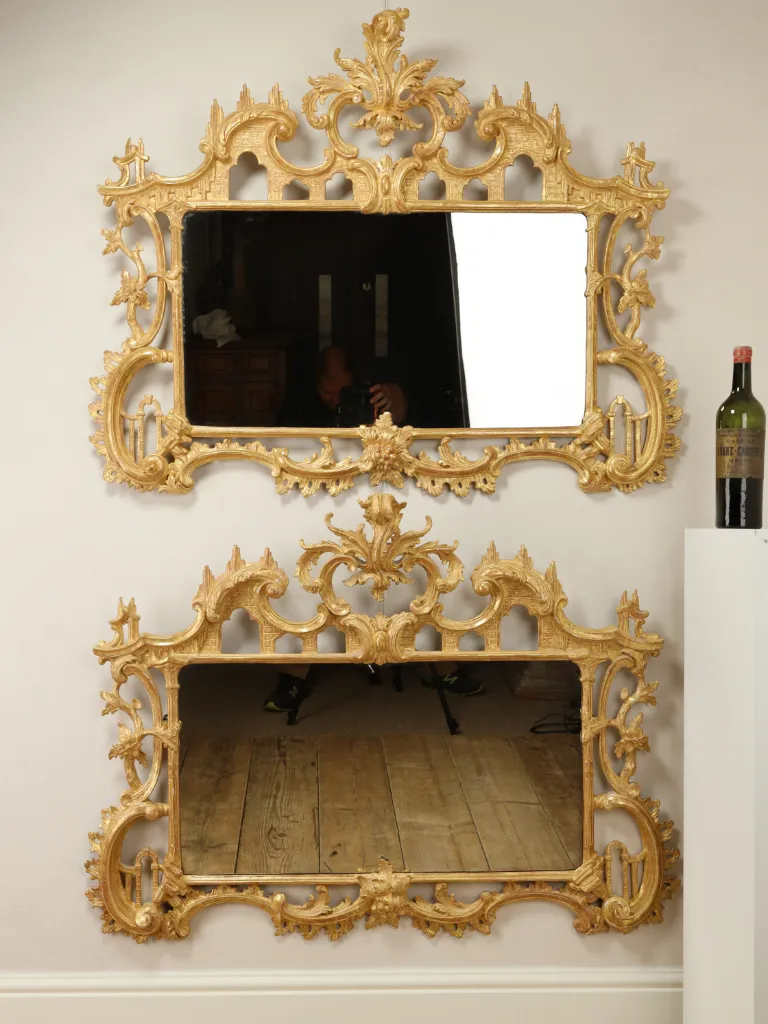
An exceptional and highly decorative pair of Irish George III carved giltwood mirrors, dating from the second half of the 18th century and acquired from the sale of the contents of a large country house.



An exceptional and rare pair of Irish George II carved giltwood mirrors, dating from the mid-18th century and acquired from the sale of the contents of a large country house.
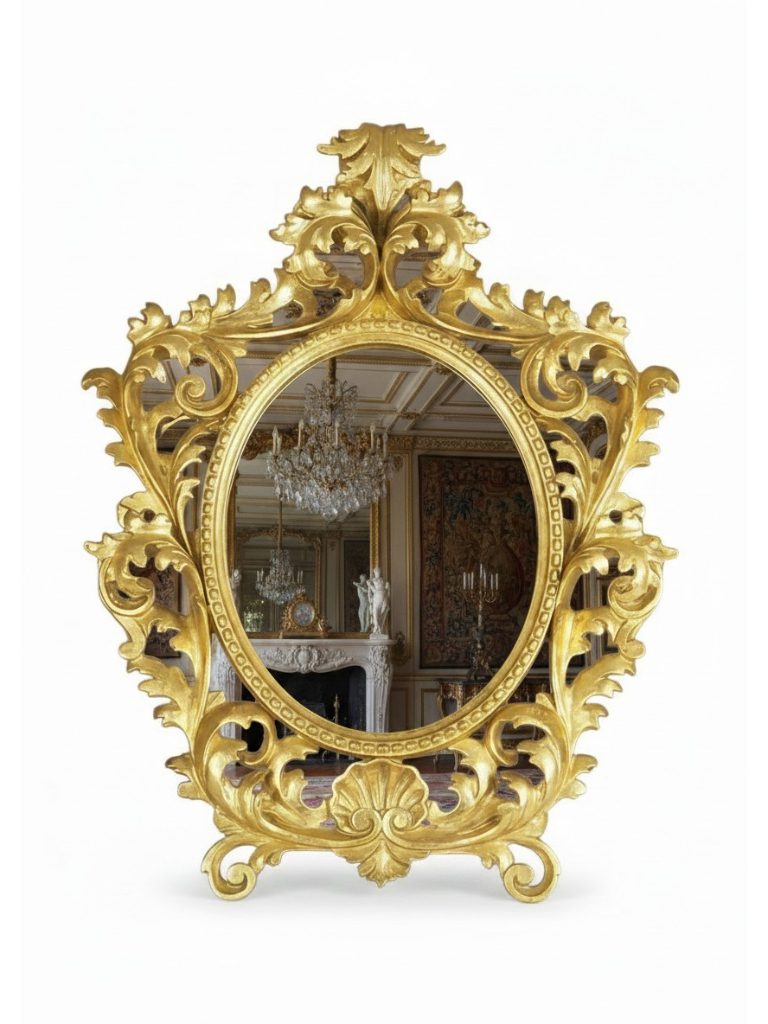
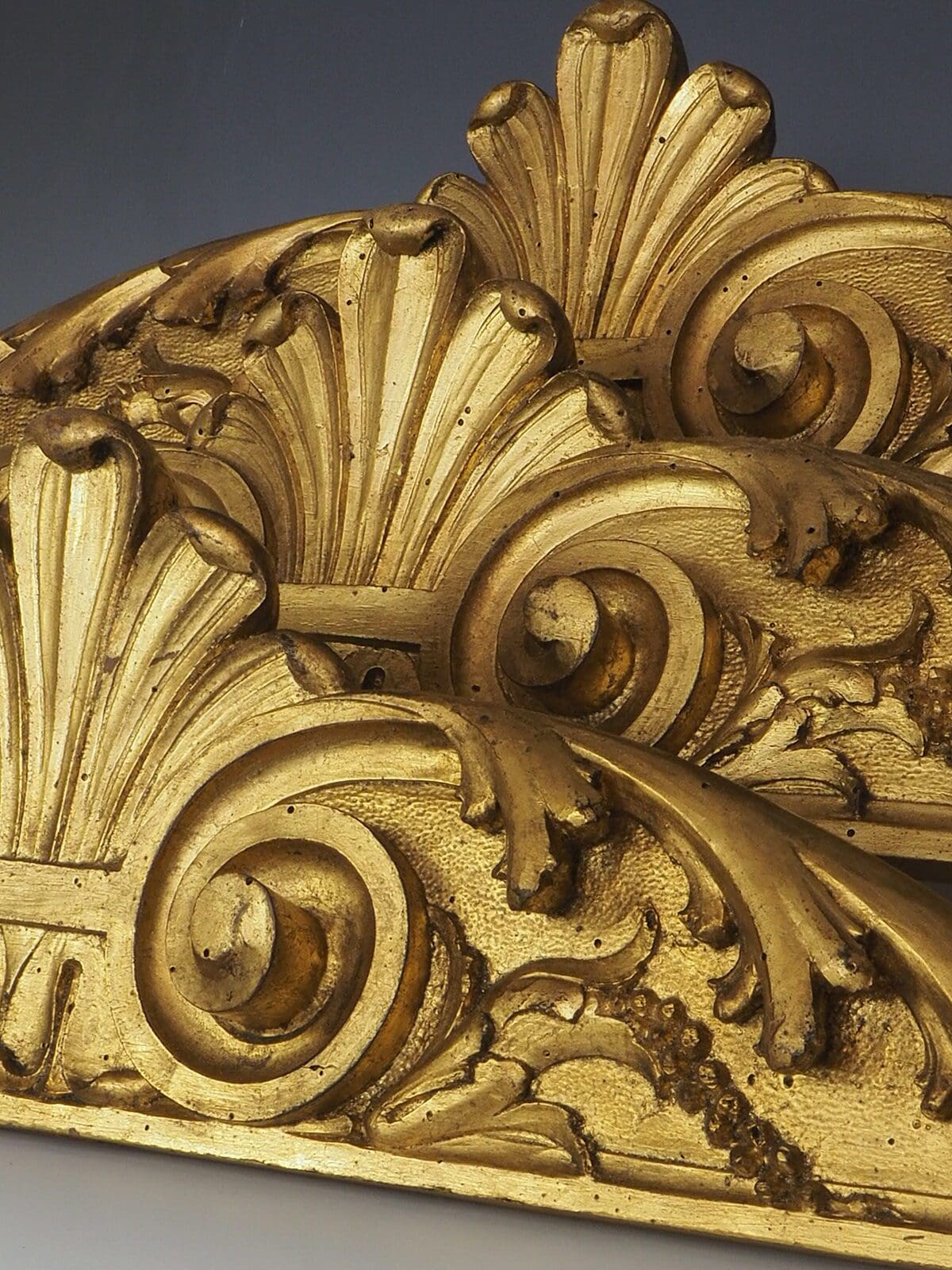
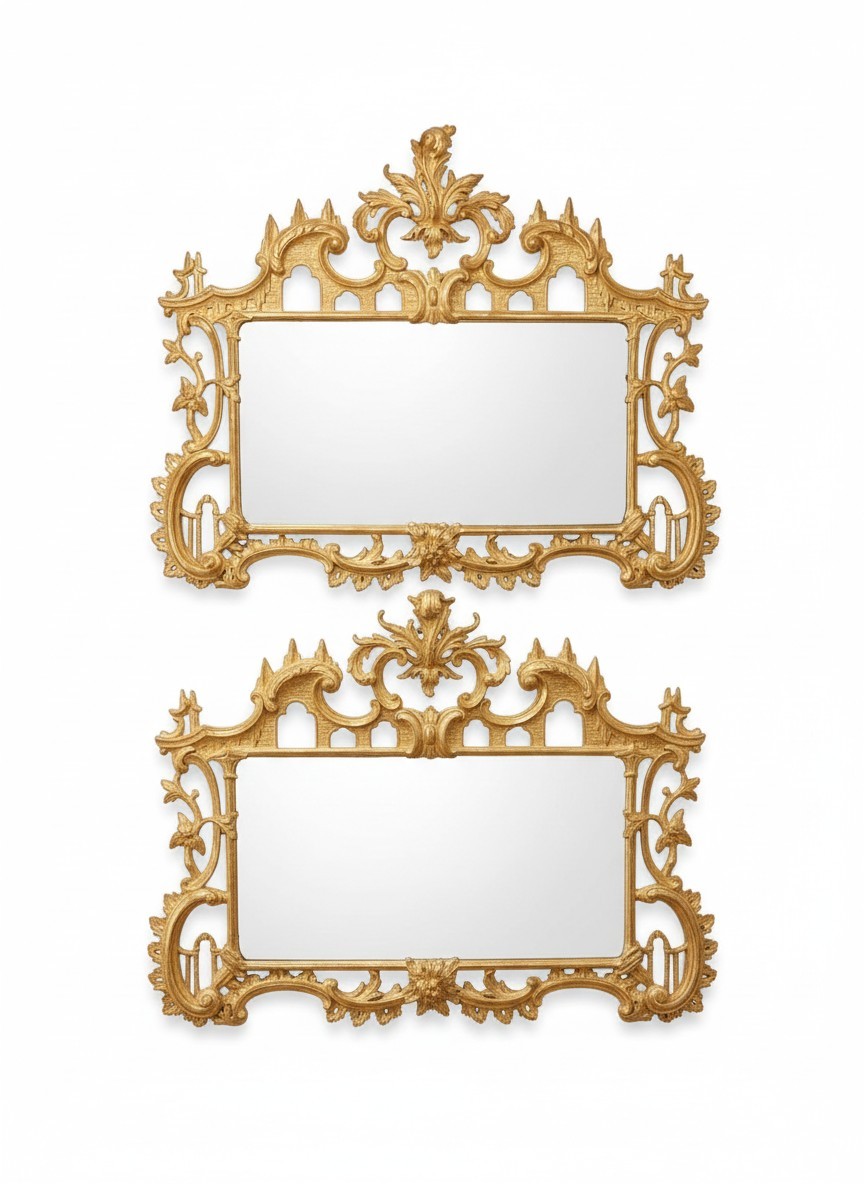
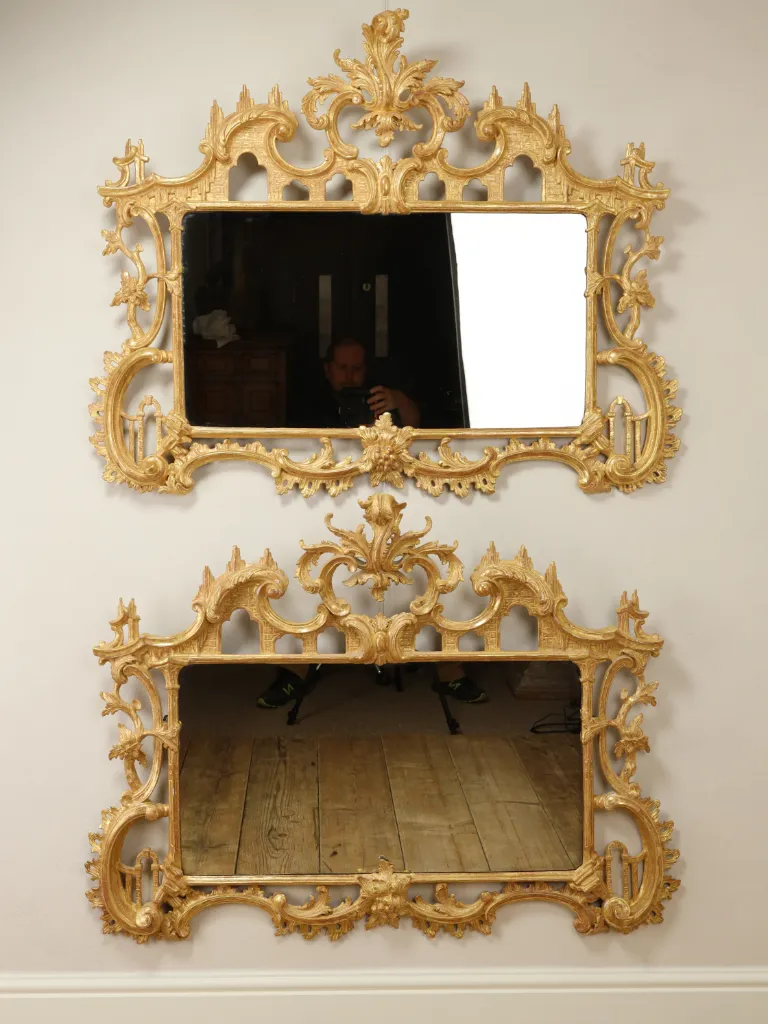
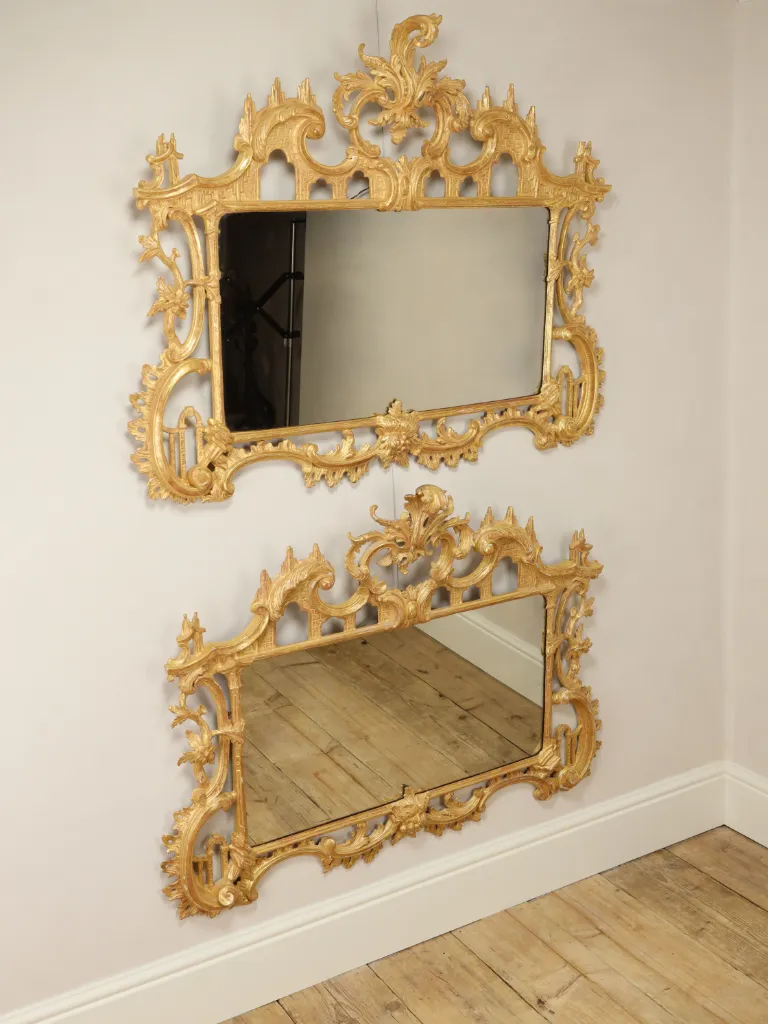
Of impressive scale and remarkable sculptural presence, each mirror is centred by a broad rectangular mirror plate surrounded by an elaborate pierced and hand-carved giltwood frame. The extraordinary frames combine scrolling foliage, bold C-scrolls and highly distinctive architectural ornament to create a wonderfully animated silhouette.
The pair were catalogued at auction as Irish George II, an attribution we have retained.
The quality and complexity of the carving are particularly striking.
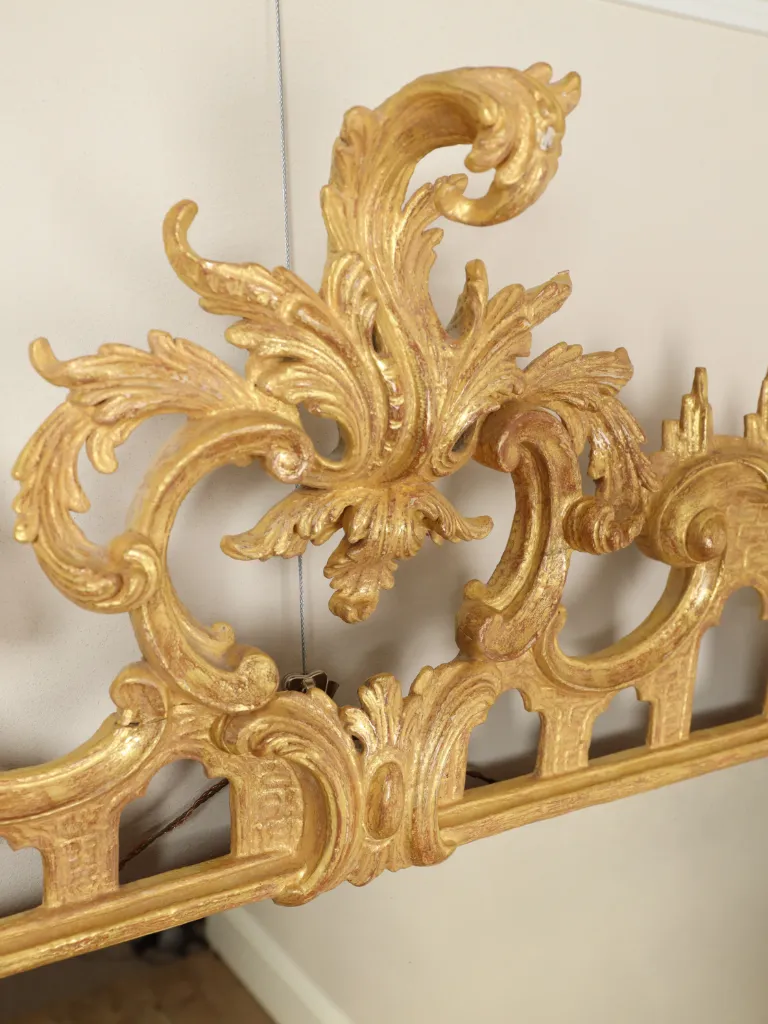
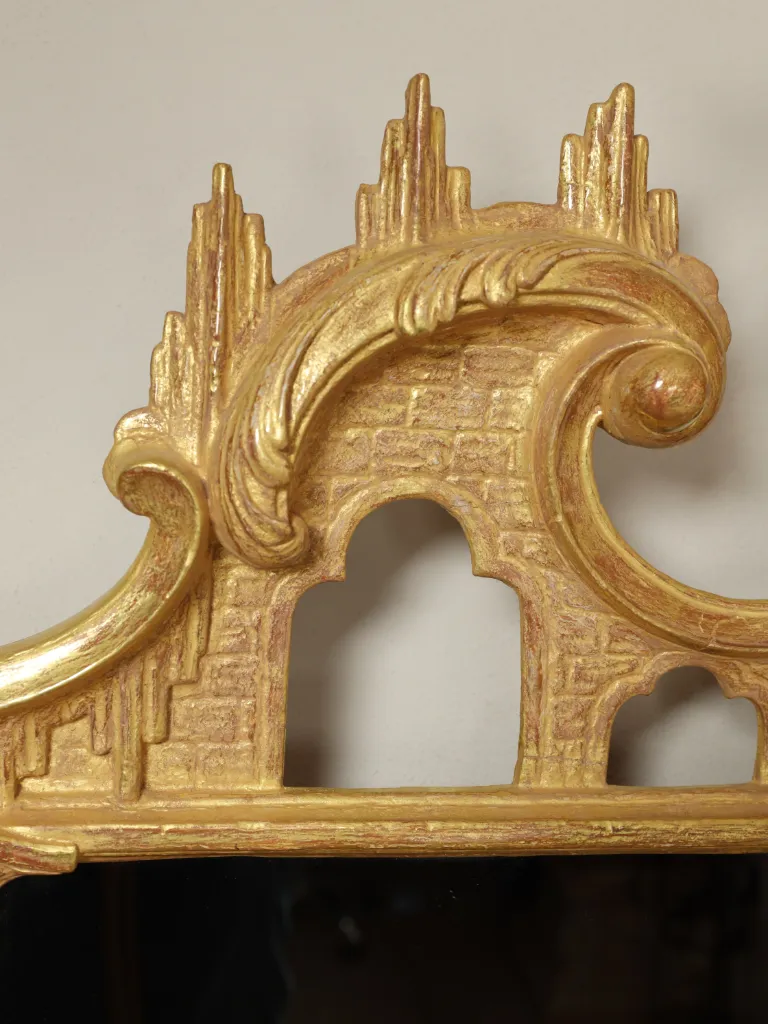
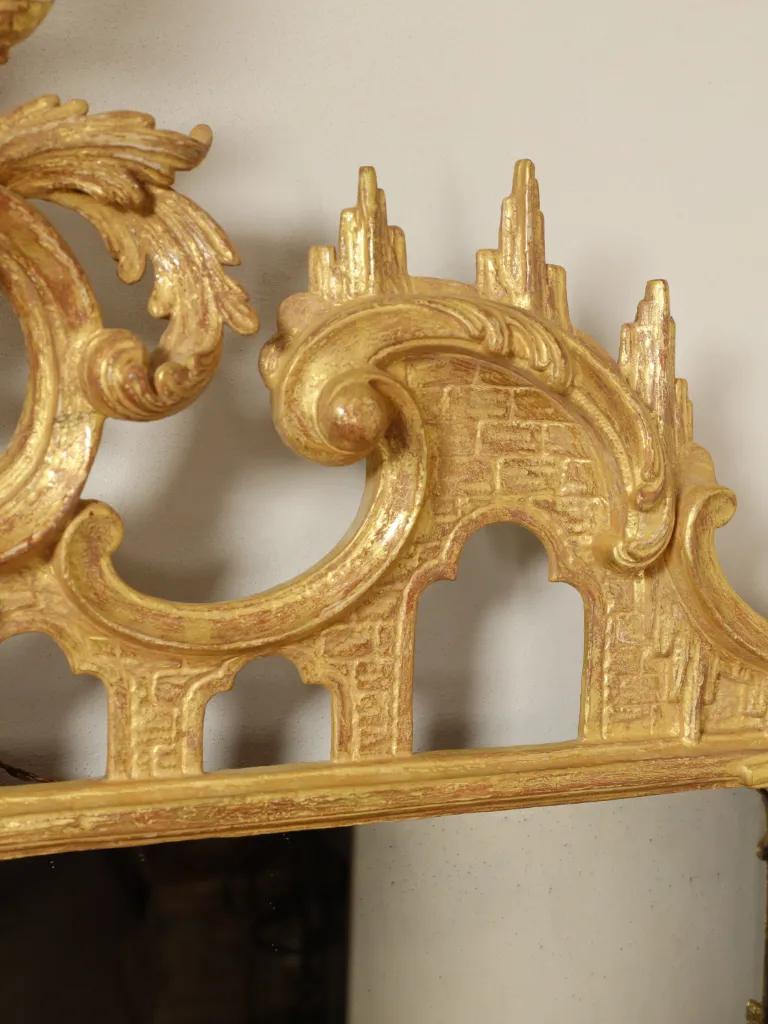
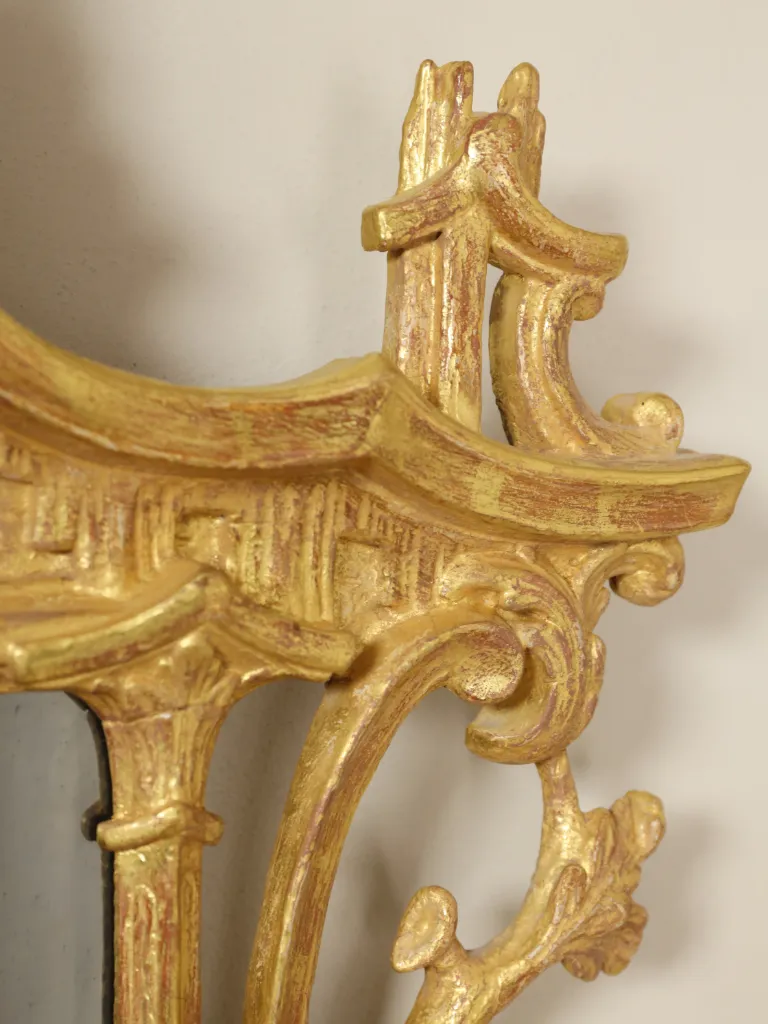
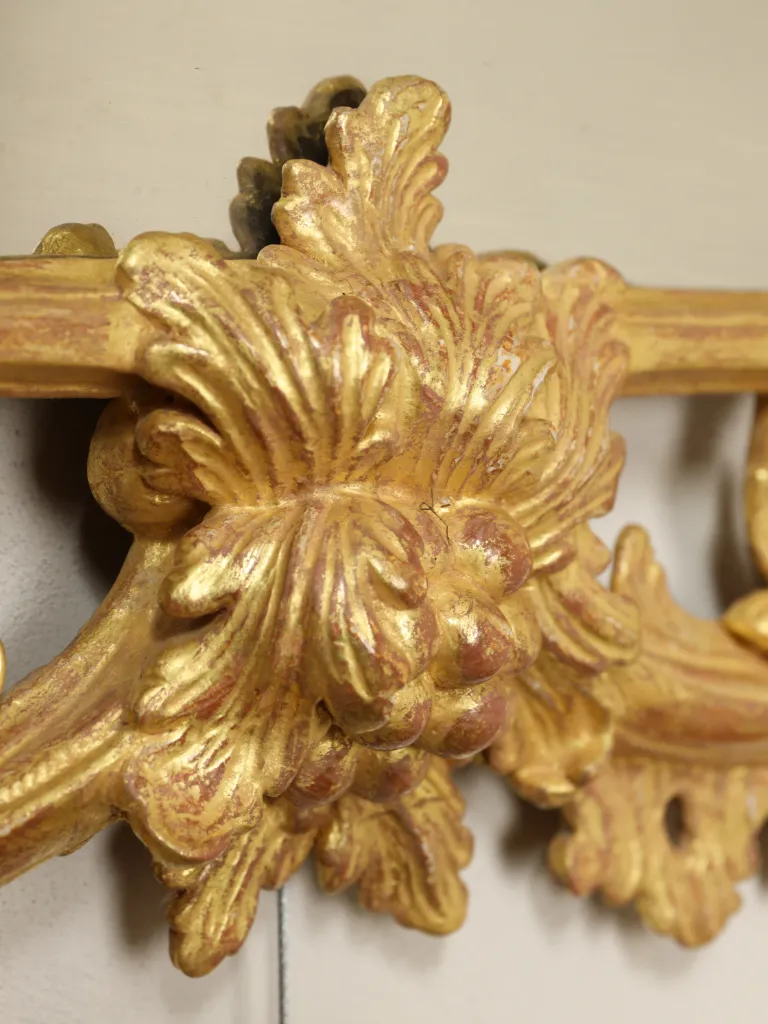
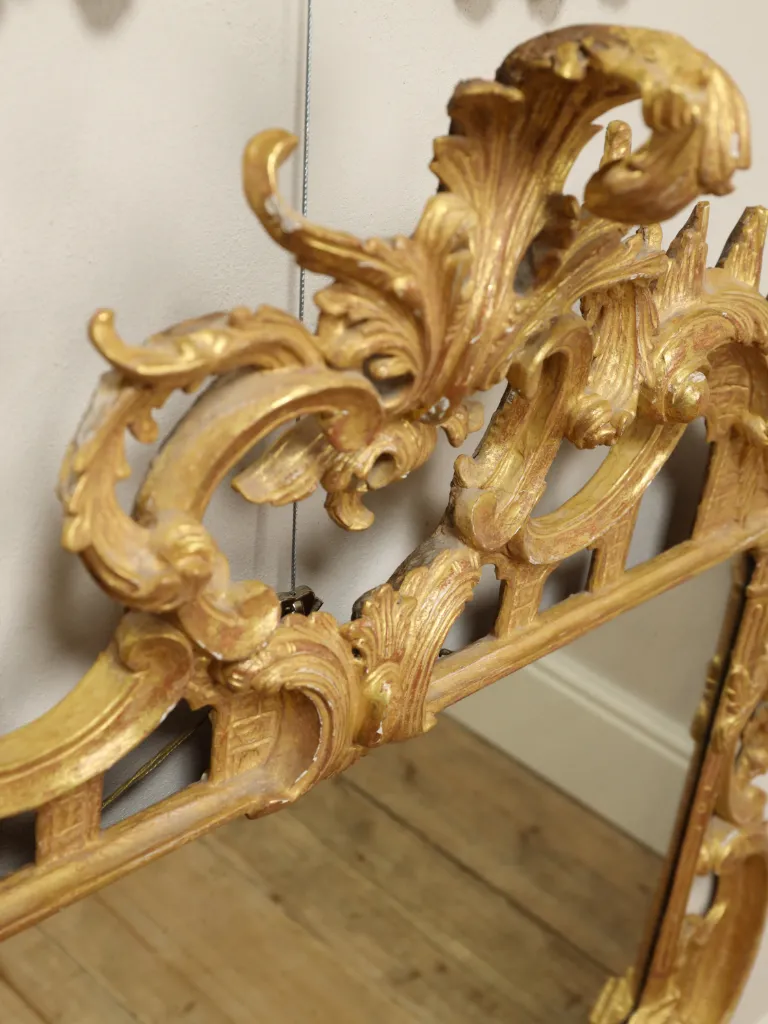
Each mirror is surmounted by an elaborate openwork crest, centred by a vigorous arrangement of deeply carved scrolling foliage. Sweeping carved elements extend outwards into an imaginative composition of architectural and naturalistic ornament.
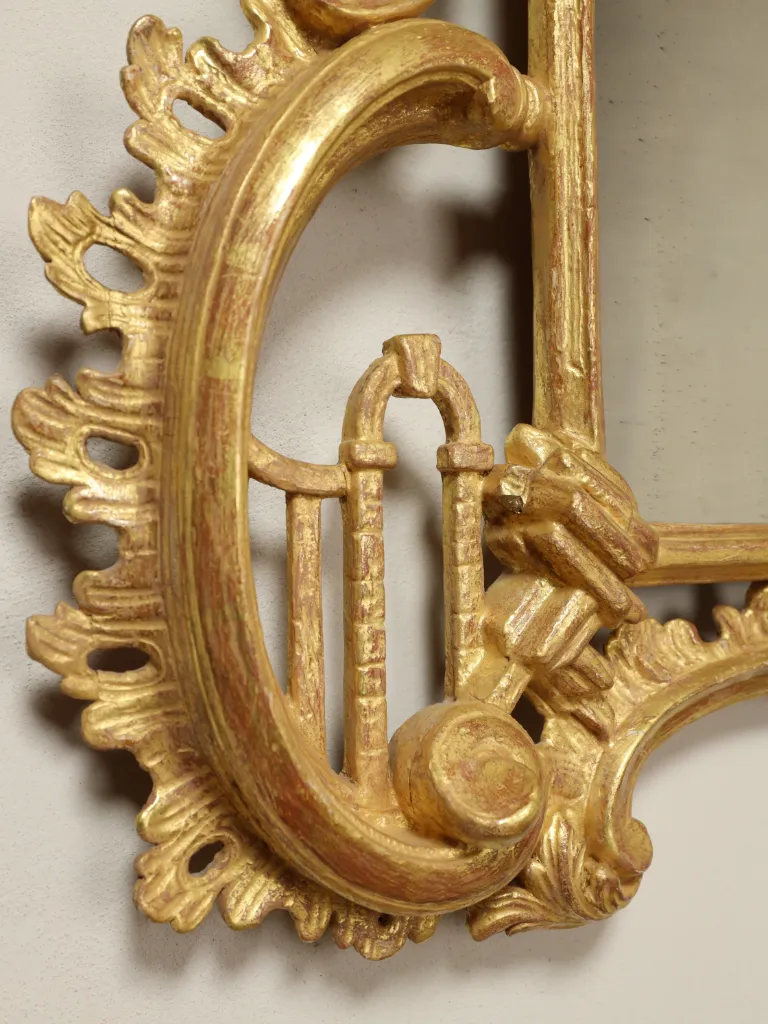
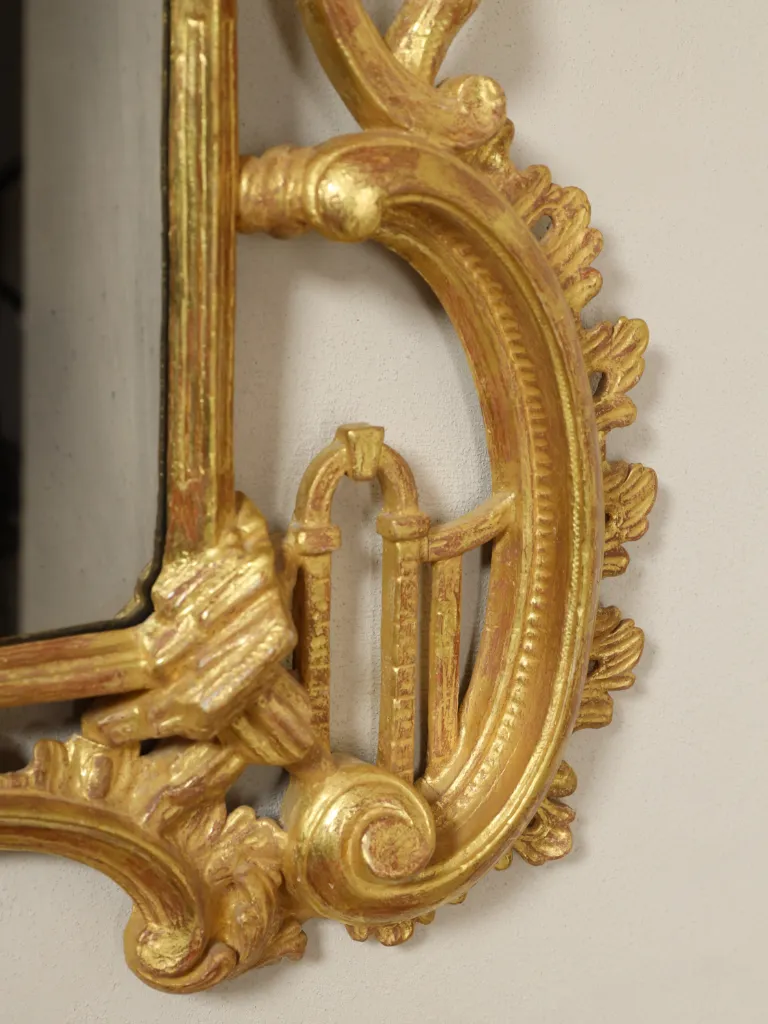
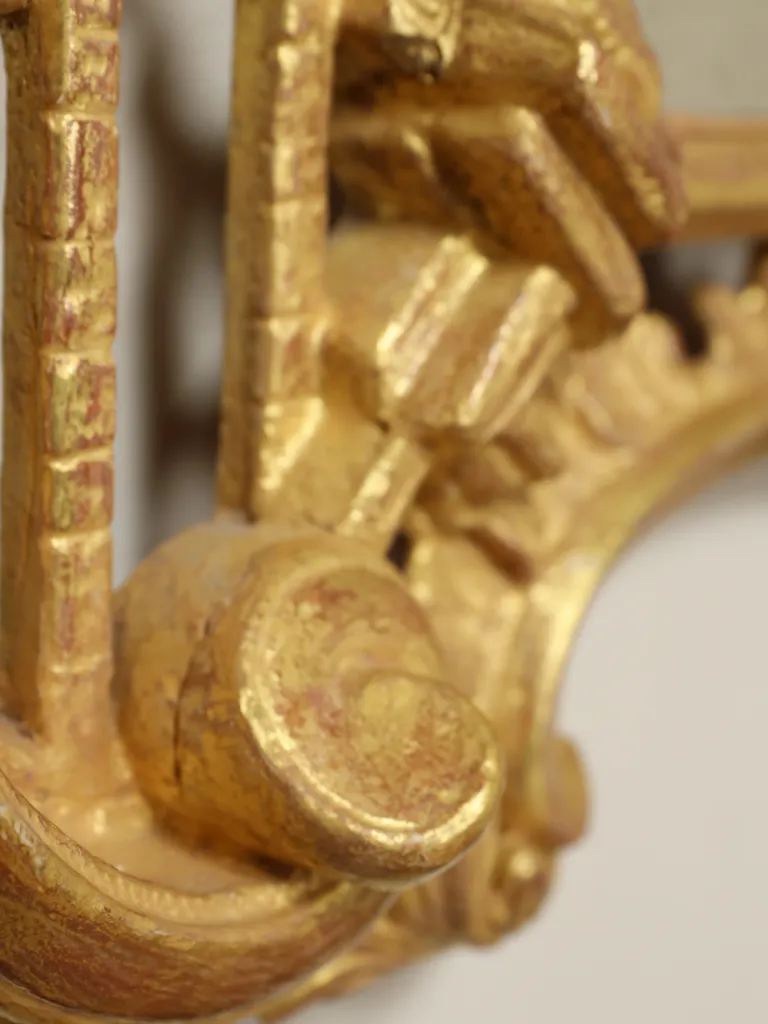
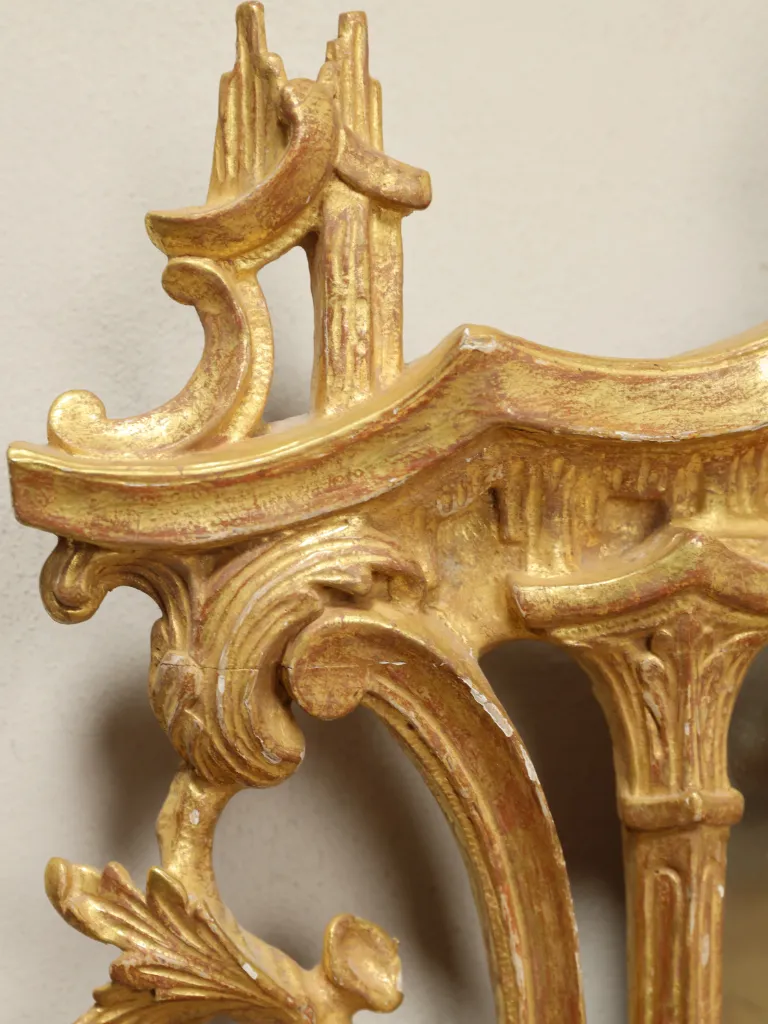
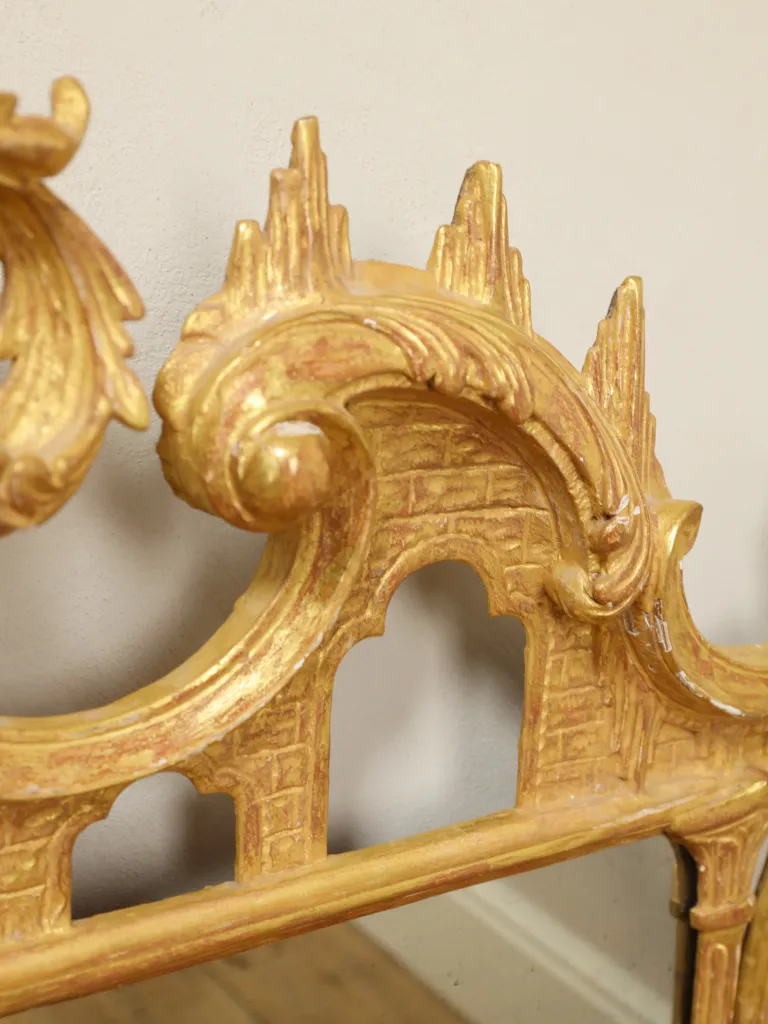
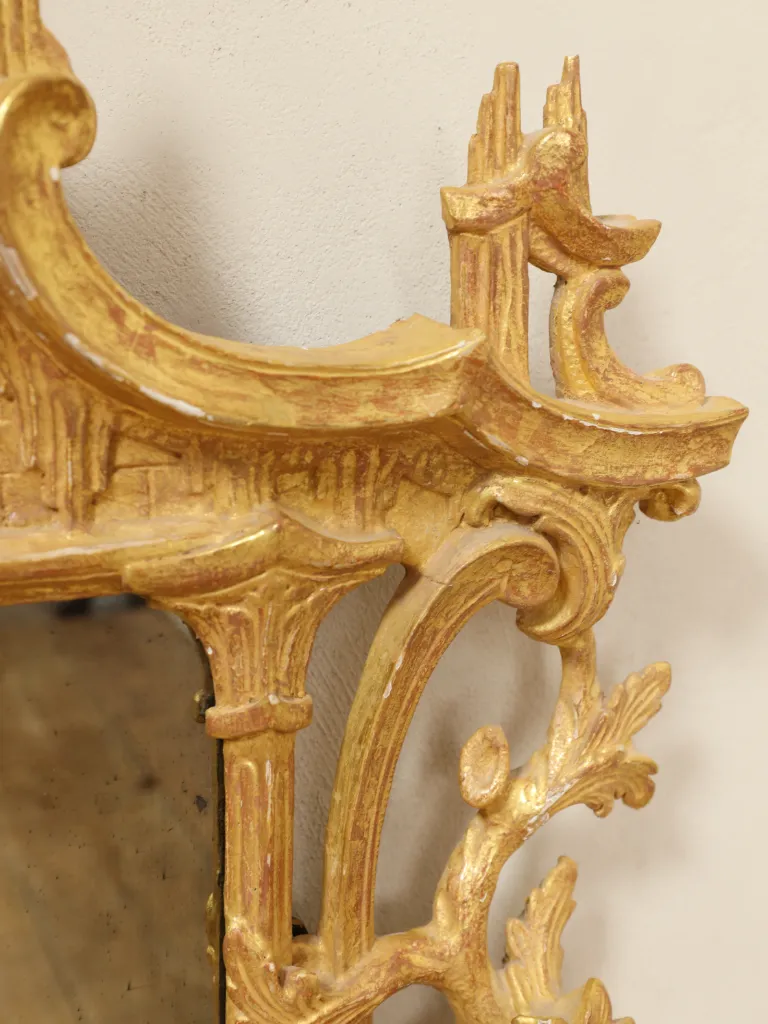
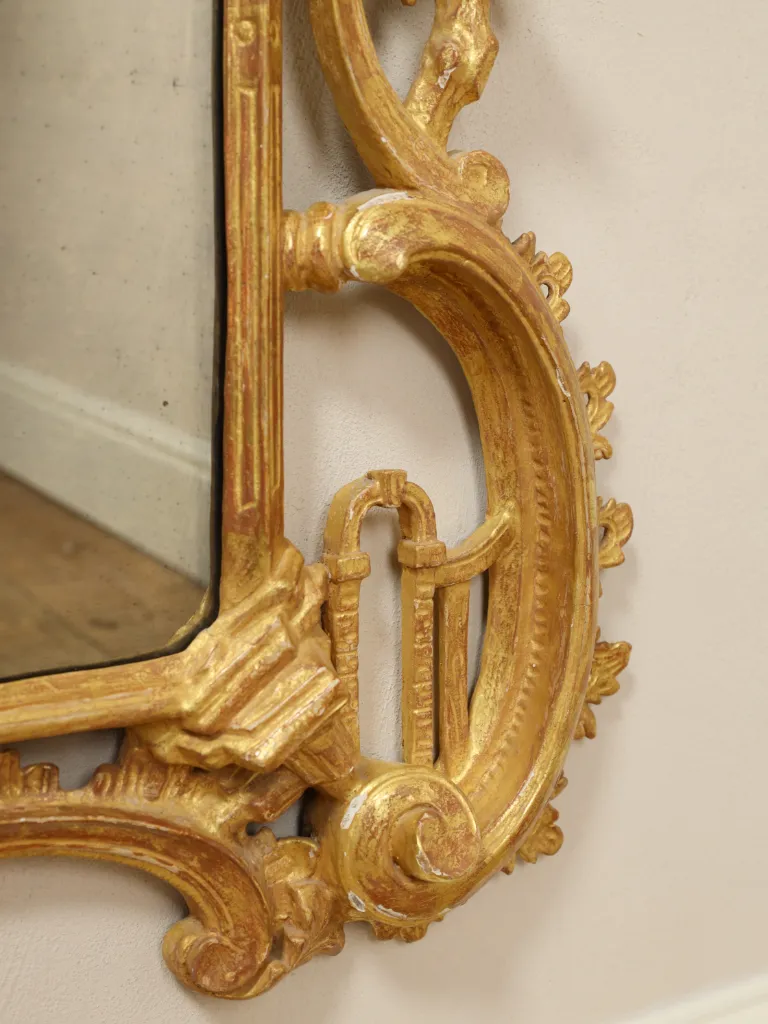
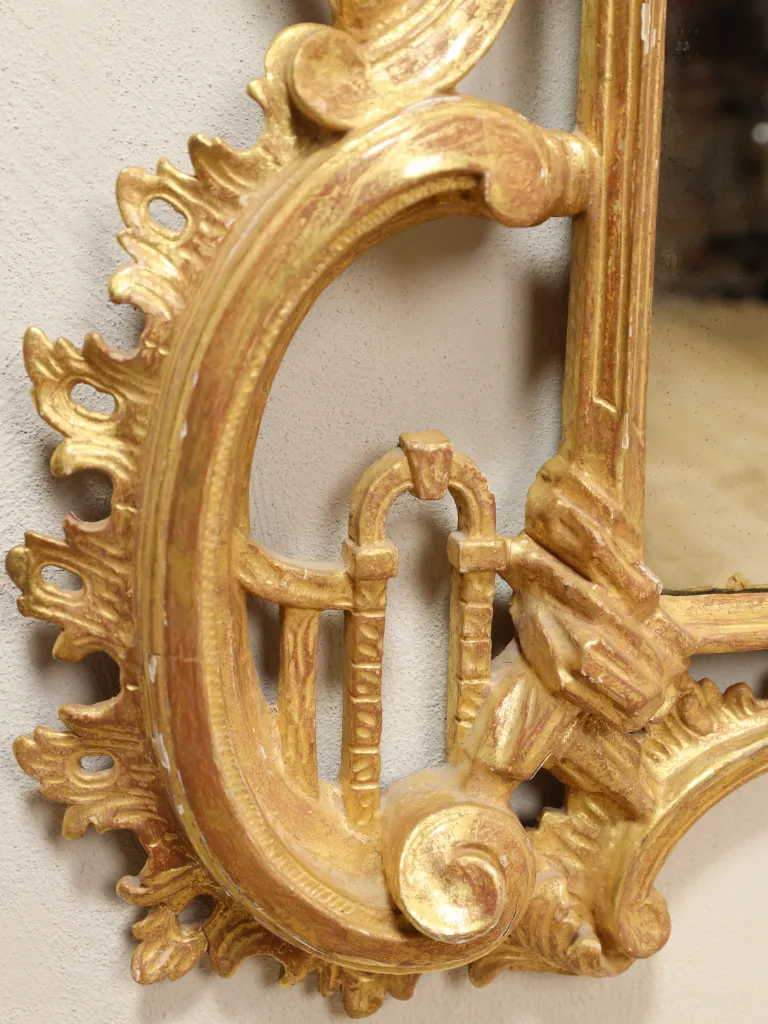
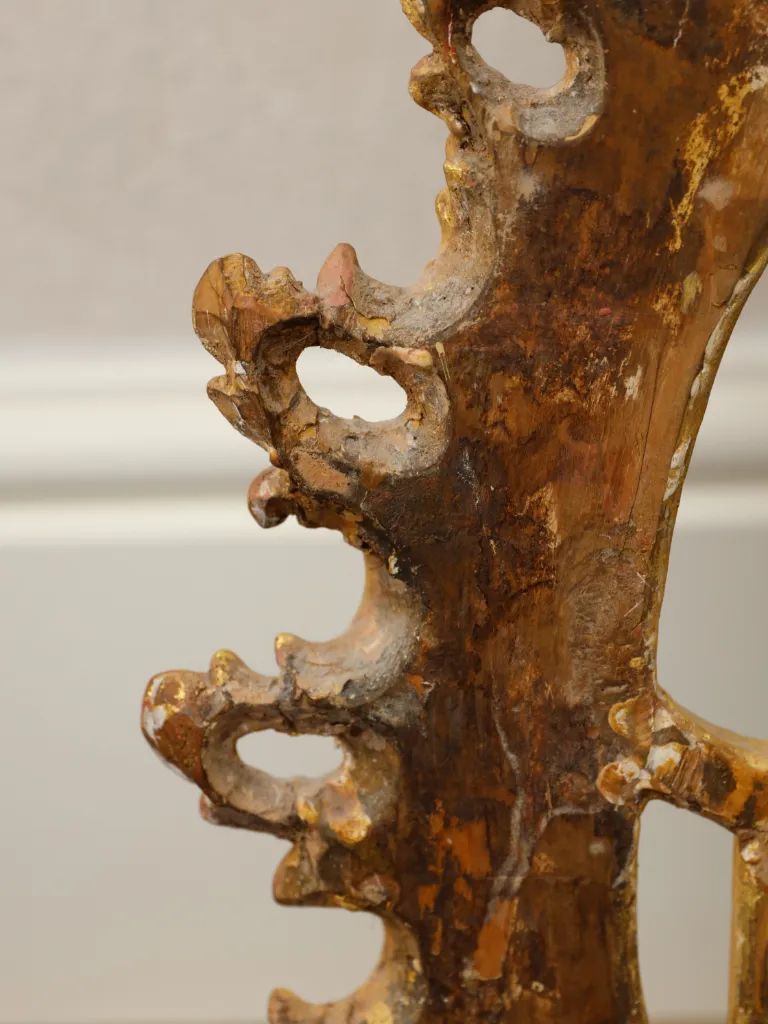
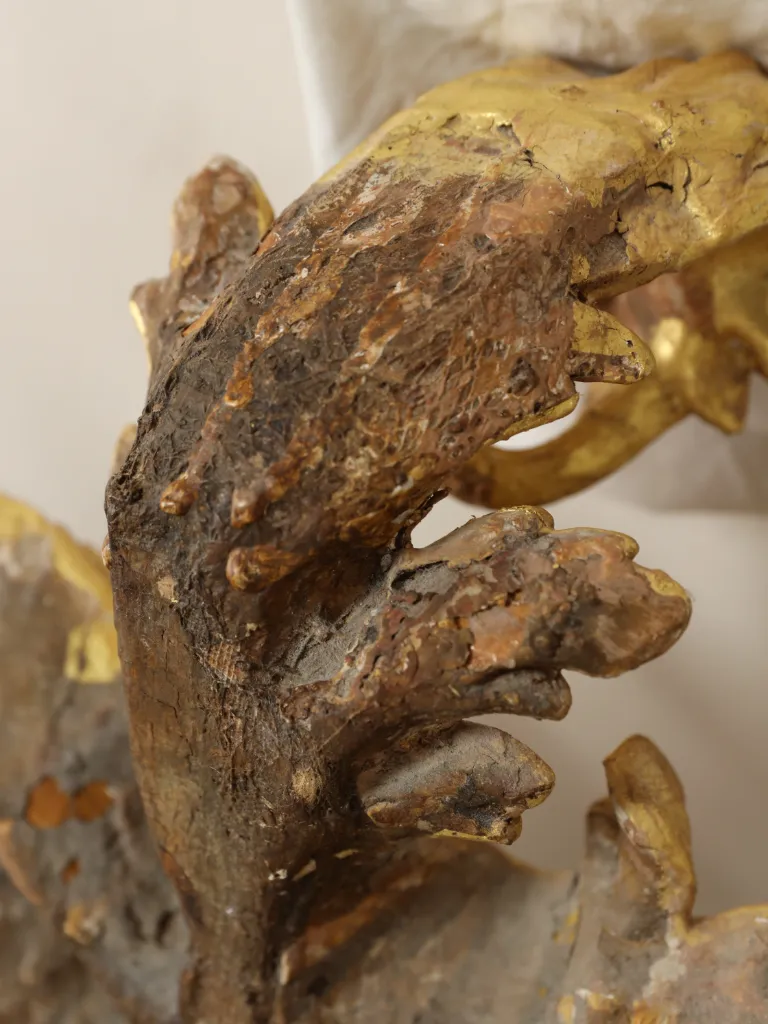
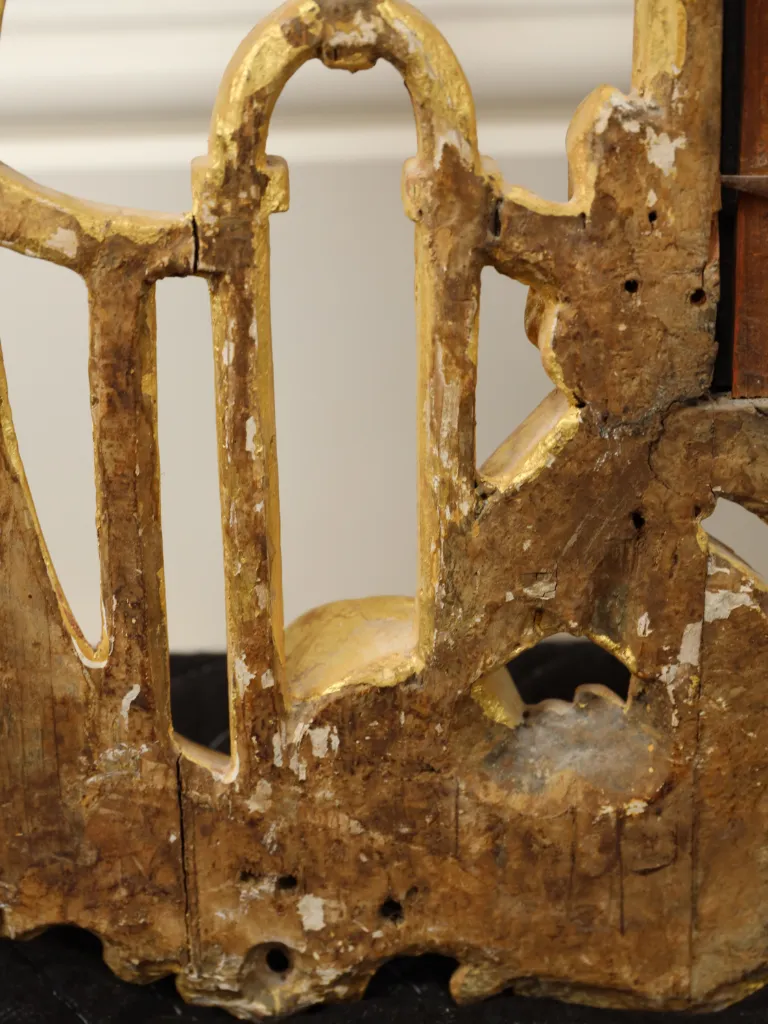
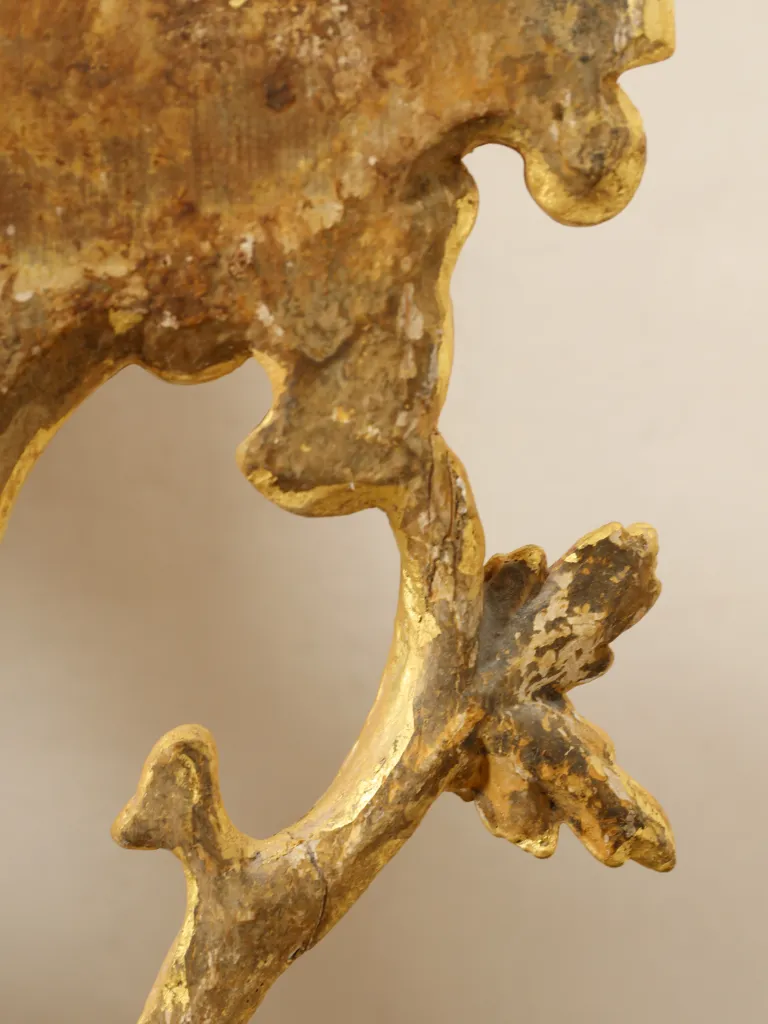
Among the most distinctive details are the small architectural structures incorporated throughout the frames. Pointed pinnacles, arched openings and textured masonry-like surfaces give the impression of miniature towers or fanciful Gothic buildings emerging amongst the foliage.
Similar architectural details reappear around the lower sections, creating a visual connection between the cresting and the elaborate apron.
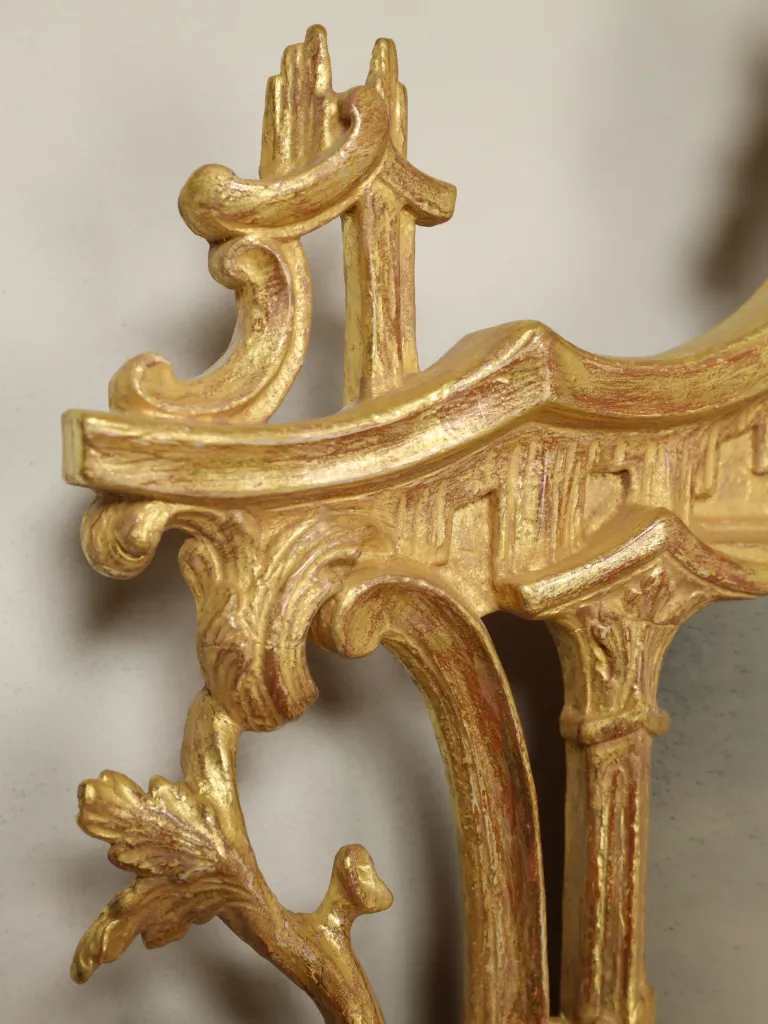
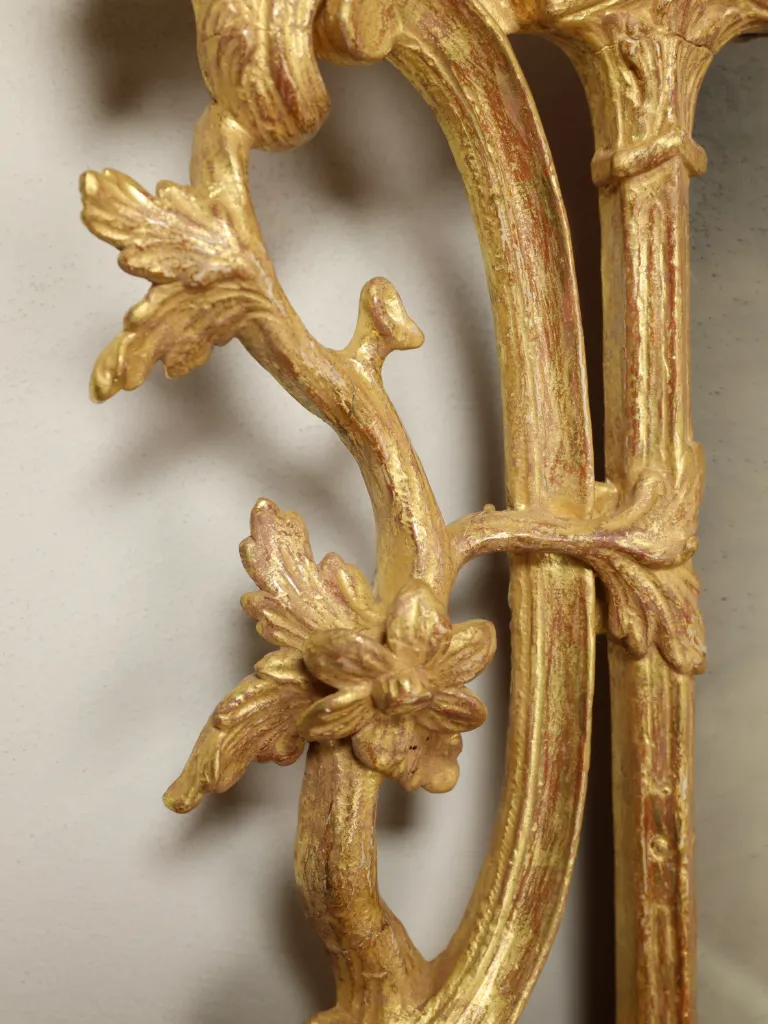
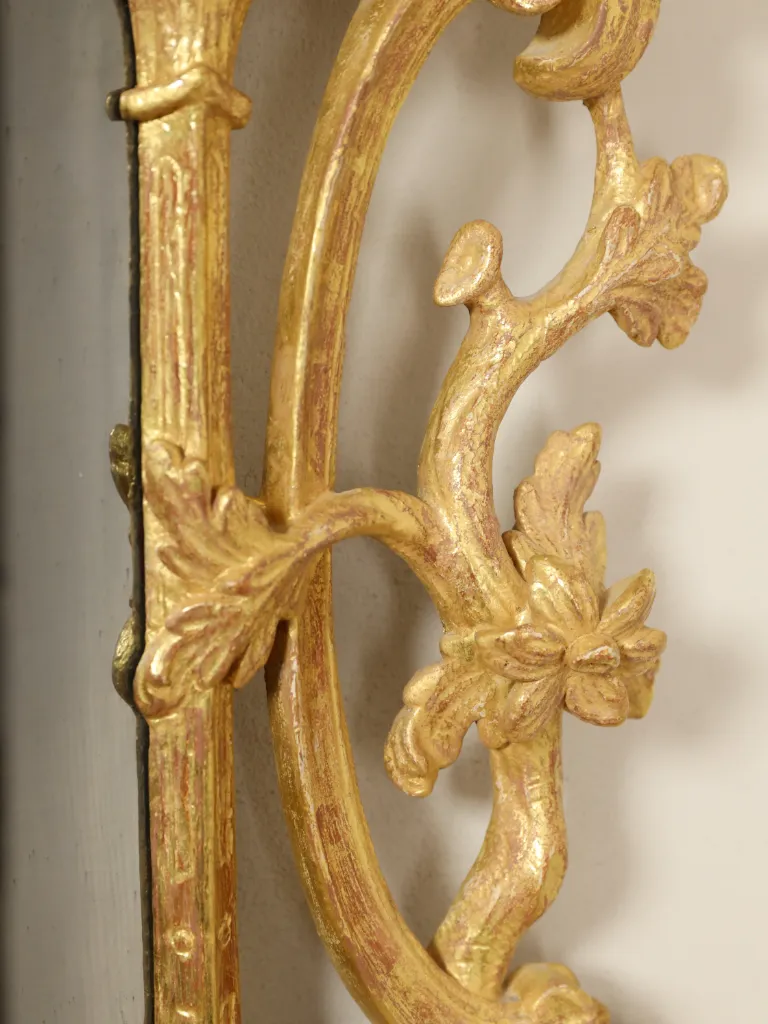
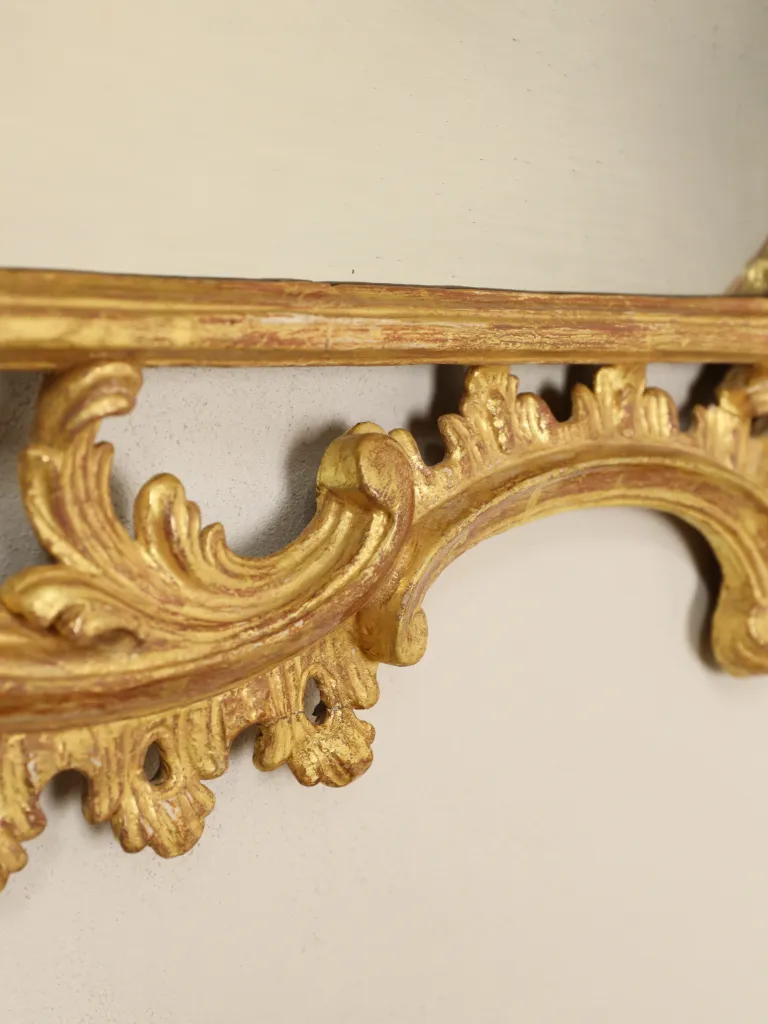
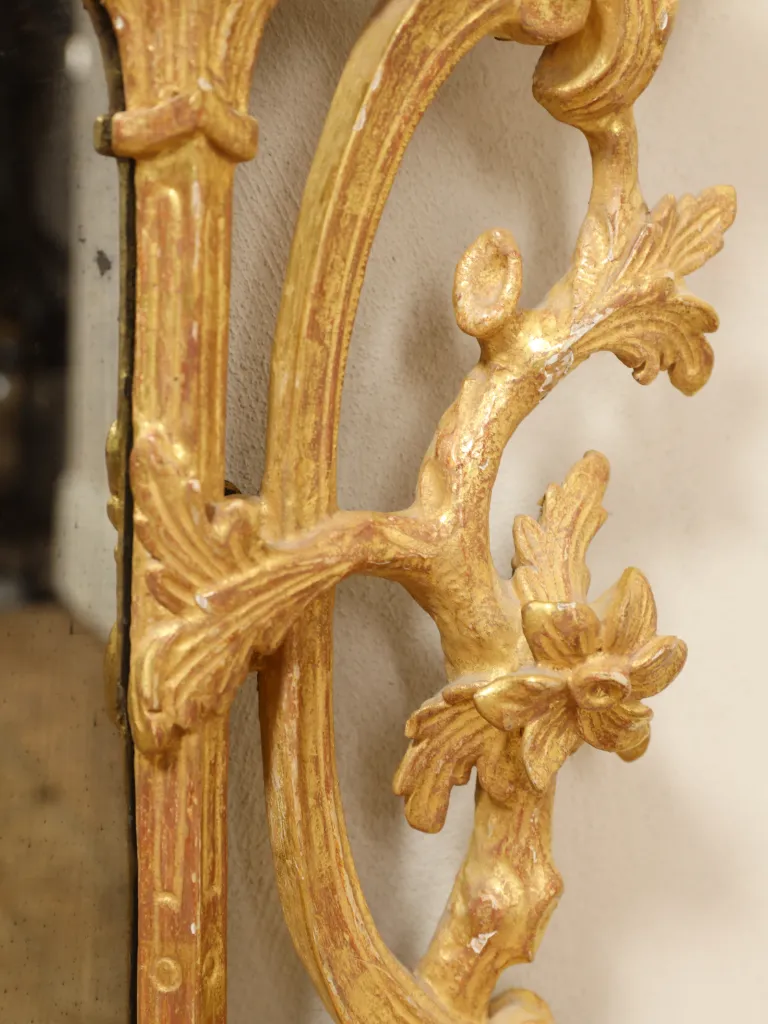
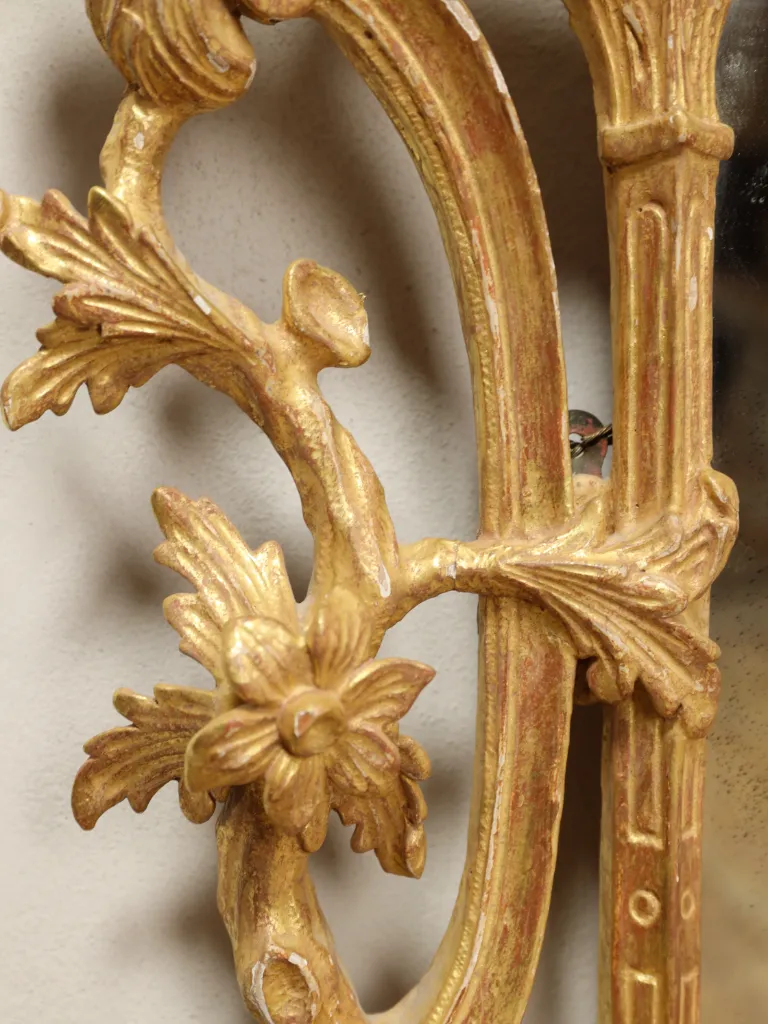
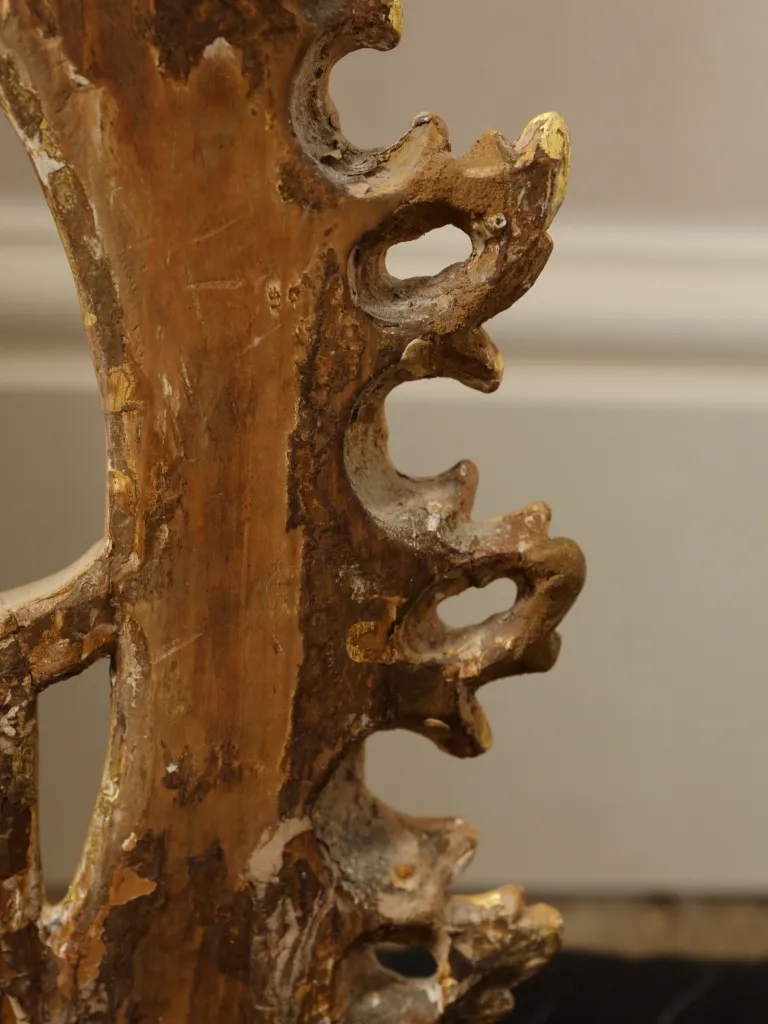
The sides of each mirror are formed from a complex arrangement of pierced scrolling branches and carved foliage. These extend freely beyond the edge of the mirror plate rather than being confined within a conventional moulded border, giving the frames their exceptionally lively character.
Across the lower edge, substantial opposing scrolls sweep towards a central foliate flourish, completing the composition.
The result is not simply a decorated frame but an elaborate piece of 18th-century carved architectural ornament, designed to project considerably from the wall and interact with the surrounding interior.
During the George II period, Ireland — particularly Dublin — developed an important tradition of looking-glass making, carving and gilding.
Irish craftsmen interpreted the fashionable decorative vocabulary of the period with considerable individuality, producing elaborate frames incorporating scrolling foliage, pierced carving and occasionally highly imaginative architectural elements.
The decoration of the present pair reflects this broader mid-18th-century taste, combining Georgian design with the Gothic and Rococo-influenced ornament fashionable during the period.
The use of flowing C-scrolls and naturalistic foliage reflects the wider European Rococo movement, while the architectural details introduce the more eccentric and distinctly British and Irish interpretation of the style.
For this reason, we prefer to catalogue the pair primarily as Irish George II giltwood mirrors, rather than simply describing them as Rococo mirrors.
Although comparisons can be drawn with documented work produced by important Dublin looking-glass makers and carvers of the period, we make no attribution to a particular maker or workshop.
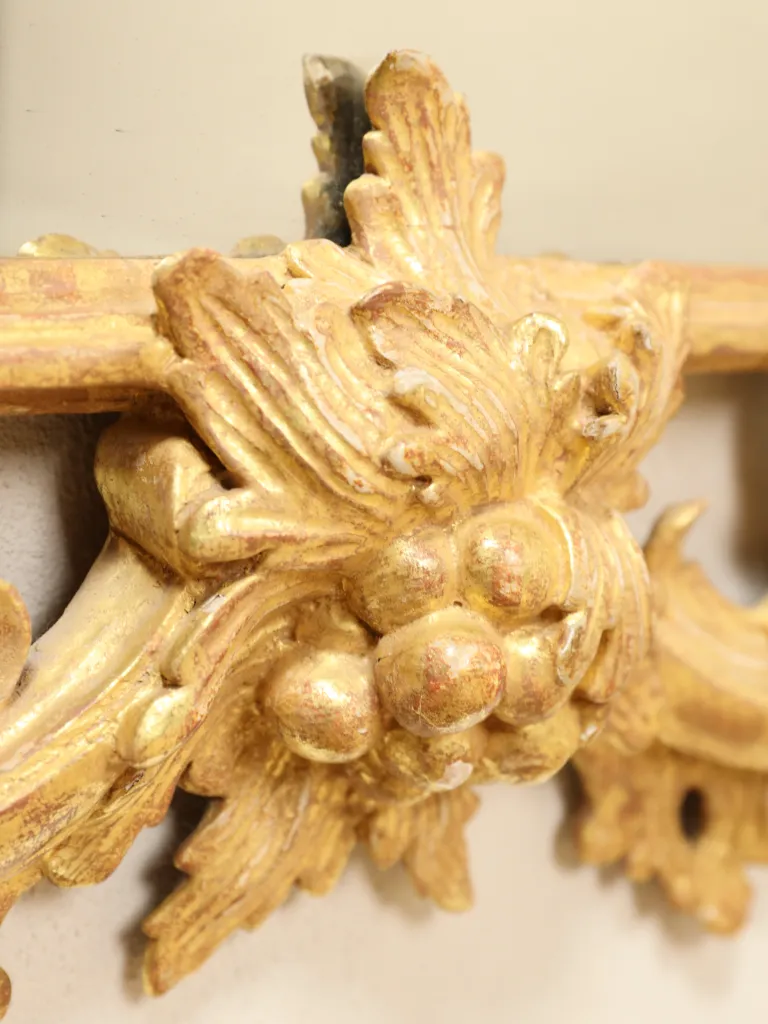
The frames retain a wonderfully aged gilt surface with considerable depth and character.
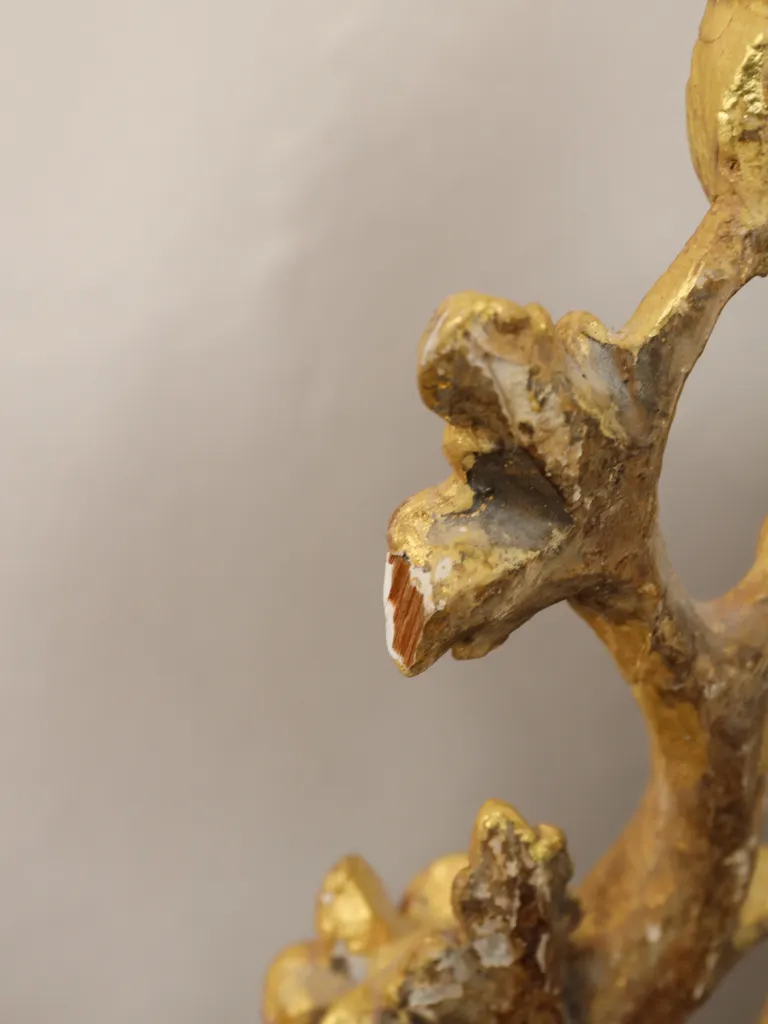
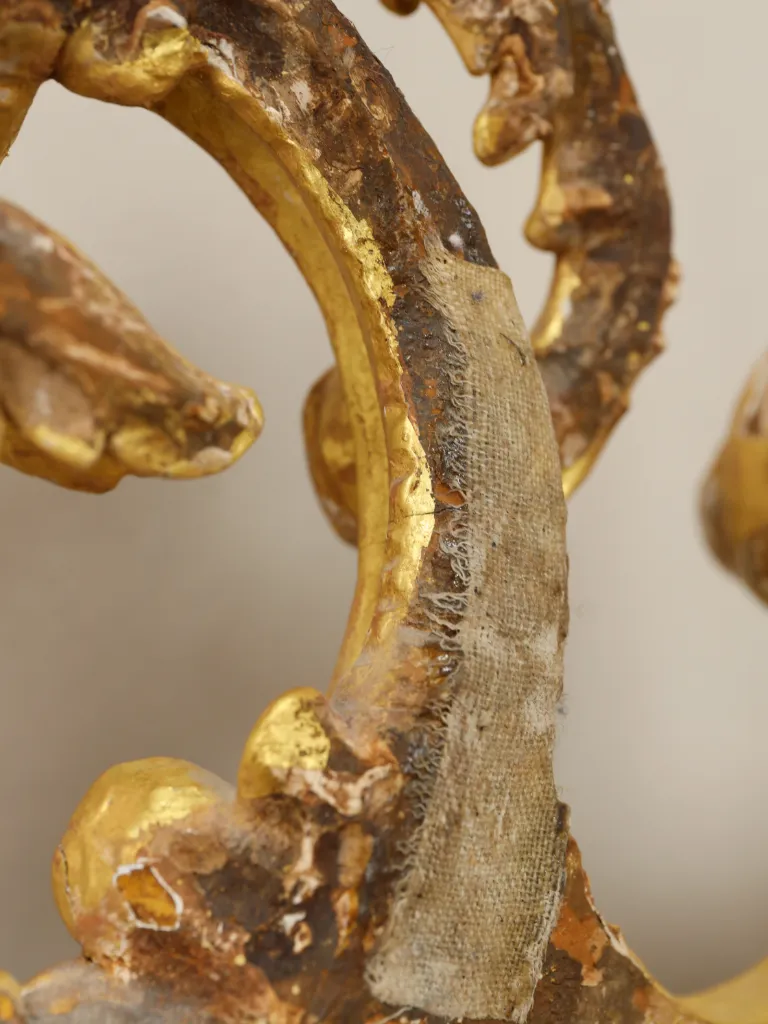
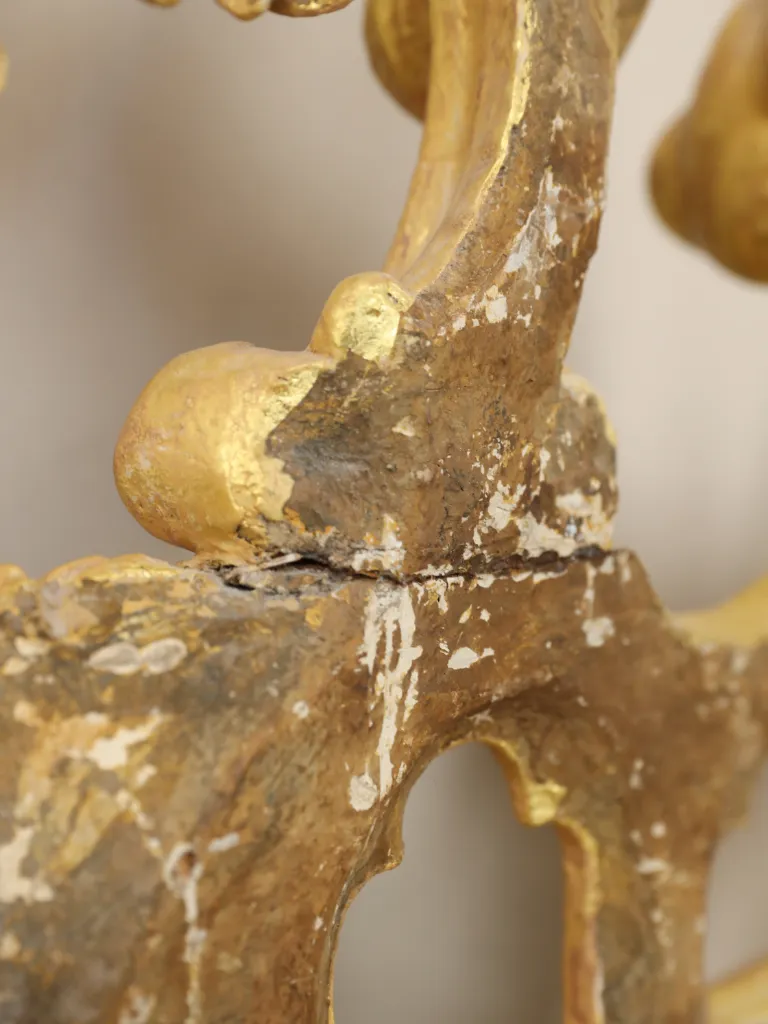
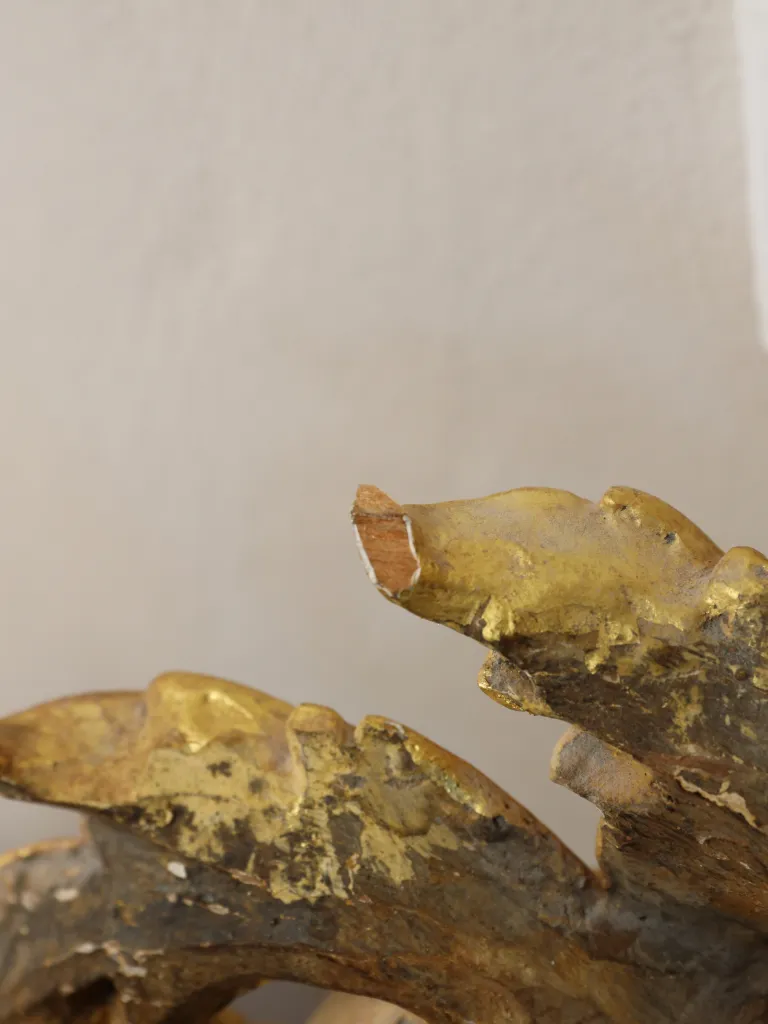
Generations of natural wear have softened the gilding, particularly across the projecting areas of carving. In places, warm reddish and ochre tones from the underlying preparation can be seen beneath the gold.
Rather than having the uniform appearance of recently restored gilding, the surfaces retain the irregularities, rubbing and tonal variation expected of historic giltwood.
This mellow surface is an important part of the character of the mirrors and has been retained rather than excessively restored.
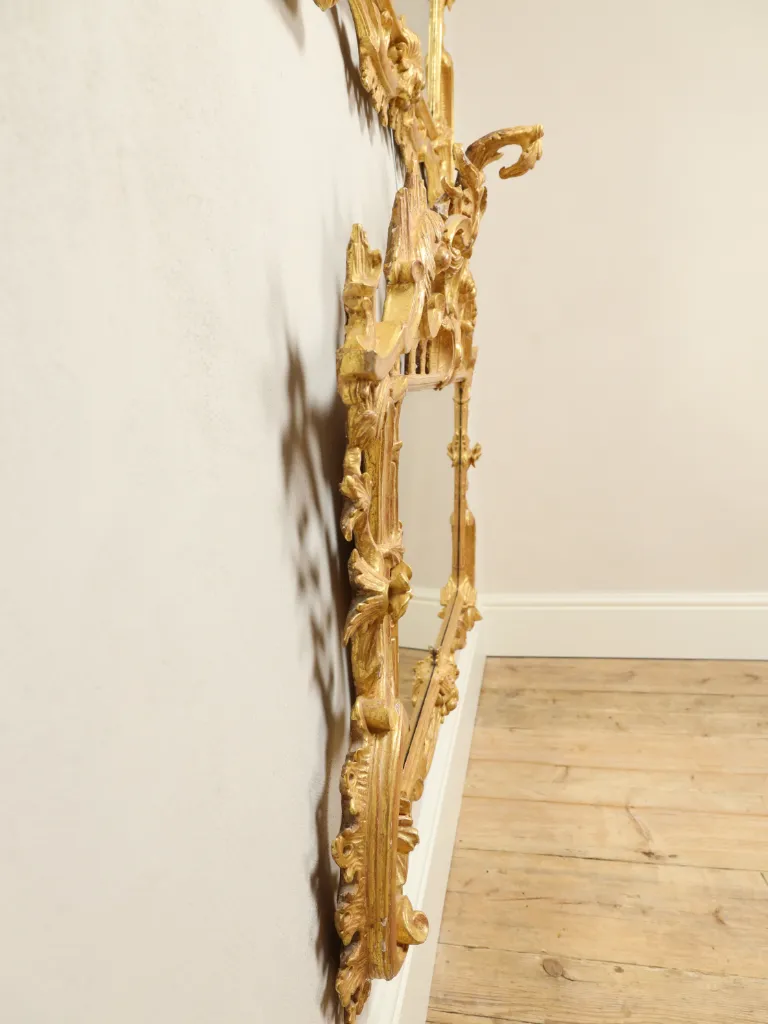
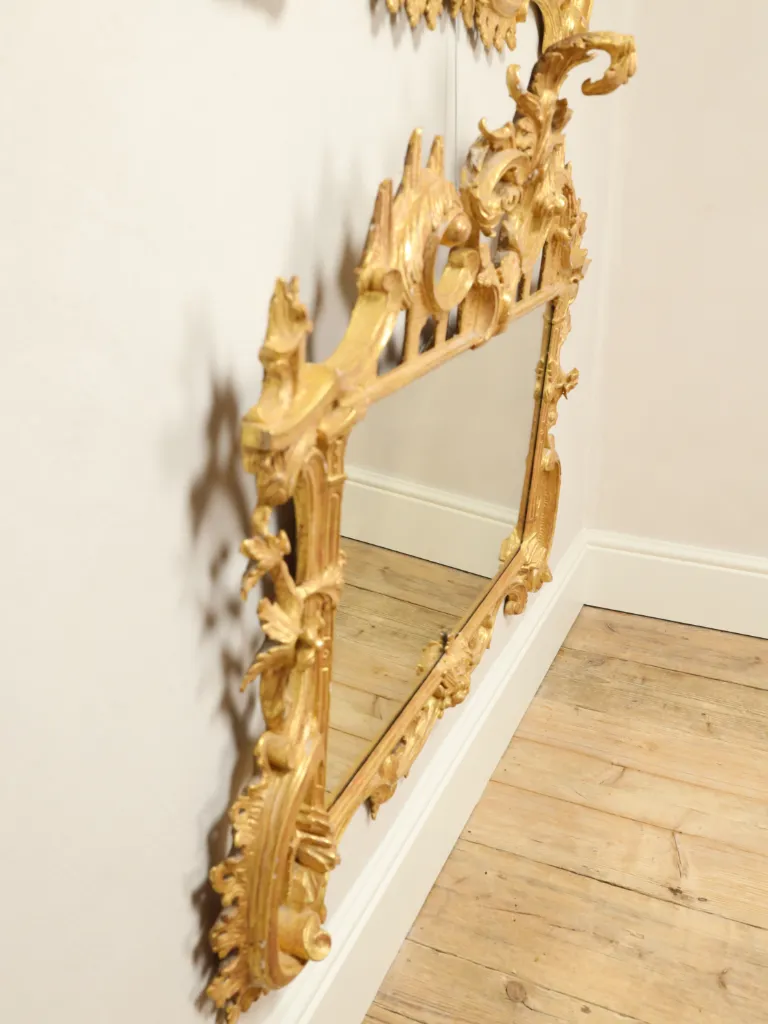
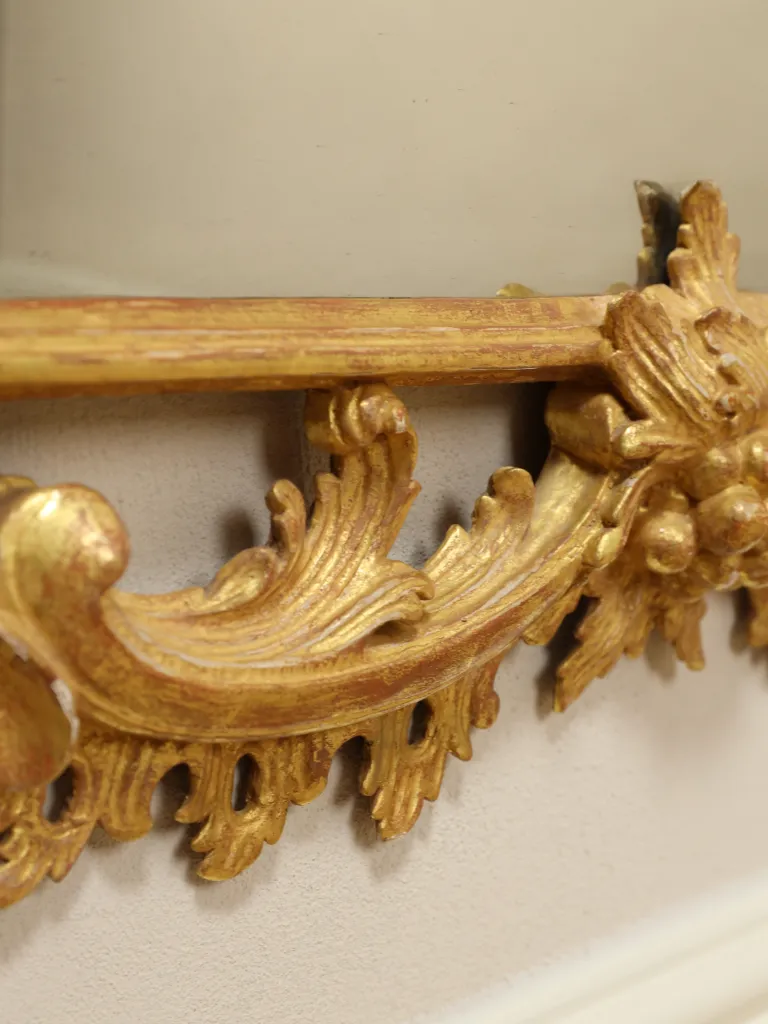
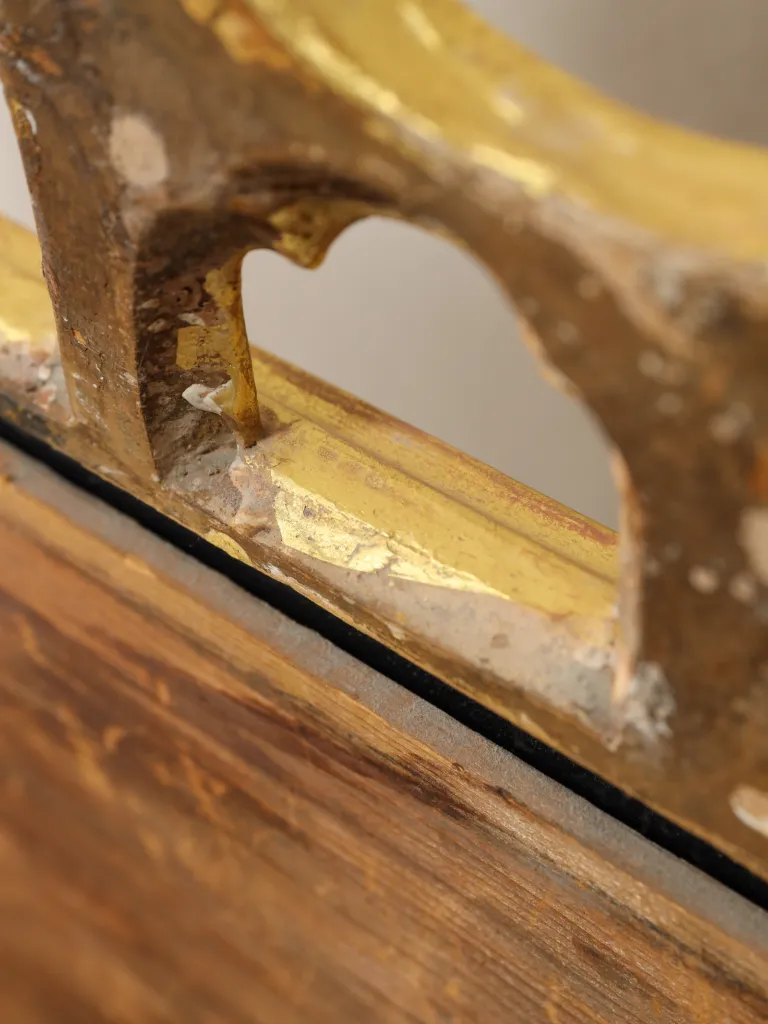
At approximately 15 cm / 5.9 inches deep, the frames are remarkably sculptural.
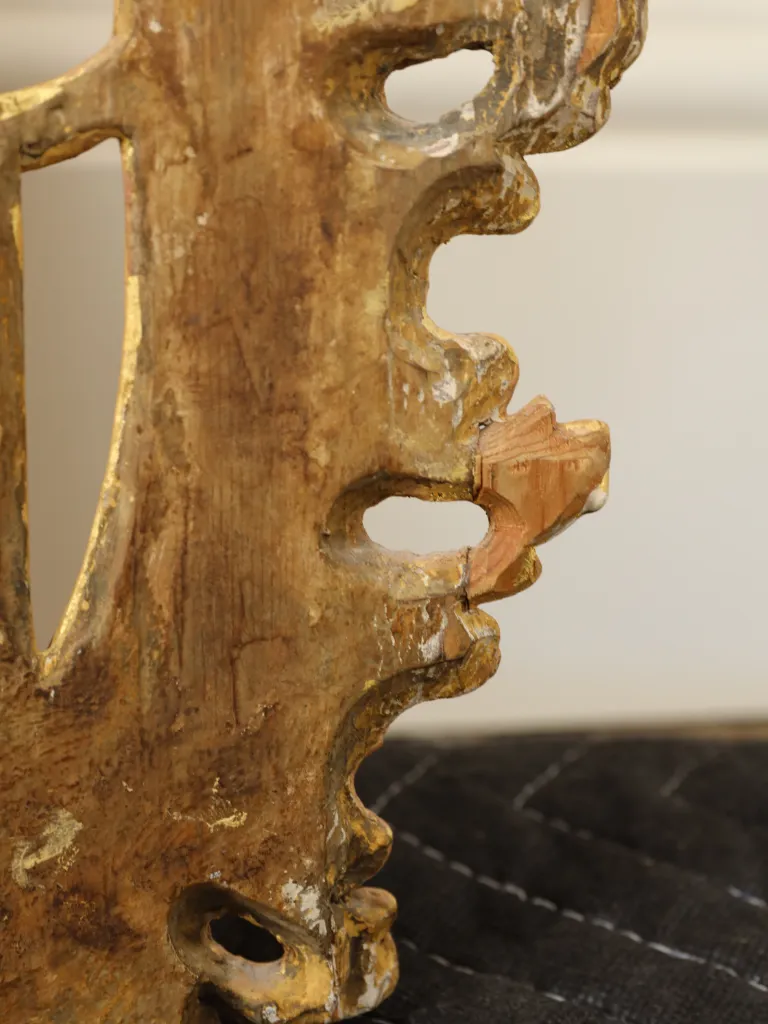
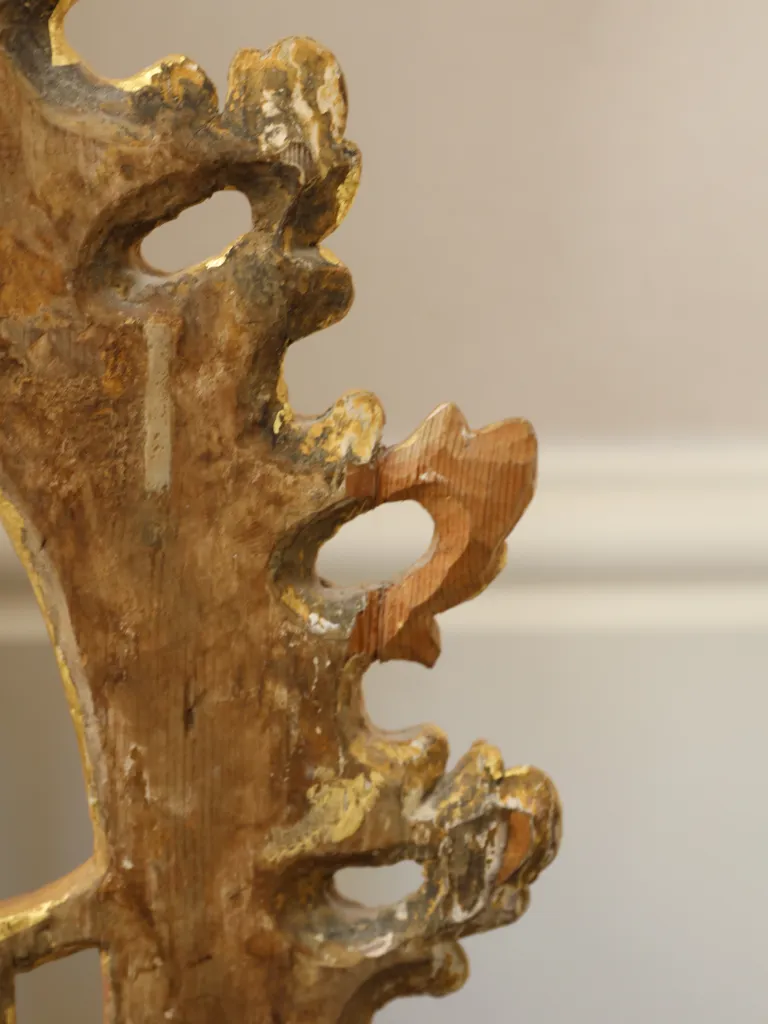
Viewed from an angle, the extent of the projecting carving becomes particularly apparent. The pierced construction allows light and shadow to pass through the ornament, giving the frames considerable visual depth when displayed.
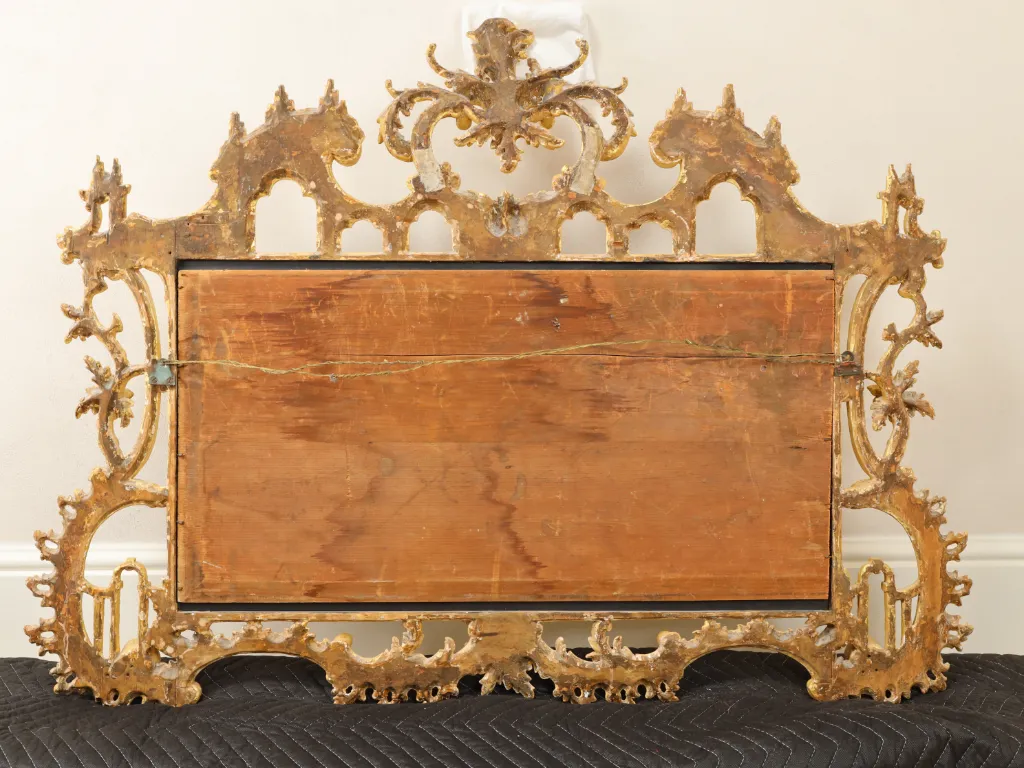
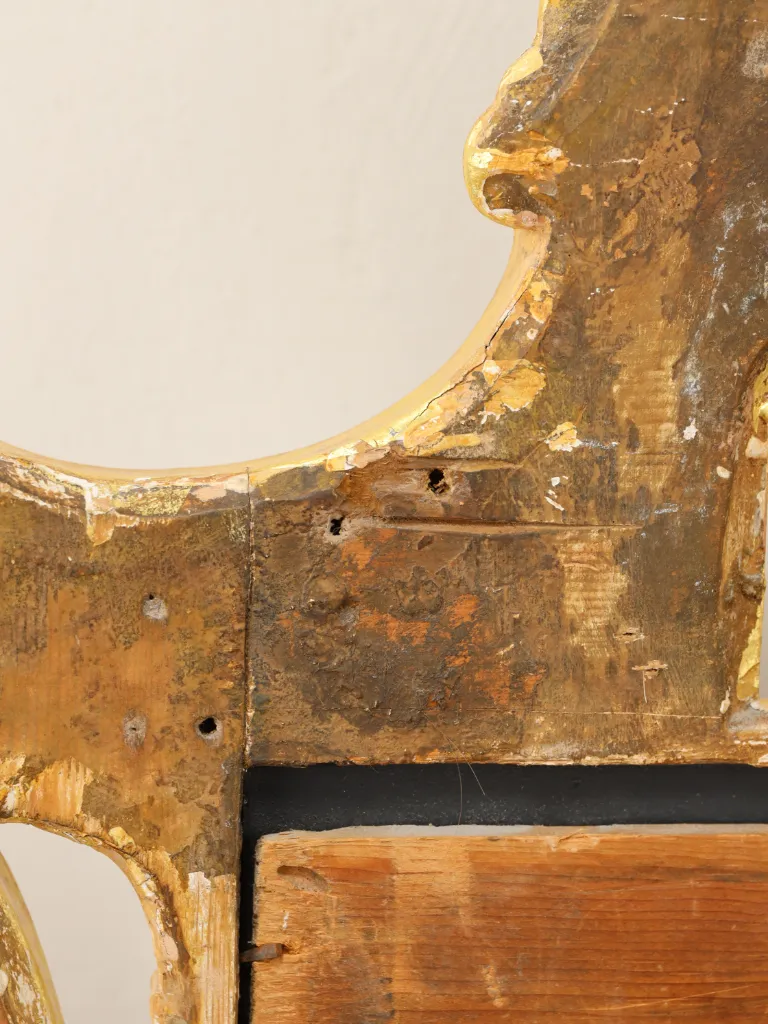
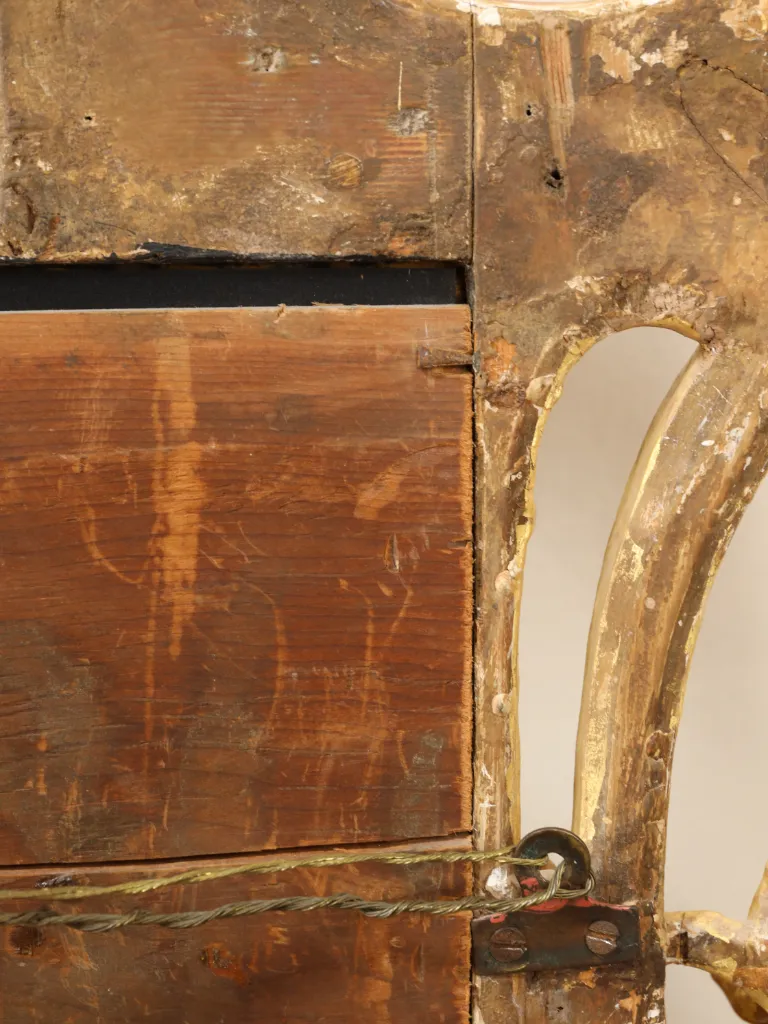
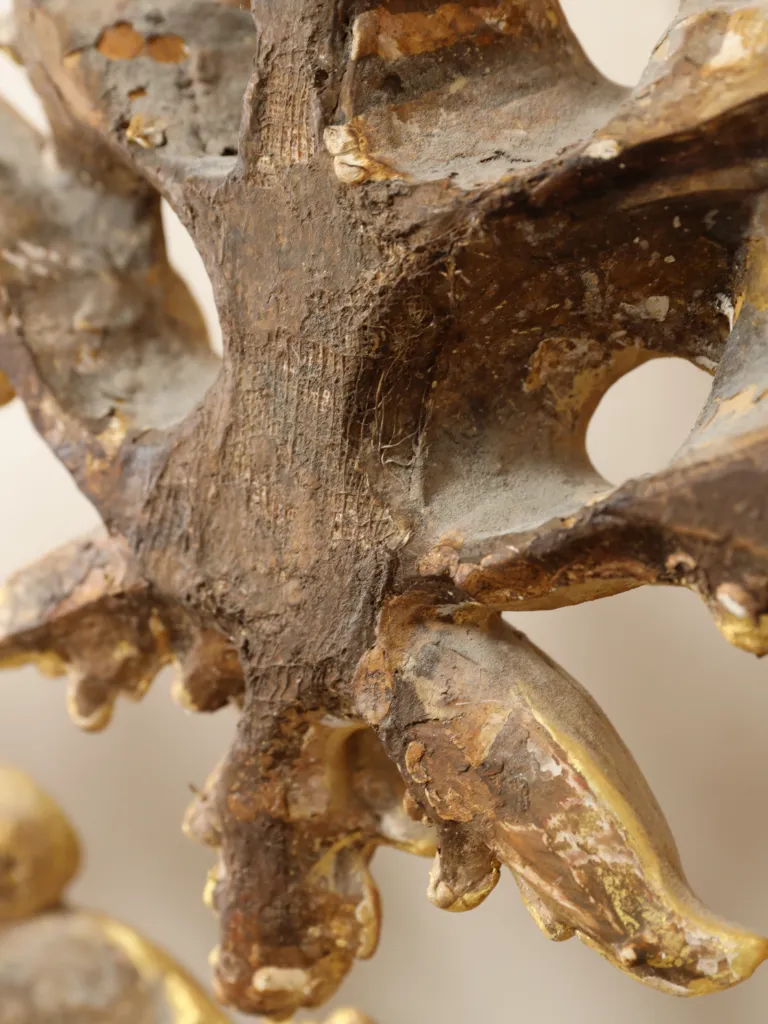
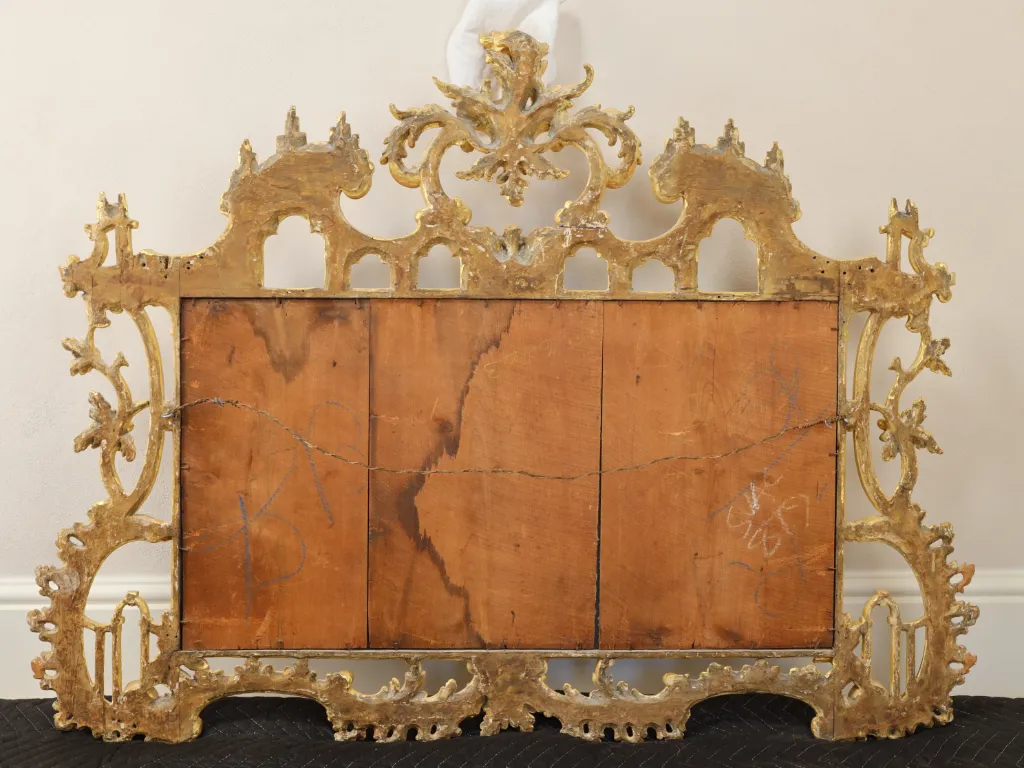
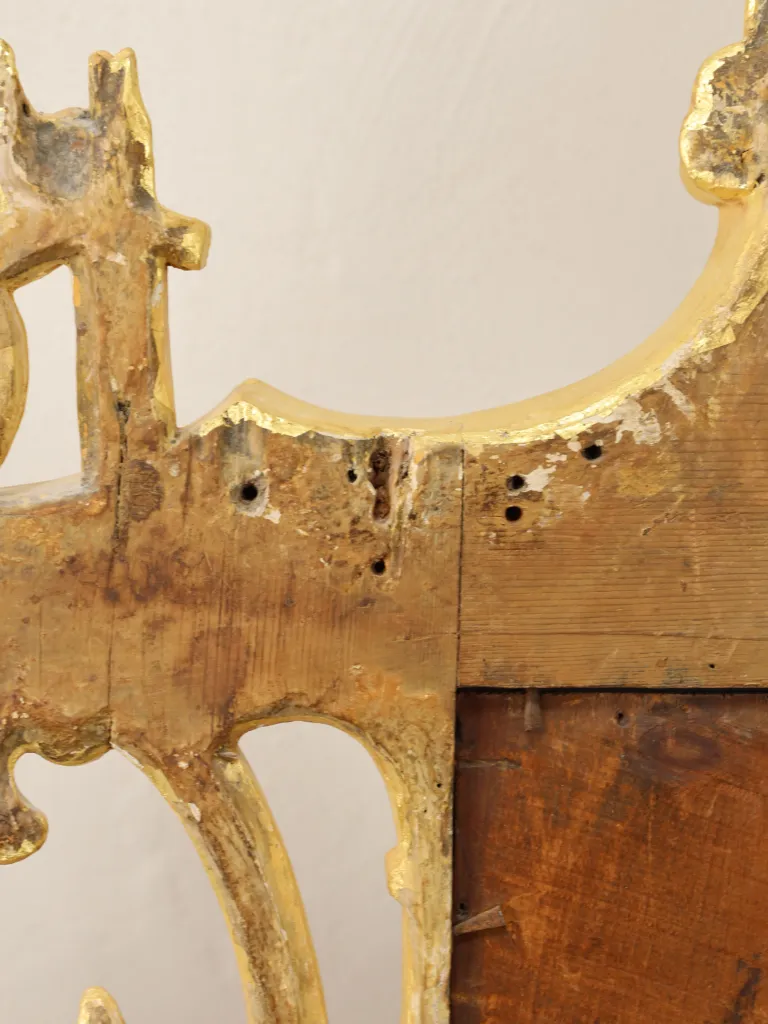
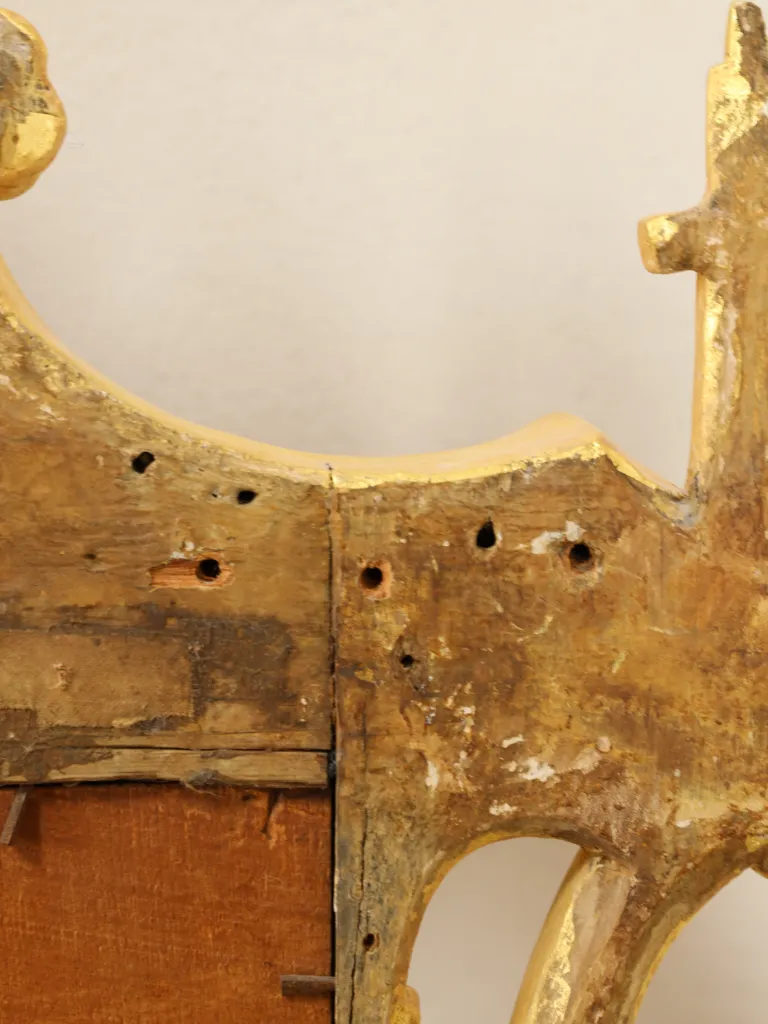
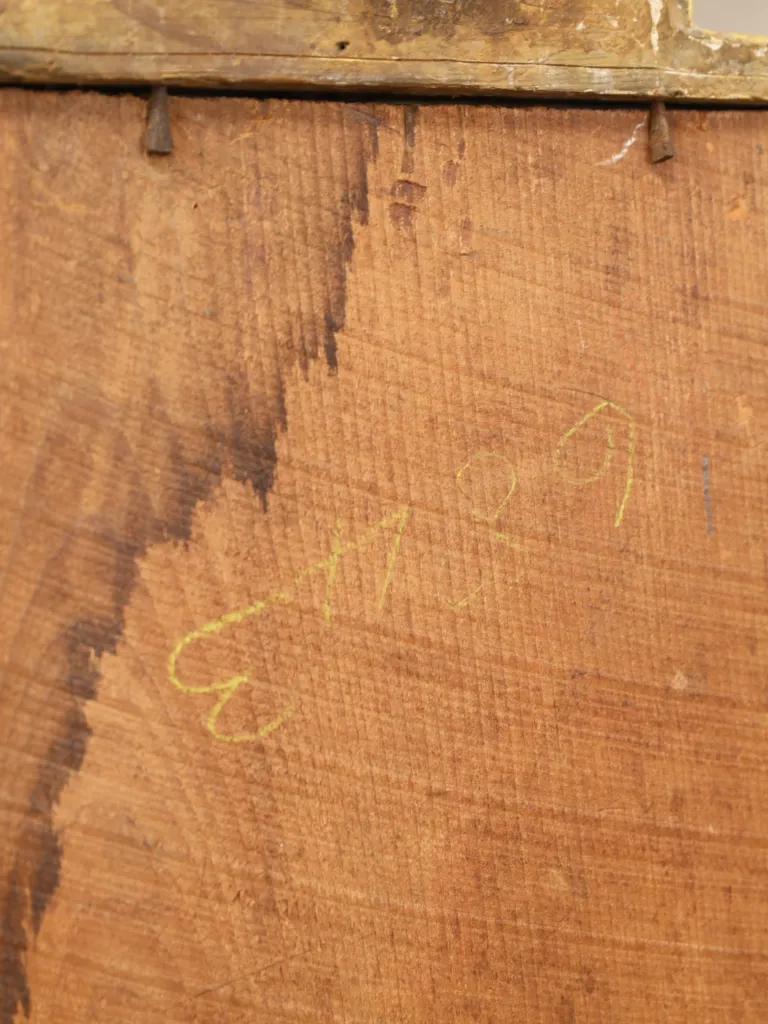
The reverse reveals traditional timber construction, with substantial wooden backboards protecting the mirror plates.
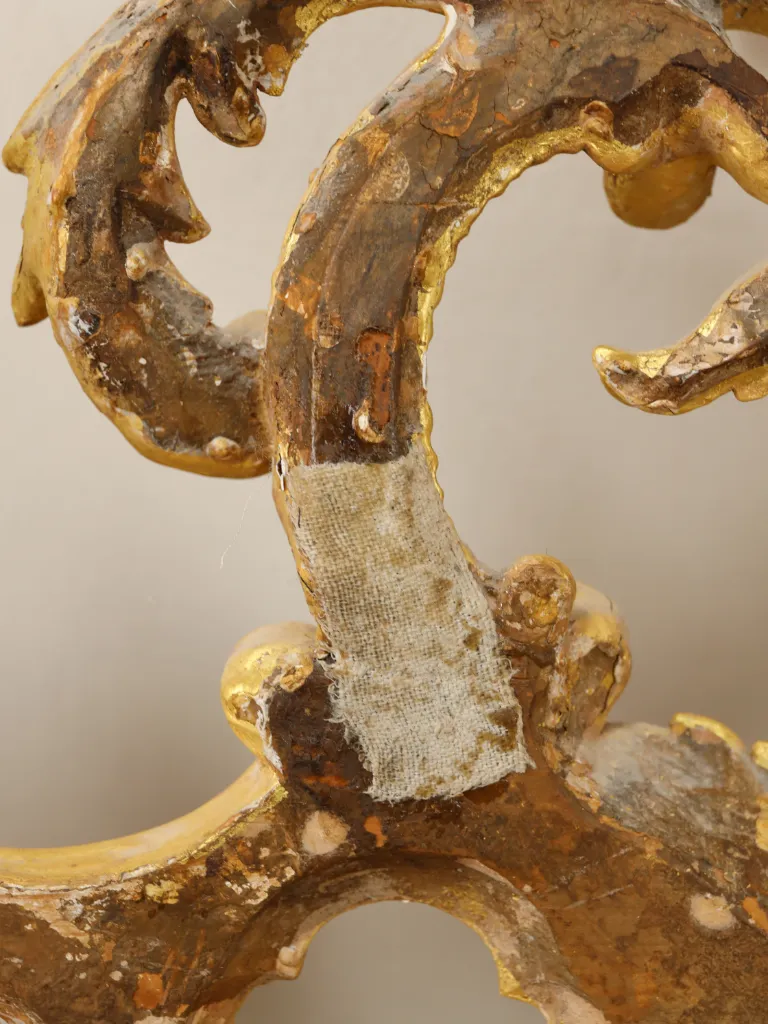
Historic reinforcement and repairs are also visible from the reverse, including old fabric-backed strengthening to vulnerable areas of the carved framework. Given the delicacy of the extensive openwork carving and the considerable age of the mirrors, such historic intervention is understandable.
Acquired from the sale of the contents of a large country house, where the pair were catalogued at auction as Irish George II.
The auction attribution has been retained within our catalogue documentation.
Their survival as a matching pair is particularly noteworthy. Elaborately carved 18th-century giltwood mirrors were inherently vulnerable to damage, alteration and separation as historic houses and collections were dispersed.
The pair therefore retain not only their decorative impact but the important symmetry for which they were originally intended.
Measuring an impressive 111 cm / 43.7 inches wide each, the mirrors have considerably greater presence than their height alone might suggest.
Their broad horizontal proportions make them particularly well suited for positioning above console tables, commodes or chests.
As a pair, they also offer the opportunity for architectural placement within a substantial interior — positioned either side of a chimney breast, between windows or doorways, or opposite one another within a drawing room, entrance hall or dining room.
The aged gilt surfaces are particularly effective against restrained or darker wall colours, where the extensive openwork carving and dramatic silhouette become almost sculptural artworks in their own right.
The mirrors are in good antique condition considering their considerable age and exceptionally intricate construction.
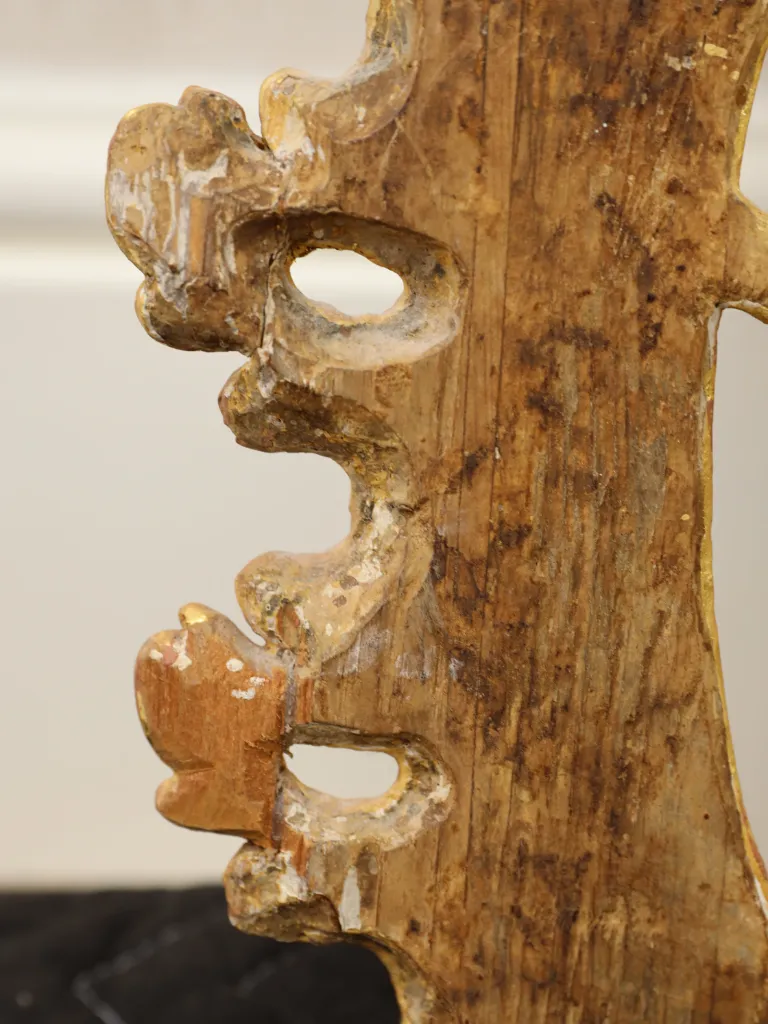
There is historic wear and variation throughout the gilt and gesso surfaces, including rubbing, small losses and areas where the underlying preparation and timber have become visible. This has created an attractive mellow surface appropriate to their age.
Historic repairs and strengthening are present to areas of the carved giltwood frames. Old reinforcement, including fabric-backed repairs, is visible from the reverse, together with other historic interventions intended to preserve vulnerable areas of the openwork carving.
There are expected age-related cracks, minor losses and historic repairs to elements of the carved decoration.
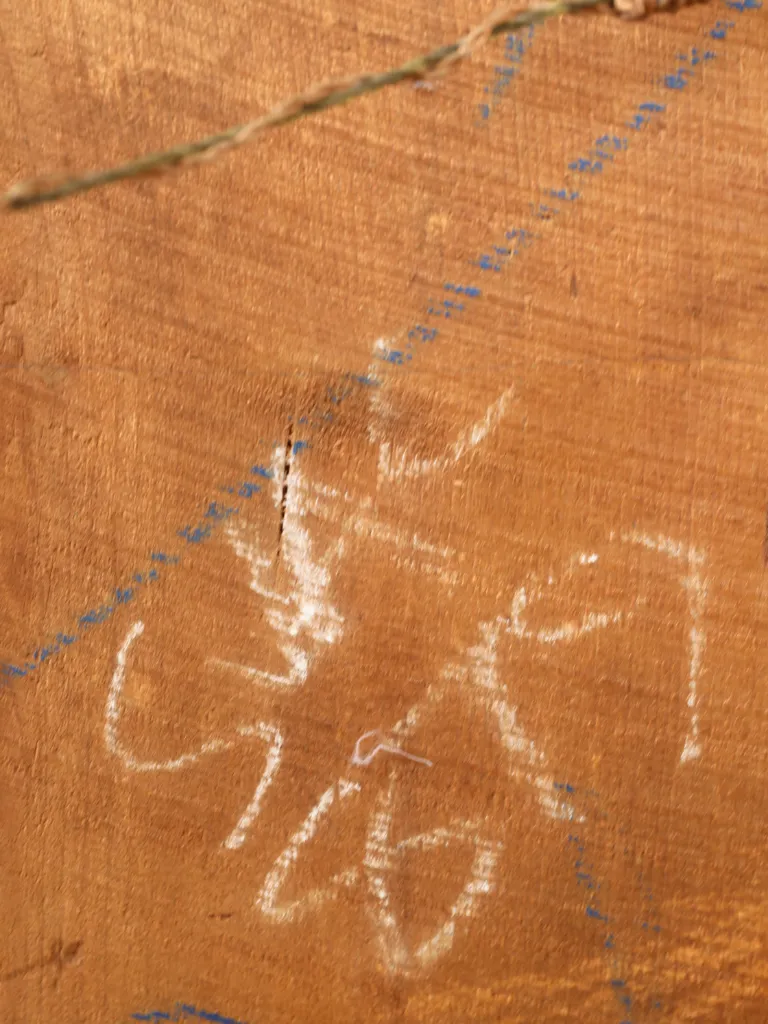
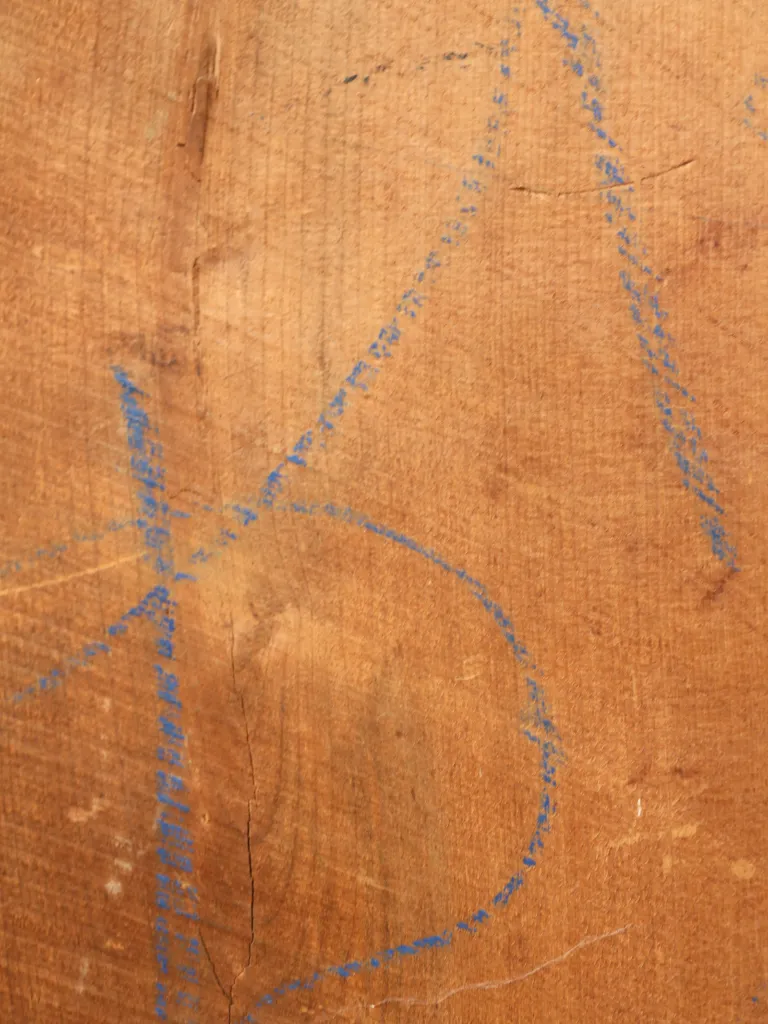
The timber backboards display appropriate age, wear and historic markings.
Mirror plates are fitted within the frames. Unless documentary evidence confirms otherwise, we make no claim that the present mirror plates are original to the 18th-century frames.
Despite the expected historic repairs and wear, the pair retain an exceptionally impressive decorative presence.
Please refer to the photographs, which form an integral part of the condition report. Further detailed photographs can be supplied upon request.
Height: 84 cm / 33.1 inches
Width: 111 cm / 43.7 inches
Depth: 15 cm / 5.9 inches
Weight: 6.5 kg / 14.3 lbs
Combined weight: approximately 13 kg / 28.7 lbs
Every item offered by Shackleton Fox is carefully inspected, prepared, and where necessary conserved within our workshop prior to sale.
As heritage craftsmen and antique specialists, we believe in preserving the authenticity and integrity of each piece. Original finishes, patina, wear, and signs of age are retained wherever possible, as these elements contribute to both character and historical significance.
When restoration, rewiring, repairs, or conservation work is required, it is undertaken sympathetically using traditional techniques and materials appropriate to the period of the piece. Our philosophy is one of careful stewardship rather than unnecessary restoration, ensuring antiques remain both functional and historically respectful.
The result is a collection of pieces that have been thoughtfully prepared, allowing future owners to enjoy them with confidence while preserving their unique story and character.