
£1,750.00



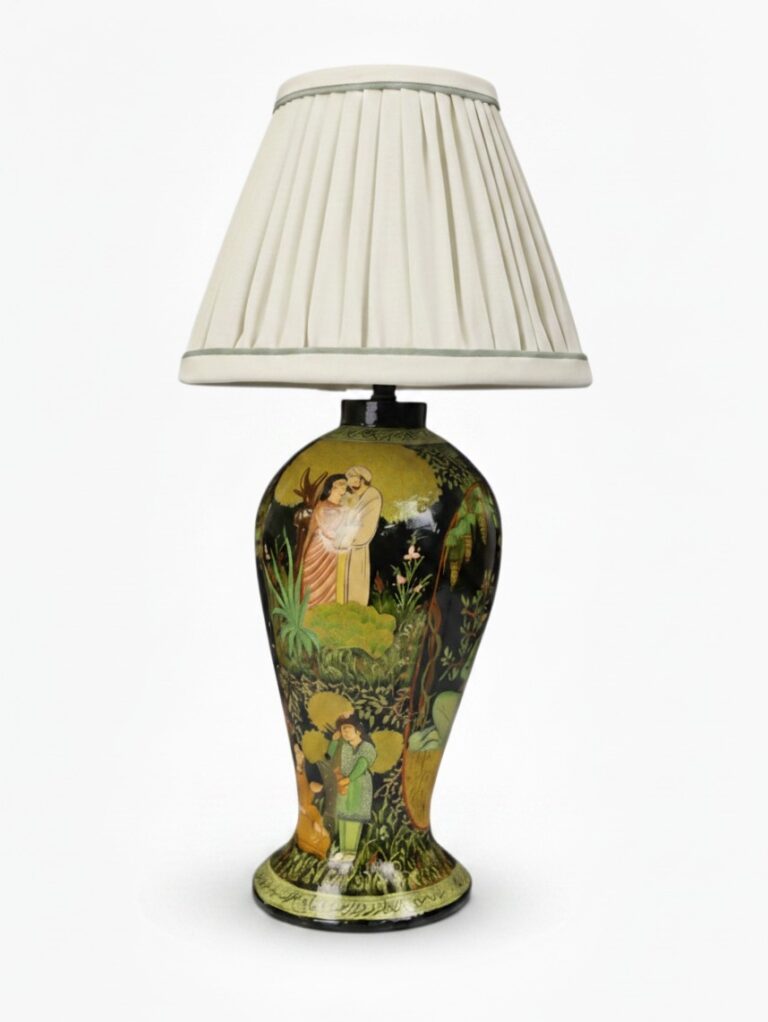
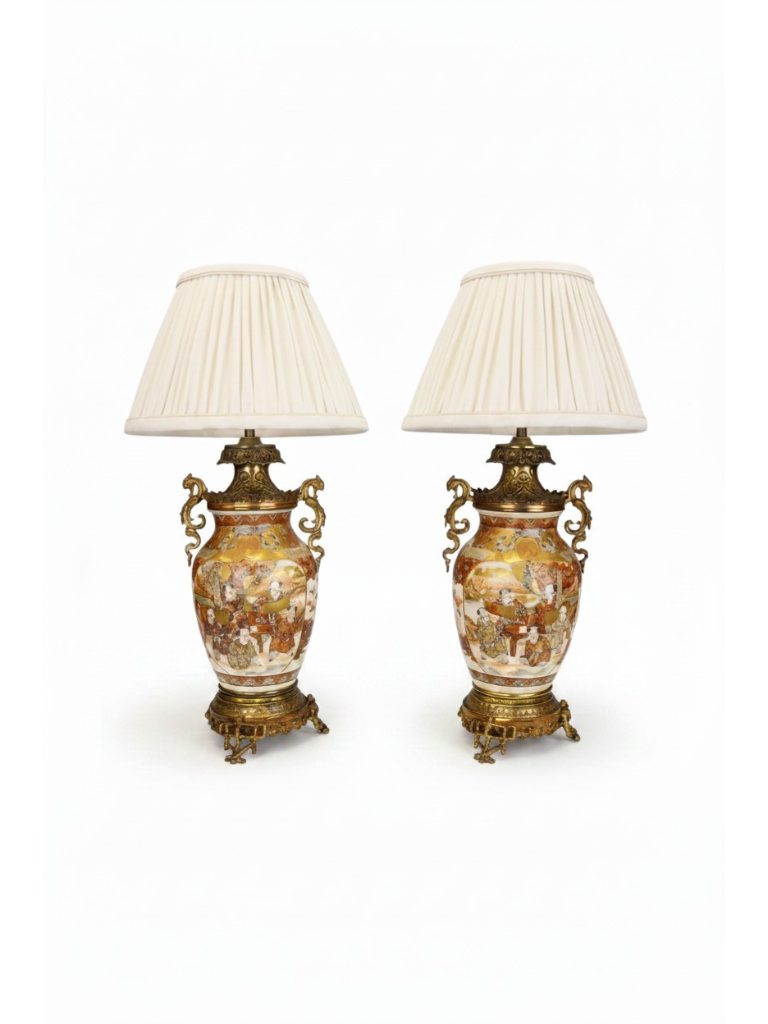
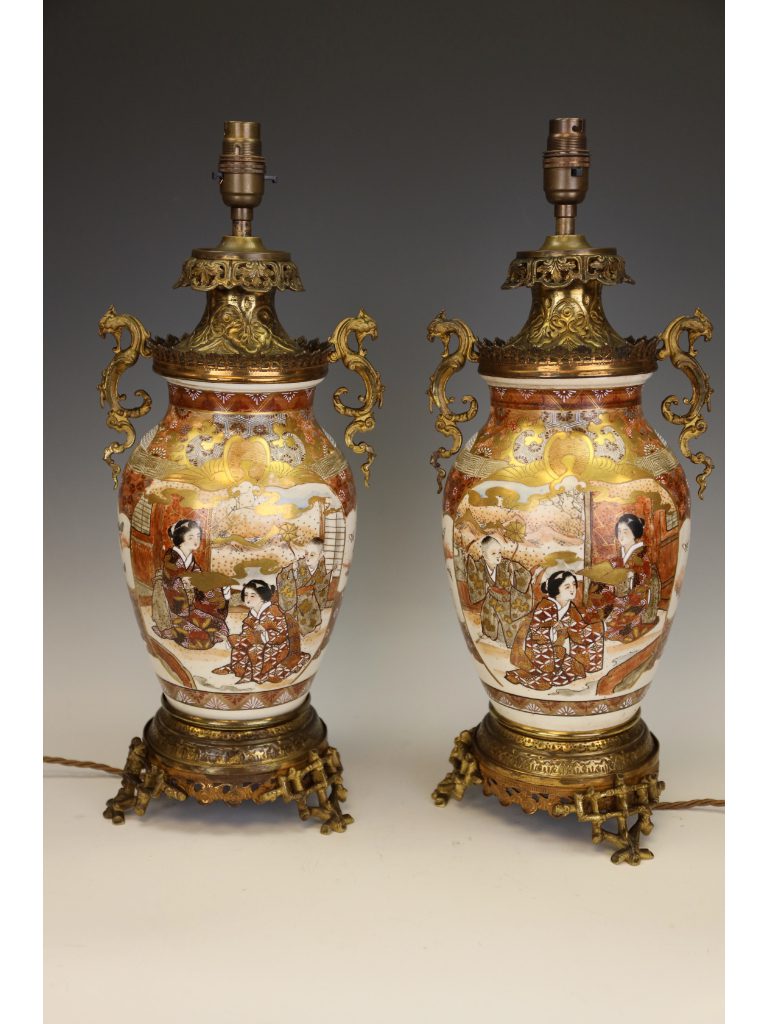
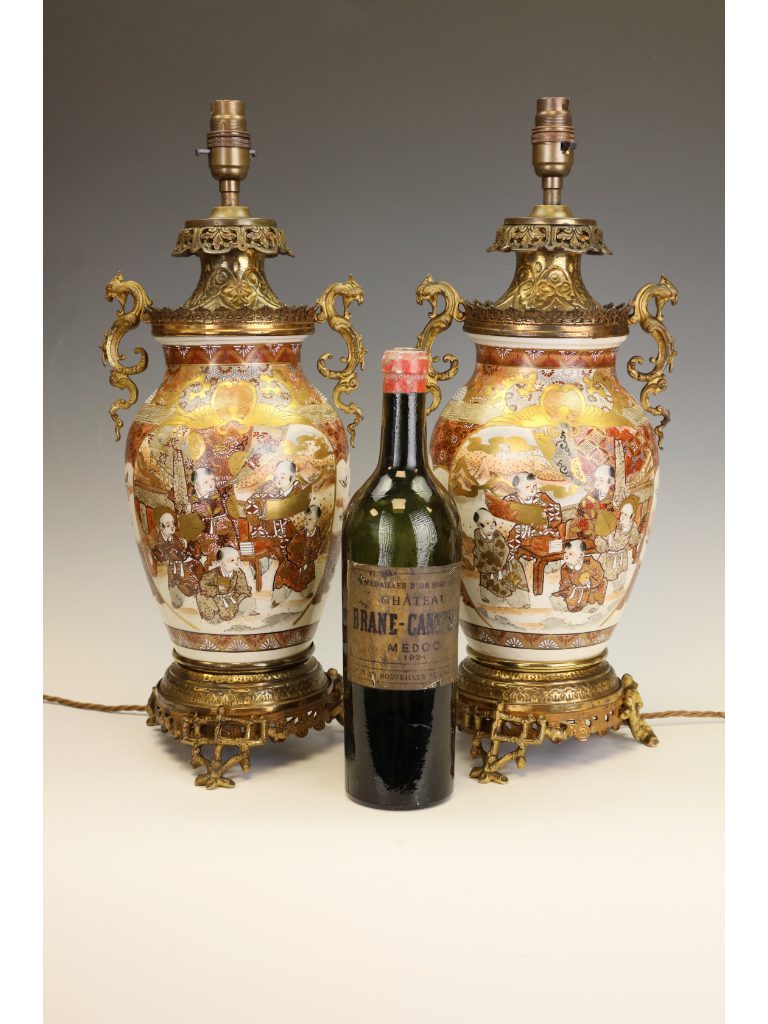
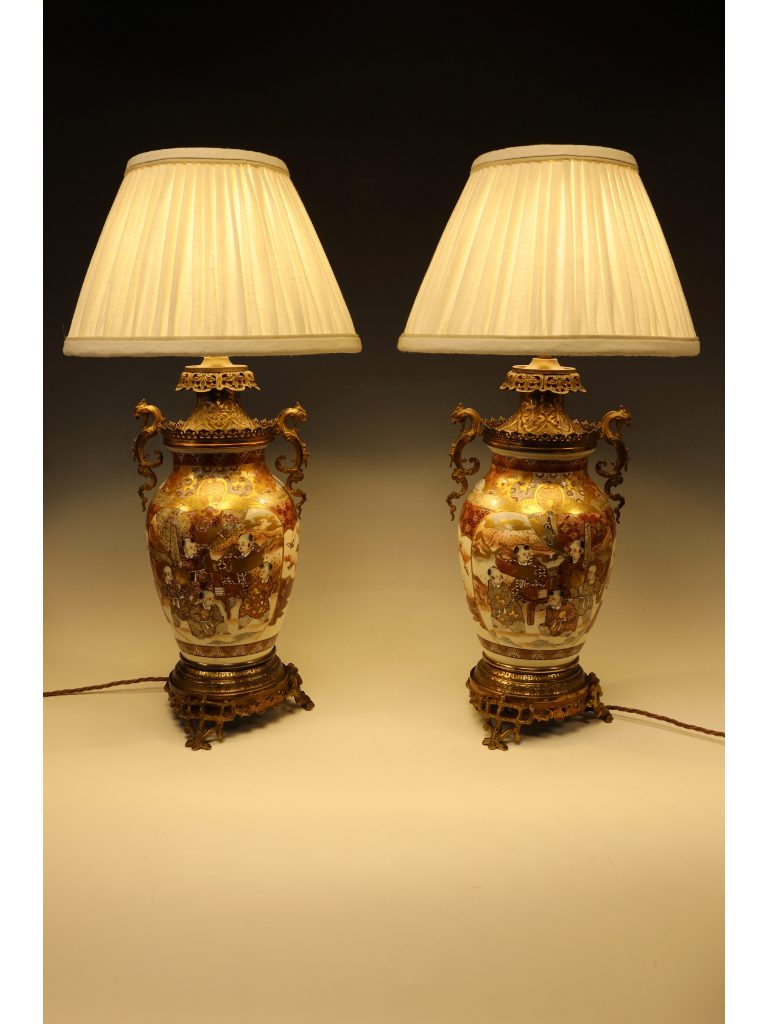
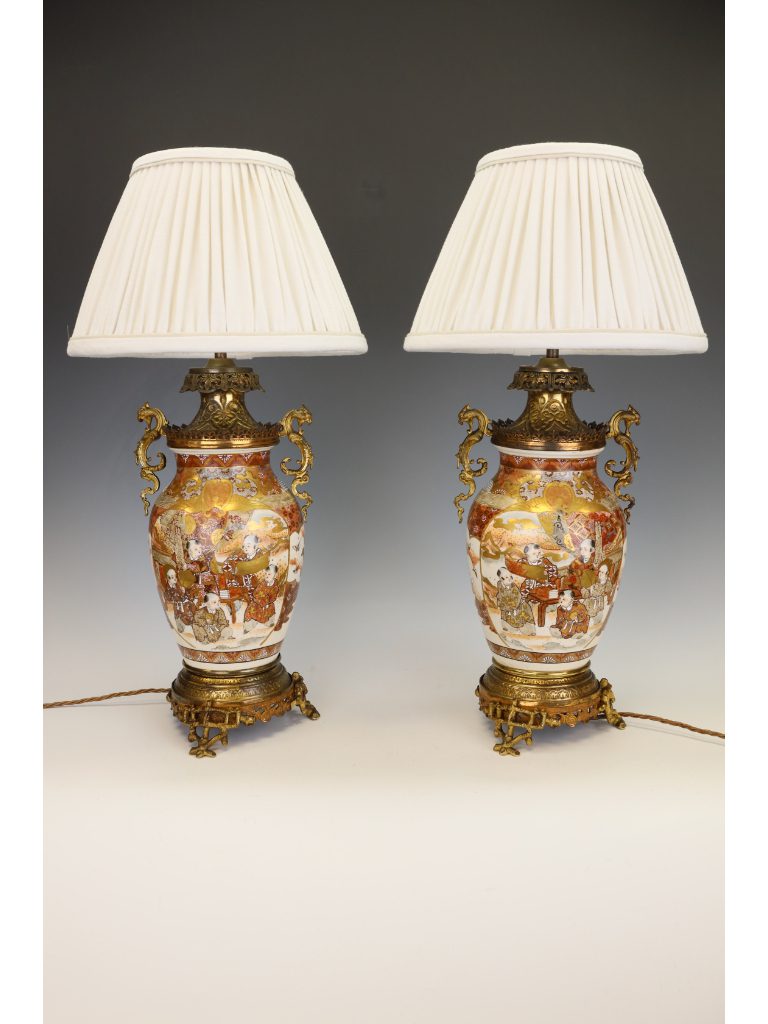
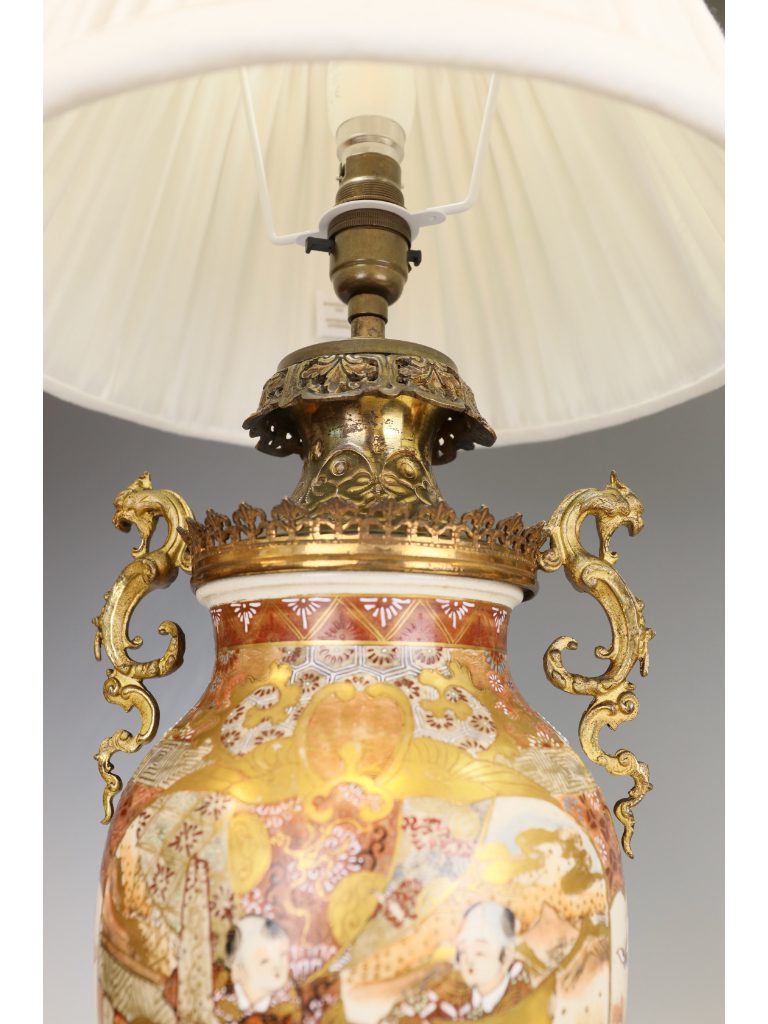
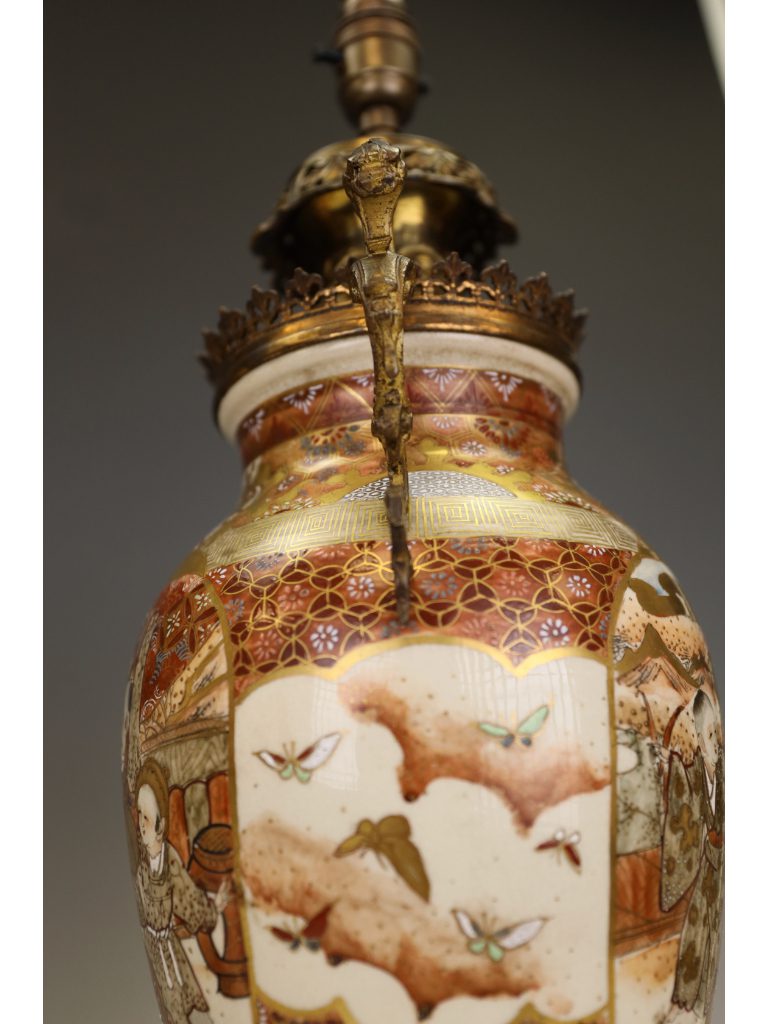
A superb and highly decorative pair of large 19th-century Japanese Satsuma vases, expertly converted into an impressive pair of statement table lamps. These are exceptional in both scale and quality, designed to anchor larger interiors such as grand consoles, sideboards, drawing rooms or luxury hospitality spaces.
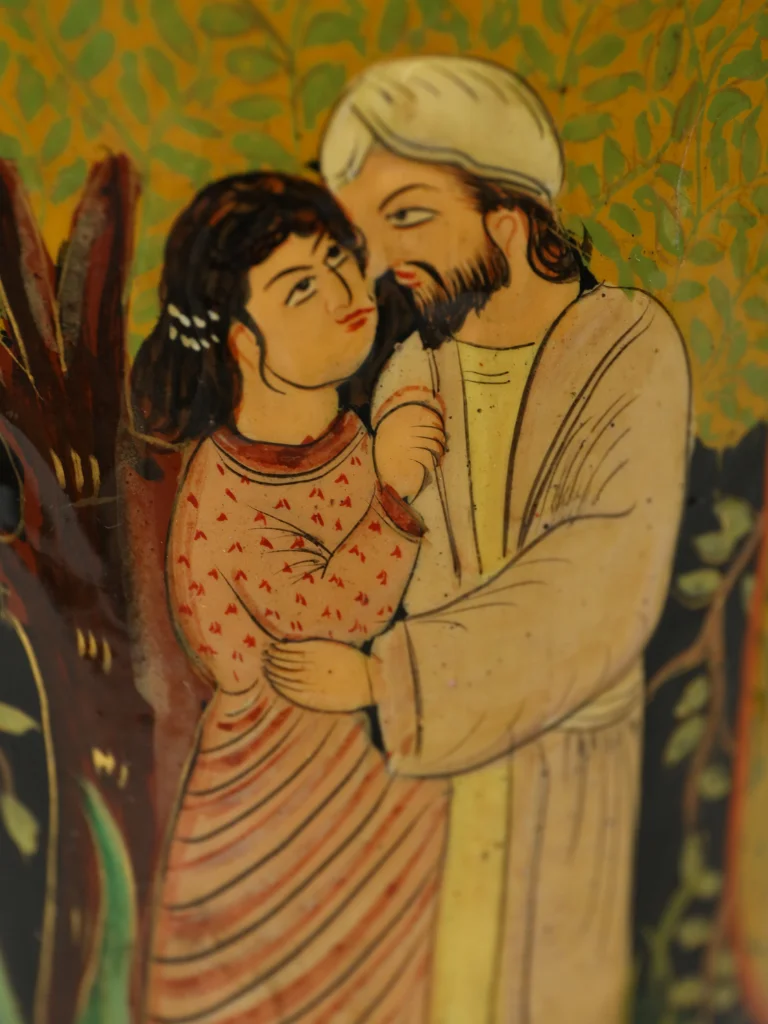
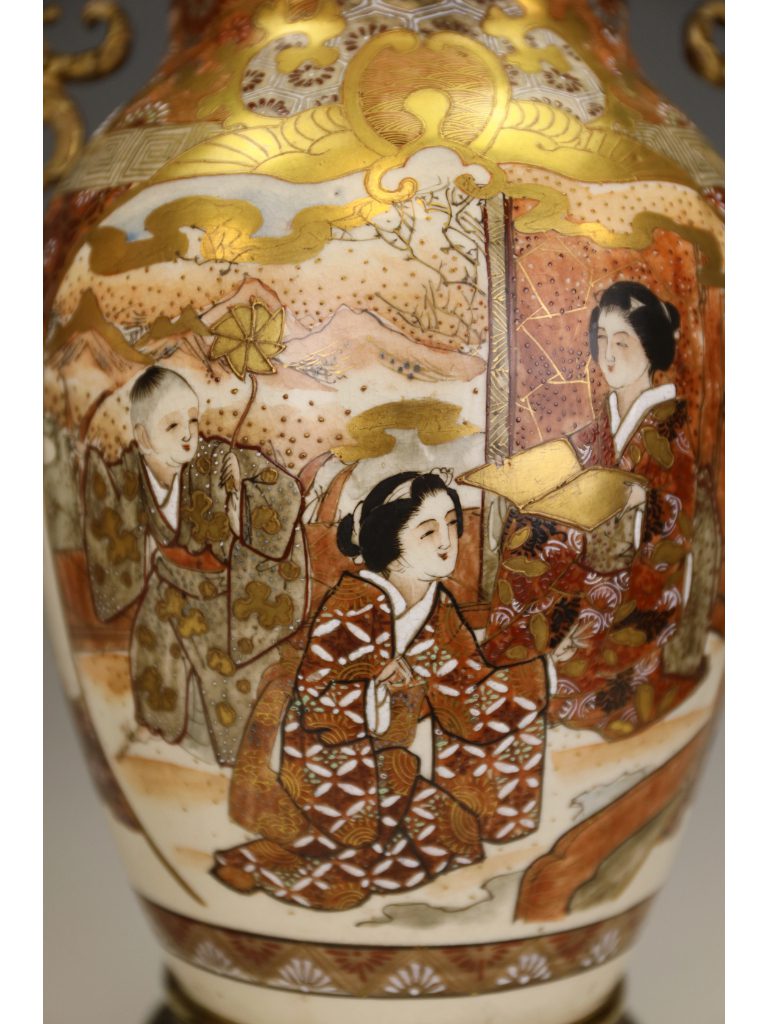
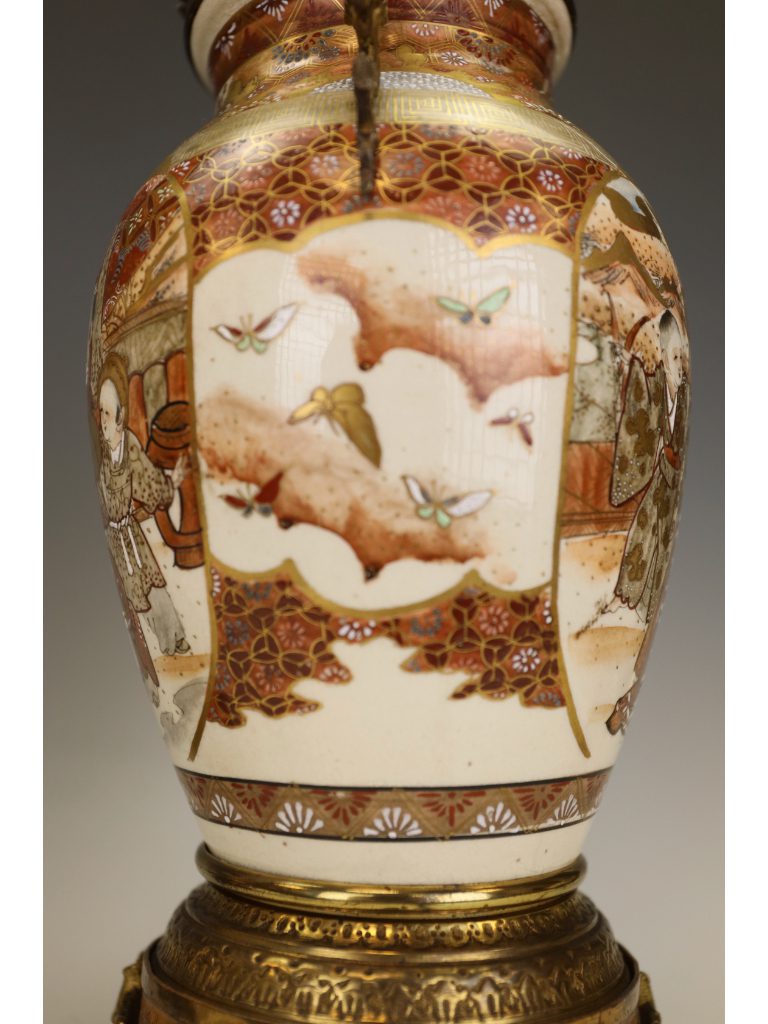
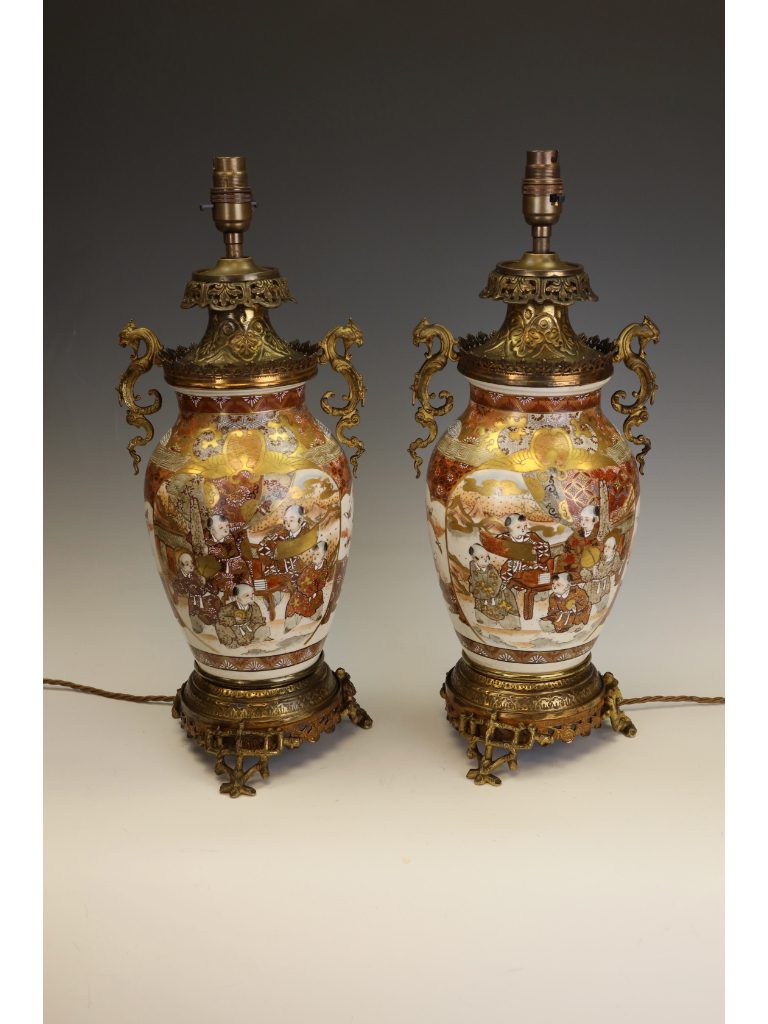
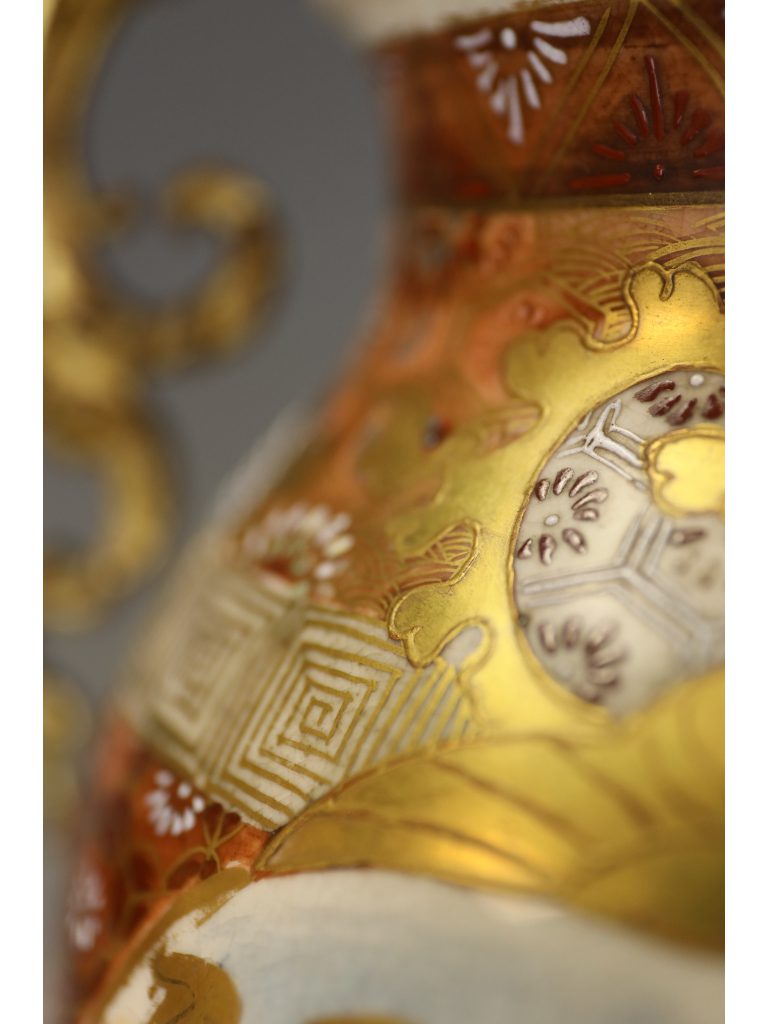
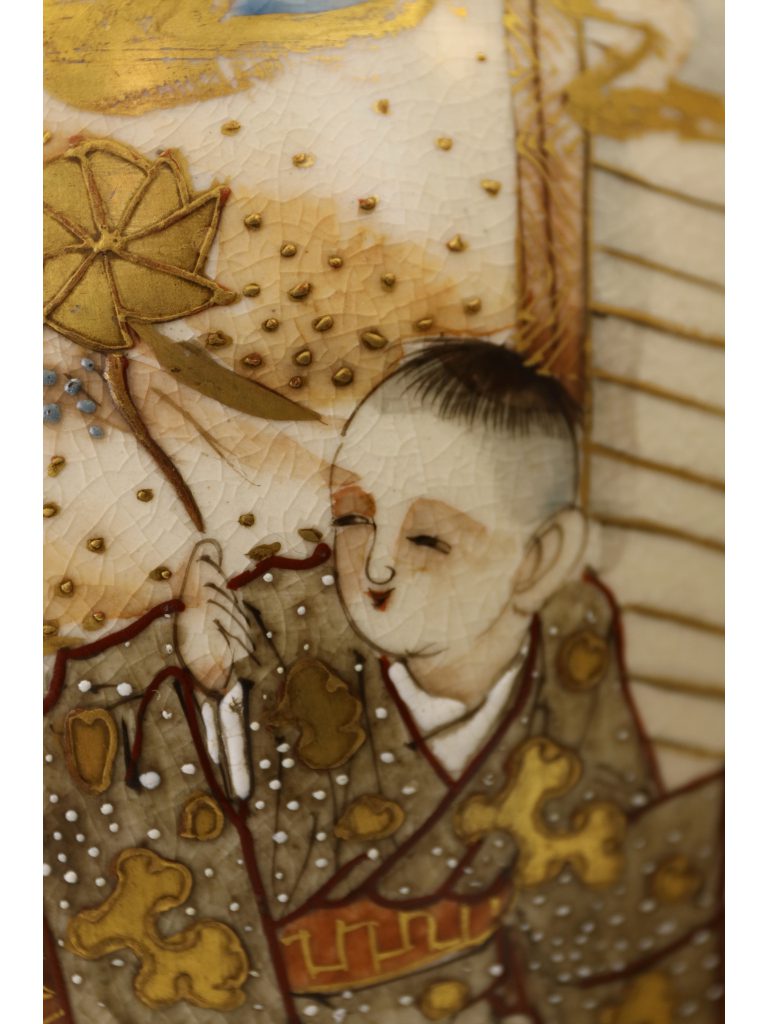
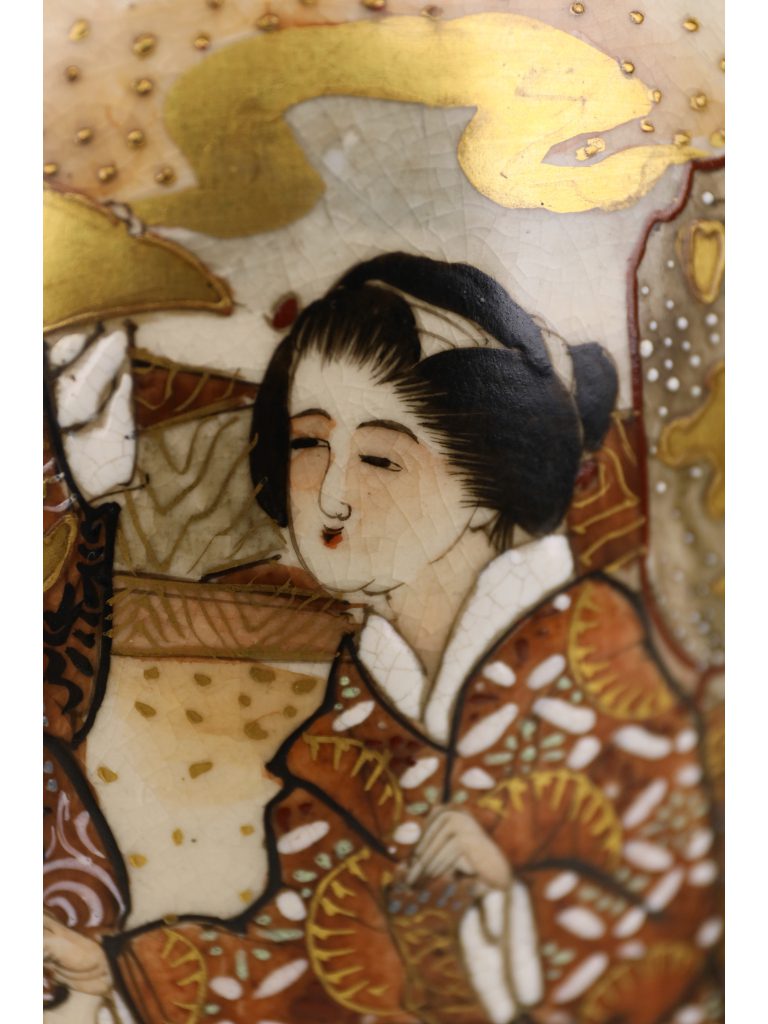
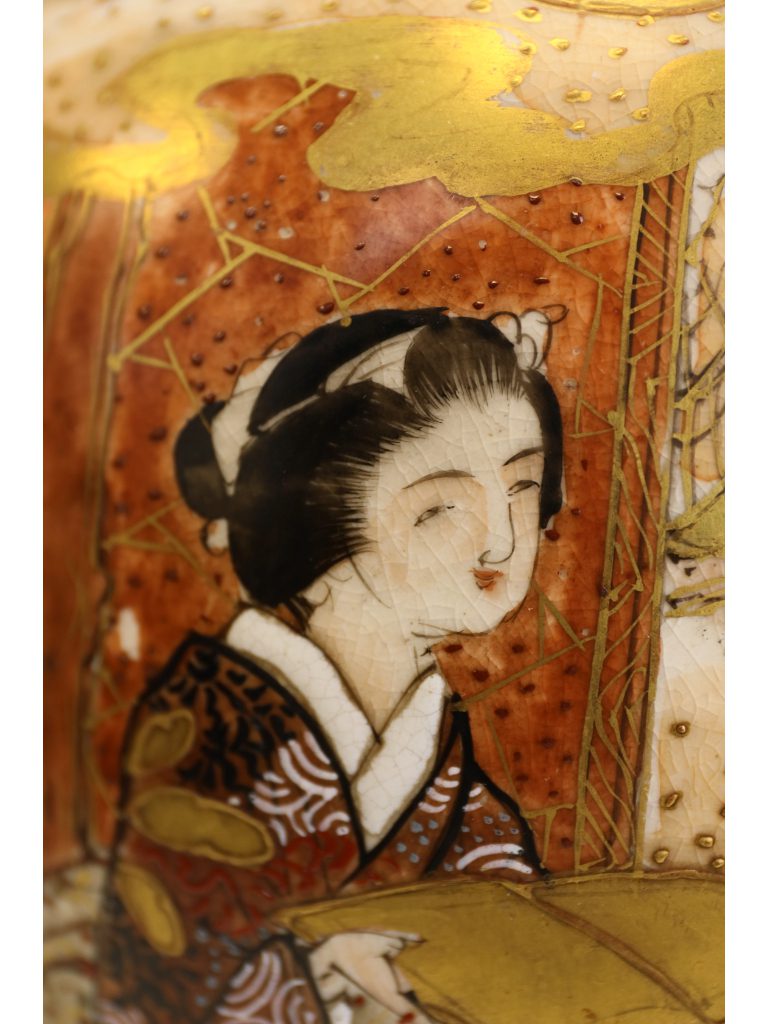
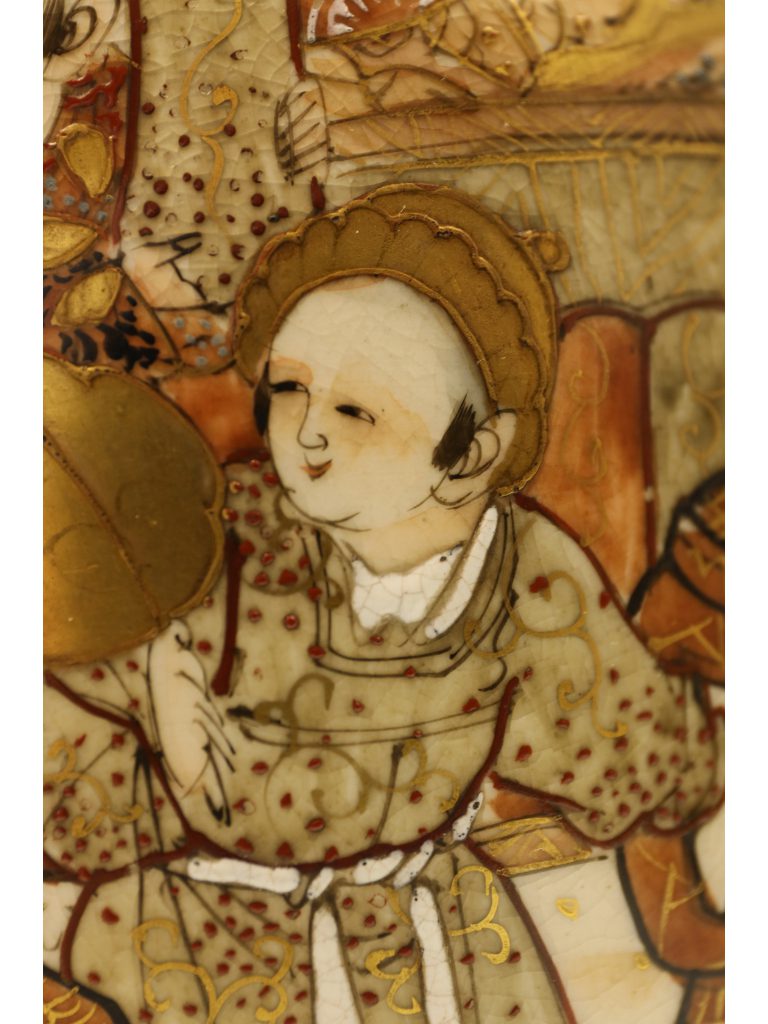
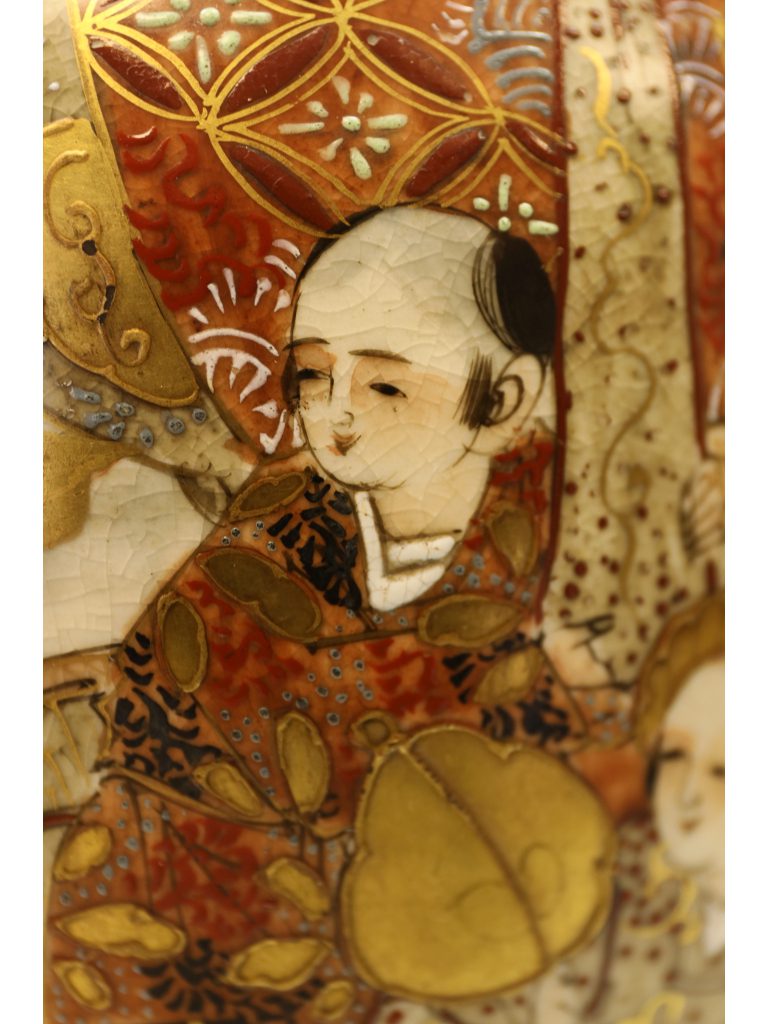
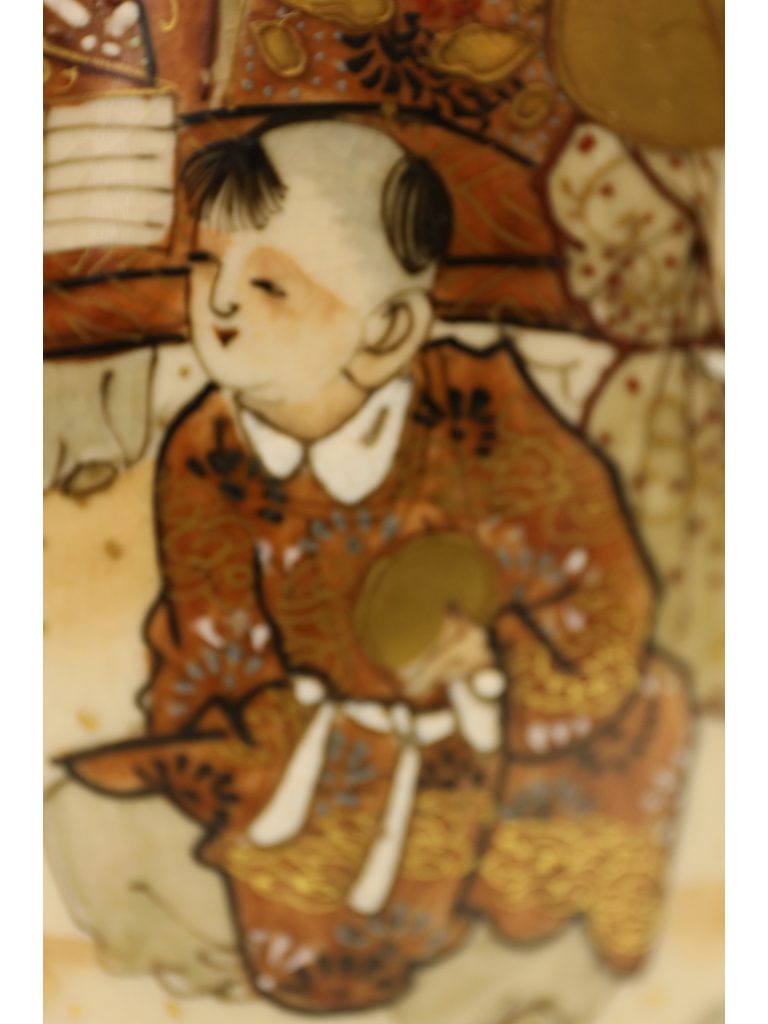
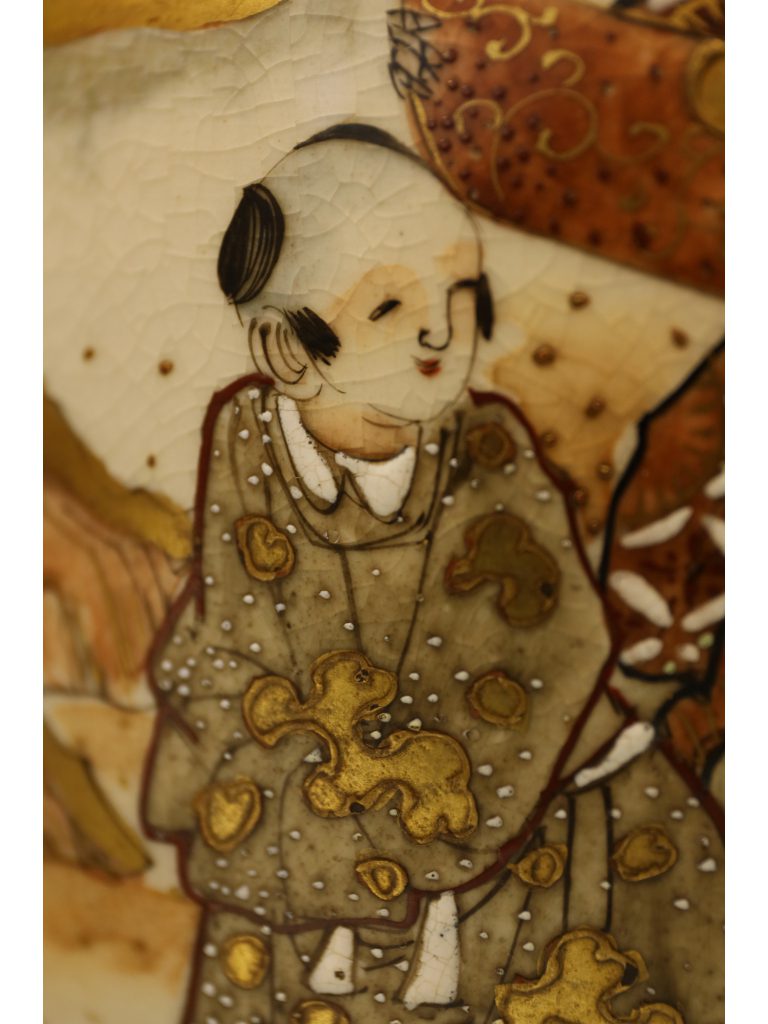
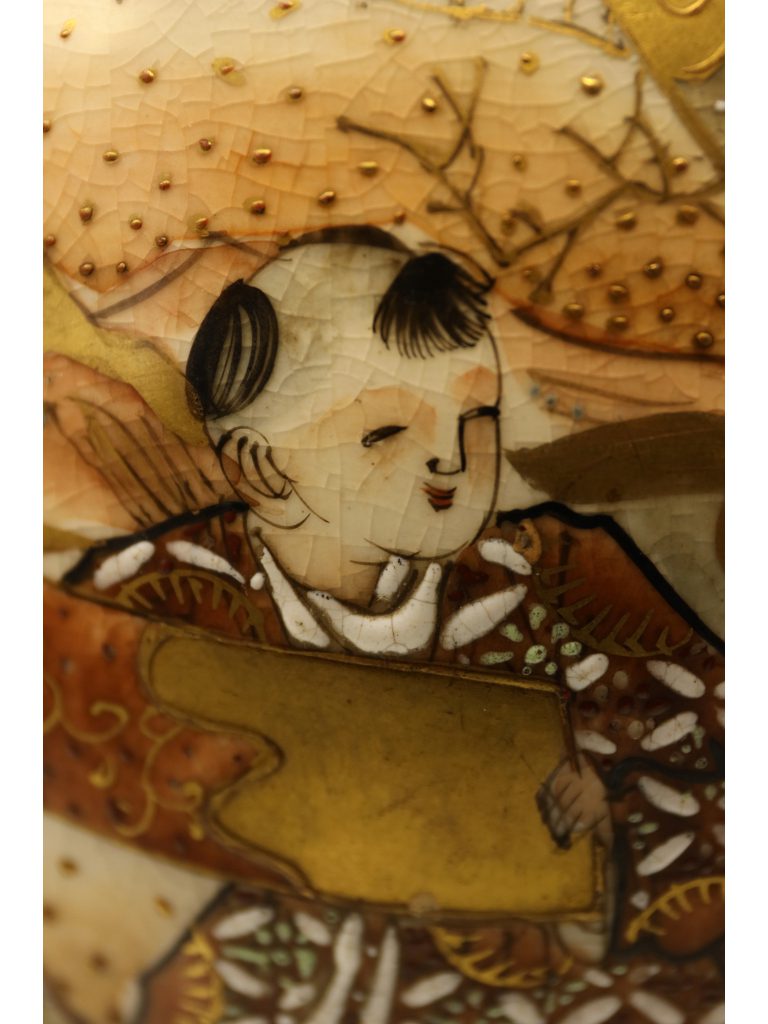
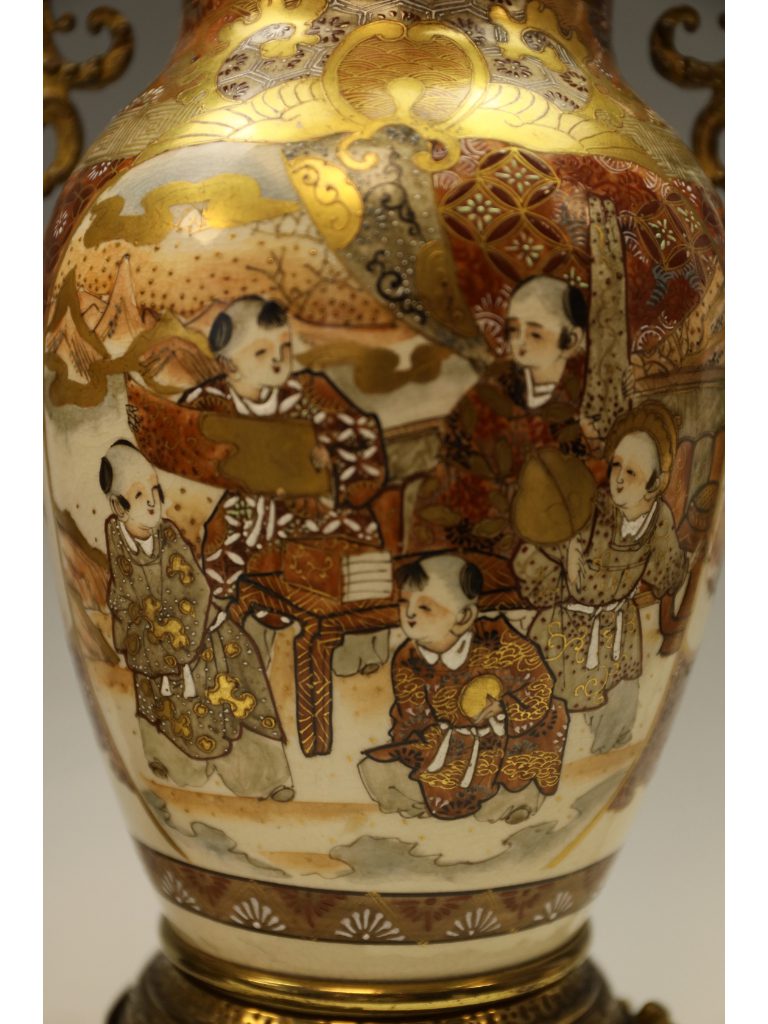
The ceramic bodies date to the Meiji period (circa 1880–1890) and display the refined craftsmanship for which Satsuma ware is internationally renowned. Each vase features finely hand-painted figural panels depicting traditional Japanese domestic and scholarly scenes, rendered with remarkable detail and expressive character. The figures are shown wearing richly decorated, heavily gilded kimonos, set against finely painted backgrounds with intricate patterning.
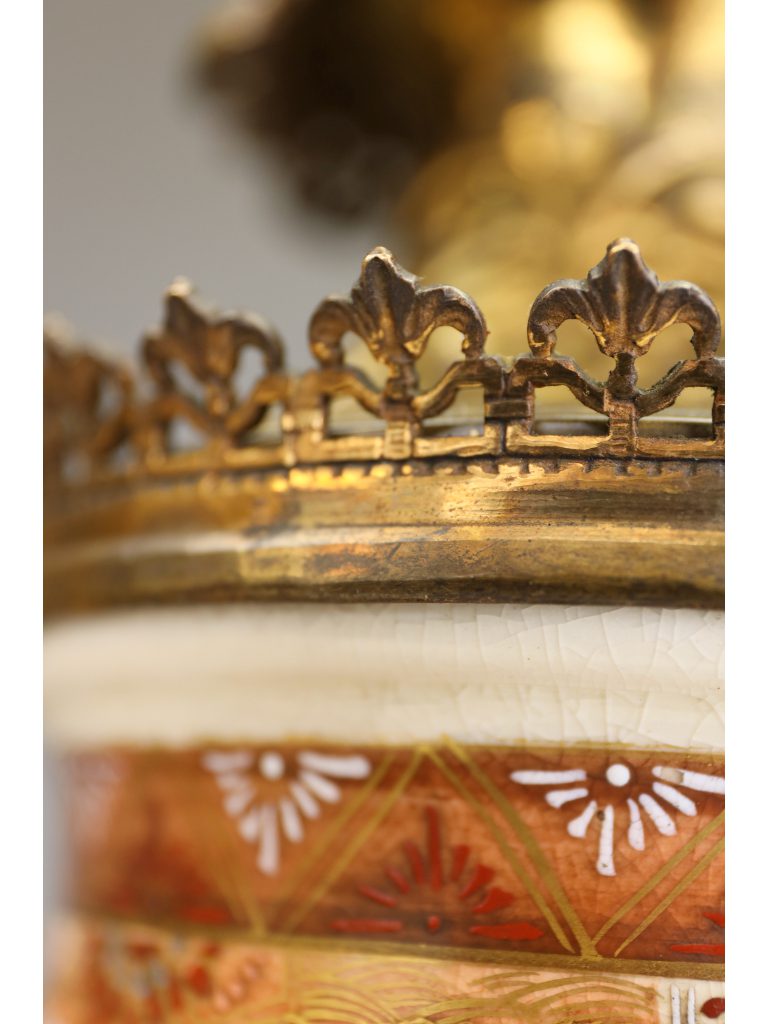
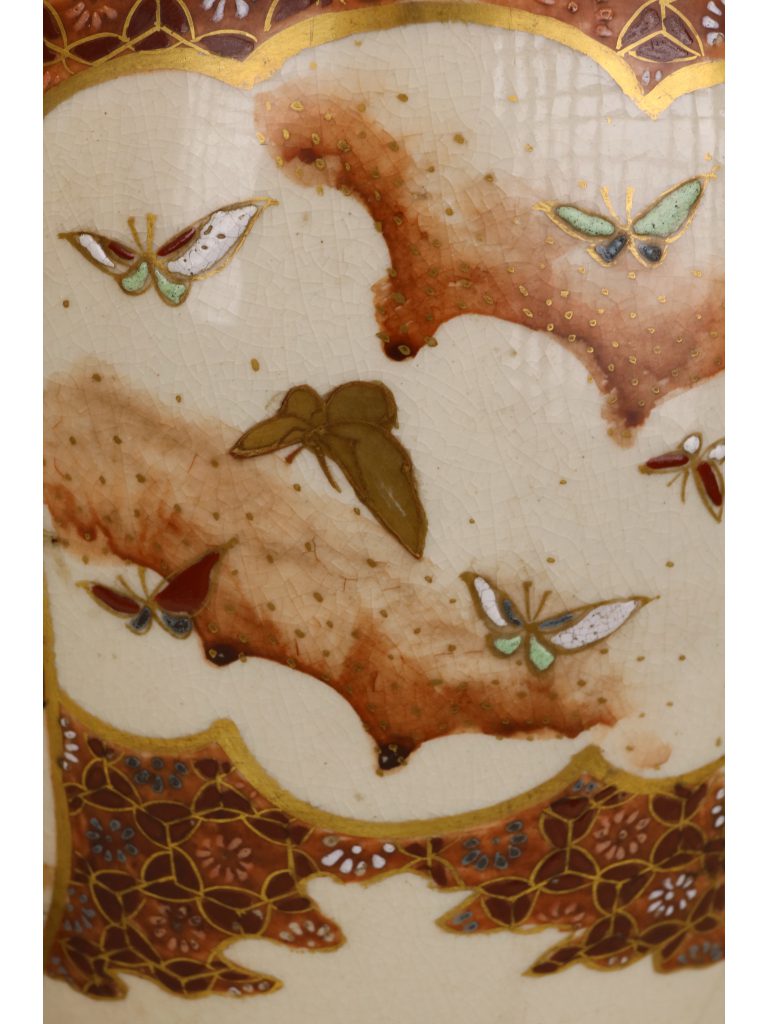
Additional panels depict delicately painted butterflies in flight amongst stylised clouds and ornamental brocade-style motifs. The surface is finished with the characteristic fine crackle glaze associated with authentic Satsuma pottery, adding depth, texture and historical authenticity.
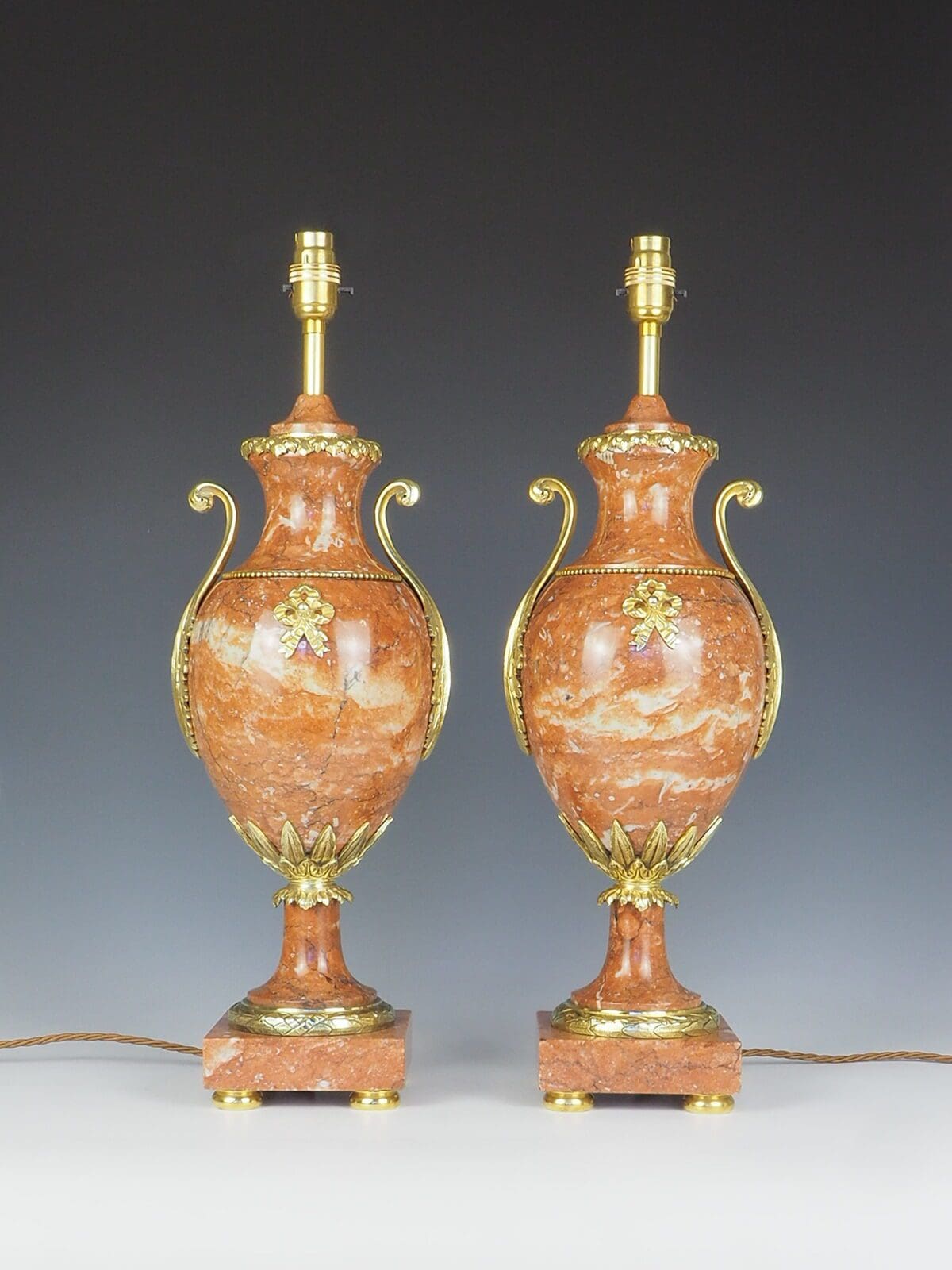
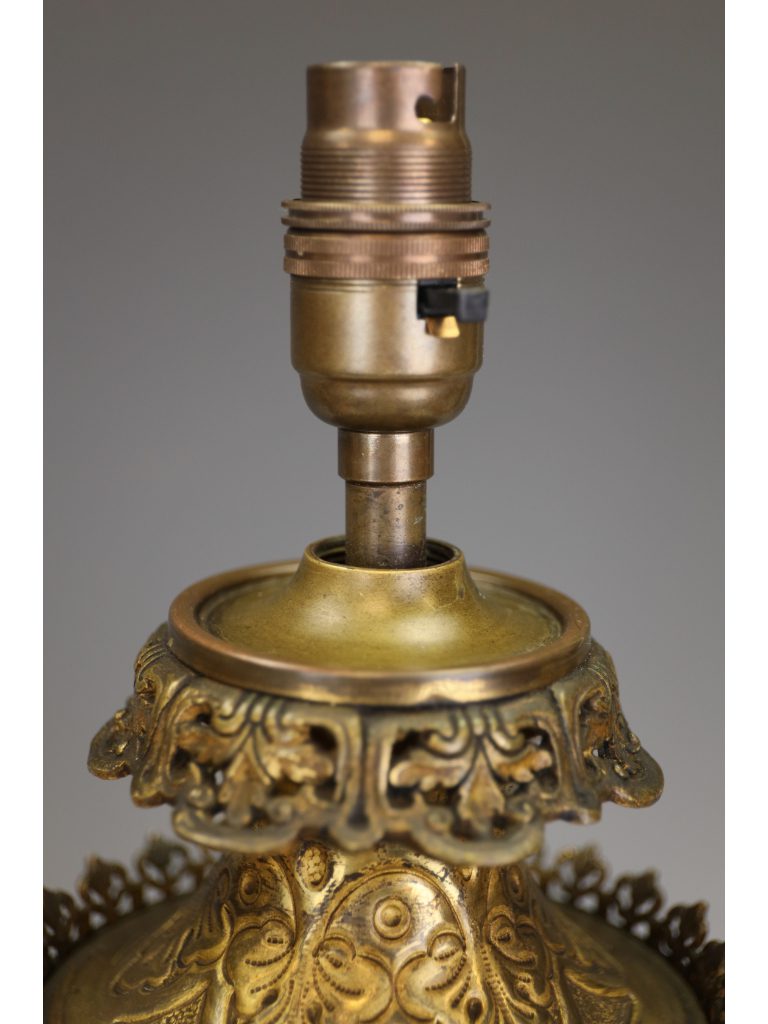
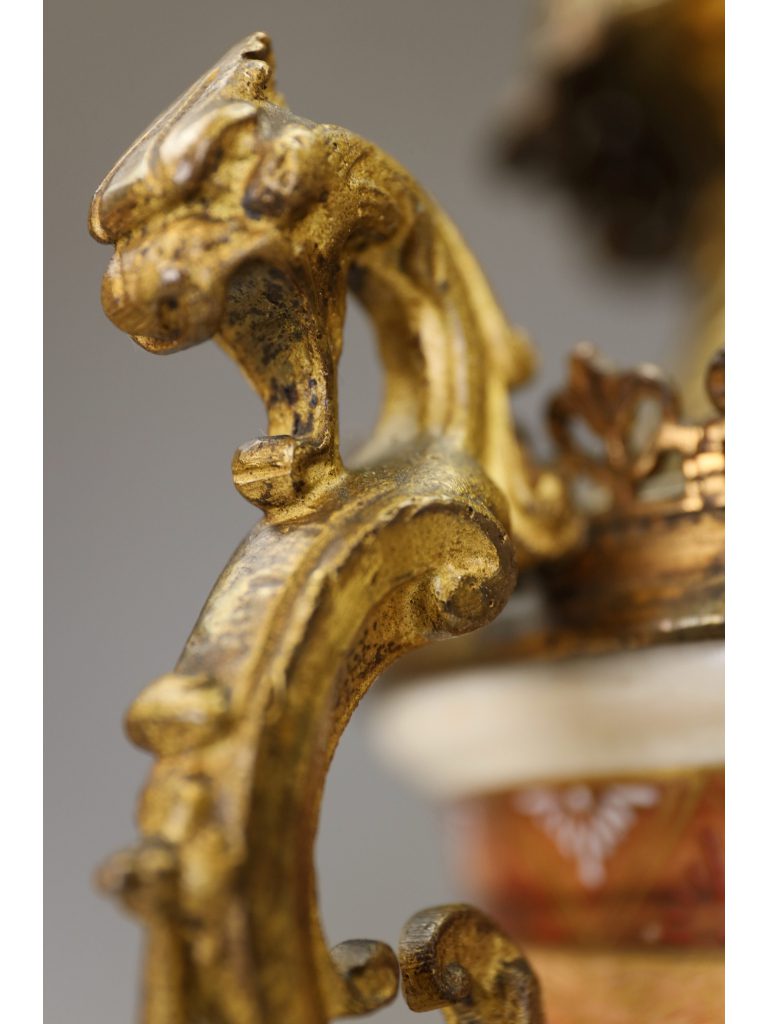
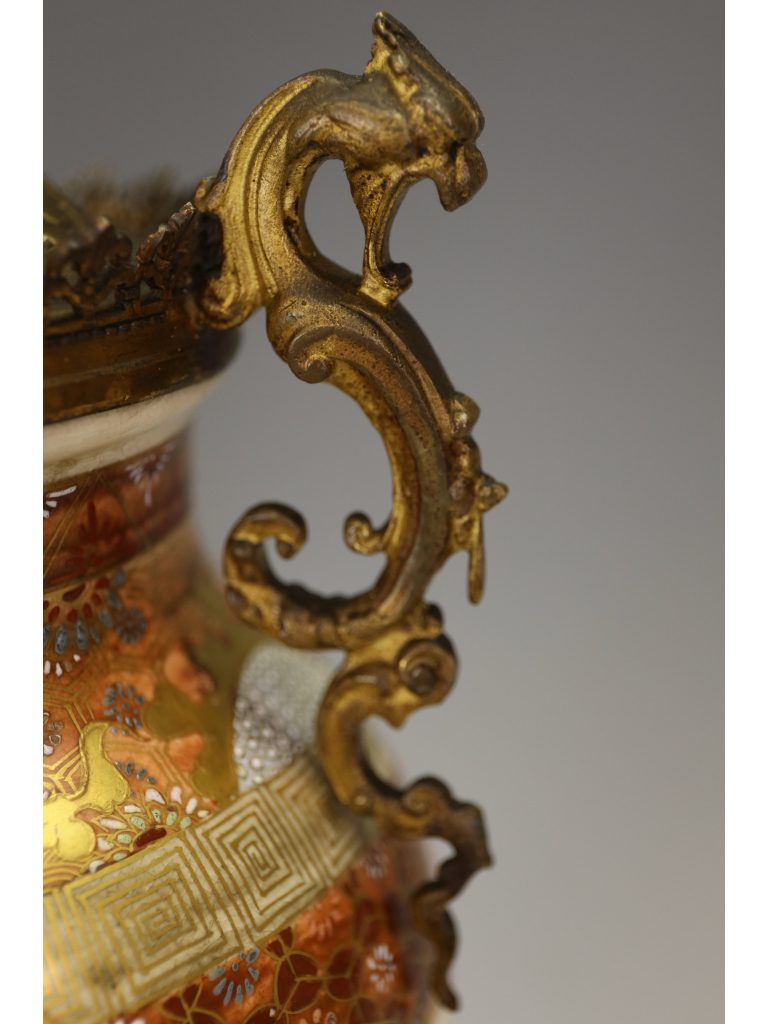
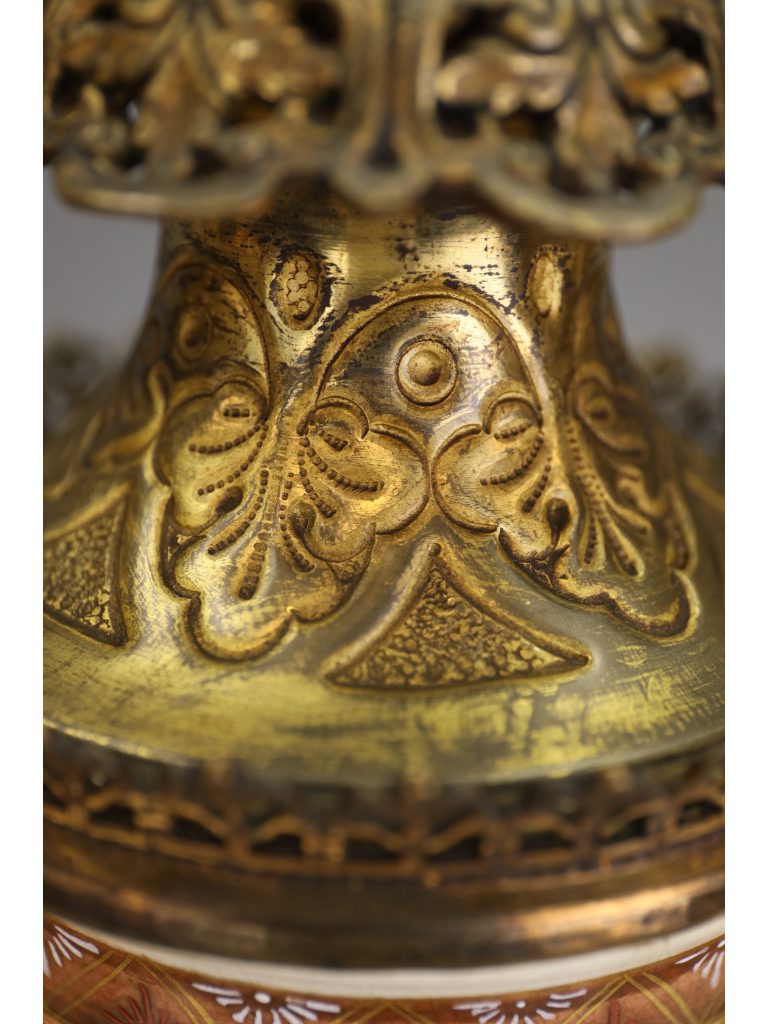
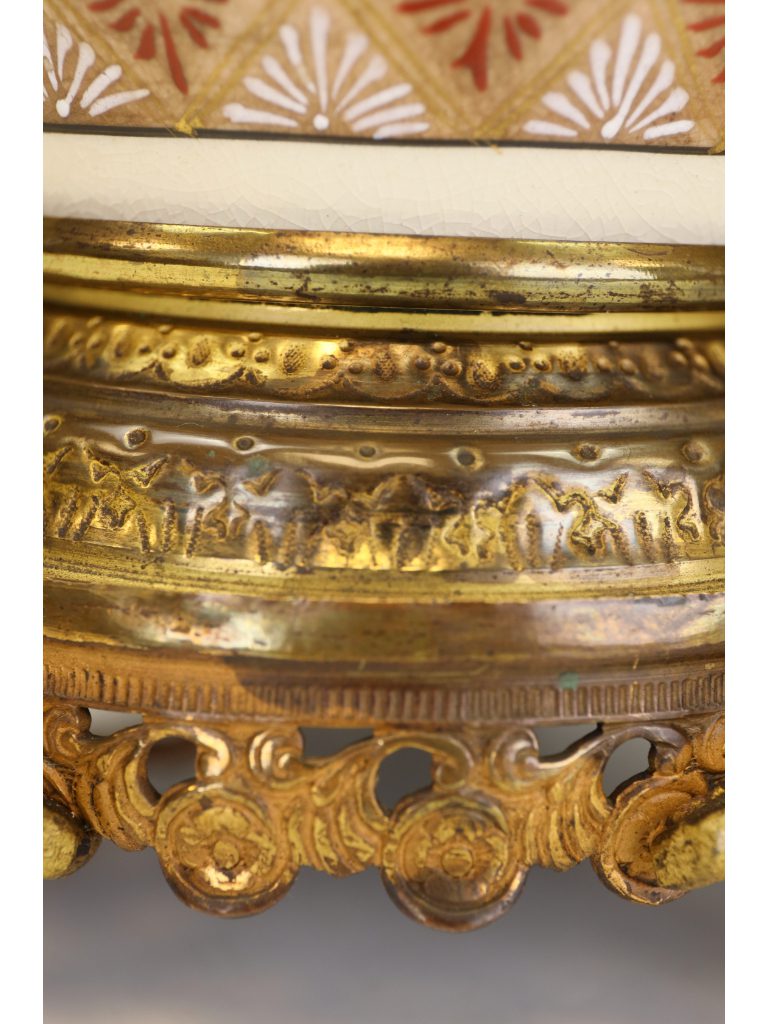
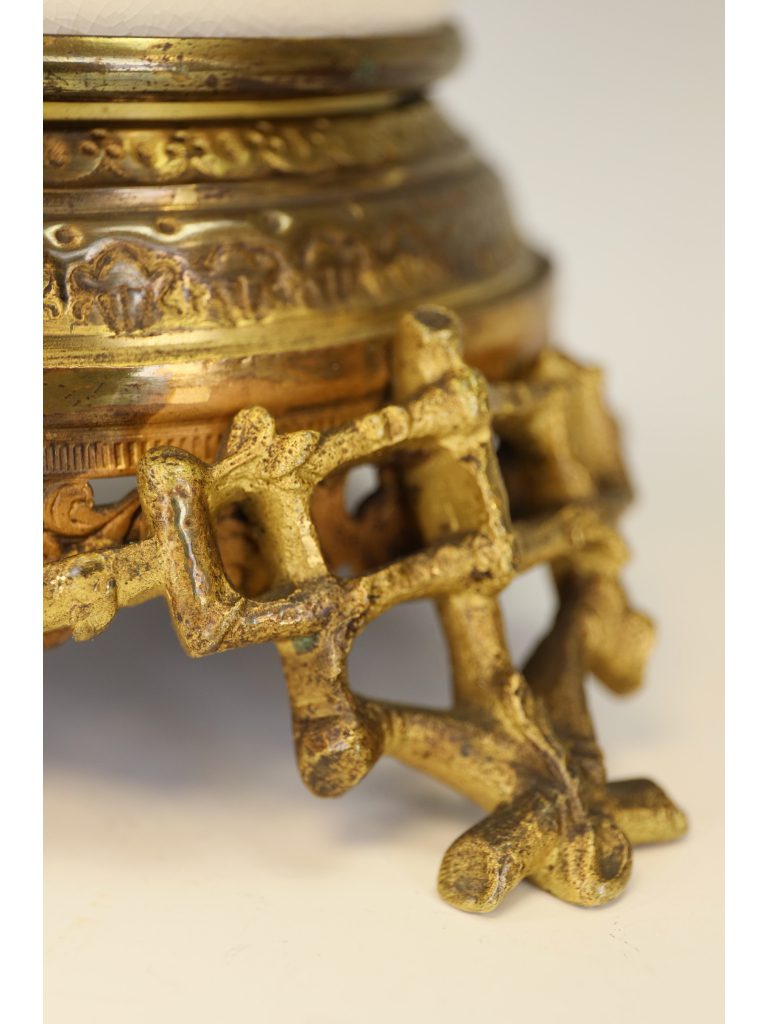
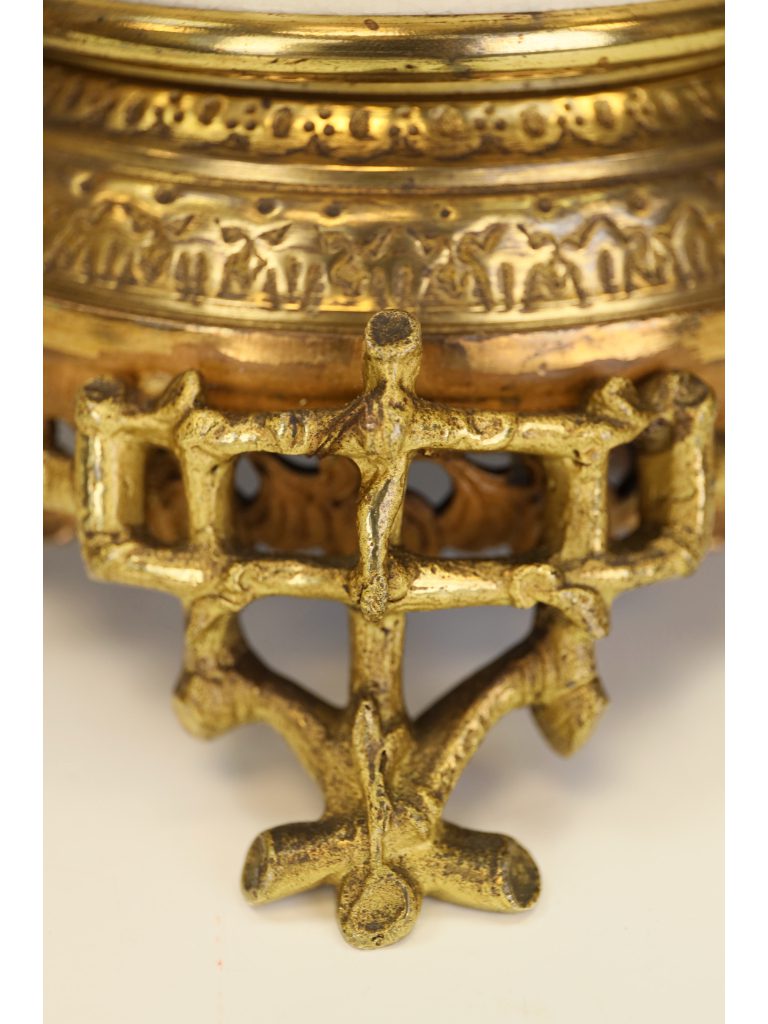
The vases are mounted in substantial gilt bronze (ormolu) fittings, likely added in Europe during the late 19th century to enhance their decorative appeal and functionality as lighting. The mounts are of particularly high quality, featuring pierced foliate collars and elaborate scrolling side handles in the form of dragon or phoenix-inspired ornamentation.
The lamps stand on decorative tripod bases with pierced scrolling feet, giving them height, balance and architectural presence.
When paired with silk or linen shades, these lamps create a warm, atmospheric light and an unmistakable sense of luxury. (Please note: shades shown are for styling purposes and are sold separately.)
During the late Victorian era, Japanese decorative arts became highly fashionable across Europe under the influence of Japonisme. Satsuma ware, in particular, was considered a luxury export and was often collected by wealthy households and aristocratic interiors.
It was common practice for fine Japanese vases to be mounted in ornate European ormolu fittings and converted into grand table lamps or candelabra-style lighting. These hybrid pieces combined Eastern craftsmanship with Western decorative metalwork, resulting in highly desirable collector’s items.
Today, large matched pairs of Satsuma vases of this quality and scale are increasingly rare and are especially sought after by interior designers for their colour, detail, and strong decorative presence.
Japan (vases) with European ormolu mounts (likely France or United Kingdom)
Japonisme / Orientalism / Chinoiserie Luxury
Late 19th Century (Meiji Period, circa 1880–1890)
Excellent antique condition throughout.
The ceramic bodies are free from structural damage, with no visible cracks or major restoration. The hand-painted decoration remains exceptionally crisp and well-preserved, with rich colouration and strong gilding throughout.
The gilt bronze mounts are solid and secure, displaying a rich aged patina consistent with their age.
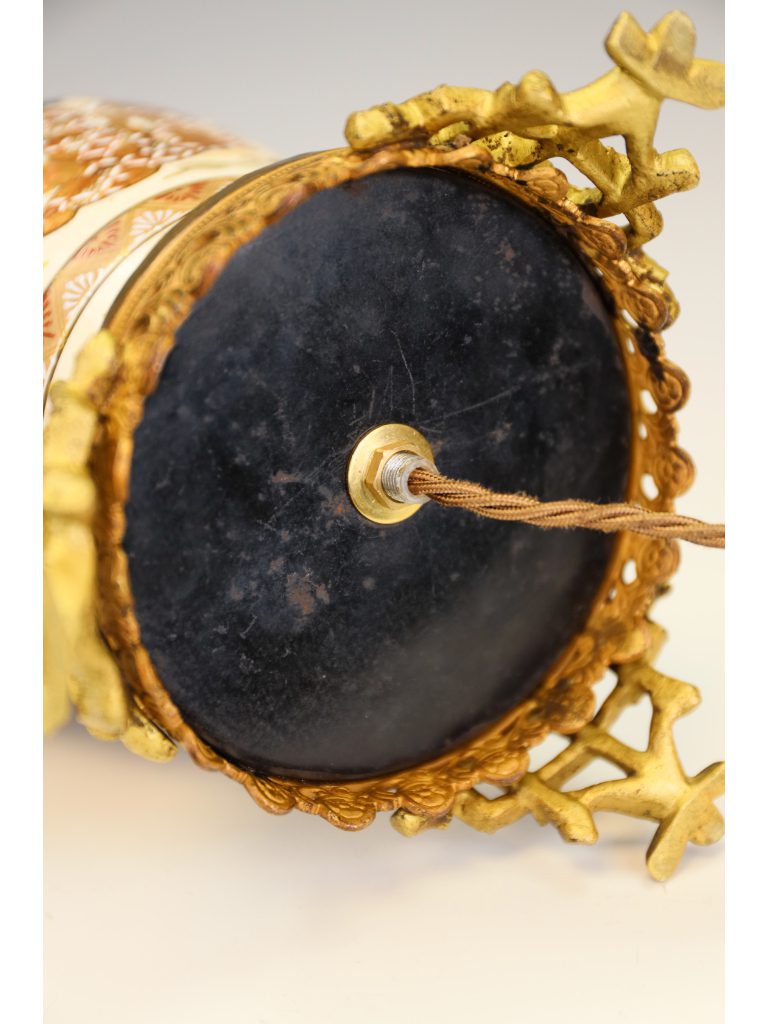
The lamps have been fully professionally rewired in our workshop using high-quality braided silk flex. They are fitted with new solid brass bulb holders and have been fully PAT tested to modern UK safety standards. They are safe and ready for immediate use with a qualified electrician.
Height: 49 cm / 19.3 in
Width: 20 cm / 7.9 in
Weight: 3.9 kg / 8.6 lbs
Every item offered by Shackleton Fox is carefully inspected, prepared, and where necessary conserved within our workshop prior to sale.
As heritage craftsmen and antique specialists, we believe in preserving the authenticity and integrity of each piece. Original finishes, patina, wear, and signs of age are retained wherever possible, as these elements contribute to both character and historical significance.
When restoration, rewiring, repairs, or conservation work is required, it is undertaken sympathetically using traditional techniques and materials appropriate to the period of the piece. Our philosophy is one of careful stewardship rather than unnecessary restoration, ensuring antiques remain both functional and historically respectful.
The result is a collection of pieces that have been thoughtfully prepared, allowing future owners to enjoy them with confidence while preserving their unique story and character.