

£500.00
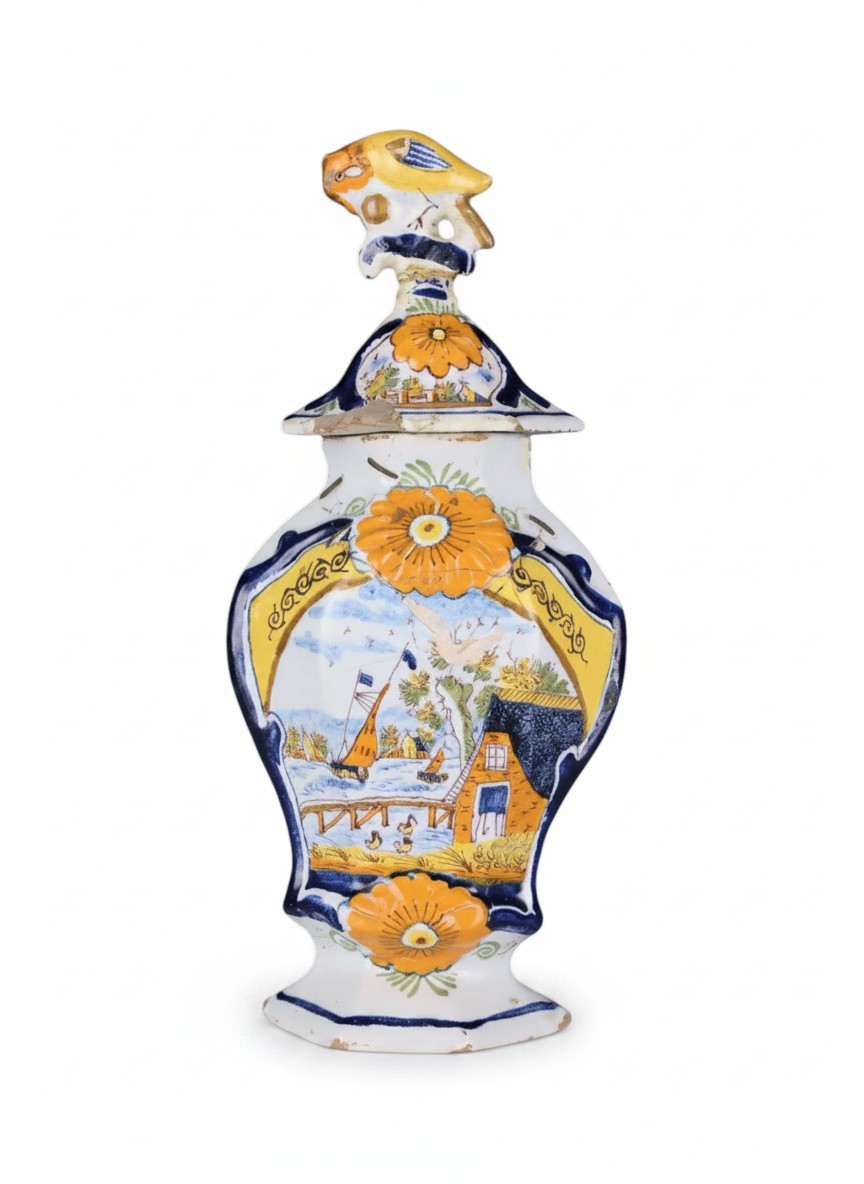
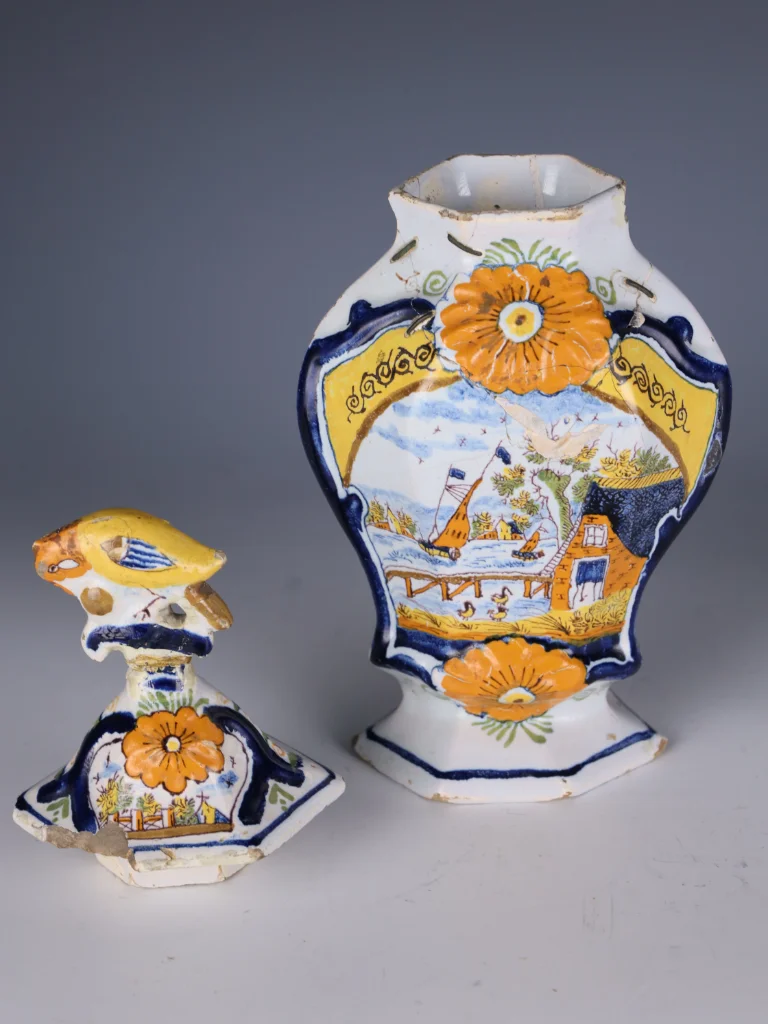
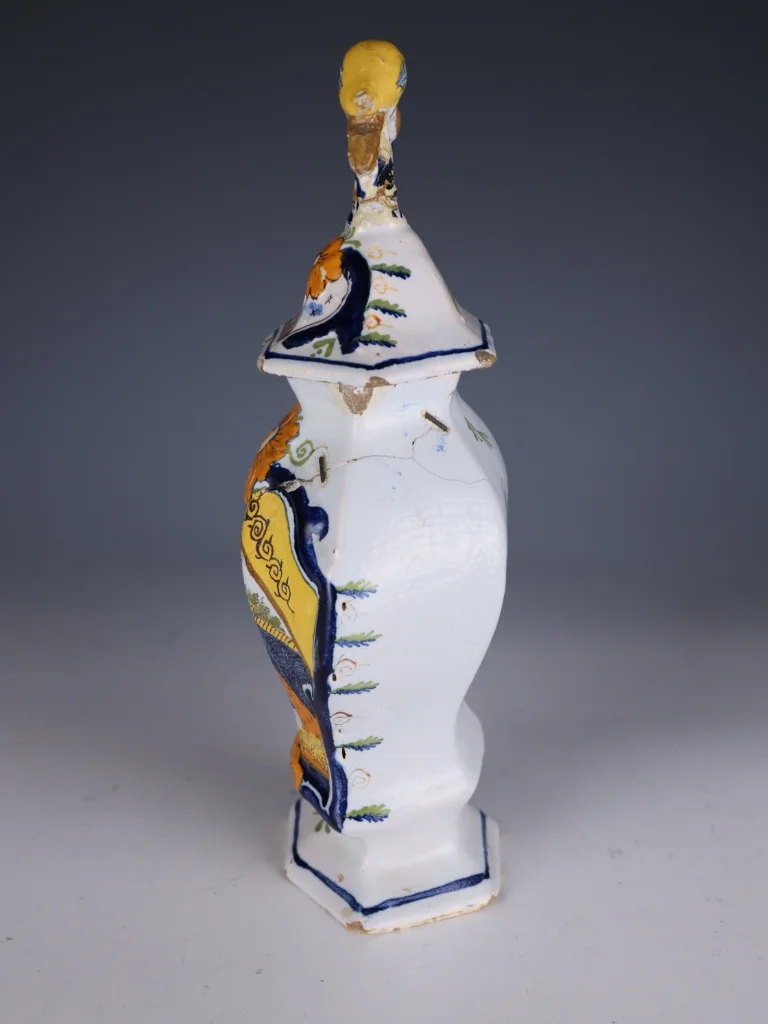
Rich in colour, history and character, this remarkable eighteenth-century Dutch Delft covered pot beautifully captures the artistry of Europe's great tin-glazed pottery tradition.
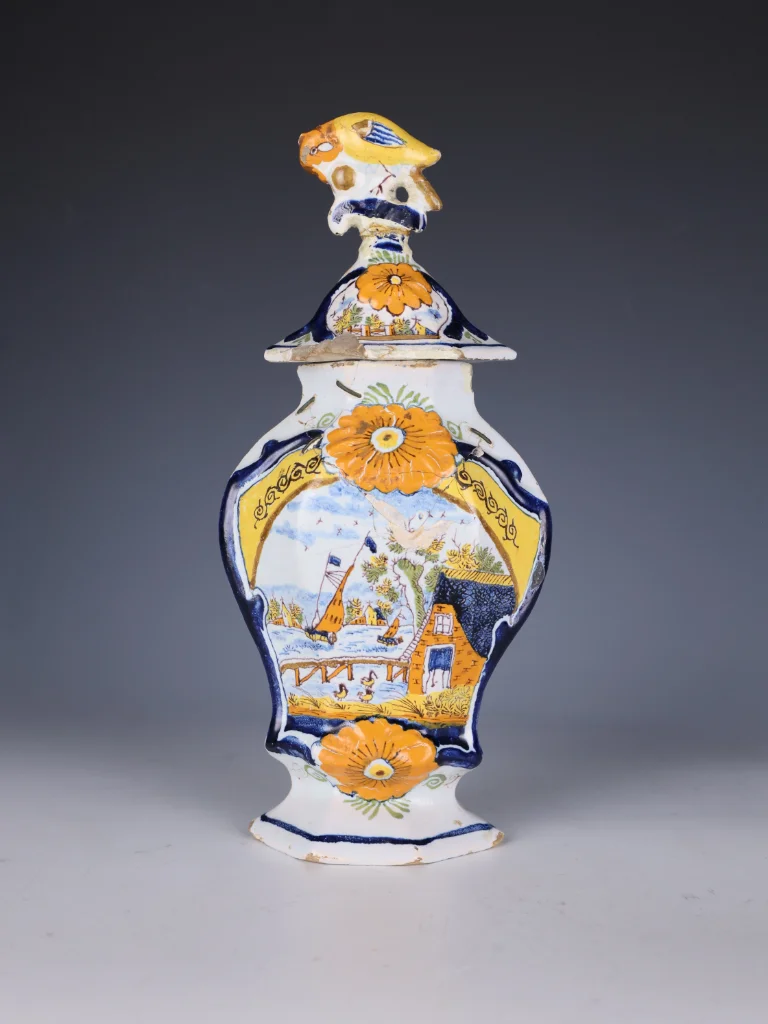
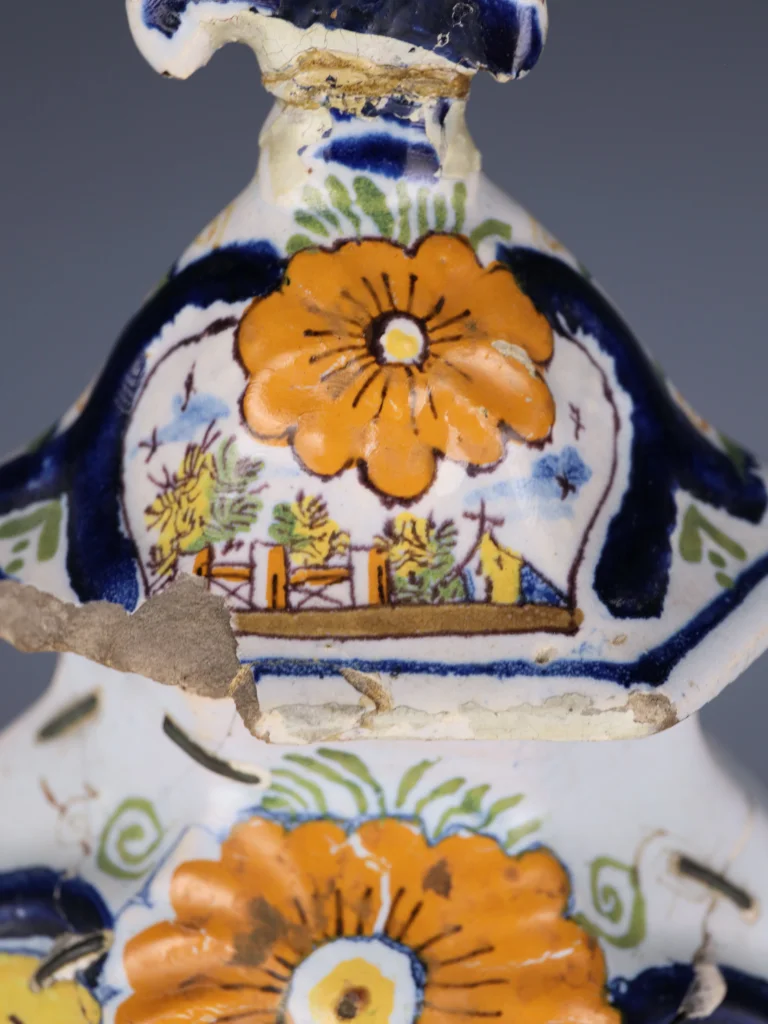
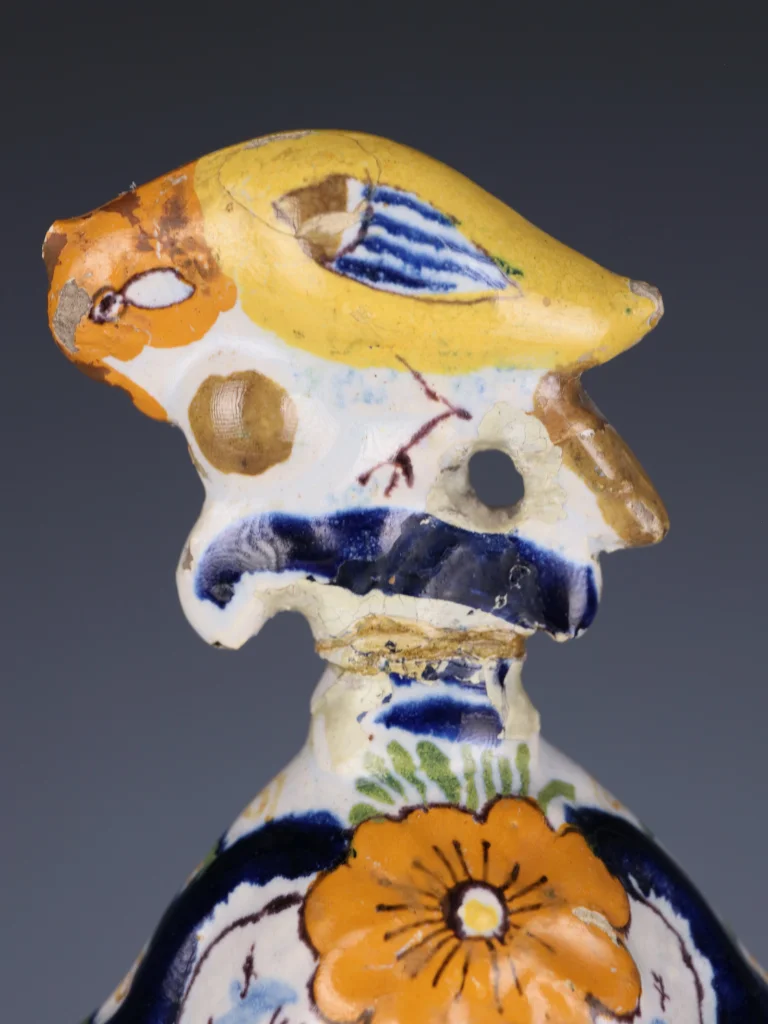
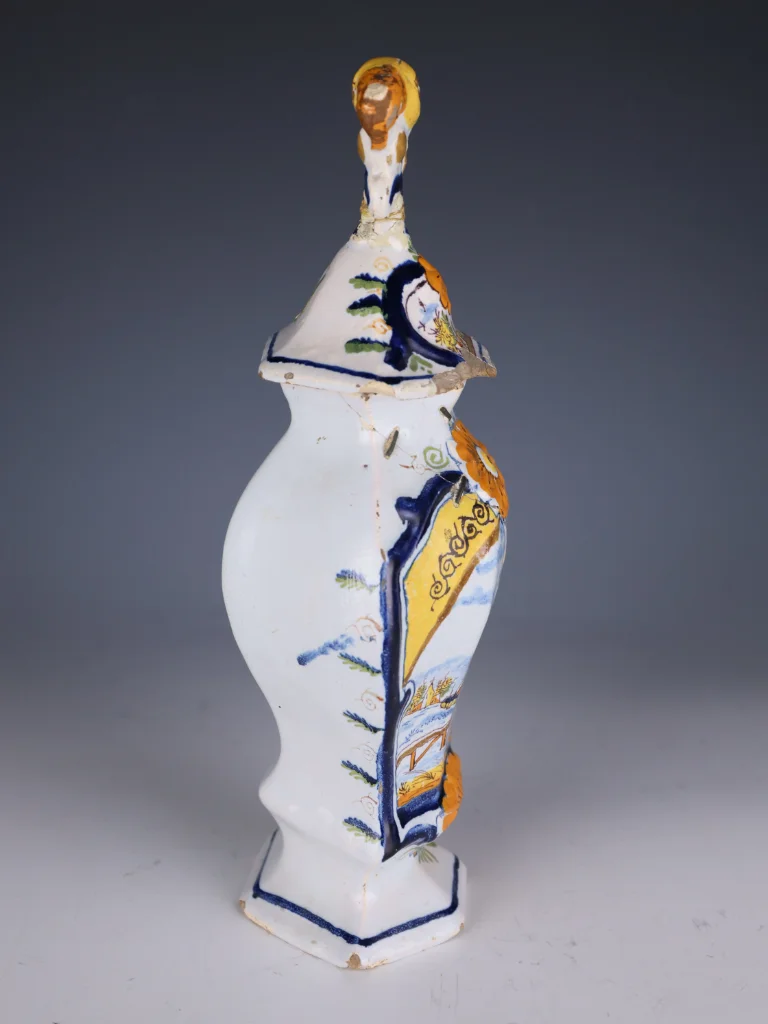
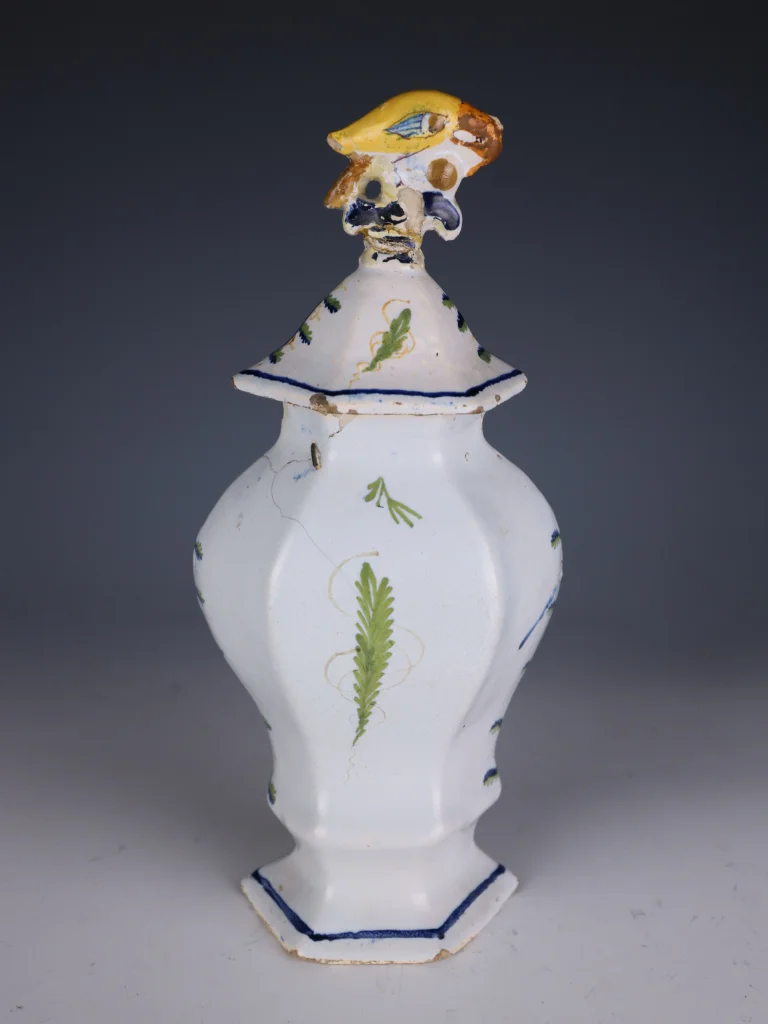
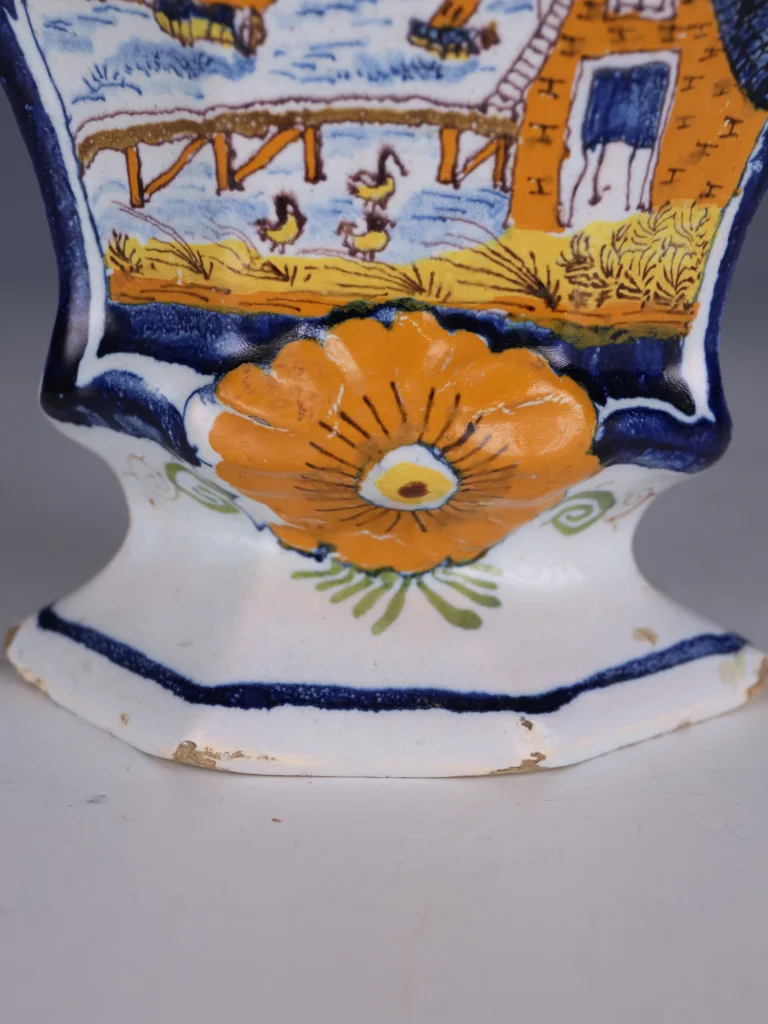
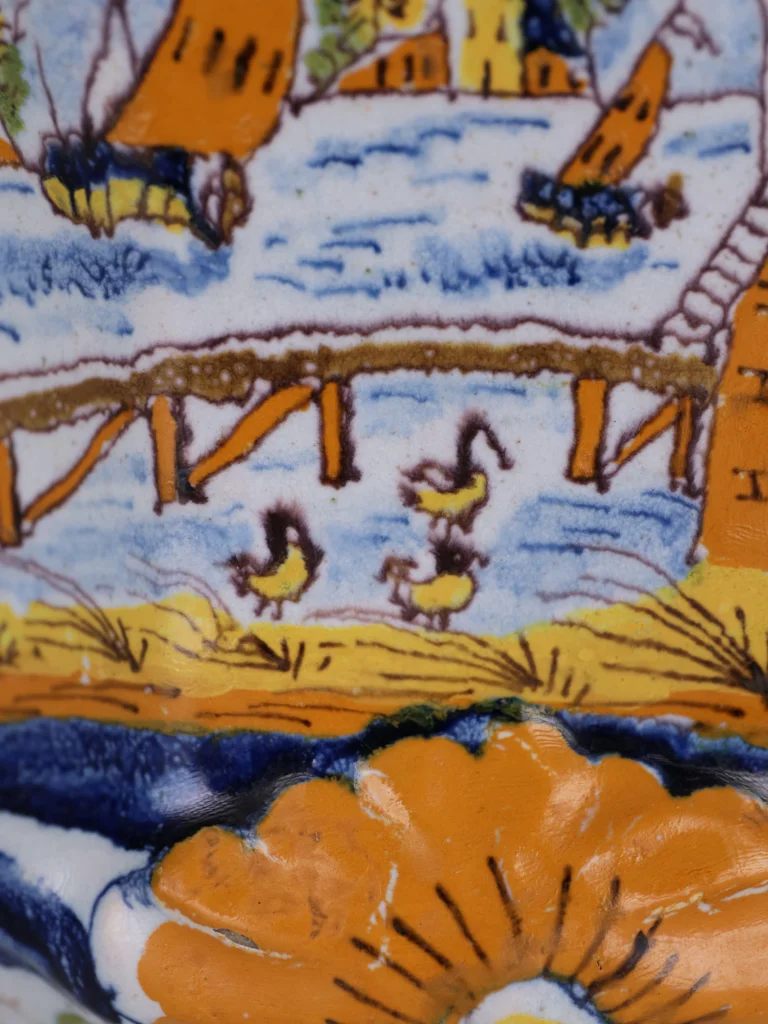
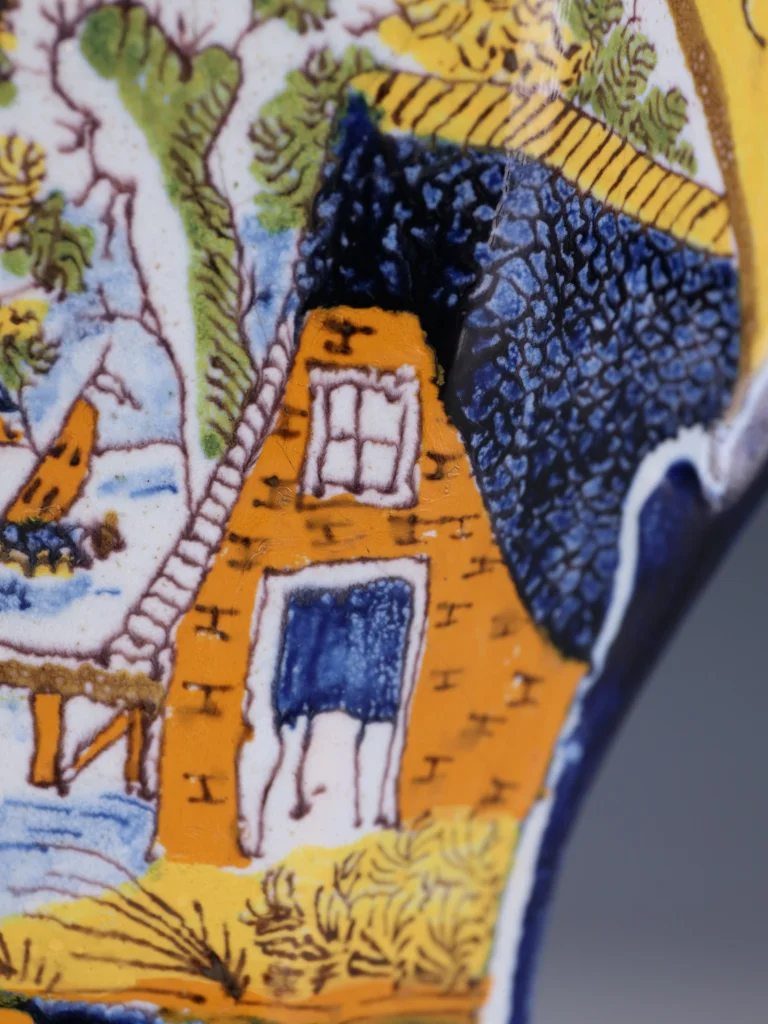
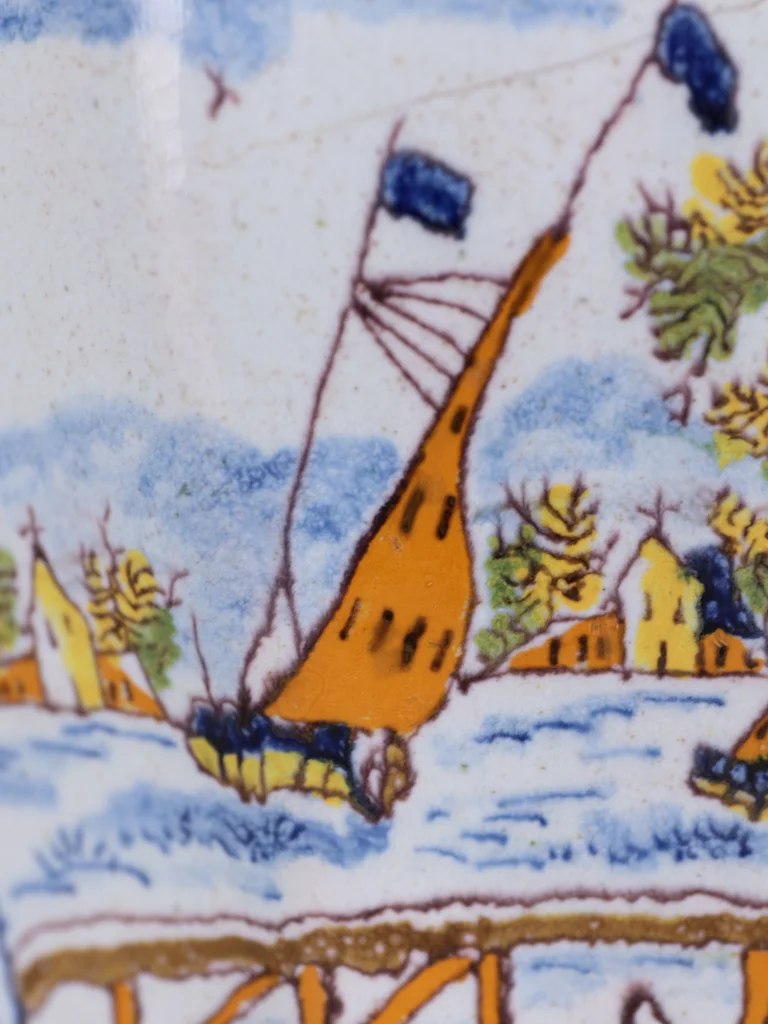
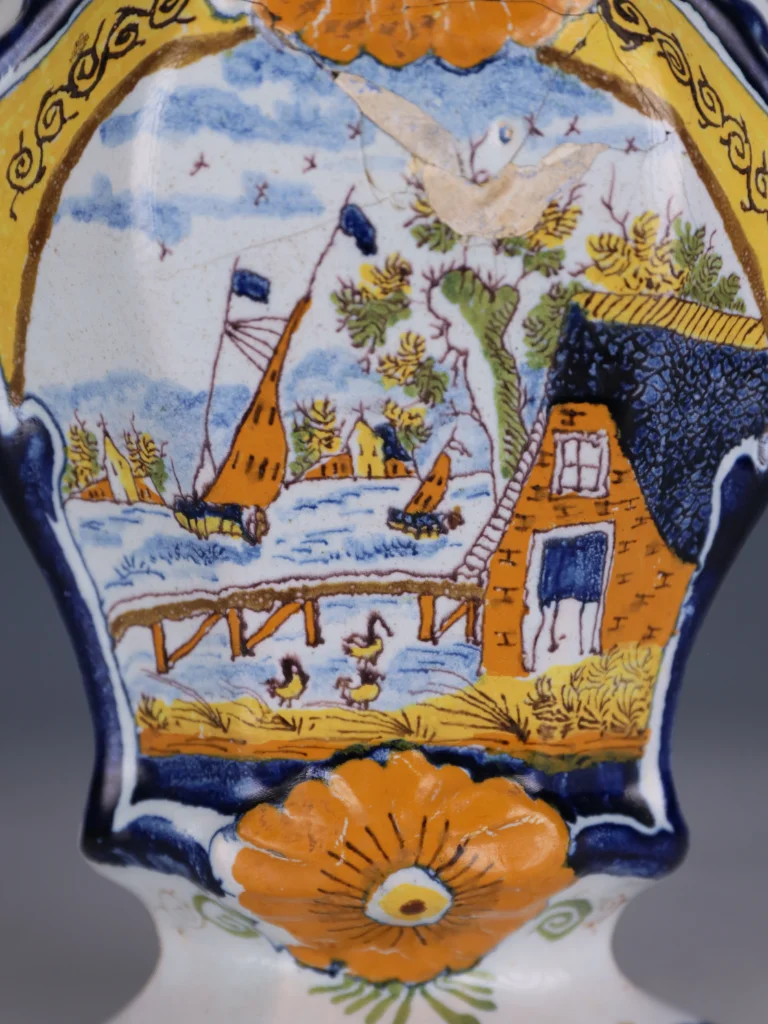
Hand-painted in vibrant cobalt blue, ochre yellow, orange and green, the vessel is decorated with an idyllic Dutch waterside landscape, complete with sailing boats, cottages and flowering ornament, all framed by bold scrolling borders and applied floral decoration. Crowning the cover is a charming sculptural bird finial, adding movement and individuality to an already striking composition.



Rich in colour, history and character, this remarkable eighteenth-century Dutch Delft covered pot beautifully captures the artistry of Europe's great tin-glazed pottery tradition.
Hand-painted in vibrant cobalt blue, ochre yellow, orange and green, the vessel is decorated with an idyllic Dutch waterside landscape, complete with sailing boats, cottages and flowering ornament, all framed by bold scrolling borders and applied floral decoration. Crowning the cover is a charming sculptural bird finial, adding movement and individuality to an already striking composition.
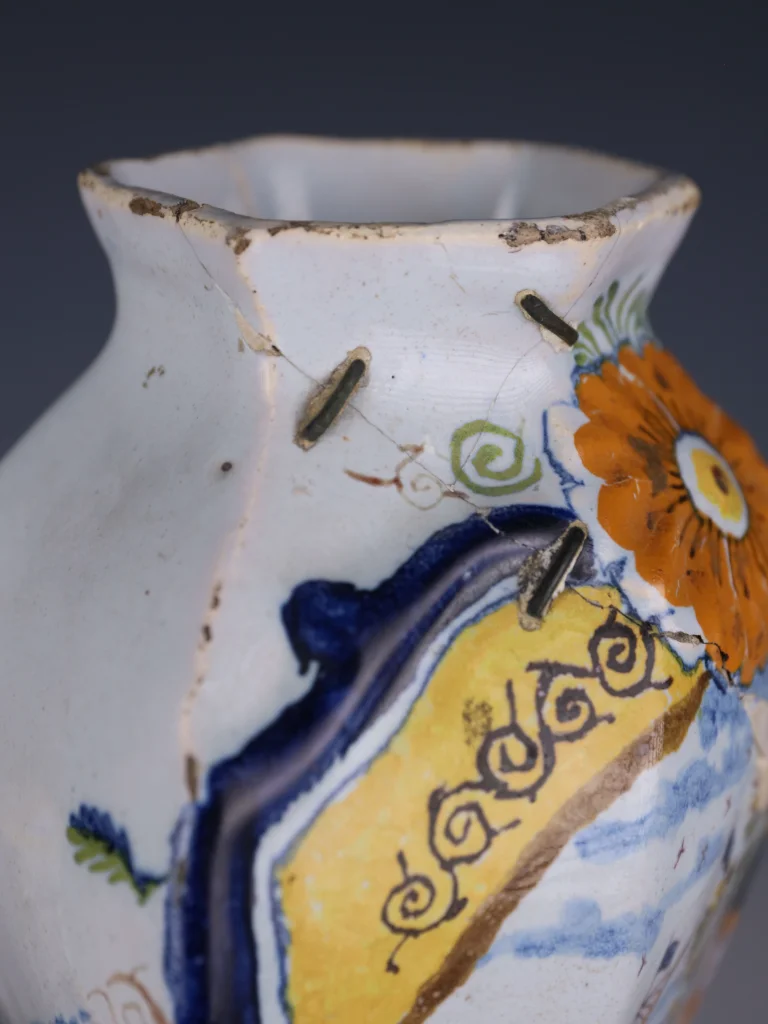
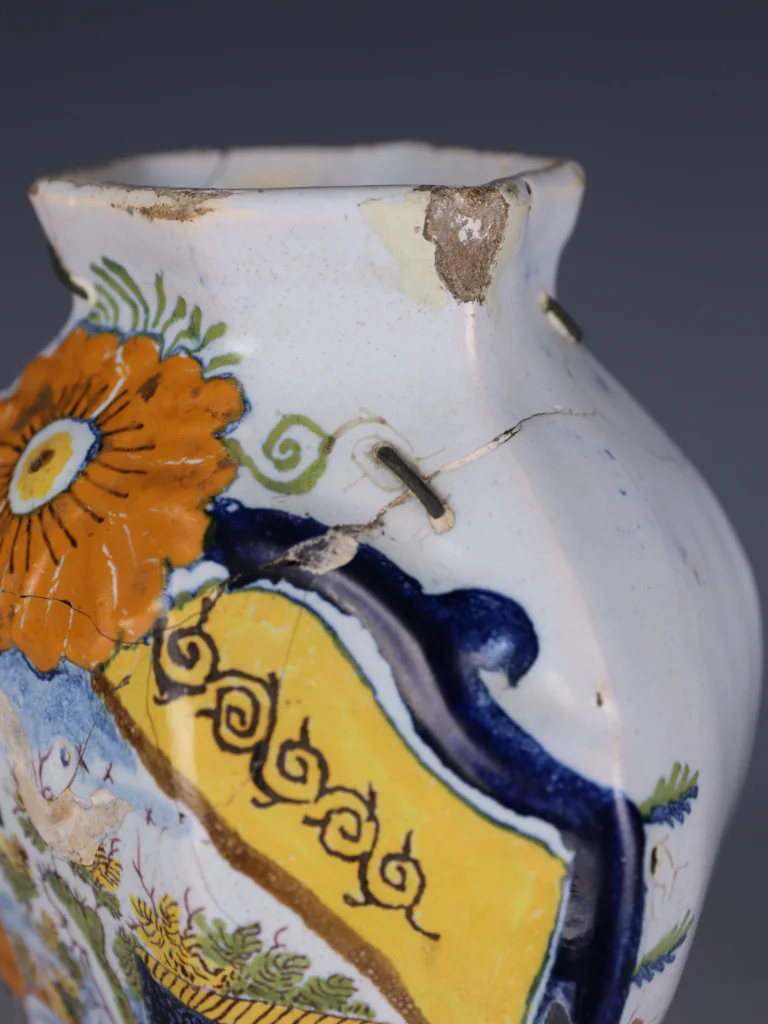
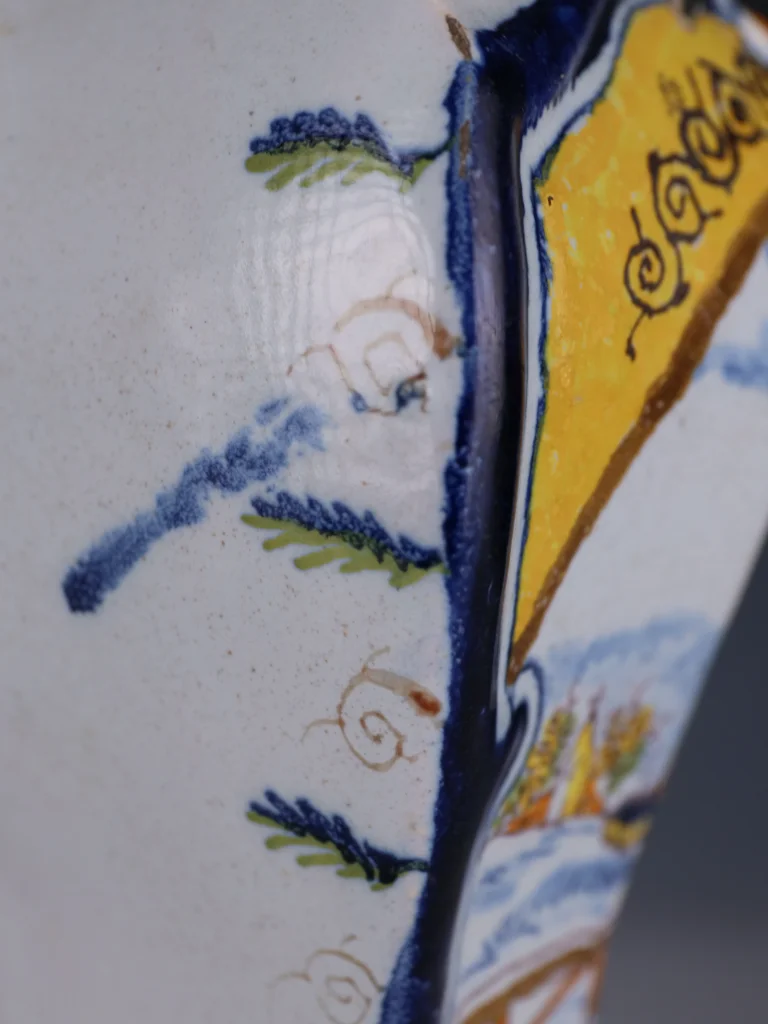
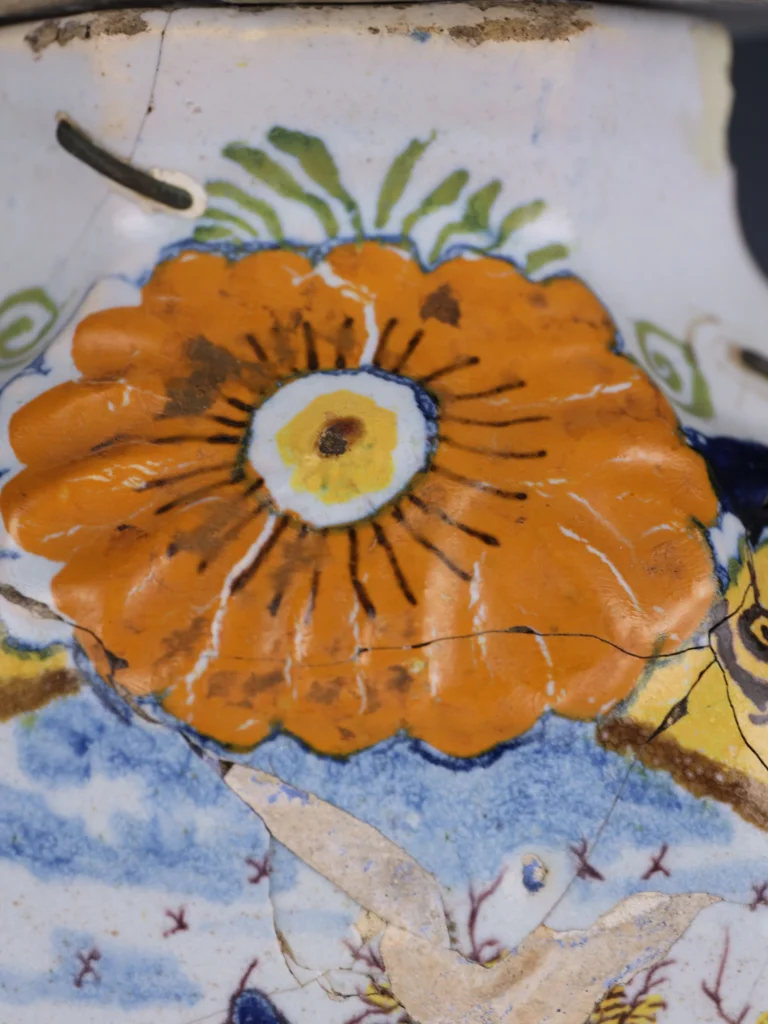
Perhaps most captivating of all are the historic riveted staple repairs. Rather than diminishing the piece, these eighteenth- or nineteenth-century restorations celebrate its long life, reflecting a period when treasured ceramics were skilfully repaired and preserved instead of discarded.
Today it survives as both a remarkable work of decorative art and a tangible piece of Dutch history.
During the seventeenth and eighteenth centuries, Dutch Delft potteries became renowned throughout Europe for producing beautifully decorated tin-glazed earthenware inspired by Chinese porcelain and local Dutch landscapes.
By the mid-eighteenth century, colourful polychrome decoration had become particularly fashionable, with artisans producing richly painted vessels featuring flowers, rural scenes, birds and coastal views that reflected the prosperity of the Dutch Republic.
Pieces such as this were never ordinary household pottery. Their elaborate decoration and sculptural form suggest they were intended for display within well-appointed homes, where they demonstrated both taste and refinement.
The historic staple repairs visible today provide a fascinating insight into eighteenth- and nineteenth-century attitudes towards valuable possessions. Before modern restoration techniques existed, damaged ceramics were professionally repaired using carefully fitted metal staples, allowing cherished objects to continue serving future generations.
The vessel has been hand-thrown before being coated in a fine tin glaze, producing the distinctive creamy white surface synonymous with Dutch Delftware.
Each decorative element has been individually painted by hand using traditional mineral pigments before firing.
Particularly attractive are:
The visible brushwork and slight irregularities throughout confirm its entirely handmade origin.
Few ceramics possess quite the same decorative presence as eighteenth-century Delftware.
Whether displayed individually or amongst other early ceramics, this piece immediately becomes a focal point.
The historic staple repairs add authenticity and individuality that many collectors actively seek.
Origin: Netherlands
Date: Circa 1760–1780
Materials
"We are continually drawn to objects that wear their history with honesty, and this wonderful Delft pot does exactly that. The vibrant hand-painted decoration, charming bird finial and beautifully observed Dutch landscape immediately caught our attention, but it is the historic staple repairs that truly tell its story. They remind us that this was once a treasured object, carefully repaired so it could continue to be admired for generations. Today it stands as a remarkable survivor of eighteenth-century Dutch craftsmanship, possessing all the charm, individuality and authenticity that collectors seek."
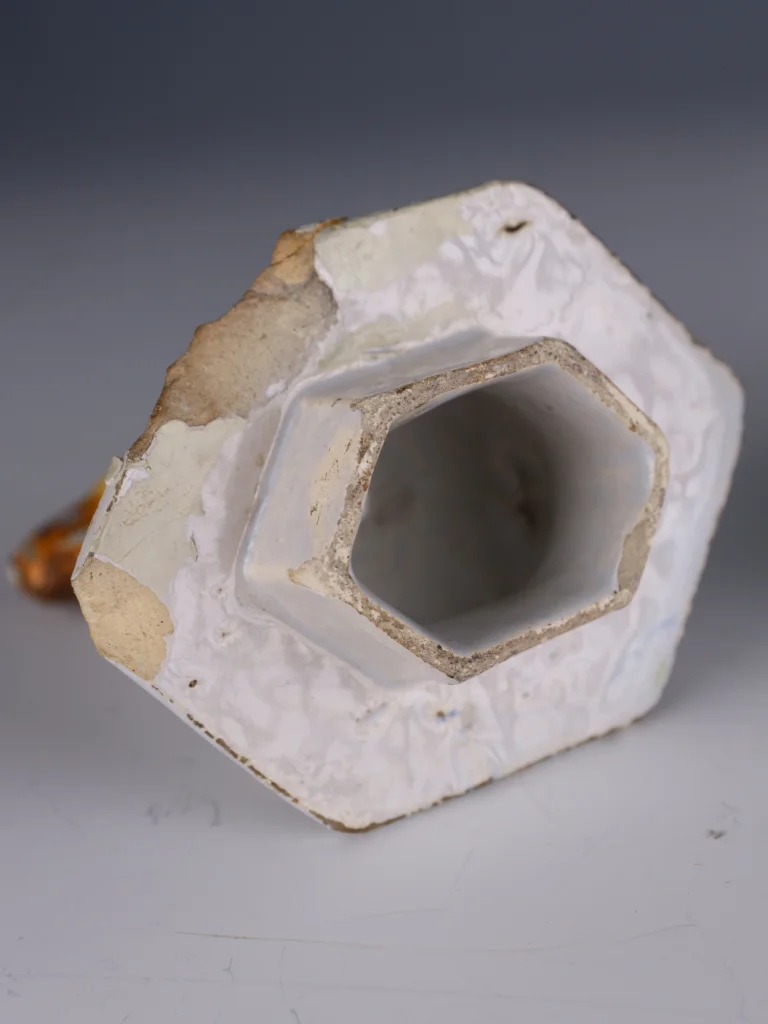
The piece displays extensive historic restoration entirely consistent with its considerable age.
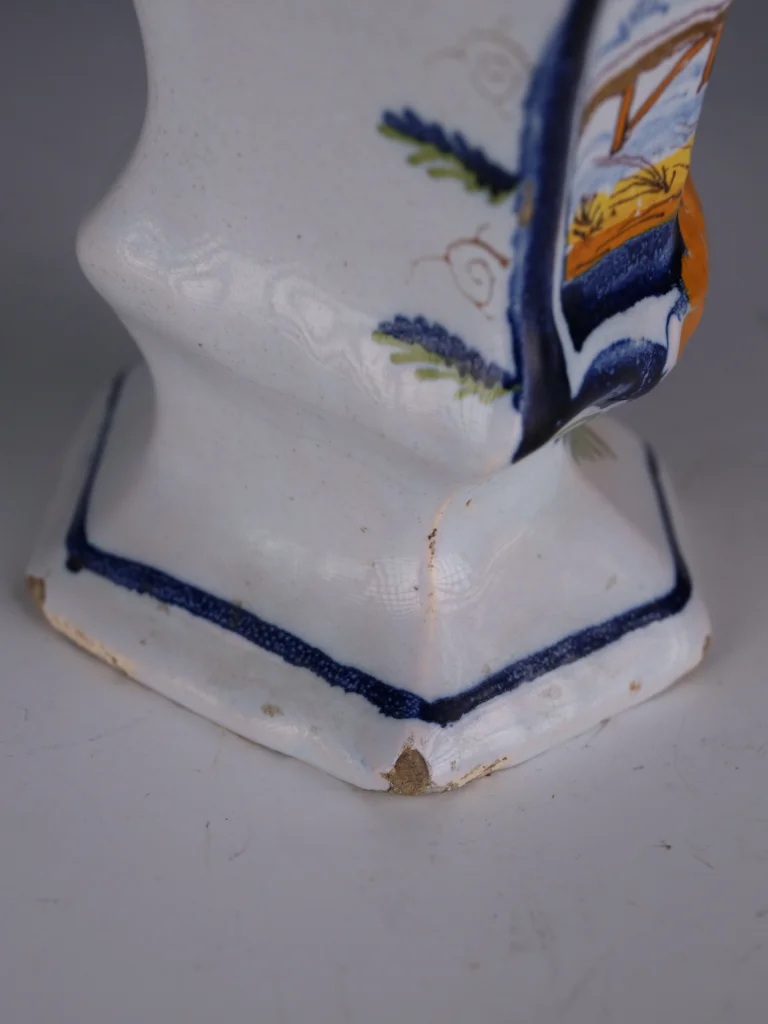
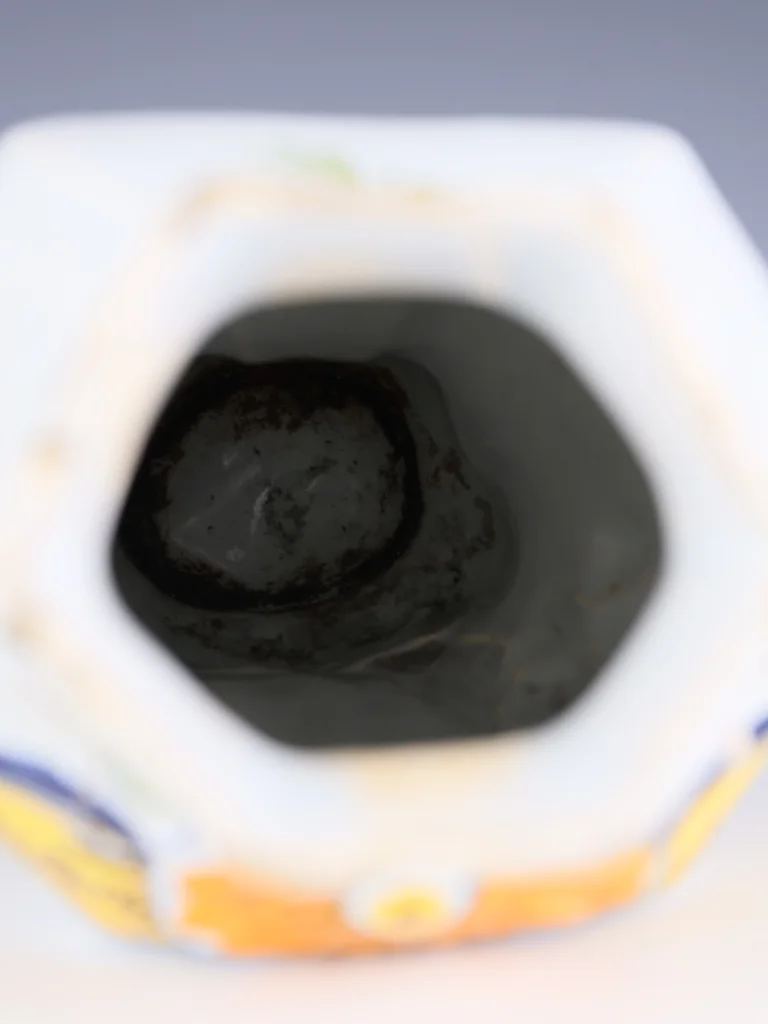
There are numerous old firing imperfections, areas of glaze wear, chips to the rim and applied decoration, together with historic metal staple repairs securing several structural cracks. These repairs appear to have been carried out many decades, and likely centuries, ago using traditional ceramic restoration techniques.
Surface crazing, minor glaze losses and wear are entirely commensurate with an eighteenth-century Delft vessel and contribute significantly to its authenticity and charm.
Despite its restoration history, the piece remains structurally stable and displays exceptionally well, making it a highly decorative example of early Dutch Delftware.
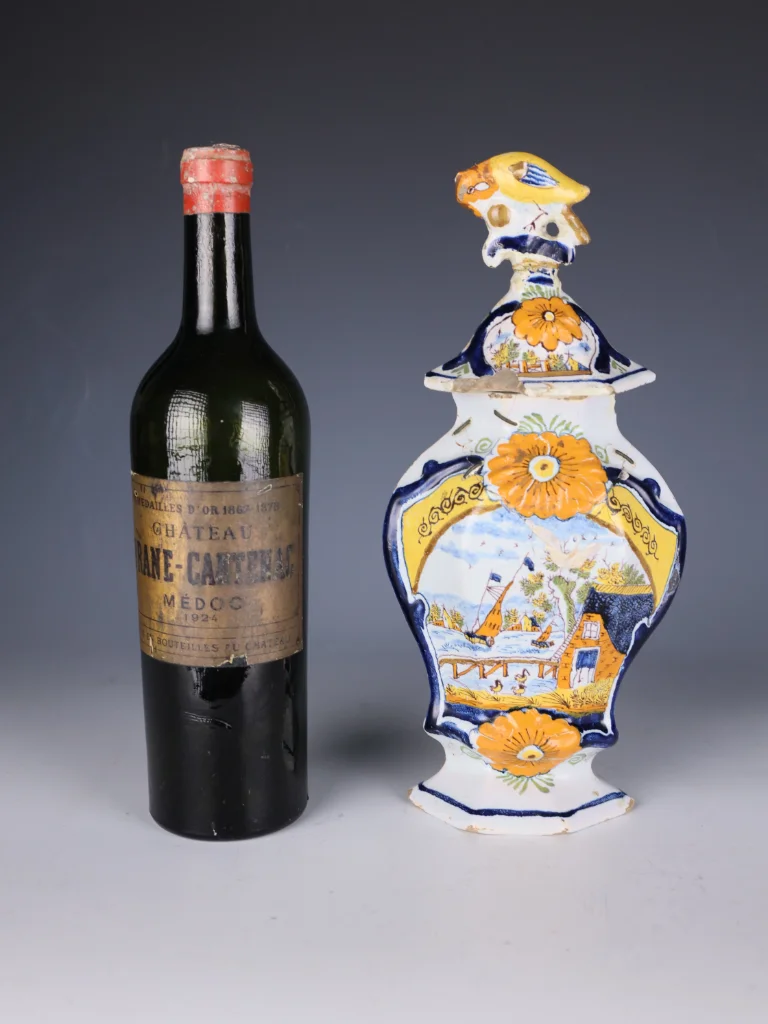
Height: 31 cm / 12.2 inches
Width: 13 cm / 5.1 inches
Depth: 9 cm / 3.5 inches
Weight: 0.7 kg / 1.5 lbs
Every item offered by Shackleton Fox is carefully inspected, prepared, and where necessary conserved within our workshop prior to sale.
As heritage craftsmen and antique specialists, we believe in preserving the authenticity and integrity of each piece. Original finishes, patina, wear, and signs of age are retained wherever possible, as these elements contribute to both character and historical significance.
When restoration, rewiring, repairs, or conservation work is required, it is undertaken sympathetically using traditional techniques and materials appropriate to the period of the piece. Our philosophy is one of careful stewardship rather than unnecessary restoration, ensuring antiques remain both functional and historically respectful.
The result is a collection of pieces that have been thoughtfully prepared, allowing future owners to enjoy them with confidence while preserving their unique story and character.