£2,500.00
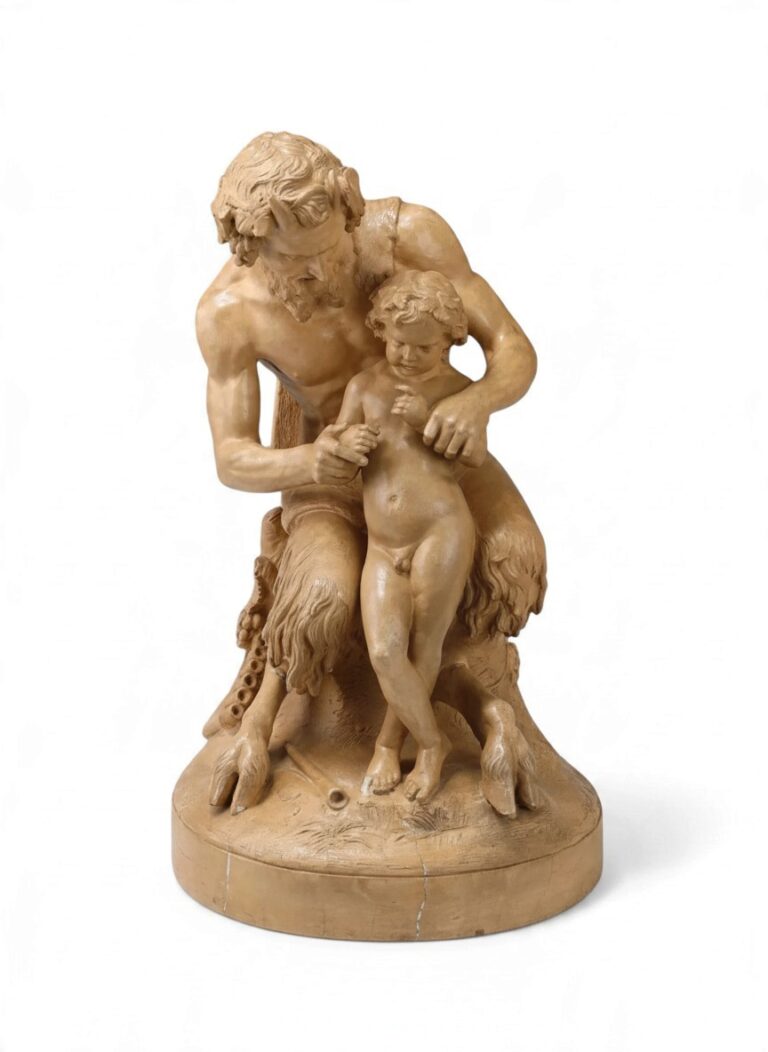
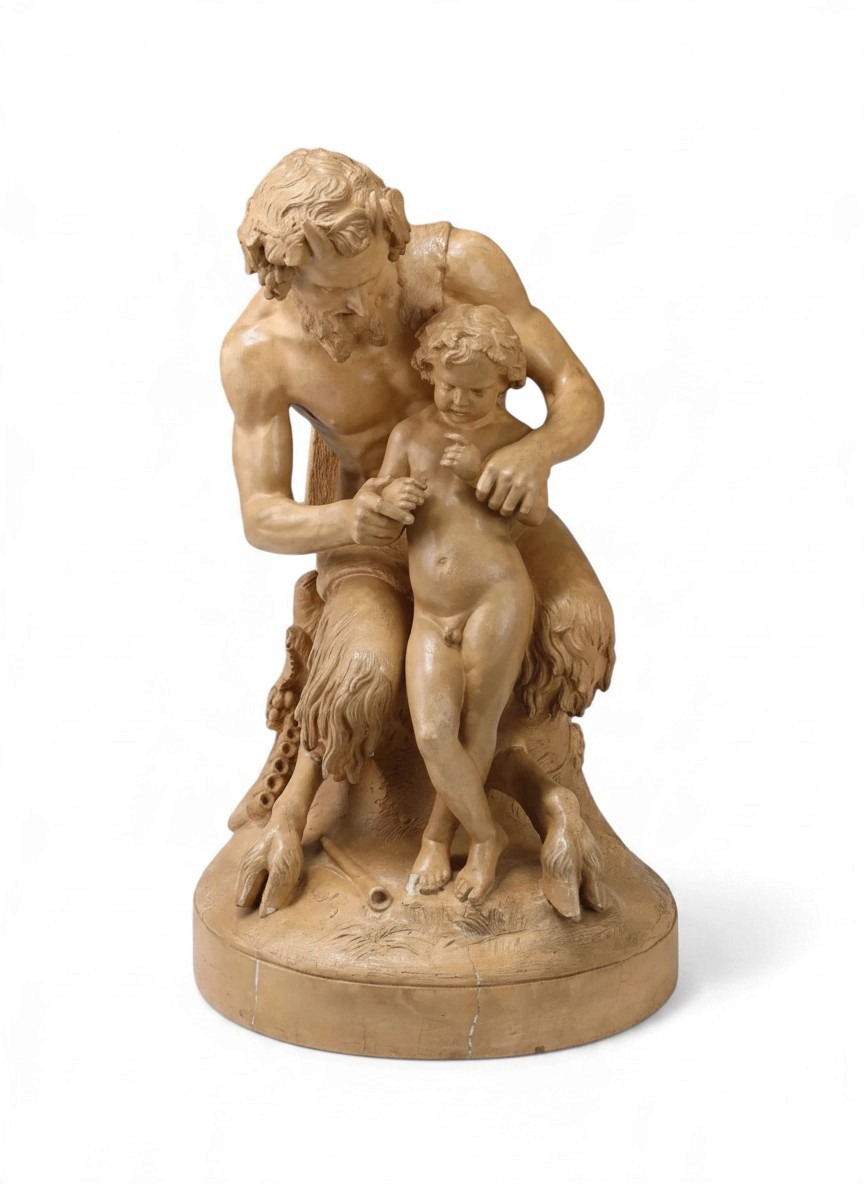
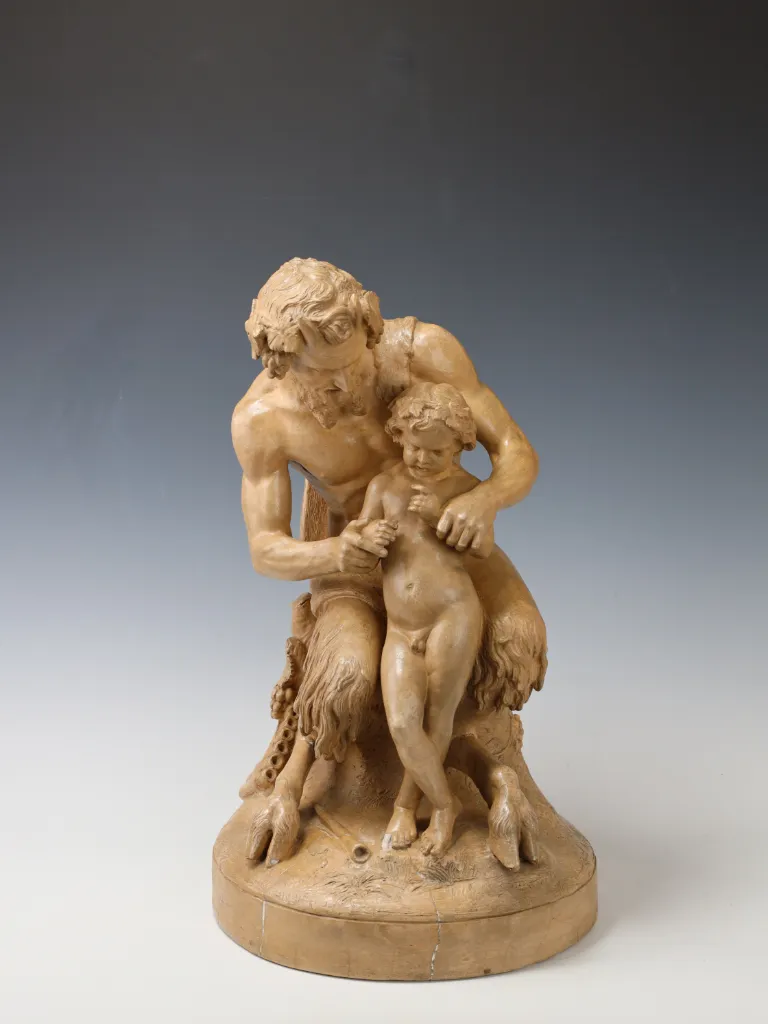
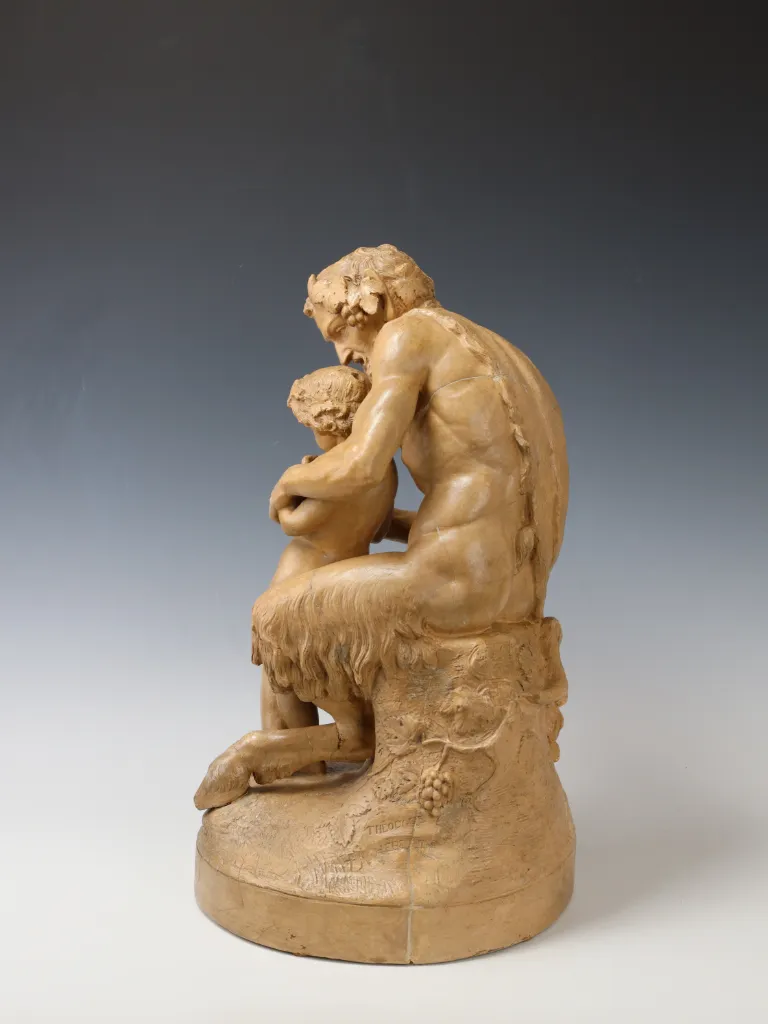
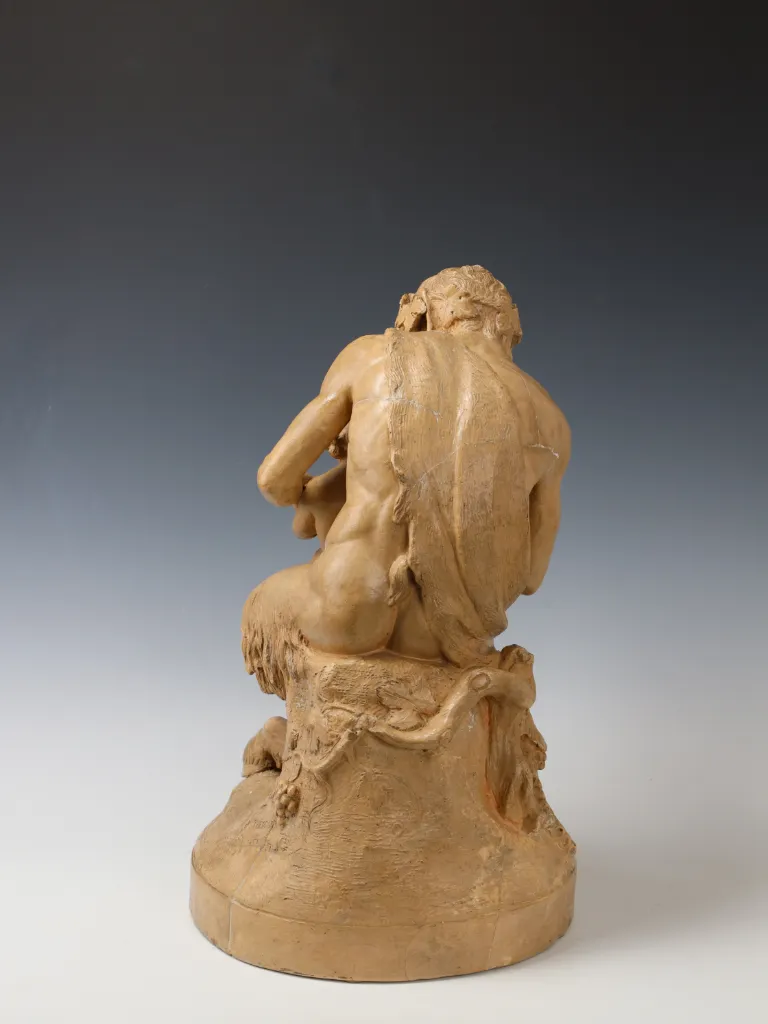
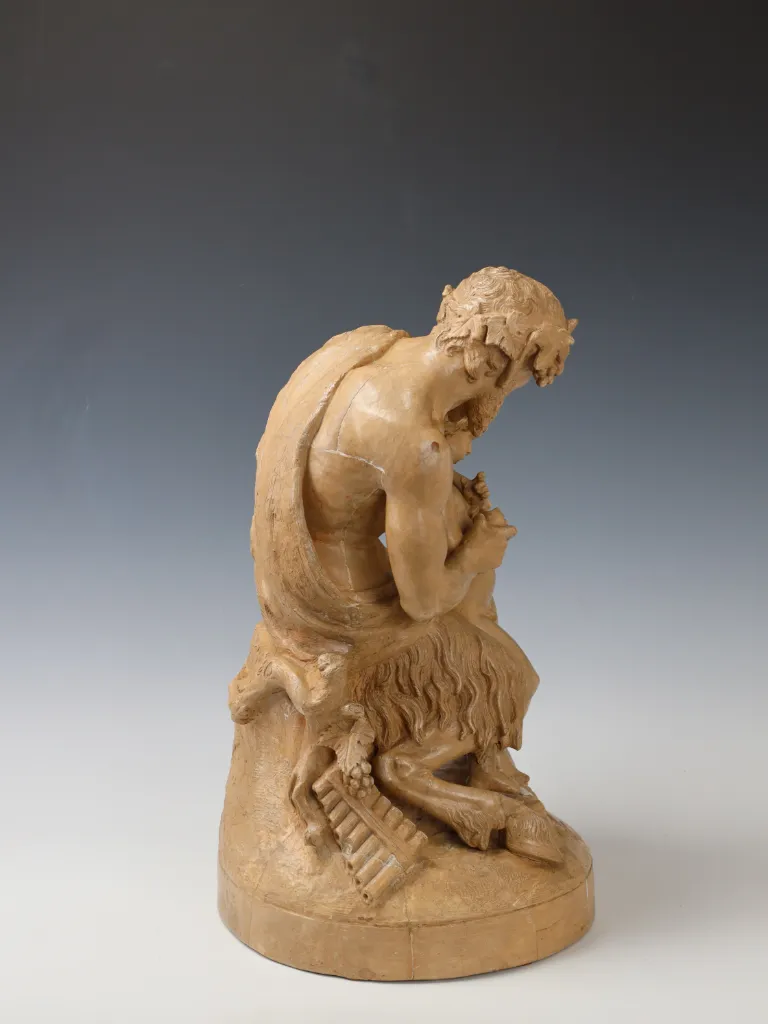
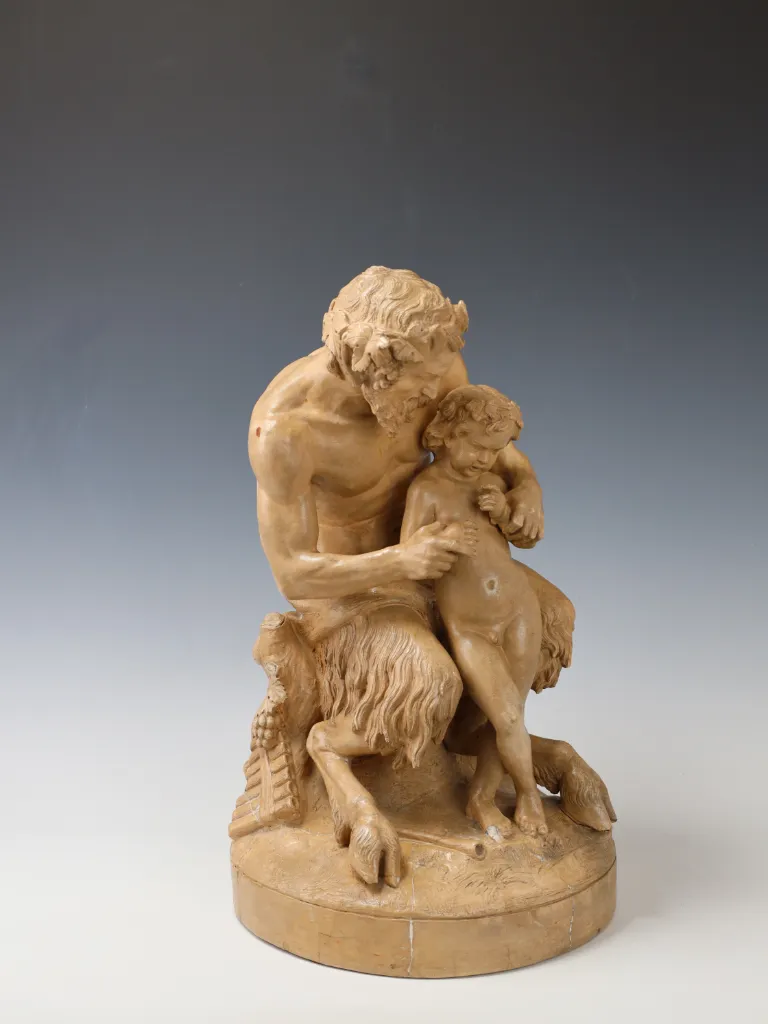
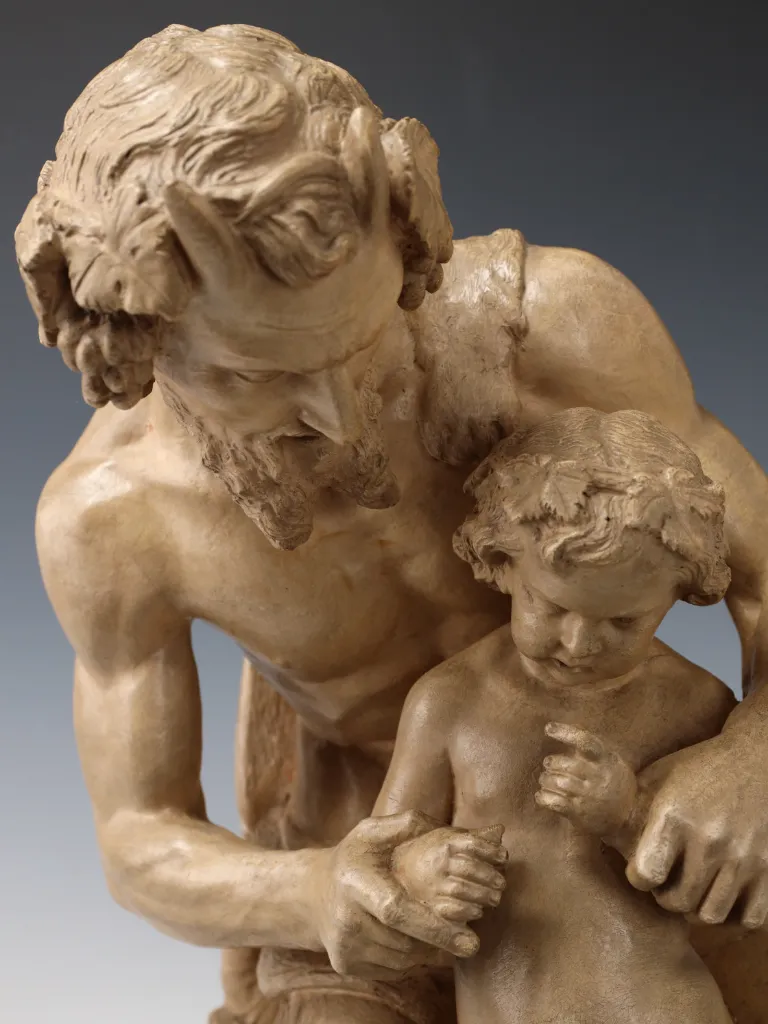
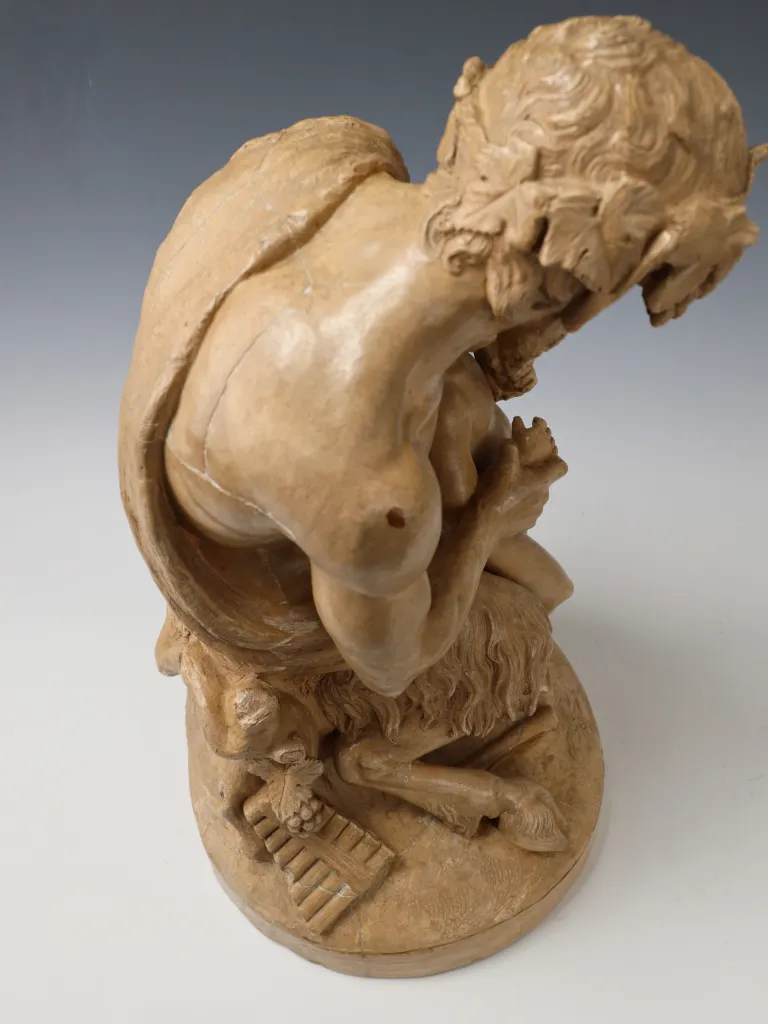
An exceptionally expressive and beautifully modelled French mythological sculptural group depicting the Greek god Pan gently instructing a young faun in music, after a composition by the French sculptor Théodore-Martin Hébert (1829–1913).



An exceptionally expressive and beautifully modelled French mythological sculptural group depicting the Greek god Pan gently instructing a young faun in music, after a composition by the French sculptor Théodore-Martin Hébert (1829–1913).
The composition is associated with Hébert's Pan et la leçon de flûte (Pan and the Flute Lesson), a subject documented in a marble version dated 1876.
Recently sourced in Paris, this substantial sculpture is particularly distinguished by its remarkable naturalism, beautifully observed anatomy and wonderfully tender interaction between the two figures.
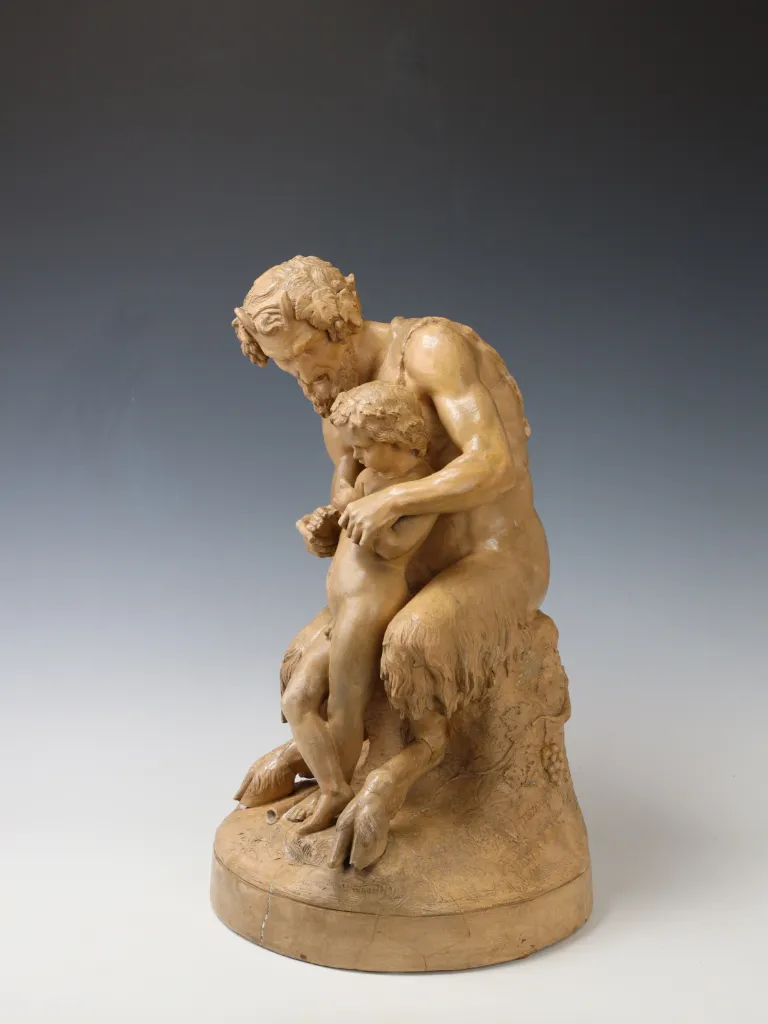
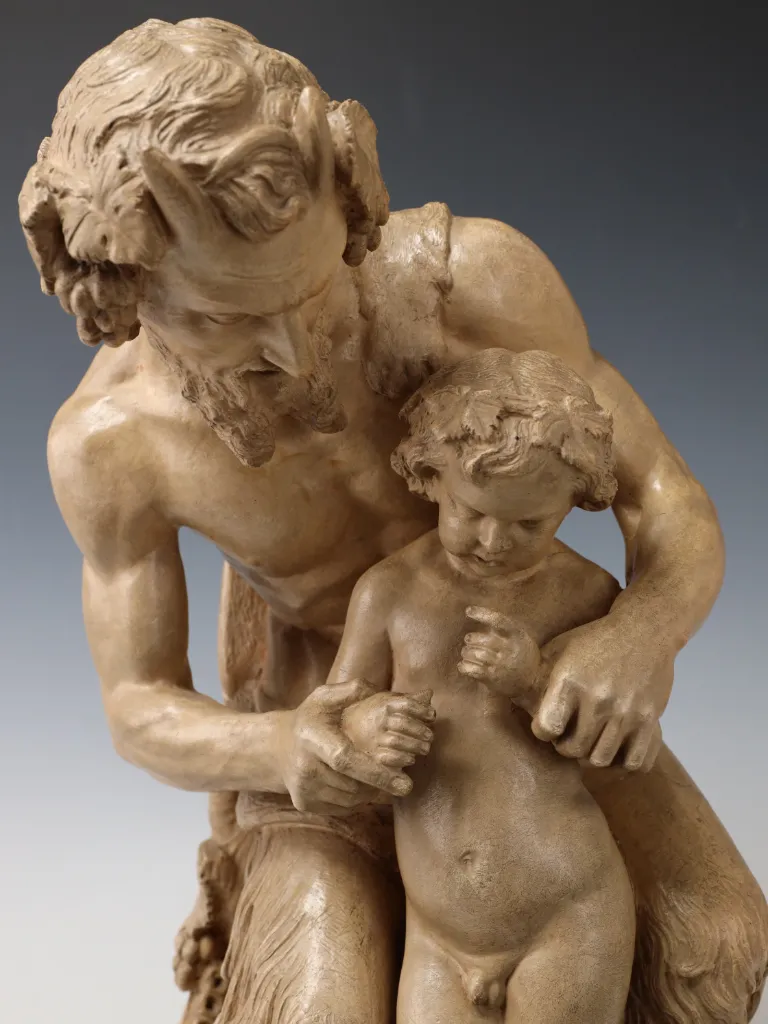
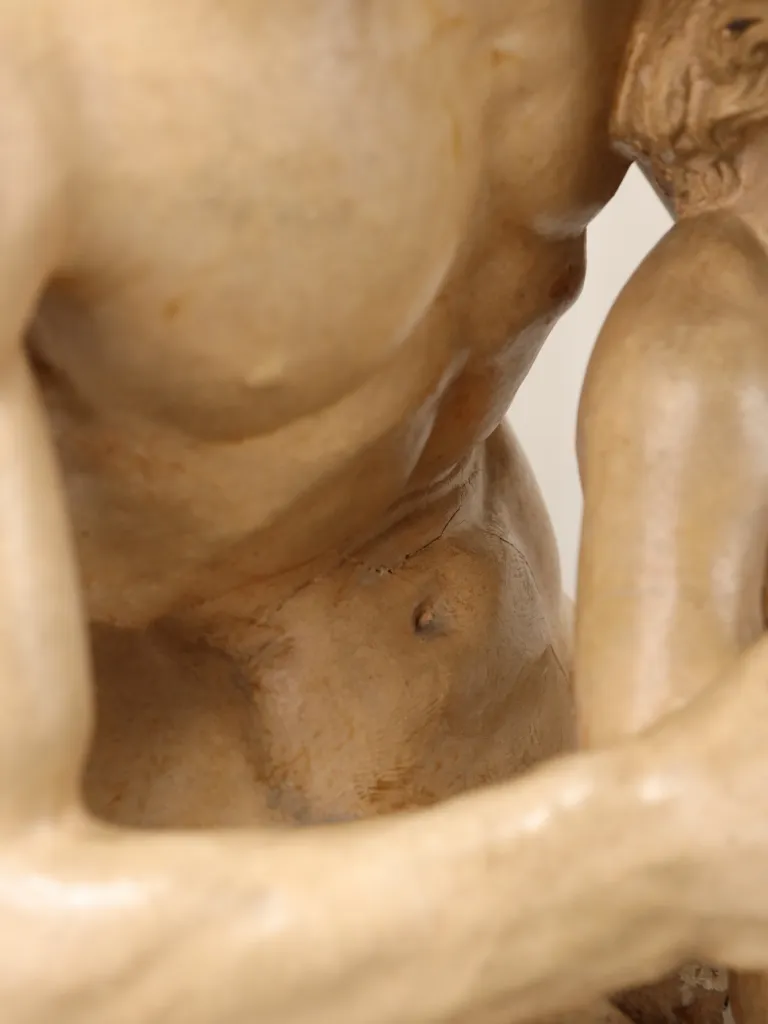
The bearded figure of Pan sits upon a rustic tree stump, his muscular upper body leaning forward as he embraces and guides the young faun standing between his legs.
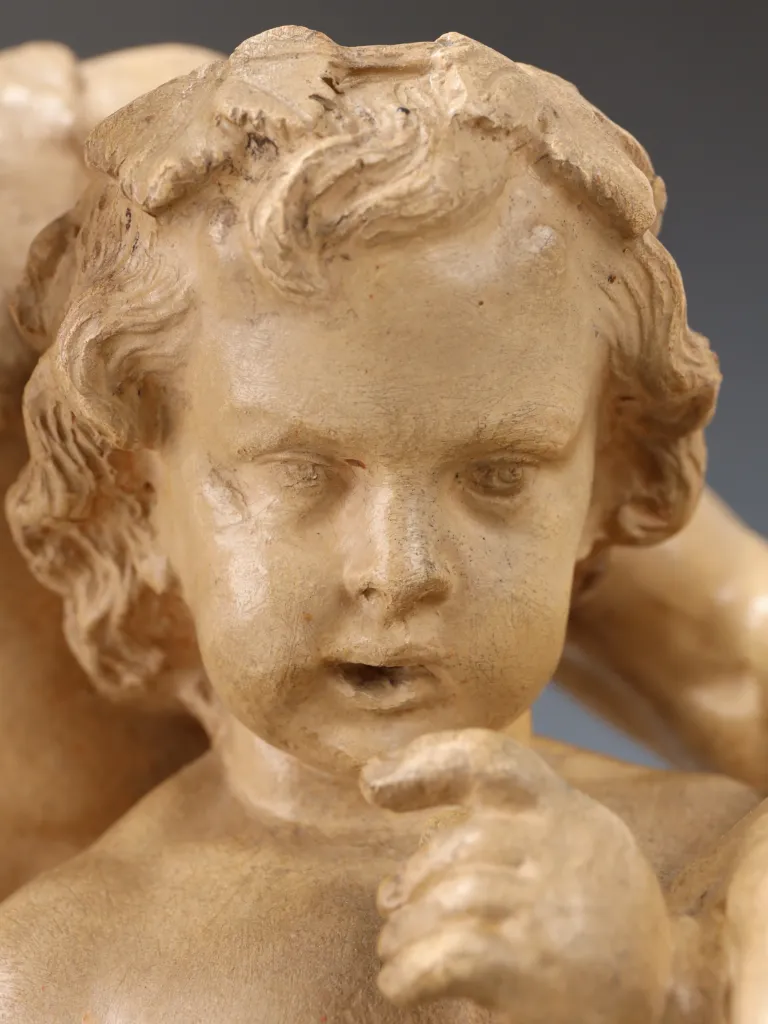
The child's head is gently lowered, his expression one of concentration, while Pan looks down towards him with an almost paternal tenderness.
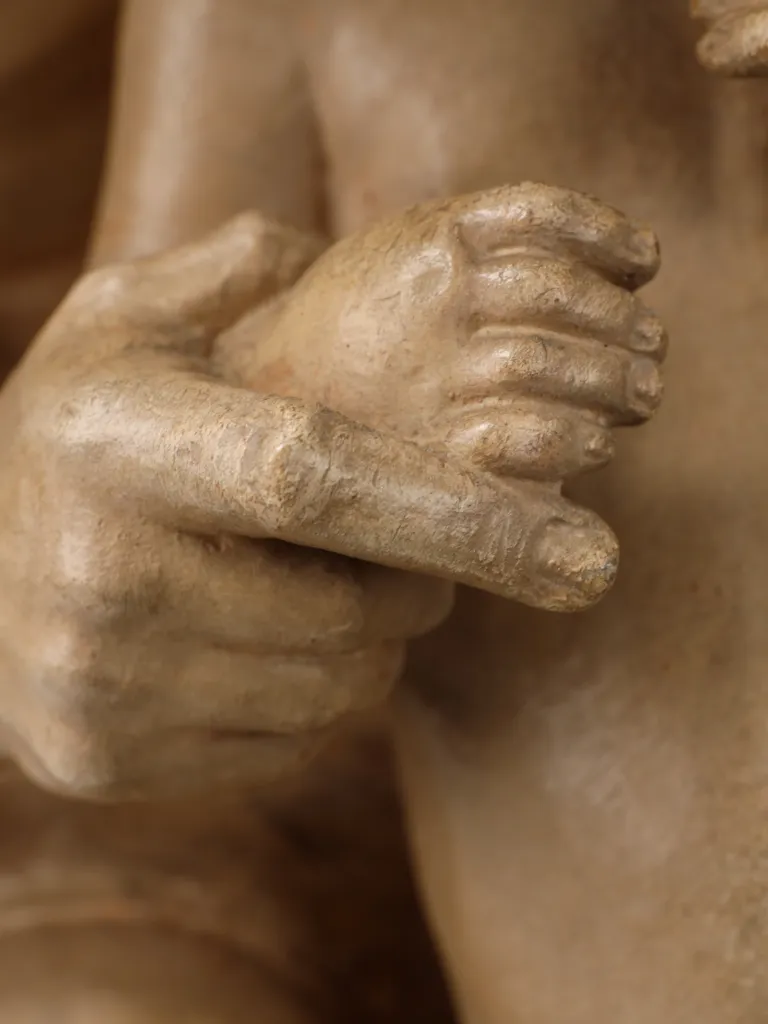
One of Pan's hands delicately holds the child's wrist, while the other rests protectively across his shoulder and upper arm.
It is this wonderfully intimate interaction that gives the sculpture such unusual emotional appeal.
In Greek mythology, Pan was the god of shepherds, flocks, wild landscapes and rustic music.
Traditionally represented with the horns, ears and hindquarters of a goat, Pan was closely associated with the countryside and the distinctive reed instrument known as the syrinx, or panpipes.
The present sculpture depicts Pan in the role of teacher, guiding a young faun in the art of music.
Rather than presenting Pan as a mischievous or intimidating woodland deity, the sculptor has chosen a remarkably gentle interpretation of the subject.
The contrast between Pan's powerful physique and the soft, youthful proportions of the child is particularly beautifully observed.
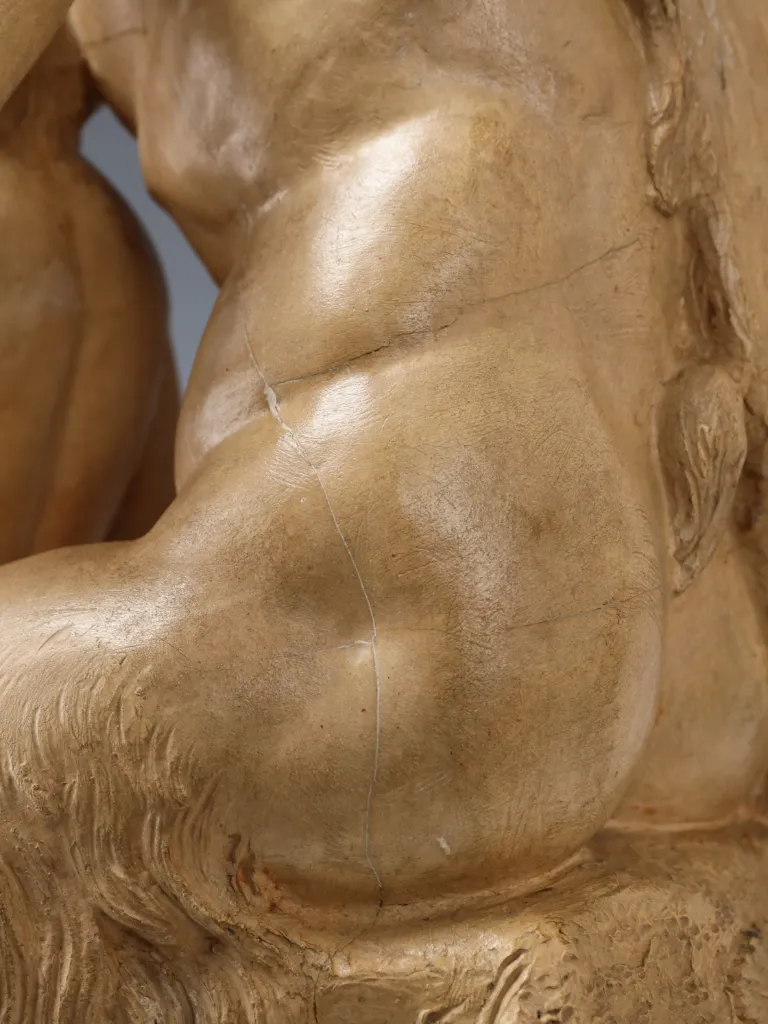
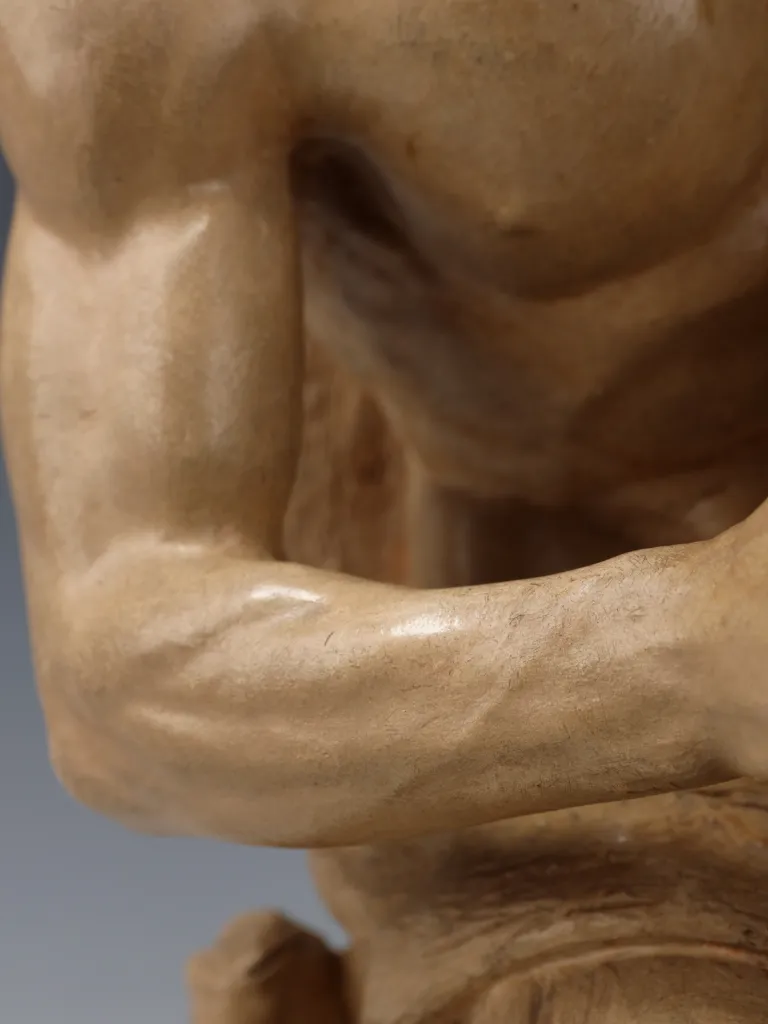
Pan's deeply modelled shoulders, muscular arms and expressive hands display considerable anatomical understanding, while the child's rounded stomach, delicate limbs and softly rendered features are treated with exceptional sensitivity.
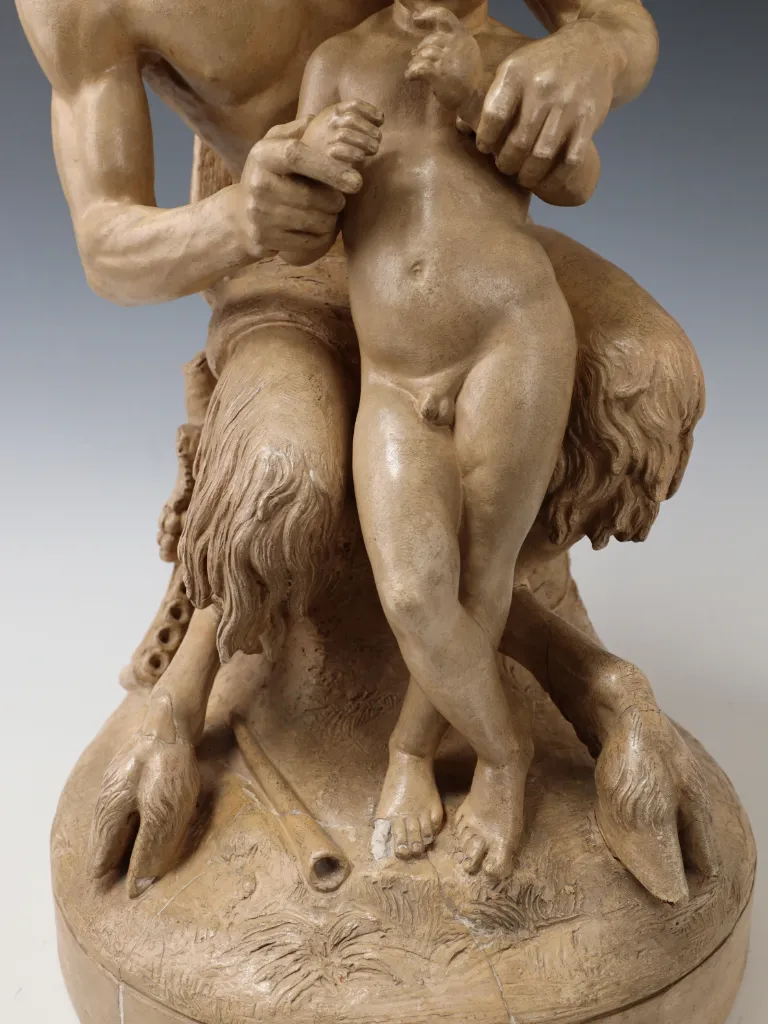
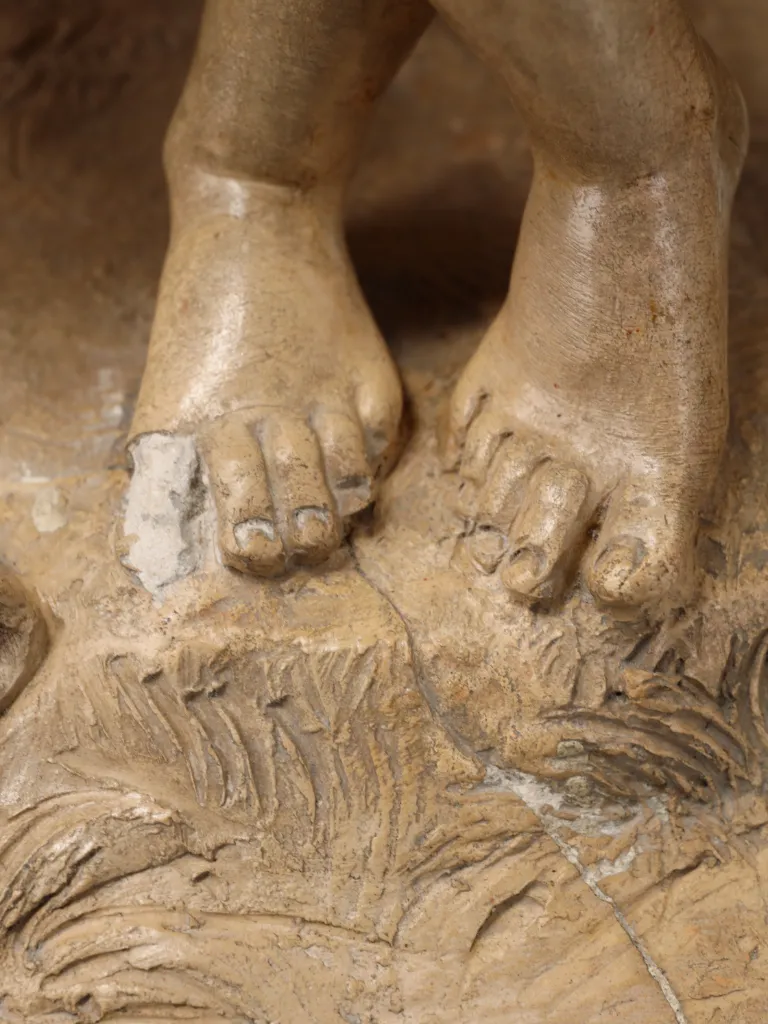
The young faun stands with his legs gently crossed, creating a graceful and naturalistic pose.
Although the original musical instrument is now missing, the positioning of the figures' hands preserves the intention of the composition and the intimate relationship between teacher and pupil.
The quality of the modelling is evident throughout.
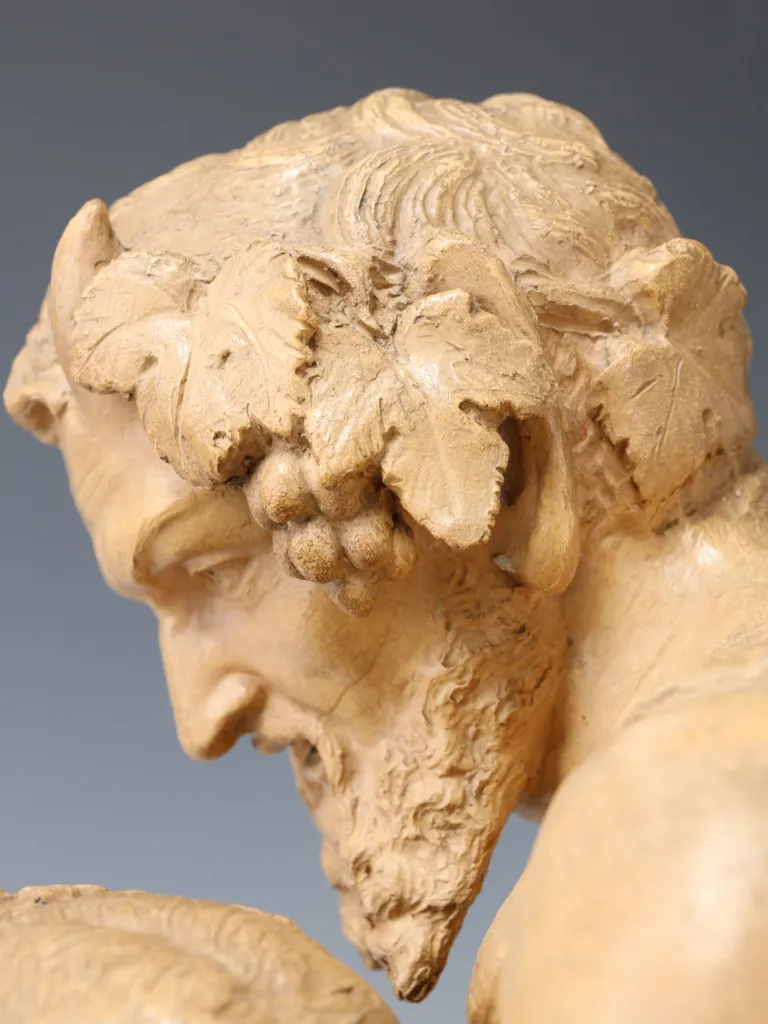
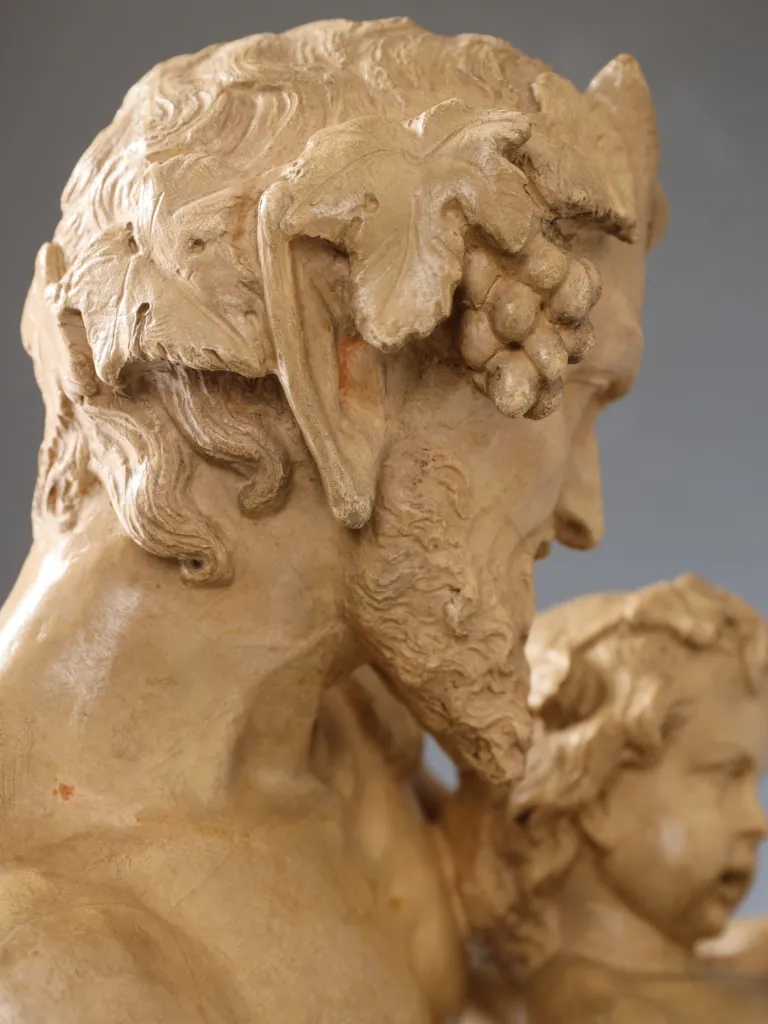
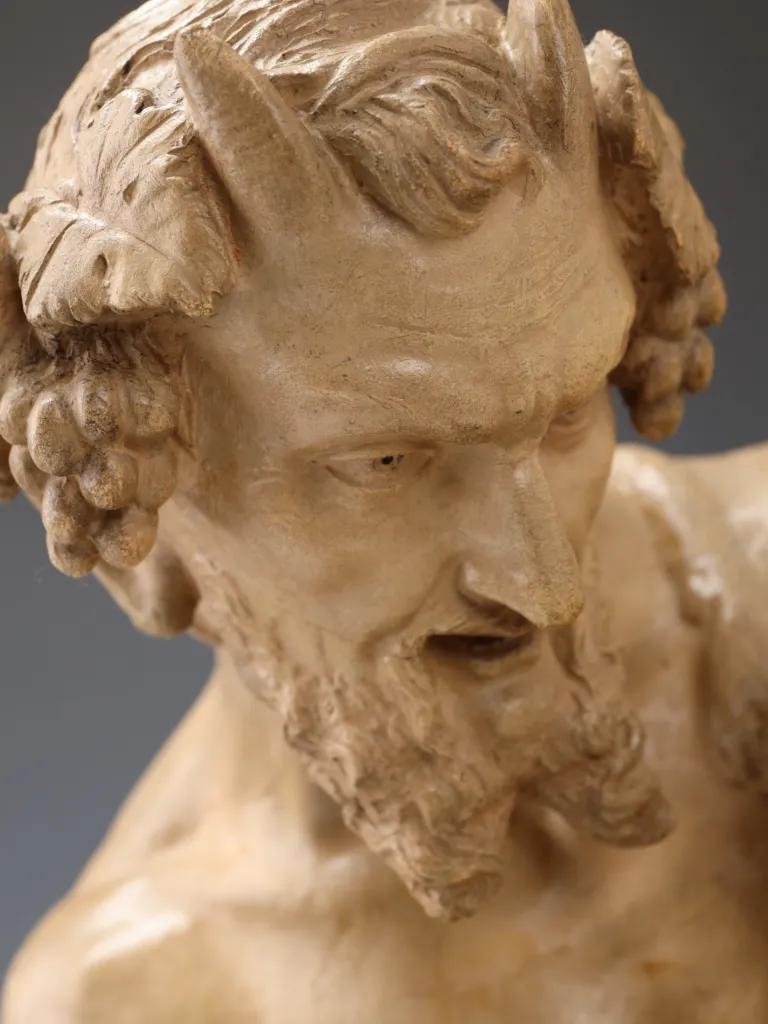
Pan's expressive face is framed by thick, curling hair, a deeply textured beard, pointed ears and short horns rising from his forehead.
His downward gaze, furrowed brow and slightly parted mouth create an extraordinary sense of concentration and character.
The young faun's face provides a beautiful contrast, with delicately formed features, softly curling hair and a contemplative expression.
The hands are particularly accomplished, with carefully defined fingers and a convincing sense of movement and physical interaction.
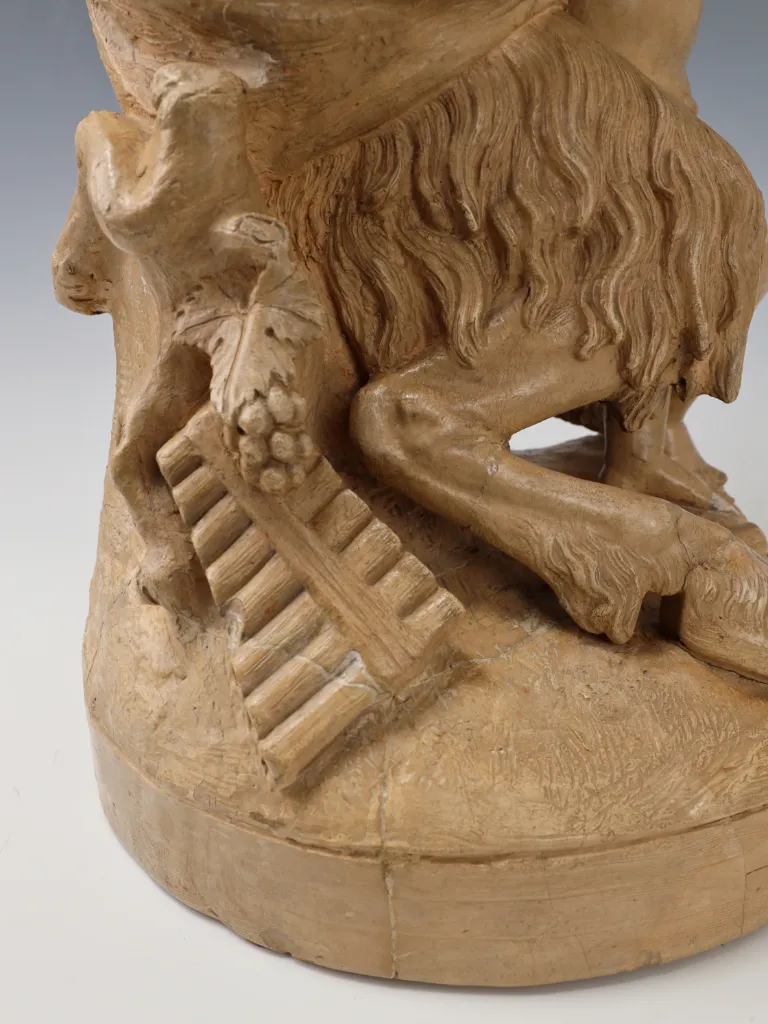
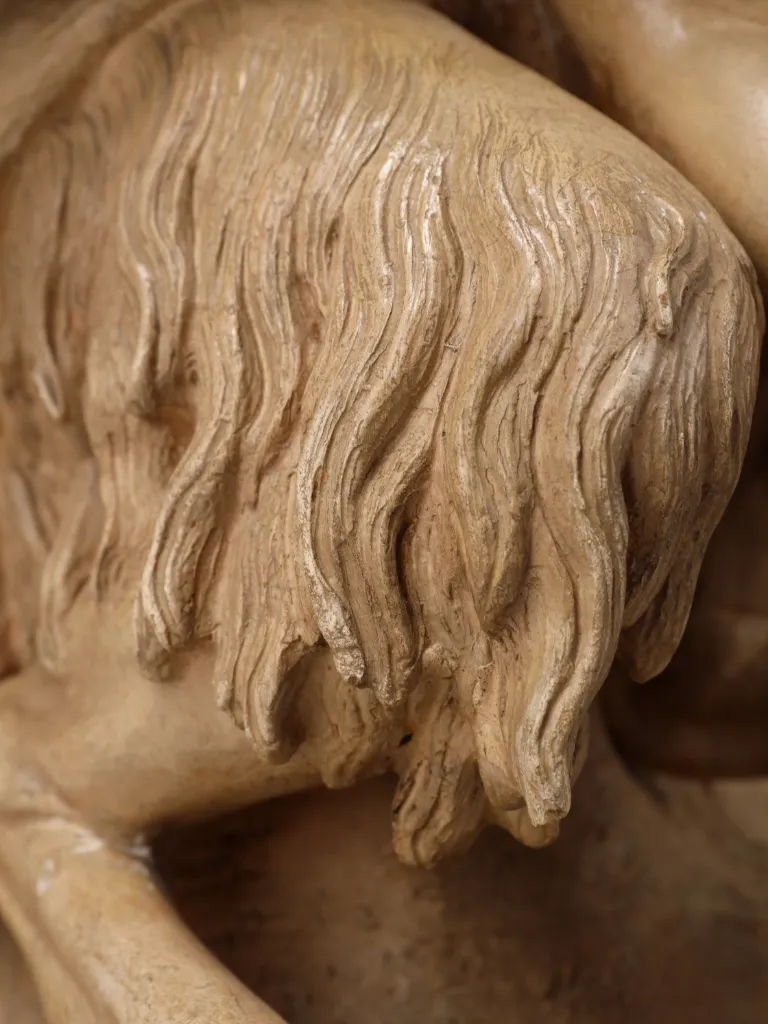
Below, Pan's goat-like hindquarters are covered in deeply modelled, flowing hair, the individual locks worked into overlapping strands.
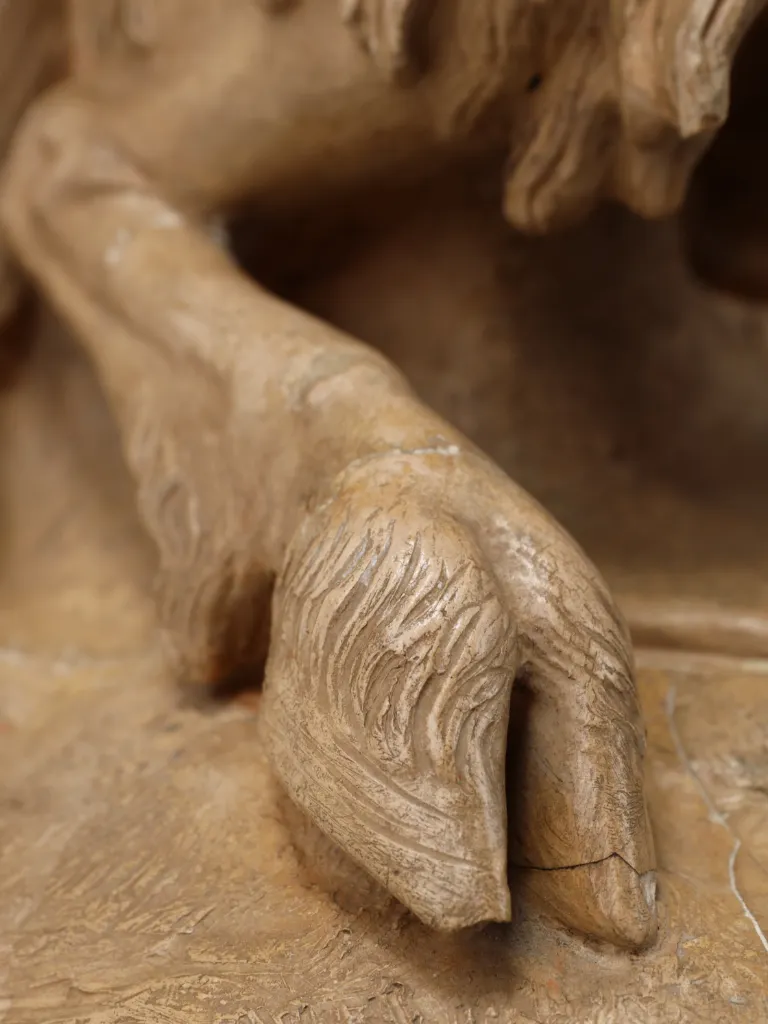
His cloven hooves extend towards the front of the composition, resting upon the naturalistically modelled ground.
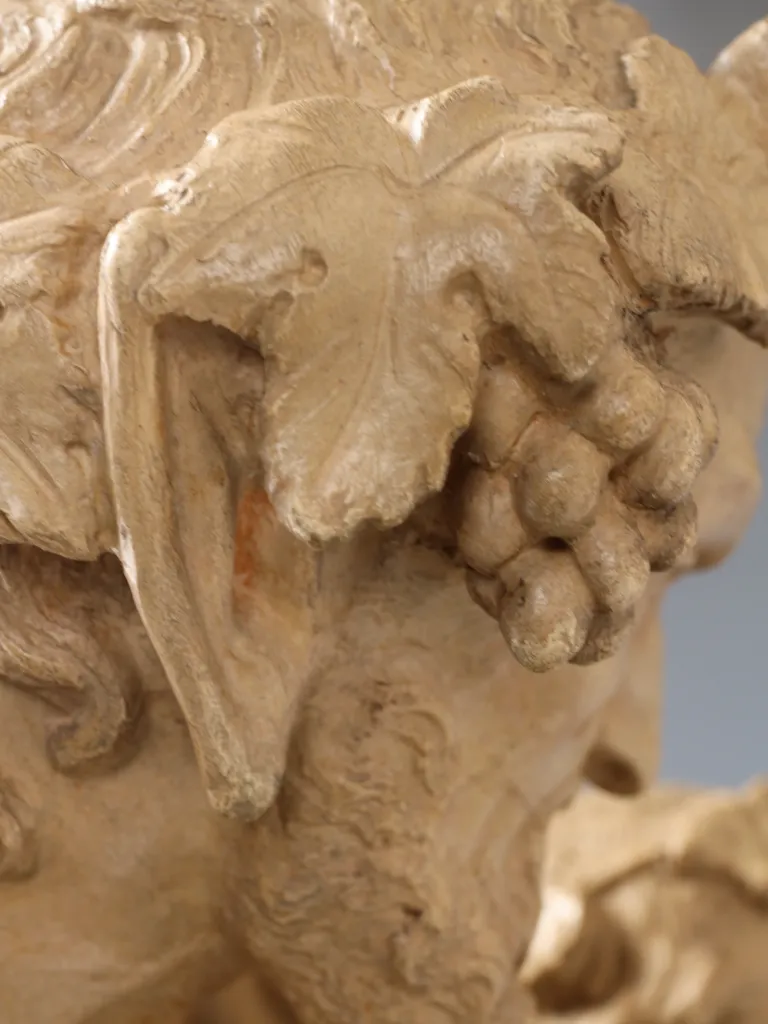
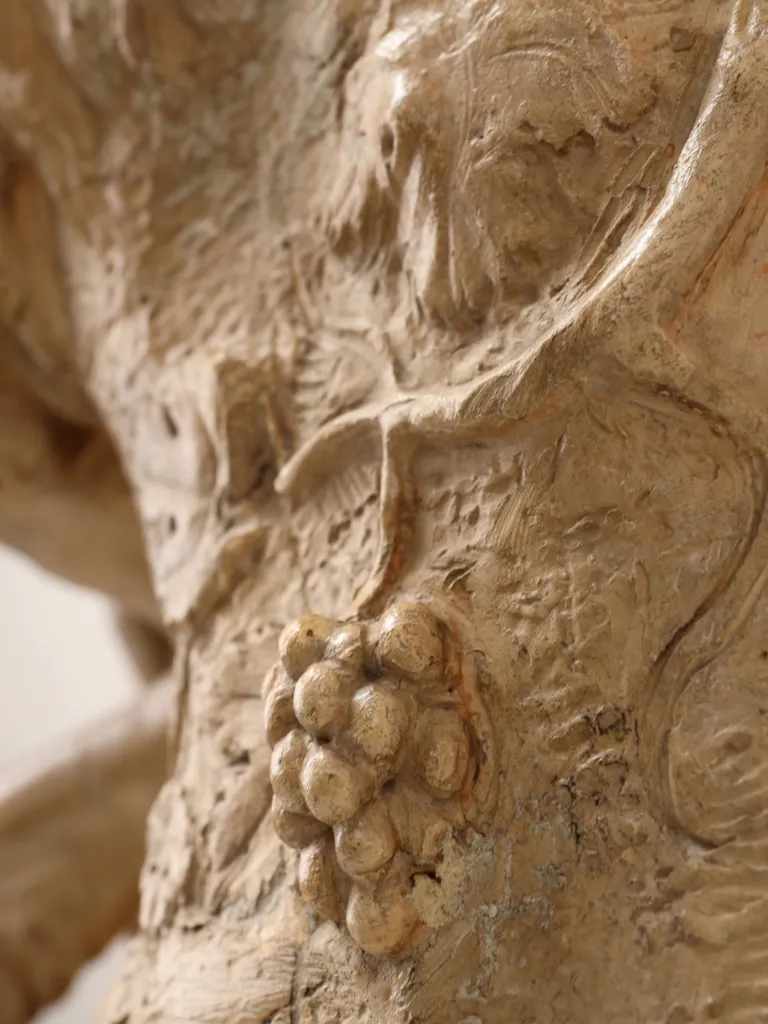
The rustic setting incorporates a tree stump, vine leaves, bunches of grapes, a panpipe-like musical motif and textured vegetation.
These details reinforce the sculpture's association with Pan, Bacchic mythology and the pastoral world of classical antiquity.
The group rests upon an integral circular base, providing a balanced architectural foundation for the animated figures above.
Théodore-Martin Hébert was a French sculptor born in Paris in 1829.
He studied under the sculptor Jean-Louis Chenillion and exhibited at the Paris Salon during the nineteenth century.
His work included mythological, allegorical and historical subjects, alongside portrait busts and official commissions.
Hébert's sculpture demonstrates the influence of the French academic tradition, combining classical subject matter with increasingly naturalistic and expressive modelling.
Among his documented works is Pan et la leçon de flûte, a marble group dated 1876, depicting Pan teaching a young faun music.
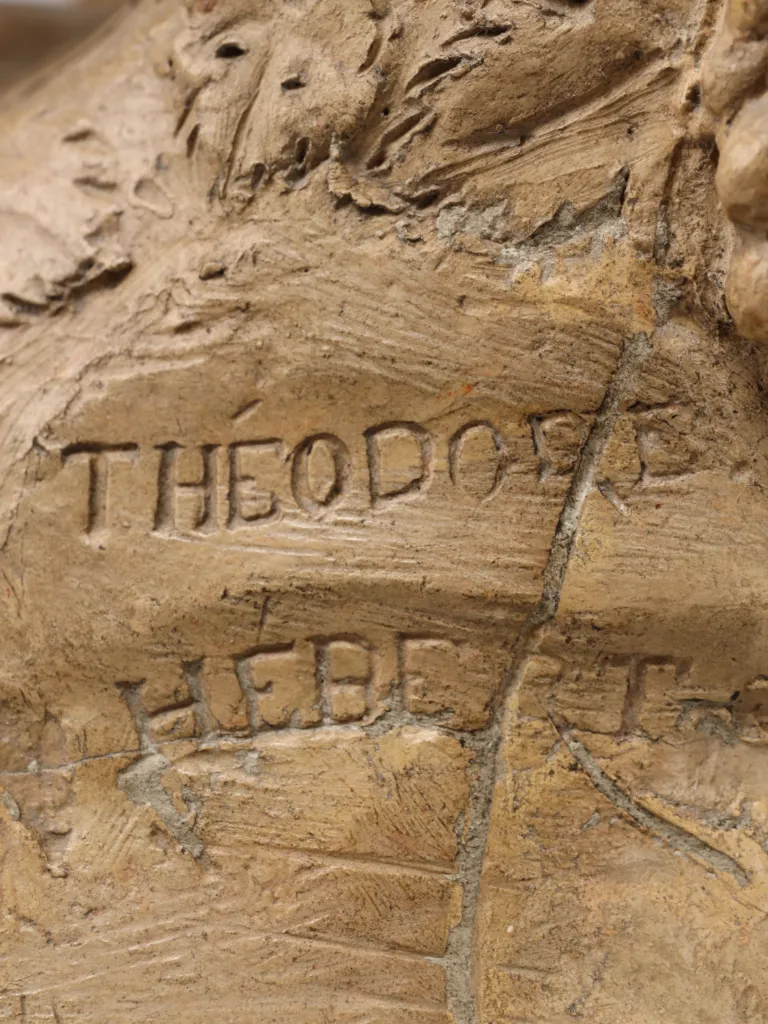
The present sculpture bears an impressed inscription reading THEODORE HEBERT and corresponds closely to this documented subject.
The inscription and composition support an attribution to Hébert's model. Whether this particular example was produced during the artist's lifetime, or represents a later reproduction of the composition, requires further examination.
The sculpture has a warm, natural terracotta-coloured finish, which beautifully complements the rustic mythological subject.
The softly varied surface accentuates the anatomical modelling, while darker tones within the recesses emphasise the detail of the hair, foliage and naturalistic groundwork.
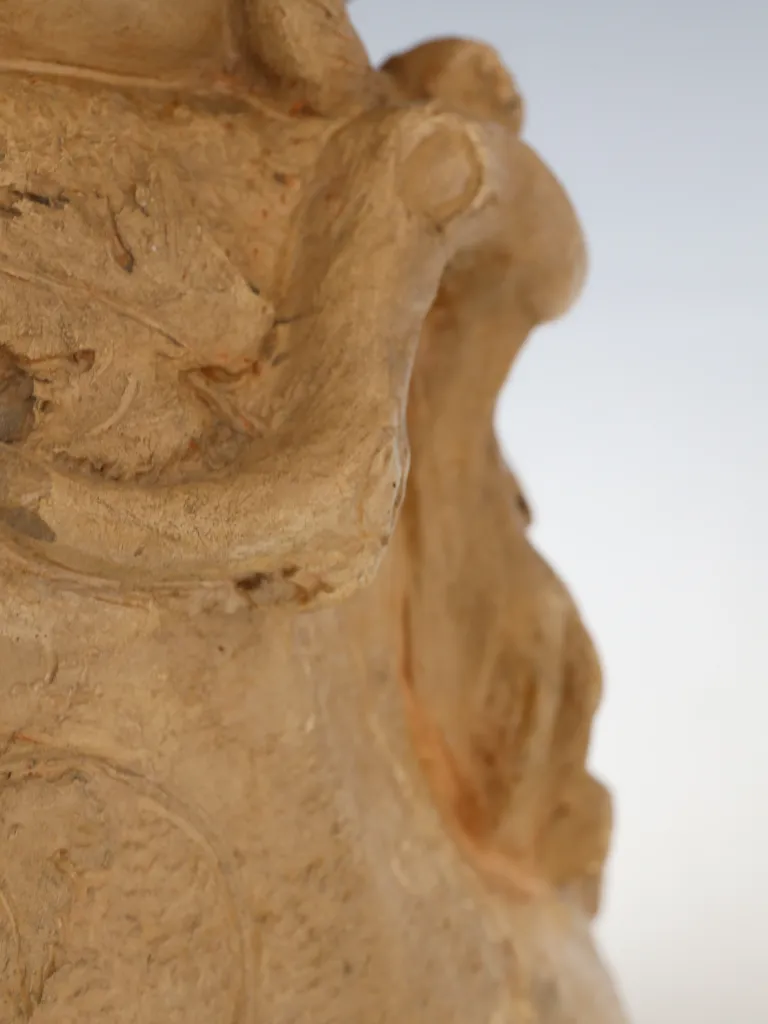
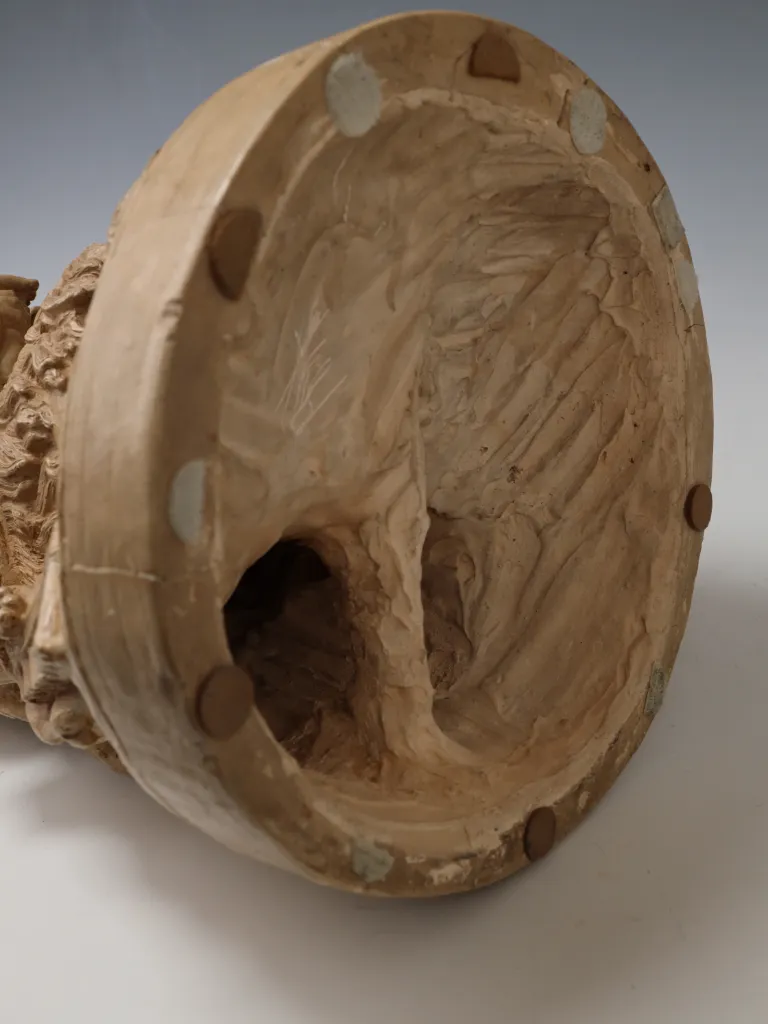
The hollow underside reveals the method of manufacture, and the sculpture has a substantial yet carefully balanced form.
The precise material remains to be confirmed through physical examination, as the photographs do not conclusively distinguish fired terracotta from a terracotta-finished plaster or composition cast.
The sculpture is presented in attractive antique decorative condition, with age-related wear, surface marks and evidence of historic repairs.
The child's original musical instrument is missing, an important loss that is reflected in the description and should be considered part of the sculpture's condition.
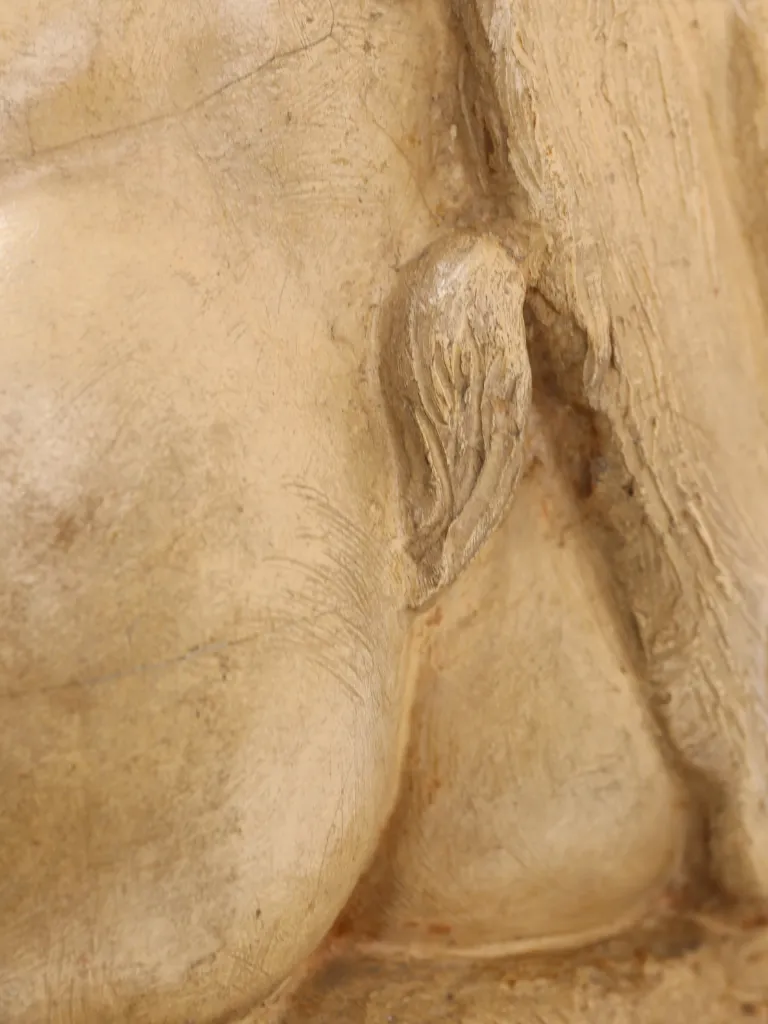
Several fine cracks and old repair lines are visible, particularly around the circular base, the figures and the rustic elements of the composition.
There are also small chips, areas of surface wear and minor losses to some of the more delicate projecting details.
The surfaces retain considerable character, with variations in tone and patination that complement the naturalistic modelling.
The sculpture remains a particularly expressive and decorative example of nineteenth-century French mythological design.
Artist / Model: Théodore-Martin Hébert (1829–1913)
Title / Subject: Pan Teaching a Young Faun to Play the Flute
Original composition: Associated with Pan et la leçon de flûte, documented in 1876
Date of this example: Probably late 19th or early 20th century; further examination required
Origin: France
Style: French Academic Sculpture / Neoclassical Mythological Sculpture
Material: Terracotta-coloured sculptural material; fired terracotta versus plaster/composition to be confirmed
Construction: Hollow sculptural group on an integral circular base
Signature: Inscribed THEODORE HEBERT on the base
Condition: Historic repairs, cracks and age-related wear; child's original musical instrument missing
Provenance: Recently acquired by Shackleton Fox in Paris, France
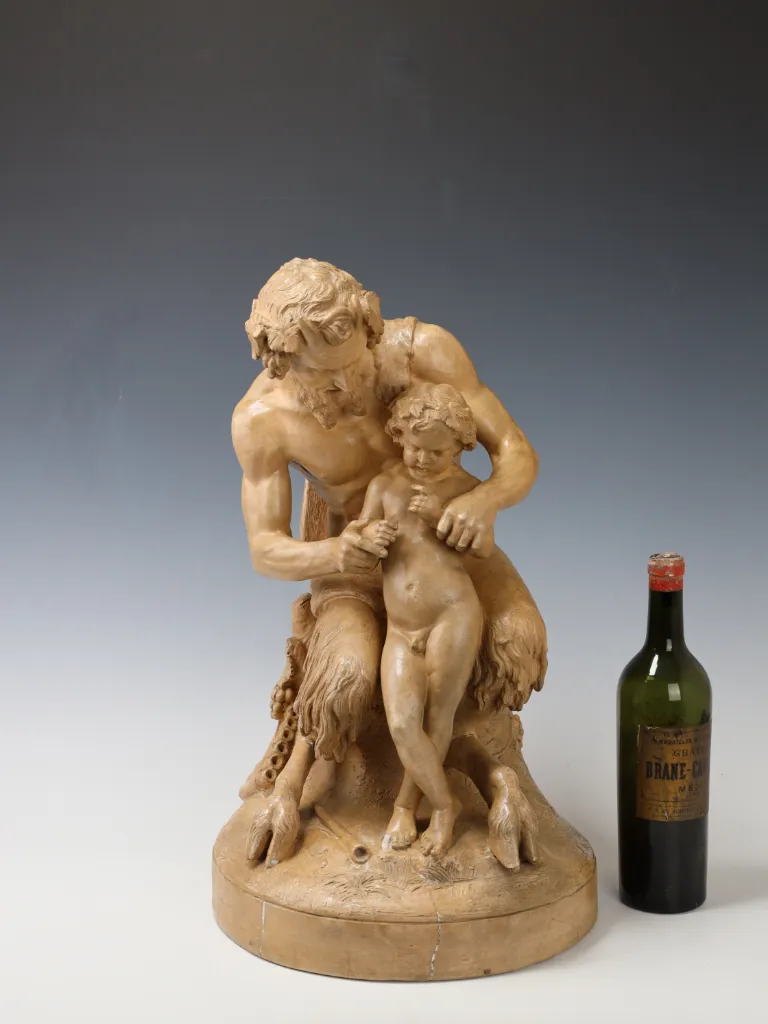
Height: 55 cm / 21.65 inches
Width: 34 cm / 13.39 inches
Depth: 34 cm / 13.39 inches
Weight: 17.5 kg / 38.58 lbs
Every item offered by Shackleton Fox is carefully inspected, prepared, and where necessary conserved within our workshop prior to sale.
As heritage craftsmen and antique specialists, we believe in preserving the authenticity and integrity of each piece. Original finishes, patina, wear, and signs of age are retained wherever possible, as these elements contribute to both character and historical significance.
When restoration, rewiring, repairs, or conservation work is required, it is undertaken sympathetically using traditional techniques and materials appropriate to the period of the piece. Our philosophy is one of careful stewardship rather than unnecessary restoration, ensuring antiques remain both functional and historically respectful.
The result is a collection of pieces that have been thoughtfully prepared, allowing future owners to enjoy them with confidence while preserving their unique story and character.