
£950.00
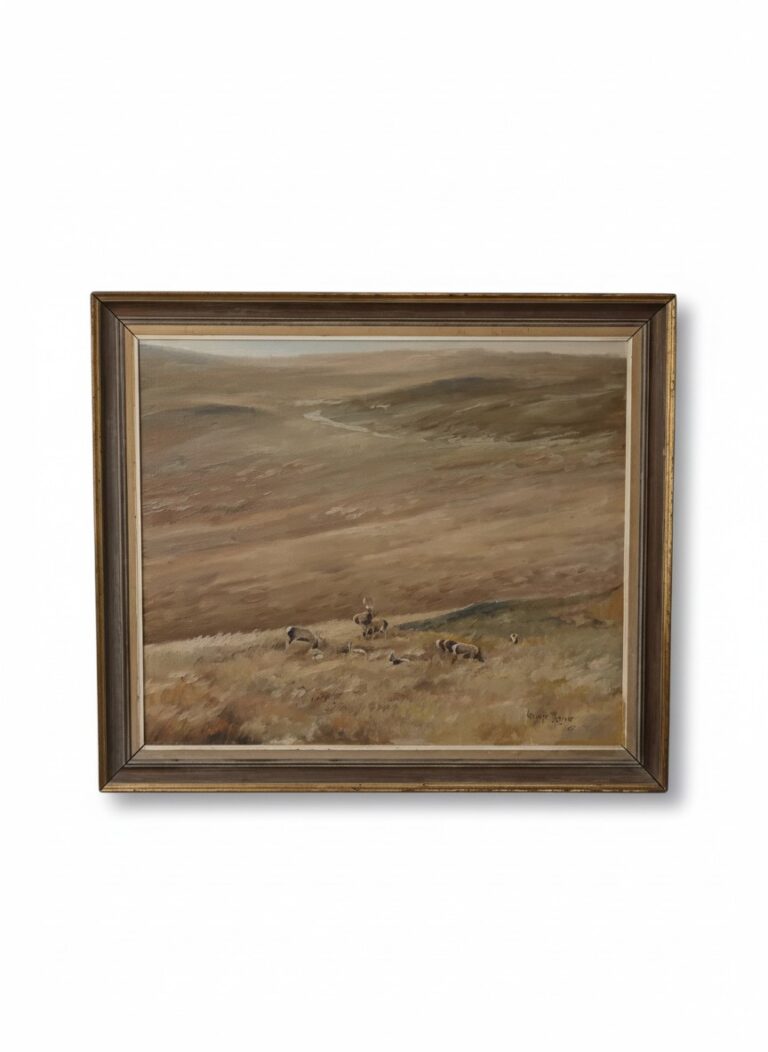
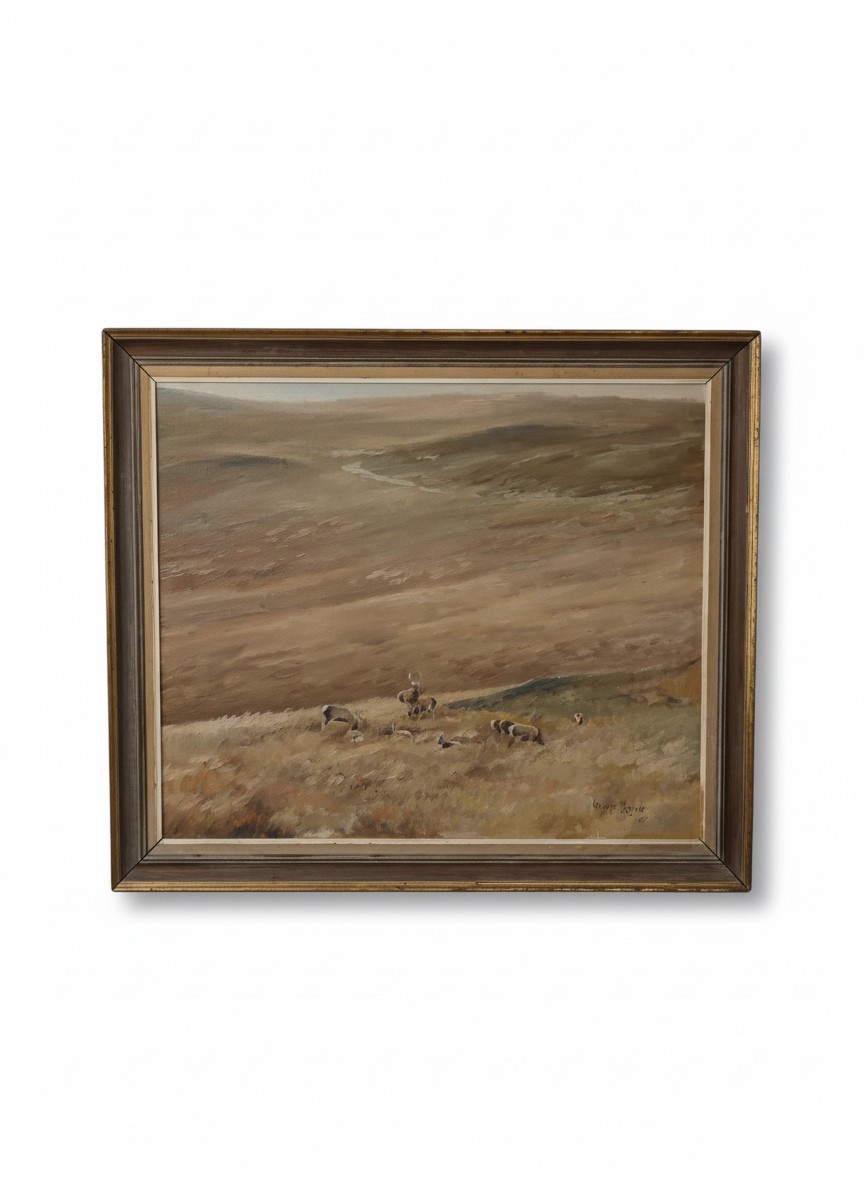
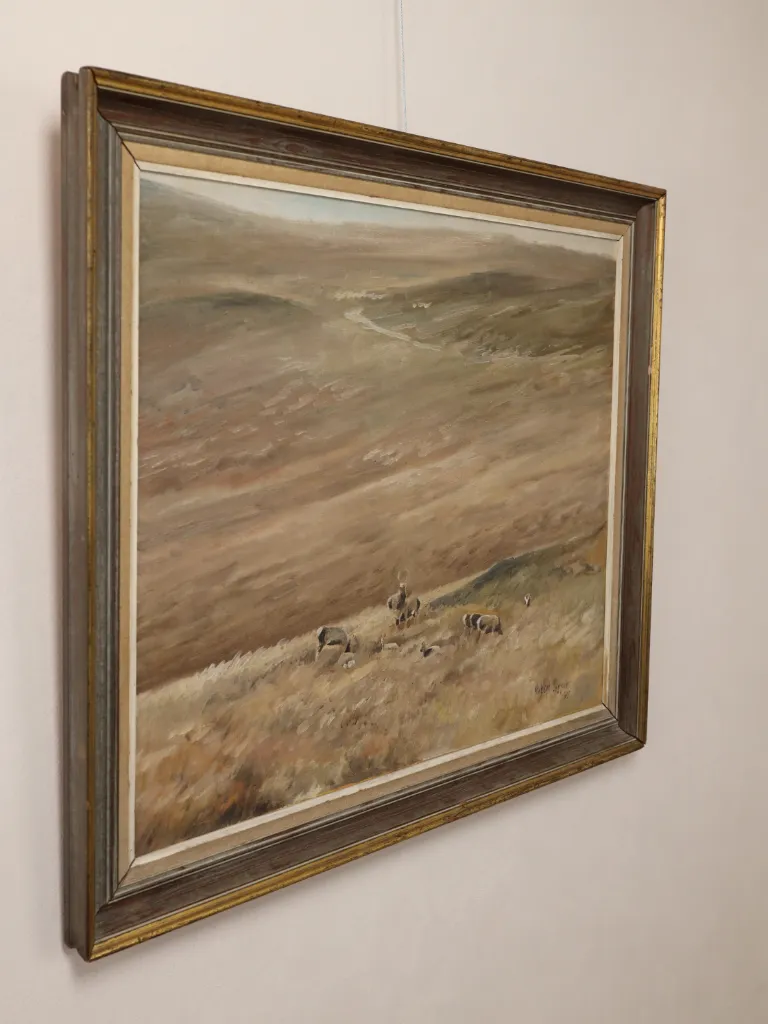
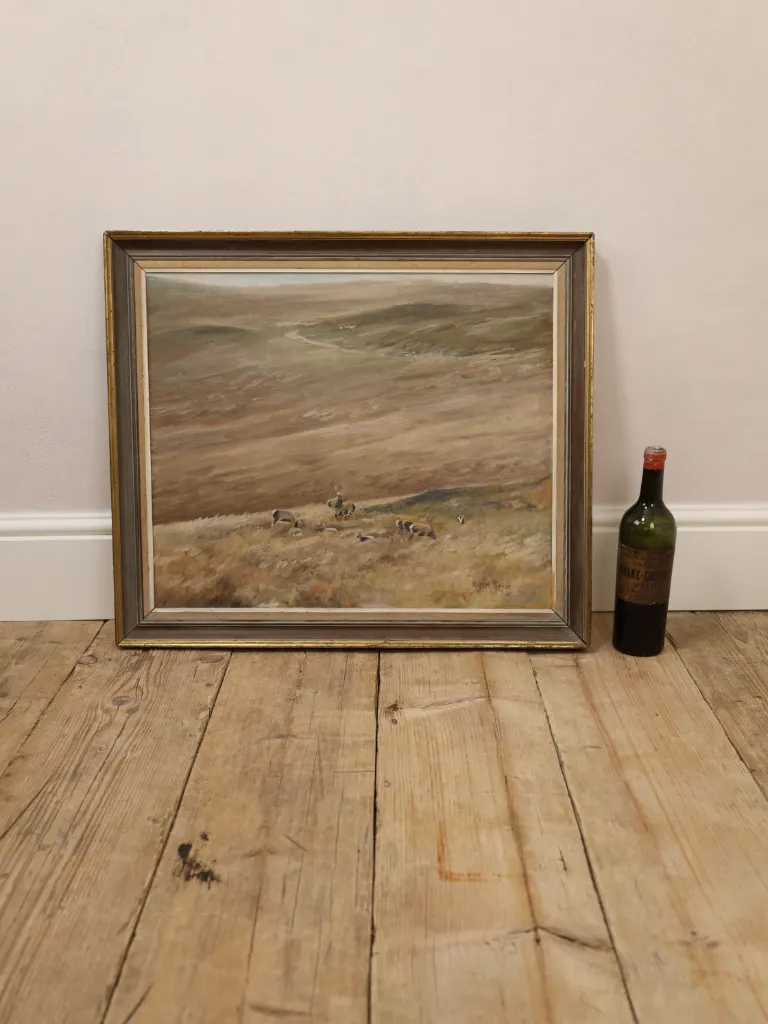
A wonderfully atmospheric British wildlife painting by Hubert Pepper (1928–1985), signed and dated 1972, depicting a small group of red deer and sheep within the extraordinary openness of a Highland moorland landscape.



A wonderfully atmospheric British wildlife painting by Hubert Pepper (1928–1985), signed and dated 1972, depicting a small group of red deer and sheep within the extraordinary openness of a Highland moorland landscape.
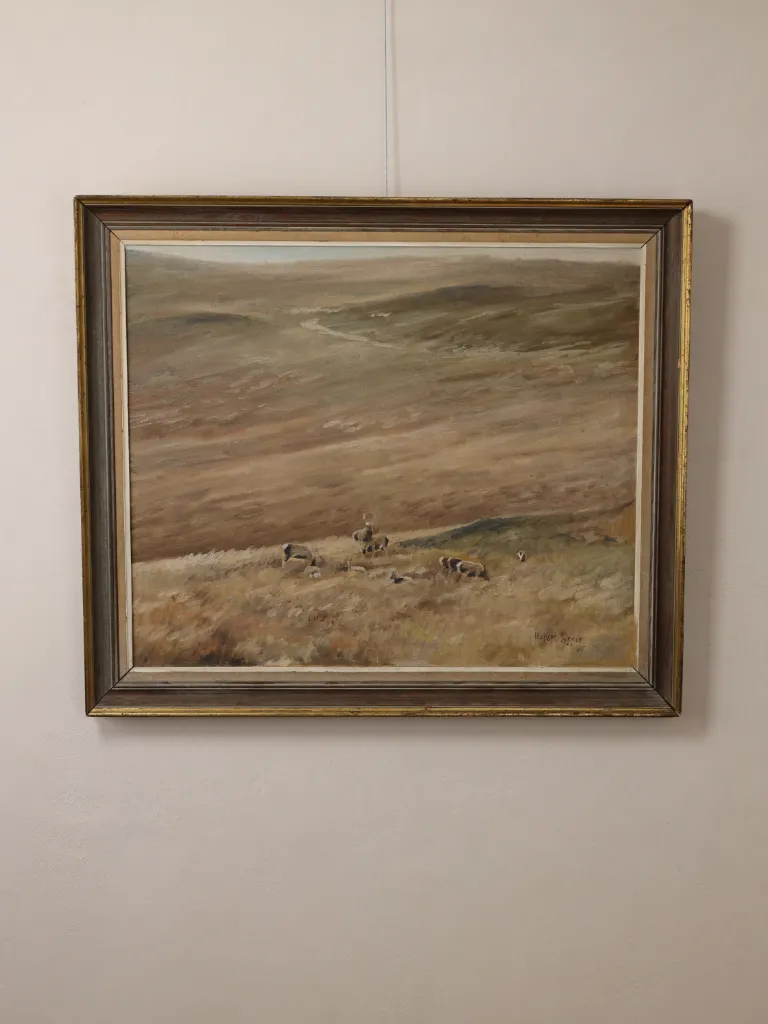
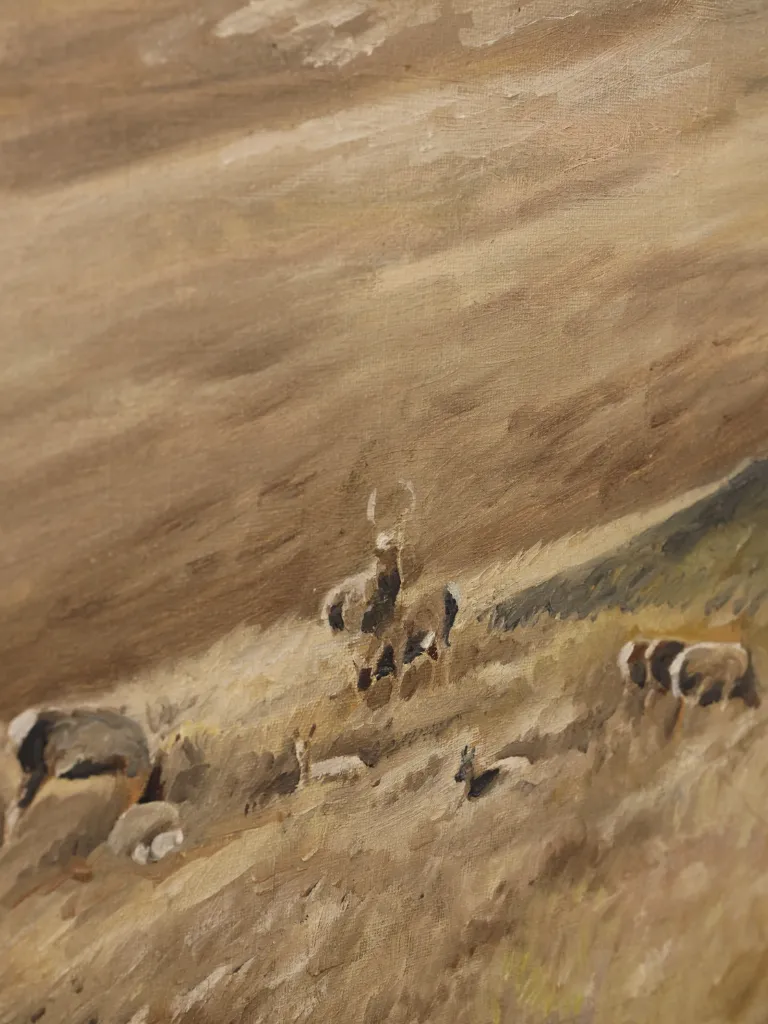
Pepper places the animals deliberately low within the composition, allowing the immense sweep of the surrounding landscape to dominate. At the centre stands an antlered stag, accompanied by further deer resting and grazing amongst the rough grasses, while sheep are scattered naturally across the hillside.
Rather than presenting the stag as a conventional close-up sporting portrait, Pepper depicts the animals as part of their environment. Their relatively diminutive scale against the expansive moor conveys an impressive sense of remoteness and solitude.
Beyond, the landscape rises through successive layers of softly rendered hills and valleys. A pale, winding watercourse or track leads the eye deep into the composition before disappearing amongst the distant slopes.
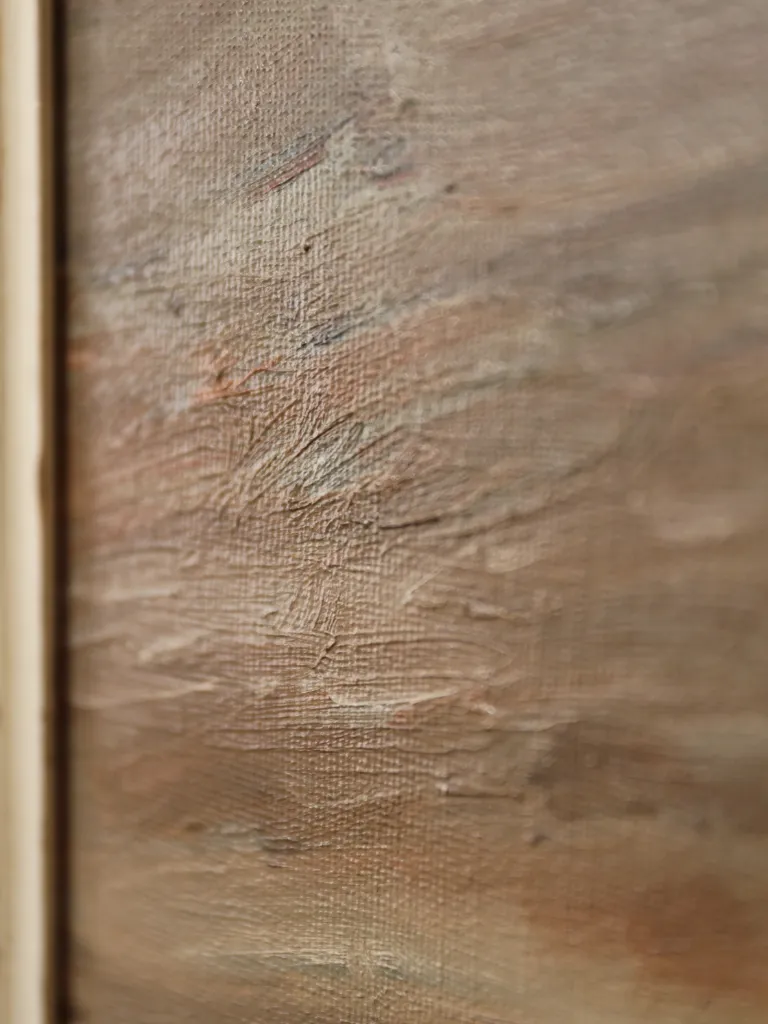
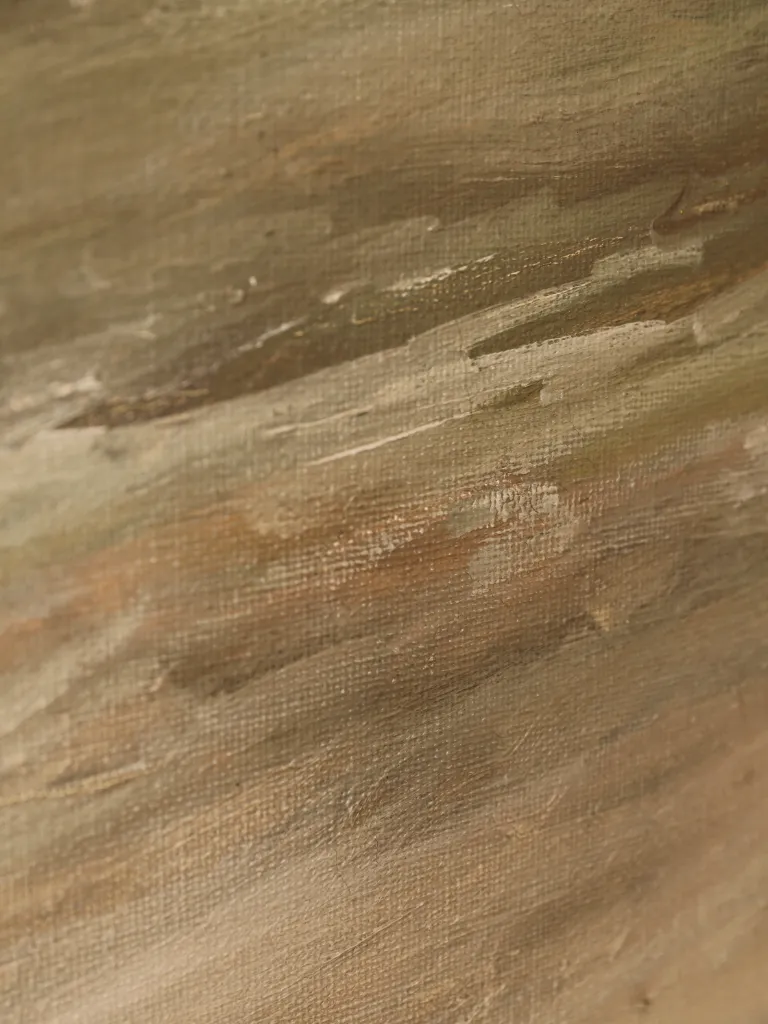
The restrained palette is particularly effective, composed principally of soft ochres, stone, muted greens, greys and earthy browns. Pepper's brushwork is loose and economical throughout, becoming increasingly abstract across the distant hills while retaining carefully judged detail around the animals.
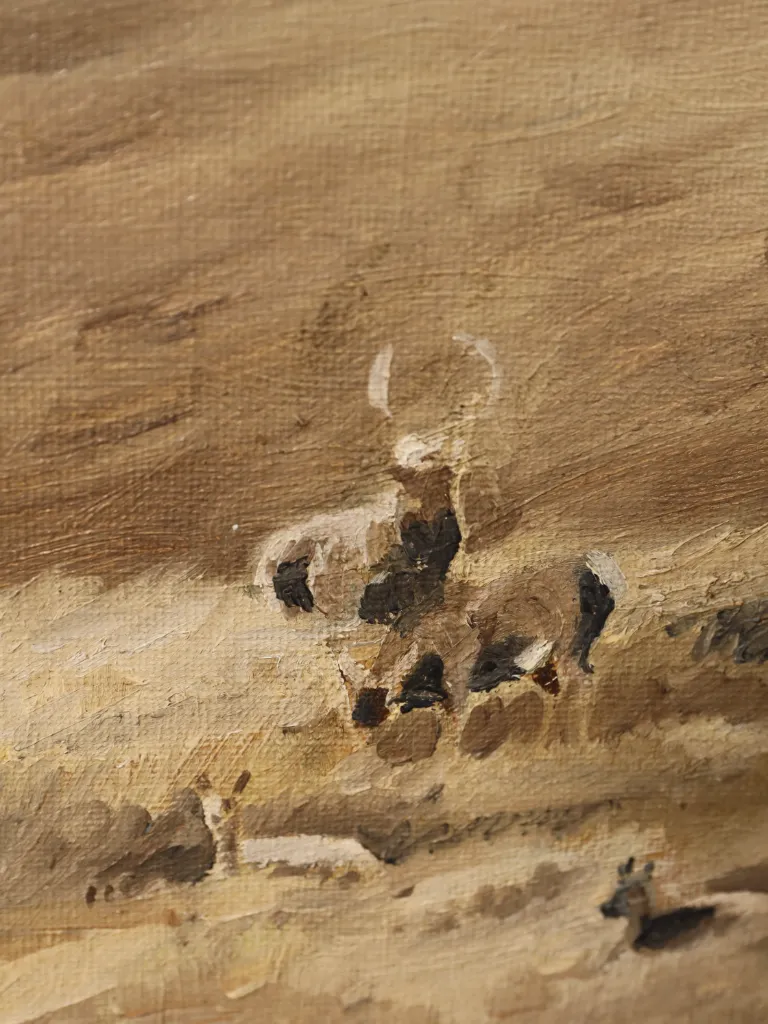
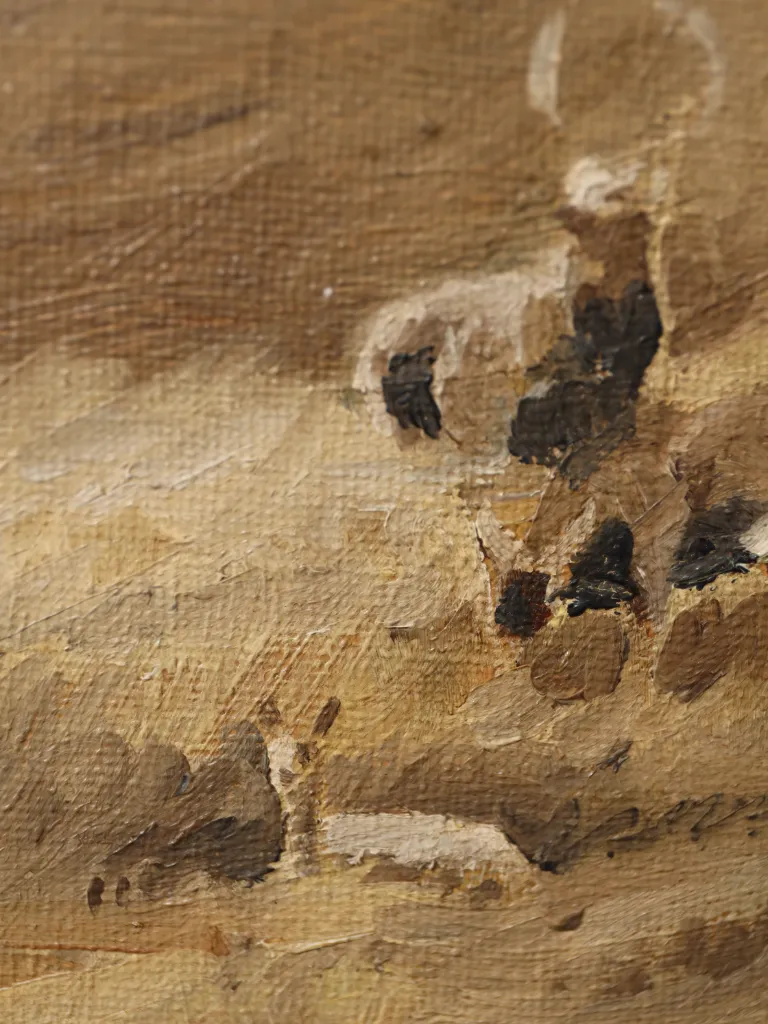
Viewed closely, the central stag is particularly accomplished. Its body, head and impressive antlers are described with surprisingly few individual marks, demonstrating Pepper's familiarity with the anatomy and behaviour of deer.
The result is a quiet and evocative sporting landscape that captures the scale and isolation of the British uplands rather than simply recording its wildlife.
Hubert Pepper (1928–1985) was a British artist particularly associated with wildlife and animal subjects.
Deer appear repeatedly within his known work. Recorded paintings include Stags on a Moor, dated 1967, which was handled by Christie's, and Landscape with Deer, also dated 1967. Other recorded subjects include grazing deer, foxes and seals.
Pepper's connection with deer extended beyond his painting. He was a member of the British Deer Society, and in 1970 the Society presented one of his Highland paintings to the retiring Earl of Lonsdale, its first president, in recognition of his service to the organisation.
Later records also connect Pepper's artistic work with the study of reindeer. His drawings were used in research concerning the markings of living and prehistoric reindeer, further demonstrating his close observation of animal form.
Pepper's work remains relatively uncommon on the market, with only a small number of paintings appearing publicly.
There is a particularly relevant documented comparison with the present work.
Christie's offered another painting by Pepper entitled:
Hubert Pepper (20th Century)
Stags on a Moor
Signed and dated “Hubert Pepper 67”
Oil on canvas
40.6 × 50.8 cm
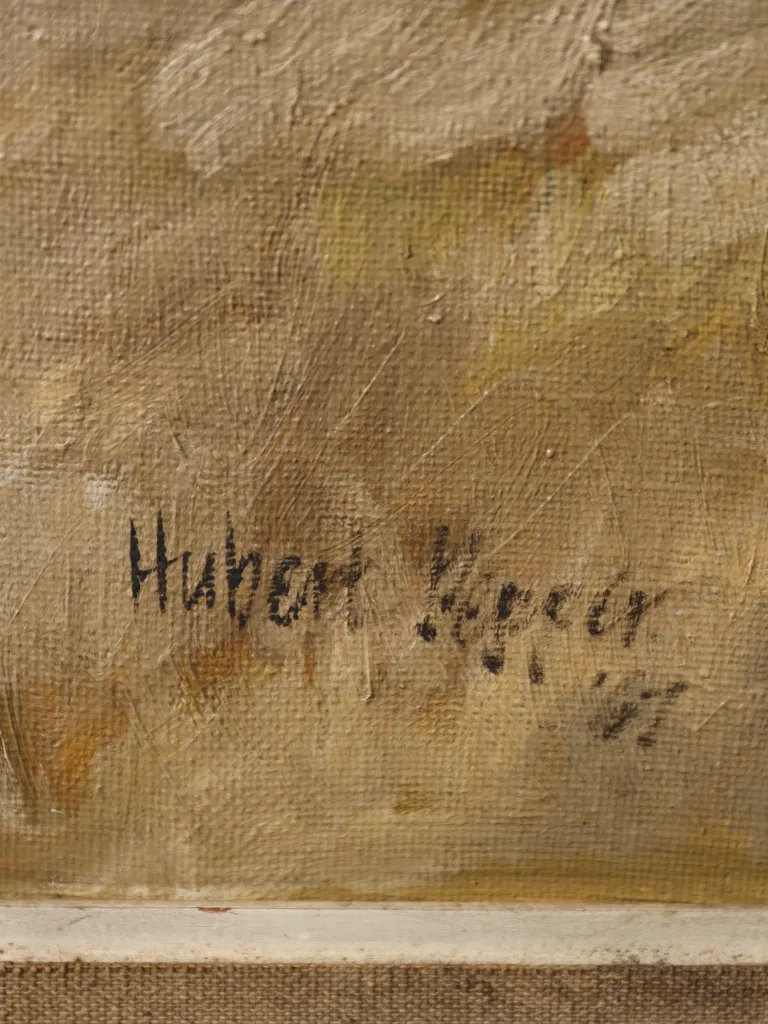
The painting is clearly signed and dated “Hubert Pepper / 72” to the lower right.
The date establishes the work as 1972, when Pepper was approximately 44 years old.
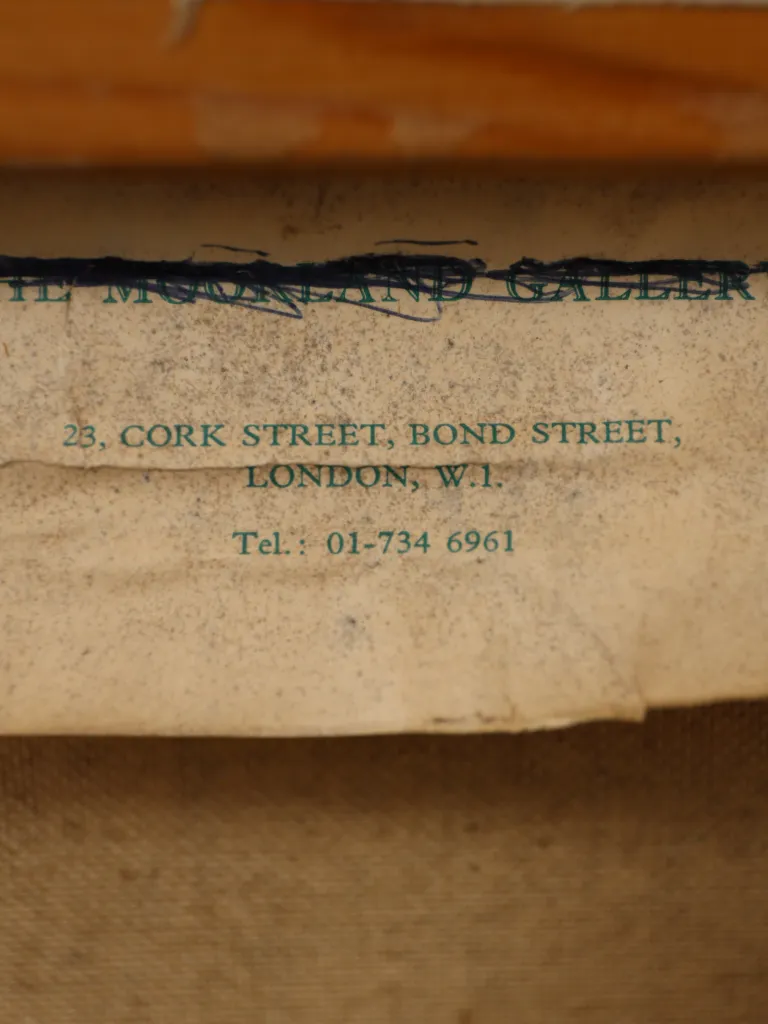
The reverse retains an original gallery label from a Bond Street gallery, London, where the painting is believed to have been originally purchased.
The work subsequently passed through Christie’s, where it was acquired by a Lincoln antiques dealer and remained within their private collection for many years. Following the clearance of the dealer’s property, the painting was acquired directly by Shackleton Fox.
This interesting chain of ownership, together with the surviving Bond Street gallery label, provides a valuable record of the painting’s history within the British art and antiques
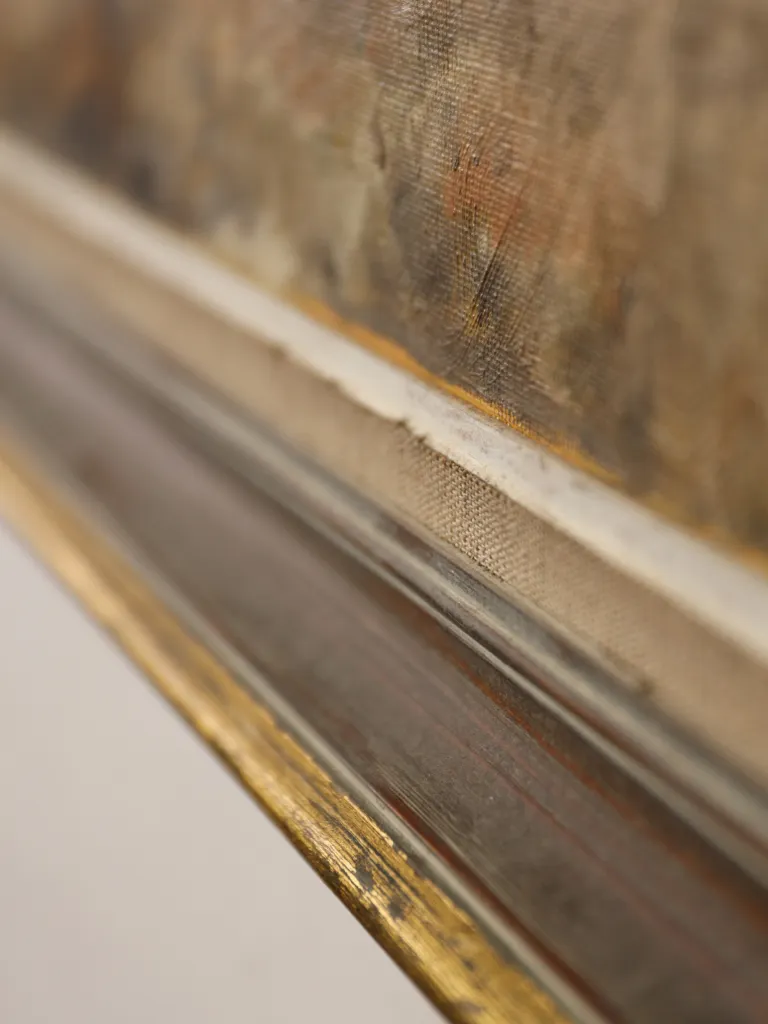
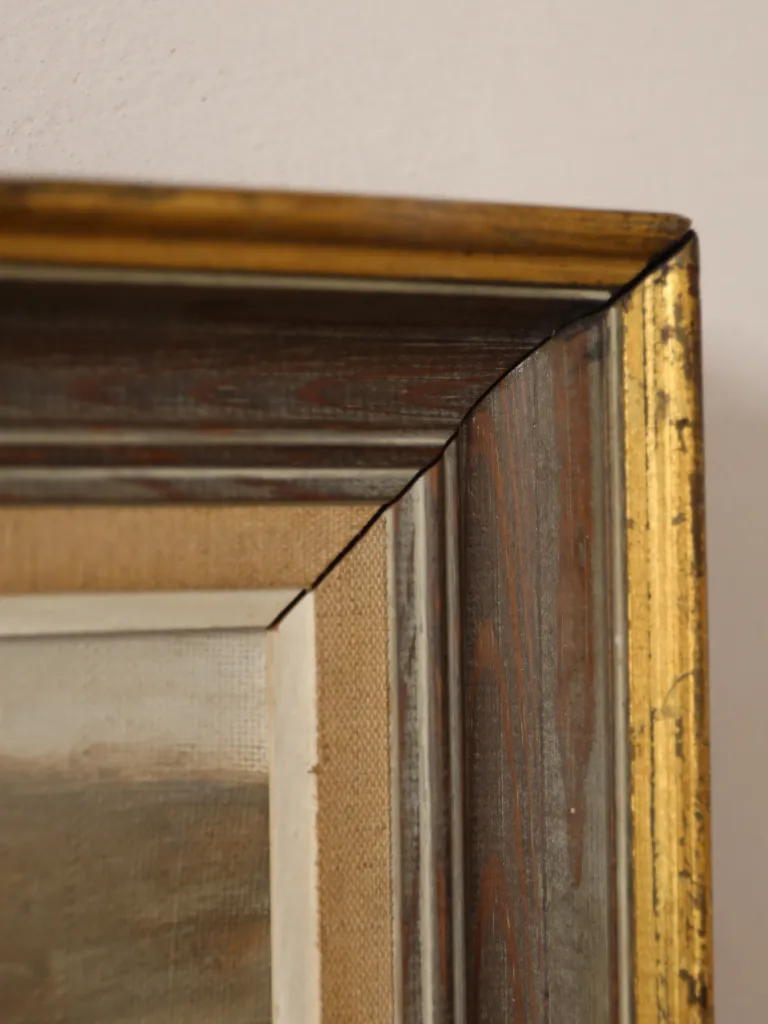
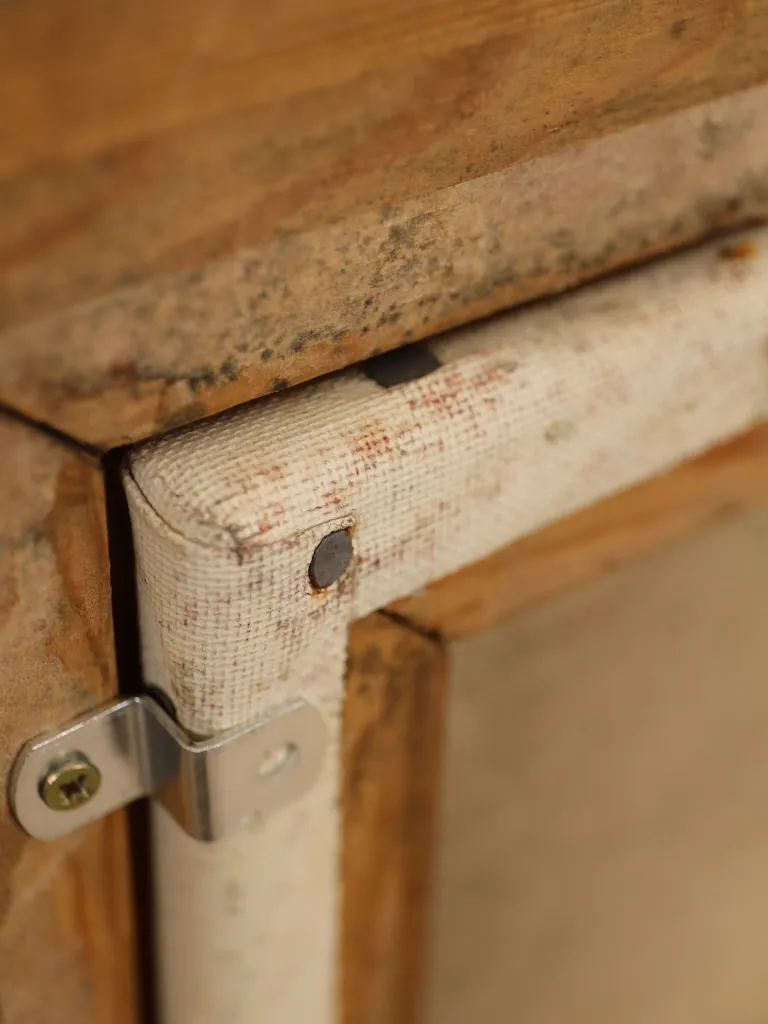
The painting is presented in its attractive period wooden frame, with a restrained combination of warm brown, muted grey and narrow gilt detailing.
Its relatively simple construction complements Pepper's subdued landscape palette particularly well without competing with the painting.
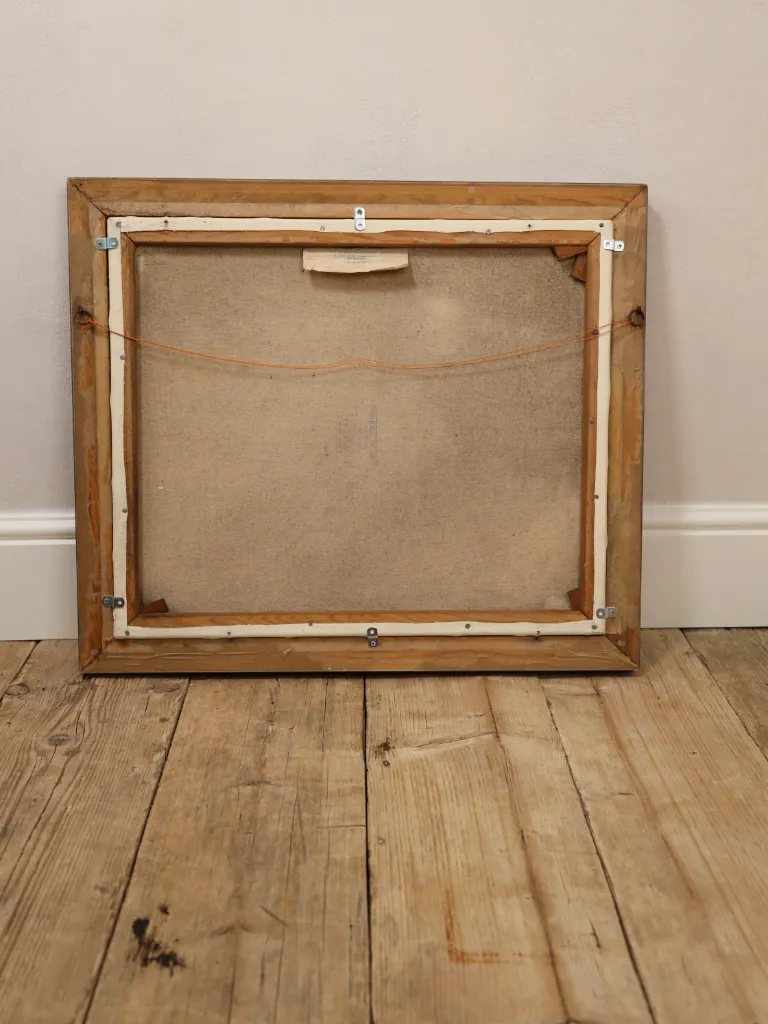
The frame presently has a slight twist, believed to have developed while the painting remained unhung for a prolonged period. This is primarily noticeable when the work is freestanding rather than when correctly hung.
The painting presents well and retains the loose, textural painted surface characteristic of Pepper's technique.
It has been carefully cleaned in the Shackleton Fox workshop, removing accumulated surface dirt while retaining the original painted character.
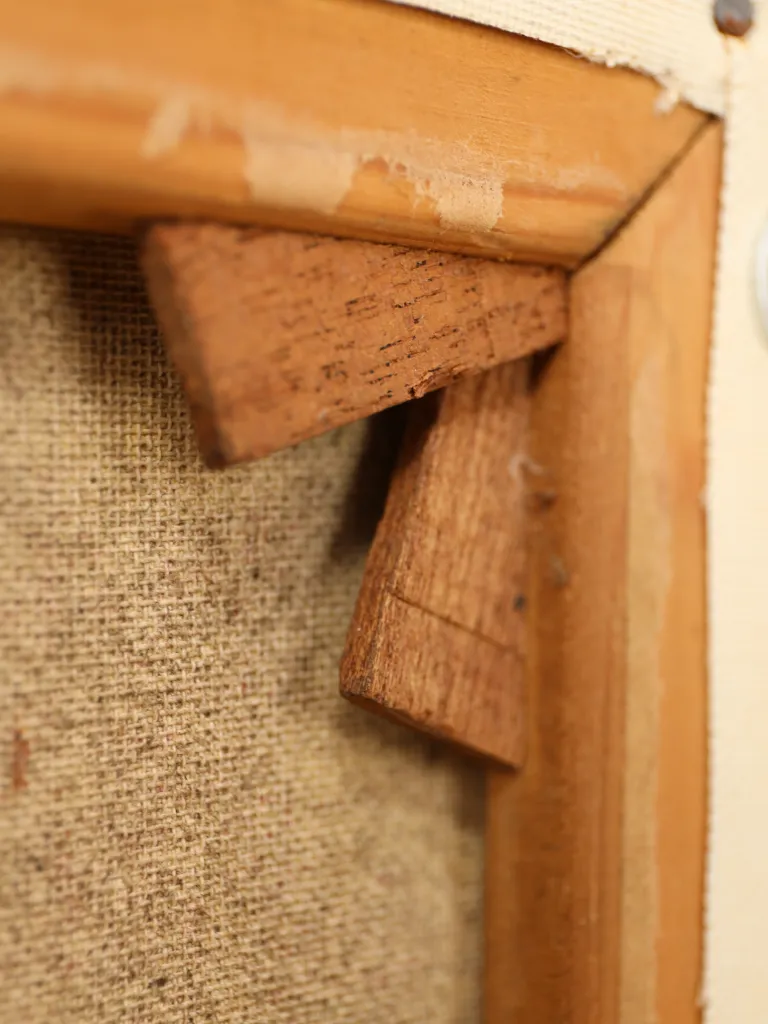
The canvas tension has also been attended to and the stretcher tightened to improve its presentation.
There are minor marks and age-related characteristics consistent with a painting dating from 1972.
The period frame displays expected age-related wear and a slight degree of twisting as noted above. We have deliberately retained the existing frame as it suits the painting extremely well.
Overall framed
Height: 60 cm / 23.6 inches
Width: 70 cm / 27.6 inches
Depth: 3.5 cm / 1.4 inches
Weight: 1.5 kg / 3.3 lbs
Artist: Hubert Pepper (British, 1928–1985)
Title: Stags on a Highland Moor
Date: 1972
Period: Third quarter of the 20th century
Medium: Oil on canvas
Country of origin: United Kingdom
Subject: Stag and deer with sheep in an extensive Highland/moorland landscape
Signature: Signed and dated lower right, “Hubert Pepper / 72”
Frame: Period wooden frame with gilt detailing
Provenance: Private collection of a Lincolnshire antiques dealer; understood to have previously been acquired through Christie's
Workshop: Carefully surface cleaned and stretcher tension adjusted by Shackleton Fox
Every item offered by Shackleton Fox is carefully inspected, prepared, and where necessary conserved within our workshop prior to sale.
As heritage craftsmen and antique specialists, we believe in preserving the authenticity and integrity of each piece. Original finishes, patina, wear, and signs of age are retained wherever possible, as these elements contribute to both character and historical significance.
When restoration, rewiring, repairs, or conservation work is required, it is undertaken sympathetically using traditional techniques and materials appropriate to the period of the piece. Our philosophy is one of careful stewardship rather than unnecessary restoration, ensuring antiques remain both functional and historically respectful.
The result is a collection of pieces that have been thoughtfully prepared, allowing future owners to enjoy them with confidence while preserving their unique story and character.