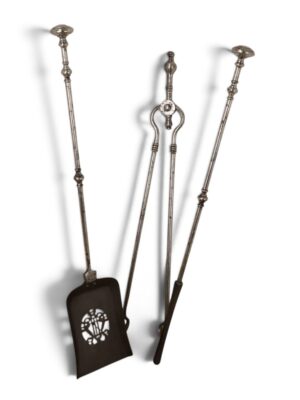
Steel is an alloy of iron with a small, controlled proportion of carbon, giving a metal that is harder and more resilient than wrought iron and can be ground, polished and tempered. In antiques it appears in cutlery blades, fire tools, fenders and grates, locks, scissors, clock and watch parts, scientific instruments, arms and armour, and decorative polished-steel jewellery and buckles.
Before the nineteenth century good steel was costly and produced in relatively small amounts, so it was reserved for edges, springs and fine work. Sheffield became famous for crucible steel cutlery and tools from the eighteenth century, and Birmingham and Woodstock produced faceted cut-steel buttons, chatelaines and buckles that sparkled like marcasite. Polished steel was also fashionable in Regency and Victorian fireside equipment, where bright steel fenders, pokers and grates set off marble chimneypieces. Rust is the principal enemy of antique steel, and pitting is difficult to remove without loss of surface. Collectors favour pieces with crisp, original polish or bluing, sound mechanisms and maker's stamps, and treat over-cleaned or heavily ground examples with caution.