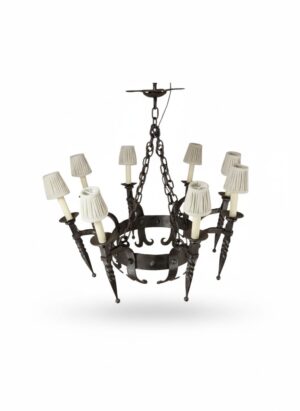
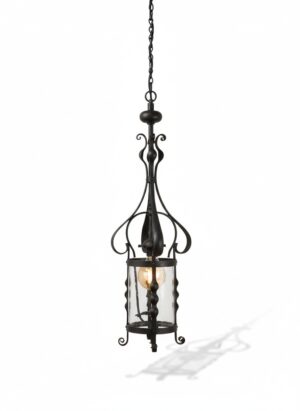
Forging is the shaping of metal by heating it until it is malleable and then hammering, bending, twisting or pressing it into the required form. Traditionally carried out by a blacksmith at a hearth and anvil, it is the method used to make wrought ironwork, tools, weapons, fire implements, hinges, locks and many other everyday and decorative objects.
Forging differs from casting, in which molten metal is poured into a mould. Hand-forged work shows characteristic hammer marks, slight variations in thickness and joints made by forge welding, riveting or collaring rather than modern electric welding. Some of the finest decorative forging in Britain was produced in the late seventeenth and early eighteenth centuries, when smiths such as Jean Tijou created spectacular gates and screens for great houses and royal palaces. The Arts and Crafts movement revived interest in hand-forged ironwork in the late nineteenth century. Industrial drop forging later allowed metal to be shaped quickly between dies. Collectors and buyers of fire dogs, gates, railings, door furniture and garden ironwork look for genuine hand work, good scrollwork and a sound, unpitted surface, as later reproductions are often made from mild steel with welded joints.