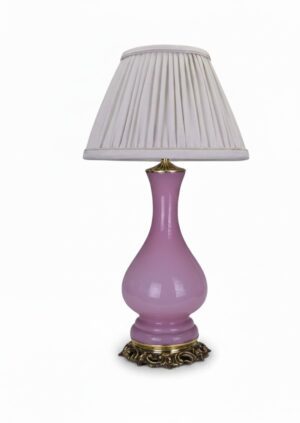
Luxury glass is the term for glassware of exceptional quality, materials and craftsmanship made for wealthy patrons and collectors, rather than for everyday use. It includes fine table services, decorative vases, chandeliers, presentation pieces and cabinet objects produced by leading glasshouses and decorators.
Throughout history, certain centres have defined luxury glass. In Renaissance Venice, the workshops of Murano produced clear cristallo and enamelled, gilded and filigree glass prized across Europe. Bohemian glassmakers excelled in engraving and coloured overlays, while English and Irish factories of the eighteenth and nineteenth centuries were renowned for brilliant cut lead crystal. French firms such as Baccarat and Saint-Louis supplied royal and aristocratic clients with crystal services and chandeliers, and the art glass of Gallé, Daum, Lalique and Tiffany brought new artistic ambition to the material around 1900. Collectors judge luxury glass by the clarity and colour of the metal, the precision of cutting and engraving, the quality of design and the presence of signatures or documented provenance, especially royal or noble commissions. Condition is critical, as chips, scratches and repairs are hard to hide on such pieces. Complete services are increasingly rare.