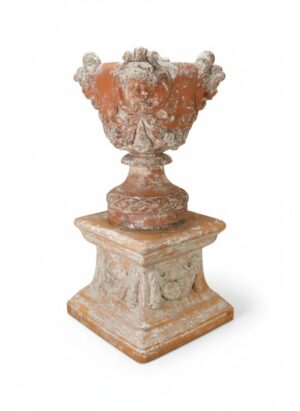
A planter is a container made to hold growing plants, either indoors or in the garden. In antiques the term covers garden urns, troughs, tubs and boxes in stone, lead, cast iron, terracotta and timber, as well as indoor jardinières and plant stands in porcelain, brass, copper and earthenware.
Formal planters became an important feature of English gardens from the seventeenth and eighteenth centuries, when lead cisterns, carved stone vases and Versailles-style wooden tubs for orange trees were placed on terraces and in orangeries. The Victorians and Edwardians added mass-produced cast-iron urns from foundries such as Coalbrookdale and Handyside, artificial stone pieces in the manner of Coade stone, and glazed stoneware and terracotta from makers including Doulton and Compton Pottery. Indoors, majolica and Chinese porcelain jardinières stood in halls and conservatories. Collectors value good weathering, crisp detail and evidence of age such as lichen and an even patina, but should look out for frost damage, cracks, rusted bases and later reproductions with artificially aged surfaces. A well-chosen antique planter instantly gives a garden, courtyard or doorway structure and a sense of history.