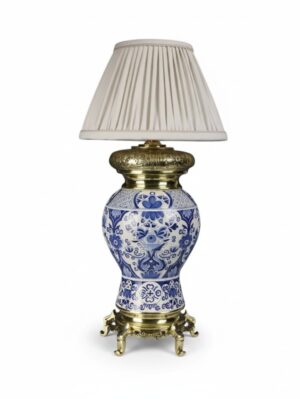
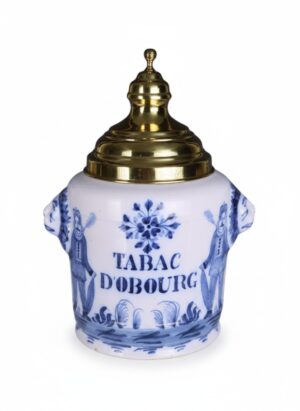
Blue and white is the term for ceramics decorated in cobalt blue on a white ground, usually painted or printed under the glaze. It is one of the longest-lived and most widely imitated decorative traditions in the world, embracing Chinese porcelain, Dutch and English delftware and English transfer-printed earthenware.
Chinese potters at Jingdezhen perfected underglaze blue on porcelain during the Yuan dynasty, and Ming and Qing blue and white was exported in vast quantities to the Middle East and Europe. Unable at first to make porcelain, European potters imitated it in tin-glazed earthenware, especially at Delft and in London, Bristol and Liverpool. English porcelain factories such as Worcester and Caughley made blue and white from the mid-eighteenth century, and from the late eighteenth century Staffordshire potters such as Spode produced transfer-printed earthenware including the famous Willow pattern. The Victorian Aesthetic Movement revived the craze for collecting old Chinese blue and white. Collectors consider date, factory, quality of painting or printing, colour and condition. Massed on a dresser or a wall of plates, blue and white remains a classic of the English country interior.