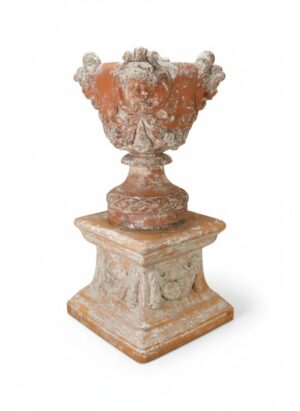
A garden planter is a container for growing plants outdoors or in a conservatory, including urns, vases, troughs, tubs, cisterns and pots. Antique planters were made in stone, lead, cast iron, terracotta, wood and composition stone, and they range from small flowerpots to monumental urns on pedestals.
Planters have long been a central element of garden design. Formal gardens of the seventeenth and eighteenth centuries featured lead cisterns and urns, and the square wooden Versailles tubs used for orange trees and other tender shrubs. The Victorians produced cast-iron urns in classical shapes, many by foundries such as Coalbrookdale and Handyside, alongside moulded terracotta and artificial stone planters made in quantity for villa gardens. Stone sinks and feeding troughs from farms, though not originally made for planting, became popular for alpines in the twentieth century. Collectors value weathered surfaces with lichen and moss, well-defined decoration and signs of age such as wear to the rim. Lead and iron should be checked for splits and corrosion, and terracotta for frost damage. Placed in pairs to frame steps or doorways, or singly as a focal point, antique planters give a garden immediate maturity.