Alabaster is a fine-grained, soft, often translucent stone that can be carved in great detail and polished to a smooth, warm surface. Two quite different minerals share the name: gypsum alabaster, which is very soft and was used for most European carving, and calcite alabaster, harder and found in Egypt and the Middle East, where it was used since antiquity for vessels and sculpture.
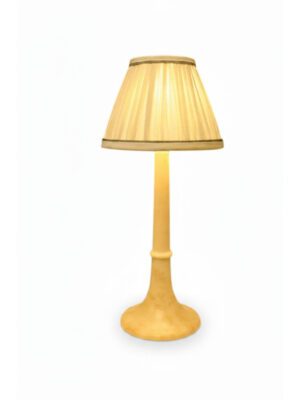
England had an important alabaster carving industry in the later Middle Ages, centred on Nottingham, producing devotional panels and figures exported across Europe, and alabaster was also used for church monuments and tomb effigies. From the eighteenth and nineteenth centuries, the workshops of Volterra in Tuscany supplied large quantities of carved alabaster vases, urns, figures and souvenir copies of classical sculpture for the Grand Tour market. Alabaster later became popular for lighting, from bowl-shaped ceiling lights to table lamps, because it diffuses light with a soft glow. Gypsum alabaster is slightly soluble in water and easily scratched, chipped or stained, so it should never be washed. Over time it tends to yellow and absorb dirt, which many collectors accept as part of its age. Good carving, sharp detail and the absence of breaks and fills all affect value.