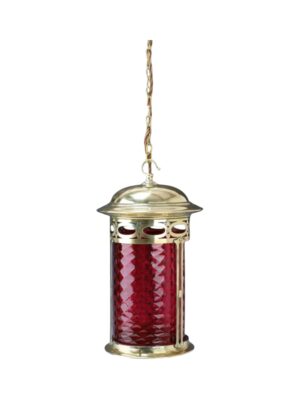
Antique hall lanterns are glazed, enclosed light fittings hung from the ceiling to light entrance halls, staircases, corridors and porches. Unlike an open chandelier, the light source is protected within a frame of glass panels, a practical arrangement that shielded candle flames from the draughts of a front door and stairwell. Frames were typically made of brass, gilt bronze, copper, tin or wrought iron, in square, hexagonal, octagonal or cylindrical forms.
Hall lanterns were well established in English houses by the early eighteenth century and became a standard feature of Georgian and Regency architecture. Many were fitted with a smoke bell or cowl above the light to protect the ceiling from soot, and the finest examples have cast or pierced crestings, scrolling arms and gilded finishes. Glass was sometimes plain, sometimes etched or engraved, and in the nineteenth century coloured or bevelled panes were used. Victorian lanterns were often adapted for gas, and most surviving examples have since been converted to electricity. Collectors should check that glass panels are old and undamaged, that the frame is sound and that wiring is safe. A well-chosen lantern suits both period and modern hallways, where its architectural form gives a strong first impression on entering a house.