Burnishing is the process of polishing a surface by rubbing it with a hard, smooth tool, so that the high points are compressed and smoothed into a lustrous finish rather than being abraded away. It is used on metals, gilding, leather, ceramics and some wood finishes, and differs from ordinary polishing in removing little or no material.
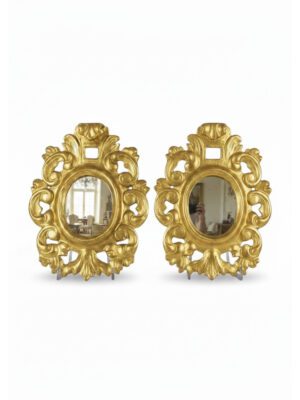
In water gilding, gold leaf laid over a gesso and clay bole ground is burnished with a polished agate or haematite tool to produce the brilliant, mirror-like highlights seen on fine mirror and picture frames, contrasted with matt areas left unburnished. Silversmiths and metalworkers burnish edges and surfaces with steel burnishers, bookbinders burnish leather and gilt tooling, and potters burnish clay before firing to give a soft sheen. In restoration, burnishing can revive dulled gilding or metal and is a gentler alternative to abrasive polishes, but it must be used with judgement. Over-burnishing can wear through thin gold leaf, flatten fine chased or tooled detail, and give an over-bright appearance at odds with an aged surface. Original burnished gilding, with its characteristic contrast of bright and matt passages, is highly valued, and conservators work to preserve rather than renew it wherever possible.