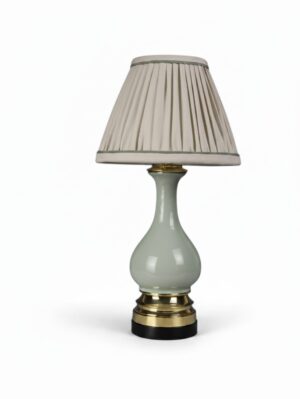
A church candlestick is a candlestick made for use in a church, typically on or beside the altar, though larger examples stand on the floor of the sanctuary or flank a coffin or shrine. Church candlesticks are generally taller and heavier than domestic ones and are frequently made in pairs or sets of six.
Early examples often have a pricket, a sharp iron spike onto which a thick candle was pressed, rather than a socket. They were made in brass, bronze, gilt copper, carved and gilded wood and silver, and their design follows the architectural styles of their time, from Gothic hexagonal stems with knops and spreading feet to Baroque turned balusters. In Britain, the Gothic Revival and the high church movement of the nineteenth century produced great numbers of brass and gilt metal altar candlesticks, often from specialist ecclesiastical suppliers, and Continental churches yielded large carved and gilded wooden examples that are now plentiful on the market. Collectors look for weight, quality of casting or carving, original gilding and evidence of age. Pairs of church candlesticks, often converted to lamps, give height and drama to hallways, mantelpieces and dining tables.