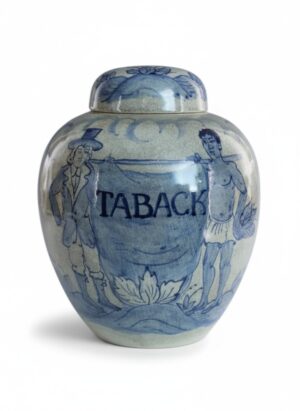











A Delft tile is a hand-painted tin-glazed earthenware tile of the kind made in the Netherlands from the late sixteenth century onwards. The tin glaze gives an opaque white ground on which designs were painted, most famously in cobalt blue, and the name is used for Dutch tiles generally, although many were in fact made in other towns such as Rotterdam, Harlingen, Makkum and Utrecht.
Production flourished in the seventeenth and eighteenth centuries, when tiles were made in vast numbers for lining fireplaces, kitchen walls, dairies and the lower walls of rooms where they protected the plaster from damp and wear. Subjects include landscapes, ships, windmills, children's games, animals, flowers, soldiers and biblical scenes, usually framed by a roundel and small corner motifs. Manganese purple was also widely used, sometimes combined with blue. Similar tiles were made in England at London, Bristol and Liverpool, where they are known as English delftware. Collectors look for crisp painting, good glaze and interesting subjects, and accept a degree of edge wear on tiles that have been lifted from walls. Antique Delft tiles remain popular for restoring period fireplaces and kitchens, where sets of matching or harmonious tiles give an authentic finish.