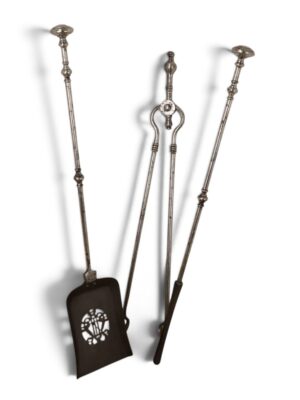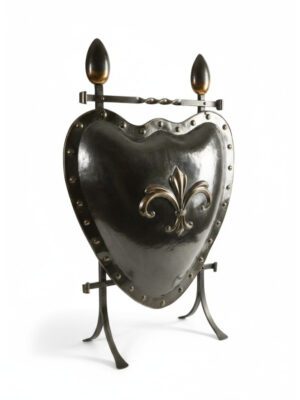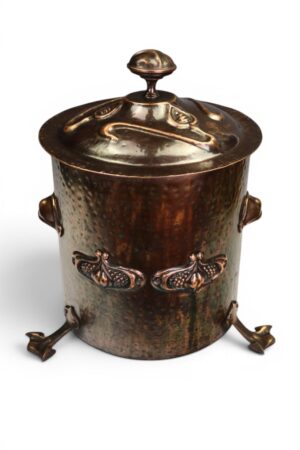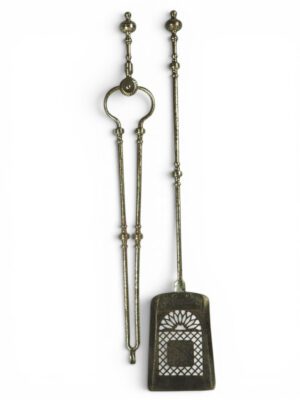











A Dutch brass fender is a low brass barrier placed in front of a hearth to keep coals, embers and ash from falling onto the floor, made in the Netherlands or in the Dutch manner. It is typically sheet brass, often with a pierced or engraved front panel, and is raised on small feet, sometimes with turned finials or knobs at the corners.
The Netherlands had a long and accomplished tradition of domestic brasswork, and from the seventeenth century onwards Dutch craftsmen produced warming pans, candlesticks, kettles and hearth furniture that were exported widely and imitated elsewhere. Dutch fenders of the eighteenth and nineteenth centuries are characterised by bold pierced decoration with scrolls, foliage and geometric patterns, sometimes combined with chased or engraved detail, and many are serpentine or bowed in plan to suit the open hearths of Dutch and Flemish houses. They are often lower and more delicate than heavy English Victorian fenders. Collectors look for crisp piercing, good colour to the brass, original feet and finials, and seams that show evidence of hand construction rather than modern stamping. Measuring the hearth before buying is essential. A Dutch brass fender gives warmth and sparkle to a country hearth or a period drawing room.