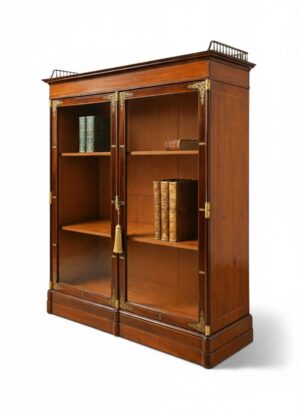
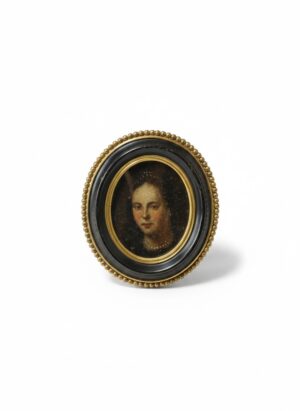
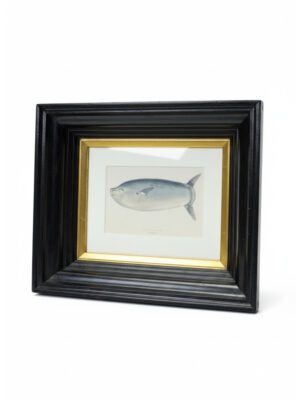
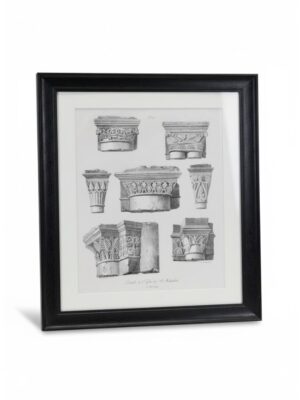
Ebony is a very dense, hard, close-grained tropical hardwood, the finest varieties of which are almost pure black and capable of taking a high, glossy polish. It comes from several species of tree in the genus Diospyros, found in Africa, India, Sri Lanka and Southeast Asia, and some types, such as macassar ebony, are striped with brown.
Ebony has been valued since antiquity, and its rarity and cost meant it was often used as a veneer or for inlay rather than in solid form. It was especially important in seventeenth-century European cabinet making, when Antwerp and Paris workshops produced magnificent ebony cabinets, and the French word for a cabinet maker, ébéniste, derives from it. Ebony was also used for inlay, stringing, mouldings, piano keys, musical instrument fittings, knife and brush handles and small carvings. Because genuine ebony was costly, many nineteenth-century pieces are ebonised, made of a cheaper wood such as pear or beech stained black to imitate it, a finish that became characteristic of the Aesthetic Movement. Macassar ebony was particularly popular for Art Deco furniture. Genuine ebony can be identified by its weight, fine texture and the natural colour of exposed timber, whereas ebonised surfaces show a paler wood beneath where worn. Many ebony species are now protected.