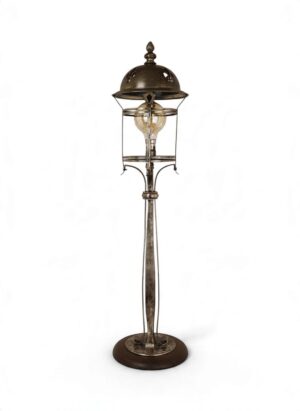
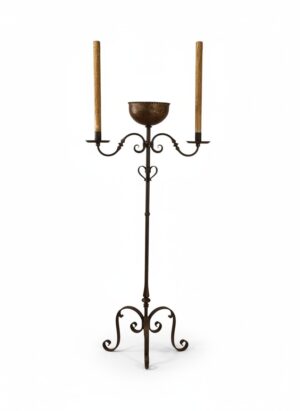
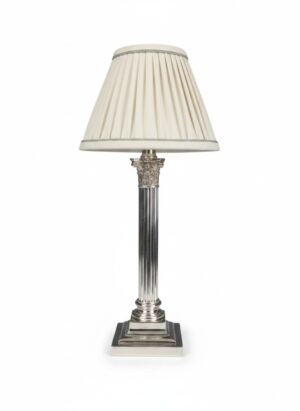
Electric lighting is illumination produced by electricity, most commonly through incandescent filament lamps, and in the antiques world it refers to the early electric fittings of the late nineteenth and early twentieth centuries as well as older candle, oil and gas fittings later converted to electricity.
Arc lamps were used for street and public lighting from the 1870s, but practical domestic electric light arrived with the incandescent lamps developed by Joseph Swan in Britain and Thomas Edison in America around 1879 and 1880. Cragside in Northumberland became famous as one of the first houses to be lit by electricity generated by water power. Early users often adapted the forms of gas and candle fittings, but designers soon exploited the freedom of a flame that needed no air, creating downward-facing shades, flexible pendants and slender wall lights. W.A.S. Benson was among the first British designers to create electric fittings with real conviction. Early fittings may have carbon filament bulbs, ceramic or brass lampholders and fabric-covered flex. Collectors value original designs and makers' marks, but any electric antique intended for use must be rewired, earthed where required and tested to current standards by a competent electrician.