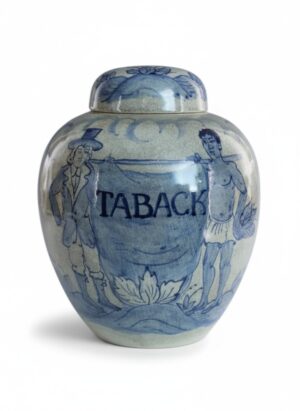
Flow Blue is a type of transfer-printed ceramic, usually earthenware or ironstone, in which the cobalt blue decoration has been deliberately blurred so that it bleeds softly into the surrounding white glaze. The effect was achieved by introducing chemicals such as lime or ammonium chloride into the kiln or saggar during the glaze firing, causing the cobalt to flow and creating a hazy, dramatic appearance.
Flow Blue was developed by Staffordshire potters in the early nineteenth century, and production expanded greatly from the 1840s through to the early twentieth century. A great deal was made for export, particularly to the American market, where it was immensely popular and is still keenly collected. Patterns included oriental scenes, florals, landscapes and Art Nouveau designs, often with gilded highlights, and potteries such as Wedgwood, Johnson Brothers, Doulton and many smaller firms produced it. Collectors look for strong, rich colour, an even degree of flow, a clear backstamp identifying the pattern and maker, and freedom from chips, crazing and staining. The heaviest flowing early patterns and pieces with unusual forms are especially valued. Flow Blue displayed on a dresser or plate rack brings a soft, painterly charm to a country kitchen or dining room.