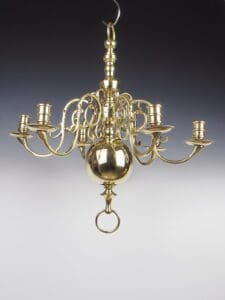
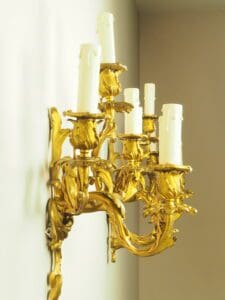



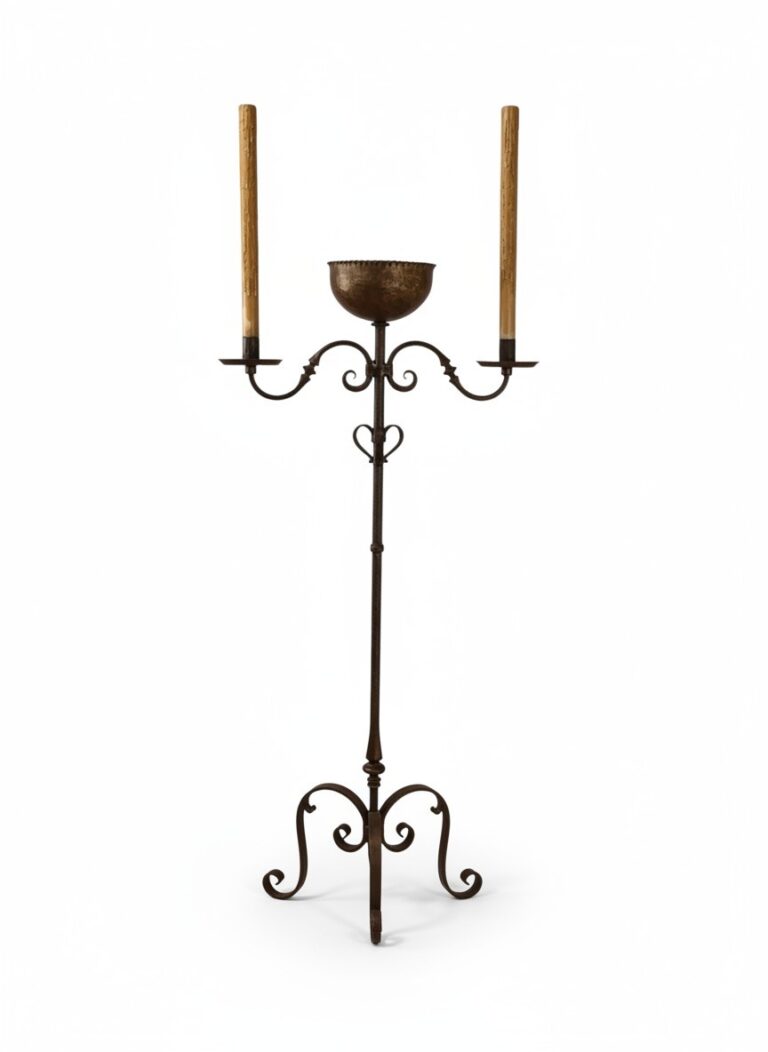

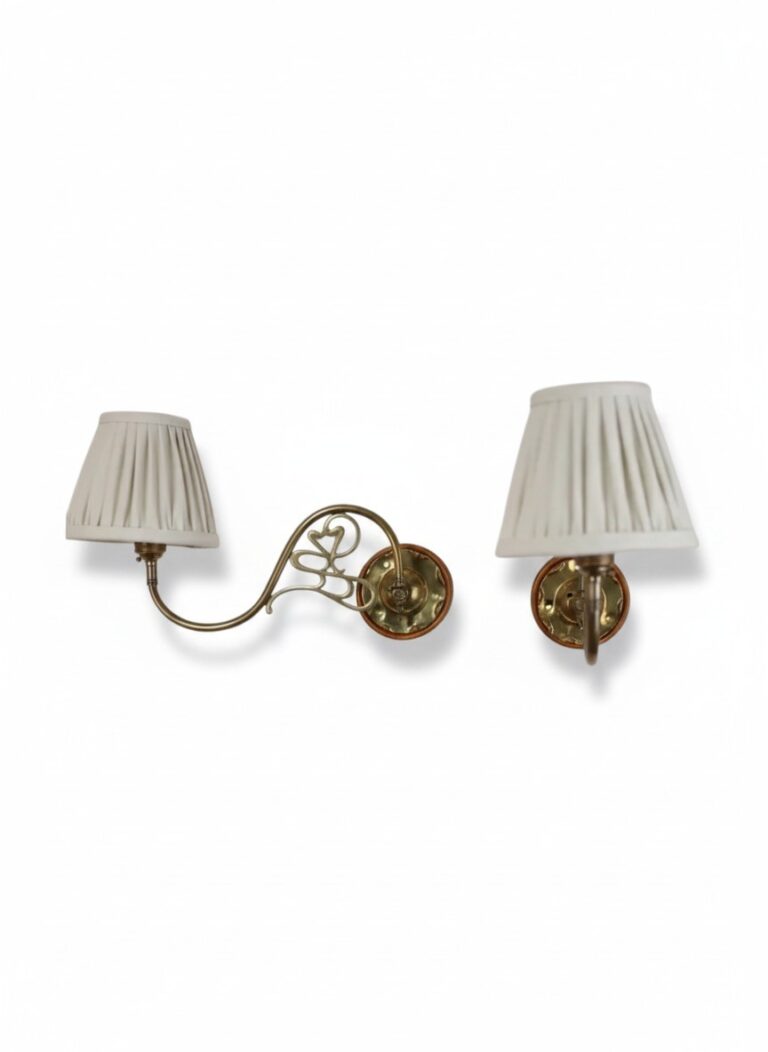





A Georgian chandelier is a hanging light fitting with branches for candles, made in Britain during the Georgian period, broadly from 1714 to 1830. The earliest Georgian chandeliers were usually of brass, often in the Dutch manner with a large ball and curving arms, or of carved and gilded wood, while cut-glass chandeliers became increasingly fashionable as the century progressed.
English glass chandeliers developed from around the 1720s and 1730s, at first with relatively simple arms and stems of moulded and cut glass. Mid-century examples grew more elaborate, adding spires, canopies and pendant drops, and from the 1770s the Neoclassical taste brought tent-shaped and urn-shaped designs dripping with faceted drops and festoons of beads. William Parker and the Perry family were among the leading London makers. Regency chandeliers of the early nineteenth century were often of tent-and-bag form, with cascades of glass drops enclosing the central stem and a gilt-brass frame. Collectors look for original glass with the slight greyish tone and soft cutting of the period, matching drops and arms, and old metalwork, as many chandeliers have been extensively restored or made up from parts. Converted to electricity with care, a Georgian chandelier is one of the finest lights for a period dining or drawing room.