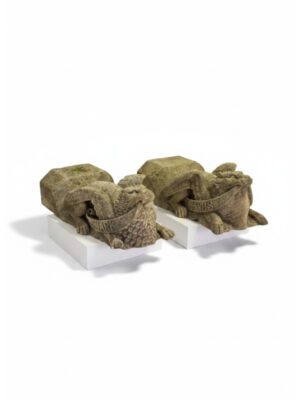
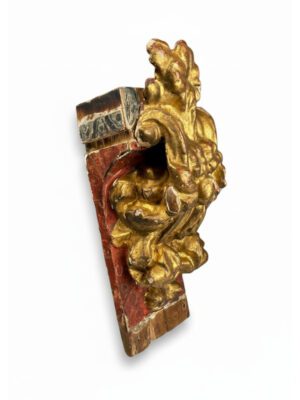
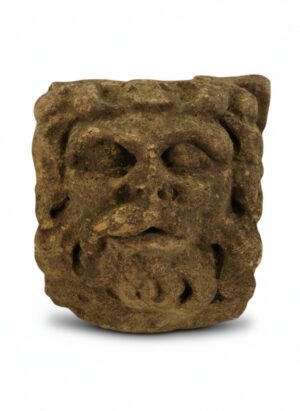
A Gothic garden ornament is any piece of garden statuary, furniture or architecture designed in the Gothic style, using the pointed arch, tracery, crockets, pinnacles, quatrefoils and other motifs drawn from medieval church building. Examples include stone and composition finials, urns, fountains, sundials and benches, cast iron seats with pointed-arch backs, and fragments of tracery or window mullions reused as garden features.
Gothic ornament appeared in English gardens early in the eighteenth century, as landowners built Gothic temples, sham ruins and follies to evoke a romantic past, and Horace Walpole's Strawberry Hill helped to popularise the taste. Coade of Lambeth supplied Gothic pieces in its artificial stone, and in the nineteenth century the Gothic Revival brought cast iron seats, gates and lamp standards in pointed-arch patterns from Victorian foundries. Collectors look for authentic weathering, lichen and moss, evidence of age in tooling and fixing holes, and quality of carving or casting. Reconstituted stone reproductions are common and should be priced accordingly. Whether a single pinnacle set at the end of a vista or a pointed-arch bench beneath a yew hedge, Gothic ornament lends a romantic, faintly ecclesiastical character suited to walled gardens and older houses.