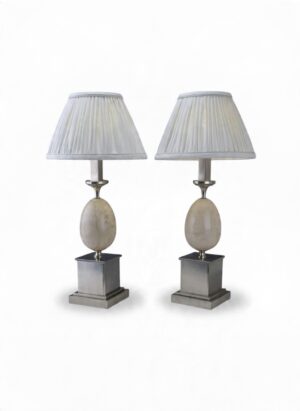




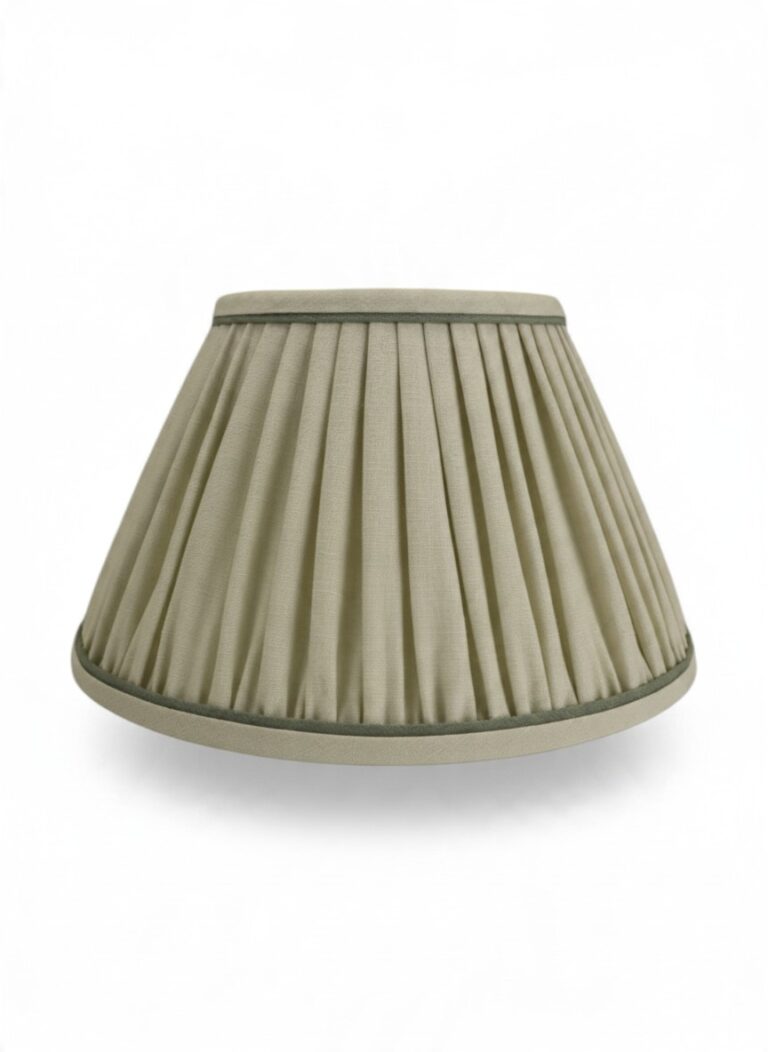

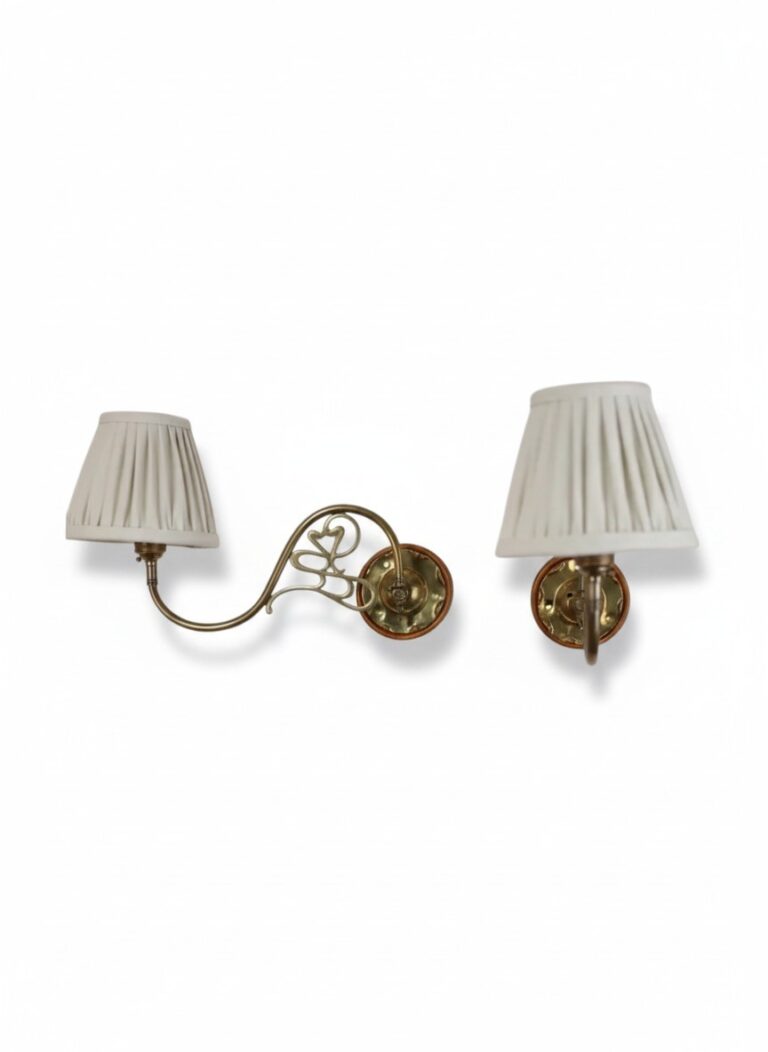



A handmade silk lampshade is a shade covered in silk and assembled by hand on a wire frame, usually with a silk or cotton lining sewn in to hide the struts and spread the light evenly. Silks commonly used include dupion and shantung, with their slight slub, as well as smooth taffeta and satin, and the fabric may be stretched tight, pleated, gathered or draped.
Silk shades were a mainstay of fashionable lighting from the Edwardian period onwards and are closely associated with the soft, warm glow of traditional drawing rooms and bedrooms. Many early examples were trimmed with fringes, tassels, braids and beading, and some were shaped with scalloped or bell-shaped frames. Silk gives a particularly luminous, translucent quality to light, but it is also delicate: heat, sunlight and age cause it to fade, become brittle and eventually split, so very few original shades survive in good condition. Low-heat bulbs greatly reduce the risk of damage, and shades should be dusted gently with a soft brush. Antique silk shades worth keeping can sometimes be stabilised by a textile conservator, though in most cases an old frame is re-covered. A well-made silk shade remains the classic partner for fine antique table lamps and candlestick lamps.