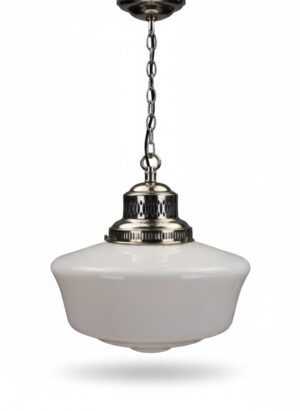
A hexagonal pendant is a ceiling light with a six-sided shade, lantern or frame suspended from a chain, rod or flex. It may be fully glazed like a traditional lantern, or have open sides with panels of glass, mica, metal or fabric, and is designed to give an even light over a room, hall or landing.
The form developed from the glazed hanging lantern used for candles, oil and gas, and became especially common once electric lighting spread in the late nineteenth and early twentieth centuries. Edwardian and Arts and Crafts pendants in brass and copper often have hexagonal shades with coloured, opalescent or textured glass, while cast and wrought iron versions were made in a more vernacular style. Hexagonal pendants were also used in shops, churches and public buildings, and many salvaged examples come from such settings. Collectors look for original glass panels, sound frames, good patina on the metalwork and fittings that have not been extensively altered. Older examples should be rewired, earthed and tested by an electrician before use. With their clear geometric shape, hexagonal pendants work well in kitchens, over dining tables and in halls, in period properties and modern interiors alike.