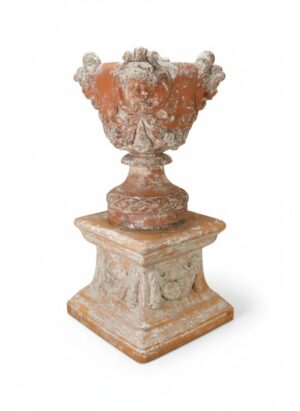
A historic sundial is an old sundial, a device that shows the time of day by the shadow cast by a raised edge, called the gnomon or style, onto a dial marked with hour lines. Sundials were the main means of checking the time for centuries and remained important for setting clocks and watches until reliable time signals became available in the nineteenth century.
The most familiar garden form is the horizontal dial, a flat plate of brass, bronze or slate set on a stone or cast iron pedestal. Vertical dials were carved or painted on the walls of churches, houses and colleges, and medieval scratch dials survive on many church walls. Armillary spheres, made of interlocking rings, are a more elaborate type. Fine brass dials of the seventeenth and eighteenth centuries were often signed by instrument makers and engraved with mottoes, the place for which they were made, compass points and an equation of time table. Collectors look for crisp engraving, a signature, original gnomon and pedestal, and good weathering. A dial will only read correctly if made for a similar latitude and set facing true north. Historic sundials remain popular focal points in gardens and courtyards.