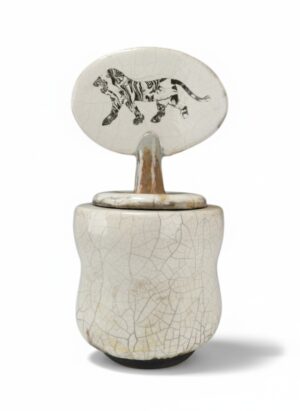
Raku is a type of Japanese pottery associated with the tea ceremony, traditionally shaped by hand rather than thrown on the wheel and fired at relatively low temperatures. Pieces are removed from the kiln while still red hot and cooled quickly, which gives the thick glazes, usually black or red, their soft, irregular and slightly textured character.
Raku ware originated in Kyoto in the late sixteenth century, when the potter Chōjirō made tea bowls under the guidance of the tea master Sen no Rikyū, whose aesthetic valued simplicity, imperfection and quiet austerity. The name, meaning enjoyment or ease, was later granted to the family as a seal, and the Raku family has continued the tradition through many generations to the present day. Raku tea bowls are prized for the way their form, weight and surface feel in the hands. In the twentieth century the technique was introduced to the West, notably through Bernard Leach, who encountered it in Japan, and Western studio potters later developed their own variations, often placing hot pots in combustible material to create smoky, crackled and lustrous effects through reduction. Collectors distinguish Japanese Raku family wares, which carry seal marks and fitted boxes, from the much broader range of Western studio raku.