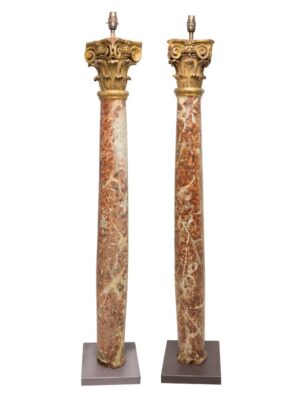
Scagliola is a technique for imitating marble, hardstone and inlaid stonework using a paste of finely ground selenite or gypsum plaster mixed with animal glue and coloured pigments. The paste is laid into a prepared ground, set and then polished to a high, stone-like finish, allowing craftsmen to reproduce the veining of rare marbles or to create elaborate inlaid designs at a fraction of the cost of real stone.
The technique was developed in Italy, with Carpi in Emilia an important early centre in the seventeenth century, and was later refined in Tuscany, where Florentine workshops produced tabletops imitating pietra dura, decorated with flowers, birds, landscapes and specimen marbles. Such tables were popular purchases with British travellers on the Grand Tour in the eighteenth century, and some are signed or dated. In Britain, scagliola was used for columns, pilasters and floors in Georgian and Regency interiors, and on a smaller scale for chimneypiece inlays and console tops. Antique scagliola is surprisingly durable but can be damaged by water, heat and abrasion, which dull the polish and loosen the inlay. Collectors look for fine detail, strong colour, an even surface and an absence of large repairs, and good tabletops are often mounted on later bases.