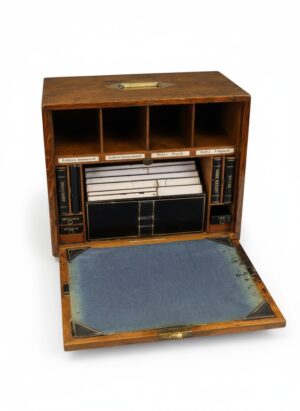
A sewing box, also called a work box, is a fitted box for storing needlework tools and materials such as threads, needles, scissors, thimbles, tape measures and bobbins. The interior is usually divided by a lift-out tray into small lidded compartments, with a deeper well below for fabric and work in progress, and many have a mirror or padded pincushion inside the lid.
Sewing boxes became a fashionable accomplishment piece in the late eighteenth and nineteenth centuries, when needlework was an important part of genteel domestic life. Regency examples in rosewood or mahogany often take a sarcophagus shape with brass inlay and lion-mask ring handles, while Victorian boxes appear in walnut, coromandel and papier-mâché, inlaid with mother-of-pearl or brass. Tunbridge ware boxes, decorated with fine wood mosaic, were made in Kent, and Chinese export lacquer work boxes with carved bone or ivory fittings were made for the Western market. Some sewing boxes stand on legs as work tables with a fabric bag or well beneath. Collectors value a complete, original fitted interior, including tools, together with good veneers, sound hinges and working locks. Original contents add considerable interest, and empty boxes make useful storage for trinkets, letters and jewellery.