Sheffield plate is a material made by fusing a thin sheet of silver to a thicker ingot of copper and rolling the two together, so that the combined metal could be worked like solid silver while using far less of the precious metal. The process was discovered in Sheffield in the early 1740s by Thomas Boulsover, and it allowed silver-coloured wares to be produced at a fraction of the cost of sterling.
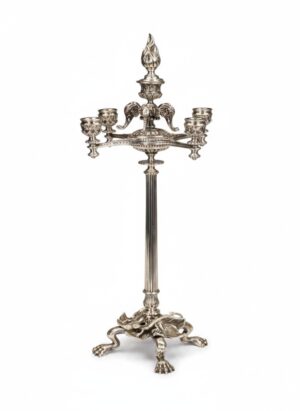
Production grew rapidly in Sheffield and Birmingham from the 1760s, with makers such as Matthew Boulton producing candlesticks, entrée dishes, coffee pots, tea urns, wine coolers and salvers in the prevailing Neoclassical and Regency styles. Because cut edges would expose the copper, craftsmen developed rolled, folded and applied silver borders to conceal the core. The industry declined after the introduction of electroplating in the 1840s, which was cheaper and simpler. Collectors look for crisp decoration and a good surface, and value the gentle pink glow of copper showing through on high points, known as bleeding, as evidence of age. Sheffield plate should not be confused with later electroplate, and pieces that have been replated lose much of their character and appeal.