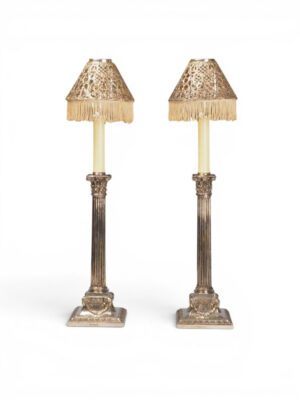
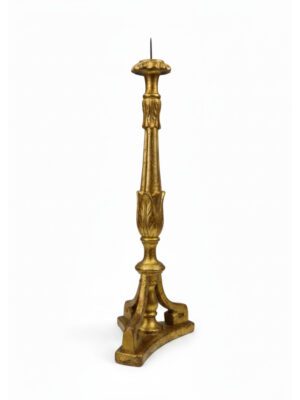
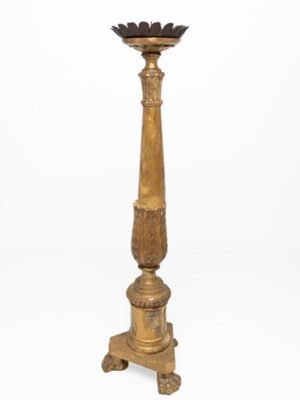
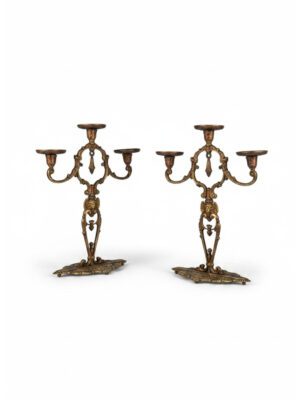
Spelter is a trade name for zinc, or a zinc-based alloy, cast into decorative figures, clock cases, lamp bases and other ornaments. It was widely used from the mid-nineteenth century onwards as an inexpensive alternative to bronze, and was normally given a painted, patinated or electroplated finish to imitate bronze, gilt or silver.
Spelter was especially popular in France, Austria and Germany, and in Britain, for mantel garnitures, figural lamps, candlesticks and Art Nouveau and Art Deco statuettes. Although sometimes dismissed as a cheap substitute, good spelter castings can be well modelled, and many attractive pieces were produced after designs by recognised sculptors. Spelter can be distinguished from bronze by its lighter weight, its greyish colour where the surface finish is worn, and its softness; a discreet scratch on the underside reveals a silvery metal rather than the golden colour of bronze. The metal is brittle and prone to cracking, bending and corrosion, and breaks are difficult to repair because of its low melting point. Collectors should check carefully for repairs, missing parts and replaced finishes, and should expect spelter to be priced well below comparable bronze.