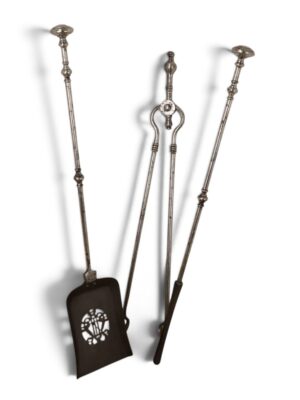
A stove is an enclosed appliance that burns fuel to heat a room or for cooking. Unlike an open fire, it contains the fire within a box of iron, ceramic or brick, so that heat is radiated from its surfaces and fuel is burned more efficiently and with less smoke entering the room.
Tall ceramic stoves faced with glazed tiles were used across Germany, Austria, Scandinavia and Central Europe from the late medieval period onwards, and fine painted examples remain among the most decorative of all heating appliances. In Britain the open fire long remained the favourite, but cast-iron stoves became widespread in the nineteenth century as foundries learned to produce intricate castings cheaply. Victorian and Edwardian makers produced parlour stoves with ornate panels and mica windows, as well as robust stoves for churches, schools, halls and railway waiting rooms, and kitchen ranges combining hotplates, ovens and boilers. Collectors and restorers look for complete examples with original doors, castings and finials, free from cracks or poorly welded repairs. Antique stoves are often restored for use, but any installation must meet current safety regulations and should be carried out by a qualified specialist. They make striking features in period and country houses.