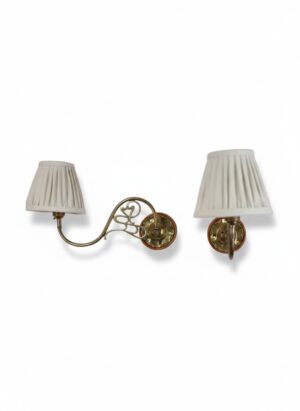
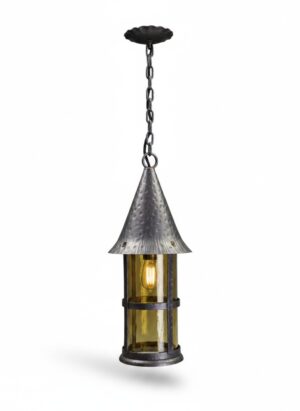
A suspension light is any light fitting hung from a ceiling by a chain, rod, cord or rope, as opposed to one fixed directly to the ceiling or wall. The term covers chandeliers, hanging lanterns, pendants, hall lights and, in nineteenth-century usage, oil and gas lamps suspended from the ceiling over a table.
In Victorian homes, the suspension lamp usually held a paraffin burner with a glass font and shade, mounted in a brass frame with chains and a counterweight or pulley system so that it could be lowered for filling and lighting and raised again. Similar rise-and-fall fittings were later adapted for gas and electricity. Library and billiard room lamps, kitchen and shop pendants, Edwardian glass pendants and Art Deco bowl lights are all popular today. Collectors and decorators look for original frames, chains and ceiling roses, matching or period shades and good condition of the glass, as well as the quality of the casting and finish. Any suspension light intended for use should be rewired and safety tested by a qualified electrician, with the hanging fixture and ceiling support checked to ensure they can carry the weight.