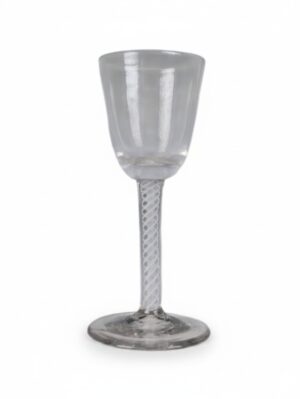
A wine glass is a stemmed drinking glass with a bowl, stem and foot, designed for serving wine. Antique English wine glasses are among the most studied areas of glass collecting, with a rich vocabulary for the many shapes of bowl, stem and foot produced from the late seventeenth century onwards.
The development of lead glass in England in the later seventeenth century, associated with George Ravenscroft, produced a heavy, clear metal well suited to the bold baluster stems of the early eighteenth century. Later forms became lighter, partly influenced by the Glass Excise Act of 1745, which taxed glass by weight. Stems progressed through balusters, plain and air twists, opaque twists, colour twists and faceted stems, while bowls might be trumpet, bell, round funnel or ogee in shape. Glasses were decorated with engraving, enamelling and gilding, including Jacobite emblems, flowers and commemorative inscriptions. Collectors look at the clarity of the metal, the quality of the twist, the presence of a pontil mark and the condition of the rim and foot. Later reproductions are common, so close comparison with known period examples is important.