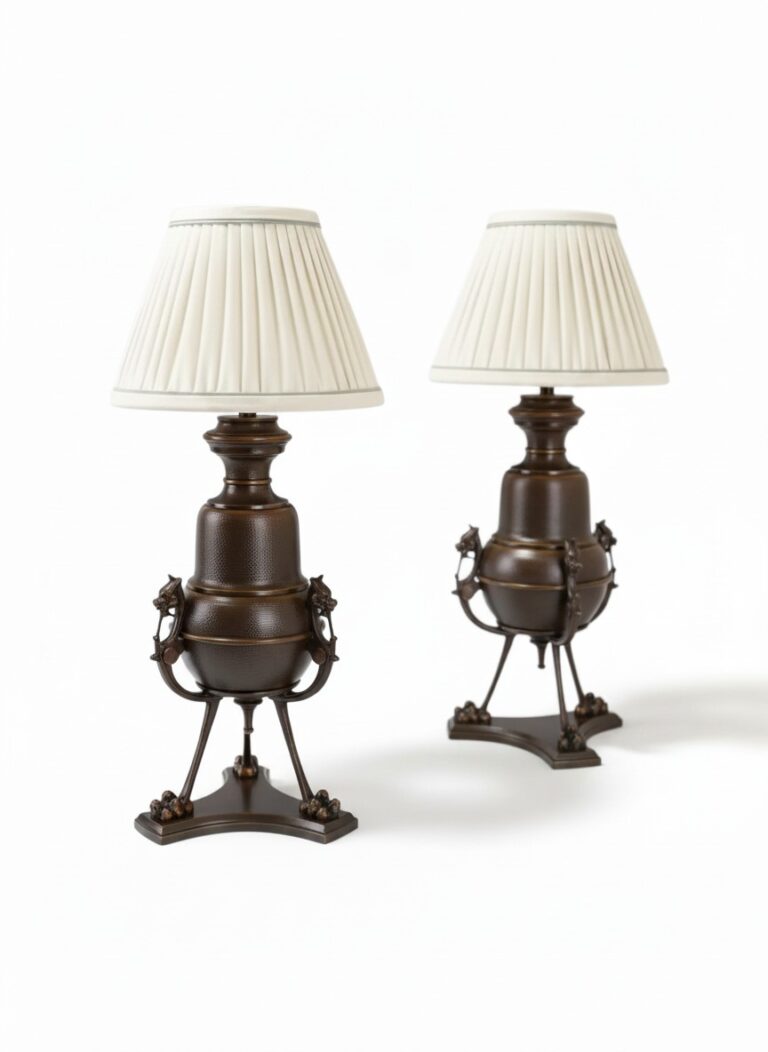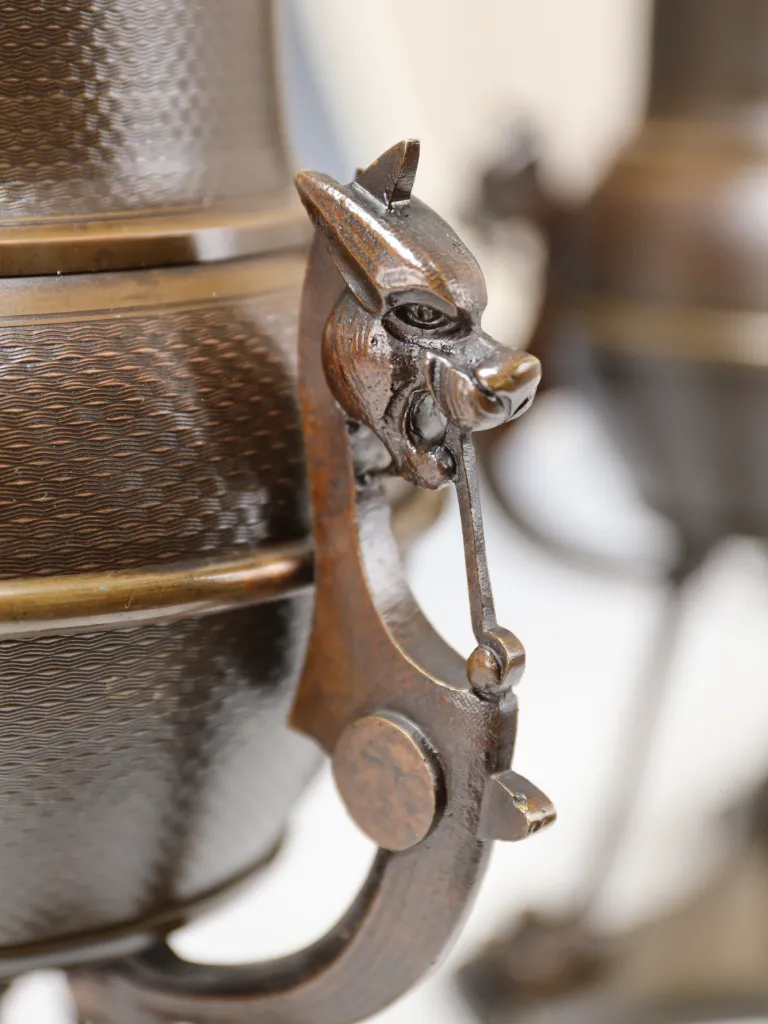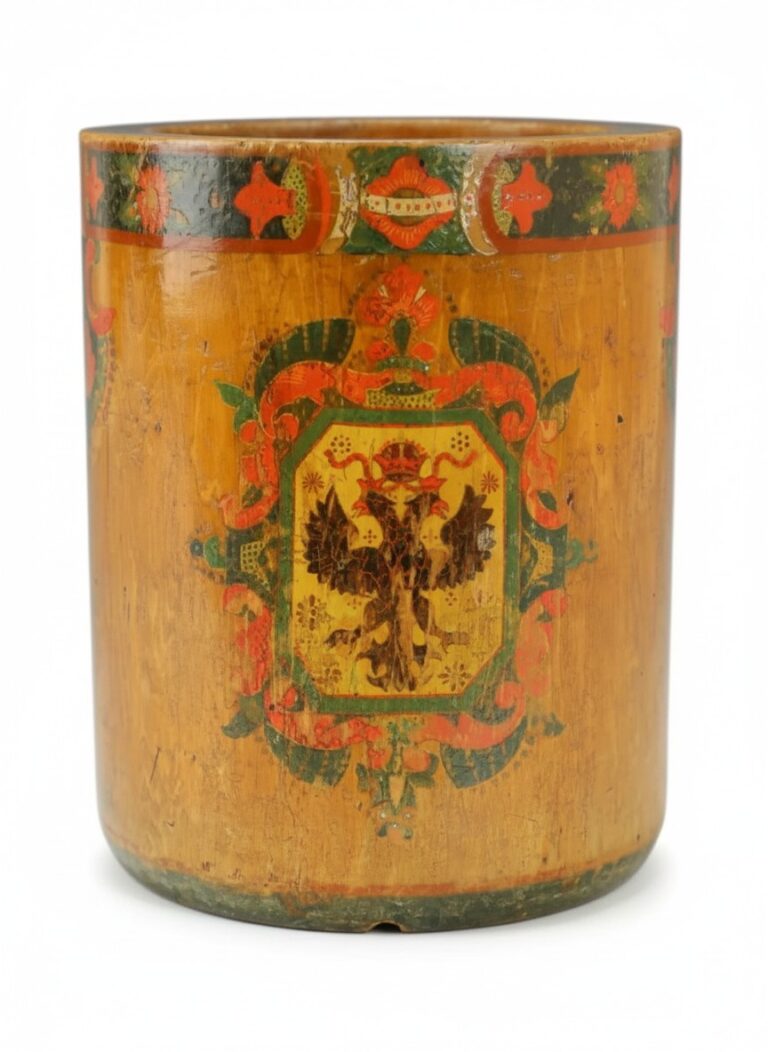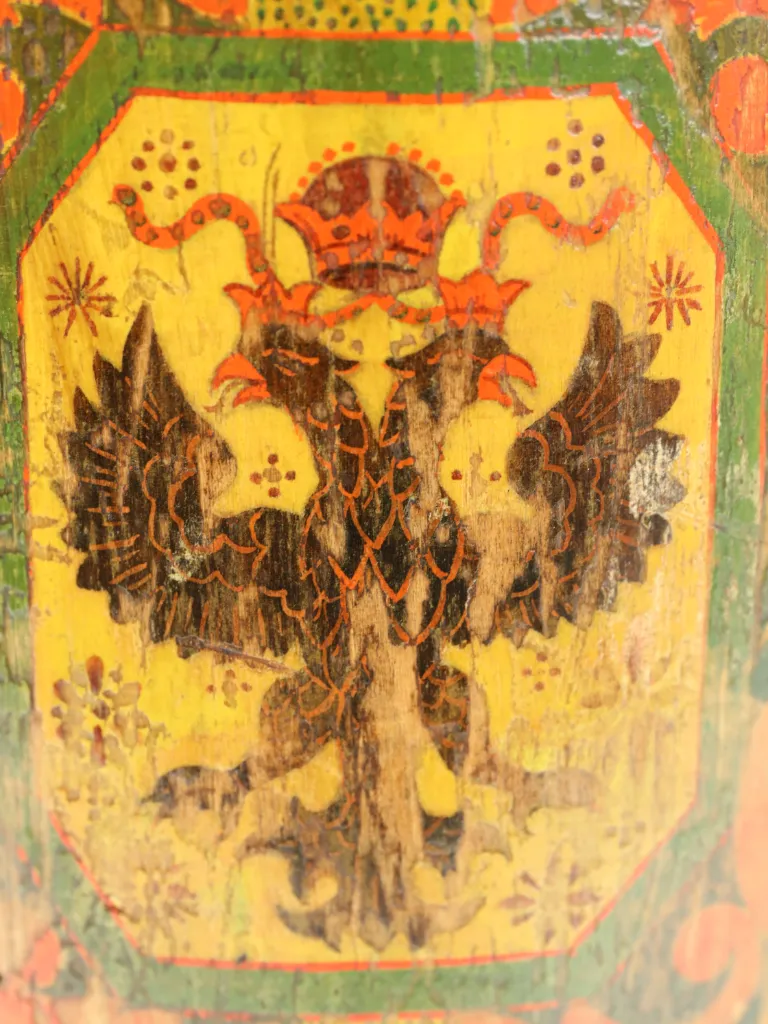


£950.00



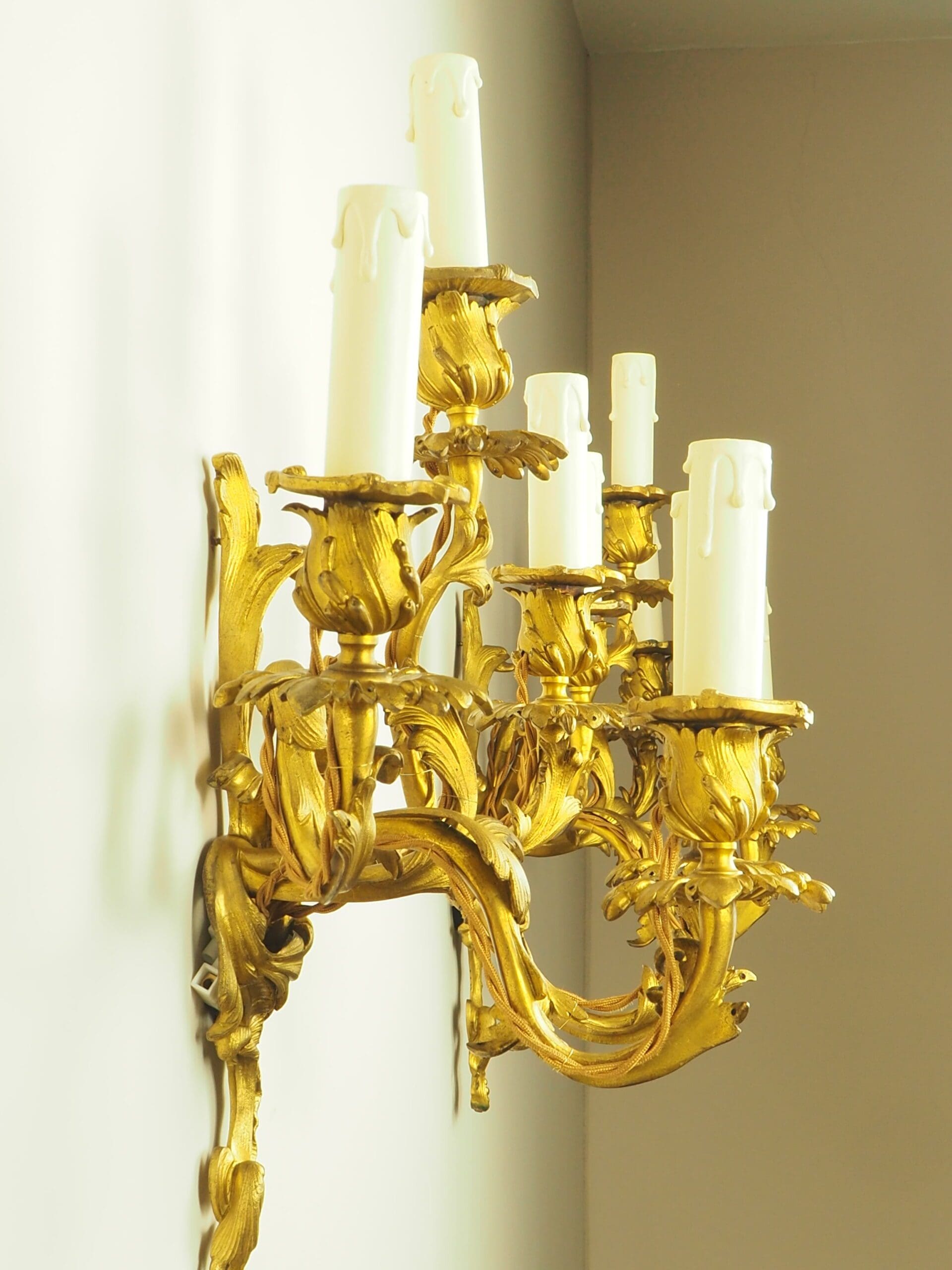
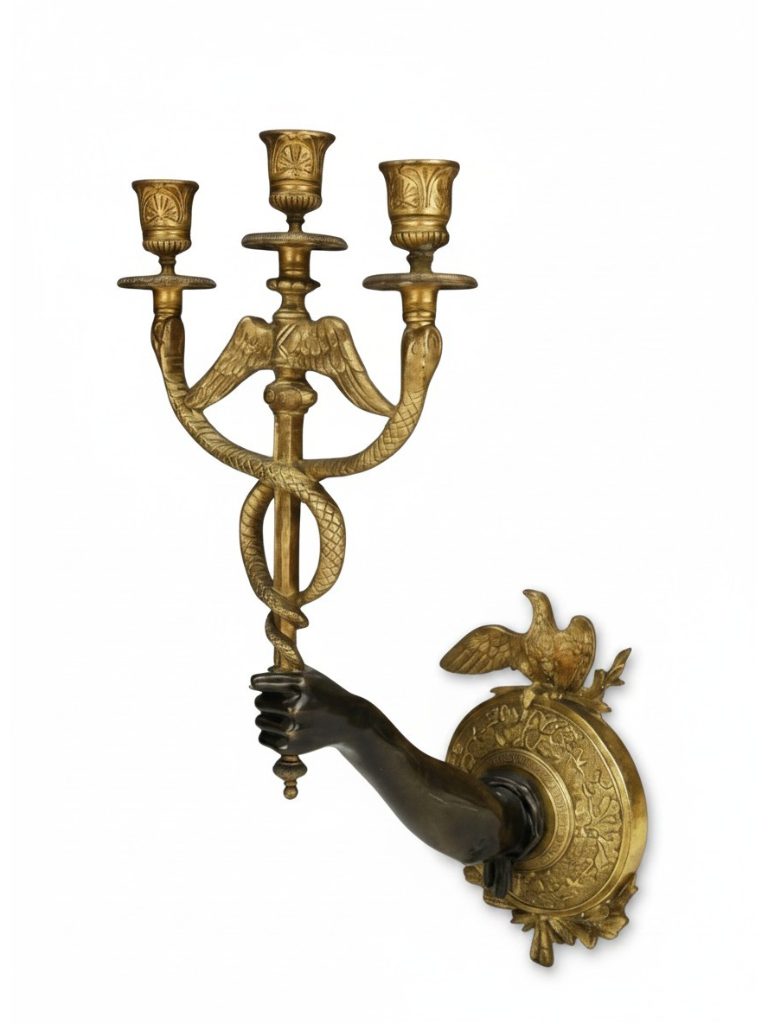
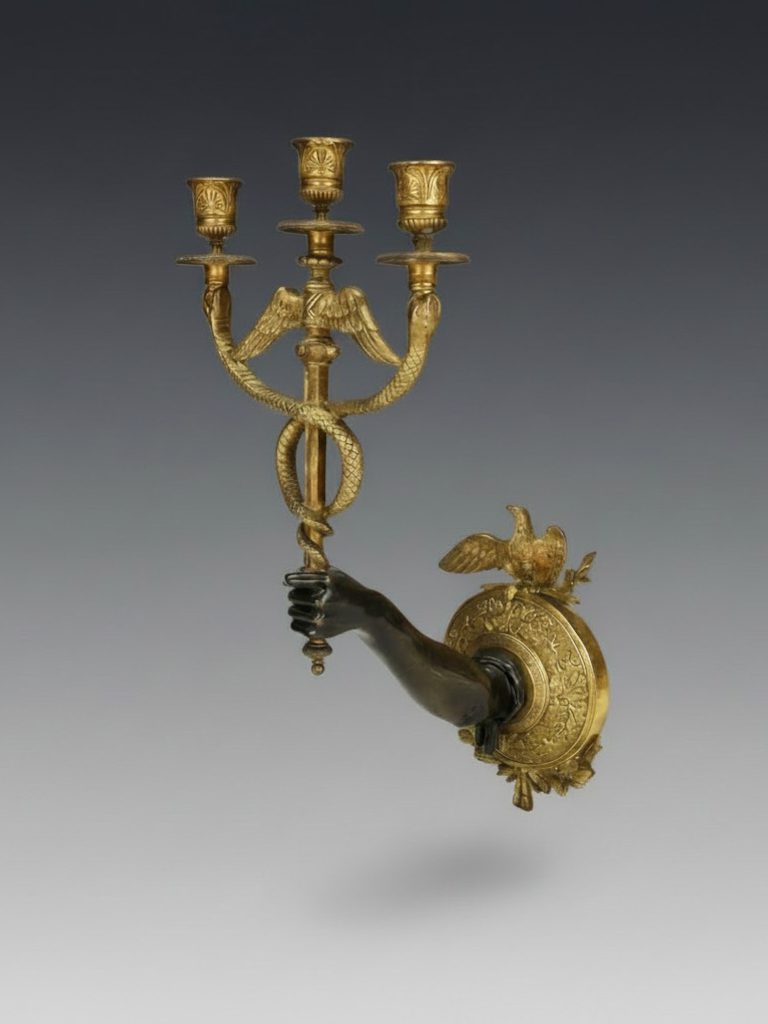
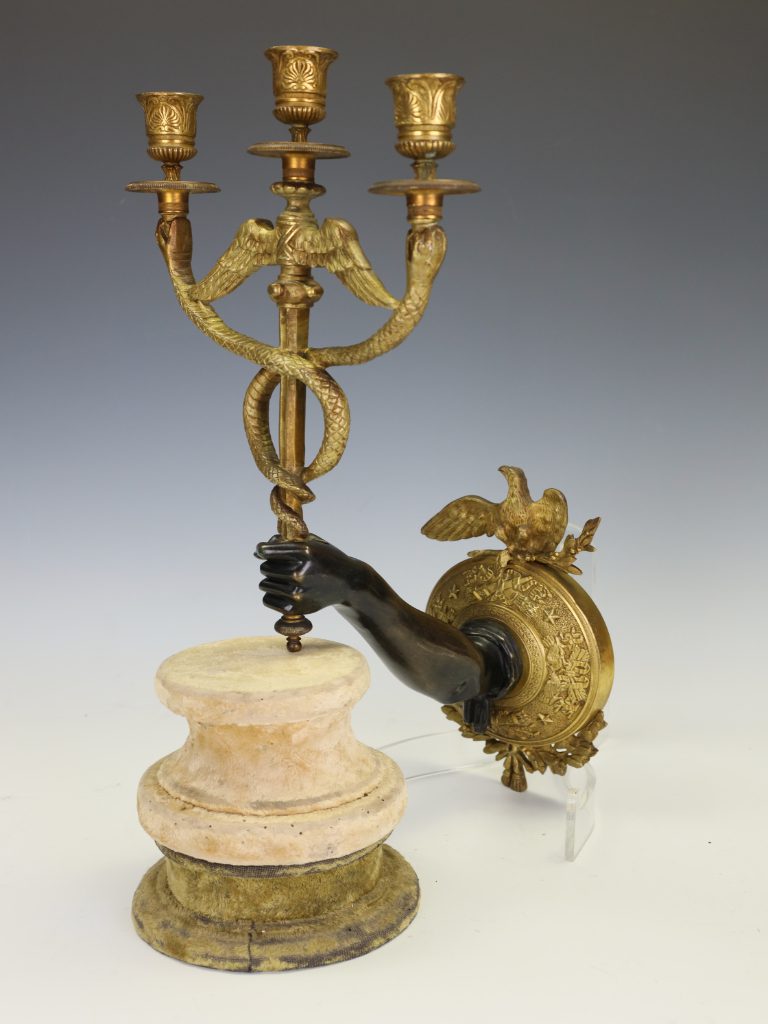
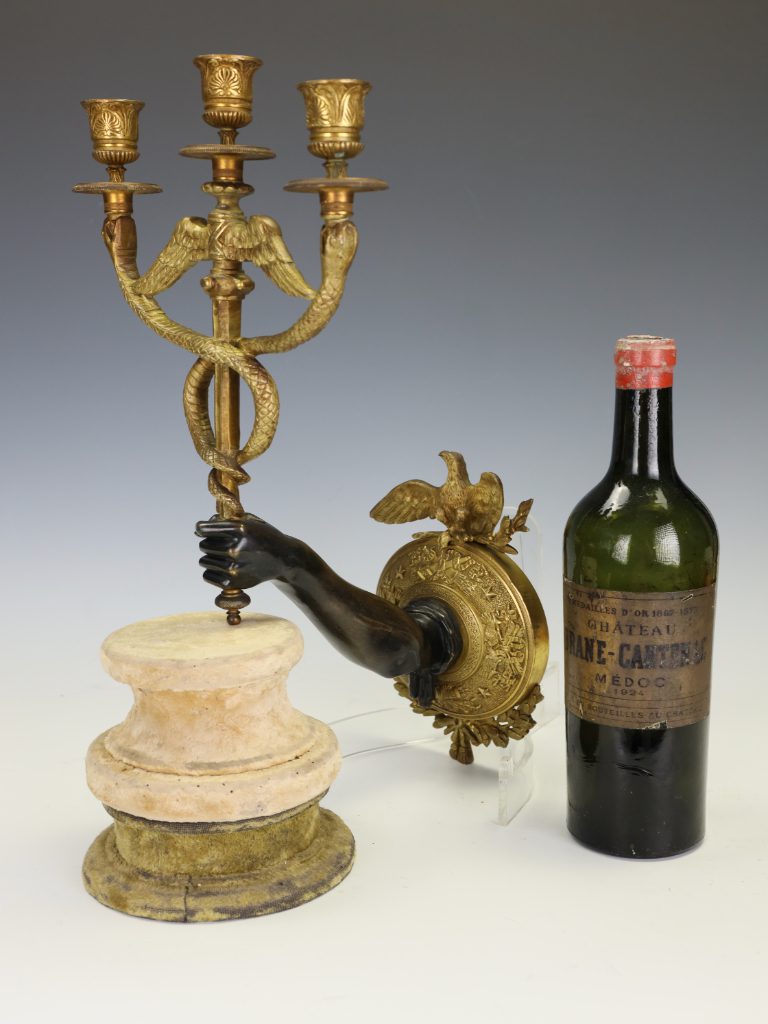
An exceptional French Empire period three-light wall sconce, executed in a striking combination of fire-gilt ormolu and richly patinated bronze. This highly sculptural applique embodies the grandeur of early 19th-century Neoclassical design, drawing on imperial Roman symbolism and Napoleonic-era allegorical iconography.
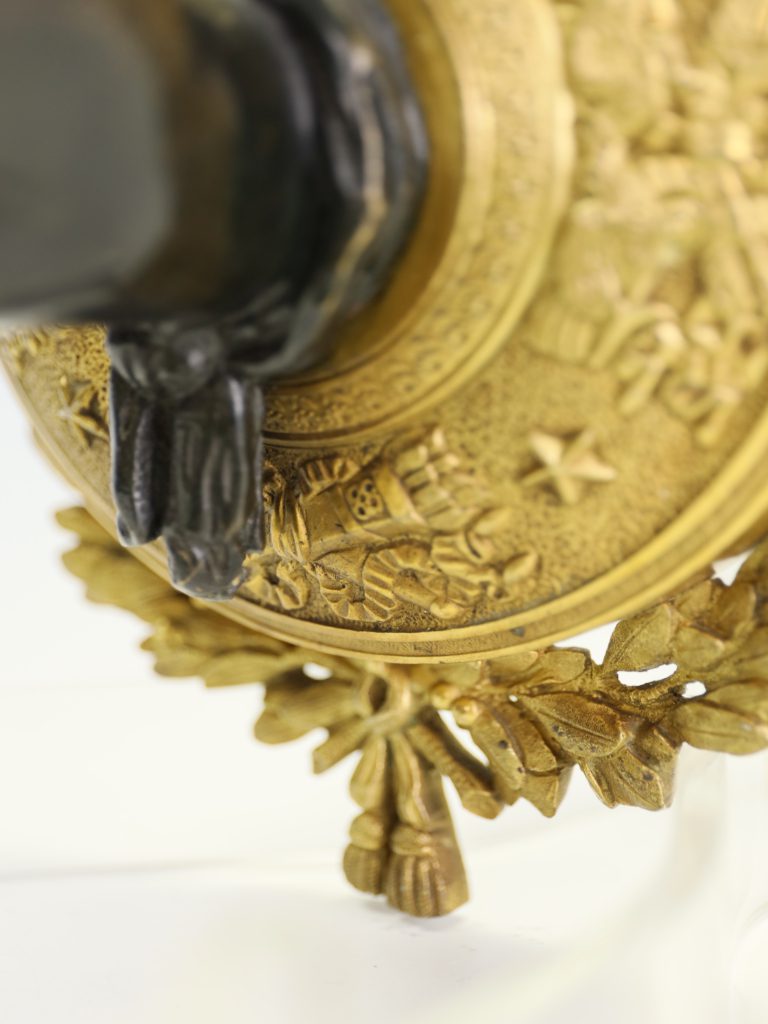
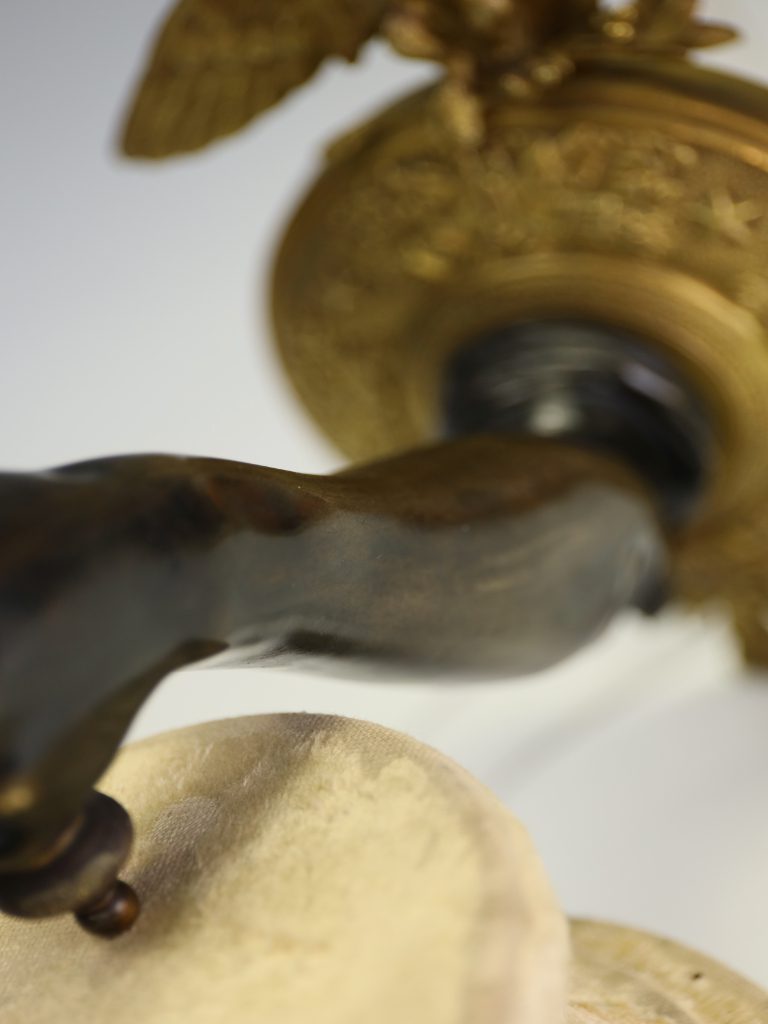
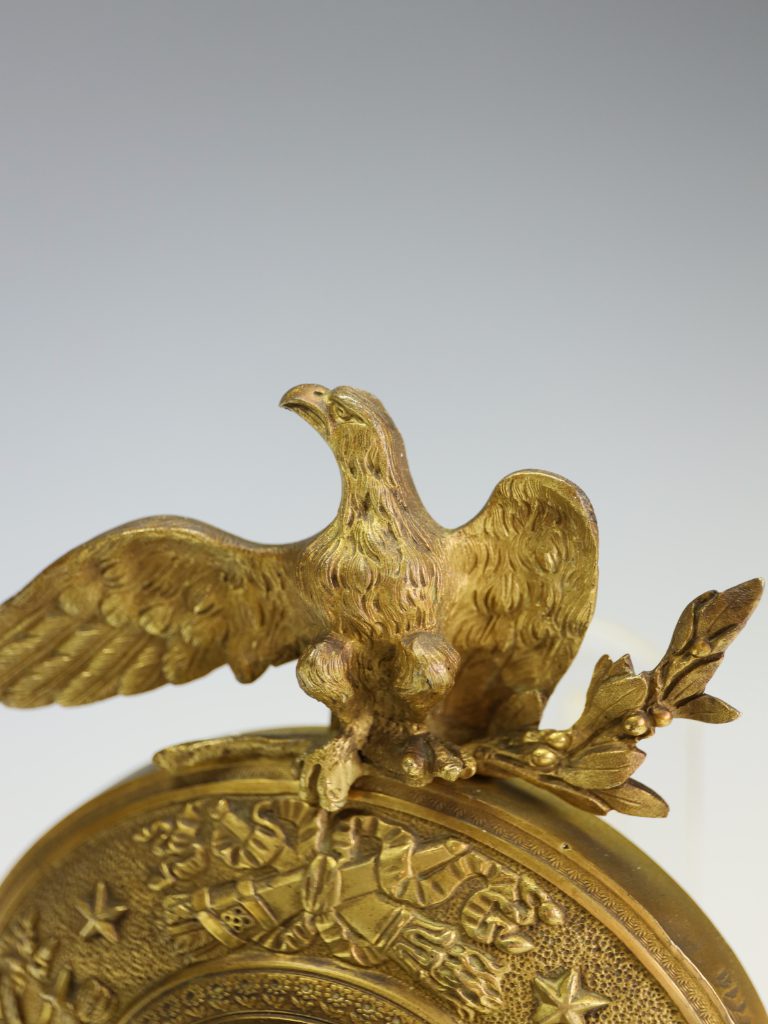
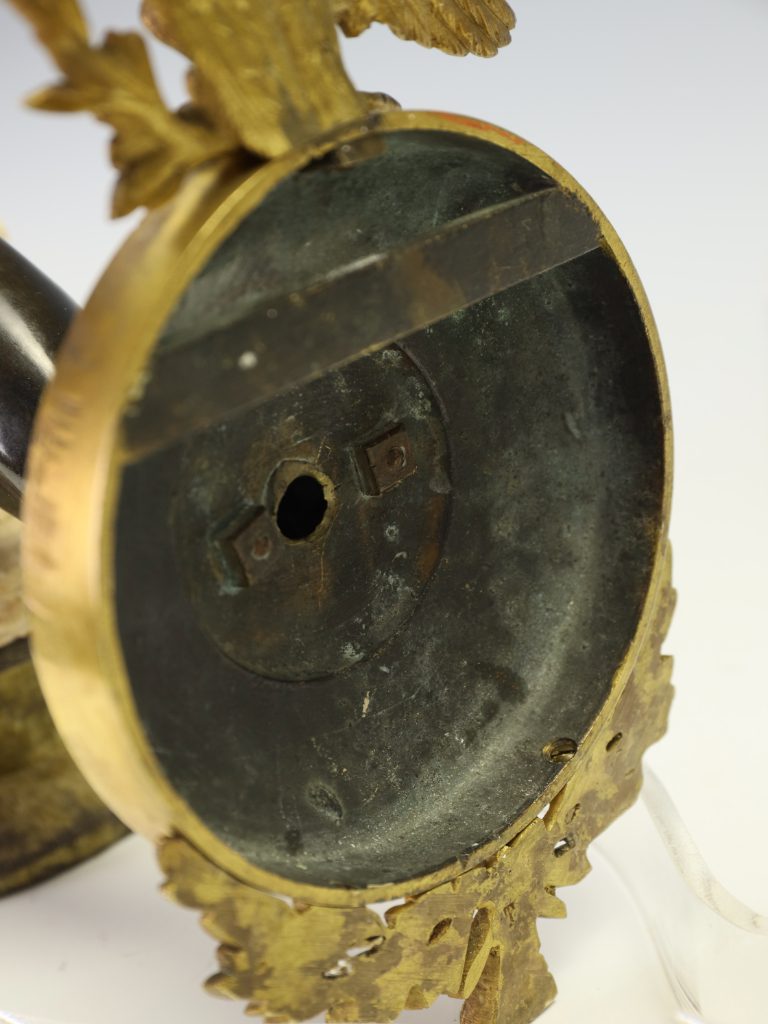
The composition is centred around a finely chased circular ormolu backplate, decorated with engine-turned detailing and classical ornament including palmettes, anthemion motifs and geometric borders. At its crest sits a finely modelled Imperial eagle, wings partially spread, clutching thunderbolts associated with Jupiter, symbolising authority and power.
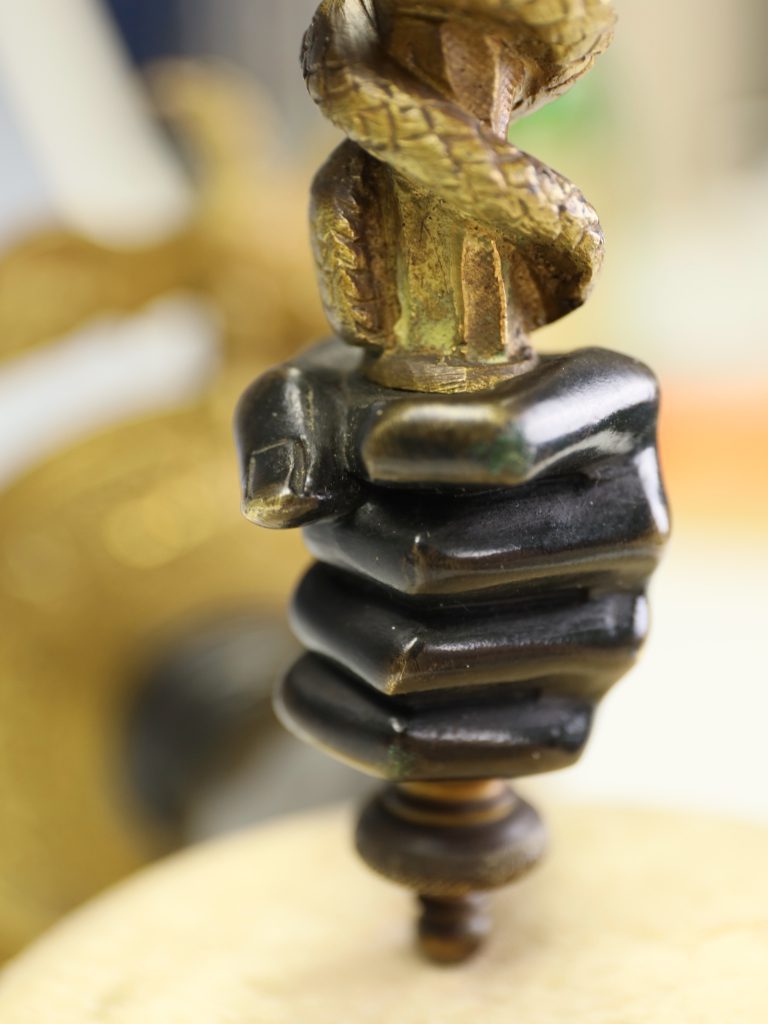
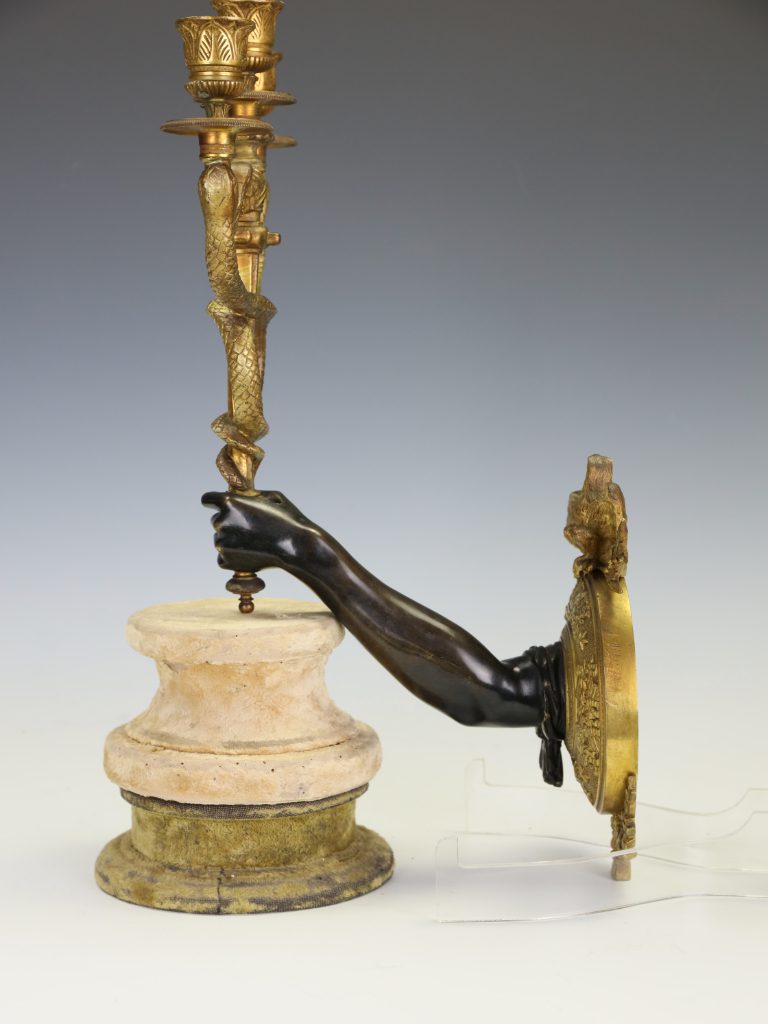
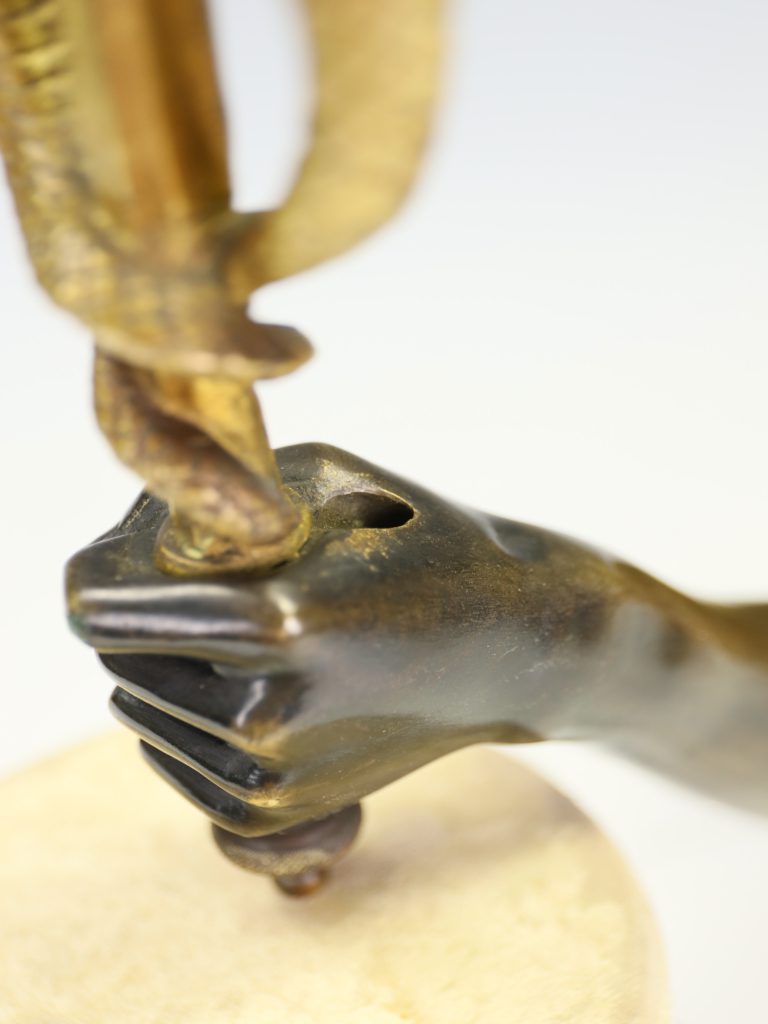
From the centre of the mount projects a highly naturalistic anatomical arm, cast in dark patinated bronze. The arm extends forward in a dynamic gesture, grasping a gilded staff in the form of the Caduceus of Mercury.
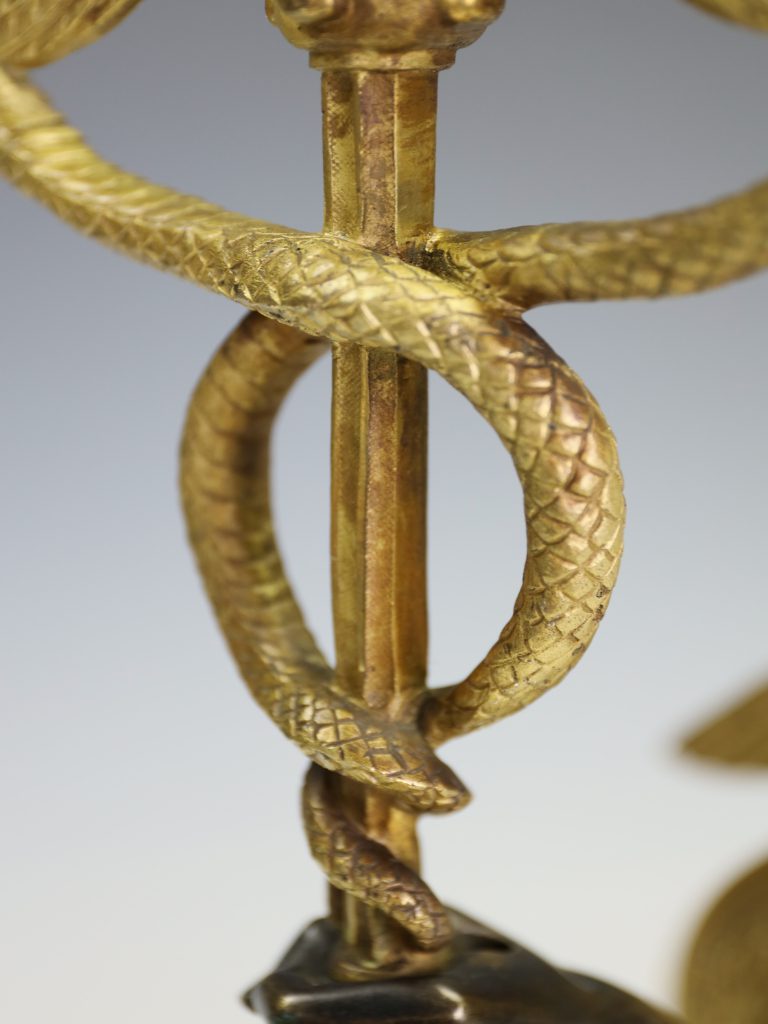
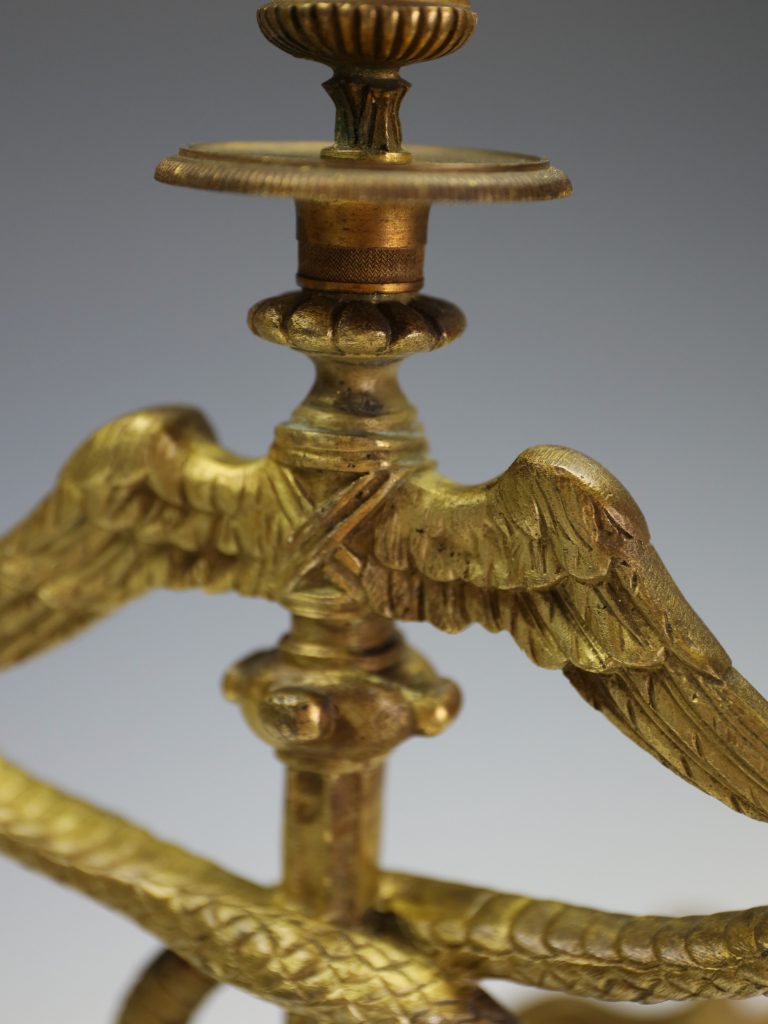
The caduceus is richly detailed, featuring two entwined serpents that rise symmetrically along the shaft, their forms carefully modelled with scale and movement. The upper section is crowned with winged ornamentation that blends classical Mercury symbolism with Imperial eagle imagery, reinforcing the Napoleonic visual language.
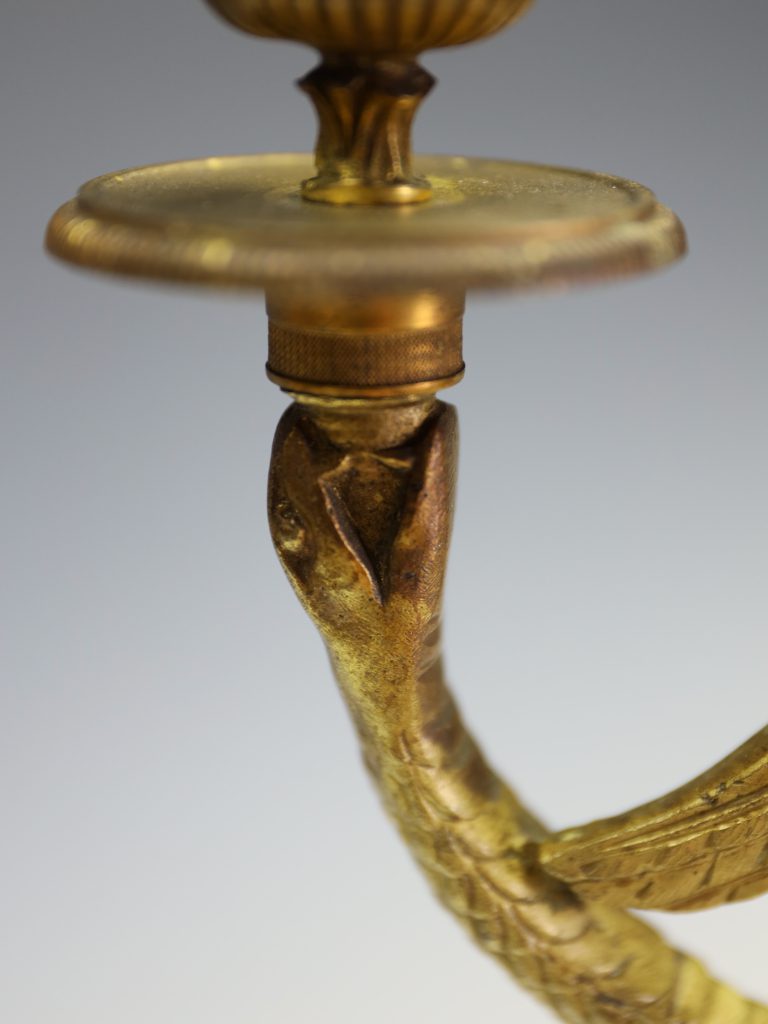
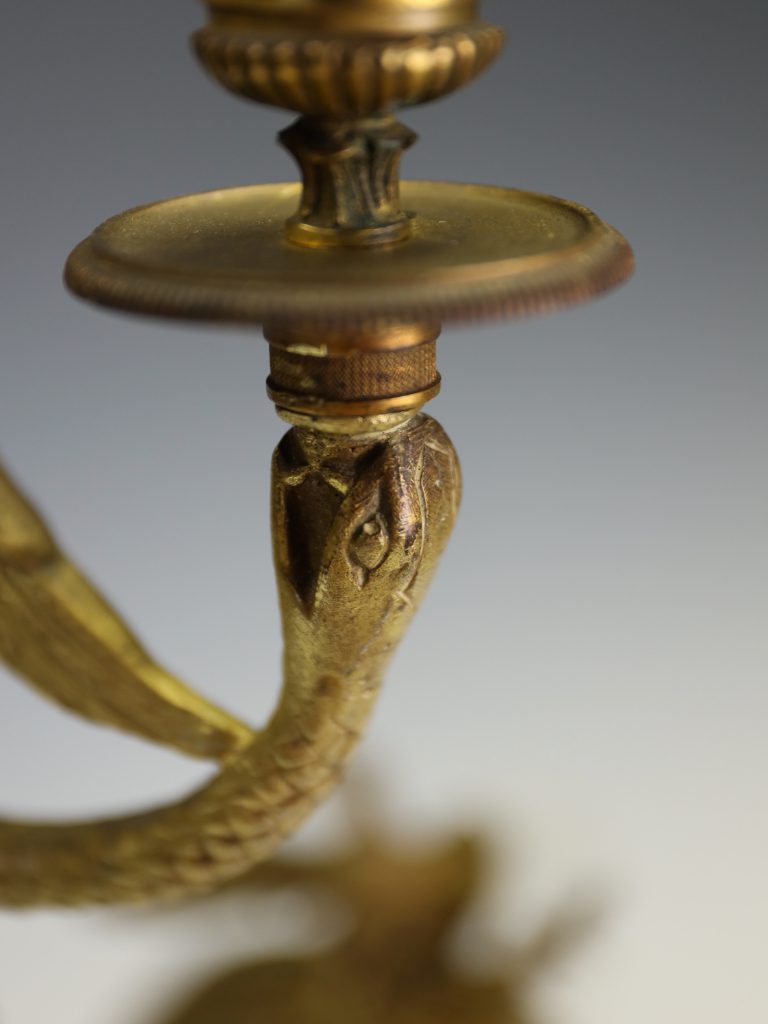
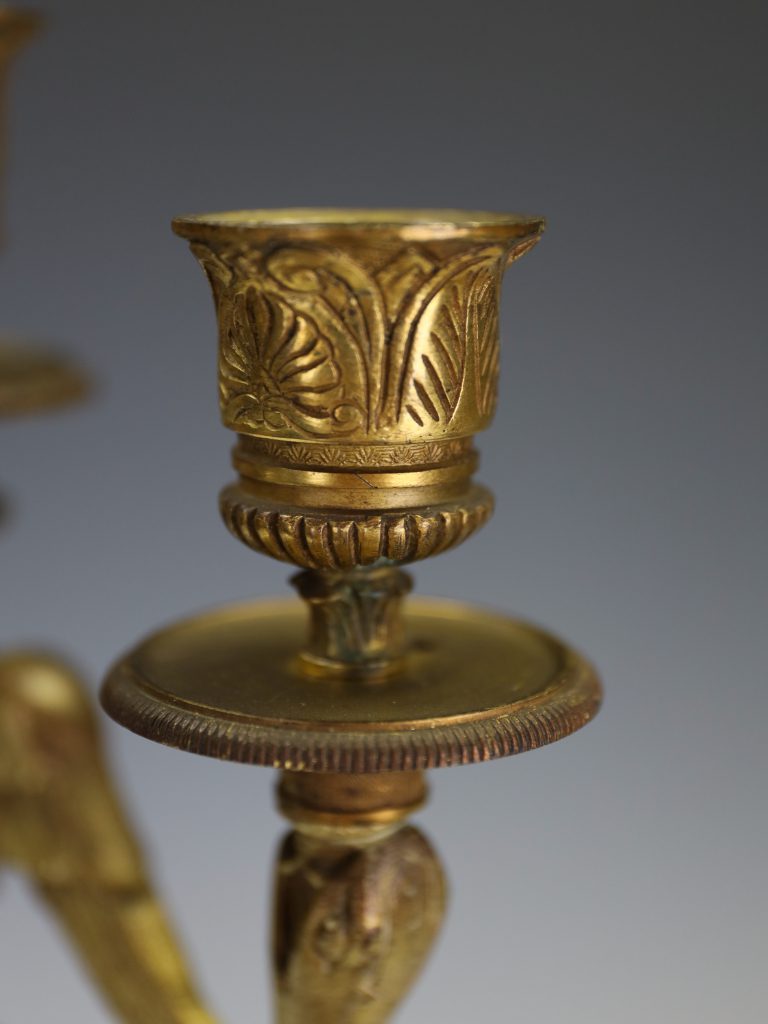
The three candle lights are arranged in a balanced triangular formation. The central nozzle rises on a fluted campana-form stem with finely chased leaf decoration, while the two lateral lights are supported by the serpent heads, each finished with shaped drip pans.
The interplay between burnished gilt bronze and deep patinated surfaces creates strong contrast and sculptural depth, highlighting the exceptional quality of the foundry craftsmanship.
Produced in France during the Empire and early Romantic period (circa 1810–1840), this type of lighting reflects the height of Napoleonic decorative arts, where classical antiquity was reinterpreted through imperial symbolism.
The caduceus represents commerce, eloquence and diplomacy, while the eagle and thunderbolts reference Jupiter and imperial power. The anatomical arm motif draws inspiration from Roman antiquities rediscovered in Herculaneum and Pompeii, which strongly influenced Empire-era design language.
Leading Parisian bronziers such as Claude Galle and Pierre-Philippe Thomire popularised this dramatic “arm and torch” format, combining sculptural bronze casting with functional lighting design.
Paris, France
French Empire / Neoclassical / Napoleonic Imperial
Circa 1880
Cast bronze, fire-gilt ormolu, and patinated bronze.
Finely hand-chased detailing throughout, including engine-turned backplate, classical relief ornament, and individually modelled figural elements. Combination of mercury gilding and dark chemical patination to achieve strong tonal contrast.
Excellent antique condition.
The bronze structure is solid and free from cracks, losses or repairs. The chasing remains exceptionally sharp and well-defined throughout.
The ormolu retains a rich, original gilded surface with warm toning and light, even wear to raised areas consistent with age. The patinated bronze arm displays a deep, even finish with only minor surface wear from historical handling.
Overall, the piece presents superbly with strong decorative impact and outstanding structural integrity.
Height: 47 cm / 18.5 in
Width: 21 cm / 8.3 in
Depth: 19 cm / 7.5 in
Weight: 3 kg / 6.6 lbs
All our collections have been through our workshop and where possible, we always try to maintain the original finish preserving the patina and colour, some items are sympathetically restored and this is done by our own skilled craftsmen using only traditional methods